
How to Grow Echeveria: Complete Guide
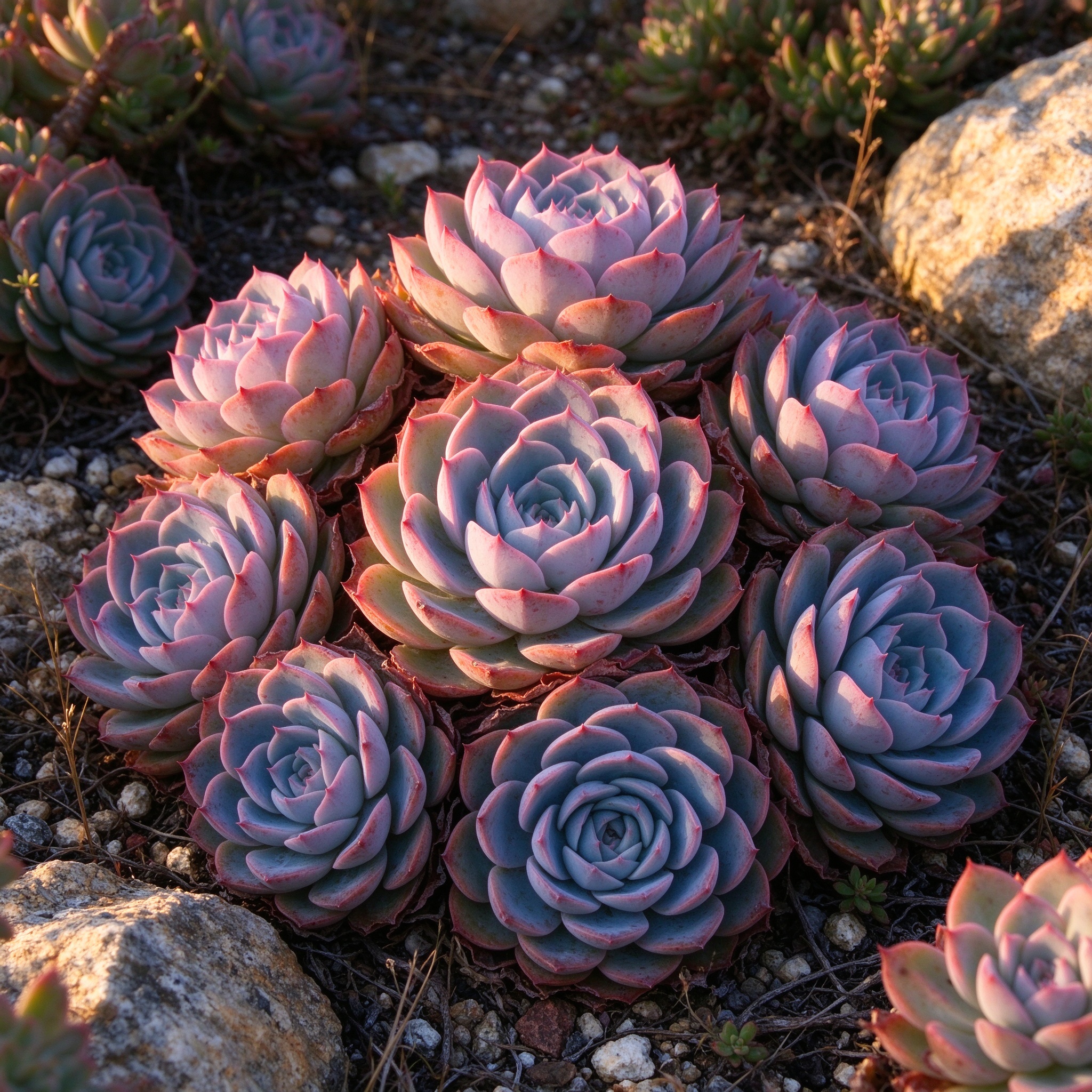
- •Echeveria is a large genus of rosette-forming succulents in the Crassulaceae family, native to an area stretching from southwest Texas to northwest Argentina and grown around the world as a houseplant, rock-garden, and container plant.
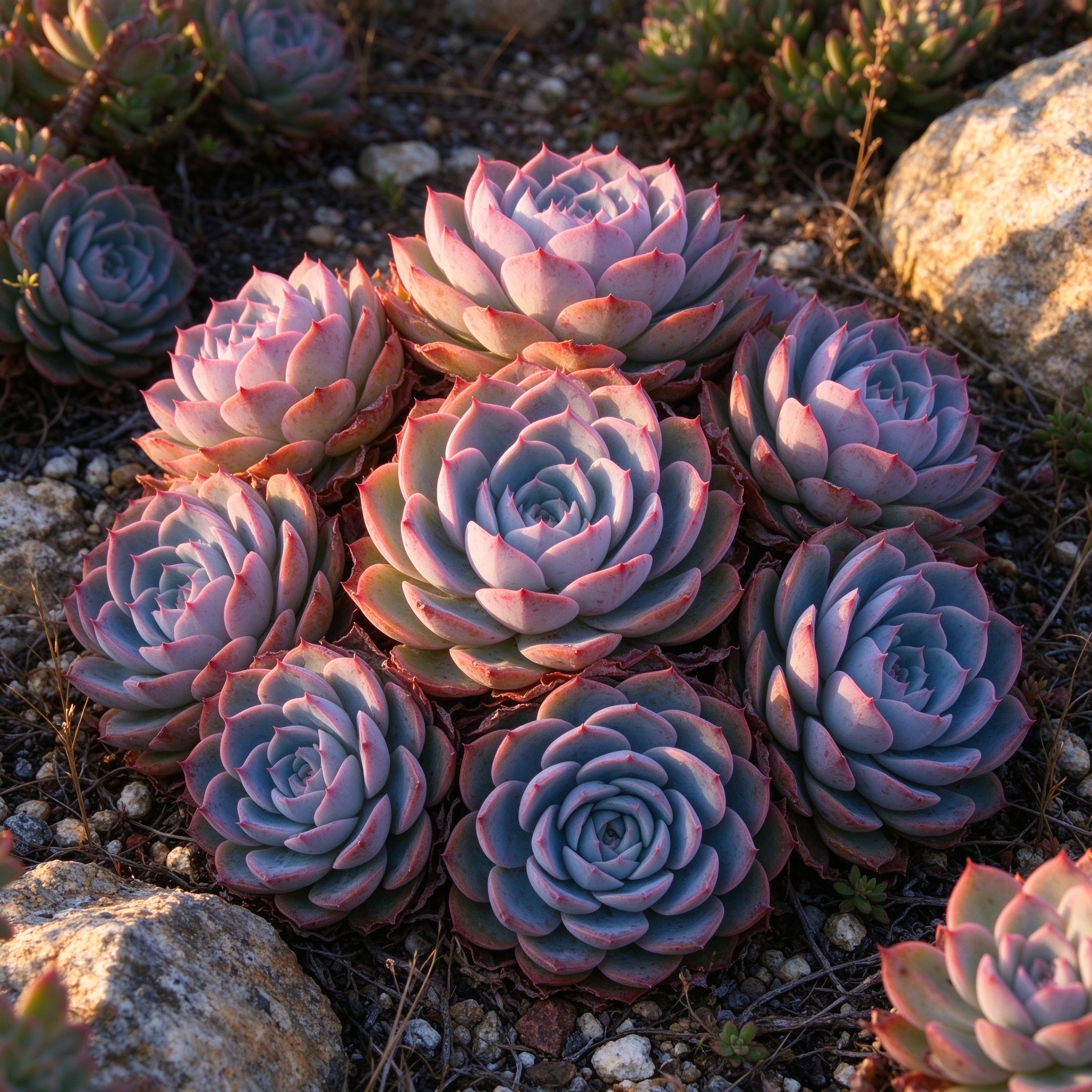
- •The thick, fleshy leaves — often spoon-shaped, waxy, and colored in shades of silver, blue-gray, sea green, pink, or deep purple — stay tight to the ground at first and slowly expose a short stem as lower leaves wither.
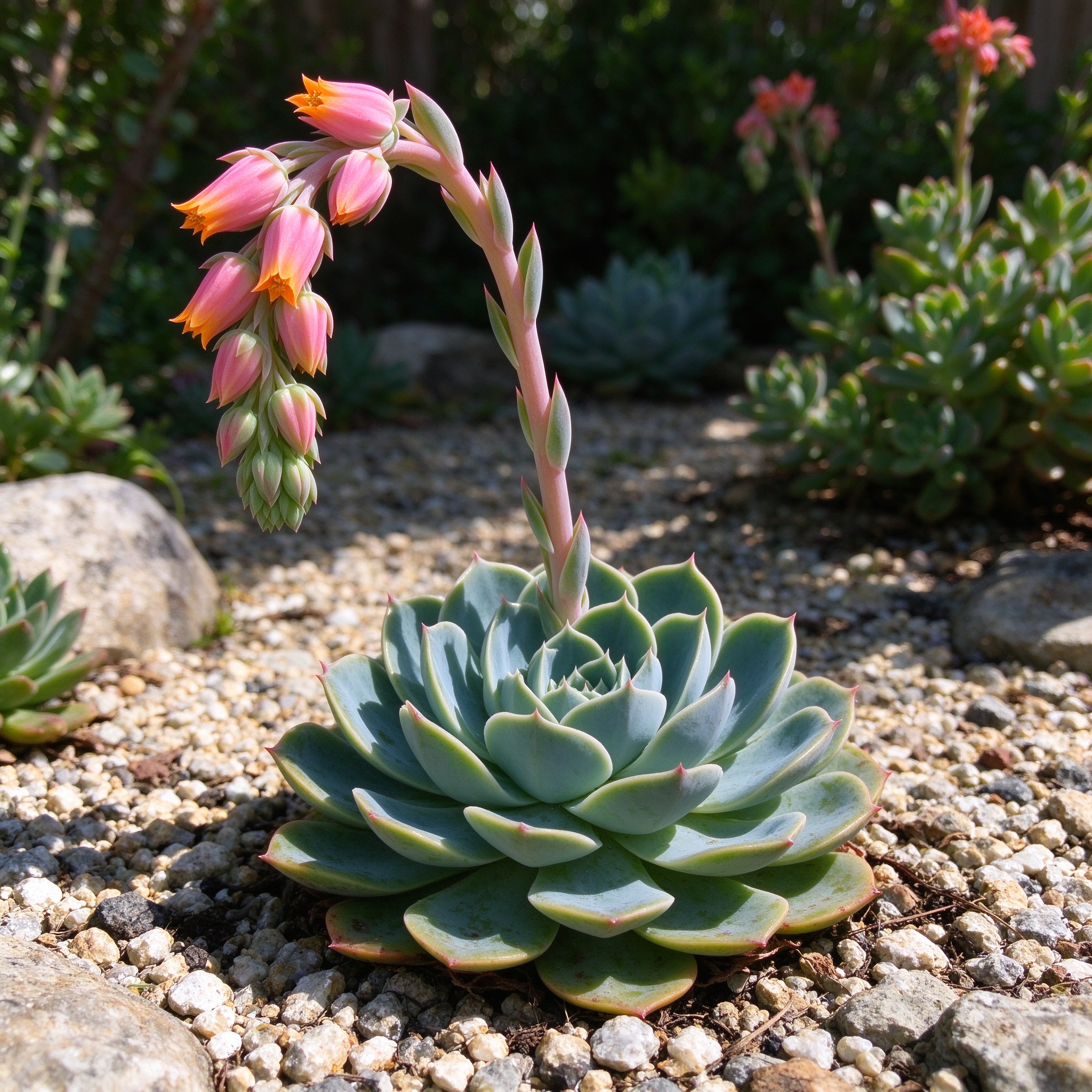
- •Mature rosettes send up arching stems bearing small, bell-shaped pink or red flowers that attract bumblebees and hummingbirds.
📋 Quick Facts
Scientific Name: Echeveria
Family: Crassulaceae
Category: Succulent
USDA Zones: 9-11
Light:
- •Echeveria wants full sun: at least six hours of bright light a day indoors on a south- or west-facing windowsill, and outdoors in a spot that gets direct morning sun with light afternoon shade in the hottest climates.
- •Leaf color — the pink, purple, and red edge coloring — actually intensifies with more sun.
- •Stretched, leggy growth is the classic sign that the plant is not getting enough light.
Water:
- •Water deeply but sparingly: soak the pot, let all water drain out, and wait until the soil is completely dry before watering again.
- •Indoors this usually means once every two to four weeks, and even less in winter.
- •Wait about a week after repotting or taking cuttings before watering to reduce rot risk. Always empty the saucer so roots never sit in standing water.
Temperature:
- •Echeveria is not frost hardy.
- •It can spend the summer outdoors in most temperate climates, but it must come inside before nighttime temperatures drop below about 45°F (7°C).
- •Indoors it does well in normal room temperatures between 60°F and 80°F (15–27°C) and prefers dry air; steamy bathrooms and kitchens are poor choices.
Soil:
- •Use a fast-draining succulent or cactus mix.
- •A reliable homemade blend is equal parts standard potting soil, coarse horticultural sand, and perlite or pumice.
- •The mix should be open and gritty, never moisture-retentive.
- •Top-dress the surface with gravel or pebbles rather than organic mulch, so damp material does not sit against the stem.
Harvest:
- •Echeveria is not harvested for food.
- •The closest thing to a 'harvest' is gathering offsets, leaf cuttings, or leggy stem sections in spring through summer to start new plants.
- •Once a rosette blooms in spring or early summer, the flower stalk can be cut off at the base after the flowers fade so the plant does not waste energy on seed.
Common Problems:
- •Overwatering is the dominant problem: mushy, yellow, or dropping lower leaves are the classic signs.
- •Pests include mealybugs, spider mites, aphids, and fungus gnats (the last usually means the soil stays too wet).
- •Leggy, stretched rosettes mean too little light, and shriveled leaves mean the plant needs a drink.
📅 When to Plant
- •Spring through early summer is the best window to buy, repot, or propagate echeveria, because the plant is entering its active growth phase and recovers quickly from root or leaf disturbance.
- •Fall planting is acceptable only in frost-free climates.
- •Echeveria is grown from offsets, leaf cuttings, or stem cuttings — there is no frost-sowing concept — and in cold-winter regions it must stay potted so it can be moved indoors before nighttime temperatures fall below about 45°F (7°C).
🌱 Growing Stages
 1
Acclimation after purchase or repotting
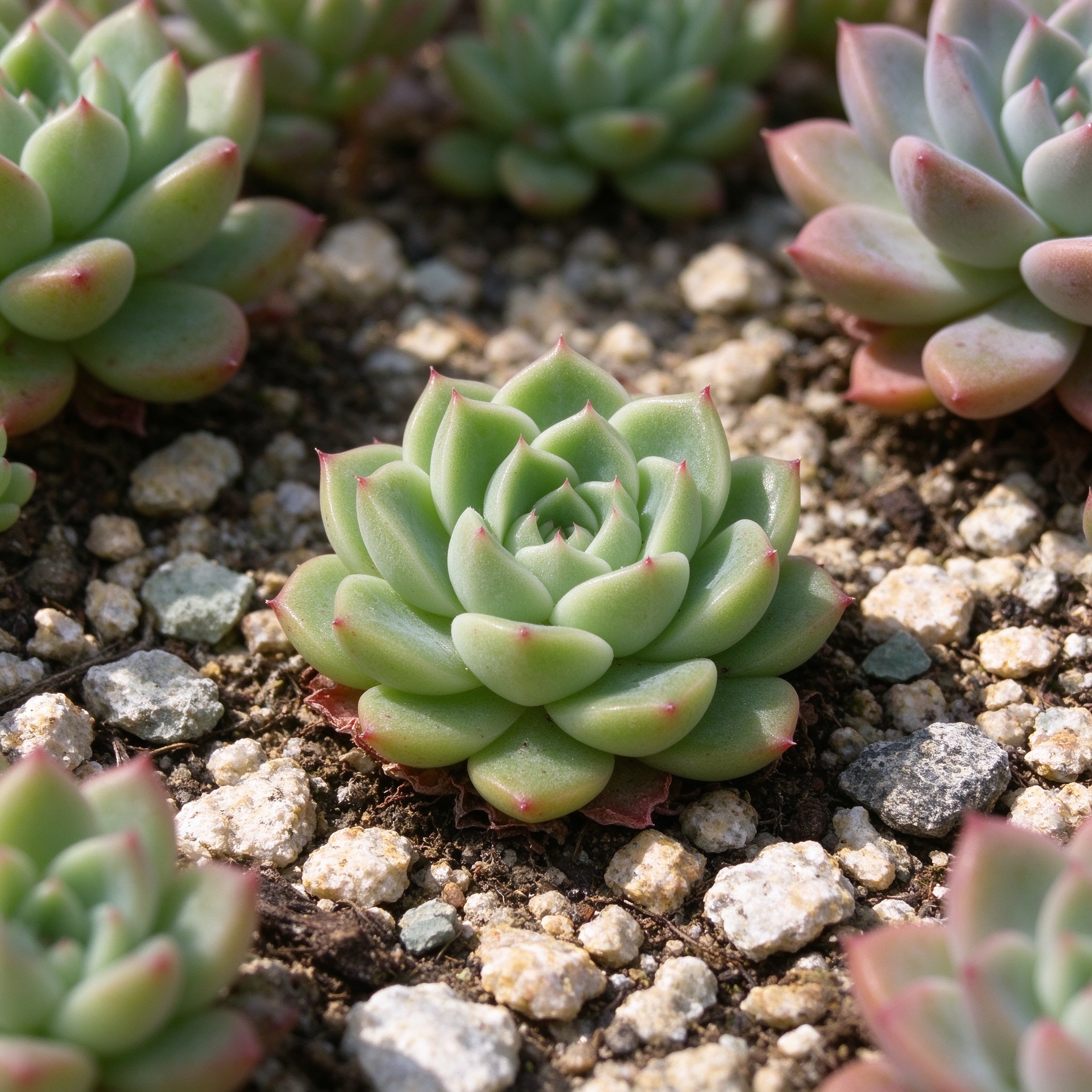
(First 1–2 weeks)- •A newly bought or repotted echeveria needs time to settle.
- •Do not water for about a week after potting, give it bright indirect light rather than blazing full sun, and let fresh roots form without the risk of rot.
- •Leaves may look a little softer for a few days while the plant recovers from the move.
 2
Active rosette growth and flowering
(Spring through summer, roughly March–August)- •During the warm, bright months the echeveria produces new leaves from the center, sends up arching flower stalks with pink or red bells, and often multiplies by offsets at the base.
- •This is the season for normal dry-and-soak watering, at most one light feeding in spring, and the time to take leaf or stem cuttings.
 3
Cool-season rest
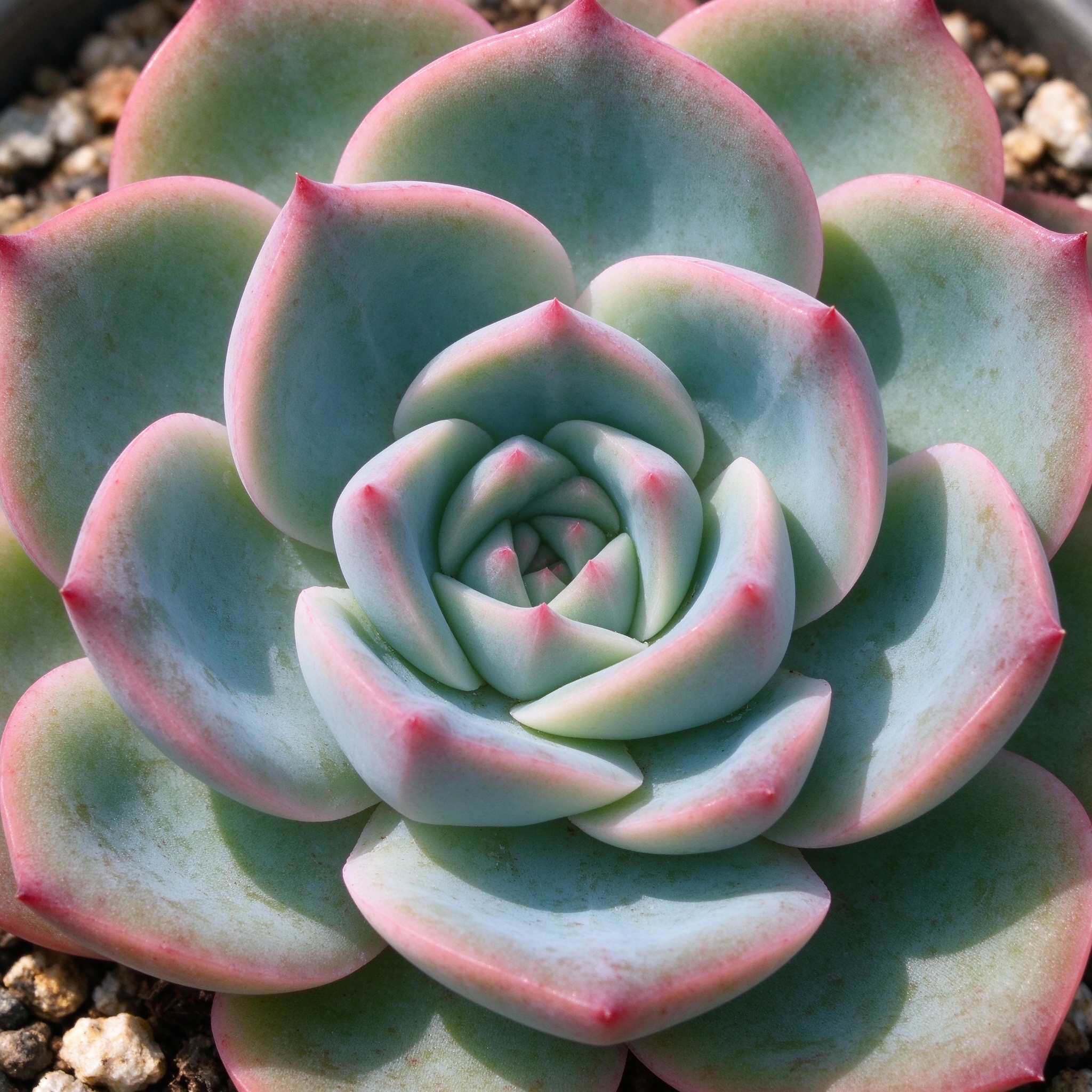
(Roughly November through February)- •Short days and cooler nights slow growth to a near-stop.
- •Water only enough to keep the leaves from shriveling — often once a month or less — stop fertilizing entirely, and keep the plant above 45°F (7°C) in a bright spot.
- •Overwatering in winter is the fastest way to lose a rosette to rot.
 4
Offsets and new plant propagation
(Spring through summer, once the rosette is established)- •Mature echeverias produce small offsets around the base, which can be twisted or cut away once they have a few leaves and their own tiny roots.
- •Leaf cuttings and stem cuttings also root during this season: let the cut surface callus for a few days, then set it on dry gritty mix and wait a week before the first light watering.
💧 Detailed Care Guide
☀️ Light Requirements
- •Echeveria wants full sun: at least six hours of bright light a day indoors on a south- or west-facing windowsill, and outdoors in a spot that gets direct morning sun with light afternoon shade in the hottest climates.
- •Leaf color — the pink, purple, and red edge coloring — actually intensifies with more sun.
- •Stretched, leggy growth is the classic sign that the plant is not getting enough light.
💧 Watering
- •Water deeply but sparingly: soak the pot, let all water drain out, and wait until the soil is completely dry before watering again.
- •Indoors this usually means once every two to four weeks, and even less in winter.
- •Wait about a week after repotting or taking cuttings before watering to reduce rot risk. Always empty the saucer so roots never sit in standing water.
🌡️ Temperature
- •Echeveria is not frost hardy.
- •It can spend the summer outdoors in most temperate climates, but it must come inside before nighttime temperatures drop below about 45°F (7°C).
- •Indoors it does well in normal room temperatures between 60°F and 80°F (15–27°C) and prefers dry air; steamy bathrooms and kitchens are poor choices.
🌱 Soil & Fertilizer
Soil:
- •Use a fast-draining succulent or cactus mix.
- •A reliable homemade blend is equal parts standard potting soil, coarse horticultural sand, and perlite or pumice.
- •The mix should be open and gritty, never moisture-retentive.
- •Top-dress the surface with gravel or pebbles rather than organic mulch, so damp material does not sit against the stem.
Fertilizer:
- •Echeveria is a very light feeder and usually thrives with no fertilizer at all.
- •If you do feed, use a balanced liquid organic fertilizer diluted to one-quarter strength, only once in spring and once in summer, and keep it off the leaves to avoid brown burn marks.
- •Never feed in fall or winter.
📝 Step-by-Step Planting Guide
- 1
Pick a small pot with a drainage hole
- •Choose a terracotta or clay pot only slightly larger than the rosette — 3 to 4 inches wide is plenty for a young echeveria, and the pot should never be more than an inch or two wider than the plant.
- •Terracotta is ideal because it breathes, dries the root zone quickly, and prevents the soggy soil that causes rot.
- •Whatever material you pick, the bottom must have a real drainage hole; a decorative cachepot without a hole can only be used as an outer sleeve, with the inner pot removed to water.
- 2
Use a fast-draining succulent mix
- •Plant echeveria in a commercial cactus and succulent mix, or blend your own from equal parts standard potting soil, coarse horticultural sand, and perlite or pumice.
- •The finished mix should feel gritty and pour freely; it must not clump like potting loam.
- •A gravel or pea-gravel topdress over the soil surface looks clean and keeps damp organic matter away from the stem, which is the most rot-prone part of the plant.
- 3
Plant at the same depth it was growing
- •Set the echeveria in the pot at exactly the same depth it grew in its nursery container, with the lowest leaves just above the soil line.
- •Fill in around the roots with fresh mix and firm lightly with your fingertips.
- •Do not bury the rosette center or pile soil against the leaves, because trapped moisture there invites rot.
- •If the plant arrived with a bare, woody stem, bury only enough to anchor it; the rest of the stem can be trimmed and used as a cutting.
- 4
Wait a week before the first watering
- •Because fresh roots are easily infected, do not water immediately after repotting or after sticking a leaf or stem cutting.
- •Wait about a week, then give the pot one thorough soaking and let all excess water drain out.
- •From then on, water only when the soil is completely dry — indoors typically every two to four weeks, and even less in winter.
- •Always empty the saucer so the roots are never sitting in standing water.
- 5
Move into bright, direct light
- •Place the pot on a south- or west-facing windowsill where the rosette gets at least six hours of bright light a day.
- •The pink, purple, and red edge coloring intensifies with sun, while a leggy, stretched rosette is the surest sign of too little light.
- •If you move the plant outdoors for summer, acclimate it over a week or two — start with morning sun only — and bring it back inside before any night that threatens frost or even temperatures near 45°F (7°C).
🌱 Recommended Varieties
Easy, forgiving starter echeverias
- •Start with Echeveria elegans (Mexican Snowball), a tight silver-gray rosette with pink stems and pink flowers, and Echeveria secunda (Blue Echeveria), which shows pale blue-green leaves with pink or red edges.
- •Echeveria derenbergii (Painted Lady) adds small blue-gray leaves with red margins and yellow flowers.
- •All three tolerate average home light, forgive missed waterings, and multiply readily by offsets.
Tiny dish-garden and windowsill rosettes
- •For small spaces try Echeveria runyonii 'Topsy Turvy', an award winner with curious curled, rectangular silver leaves, and Echeveria multicaulis (Copper Rose), a small shrubby selection with shiny dark green leaves edged in red.
- •The hybrid 'Victor' (E.
- •multicaulis × E.
- •derenbergii) makes a tight, compact rosette with shades of yellow-red. These fit 3- to 4-inch pots and mix well in dish gardens with sedums and cacti.
Showier hybrids for enthusiasts
- •Once the basics are steady, branch into named hybrids: 'Perle von Nürnberg' (E. gibbiflora 'Metallica' × E.
- •elegans) is a gray rosette with purplish-pink tones, 'Lola' (E. lilacina × E.
- •'Deresina') shows gray-white leaves with pink tips, and 'Pulv-oliver' — the Plush Plant — carries fuzzy, light green leaves tipped in red.
- •'Imbricata' and 'Deresina' round out a colorful collection and all respond to the same gritty mix and bright light.
🪴 Growing in Containers
- Terracotta is the default pot:
- •Porous clay dries the root zone quickly, prevents the soggy mix that causes rot, and looks classic under a tight rosette.
- •It is the material most growers reach for when potting echeveria.
- Pick a pot only 1–2 inches wider than the rosette:
- •Echeveria has small, modest roots. An oversized pot holds extra wet soil the plant cannot use, which is a setup for rot.
- •Young rosettes do fine in 3- to 4-inch pots and only move up when they visibly outgrow the current one.
- Every container must have a drainage hole:
- •A real hole in the bottom is non-negotiable.
- •Decorative cachepots without holes can be used only as sleeves: take the inner pot out to water, let it drain fully, then set it back.
- •Never let water pool in the outer pot.
- Top-dress with gravel, not organic mulch:
- •A thin layer of pea gravel or crushed rock over the soil surface keeps the stem dry, looks clean, and stops organic mulch from holding moisture against the rosette.
- •It also discourages fungus gnats from laying eggs.
- Moveable pots for cold climates:
- •Gardeners in frost-prone areas should grow echeveria in a light, sturdy pot rather than in the ground.
- •That way it can summer on a patio or rock garden and come indoors before the first cold night.
- •Add a pebble tray under the pot indoors if winter air is very dry.
✂️ Pruning & Maintenance
- ✓
Pick off dried lower leaves
- •As the rosette grows upward, the oldest bottom leaves shrivel and turn brown.
- •Gently pluck them off; leaving them traps moisture and gives mealybugs and fungus a place to hide.
- ✓
Cut the flower stalk after bloom
- •Once the pink or red bells have faded, snip the arching flower stalk off at the base with small clean scissors.
- •This keeps the plant looking tidy and stops it from wasting energy on seed.
- ✓
Behead leggy rosettes
- •If the stem gets long and bare from insufficient light, cut off the top rosette with about an inch of stem, let it callus for a few days, and re-root it in dry gritty mix.
- •The old stump will usually send out new offsets.
- ✓
Thin crowded offsets
- •When offsets pile up around the mother plant, twist or cut some away to start new pots.
- •Leaving too many offsets in one small pot exhausts the soil and keeps the crown perpetually crowded and damp.
🐛 Pest & Disease Control
Common Pests
Mealybugs
Symptoms: Cottony white clusters gather in the rosette's center, between leaves, and on roots; leaves may yellow, lose their waxy sheen, and look weakened, with sticky honeydew nearby.Control:- •Dab every visible cluster with a cotton swab dipped in 70% isopropyl alcohol, then gently wipe the rosette with a soft, damp brush.
- •For persistent infestations spray the whole plant — including leaf undersides — with insecticidal soap or neem oil, and isolate the echeveria from other houseplants.
- •Check the root ball when you repot, because root mealybugs hide in the soil.
Aphids
Symptoms: Soft green, pink, or black insects cluster on new growth and especially on the flower stalk, distorting buds and leaving shiny honeydew that can grow sooty mold on the leaves below.Control:- •Spray the aphids off with a strong stream of lukewarm water, repeating every few days.
- •If they return, treat with insecticidal soap or neem oil, making sure to reach the tight center of the rosette where aphids hide.
- •Cut and dispose of badly infested flower stalks rather than spraying them repeatedly.
Spider mites
Symptoms: Fine pale speckles stipple the leaf surface, the waxy coating looks dull, and in dry, heated rooms you may see delicate webbing between leaves; the whole plant takes on a bronzed, dusty look.Control:- •Rinse the rosette with lukewarm water to knock off mites and webbing, then raise humidity around the plant by grouping it with other houseplants or setting the pot on a pebble tray.
- •Treat persistent outbreaks with insecticidal soap or neem. Avoid moving echeveria into hot, dry, drafty spots where mites thrive.
Fungus gnats
Symptoms:- •Tiny dark flies weave around the pot and sit on the soil surface; their small maggots live in wet soil and can damage young roots.
- •Their presence almost always means the mix is staying too wet.
Control:- •Let the soil dry out completely between waterings, and let the top inch dry before watering again.
- •Sticky yellow cards on the soil surface catch the adults, and a thin layer of coarse sand or grit over the surface stops females from laying eggs.
- •Repot into fresh, fast-draining mix if gnats continue.
Common Diseases
Root and crown rot (Phytophthora / Pythium)
Symptoms: Lower leaves turn yellow, mushy, and translucent; the base of the rosette softens and may smell; pulling a leaf reveals brown, squishy roots instead of firm pale ones.Control:- •Stop watering immediately and tip the pot on its side to drain.
- •If the crown is still firm, repot the plant in completely dry, fresh cactus mix and wait a week before watering.
- •If the crown has turned soft, cut off healthy outer leaves or the top rosette, let them callus for a few days, and re-root them in dry gritty mix.
Botrytis gray mold
Symptoms: A fuzzy gray-brown mold spreads over dying leaves and flower stalks, especially in cool, wet, poorly ventilated conditions; affected leaves collapse into a slimy mess.Control:- •Cut off and destroy all affected tissue with a clean knife, and improve air circulation around the rosette.
- •Water only at the soil line, never over the leaves, and avoid leaving fallen leaves on the surface.
- •Severe cases can be treated with a copper fungicide, but the real cure is reducing leaf wetness and humidity.
Leaf spot (fungal / bacterial)
Symptoms: Small brown or tan lesions with yellow halos appear on the fleshy leaves, often starting where water has pooled overnight or where a leaf was bruised during shipping.Control:- •Remove spotted leaves at the base, water the soil rather than the foliage, and improve spacing and ventilation so leaves dry quickly.
- •Avoid wetting the rosette in the evening. Fungicide is rarely needed; most cases resolve once watering habits improve.
Powdery mildew
Symptoms: A thin, white, powdery coating spreads on leaf surfaces, usually in still, moderately warm air with poor light; leaves may distort or turn pale.Control:- •Improve air movement and increase light so the rosette dries quickly after any moisture.
- •Wipe leaves with a soft, damp cloth and avoid overhead watering.
- •Treat persistent cases with sulfur or a labeled fungicide, but moving the plant to a brighter, airier spot is usually enough.
Edema / physiological leaf spots
Symptoms: Raised, corky brown or tan bumps appear on leaves when roots take up water faster than leaves can transpire, often after heavy watering on a dull, cool day.Control:- •This is not infectious, but the cosmetic scars remain.
- •Prevent it by watering only when the soil is dry, and avoid watering heavily on cool, cloudy days.
- •Move the plant into brighter light and let the mix dry out more thoroughly between waterings.
🍅 When to Harvest
- •Echeveria is not harvested for food.
- •The closest thing to a 'harvest' is gathering offsets, leaf cuttings, or leggy stem sections in spring through summer to start new plants.
- •Once a rosette blooms in spring or early summer, the flower stalk can be cut off at the base after the flowers fade so the plant does not waste energy on seed.
❓ Frequently Asked Questions
- 1
Are echeverias safe for cats and dogs?
- •Yes.
- •Echeveria is listed as non-toxic to cats, dogs, and horses, and it is one of the safest succulents you can keep in a home with pets.
- •The leaves are firm and waxy, so most animals ignore them, but a curious cat or puppy may still take a bite; in that case you may see mild drooling or an upset stomach.
- •Keep the pot stable so it does not get knocked over, and enjoy the rosette on a sunny windowsill without worrying about poisoning.
- 2
How often should I water my echeveria?
- •Water deeply, then wait until the soil is completely dry before watering again.
- •Indoors in a bright spot this usually works out to once every two to four weeks, and even less in winter when light is weak.
- •To check, push a finger an inch into the soil — if it feels at all cool or damp, wait.
- •Always let water run through the drainage hole and empty the saucer so roots never sit in standing water.
- •Overwatering, not drought, kills most echeverias.
- 3
Why is my echeveria stretched out and leggy?
- •A stretched, leggy rosette with a bare, exposed stem is the classic sign that the plant is not getting enough light.
- •Echeveria wants at least six hours of bright light a day, ideally on a south- or west-facing windowsill.
- •Move it closer to the glass, or add a small grow light.
- •You can also fix an already leggy plant by cutting off the top rosette with an inch of stem, letting it callus for a few days, and re-rooting it in fresh gritty mix.
- 4
How do I propagate echeveria from a leaf?
- •Gently wiggle a healthy, fully grown leaf from side to side until it pops off the rosette whole — a broken or nicked leaf will not root well.
- •Lay the leaf on top of dry, gritty succulent mix in a bright spot out of direct sun, and wait about a week before misting lightly.
- •In a few weeks tiny roots and a baby rosette will form at the base of the leaf; keep it barely moist until the old leaf withers, then pot the little plant on its own.
- 5
Can echeveria stay outside in winter?
- •Only in climates that never see frost and stay above about 45°F (7°C) year-round.
- •Echeveria is not frost hardy: even a light freeze will blacken and collapse the fleshy leaves.
- •In every colder climate, grow it in a pot so you can move it outdoors for summer and bring it back inside before the first cold night.
- •Keep it indoors on a bright, cool windowsill through winter, away from drafts and cold window glass.
- 6
Why are the lower leaves on my echeveria dying?
- •It is normal for the oldest, lowest leaves to shrivel and die as the rosette grows upward — that is how the stem becomes visible over time.
- •These dried leaves should be gently picked off so they do not trap moisture or harbor mealybugs.
- •However, if the dying leaves are yellow, mushy, or translucent, that is overwatering: let the soil dry out completely and check that the pot has a working drainage hole.
- •If leaves are wrinkled but firm, the plant simply needs a drink.
Source:
NC State Extension Gardener Plant Toolbox — https://plants.ces.ncsu.edu/images/plants/echeveria/
NC State Extension Gardener Plant Toolbox — https://plants.ces.ncsu.edu/images/plants/echeveria/
The Old Farmer's Almanac — https://www.almanac.com/plant/echeveria
The Old Farmer's Almanac — https://www.almanac.com/plant/echeveria
Photo credit: NC State Extension
Images courtesy of NC State Extension under CC BY license. Thank you to the photographers who make these educational images available.
License: CC BY-NC 2.0 / CC BY 4.0