
How to Grow Bermuda Grass: Complete Guide
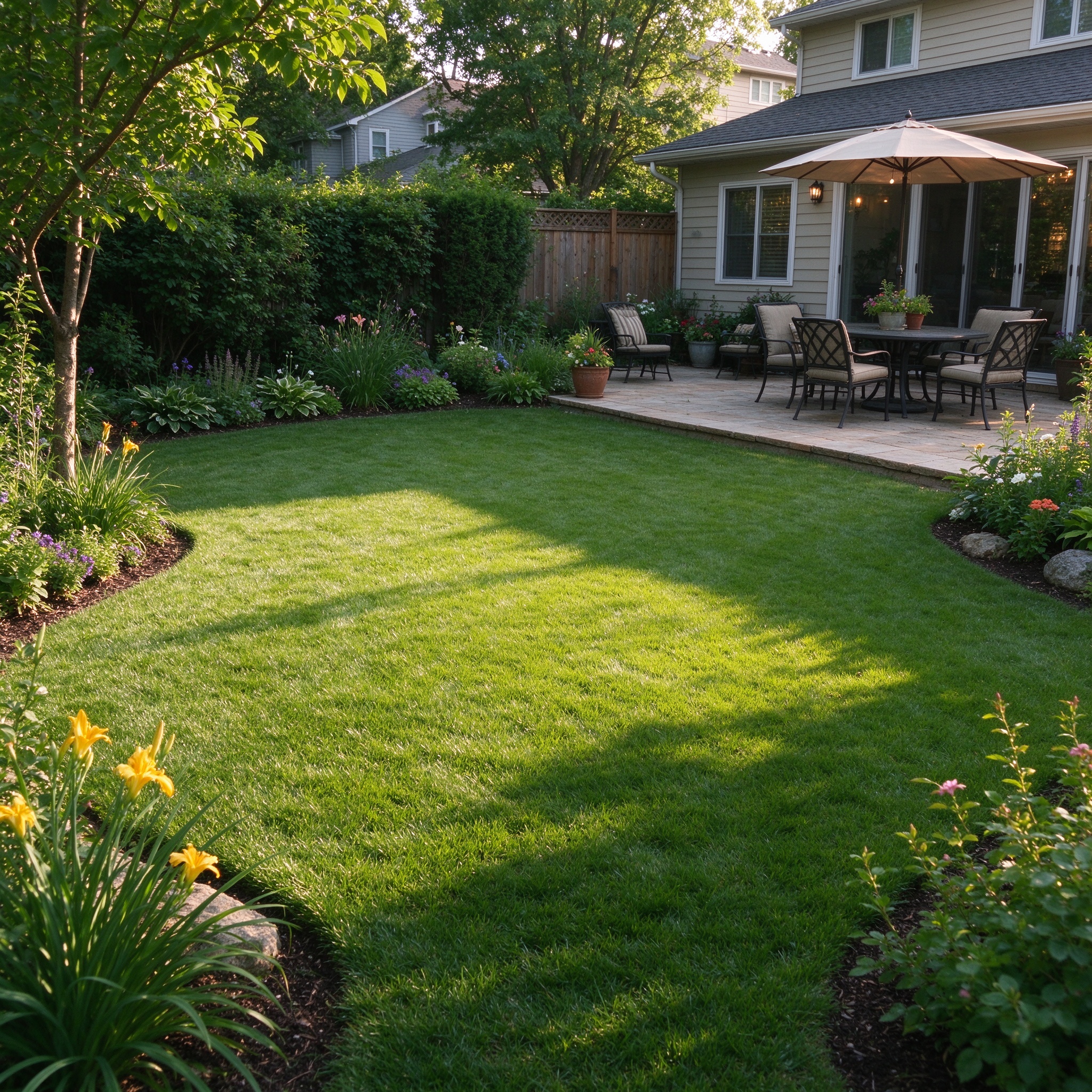
- •Bermuda grass is a warm-season perennial sod grass in the true grass family, the most widely used high-traffic lawn and sports turf across the southern United States from California to Florida.
- •Its fine blades, aggressive above-ground runners (stolons) and underground stems (rhizomes) knit together a tough, drought-tolerant mat that recovers rapidly from wear, heat, and drought.
- •It thrives in full sun on athletic fields, golf tees, roadsides, and backyard play areas, but it fails in shade and turns completely brown after frost, dormant through cool weather until soil warms again.
- •Common (common-type) bermudagrass can be established from seed; most fine-textured hybrid sports varieties are planted only by sod, sprigs, or plugs.
- •Its spreading habit makes it a strong lawn but also a vigorous weed in flower beds if edges are not contained.
📋 Quick Facts
- •Bermuda grass demands full sun: at least eight hours of direct sunlight a day for a dense, healthy stand.
- •It is the least shade-tolerant common warm-season lawn grass and thins, develops weak runners, and declines under even light tree shade; it will not persist under live oaks, pines, or building overhangs.
- •Plant it only in open, exposed yards and athletic fields; shady corners need a more shade-tolerant species such as St. Augustine grass or tall fescue.
- •Its aggressive rhizomes also let it spread into beds, so define lawn edges with a solid border or edging strip.
- •Once established, bermudagrass is among the most drought-tolerant southern lawn grasses and survives dry spells by going dormant brown until moisture returns.
- •Water an established lawn with ½ to ¾ inch per irrigation event when blades wilt to a dull gray-green, usually once or twice a week in peak summer; deep, infrequent watering promotes deep roots and reduces disease.
- •A newly seeded or sodded lawn must stay moist on top for the first three to four weeks: light watering once or twice a day until seedlings emerge and runners root, then taper to deeper, less frequent irrigation.
- •During winter dormancy the lawn needs almost no water except in prolonged dry, windy weather.
- •Bermuda grass is a warm-season grass hardy in USDA zones 7 through 10.
- •Active growth begins when soil temperature holds above 65°F and air temperature stays between 70°F and 95°F; high heat and humidity accelerate spread.
- •Any frost or sustained temperature below freezing burns the blades brown, and in zone 7 the stand survives through rhizomes and root crowns under protective cover, resprouting when soil warms in spring.
- •In the northern edge of its range it stays dormant longer each year; far south it greens up almost year-round.
- •It tolerates high heat and southern humidity better than any cool-season lawn grass.
- •Bermudagrass adapts to a wide range of southern soils, including sandy roadsides and compacted sports fields, but it performs best in fertile, well-drained loam with a pH of 6.0 to 7.0.
- •Have the soil tested before planting; incorporate lime and phosphorus to the recommended depth because these amendments move slowly through the soil.
- •Work compost into sand or heavy clay at preparation time, level the surface, and core-aerate mature athletic and high-traffic lawns twice a year during active growth.
- •Bermudagrass tolerates compacted ground better than most lawn grasses, but drainage still matters in low wet spots.
- •A lawn has no edible harvest.
- •Treat establishment height as the first mowing benchmark: begin mowing when the seedling stand reaches about 2.25 inches tall.
- •Mow with a reel mower at 0.75 to 1 inch for high-quality turf, or with a sharp rotary mower at 1 to 2 inches on common lawns.
- •Begin mowing when the grass reaches 50% taller than the target height, remove no more than one-third of the blade in a single cut, use a sharp mower blade, and mow only when the turf is dry.
- •Because bermudagrass grows fast in summer, high-maintenance lawns may need mowing two to three times a week during peak heat.
📅 When to Plant
- •Seed common bermudagrass in late spring to early summer, from May 1 to June 15 in the Arkansas and mid-South states, when soil temperature reaches 65°F and stays there; North Carolina extension lists an April-through-July planting window.
- •Air temperatures between 70°F and 95°F favor rapid establishment.
- •Do not seed in fall: young bermudagrass seedlings cannot survive the first frost, and fall plantings die over winter.
- •Sow ½ to 1 pound of seed per 1,000 square feet for a new seeded lawn; Texas A&M AgriLife recommends ½ to 1 pound of broadcast seed, while NC State lists 1 to 2 pounds for common lawns.
- •Hulled seed germinates in about five days in warm soil; unhulled seed takes seven to ten days.
- •Hybrid varieties are installed as sod, sprigs, or plugs in late spring after soil warms above 65°F.
🌱 Growing Stages
 1
Germination
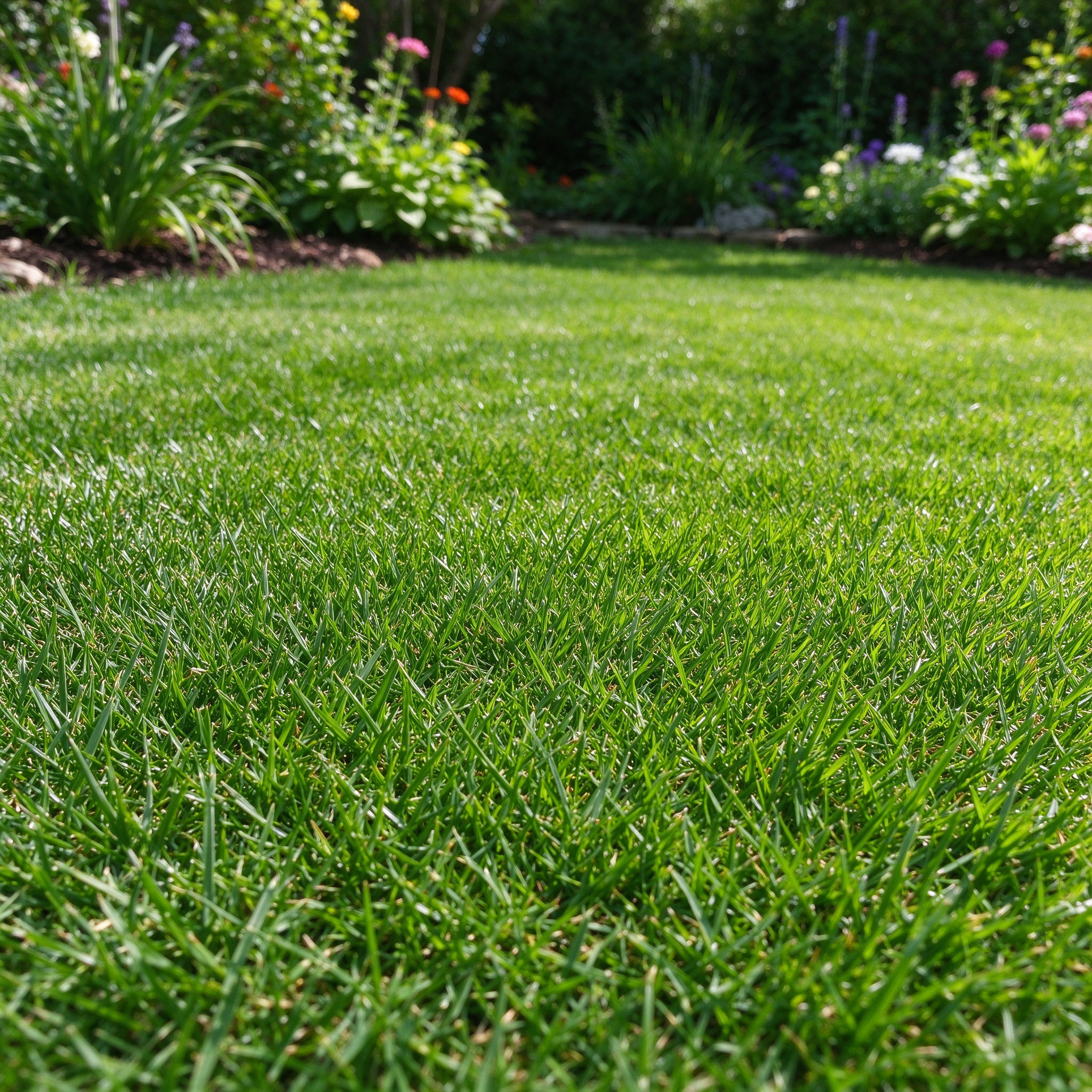
(About 5 days (hulled); 7 to 10 days (unhulled))- •In soil at or above 65°F, hulled bermudagrass sprouts in about five days in warm soil; unhulled seed with its hard coat takes seven to ten days.
- •Keep the seedbed continuously moist; dry surface soil kills tender seedlings that have just emerged.
- •Cold soil or fall planting stalls germination and invites weeds.
 2
Seedling establishment
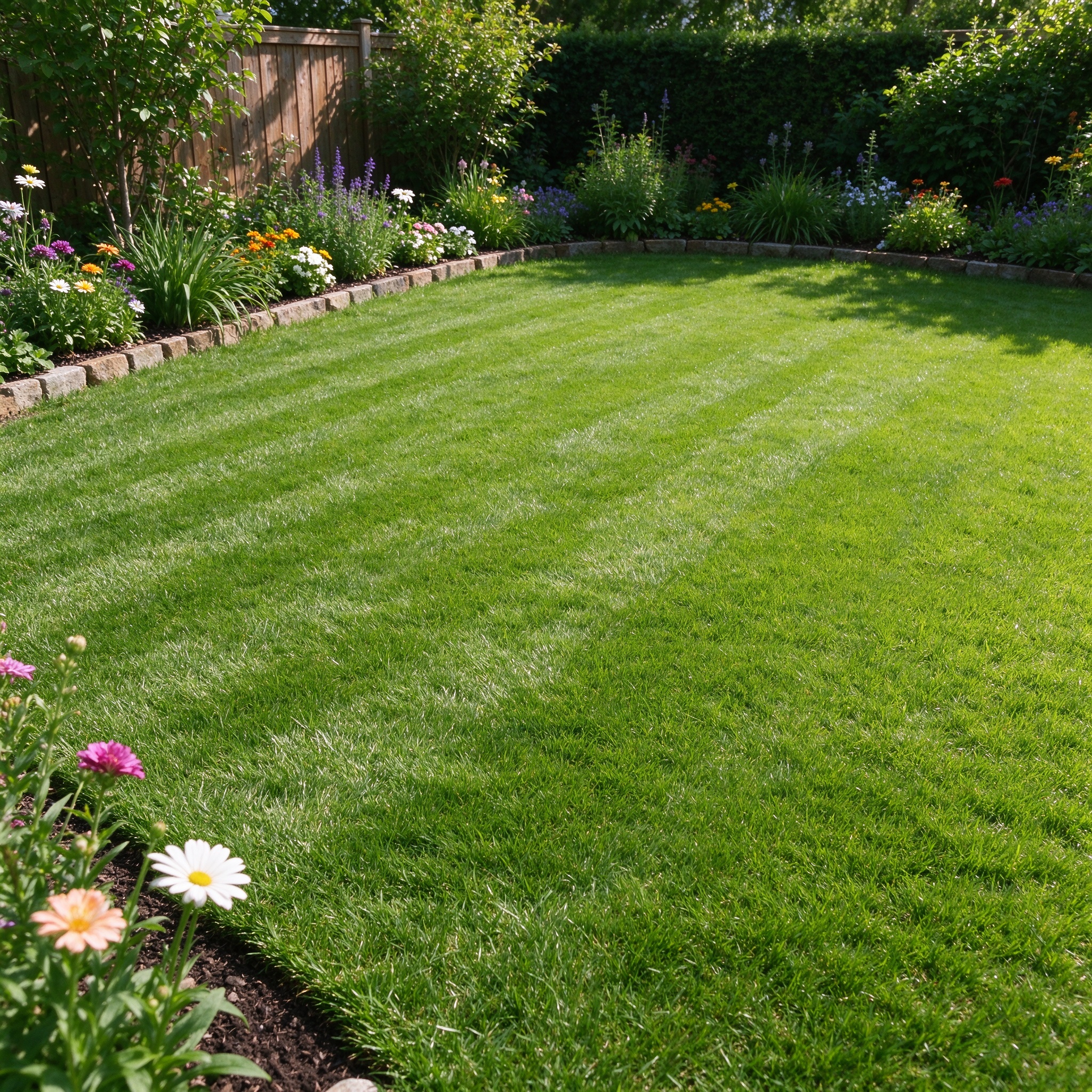
(First 3 to 6 weeks)- •Seedlings produce fine blades and short roots while surface runners begin to emerge.
- •Water lightly and frequently, keep traffic off the new stand, and hold broadleaf herbicides until the lawn has been mowed several times.
- •Fertilize once after emergence to steady growth without forcing disease-prone soft foliage.
 3
Stolon and rhizome spread
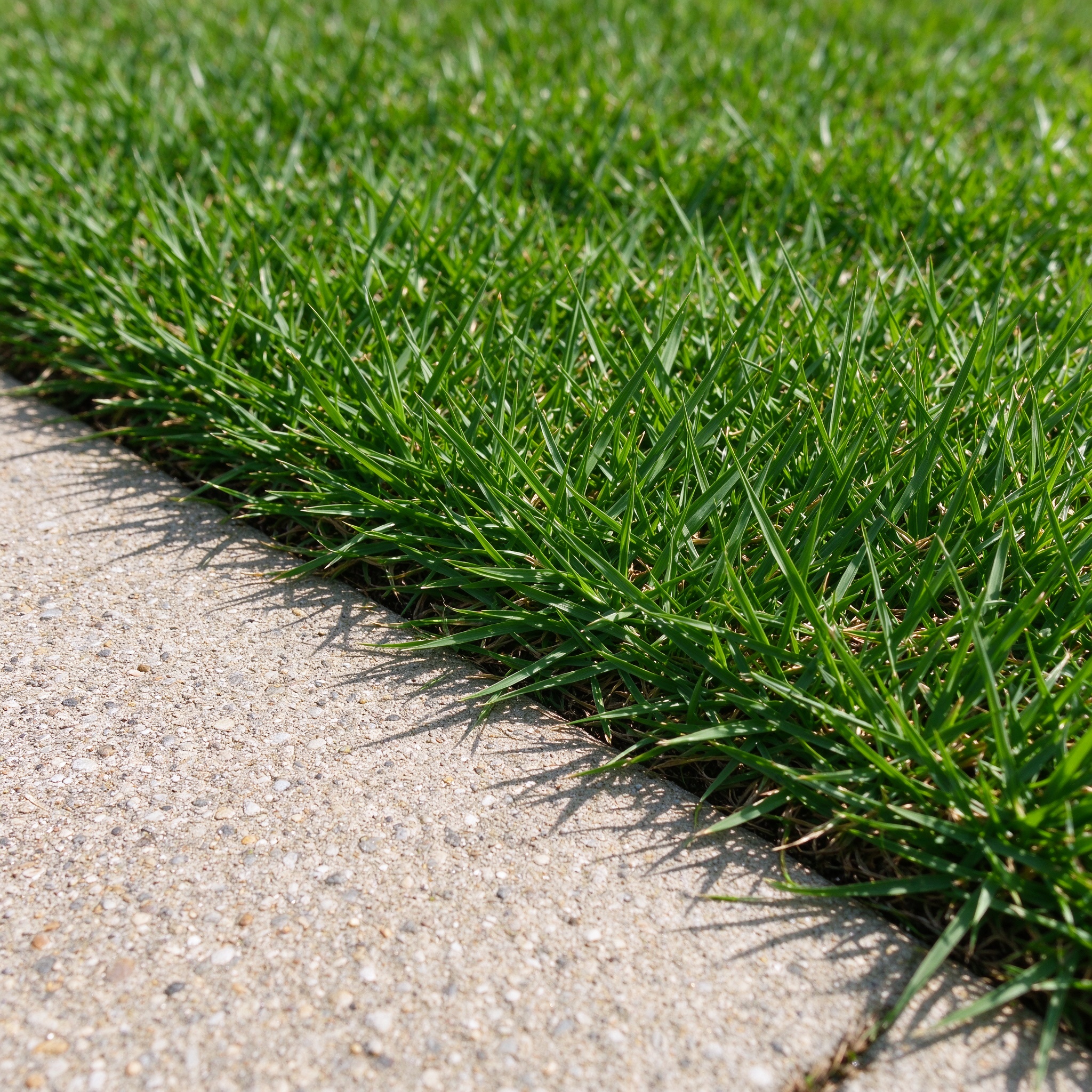
(Weeks 4 to 12)- •Above-ground runners and underground stems spread aggressively, rooting at nodes to knit a connected mat.
- •Mow at the target height, return clippings, and watch for first thatch buildup and armyworm feeding.
- •Bare gaps close over quickly as runners cross them.
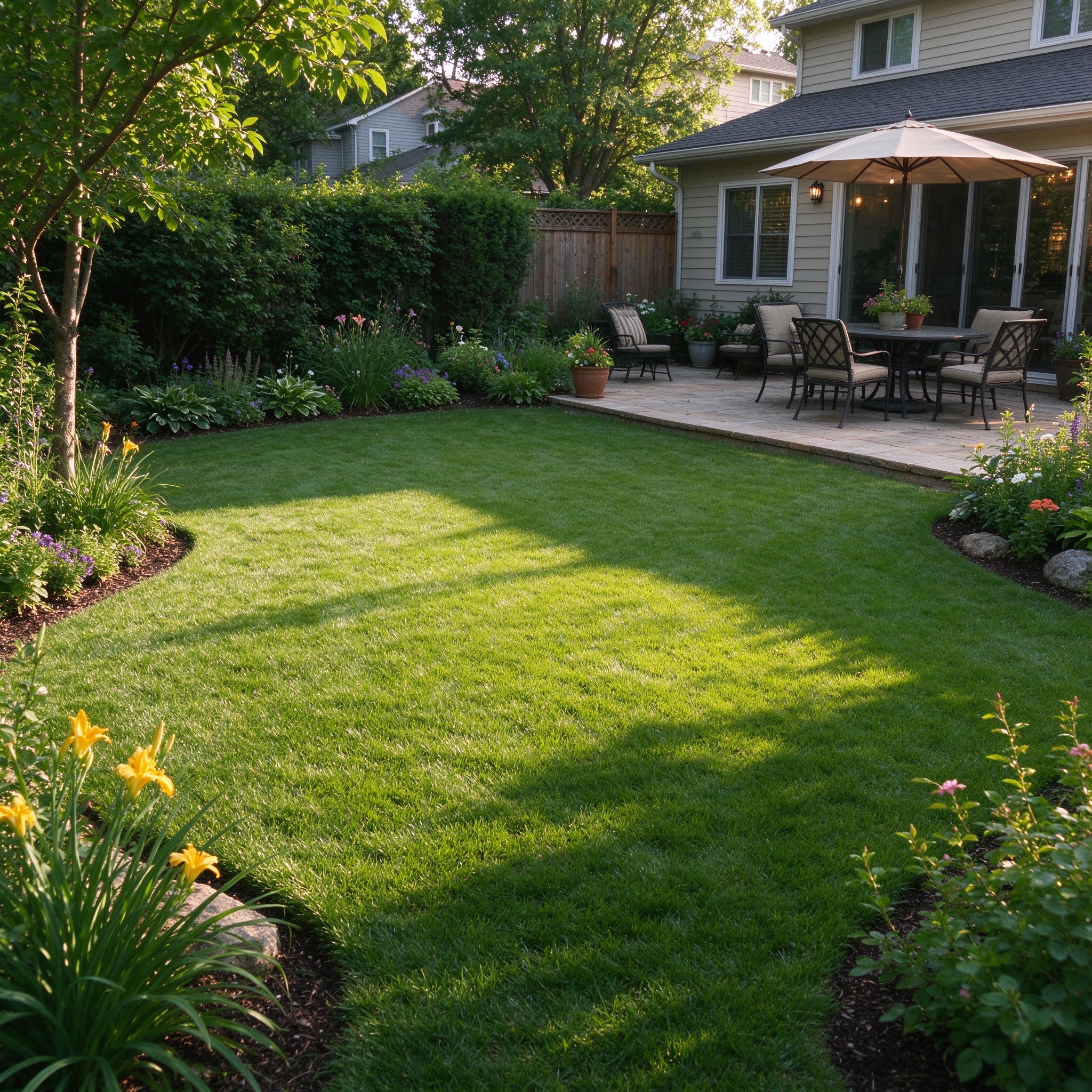 4
Mature turf
(Year 1 onward)- •The lawn becomes a dense, drought-tolerant mat maintained at 0.75 to 1 inch with a reel mower or 1 to 2 inches with a rotary mower.
- •Core-aerate high-traffic areas twice a growing season, dethatch when the layer exceeds one-half inch, and monitor armyworms, webworms, nematodes, and spring dead spot through the warm months.
 5
Winter dormancy
(After the first frost)- •Frost burns the blades brown and growth stops for the winter.
- •Roots and rhizomes survive underground; keep leaves off the dormant mat, skip fall nitrogen, and water only through prolonged dry wind.
- •In northern zone 7, a thin layer of winter mulch or overseeded ryegrass protects runners and provides color until spring green-up.
💧 Detailed Care Guide
☀️ Light Requirements
- •Bermuda grass demands full sun: at least eight hours of direct sunlight a day for a dense, healthy stand.
- •It is the least shade-tolerant common warm-season lawn grass and thins, develops weak runners, and declines under even light tree shade; it will not persist under live oaks, pines, or building overhangs.
- •Plant it only in open, exposed yards and athletic fields; shady corners need a more shade-tolerant species such as St. Augustine grass or tall fescue.
- •Its aggressive rhizomes also let it spread into beds, so define lawn edges with a solid border or edging strip.
💧 Watering
- •Once established, bermudagrass is among the most drought-tolerant southern lawn grasses and survives dry spells by going dormant brown until moisture returns.
- •Water an established lawn with ½ to ¾ inch per irrigation event when blades wilt to a dull gray-green, usually once or twice a week in peak summer; deep, infrequent watering promotes deep roots and reduces disease.
- •A newly seeded or sodded lawn must stay moist on top for the first three to four weeks: light watering once or twice a day until seedlings emerge and runners root, then taper to deeper, less frequent irrigation.
- •During winter dormancy the lawn needs almost no water except in prolonged dry, windy weather.
🌡️ Temperature
- •Bermuda grass is a warm-season grass hardy in USDA zones 7 through 10.
- •Active growth begins when soil temperature holds above 65°F and air temperature stays between 70°F and 95°F; high heat and humidity accelerate spread.
- •Any frost or sustained temperature below freezing burns the blades brown, and in zone 7 the stand survives through rhizomes and root crowns under protective cover, resprouting when soil warms in spring.
- •In the northern edge of its range it stays dormant longer each year; far south it greens up almost year-round.
- •It tolerates high heat and southern humidity better than any cool-season lawn grass.
🌱 Soil & Fertilizer
Soil:
- •Bermudagrass adapts to a wide range of southern soils, including sandy roadsides and compacted sports fields, but it performs best in fertile, well-drained loam with a pH of 6.0 to 7.0.
- •Have the soil tested before planting; incorporate lime and phosphorus to the recommended depth because these amendments move slowly through the soil.
- •Work compost into sand or heavy clay at preparation time, level the surface, and core-aerate mature athletic and high-traffic lawns twice a year during active growth.
- •Bermudagrass tolerates compacted ground better than most lawn grasses, but drainage still matters in low wet spots.
Fertilizer:
- •Bermudagrass is a heavy feeder during the long southern growing season.
- •On the NC State coastal maintenance table, a basic program totals 3 pounds of nitrogen per 1,000 square feet per year, applied in April, July, and August; high-maintenance sports turf may reach about 6 pounds on a monthly April-to-September schedule.
- •Avoid nitrogen in late fall and early winter after the lawn begins to brown, because feeding weakens cold-hardiness and fuels thatch.
- •Use a complete fertilizer with slow-release nitrogen and follow the soil-test rate; returning clippings returns a share of nitrogen.
- •The soil test determines phosphorus, potassium, and iron needs.
📝 Step-by-Step Planting Guide
- 1
Test the soil and prepare the seedbed
- •Send a soil sample to your county Extension laboratory before planting.
- •Incorporate lime, phosphorus, and compost to the recommended depth, loosen compacted soil, level the surface to marble-size particles, water to settle, and roll lightly.
- •Kill existing weeds with a labeled nonselective herbicide and let the bed settle before seeding or laying sod.
- 2
Choose common seed or a hybrid vegetative variety
- •For a seed lawn, buy hulled common or improved bermudagrass seed from a reputable supplier; choose fine-textured improved cultivars such as 'Riviera', 'Princess-77', or 'Latitude 36' for a denser lawn.
- •For sports turf and the finest texture, plant a hybrid such as 'Tifway', 'Tifdwarf', or 'Celebration' from sod, sprigs, or plugs; hybrids do not come true from seed.
- 3
Seed at 0.5–1 lb hulled per 1,000 sq ft in two passes
- •Divide seed into two equal portions and spread half in one direction, the second half at right angles to the first pass to eliminate skips.
- •Press or rake seed into the top quarter inch of soil; bermudagrass seed needs close soil contact to germinate.
- •Do not bury seed deeper than a quarter inch.
- 4
Cover, roll, and keep the bed moist
- •Roll the bed to firm seed-to-soil contact; a light, weed-free straw cover helps retain moisture on slopes and sandy soil.
- •Keep the top half inch of soil moist for three to four weeks with light watering once or twice a day until hulled seed emerges in about five days and runners begin rooting.
- •Taper watering depth and frequency as the stand establishes.
- 5
Begin mowing and start the summer maintenance program
- •Begin mowing when seedlings reach about 2.25 inches tall; maintain high-quality turf at 0.75 to 1 inch with a reel mower or common lawns at 1 to 2 inches with a rotary mower, never removing more than one-third of the blade.
- •Fertilize on the April-to-August nitrogen schedule from the soil test, watch for fall armyworm damage in midsummer, and water deeply when blades wilt to dull gray-green.
🌱 Recommended Varieties
Common bermudagrass seed
- •Common-type seed is cheap and coarse-textured, suitable for roadsides, utility areas, and general utility lawns.
- •It establishes from seed, tolerates poor soil and wear, and is mowed on a 1- to 2-inch rotary schedule; it is less dense and less fine-bladed than improved cultivars.
Improved seeded cultivars
- •'Riviera', 'Princess-77', 'Latitude 36', and similar releases breed a finer blade, darker color, denser sod, and better cold tolerance than common bermudagrass.
- •They establish from seed for home lawns, parks, and medium-quality sports fields, and mow well on a 1- to 2-inch rotary or 0.75- to 1-inch reel height.
Hybrid bermudagrass sod and sprigs
- •'Tifway', 'Tifdwarf', 'Celebration', and 'Celebration II' are fine-textured hybrids planted only by sod, sprigs, or plugs, used on golf courses, high-end sports fields, and luxury lawns.
- •They mow as low as 0.5 inch on greens, recover fast from wear, and do not produce viable seed for home planting.
🪴 Growing in Containers
- Sunny high-traffic lawns and play areas:
- •Bermudagrass is the default southern lawn for backyards, dog yards, and active play spaces: its runners and rhizomes knit a tough mat that repairs quickly from running, chasing, and dog traffic.
- •Choose improved seeded cultivars for dense cover and mow at 1 to 2 inches on a rotary mower.
- Sports fields and athletic turf:
- •Its wear tolerance, fast recovery, and close mowing make bermudagrass the standard for football fields, soccer pitches, baseball diamonds, and golf tees and fairways.
- •Hybrid varieties such as 'Tifway' serve high-performance fields; core-aerate twice a season and follow a soil-test fertilizer program.
- Roadsides and utility slopes:
- •Common bermudagrass tolerates poor, sandy, compacted soil and drought, making it widely planted on road embankments, medians, and utility rights-of-way for erosion control.
- •Mow less frequently on rough slopes and keep it contained away from neighboring flower beds.
- Renovation of a thin southern lawn:
- •When an old thin bermudagrass stand or a struggling cool-season lawn in the South needs renewal, core-aerate, kill weeds, and seed an improved cultivar at 0.5 to 1 pound per 1,000 square feet in late spring, or install hybrid sod for an immediate fine-textured surface.
- •Edging strips keep runners out of adjacent beds.
✂️ Pruning & Maintenance
- ✓
Mow at the recommended height and never scalp
- •Mow high-quality bermudagrass at 0.75 to 1 inch with a reel mower, or common lawns at 1 to 2 inches with a rotary mower.
- •Begin mowing when the grass reaches 50% taller than the target height and remove no more than one-third of the blade at once.
- •Close scalping weakens roots, exposes runners to sunscald, and opens the stand to weeds and spring dead spot.
- ✓
Leave clippings on the lawn
- •Clippings decompose quickly and return a share of the nitrogen the lawn needs during heavy summer growth.
- •Collect them only when heavy or clumped enough to cover and smother the fine blades.
- ✓
Dethatch and aerate on schedule
- •Bermudagrass builds thatch quickly on high-nitrogen sports turf.
- •When thatch exceeds one-half inch, vertical-mow during active summer growth; core-aerate high-traffic fields twice a season to relieve compaction and improve water and fertilizer penetration.
- ✓
Define edges and remove fallen leaves
- •Runners spread aggressively into flower beds and neighboring yards; install a solid edging strip or cut a clean edge each mowing.
- •Rake or blow fallen leaves off the dormant and growing turf before they mat down and shade out the fine blades.
🐛 Pest & Disease Control
Common Pests
Fall armyworm
Symptoms:- •Striped caterpillars devour blades in large ragging patches that appear suddenly in mid-to-late summer and fall, often spreading across a lawn in days.
- •Close inspection reveals clusters of larvae on blades and masses of bird activity feeding on the outbreak; damage looks like the turf was scalped or burned.
Control:- •Scout at dusk with a soapy-water flush and watch for green-brown frass on blades.
- •Treat active outbreaks promptly with a labeled insecticide applied to moist turf in the evening, watering in lightly to reach feeding larvae.
- •Keep the lawn vigorous through proper irrigation and fertilizer; armyworm damage on healthy bermudagrass regrows quickly from runners.
Sod webworms
Symptoms:- •Small caterpillars cut blades near the thatch and tie them with silken threads, leaving browned, chewed patches that spread across sunny lawns in summer.
- •Silk tunnels and frass appear near the soil surface when the stand is inspected closely.
Control:- •Monitor with a soapy-water flush in the early evening.
- •Encourage birds and ground beetles; treat active outbreaks with a labeled insecticide applied to moist turf in the evening and water in lightly to move the product into the thatch layer.
Bermudagrass stem maggot
Symptoms:- •Small fly larvae tunnel inside grass stems, killing the tips which turn yellow and brown while the lower canopy stays green; the lawn appears blighted with scattered browned flagging from late summer into fall.
- •Symptoms often appear on recently renovated or overfertilized turf.
Control:- •Avoid excess late-season nitrogen and mow on schedule to remove damaged stem tips.
- •Most damage is cosmetic and the turf regrows when rhizomes resprout; in heavy pressure, apply a labeled insecticide targeting adult flies before egg-laying according to Extension guidance for your region.
Nematodes and white grubs
Symptoms:- •Microscopic nematodes feed inside roots, causing gradual thinning, yellowing, and slow growth on sandy soils that looks like a nutrient deficiency.
- •C-shaped white grubs feed on roots in late summer, producing wilted patches that lift easily; skunks, moles, and crows may dig for grubs and add secondary damage.
Control:- •Submit a root-and-soil sample to the Extension diagnostic lab for nematode confirmation; improve root-zone organic matter and balanced fertility to keep turf vigorous.
- •Sample grubs in a 2-inch-deep square and treat only above the labeled threshold; apply preventive products in early summer at adult beetle flight.
Common Diseases
Spring dead spot
Symptoms:- •After winter dormancy, well-defined circular dead patches appear in spring where bermudagrass fails to green up while surrounding turf grows; weeds fill the dead circles over summer.
- •Roots, rhizomes, and stolons in the patch are sparse and dark necrotic after feeding by soil-borne fungi; the disease recurs and enlarges on poorly drained, overwatered, high-thatched, or compacted sites.
Control:- •Keep fall nitrogen moderate (no more than ½ pound per 1,000 square feet after mid-September), improve drainage and air movement, keep thatch below half an inch, and core-aerate compacted soil.
- •Choose tolerant cultivars and apply fungicides preventively in fall when soil temperatures are 60 to 80°F.
Dollar spot
Symptoms:- •Small circular bleached or straw-colored spots, roughly the size of a silver dollar, merge into larger dead patches; a thin white web of fungal mycelium may appear on morning dew on the blades.
- •The disease flourishes on low-nitrogen, dry lawns during warm days and cool, moist nights of spring and fall.
Control:- •Maintain balanced fertility based on a soil test, water deeply but infrequently rather than on a light daily cycle, and reduce thatch.
- •Mow at the recommended height and collect clippings during outbreaks; labeled fungicides protect high-value lawns in high-pressure seasons.
Large patch
Symptoms:- •Large circular or irregular patches of yellow-brown turf, several feet across, develop in cool, wet weather of late fall, winter, and early spring, with a brown to orange-red fringe of diseased blades at the edge.
- •Stolons may stay alive under the patch; damage spreads into summer if the soil stays waterlogged.
Control:- •Improve drainage and air circulation, water deeply but infrequently in the morning rather than late in the day, avoid high nitrogen in fall and spring, and reduce thatch.
- •Collect clippings during active disease; severe cases may need a labeled fungicide applied at the first fall symptoms on susceptible lawns.
Bermuda mite
Symptoms: Microscopic eriophyid mites feed on stems and leaves, causing stunted, rosetted growth with shortened internodes; blades appear tufted and bunched, and the lawn thins and yellows in irregular patches in spring and summer, worst on stressed or overfertilized turf.Control:- •Maintain proper irrigation and balanced fertility to reduce plant stress, and prune out severely damaged stems.
- •High-value lawns can be treated with labeled miticides timed to active mite movement; resist overfeeding that produces soft, attractive growth.
- •Confirmed identification requires microscopic examination.
Nematode decline
Symptoms: Stunted, yellowed, thin turf that struggles to green up despite adequate fertilizer and water; roots are short, dark, and knotted, and patches spread slowly across sandy soils in warm regions, peaking in the hottest, driest part of summer.Control:- •Submit a root-and-soil sample to the Extension nematode diagnostic lab for confirmation.
- •Build organic matter in the root zone, irrigate deeply and properly, maintain balanced fertility, and consider more tolerant grass species or overseeding on heavily infested sites.
- •Nematicides for home lawns are limited and mostly ineffective once populations are high.
🍅 When to Harvest
- •A lawn has no edible harvest.
- •Treat establishment height as the first mowing benchmark: begin mowing when the seedling stand reaches about 2.25 inches tall.
- •Mow with a reel mower at 0.75 to 1 inch for high-quality turf, or with a sharp rotary mower at 1 to 2 inches on common lawns.
- •Begin mowing when the grass reaches 50% taller than the target height, remove no more than one-third of the blade in a single cut, use a sharp mower blade, and mow only when the turf is dry.
- •Because bermudagrass grows fast in summer, high-maintenance lawns may need mowing two to three times a week during peak heat.
❓ Frequently Asked Questions
- 1
When is the best time to plant bermuda grass?
- •Seed common or improved bermudagrass in late spring to early summer, May 1 to June 15 across Arkansas and the mid-South, when soil temperature reaches 65°F and stays above it; North Carolina extension lists an April-through-July window.
- •Air temperatures between 70°F and 95°F favor fast establishment. Never seed in fall: seedlings cannot survive the first frost and die over winter.
- •Install hybrid sod, sprigs, or plugs in late spring after the soil warms above 65°F.
- 2
How much bermuda grass seed per 1,000 square feet?
- •For a new seeded lawn, use ½ to 1 pound of seed per 1,000 square feet; Texas A&M AgriLife recommends this broadcast rate for bermudagrass, while NC State lists 1 to 2 pounds for common lawns.
- •Divide the seed in half and spread in two perpendicular passes; cover only the top quarter inch of soil.
- •Hybrid bermudagrass does not produce viable seed and must be installed from sod, sprigs, or plugs.
- 3
Will bermuda grass grow in shade?
- •No.
- •Bermuda grass is the least shade-tolerant common warm-season lawn grass and needs at least eight hours of direct sun a day; under light tree shade it thins, produces weak runners, and declines within a few years.
- •It will not persist under live oaks, pines, or building overhangs. For shady southern yards choose St.
- •Augustine grass, and in cooler transition-zone shade choose tall fescue mixed with fine fescues.
- 4
Is bermuda grass safe for dogs and children?
- •Yes.
- •Bermuda grass is not listed by the ASPCA as toxic to cats, dogs, or horses, and its tough, fast-recovering growth makes it one of the best lawns for dog yards and active play areas; it repairs quickly from running and scratching.
- •Keep animals off newly treated turf until herbicide, insecticide, and fertilizer labels allow safe re-entry, and water in armyworm and nematode insecticide treatments as the label directs.
- 5
Why does my bermuda grass turn brown in winter, and should I overseed ryegrass?
- •Bermuda is a warm-season grass: after the first frost it goes dormant and turns brown until soil warms above 65°F in spring, which is normal in zones 7 through 10.
- •For winter color, many southern lawns overseed with perennial ryegrass in fall at about 5 to 10 pounds per 1,000 square feet; the ryegrass greens the dormant mat and dies back as bermudagrass resumes growth in spring.
- •Skip winter nitrogen on the bermudagrass itself and avoid excessive ryegrass that competes with spring green-up.
Source:
University of Arkansas Division of Agriculture, FSA-19: Establishing Bermudagrass — https://www.uaex.uada.edu/publications/PDF/FSA-19.pdf
NC State Extension, Carolina Lawns — https://content.ces.ncsu.edu/carolina-lawns
University of Georgia Extension, Bulletin C1012: Spring Dead Spot in Bermudagrass — https://extension.uga.edu/publications/detail.html?number=c1012
Texas A&M AgriLife Extension, Turfgrass Establishment for Texas — https://agrilifeextension.tamu.edu/wp-content/uploads/2026/03/Turfgrass-Establishment-for-Texas.pdf
Photo credit: NC State Extension
Images courtesy of NC State Extension under CC BY license. Thank you to the photographers who make these educational images available.
License: CC BY-NC 2.0 / CC BY 4.0