
How to Grow Kentucky Bluegrass: Complete Guide
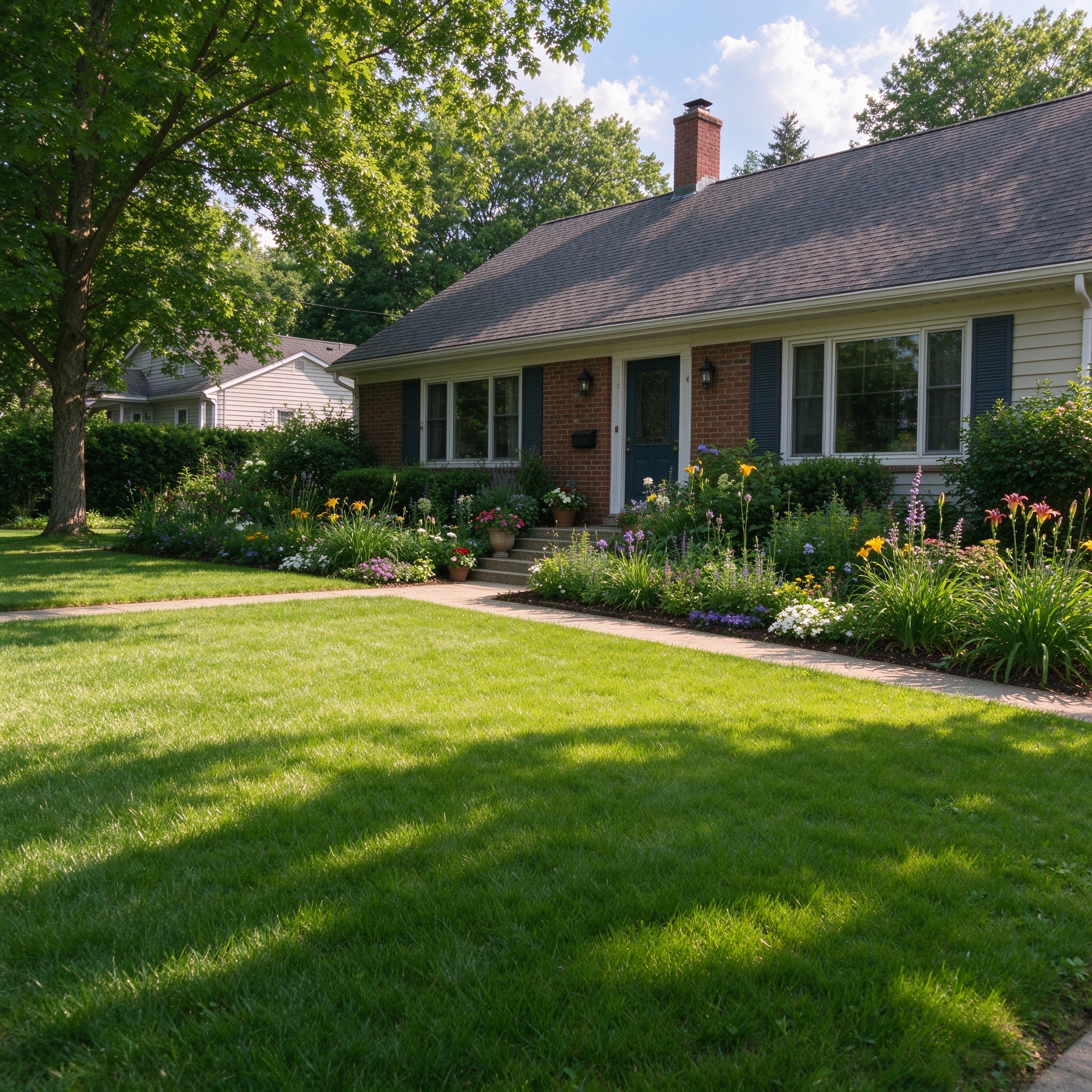
- •Kentucky bluegrass is a rhizomatous, sod-forming cool-season grass in the true grass family, grown across the northern United States and southern Canada for one of the finest-looking home lawns available.
- •Its fine to medium-fine texture, dark green color, and boat-shaped leaf tip are easy to recognize, and underground stems (rhizomes) spread to fill in thin spots and repair moderate wear.
- •It is the classic high-quality northern lawn grass: dense, soft underfoot, and strongly cold hardy, but it demands fertile soil, regular watering, and on-site maintenance.
- •Compared with bunch-type fescues, bluegrass recovers from wear through rhizome spread; compared with warm-season grasses it stays green through a northern winter and turns only partly brown in extended summer drought.
- •Germination is one of the slowest among common lawn grasses, so a bluegrass lawn needs patience during the first establishment season.
📋 Quick Facts
- •Kentucky bluegrass performs best in full sun, six or more hours of direct light each day.
- •It tolerates moderate shade of four to six hours better than warm-season grasses, but it is not a true shade grass: in constant, dense shade it thins out, develops leaf spot and rust, and rarely lasts more than a couple of years.
- •Under tree canopies or north-facing yards, mix bluegrass with fine fescues rather than planting it alone.
- •Water needs are moderate and rise as the mature lawn ages and thatch builds up.
- •An established bluegrass lawn uses about one inch of water per week, applied in one to three deep irrigations rather than daily shallow sprinklings.
- •During a two- to four-week drought it goes dormant and brown, then greenes back through rhizomes when moisture returns; watering often increases disease problems, so allow short dormancy rather than nursing the lawn through every dry spell.
- •Newly seeded beds must stay moist on top: light watering two to three times a day for the first two to three weeks, because bluegrass germinates slowly and seeds still underground will die if the bed dries out.
- •Kentucky bluegrass is hardy in USDA zones 3 through 7 and survives the coldest northern winters when roots stay drained and snow or mulch protects the crowns.
- •Shoot growth peaks in air temperatures of about 60°F to 75°F, and roots grow best in soil between 50°F and 65°F.
- •It tolerates cold far better than heat and humidity: in the southern transition zone it struggles through July and August, where shade plus high nitrogen pushes leaf spot and rust.
- •In warm humid climates it is usually best mixed into a tall fescue blend rather than grown alone.
- •Bluegrass prefers fertile, well-drained loam with a pH near 6.0 to 7.0, and it does not tolerate heavy, compacted, or poorly drained ground.
- •Have the soil tested before planting; incorporate lime and phosphorus to the recommended depth because these amendments move slowly through the soil.
- •Work compost into clay or sand at preparation time, loosen compacted layers, and core-aerate mature lawns on heavy clay every fall.
- •Dense thatch keeps roots in the organic layer instead of the soil, so thatch control is part of the long-term soil program.
- •A lawn has no edible harvest.
- •Treat establishment height as the first mowing benchmark: begin mowing when the grass reaches about 50% taller than your target height, usually 3 to 4 inches tall for a new stand.
- •Mow pure Kentucky bluegrass at 1.5 to 2.5 inches; when it is mixed with tall fescue, mow the blend at 2.5 to 3.5 inches.
- •Never remove more than one-third of the leaf blade in a single cut, use a sharp mower blade, and mow only when the turf is dry.
- •Mature lawns are mowed weekly during peak growth in spring and fall.
📅 When to Plant
- •Fall is the primary and best planting window: sow from late August through early October depending on your zone, when the two-inch soil temperature holds between 50°F and 65°F (10–18°C).
- •In the mountains this runs from about August 15 to September 1; in the piedmont the primary mix window runs from September 1 to September 15.
- •Aim to finish seeding six to eight weeks before the first hard frost so seedlings root before winter.
- •Early spring (March through May, once the soil reaches 50°F) is a weaker backup: spring seedlings face annual weeds and summer heat before they establish, so treat spring seeding as a renovation option, not the main effort.
- •Sow 1.5 to 2 pounds of certified seed per 1,000 square feet for a new lawn.
🌱 Growing Stages
 1
Germination
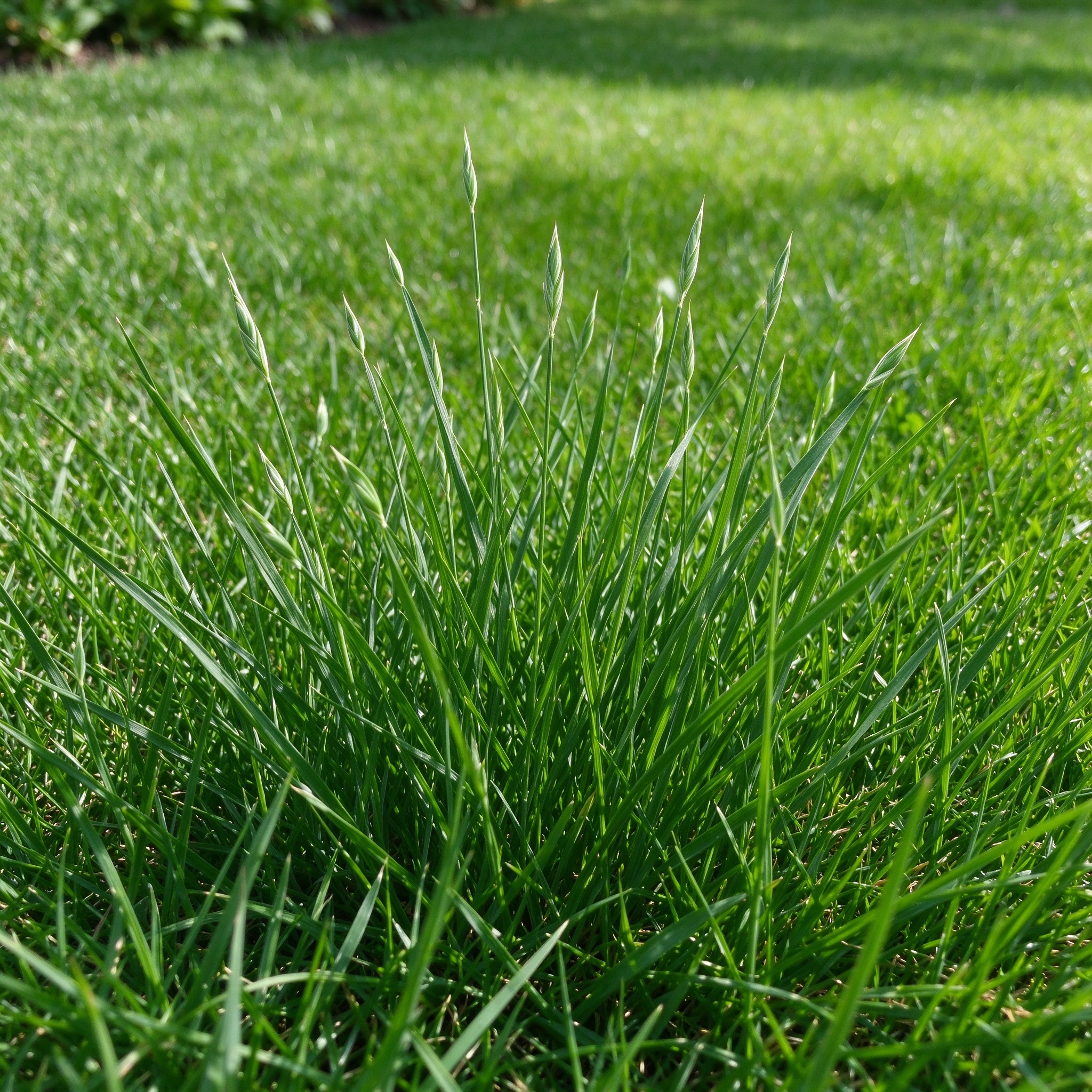
(About 2 to 3 weeks)- •In soil between 50°F and 65°F, bluegrass seed swells and sprouts slowly compared with ryegrass or fescue; it can take as long as three weeks for all seed to emerge.
- •The bed must stay continuously moist through this whole period; cold, dry, or crusted soil delays or stops germination and lets weeds take the open surface.
 2
Seedling establishment
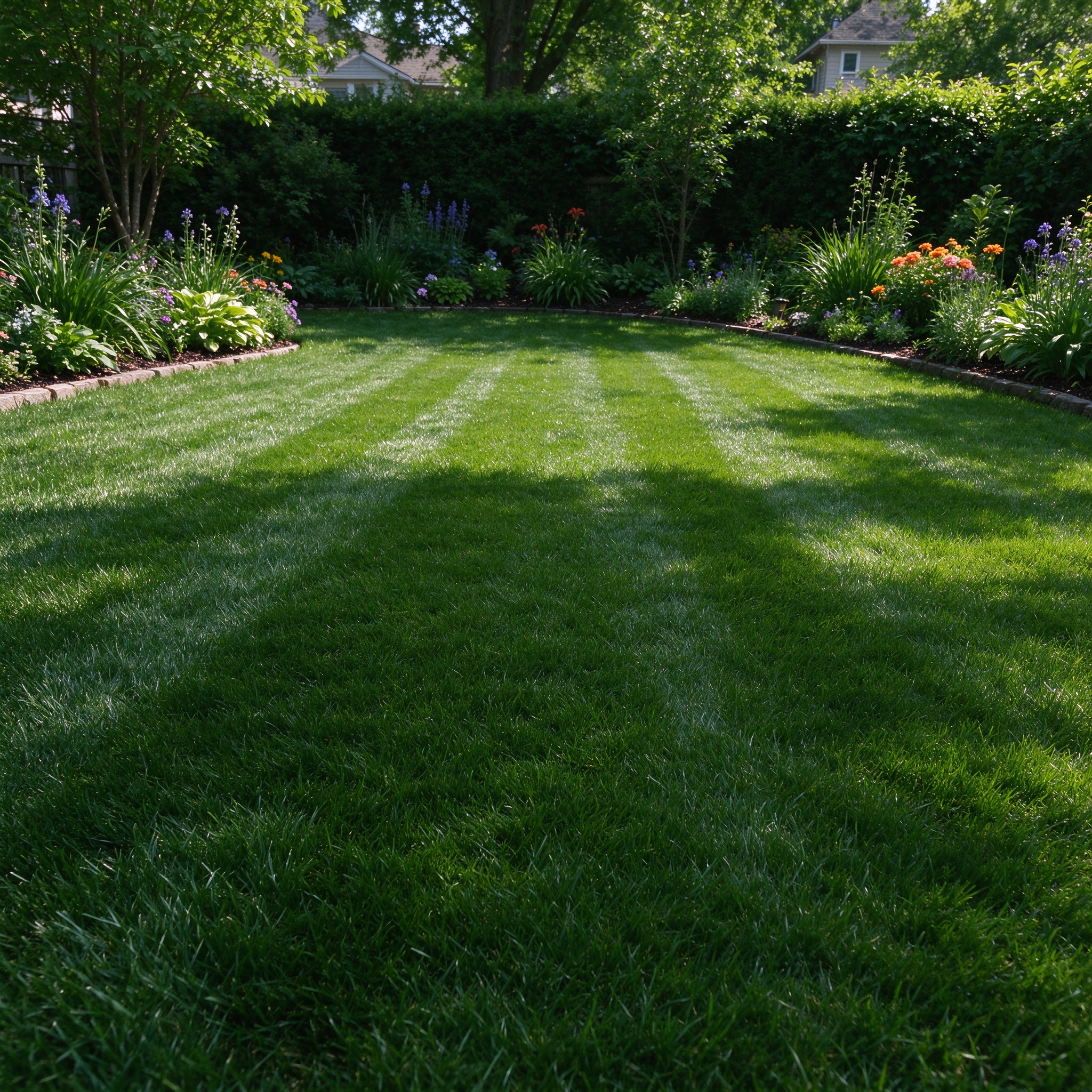
(First 6 to 8 weeks)- •Young seedlings produce narrow, folded leaves and shallow fibrous roots.
- •Water lightly and frequently, avoid traffic, and hold off broadleaf herbicides until the turf has been mowed several times.
- •Fertilize once after emergence to keep color steady without forcing soft growth.
 3
Rhizome spread and sod formation
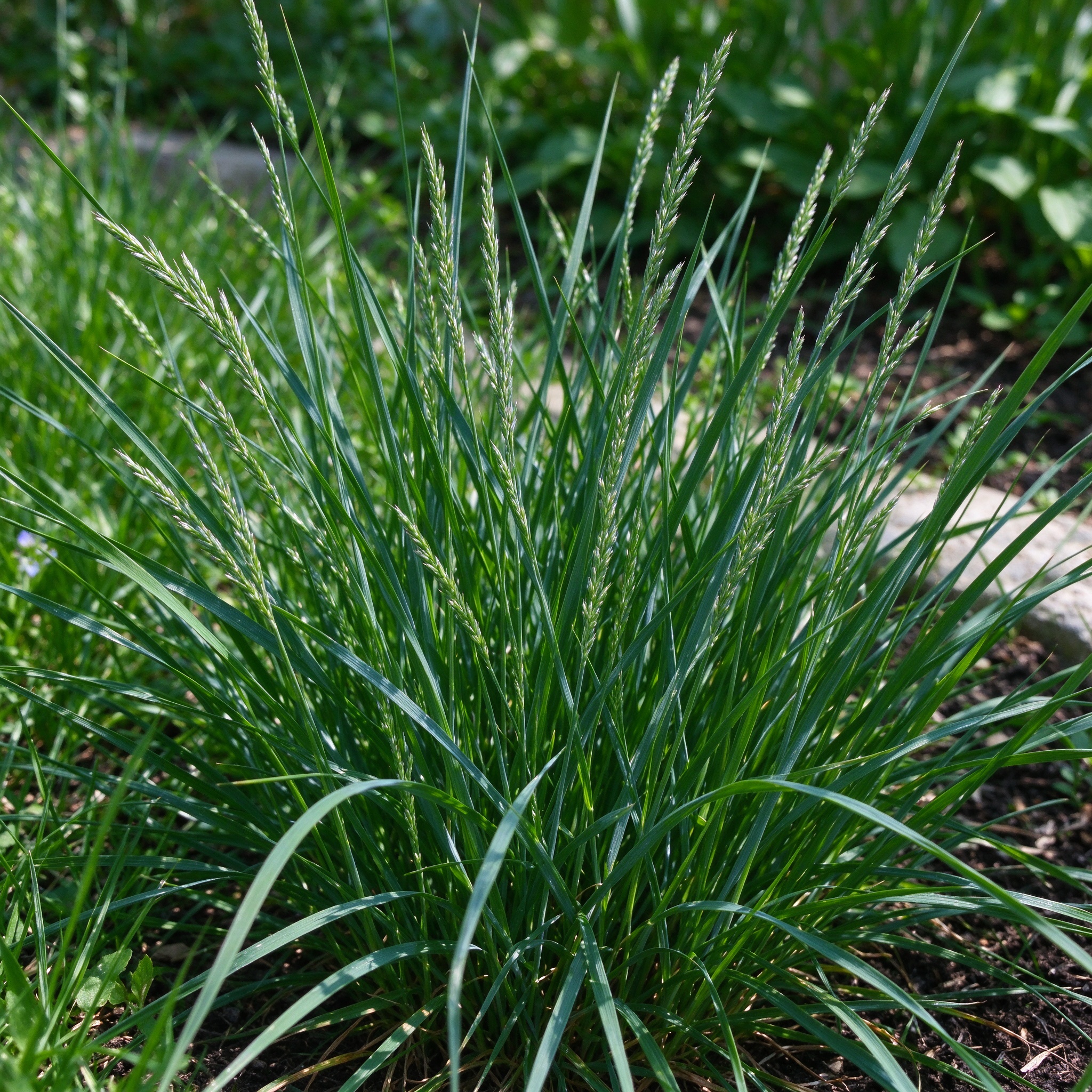
(Year 1)- •Underground rhizomes begin to branch and send up new shoots, so the stand closes over bare patches the original seedlings left behind.
- •Mow at the target height, return clippings, and watch for the first thatch layer; bluegrass builds thatch faster than many other cool-season grasses.
 4
Mature turf
(Years 2 to 3 onward)- •Roots deepen and the sod becomes dense and self-repairing.
- •Fertilize on the spring-and-fall basic program, aerate compacted sites, dethatch when thatch exceeds about half an inch, and manage billbugs, grubs, and necrotic ring spot before symptoms spread across the lawn.
 5
Winter dormancy
(Coldest months)- •Growth slows and the color darkens or partly browns under snow and freezing weather.
- •Keep fall leaves off the crowns, avoid late-fall excess nitrogen, and rely on snow cover or light mulch to protect exposed crowns from drying wind.
- •Rhizomes survive underground and resume growth when soil warms in spring.
💧 Detailed Care Guide
☀️ Light Requirements
- •Kentucky bluegrass performs best in full sun, six or more hours of direct light each day.
- •It tolerates moderate shade of four to six hours better than warm-season grasses, but it is not a true shade grass: in constant, dense shade it thins out, develops leaf spot and rust, and rarely lasts more than a couple of years.
- •Under tree canopies or north-facing yards, mix bluegrass with fine fescues rather than planting it alone.
💧 Watering
- •Water needs are moderate and rise as the mature lawn ages and thatch builds up.
- •An established bluegrass lawn uses about one inch of water per week, applied in one to three deep irrigations rather than daily shallow sprinklings.
- •During a two- to four-week drought it goes dormant and brown, then greenes back through rhizomes when moisture returns; watering often increases disease problems, so allow short dormancy rather than nursing the lawn through every dry spell.
- •Newly seeded beds must stay moist on top: light watering two to three times a day for the first two to three weeks, because bluegrass germinates slowly and seeds still underground will die if the bed dries out.
🌡️ Temperature
- •Kentucky bluegrass is hardy in USDA zones 3 through 7 and survives the coldest northern winters when roots stay drained and snow or mulch protects the crowns.
- •Shoot growth peaks in air temperatures of about 60°F to 75°F, and roots grow best in soil between 50°F and 65°F.
- •It tolerates cold far better than heat and humidity: in the southern transition zone it struggles through July and August, where shade plus high nitrogen pushes leaf spot and rust.
- •In warm humid climates it is usually best mixed into a tall fescue blend rather than grown alone.
🌱 Soil & Fertilizer
Soil:
- •Bluegrass prefers fertile, well-drained loam with a pH near 6.0 to 7.0, and it does not tolerate heavy, compacted, or poorly drained ground.
- •Have the soil tested before planting; incorporate lime and phosphorus to the recommended depth because these amendments move slowly through the soil.
- •Work compost into clay or sand at preparation time, loosen compacted layers, and core-aerate mature lawns on heavy clay every fall.
- •Dense thatch keeps roots in the organic layer instead of the soil, so thatch control is part of the long-term soil program.
Fertilizer:
- •Kentucky bluegrass is a moderate to medium feeder.
- •On a basic maintenance program, plan on 2 to 3 pounds of nitrogen per 1,000 square feet per year, split between a spring application and a fall application; newer compact cultivars can need more nitrogen to hold color and density, while older common types perform well on modest rates.
- •Do not apply more than 0.5 pound of nitrogen per 1,000 square feet in June, July, and August, because summer feeding pushes soft growth that leaf spot and rust attack.
- •Returning clippings supplies up to 20% to 30% of the lawn's nitrogen, and a soil test tells you exactly what phosphorus and potassium are needed.
📝 Step-by-Step Planting Guide
- 1
Test the soil and prepare the seedbed
- •Send a soil sample to your county Extension laboratory several weeks before planting.
- •Work in the recommended lime and phosphorus to the top 6 to 8 inches, loosen compacted soil, rake the surface smooth to marble-size particles, water to settle, and roll lightly before seeding.
- 2
Choose a certified blend of two or three cultivars
- •Buy certified seed of an improved Kentucky bluegrass cultivar or a two- or three-cultivar blend; broader genetic resistance reduces disease losses.
- •In partial shade, choose a blend that includes fine fescue rather than pure bluegrass.
- •Read the label for germination percentage and weed seed content.
- 3
Seed at 1.5–2 lb per 1,000 sq ft in two passes
- •Divide the seed into two equal portions.
- •Spread half in one direction with a drop or rotary spreader and the second half at right angles to the first pass to eliminate skips and thin strips.
- •Planting too heavily produces weak, shallow-rooted seedlings that suffer more drought and disease.
- 4
Cover, roll, and mulch lightly
- •Rake the seed into the top quarter inch of soil, roll the bed to firm seed-to-soil contact, and apply weed-free straw at 50% to 75% surface cover (about one 50-pound bale per 1,000 square feet) to hold moisture and protect seedlings.
- •On slopes, use an erosion-control blanket.
- 5
Water, fertilize, and begin the first mowing
- •Keep the top half inch of soil moist for two to three weeks with light watering two to three times a day, continuing even after the first shoots appear because bluegrass germinates over several weeks.
- •Fertilize seedlings about three weeks after emergence with 0.5 to 1 pound of nitrogen per 1,000 square feet, and begin mowing when the stand reaches 3 to 4 inches tall, never removing more than one-third of the blades.
🌱 Recommended Varieties
Dark-green improved cultivars
- •Breeding releases bred for finer texture, darker color, wear tolerance, and disease resistance.
- •'Midnight', 'Moonlight', 'America', 'Award', and 'Eclipse' are widely planted in northern home lawns and sports fields.
- •They generally perform at lower mowing heights than common types and respond to moderate nitrogen.
Low-maintenance common bluegrass
- •Older common selections such as 'Kenblue', 'Newport', and 'Park' are hardy and easy to establish on lower fertility, but are coarser and less dense than modern cultivars.
- •They suit rough areas, erosion control, and blends rather than the showpiece front lawn.
Bluegrass–fine fescue shade blends
- •For sites under trees or on north slopes, a mixture of Kentucky bluegrass with creeping red fescue, hard fescue, or chewings fescue gives a more persistent lawn than pure bluegrass.
- •The fescues carry the shade while the bluegrass fills open sun patches; follow the higher shade-grass seeding rate for the mix.
🪴 Growing in Containers
- Open sunny front and back lawns:
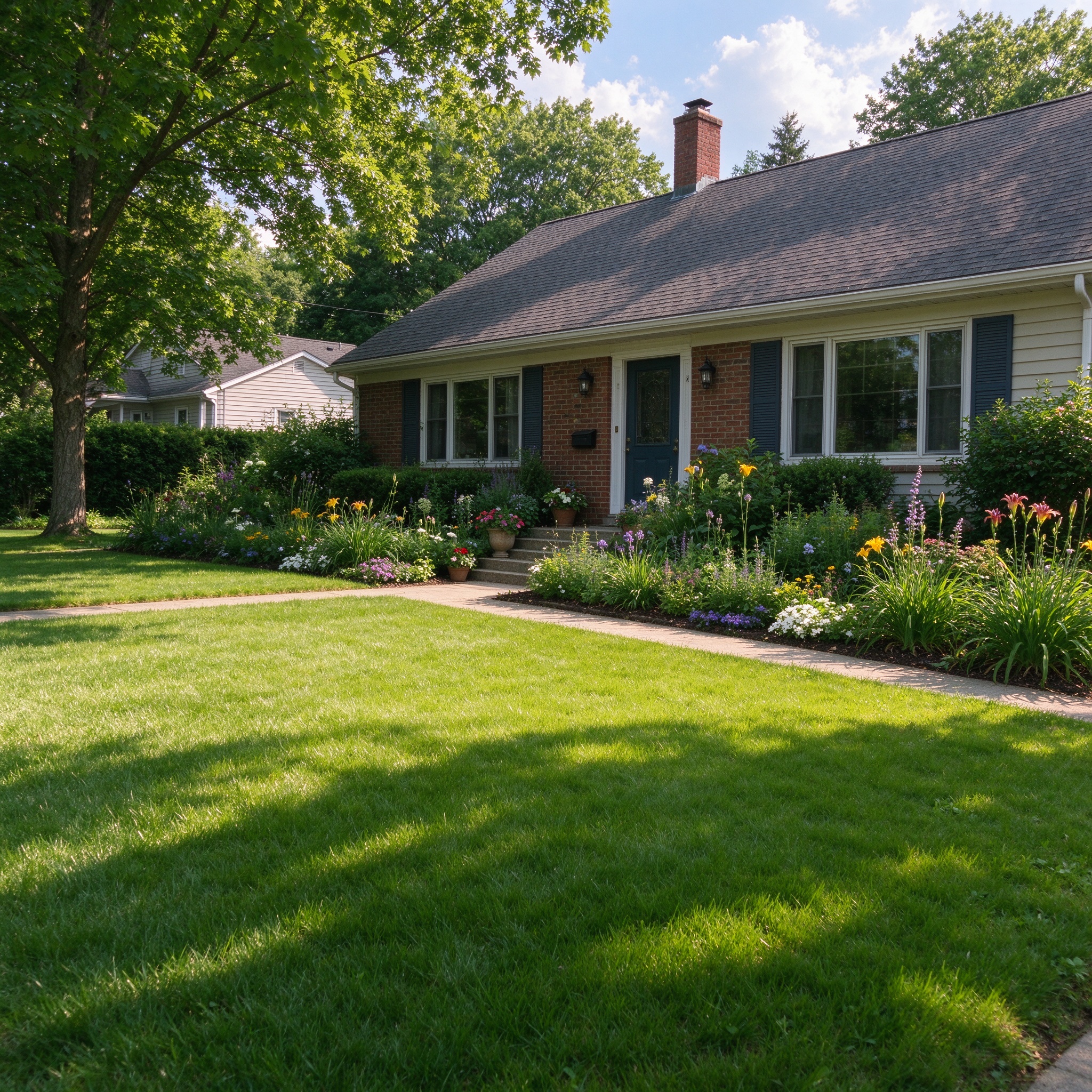
- •Kentucky bluegrass shows its best color and density in open yards with six or more hours of sun, good drainage, and regular mowing.
- •This is where a single cultivar or two-cultivar blend produces the dense, soft northern lawn the species is known for.
- Narrow sideyard and walkway strips:
- •Along driveways, paths, and narrow side strips, bluegrass rhizomes knit the soil and recover from light traffic.
- •Keep these sites watered through summer and avoid compacting the soil with heavy equipment or parked vehicles.
- Moderate-traffic yards and athletic spaces:
- •For yards used by children, dogs, and general activity, choose an improved wear-tolerant cultivar and mix bluegrass with tall fescue in the transition zone.
- •Overseed thin spots each fall and core-aerate compacted high-traffic zones to keep the root zone healthy.
- Renovation of an existing cool-season lawn:
- •When an older bluegrass or fescue lawn has thinned, core-aerate first, overseed bluegrass at a lower rate of about 1 to 1.5 pounds per 1,000 square feet, and keep the seedbed moist through germination.
- •Do not apply a crabgrass preemergent within the label interval before overseeding.
✂️ Pruning & Maintenance
- ✓
Mow at the recommended height and never scalp
- •Mow pure bluegrass at 1.5 to 2.5 inches and a bluegrass–fescue blend at 2.5 to 3.5 inches.
- •Begin mowing when the grass reaches 50% taller than the target height, and remove no more than one-third of the blade at once.
- •Scalping weakens roots, invites weeds, and opens the stand to disease.
- ✓
Leave clippings on the lawn
- •Clippings decompose quickly and return up to 20% to 30% of the nitrogen the lawn needs.
- •Collect them only when they are heavy or clumped enough to cover and smother the turf.
- ✓
Dethatch every one to two years
- •Bluegrass is a heavy thatch producer.
- •When the layer exceeds about half an inch, vertical-mow or rake the thatch out in spring or early fall when the grass is actively growing, then water and fertilize lightly to help the stand recover.
- ✓
Remove fallen leaves each fall
- •A layer of leaves blocks light, holds humidity against the crowns, and favors patch and leaf spot diseases.
- •Rake, blow, or vacuum leaves off the lawn before they mat down, especially over a weak or newly seeded stand.
🐛 Pest & Disease Control
Common Pests
Bluegrass billbug
Symptoms:- •Adults chew notches in leaf edges; larvae tunnel into stems and feed on crowns, producing irregular patches that turn brown and roll back like a loose carpet in dry weather.
- •Damage appears in late spring and summer, especially on drought-stressed turf.
Control:- •Maintain vigorous, adequately watered turf and avoid excess thatch.
- •Scout adults with a soapy-water flush or trap, and apply a labeled preventive insecticide in early summer at adult flight for sites with a known history; remove grass clippings and debris that shelter overwintering adults.
Sod webworms
Symptoms:- •Small caterpillars cut grass blades near the thatch and tie them with silken threads, leaving browned, chewed patches that spread across sunny spots in summer.
- •Close inspection reveals silk tunnels and frass near the soil surface.
Control:- •Monitor with a soapy-water flush in the early evening.
- •Encourage natural predators such as birds and ground beetles; treat active outbreaks with a labeled insecticide applied to moist turf in the evening, and water in lightly to move the product toward the thatch layer.
White grubs
Symptoms:- •C-shaped white larvae feed on roots, causing wilted patches that lift easily from the soil.
- •Skunks, moles, and crows may dig in the lawn in search of grubs, adding secondary damage. Peak injury occurs in late summer and early fall.
Control:- •Sample a 2-inch-deep square of turf and soil; treat only when counts exceed the labeled threshold.
- •Apply preventive products in early summer at adult beetle flight; curative treatments work best on small grubs soon after a rain when they feed near the surface.
Kentucky bluegrass weevil
Symptoms:- •Adults and larvae strip and mine blades, producing thin, yellow-brown patches that merge into large damaged areas from late spring through summer.
- •Larvae tunnel down into stems, causing dieback in high-maintenance bluegrass lawns, especially in northeastern and mid-Atlantic states.
Control:- •Maintain proper mowing height and thatch control, since overgrown thatch shelters the weevils.
- •Scout by inspecting stems and using a vacuum or sweep, and apply labeled insecticides at labeled timing targeting adults before larvae hatch; several applications may be needed in heavy pressure areas.
Common Diseases
Necrotic ring spot
Symptoms:- •Distinct dead rings or arcs 6 inches to several feet wide develop in mature bluegrass; inside the ring, grass dies while weeds fill the gap.
- •Roots are blackened and weakened, and the lawn does not recover with ordinary watering.
- •The disease worsens as accumulated thatch and organic matter feed the root pathogen.
Control:- •Choose cultivars bred for necrotic ring spot tolerance, reduce thatch, and water lightly and frequently because diseased roots cannot reach deep moisture.
- •Raise the mowing height, avoid excess nitrogen, and overseed tolerant cultivars; fungicide options for home lawns are limited, so cultural prevention is key.
Leaf spot (Bipolaris)
Symptoms:- •Small dark spots enlarge into oval lesions with gray centers and brown borders on blades; seedlings and weak stands thin and die out in spring and late winter, opening the turf to weeds.
- •High nitrogen, shade, and wet foliage favor outbreaks.
Control:- •Grow resistant cultivars, avoid excess nitrogen in shade, and water in the early morning so leaves dry through the day.
- •Mow at the proper height, remove clippings during active disease, and improve air flow around trees; severe cases may need a labeled fungicide on a healthy, vigorous stand.
Rust (Puccinia)
Symptoms:- •Blades develop yellow-orange powdery pustules that rub off on shoes and mower wheels; the lawn looks dull yellow-brown and thins under low fertility or slow growth.
- •Rust appears in fall on new plantings and on slow-growing, underfed turf.
Control:- •Maintain adequate nitrogen and mowing so growth stays active, aerate compacted soil, and choose rust-tolerant cultivars.
- •Remove infected clippings, and avoid dense shade; vigorous turf outgrows rust before it causes lasting damage.
Powdery mildew
Symptoms:- •A white to grayish powdery coating spreads over blades and shoots in cool, humid, shaded conditions, causing leaves to yellow and die back.
- •Dense shade, poor air circulation, and overwatering favor the fungus.
Control:- •Prune back overhanging branches and thin shrubs to improve sunlight and airflow, avoid shade-seeded pure bluegrass, and keep nitrogen moderate.
- •Water in the morning and treat severe cases with a labeled fungicide while correcting the shady, humid site that favored it.
Dollar spot
Symptoms:- •Small circular bleached or straw-colored spots, roughly the size of a silver dollar, merge into larger dead patches; a thin white web of fungal mycelium may appear on morning dew on the blades.
- •The disease flourishes on low-nitrogen, dry lawns during warm days and cool, moist nights.
Control:- •Maintain balanced fertility based on a soil test, water deeply but infrequently rather than on a light daily cycle, and reduce thatch.
- •Mow at the recommended height and collect clippings during outbreaks; labeled fungicides protect high-value lawns in high-pressure seasons.
🍅 When to Harvest
- •A lawn has no edible harvest.
- •Treat establishment height as the first mowing benchmark: begin mowing when the grass reaches about 50% taller than your target height, usually 3 to 4 inches tall for a new stand.
- •Mow pure Kentucky bluegrass at 1.5 to 2.5 inches; when it is mixed with tall fescue, mow the blend at 2.5 to 3.5 inches.
- •Never remove more than one-third of the leaf blade in a single cut, use a sharp mower blade, and mow only when the turf is dry.
- •Mature lawns are mowed weekly during peak growth in spring and fall.
❓ Frequently Asked Questions
- 1
When is the best time to plant Kentucky bluegrass?
- •Fall is best: sow from late August through early October, when soil temperature stays between 50°F and 65°F and seedlings have six to eight weeks of growing weather before the first hard frost.
- •In mountain zones this means roughly August 15 to September 1; in the piedmont the main window runs September 1 to September 15.
- •Early spring (March through May, after the soil reaches 50°F) works as a backup renovation, but spring seedlings face weeds and summer heat and establish more weakly than fall-sown bluegrass.
- 2
How much Kentucky bluegrass seed per 1,000 square feet?
- •For a new lawn, use 1.5 to 2 pounds of certified seed per 1,000 square feet; NC State publications list 1 to 2 pounds per 1,000 square feet, and Purdue Extension recommends 1.5 to 2.0 pounds for 100% Kentucky bluegrass.
- •For overseeding an existing thin lawn, use about 1 to 1.5 pounds per 1,000 square feet.
- •Divide the seed in half and spread it in two perpendicular passes.
- •If the seed is clay-coated, raise the rate to compensate for the coating percentage on the label.
- 3
Why is my bluegrass lawn thinning or developing dead rings?
- •Necrotic ring spot produces dead rings and arcs in mature Kentucky bluegrass and is the classic problem when roots are weakened and thatch has built up.
- •Leaf spot, rust, and powdery mildew thin the stand under shade, high nitrogen, and wet leaves; billbugs, sod webworms, and grubs chew blades or roots and leave brown patches.
- •First check the thatch layer, soil moisture, and mowing height, choose tolerant cultivars on renovation, and send a sample to your county Extension office for an accurate diagnosis before applying fungicide or insecticide.
- 4
Is Kentucky bluegrass safe for dogs and cats?
- •Yes.
- •Kentucky bluegrass is a non-toxic lawn and pasture grass and does not appear on the ASPCA lists of plants poisonous to cats, dogs, or horses.
- •A pet that nibbles a few blades may bring them back up as it does with ordinary grass.
- •Keep animals off newly treated turf until herbicide, fungicide, and fertilizer labels allow safe re-entry, and remember that an unmown flowering stand can release grass pollen that irritates allergic people and animals.
- 5
How long does Kentucky bluegrass take to germinate?
- •Kentucky bluegrass is one of the slower germinating lawn grasses: under favorable soil temperature (50°F to 65°F) and continuous moisture it sprouts in about two to three weeks, and may take as long as three weeks to emerge.
- •Keep the seedbed moist through the entire period; do not stop watering when the first shoots appear, because later seeds are still waiting underground.
- •A full, dense lawn usually develops over the first two growing seasons as rhizomes spread.
Source:
NC State Extension, Carolina Lawns — https://content.ces.ncsu.edu/carolina-lawns
Oregon State University, Beaver State Turf: Kentucky Bluegrass (Poa pratensis L.) — https://agsci.oregonstate.edu/beaverturf/kentucky-bluegrass-poa-pratensis-l
NC State Extension, Organic Lawn Care: Establishing a New Lawn — https://content.ces.ncsu.edu/organic-lawn-care-a-guide-to-organic-lawn-maintenance-and-pest-management/establishing-a-new-lawn
NC State Extension, Tall Fescue and Kentucky Bluegrass Home Lawn Calendar (AG-930) — https://content.ces.ncsu.edu/tall-fescue-and-kentucky-bluegrass-home-lawn-calendar
Purdue Extension / University of Illinois Extension, AY-3-W: Establishing Turfgrass Areas From Seed — https://www.extension.purdue.edu/extmedia/ay/ay-3-w.pdf
Photo credit: NC State Extension
Images courtesy of NC State Extension under CC BY license. Thank you to the photographers who make these educational images available.
License: CC BY-NC 2.0 / CC BY 4.0