
How to Grow Tall Fescue: Complete Guide
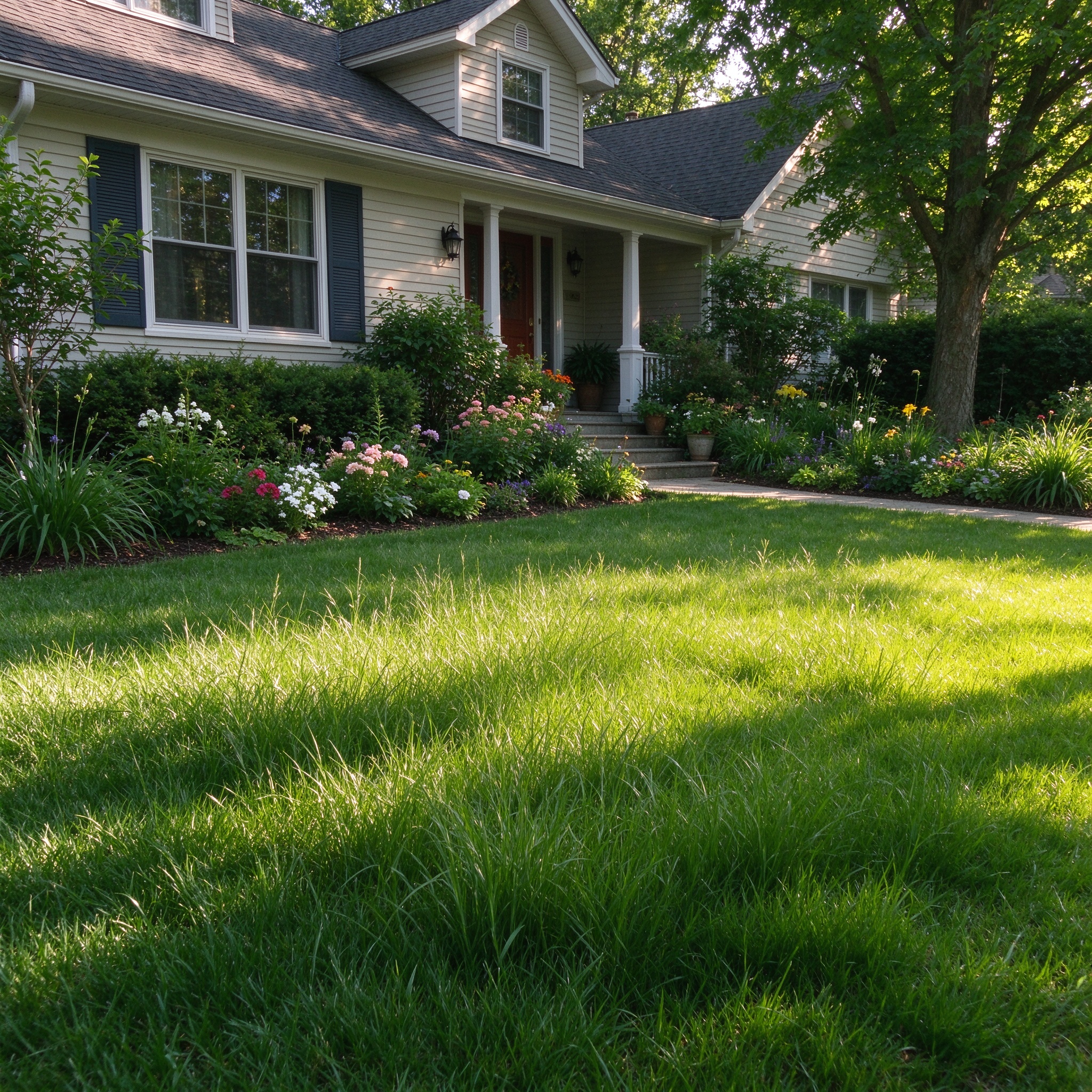
- •Tall fescue is a bunch-type cool-season grass in the true grass family, the workhorse of the transition zone where neither northern bluegrass nor southern warm-season grasses perform reliably.
- •Its broad, coarse blades and deep, fibrous root system give it better heat and drought tolerance than Kentucky bluegrass or perennial ryegrass, while still staying green through cold winters.
- •Unlike rhizomatous grasses, tall fescue grows in upright clumps and does not spread sideways, so bare spots must be reseeded rather than filled by runners.
- •Many modern turf-type cultivars carry an internal endophyte that improves resistance to chewing insects; on grazing livestock the alkaloids produced by that endophyte can cause fescue toxicosis, so pasture and hayland should use endophyte-free or novel-endophyte cultivars.
- •The dense, wear-tolerant lawn survives moderate shade, summer heat, and heavy foot traffic across zones 3 through 7, and it is the most commonly recommended cool-season lawn grass for the mid-Atlantic, upper South, and parts of the Midwest.
📋 Quick Facts
- •Tall fescue tolerates full sun and moderate shade better than most cool-season lawn grasses, which is one reason it dominates the transition zone.
- •It performs well under light tree cover and on north-facing slopes, but it still needs at least four to five hours of direct light to stay dense; deep shade produces thin, weak clumps that decline within a few years.
- •In heavily shaded yards, mix tall fescue with fine fescues rather than planting it alone.
- •Tall fescue has deeper roots than Kentucky bluegrass and is the most drought-tolerant common cool-season lawn grass, but it still needs about one inch of water per week during active growth, applied in one to two deep irrigations rather than daily shallow sprinklings.
- •In prolonged drought it turns brown and goes dormant; unlike bluegrass it cannot recover from rhizomes, so a deeply parched stand may need reseeding.
- •Newly seeded beds must stay moist on top: light watering two to three times a day for the first two to three weeks until germination finishes, then taper to deeper, less frequent watering as seedlings root.
- •Avoid frequent light sprinkling in summer, which favors brown patch.
- •Tall fescue is hardy in USDA zones 3 through 7 and survives cold northern winters better than warm-season grasses, though its broad leaves may suffer winter desiccation on exposed, windy sites.
- •Shoot growth peaks in air temperatures of about 60°F to 75°F, and roots germinate best in soil between 50°F and 65°F.
- •Its key strength is summer heat tolerance: it keeps growing through July and August where bluegrass wilts and browns, though hot humid nights and excess nitrogen trigger brown patch.
- •In the southern edge of its range it is best sown in fall and watered through summer; farther north it tolerates snow cover and freeze-thaw cycles well.
- •Tall fescue adapts to a wider range of soils than most lawn grasses, including heavier clay and poorer ground, but it performs best on fertile, well-drained loam with a pH of 5.5 to 7.0.
- •Have the soil tested before planting; incorporate lime and phosphorus to the recommended depth because these amendments move slowly through the soil.
- •Work compost into clay or sand at preparation time, loosen compacted layers, and core-aerate mature lawns on heavy clay every fall.
- •Good surface drainage matters: standing water around bunch crowns favors brown patch and root rot.
- •A lawn has no edible harvest.
- •Treat establishment height as the first mowing benchmark: begin mowing when the grass reaches about 50% taller than your target height, usually 3 to 4 inches on a new stand.
- •Maintain tall fescue at 2.5 to 3.5 inches and never mow below 2.5 inches, because close cutting weakens the bunch crowns, dries the root zone, and opens the lawn to weeds and brown patch.
- •Never remove more than one-third of the leaf blade in a single cut, use a sharp mower blade, and mow only when the turf is dry.
- •Mature lawns are mowed weekly during spring and fall growth and less often in summer dormancy.
📅 When to Plant
- •Fall is the best planting window for tall fescue: sow from early September to early October in the piedmont and from mid-August to early September in mountain zones, when the soil temperature holds between 50°F and 65°F (10–18°C) and seedlings establish before winter.
- •Finish seeding six to eight weeks before the first hard frost.
- •Early spring (March through May, after the soil reaches 50°F) is a secondary option, but spring-sown tall fescue faces annual weeds and the summer heat and brown patch pressure before it matures.
- •For a new lawn sow 5 to 6 pounds of seed per 1,000 square feet; extension recommendations range from 5 to 8 pounds depending on the region and cultivar blend.
🌱 Growing Stages
 1
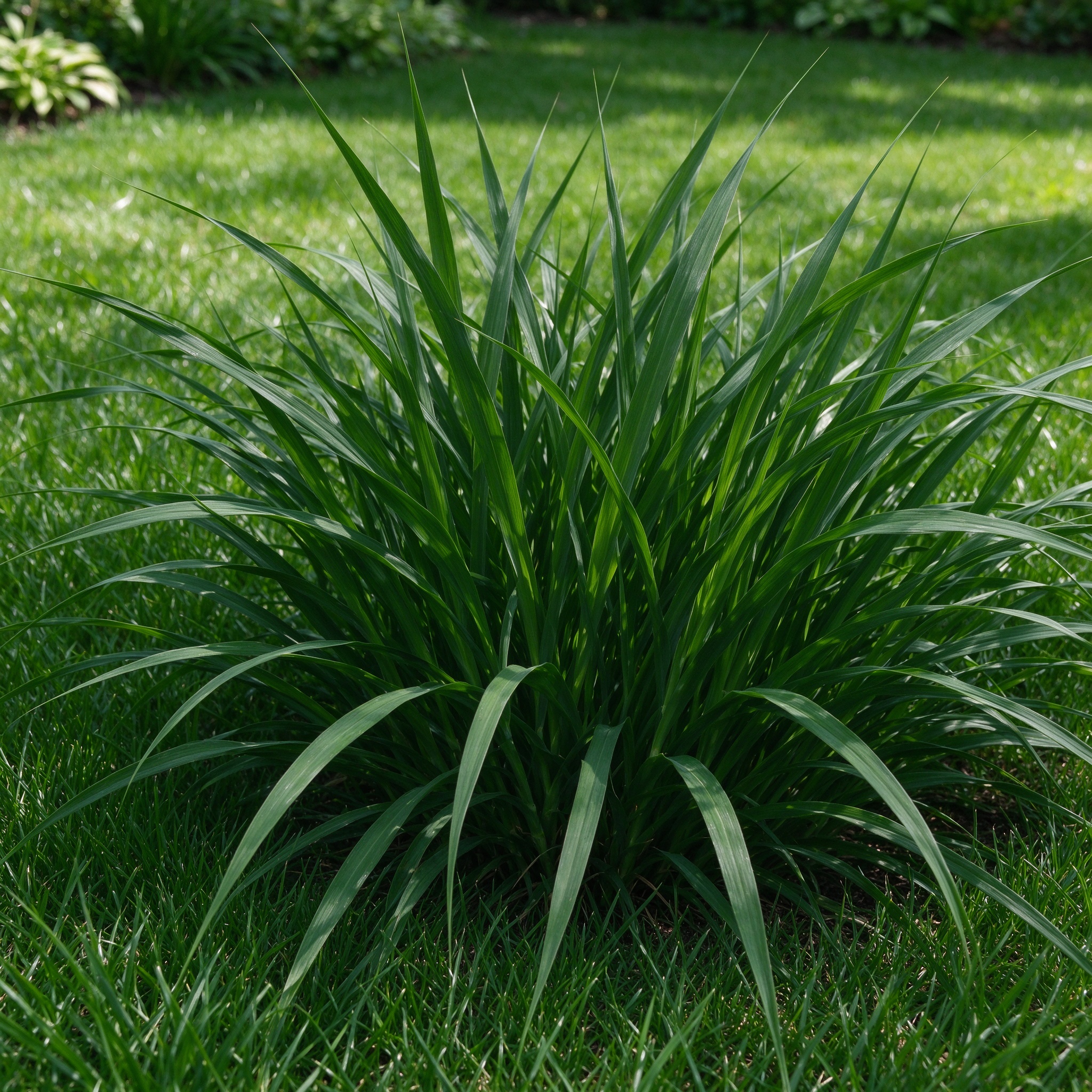
Germination
(7 to 21 days)- •In soil between 50°F and 65°F, tall fescue seed sprouts in about 10 to 21 days with soil moisture and suitable soil temperature; under warm, favorable conditions K-State reports germination in four to seven days.
- •The bed must stay continuously moist through this period; cold, dry, or crusted soil delays emergence and lets weeds take the open surface.
 2
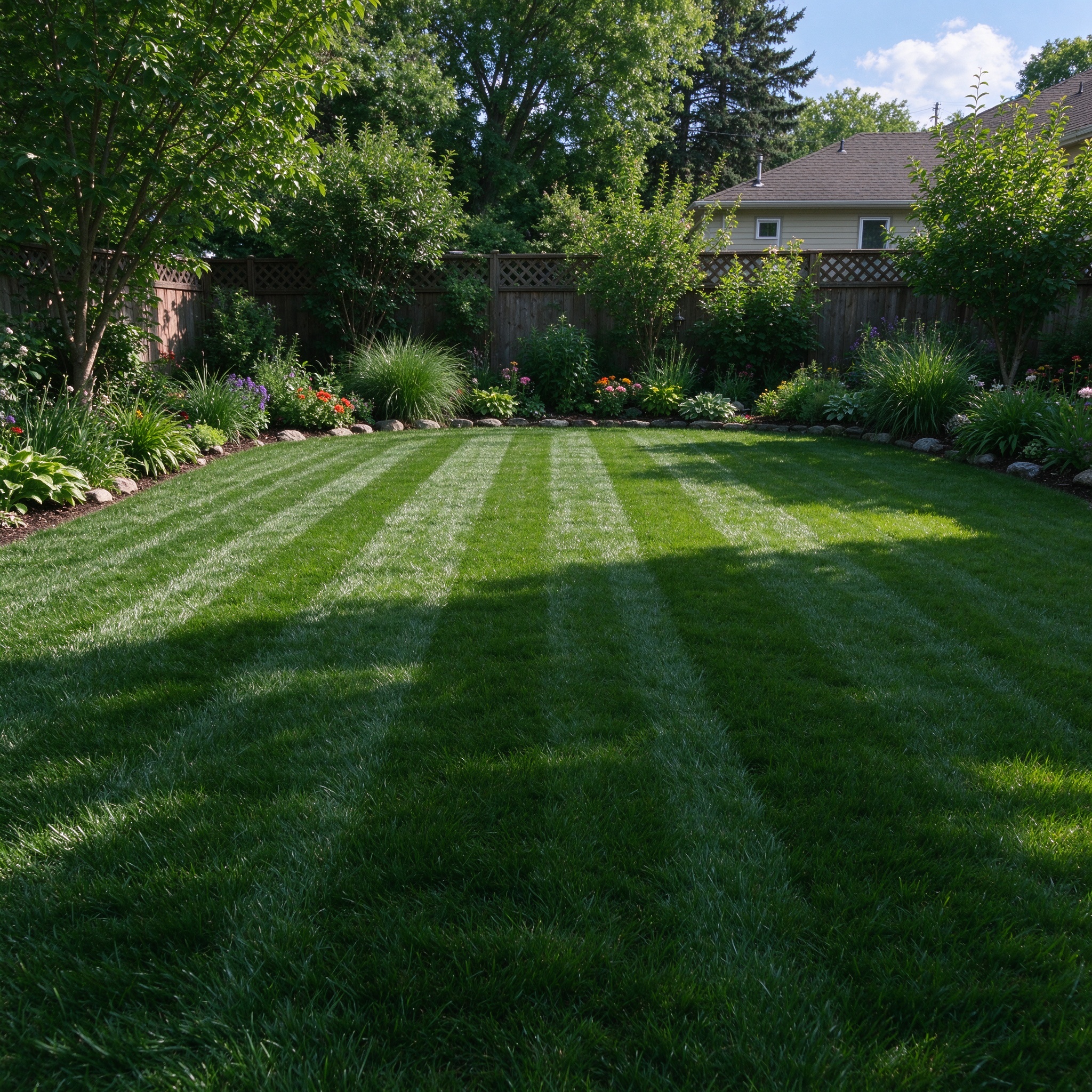
Seedling establishment
(First 6 to 8 weeks)- •Young seedlings produce narrow blades and a fibrous root system.
- •Water lightly and frequently, avoid traffic, and hold off broadleaf herbicides until the turf has been mowed several times.
- •Fertilize once after emergence to keep color steady without forcing soft growth that brown patch favors.
 3
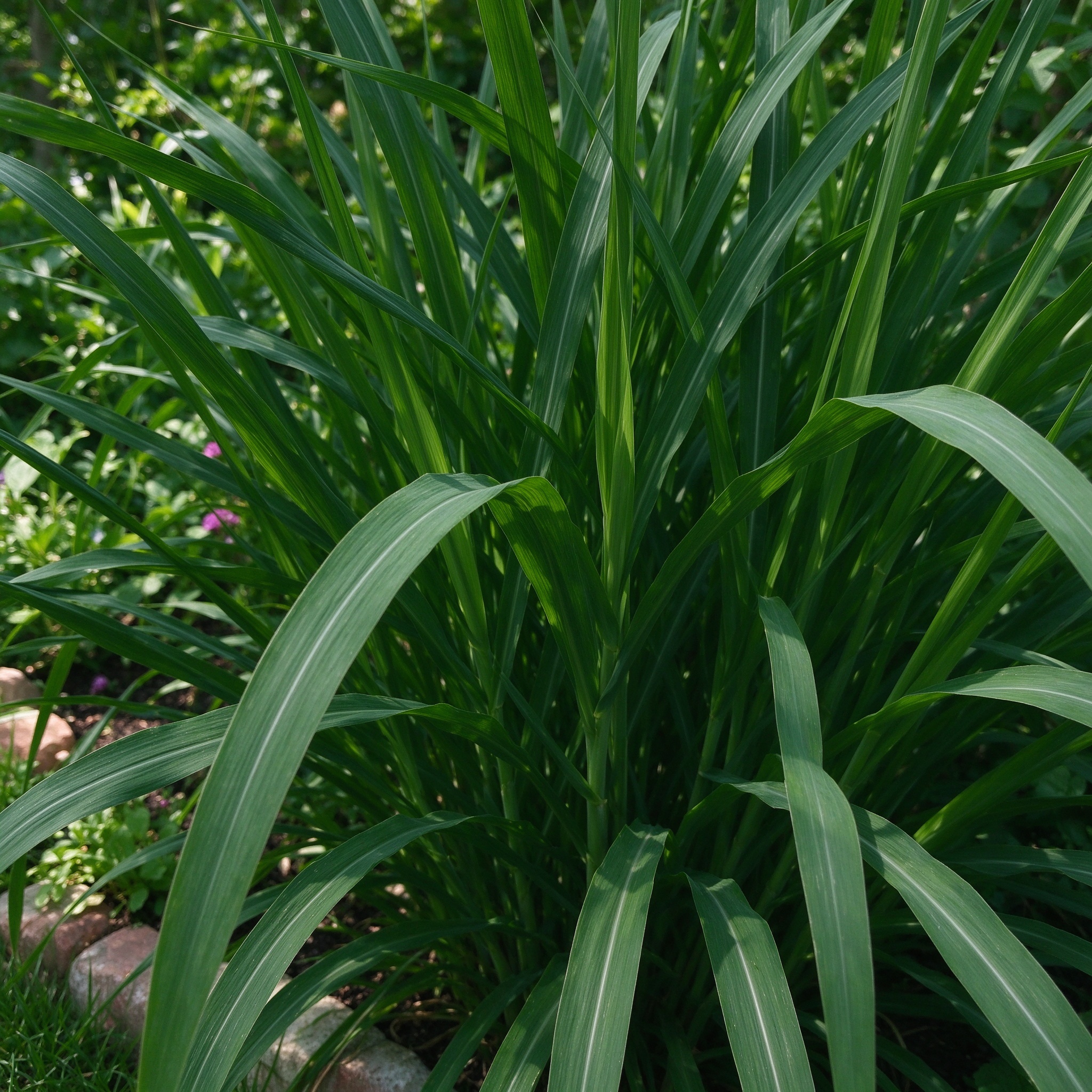
Bunch clump thickening
(Year 1)- •Because tall fescue grows in upright bunches rather than spreading by runners, individual clumps thicken and tiller outward while gaps between clumps persist.
- •Overseed thin areas in fall to close the stand; mow at 2.5 to 3.5 inches, return clippings, and watch for the first brown patch outbreak in warm, humid weather.
 4
Mature turf
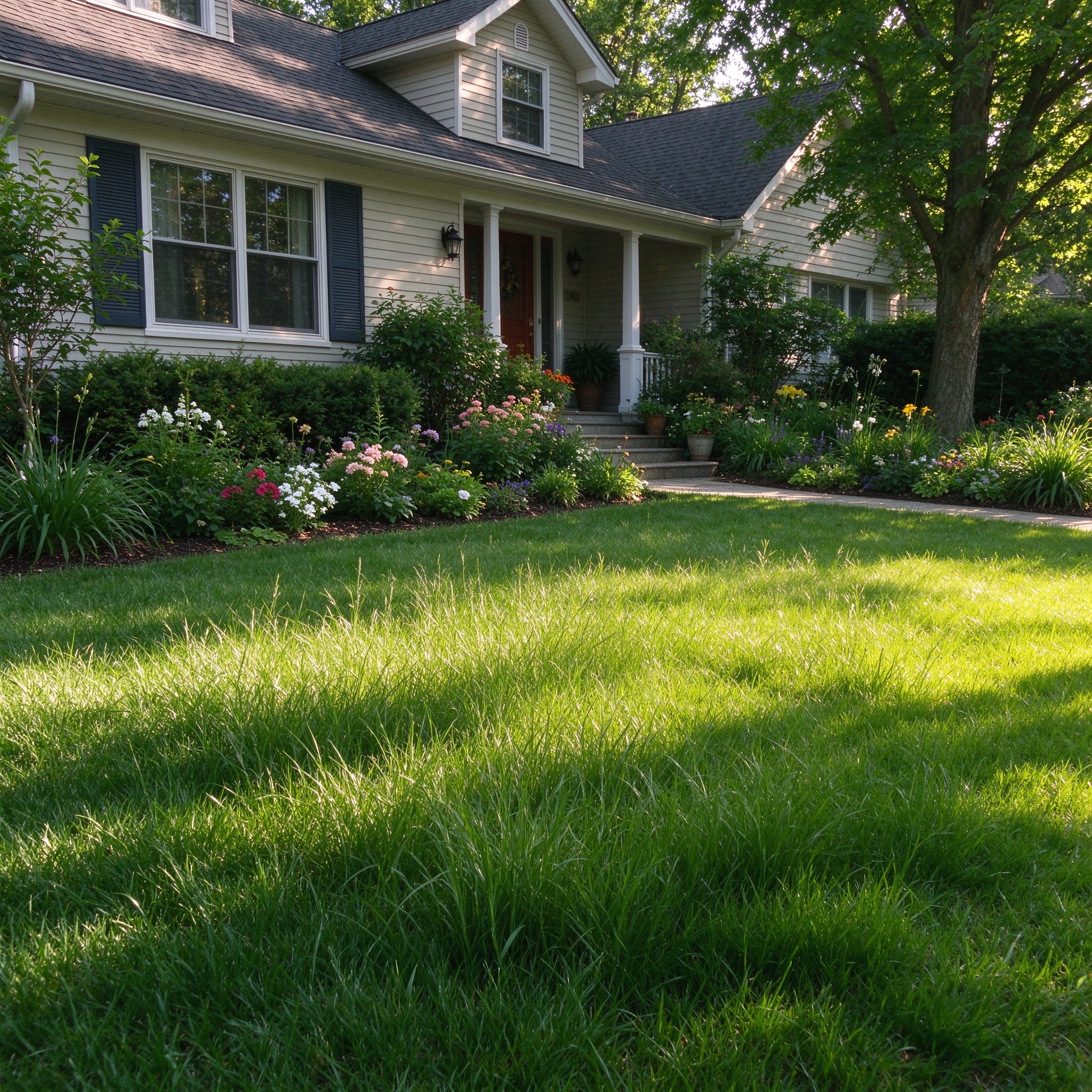
(Years 2 to 3 onward)- •Roots deepen and the lawn becomes dense and wear-tolerant.
- •Fertilize on the September, November, and February basic program, aerate compacted sites each fall, and manage grubs, webworms, and brown patch before symptoms spread.
- •Bare spots do not close on their own and must be reseeded each fall.
 5
Winter dormancy
(Coldest months)- •Growth slows under freezing weather; broad leaves may darken or partly brown on exposed sites.
- •Keep fall leaves off the crowns, avoid late-fall excess nitrogen, and rely on snow cover to protect exposed bunches.
- •Roots stay alive and resume growth when soil warms in spring.
💧 Detailed Care Guide
☀️ Light Requirements
- •Tall fescue tolerates full sun and moderate shade better than most cool-season lawn grasses, which is one reason it dominates the transition zone.
- •It performs well under light tree cover and on north-facing slopes, but it still needs at least four to five hours of direct light to stay dense; deep shade produces thin, weak clumps that decline within a few years.
- •In heavily shaded yards, mix tall fescue with fine fescues rather than planting it alone.
💧 Watering
- •Tall fescue has deeper roots than Kentucky bluegrass and is the most drought-tolerant common cool-season lawn grass, but it still needs about one inch of water per week during active growth, applied in one to two deep irrigations rather than daily shallow sprinklings.
- •In prolonged drought it turns brown and goes dormant; unlike bluegrass it cannot recover from rhizomes, so a deeply parched stand may need reseeding.
- •Newly seeded beds must stay moist on top: light watering two to three times a day for the first two to three weeks until germination finishes, then taper to deeper, less frequent watering as seedlings root.
- •Avoid frequent light sprinkling in summer, which favors brown patch.
🌡️ Temperature
- •Tall fescue is hardy in USDA zones 3 through 7 and survives cold northern winters better than warm-season grasses, though its broad leaves may suffer winter desiccation on exposed, windy sites.
- •Shoot growth peaks in air temperatures of about 60°F to 75°F, and roots germinate best in soil between 50°F and 65°F.
- •Its key strength is summer heat tolerance: it keeps growing through July and August where bluegrass wilts and browns, though hot humid nights and excess nitrogen trigger brown patch.
- •In the southern edge of its range it is best sown in fall and watered through summer; farther north it tolerates snow cover and freeze-thaw cycles well.
🌱 Soil & Fertilizer
Soil:
- •Tall fescue adapts to a wider range of soils than most lawn grasses, including heavier clay and poorer ground, but it performs best on fertile, well-drained loam with a pH of 5.5 to 7.0.
- •Have the soil tested before planting; incorporate lime and phosphorus to the recommended depth because these amendments move slowly through the soil.
- •Work compost into clay or sand at preparation time, loosen compacted layers, and core-aerate mature lawns on heavy clay every fall.
- •Good surface drainage matters: standing water around bunch crowns favors brown patch and root rot.
Fertilizer:
- •Tall fescue is a moderate feeder.
- •On a basic maintenance program, plan on about 2 pounds of nitrogen per 1,000 square feet per year: apply 1 pound in mid-September and again in November, with a February application on the NC State calendar; the fall feeding produces the strongest root and color response.
- •During June, July, and August apply no more than 1/5 to 1/2 pound of nitrogen per 1,000 square feet, because excess summer nitrogen pushes soft, succulent growth that brown patch attacks.
- •Returning clippings supplies up to 20% to 30% of the lawn's nitrogen, and a soil test determines phosphorus and potassium needs.
📝 Step-by-Step Planting Guide
- 1
Test the soil and prepare the seedbed
- •Send a soil sample to your county Extension laboratory several weeks before planting.
- •Work in the recommended lime and phosphorus to the top 6 to 8 inches, loosen compacted soil, rake the surface smooth to marble-size particles, water to settle, and roll lightly before seeding.
- 2
Choose an endophyte-enhanced turf-type blend
- •Buy certified seed of two or three turf-type tall fescue cultivars bred for density, wear tolerance, and disease resistance, preferably endophyte-enhanced so the internal fungus repels chewing insects.
- •Read the label for germination percentage, endophyte guarantee, and weed seed content; coarse pasture-type seed produces an open, clumpy lawn.
- 3
Seed at 5–6 lb per 1,000 sq ft in two passes
- •Divide the seed into two equal portions.
- •Spread half in one direction with a drop or rotary spreader and the second half at right angles to the first pass to eliminate skips and thin strips.
- •Tall fescue is a bunch grass, so even coverage matters more than over-seeding; too heavy a rate produces weak, crowded seedlings.
- 4
Cover, roll, and mulch lightly
- •Rake the seed into the top quarter inch of soil, roll the bed to firm seed-to-soil contact, and apply weed-free straw at 50% to 75% surface cover (about one 50-pound bale per 1,000 square feet) to hold moisture and protect seedlings.
- •On slopes, use an erosion-control blanket.
- 5
Water, fertilize, and begin the first mowing
- •Keep the top half inch of soil moist for two to three weeks with light watering two to three times a day, tapering to deeper watering as seedlings root.
- •Fertilize seedlings about three weeks after emergence with 0.5 to 1 pound of nitrogen per 1,000 square feet, and begin mowing when the stand reaches 3 to 4 inches tall, maintaining 2.5 to 3.5 inches and never removing more than one-third of the blades.
🌱 Recommended Varieties
Turf-type endophyte-enhanced blends
- •Modern cultivars bred for finer texture, dark green color, density, and wear tolerance; many carry an internal endophyte that improves resistance to billbugs and sod webworms.
- •Blends of two or three cultivars reduce disease risk and suit home lawns, sports fields, and high-traffic yards across zones 3 to 7.
- •For pasture or hay, choose endophyte-free or novel-endophyte cultivars.
Dwarf and turf-type tall fescue blends
- •Lower-growing, finer-bladed selections such as the newer dwarf tall fescues need less frequent mowing and hold color through summer, though they still perform best at 2.5 to 3.5 inches.
- •They suit showpiece home lawns in the transition zone where bluegrass struggles.
Coarse pasture-type tall fescue
- •Older, broad-bladed forage cultivars are hardy and cheap but form an open, clumpy lawn and are not recommended for ornamental turf.
- •Most carry the endophyte that causes fescue toxicosis in grazing livestock; use endophyte-free seed only where the grass will be cut for hay or grazed, never as a home lawn substitute.
🪴 Growing in Containers
- Transition-zone home lawns:
- •Tall fescue is the default cool-season lawn for the mid-Atlantic, upper South, and Midwest transition zone, where bluegrass suffers summer heat and warm-season grasses fail winter cold.
- •Open yards with six or more hours of sun develop a dense, wear-tolerant stand when sown in fall at the proper rate.
- Moderate-shade yards under trees:
- •Its shade tolerance makes tall fescue useful under light tree cover and on north slopes where bluegrass thins.
- •Keep tree roots pruned back where possible, water deeply, and mix in fine fescue for the shadiest spots; pure fescue still needs four to five hours of direct light.
- High-traffic yards and play areas:
- •Wear-tolerant turf-type blends stand up to children, dogs, and general activity better than most cool-season grasses.
- •Overseed worn thin spots each fall, core-aerate compacted high-traffic zones, and keep mowing height at 3 to 3.5 inches to protect bunch crowns.
- Renovation of an existing transition-zone lawn:
- •When an old bluegrass or weak fescue lawn has thinned in the heat, core-aerate first, overseed tall fescue at about 3 to 4 pounds per 1,000 square feet, and keep the seedbed moist through germination.
- •Do not apply a crabgrass preemergent within the label interval before overseeding.
✂️ Pruning & Maintenance
- ✓
Mow at 2.5 to 3.5 inches and never scalp
- •Maintain tall fescue at 2.5 to 3.5 inches and keep the mowing height at 3 inches or higher in summer heat.
- •Begin mowing when the grass reaches 50% taller than the target height, and remove no more than one-third of the blade at once.
- •Cutting below 2.5 inches weakens bunch crowns, invites weeds, and raises brown patch risk.
- ✓
Leave clippings on the lawn
- •Clippings decompose quickly and return up to 20% to 30% of the nitrogen the lawn needs.
- •Collect them only when they are heavy or clumped enough to cover and smother the turf.
- ✓
Core-aerate each fall
- •Tall fescue forms dense bunches and compacts the root zone over time.
- •Hollow-tine aeration in early fall relieves compaction, improves water and fertilizer penetration, and lets overseeded seed reach soil rather than sitting on thatch.
- ✓
Remove fallen leaves each fall
- •A layer of leaves blocks light, holds humidity against bunch crowns, and favors brown patch and root rot.
- •Rake, blow, or vacuum leaves off the lawn before they mat down, especially over a weak or newly seeded stand.
🐛 Pest & Disease Control
Common Pests
White grubs
Symptoms:- •C-shaped white larvae feed on roots, producing wilted patches that lift easily from the soil.
- •Skunks, moles, and crows may dig in the lawn searching for grubs, adding secondary damage. Peak injury occurs in late summer and early fall.
Control:- •Sample a 2-inch-deep square of turf and soil; treat only when counts exceed the labeled threshold.
- •Apply preventive products in early summer at adult beetle flight; curative treatments work best on small grubs soon after a rain when they feed near the surface.
- •Endophyte-enhanced cultivars resist some root-feeding pressure.
Sod webworms
Symptoms:- •Small caterpillars cut grass blades near the thatch and tie them with silken threads, leaving browned, chewed patches that spread across sunny spots in summer.
- •Close inspection reveals silk tunnels and frass near the soil surface.
Control:- •Monitor with a soapy-water flush in the early evening.
- •Encourage natural predators such as birds and ground beetles; treat active outbreaks with a labeled insecticide applied to moist turf in the evening, and water in lightly to move the product toward the thatch layer.
- •Endophyte infection reduces webworm feeding damage.
Billbugs
Symptoms:- •Adults chew notches in leaf edges; larvae tunnel into stems and feed on crowns, producing irregular patches that turn brown and roll back like a loose carpet in dry weather.
- •Damage appears in late spring and summer, especially on drought-stressed turf.
Control:- •Maintain vigorous, adequately watered turf and avoid excess thatch.
- •Scout adults with a soapy-water flush or trap, and apply a labeled preventive insecticide in early summer at adult flight for sites with a known history.
- •Endophyte-enhanced tall fescue is naturally repellent to billbug adults and larvae.
Common Diseases
Brown patch
Symptoms:- •Large, irregular brown patches 6 inches to several feet wide develop in hot, humid weather (temperatures above 75°F at night), often with a grayish or purplish fringe of wilted blades at the edge.
- •Leaf blades die in spots but crowns usually survive; the disease is the single most important tall fescue lawn problem, triggered by excess nitrogen, frequent light watering, and poor air movement.
Control:- •Apply no more than 0.5 pound of nitrogen per 1,000 square feet in summer, water deeply and infrequently in the early morning rather than daily, raise the mowing height to 3 to 3.5 inches, and improve airflow around trees and shrubs.
- •Remove clippings during active disease; severe cases may need a labeled fungicide applied at the first sign of symptoms.
Gray leaf spot
Symptoms: Long, gray-tan lesions with brown borders appear on blades, which wither and die back from the tip; large thin patches develop during warm, humid summer weather, especially on weak, overwatered or overfertilized tall fescue.Control:- •Avoid excess summer nitrogen and frequent shallow watering, maintain proper mowing height, and improve sunlight and airflow.
- •Grow resistant cultivars in high-pressure areas; collect clippings during outbreaks and apply a labeled fungicide to high-value lawns at first symptoms.
Leaf rust
Symptoms:- •Blades develop yellow-orange powdery pustules that rub off on shoes and mower wheels; the lawn looks dull yellow-brown and thins under low fertility or slow growth.
- •Rust appears in fall on new plantings and on slow-growing, underfed turf.
Control:- •Maintain adequate nitrogen and mowing so growth stays active, aerate compacted soil, and choose rust-tolerant cultivars.
- •Remove infected clippings, and avoid dense shade; vigorous turf outgrows rust before it causes lasting damage.
Red thread (pink patch)
Symptoms:- •Fine, red to pink thread-like strands extend from the tips of blades in irregular patches during cool, wet spring and fall weather; the lawn turns tan or bleached between the threads.
- •Weak, underfertilized stands are most susceptible.
Control: Maintain balanced nitrogen based on a soil test, mow at the proper height, improve air circulation, and remove clippings during outbreaks; the disease usually clears with adequate fertility and drier weather.Fairy ring
Symptoms: One or more rings of dark-green stimulated turf, dead grass, or mushrooms appear across the lawn, expanding outward over years; rings are favored by thatch, decaying organic matter, and high soil moisture.Control:- •Dethatch, aerate, and maintain balanced fertility and irrigation; remove mushrooms promptly and keep children and pets away from unidentified fungi.
- •Large or persistent rings may require professional treatment.
🍅 When to Harvest
- •A lawn has no edible harvest.
- •Treat establishment height as the first mowing benchmark: begin mowing when the grass reaches about 50% taller than your target height, usually 3 to 4 inches on a new stand.
- •Maintain tall fescue at 2.5 to 3.5 inches and never mow below 2.5 inches, because close cutting weakens the bunch crowns, dries the root zone, and opens the lawn to weeds and brown patch.
- •Never remove more than one-third of the leaf blade in a single cut, use a sharp mower blade, and mow only when the turf is dry.
- •Mature lawns are mowed weekly during spring and fall growth and less often in summer dormancy.
❓ Frequently Asked Questions
- 1
When is the best time to plant tall fescue?
- •Fall is best: sow from early September to early October in the piedmont and mid-August to early September in mountain zones, when soil temperature stays between 50°F and 65°F and seedlings have six to eight weeks of growing weather before the first hard frost.
- •Early spring (March through May, after the soil reaches 50°F) works as a secondary renovation, but spring-sown tall fescue faces annual weeds, summer heat, and brown patch before it matures, so fall seeding always produces the stronger lawn.
- 2
How much tall fescue seed per 1,000 square feet?
- •For a new lawn, use 5 to 6 pounds of seed per 1,000 square feet; NC State recommends 6 pounds for tall fescue, the NC State TurfFiles calendar lists 5 to 6 pounds of uncoated seed, and K-State lists 6 to 8 pounds depending on region and blend.
- •For overseeding an existing thin lawn, use about 3 to 4 pounds per 1,000 square feet.
- •Divide the seed in half and spread it in two perpendicular passes.
- •If the seed is clay-coated, raise the rate to compensate for the coating percentage on the label.
- 3
Is tall fescue shade tolerant?
- •Yes, it is one of the more shade-tolerant cool-season lawn grasses and performs better under light tree cover than Kentucky bluegrass or perennial ryegrass.
- •It still needs at least four to five hours of direct light to stay dense; in deep shade it thins and declines within a few years.
- •For the shadiest spots, mix tall fescue with fine fescues rather than planting it alone, and prune back overhanging branches to improve light and airflow.
- 4
Is tall fescue safe for dogs, cats, and horses?
- •For dogs and cats, yes: a home lawn of tall fescue is not listed by the ASPCA as toxic, and pets can walk and lie on it safely.
- •For horses, cattle, sheep, and other grazing animals, caution applies: most commercial turf and forage cultivars carry an endophyte fungus that produces ergovaline alkaloids causing fescue toxicosis, so pastures and hayfields should use endophyte-free or novel-endophyte seed.
- •A home lawn carries no such risk to companion animals. Keep pets off recently treated turf until product label intervals have passed.
- 5
Why does my tall fescue develop brown patches in summer?
- •Brown patch is the most common and damaging disease of tall fescue, triggered by hot humid nights, excess summer nitrogen, frequent light watering, and poor air movement.
- •Leaf blades die in large irregular patches while bunch crowns usually survive.
- •Keep summer nitrogen below 0.5 pound per 1,000 square feet, water deeply and infrequently in the early morning, mow at 3 to 3.5 inches, and thin surrounding shrubs to improve airflow; severe cases may need a labeled fungicide applied at the first symptom.
Source:
NC State Extension, Tall Fescue Lawn Maintenance Calendar — https://content.ces.ncsu.edu/tall-fescue-lawn-maintenance-calendar
NC State Extension, Brown Patch in Turf — https://content.ces.ncsu.edu/brown-patch-in-turf
Purdue Extension, BP-218: Common Diseases on Cool-Season Lawns — https://edustore.purdue.edu/media/wysiwyg/downloads/pubs/BP/BP-218-W-A.pdf
K-State Research and Extension, MF736: Tall Fescue Lawns — https://bookstore.ksre.ksu.edu/pubs/mf736.pdf
Purdue University College of Agriculture, Tall Fescue (Poisonous Plants) — https://ag.purdue.edu/department/arge/PACs/sipac/toxic-plants/tall-fescue.html
NC State Extension TurfFiles, Time for Fall Seeding of Tall Fescue — https://www.turffiles.ncsu.edu/2025/09/time-for-fall-seeding-of-tall-fescue/
Photo credit: NC State Extension
Images courtesy of NC State Extension under CC BY license. Thank you to the photographers who make these educational images available.
License: CC BY-NC 2.0 / CC BY 4.0