
How to Grow St. Augustine Grass: Complete Guide
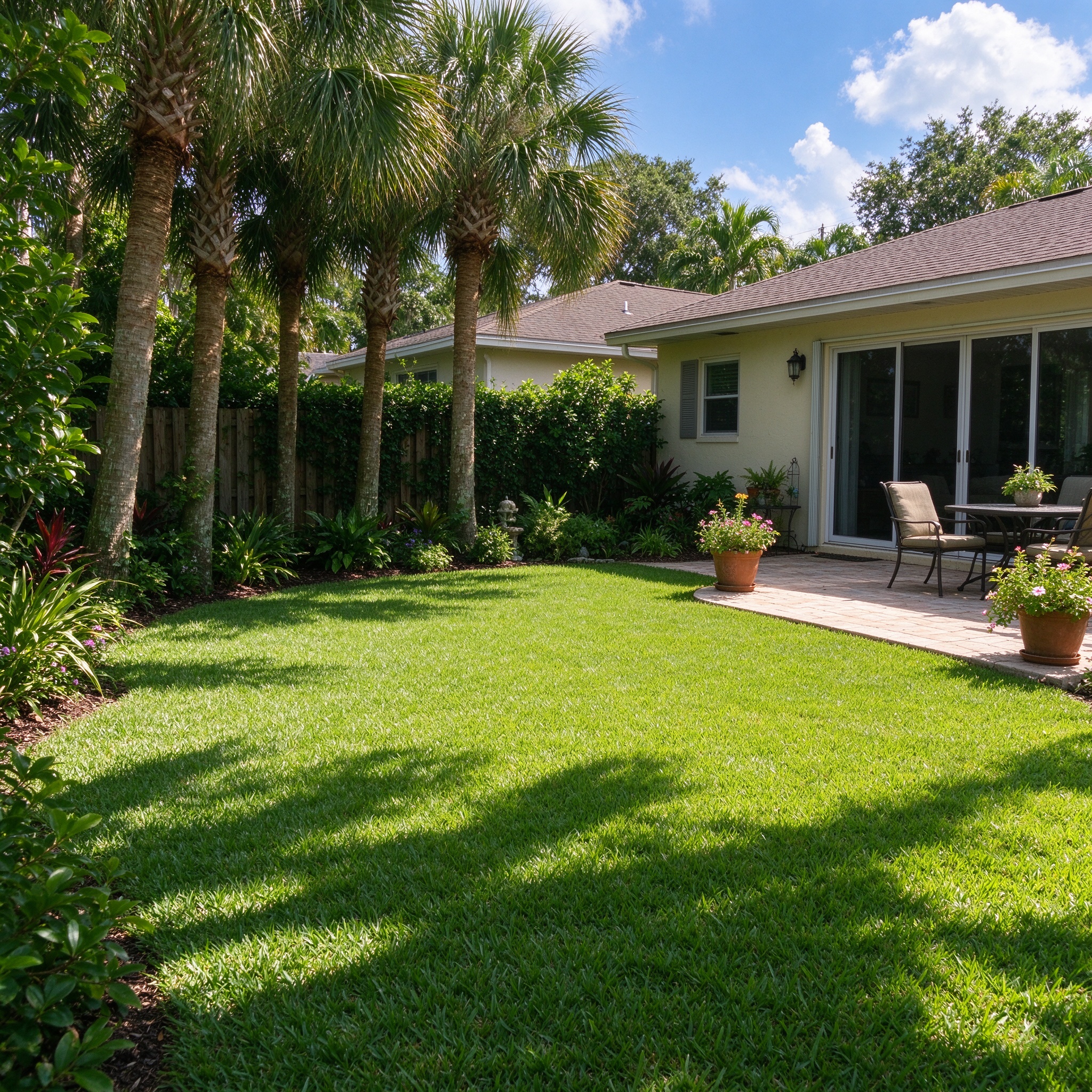
- •St.
- •Augustine grass is a warm-season perennial sod grass in the true grass family, grown across the southern coastal states from Florida through the Gulf Coast and southern California.
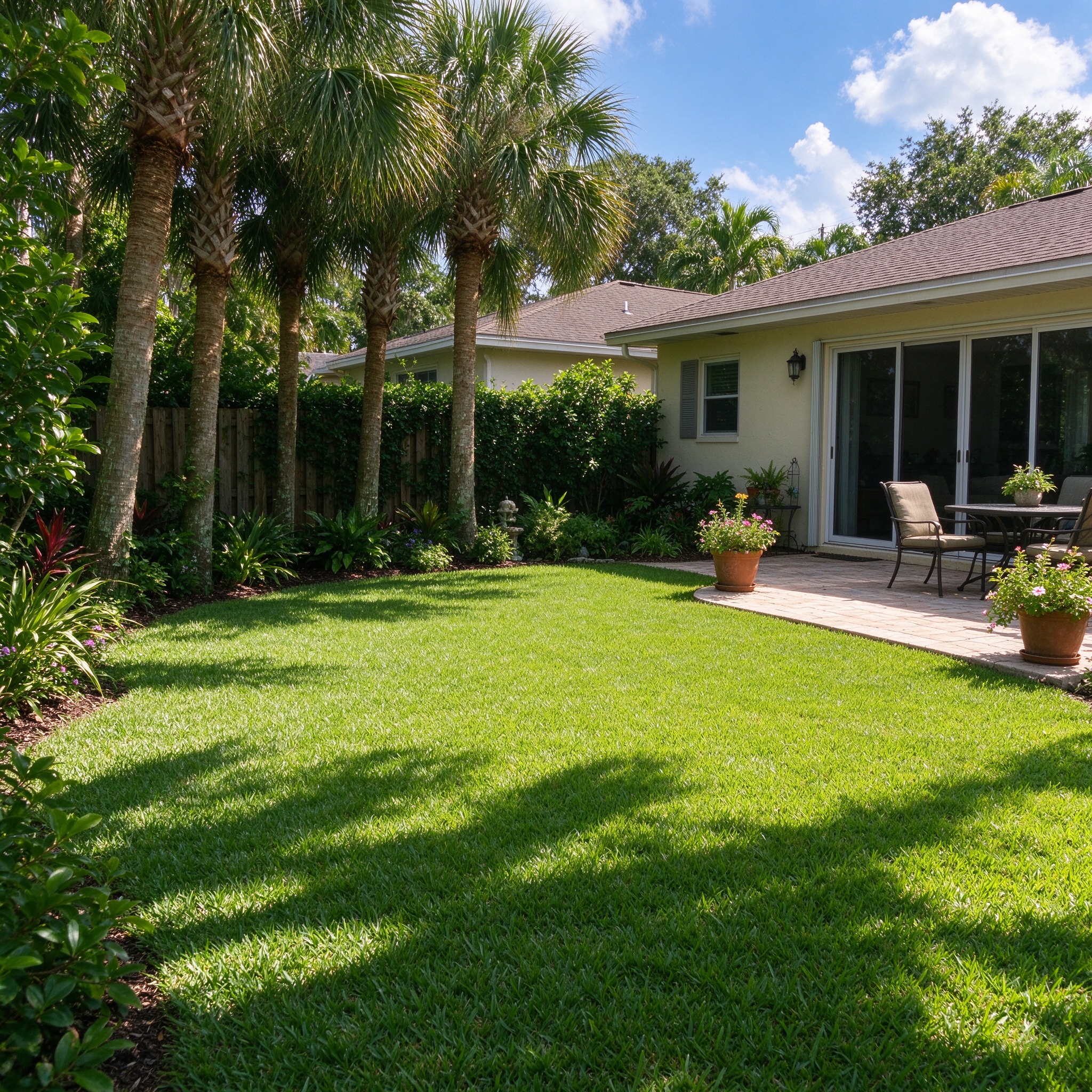
- •Its broad, coarse blades form a spreading mat by means of above-ground runners (stolons), and among warm-season lawn grasses it is the most shade tolerant and one of the most salt tolerant, which makes it a top choice for shady yards near beaches and under live oaks.
- •It has poor wear tolerance compared with bermudagrass and centipedegrass and does not hold up to heavy foot traffic or sports use.
- •A defining practical fact: St. Augustine lawns are almost never established from seed.
- •Homeowners plant it from sod, plugs, or sprigs because the grass produces little viable seed and most popular cultivars are vegetatively propagated hybrids.
- •It turns brown after the first frost and goes dormant through cool weather, greening back when soil warms above 55°F.
📋 Quick Facts
- •St.
- •Augustine is the most shade-tolerant warm-season lawn grass: it performs well under open pine and live oak canopies and tolerates more filtered light than bermudagrass or zoysiagrass.
- •It still needs at least four to five hours of sun or filtered light a day; under very dense evergreen shade it thins, produces weak stolons, and declines.
- •It tolerates full sun in coastal climates but suffers in extended drought and intense inland heat.
- •Trim lower branches and thin tree canopies to improve light and air movement over the lawn.
- •St.
- •Augustine has moderate water needs, established lawns use about ½ to ¾ inch of water per irrigation event, applied when blades wilt and turn a dull bluish-gray rather than on a fixed daily schedule.
- •Water deeply but infrequently, usually once or twice a week in summer, to wet the top 4 to 6 inches of soil; overwatering promotes large patch, take-all root rot, and thatch buildup.
- •A newly installed sod, plug, or sprig lawn must stay moist on top for 14 to 21 days while roots establish — light watering once or twice a day, then taper as runners root.
- •During cold dormancy the lawn needs almost no irrigation unless drought is extreme.
- •St.
- •Augustine is a warm-season grass hardy in USDA zones 8 through 10.
- •Active growth begins when soil temperature holds above 55°F and peaks between about 70°F and 90°F air temperature.
- •It grows through the summer heat and humidity of the Gulf and Florida coasts, but any sustained temperature near freezing causes leaf browning; it survives light freezes in zone 8 through the stolons and root crown, but sustained hard frost damages or kills the stand in the northern edge of its range.
- •In inland heat pockets it needs afternoon shade or regular irrigation to avoid drought stress.
- •St.
- •Augustine tolerates a range of sandy and loamy coastal soils and performs best in fertile, well-drained ground with a pH of 5.0 to 7.5.
- •It does not do well in heavy, permanently waterlogged clay.
- •Have the soil tested before installation; in alkaline high-pH soils iron and manganese tie up and the lawn develops yellow interveinal chlorosis, corrected with chelated iron and soil amendments.
- •Incorporate compost into sand or poor topsoil at preparation time, level the surface to eliminate low spots that hold water, and core-aerate mature lawns on compacted sites each spring.
- •A lawn has no edible harvest.
- •Treat establishment height as the first mowing benchmark: wait 14 to 21 days after laying sod or installing plugs and sprigs until new roots anchor and the sod cannot be lifted by hand.
- •Standard wide-blade cultivars are maintained at 3.5 to 4 inches; dwarf cultivars are mowed at 2 to 2.5 inches.
- •Begin mowing when the grass reaches about 50% taller than the target height, remove no more than one-third of the blade in a single cut, use a sharp mower blade, and mow only when the turf is dry.
- •Mature lawns are mowed weekly during the summer growing season.
- •Southern chinch bugs, Mole crickets, Sod webworms and armyworms, White grubs, Nematodes, Large patch, Gray leaf spot, Take-all root rot, St.
- •Augustine Decline (SAD) virus, Thatch buildup, Iron chlorosis on high-pH soil.
📅 When to Plant
- •Plant St.
- •Augustine vegetatively — by sod, plugs, or sprigs — from April through July in the Carolinas and Gulf states, when soil temperature rises above 55°F and summer moisture and heat favor rooting.
- •In north Florida and northern parts of the zone, finish installation before the hottest, driest part of summer and well before the first cold snap so stolons root before winter; in south Florida planting can continue through late fall, winter, and spring.
- •Install sod so seams meet tightly, keep the bed continuously moist for the first two to three weeks until roots anchor, then taper to regular irrigation.
- •Because there is no seed to sow, do not search for "St.
- •Augustine seed" at a garden center: any small seed packet marketed under this name is usually a different grass and will not produce the broad-leaved St.
- •Augustine lawn.
🌱 Growing Stages
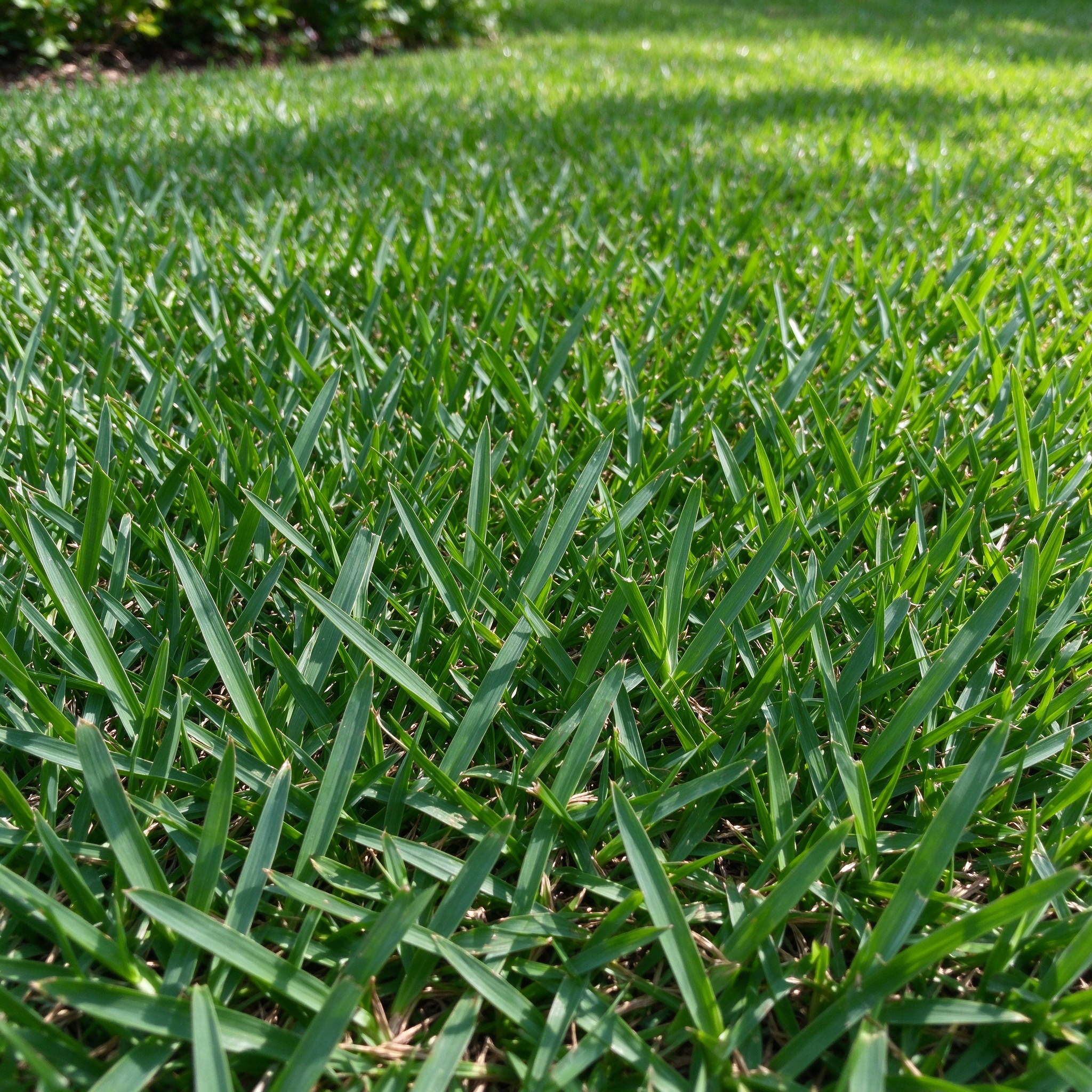 1
Rooting establishment
(14 to 21 days)- •Sod, plugs, and sprigs send new roots into the moist bed while existing stolons stay alive.
- •Keep the surface continuously moist; dry spells in this period cause sod to shrink, curl, and die.
- •New roots anchor when the material cannot be lifted or tugged loose from the soil.
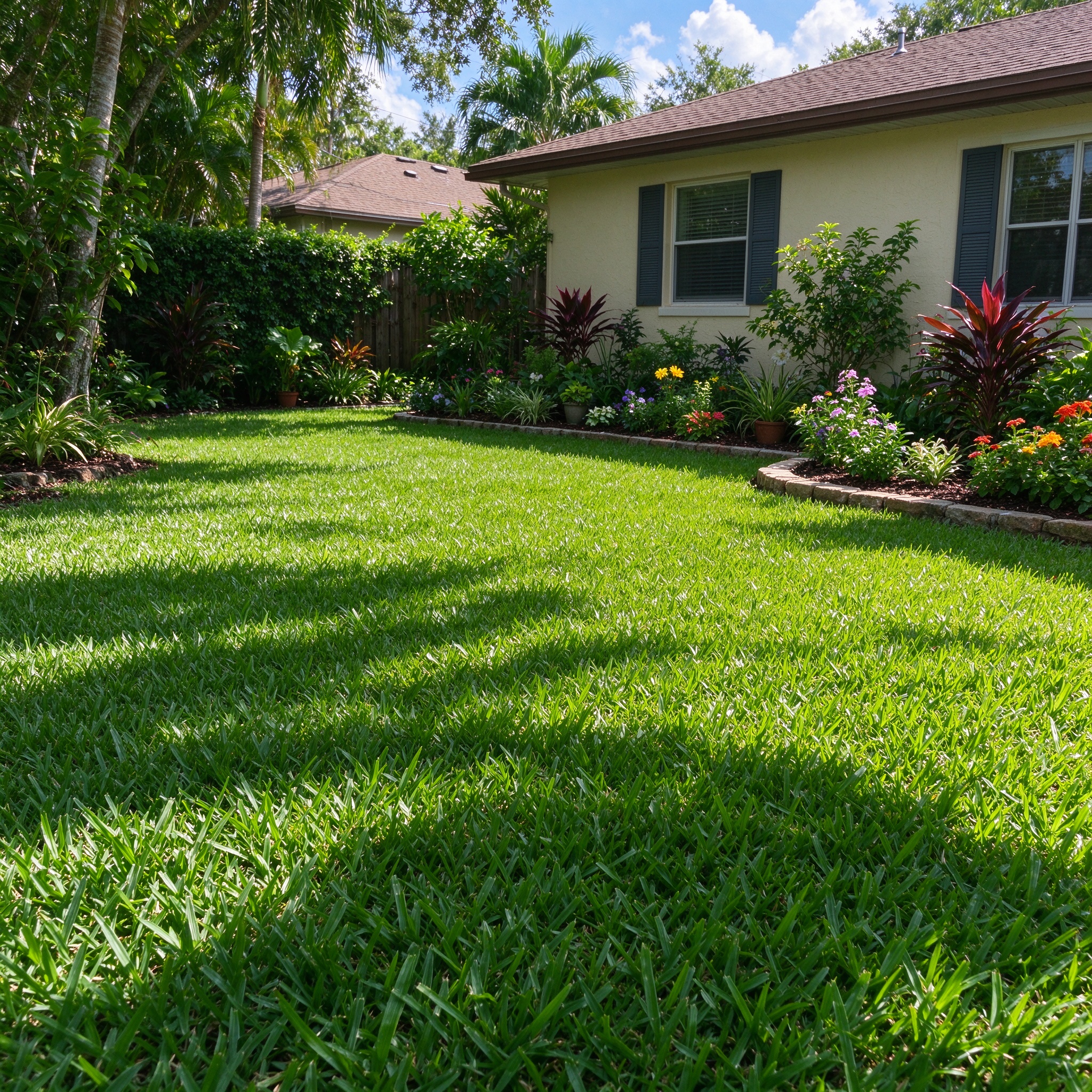 2
Stolon spread
(Weeks 3 to 10)- •Above-ground runners grow outward from the installed material, rooting at nodes as they cross bare soil.
- •Water deeply but infrequently, begin light mowing once rooted, and fill any gaps where runners failed to establish.
- •Watch early chinch bug and mole cricket damage in sunny, dry patches.
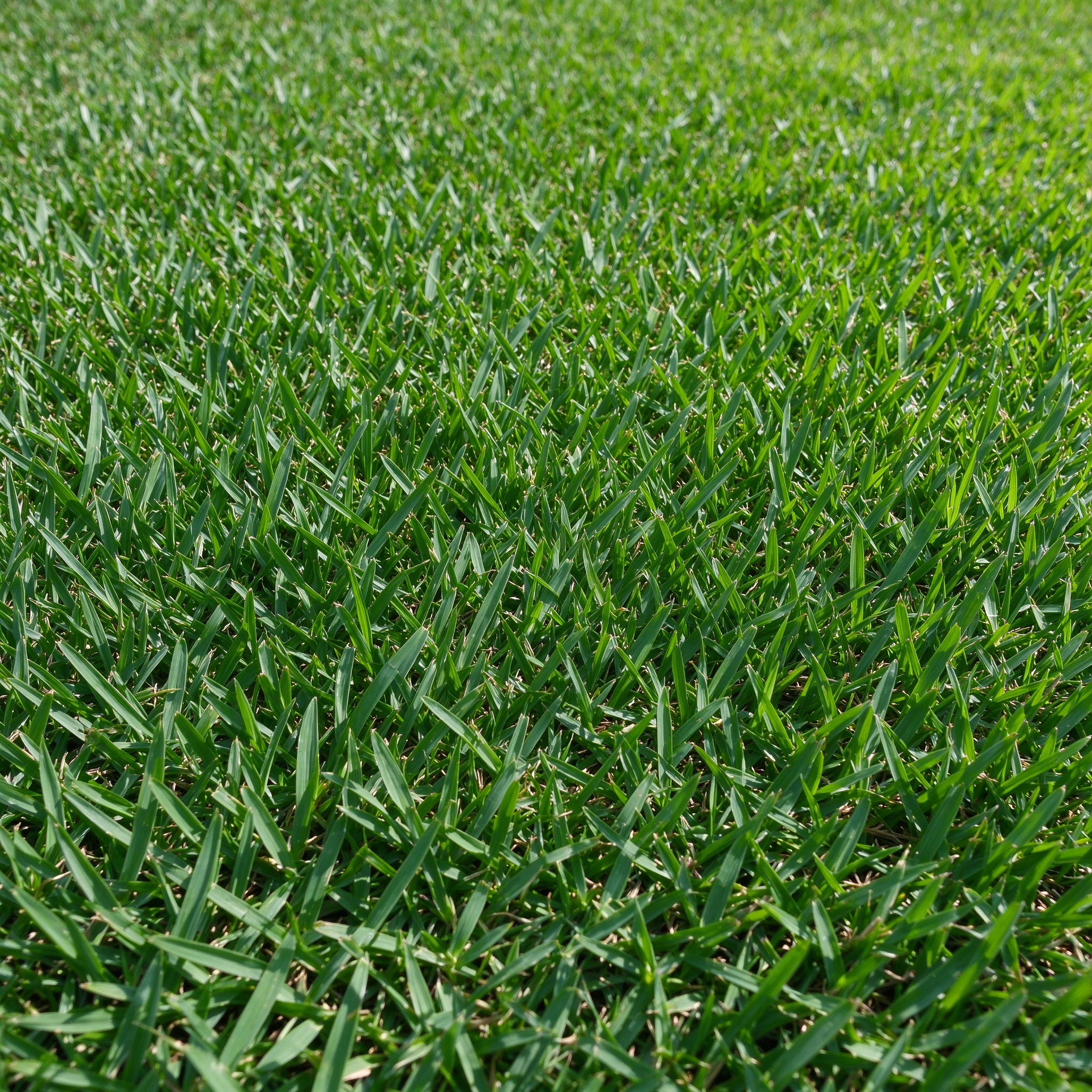 3
Canopy closure
(Months 2 to 6)- •Stolons meet and the broad blades form a continuous canopy that shades out weeds.
- •Fertilize on the soil-test schedule, mow at the cultivar height, and begin routine thatch inspection.
- •Plug-only installations may take a full growing season to close completely.
 4
Mature turf
(Year 1 onward)- •The lawn becomes a dense, spreading mat maintained at 3.5 to 4 inches (standard) or 2 to 2.5 inches (dwarf).
- •Core-aerate compacted sites each spring, dethatch when the layer exceeds one inch, and monitor chinch bugs, large patch, and take-all root rot through the warm season.
 5
Cold dormancy
(Cool months after frost)- •After the first frost or sustained cool weather, blades brown and growth stops.
- •Keep the lawn clear of leaves, reduce irrigation to near zero unless drought is extreme, and hold off spring fertilization until the grass greens up.
- •Stolons and root crowns survive underground and resprout when soil warms above 55°F.
💧 Detailed Care Guide
☀️ Light Requirements
- •St.
- •Augustine is the most shade-tolerant warm-season lawn grass: it performs well under open pine and live oak canopies and tolerates more filtered light than bermudagrass or zoysiagrass.
- •It still needs at least four to five hours of sun or filtered light a day; under very dense evergreen shade it thins, produces weak stolons, and declines.
- •It tolerates full sun in coastal climates but suffers in extended drought and intense inland heat.
- •Trim lower branches and thin tree canopies to improve light and air movement over the lawn.
💧 Watering
- •St.
- •Augustine has moderate water needs, established lawns use about ½ to ¾ inch of water per irrigation event, applied when blades wilt and turn a dull bluish-gray rather than on a fixed daily schedule.
- •Water deeply but infrequently, usually once or twice a week in summer, to wet the top 4 to 6 inches of soil; overwatering promotes large patch, take-all root rot, and thatch buildup.
- •A newly installed sod, plug, or sprig lawn must stay moist on top for 14 to 21 days while roots establish — light watering once or twice a day, then taper as runners root.
- •During cold dormancy the lawn needs almost no irrigation unless drought is extreme.
🌡️ Temperature
- •St.
- •Augustine is a warm-season grass hardy in USDA zones 8 through 10.
- •Active growth begins when soil temperature holds above 55°F and peaks between about 70°F and 90°F air temperature.
- •It grows through the summer heat and humidity of the Gulf and Florida coasts, but any sustained temperature near freezing causes leaf browning; it survives light freezes in zone 8 through the stolons and root crown, but sustained hard frost damages or kills the stand in the northern edge of its range.
- •In inland heat pockets it needs afternoon shade or regular irrigation to avoid drought stress.
🌱 Soil & Fertilizer
Soil:
- •St.
- •Augustine tolerates a range of sandy and loamy coastal soils and performs best in fertile, well-drained ground with a pH of 5.0 to 7.5.
- •It does not do well in heavy, permanently waterlogged clay.
- •Have the soil tested before installation; in alkaline high-pH soils iron and manganese tie up and the lawn develops yellow interveinal chlorosis, corrected with chelated iron and soil amendments.
- •Incorporate compost into sand or poor topsoil at preparation time, level the surface to eliminate low spots that hold water, and core-aerate mature lawns on compacted sites each spring.
Fertilizer:
- •St.
- •Augustine is a moderate to heavy feeder during the warm growing season.
- •Apply two to six fertilizer applications from spring green-up through fall, depending on soil test results and local extension guidance; south Florida lawns may be fed year-round, while north Florida and zone 8 lawns should not be fertilized too early in spring before the grass fully greens up.
- •Use a complete fertilizer with slow-release nitrogen at the rate recommended for your soil test, and follow the label to avoid excess nitrogen that fuels gray leaf spot and thatch.
- •Returning clippings returns a portion of the nutrients; a soil test determines phosphorus, potassium, and iron needs.
📝 Step-by-Step Planting Guide
- 1
Choose sod, plugs, or sprigs and a suitable cultivar
- •Select a vegetatively propagated cultivar matched to your shade and traffic conditions: broad-leaf standard types such as 'Raleigh' and 'Texas Common' for cold tolerance; dwarf fine-textured types such as 'Seville', 'Bitterblue', and 'Palmetto'; and SAD-resistant selections such as 'Floratam', 'Floralawn', 'Raleigh', or 'Seville'.
- •Buy certified sod or healthy plugs from a reputable supplier; St. Augustinegrass is not sold as seed.
- 2
Test the soil and prepare the bed
- •Send a soil sample to your county Extension laboratory before installation.
- •Incorporate lime, phosphorus, or compost to the recommended depth, level the surface to remove low wet spots, loosen compacted soil, and water the bed to settle it.
- •Kill existing weeds with a labeled nonselective herbicide and let the soil settle before laying sod or plugs.
- 3
Lay sod tightly or space plugs and sprigs
- •For sod, stagger seams like brickwork and fit edges tightly so no soil shows; roll to ensure root-to-soil contact.
- •For plugs, space them 12 to 18 inches apart in a grid and press each into prepared soil.
- •For sprigs, broadcast them evenly and cover with a thin layer of soil or sand, then roll.
- •More material means a faster lawn; sparse plugging takes a full season to close over.
- 4
Keep the bed moist for 14 to 21 days while rooting
- •Water lightly once or twice a day to keep the sod, plugs, and sprigs and the top inch of soil moist without standing water.
- •After two to three weeks, tug on sod or runners to check that roots have anchored; then reduce watering frequency and increase depth to wet the top 4 to 6 inches of soil.
- 5
Begin the first mow and start maintenance
- •Once roots anchor (14 to 21 days after installation), begin mowing at 3.5 to 4 inches for standard cultivars or 2 to 2.5 inches for dwarf types, never removing more than one-third of the blade.
- •Fertilize according to the soil test on the spring-to-fall schedule, watch for chinch bugs in sunny patches, and irrigate when blades wilt to a dull bluish-gray.
🌱 Recommended Varieties
Standard broad-leaf cultivars
- •'Raleigh' and 'Texas Common' have broad blades and better cold tolerance than most St.
- •Augustine types, suiting zone 8 lawns at the northern edge of the range.
- •They are mowed at 3.5 to 4 inches and perform best in full sun to light shade with moderate traffic.
Dwarf cultivars
- •'Seville', 'Bitterblue', 'Palmetto', and 'Floratam' produce finer, denser growth that can be mowed lower, at 2 to 2.5 inches, for a manicured look.
- •'Floratam' resists St.
- •Augustine Decline virus but has poor shade tolerance; 'Palmetto' and 'Seville' suit moderate shade.
Shade-tolerant and improved selections
- •'Seville' performs well in both shade and full sun, and other improved selections are bred for finer texture and denser growth.
- •They suit yards under live oaks and pines where bermudagrass and zoysiagrass would thin out, though no St.
- •Augustine cultivar survives deep evergreen shade.
🪴 Growing in Containers
- Shady southern yards under live oaks and pines:
- •St.
- •Augustine is the standard warm-season lawn for shaded coastal yards, where bermudagrass and zoysiagrass fail under tree canopies.
- •Choose shade-tolerant cultivars, thin lower branches to let in filtered light, and water through summer dry spells.
- Coastal and salt-spray yards:
- •Its good salt tolerance makes St. Augustine a practical choice for beachfront and coastal homes where other warm-season grasses burn from salt spray.
- •Install from sod for a faster cover, and flush saline soil after storm surge with deep irrigation.
- Low-traffic decorative lawns:
- •The broad, soft blades suit showpiece lawns that are walked across rather than used for sports or heavy play.
- •Avoid it along high-traffic shortcuts and dog runs where wear tolerance matters; those areas need a tougher grass such as bermudagrass.
- Renovation of a declining St. Augustine lawn: When an old stand thins from SAD virus, nematodes, or large patch, kill the affected turf, correct soil pH and drainage, and replant with resistant certified sod of an improved cultivar rather than overseeding into the diseased stand.
✂️ Pruning & Maintenance
- ✓
Mow at the cultivar height and never scalp
- •Maintain standard cultivars at 3.5 to 4 inches and dwarf types at 2 to 2.5 inches.
- •Begin mowing when the grass reaches 50% taller than the target height and remove no more than one-third of the blade at once.
- •Close cutting weakens stolons, opens the stand to weeds, and raises disease and chinch bug risk.
- ✓
Leave clippings on the lawn
- •Clippings decompose quickly and return a share of the nitrogen the lawn needs.
- •Collect them only when heavy or clumped enough to cover and smother the broad blades.
- ✓
Dethatch during the growing season
- •St.
- •Augustine builds a thatch layer faster than many warm-season grasses.
- •When thatch exceeds one inch, vertical-mow or rake it out during active summer growth, then water and fertilize lightly to help runners recover.
- ✓
Remove fallen leaves each cool season
- •Leaf cover blocks sunlight, holds humidity against stolons, and favors large patch in winter and early spring.
- •Rake or blow leaves off the lawn before they mat down, especially over a weak or recently installed stand.
🐛 Pest & Disease Control
Common Pests
Southern chinch bug
Symptoms:- •Small black and white bugs suck sap from stems near the soil line, producing yellow then brown patches that spread across hot, dry, sunny areas in spring and summer, often along driveway edges and open middles.
- •Nymphs cluster in the thatch; damage is worst on drought-stressed, heavily fertilized turf.
Control:- •Scout with a bottomless can pushed into the soil and filled with soapy water, or separate grass from thatch by hand.
- •Water adequately to reduce stress, avoid excess summer nitrogen, and treat active infestations with a labeled insecticide applied to moist turf.
- •On new installations, choose improved cultivars bred for chinch-bug resistance where available.
Mole cricket
Symptoms:- •Frog-like insects tunnel through the root zone and feed on roots and stolons, causing loose, bulging soil and bare patches that dry out.
- •Active channels and uprooted plants appear in spring and fall; southern and tawny mole crickets damage St.
- •Augustine across the Gulf Coast and Florida.
Control:- •Scout in early spring with a soapy-water flush to confirm adult and nymph activity, and apply a labeled preventive or bait treatment at the labeled timing for your species.
- •Keep thatch and excess fertilizer in check, and treat young nymphs soon after hatching for best control.
Sod webworms and armyworms
Symptoms:- •Caterpillars cut blades near the thatch, leaving chewed, browned patches that spread across sunny lawns in summer and fall.
- •Close inspection reveals silk tunnels (webworms) or clusters of striped larvae feeding on blades (armyworms); birds may gather to forage on the outbreak.
Control:- •Monitor with a soapy-water flush in the early evening and treat active outbreaks with a labeled insecticide applied to moist turf in the evening, watering in lightly to move the product toward the thatch.
- •Encourage birds and other natural predators, and keep the lawn vigorous through proper irrigation and fertilization.
White grubs and nematodes
Symptoms:- •C-shaped white grubs feed on roots, producing wilted patches that lift easily; skunks, moles, and birds may dig for them.
- •Nematodes are microscopic worms that feed inside roots, causing gradual thinning, yellowing, and slow growth that looks like a nutrient deficiency, worst on sandy soils in central and south Florida.
Control:- •Sample a 2-inch-deep square of turf and soil before treating grubs, and apply labeled products only above the threshold count.
- •For nematodes, send a soil sample to the Extension nematode lab, improve root-zone organic matter, follow fertilizer guidance to keep turf vigorous, and consider resistant or alternative grass species on heavily infested sandy sites.
Common Diseases
Large patch
Symptoms:- •Large circular or irregular patches of yellow-brown turf, several feet across, develop in cool, wet weather of late fall, winter, and early spring, with a brown or orange-red fringe of diseased blades at the edge.
- •Stolons may stay alive under the patch; the damage spreads into summer if soil stays waterlogged.
Control:- •Improve drainage and air circulation, water deeply but infrequently in the morning rather than late in the day, avoid high nitrogen in fall and spring, and reduce thatch.
- •Collect clippings during active disease; severe cases may need a labeled fungicide applied at the first fall symptoms on susceptible lawns.
Gray leaf spot
Symptoms:- •Long, gray-tan lesions with brown borders appear on blades, which wither and die back from the tip; large thin patches develop during hot, humid summer weather, especially on weak, overwatered or overfertilized St.
- •Augustine.
Control:- •Avoid excess summer nitrogen and frequent shallow watering, maintain proper mowing height, and improve sunlight and airflow.
- •Collect clippings during outbreaks and apply a labeled fungicide to high-value lawns at first symptoms; grow resistant cultivars where available.
Take-all root rot
Symptoms:- •Roots and stolons turn dark brown and rot; the lawn develops thin, yellow, irregular patches that decline over one or more seasons, often on sandy, alkaline soils with poor drainage.
- •Fine black strands (fungal runners) may be visible on infected roots and stolons when examined closely.
Control:- •Improve drainage and thatch management, avoid high-pH soil and excess lime, water deeply but infrequently in the morning, and follow balanced soil-test fertilization including adequate potassium.
- •Remove severely affected areas and replant healthy certified sod; fungicide options for home lawns are limited, so cultural prevention matters most.
St. Augustine Decline (SAD) virus
Symptoms:- •Fine yellow speckling and mottling appear on blades, which develop a faded, streaked appearance; the lawn thins gradually over years, with runners weakening and weeds filling gaps.
- •The virus spreads mechanically through mowing, tools, and runners and cannot be cured once established.
Control:- •Plant virus-resistant cultivars such as Floratam, Floralawn, Raleigh, or Seville, and install certified sod rather than shared sprigs from an infected lawn.
- •Keep mowing equipment clean between properties, avoid stress from drought and overfertilization, and renovate a badly affected stand by killing the old turf and replanting resistant sod on corrected soil.
Nematode decline
Symptoms:- •Stunted, yellowed, thin turf that struggles to green up despite adequate fertilizer and water; roots are short, dark, and knotted, and patches spread slowly across sandy soils in warm regions.
- •Symptoms peak during the hottest, driest part of summer.
Control:- •Submit a root-and-soil sample to the Extension nematode diagnostic lab for confirmation.
- •Build organic matter in the root zone, irrigate deeply and properly, maintain balanced fertility, and consider switching to a more tolerant grass or overseeding with perennial ryegrass on heavily infested sites.
- •Nematicides for home lawns are limited and mostly ineffective once populations are high.
🍅 When to Harvest
- •A lawn has no edible harvest.
- •Treat establishment height as the first mowing benchmark: wait 14 to 21 days after laying sod or installing plugs and sprigs until new roots anchor and the sod cannot be lifted by hand.
- •Standard wide-blade cultivars are maintained at 3.5 to 4 inches; dwarf cultivars are mowed at 2 to 2.5 inches.
- •Begin mowing when the grass reaches about 50% taller than the target height, remove no more than one-third of the blade in a single cut, use a sharp mower blade, and mow only when the turf is dry.
- •Mature lawns are mowed weekly during the summer growing season.
❓ Frequently Asked Questions
- 1
Can I grow St. Augustine grass from seed?
- •No.
- •St.
- •Augustinegrass seed is not available: cultivars must be planted vegetatively.
- •Buy certified sod, plugs, or sprigs from a reputable supplier and install them from April through July when soil temperature rises above 55°F and summer heat and moisture favor rooting.
- •Any small packet labeled St.
- •Augustinegrass sold at a general garden center usually contains a different grass and will not produce the broad-leaved St. Augustine lawn you want.
- 2
When is the best time to plant St. Augustine grass?
- •Install sod, plugs, or sprigs from April through July in the Carolinas, Gulf Coast, and north Florida, when soil temperature stays above 55°F and summer heat and moisture favor rooting.
- •Finish before the hottest, driest stretch of summer and well before the first cold snap so runners root before winter.
- •In south Florida you can plant through late fall, winter, and spring; in zone 8 at the northern edge, avoid late-fall installation that would face the first frost without established roots.
- 3
How many St. Augustine plugs or how much sod do I need?
- •For sod, order enough to cover the whole area in one layer, calculating length times width in square feet with a 5% to 10% waste allowance for cutting and seams.
- •For plugs, space them 12 to 18 inches apart in a grid; a typical 12-inch spacing uses roughly four to five plugs per square foot.
- •Closer spacing gives faster cover, while wider spacing takes a full growing season to close over.
- •Sprigs are broadcast by the bushel or crate per square foot according to the supplier's rate; follow the installation depth and roll recommendations for the product you buy.
- 4
Is St. Augustine grass safe for dogs and cats?
- •Yes.
- •St.
- •Augustine grass is not listed by the ASPCA as toxic to cats, dogs, or horses, and pets can walk, lie, and play on it safely.
- •The broad blades are tough rather than palatable as a chew grass.
- •Keep animals off newly treated turf until herbicide, insecticide, and fertilizer labels allow safe re-entry, and take extra care following chinch bug and mole cricket insecticide applications common in southern lawns.
- 5
What is St. Augustine Decline (SAD) virus?
- •SAD (St.
- •Augustine Decline) is caused by Panicum mosaic virus, which causes fine yellow speckling and mottling on blades; over years the lawn thins gradually and weeds fill the gaps.
- •It spreads mechanically through mowing equipment, tools, and infected runners, and there is no cure for an infected lawn.
- •Plant resistant cultivars such as Floratam, Floralawn, Raleigh, or Seville, start with certified sod, keep mowers clean between yards, and renovate a badly affected stand by killing the old turf, correcting the soil, and replanting resistant sod.
Source:
University of Florida IFAS Extension, ENH5: St. Augustinegrass for Florida Lawns — https://sfyl.ifas.ufl.edu/media/sfylifasufledu/hillsborough/docs/pdf/irrigationevaluations/St-Augustinegrass-for-Florida-Lawns.pdf
LSU AgCenter, Pub. 3097: St. Augustine Decline (SAD) of St. Augustinegrass — https://www.lsuagcenter.com/NR/rdonlyres/3CB937CF-B5F1-4866-BC80-1C751C14C893/54393/pub3097StAugustineDeclineHIGHRES1.pdf
NC State Extension, Carolina Lawns — https://content.ces.ncsu.edu/carolina-lawns
NC State Extension, St. Augustinegrass Lawn Maintenance Calendar — https://content.ces.ncsu.edu/st-augustinegrass-lawn-maintenance-calendar
Photo credit: NC State Extension
Images courtesy of NC State Extension under CC BY license. Thank you to the photographers who make these educational images available.
License: CC BY-NC 2.0 / CC BY 4.0