
How to Grow American Beech: Complete Guide
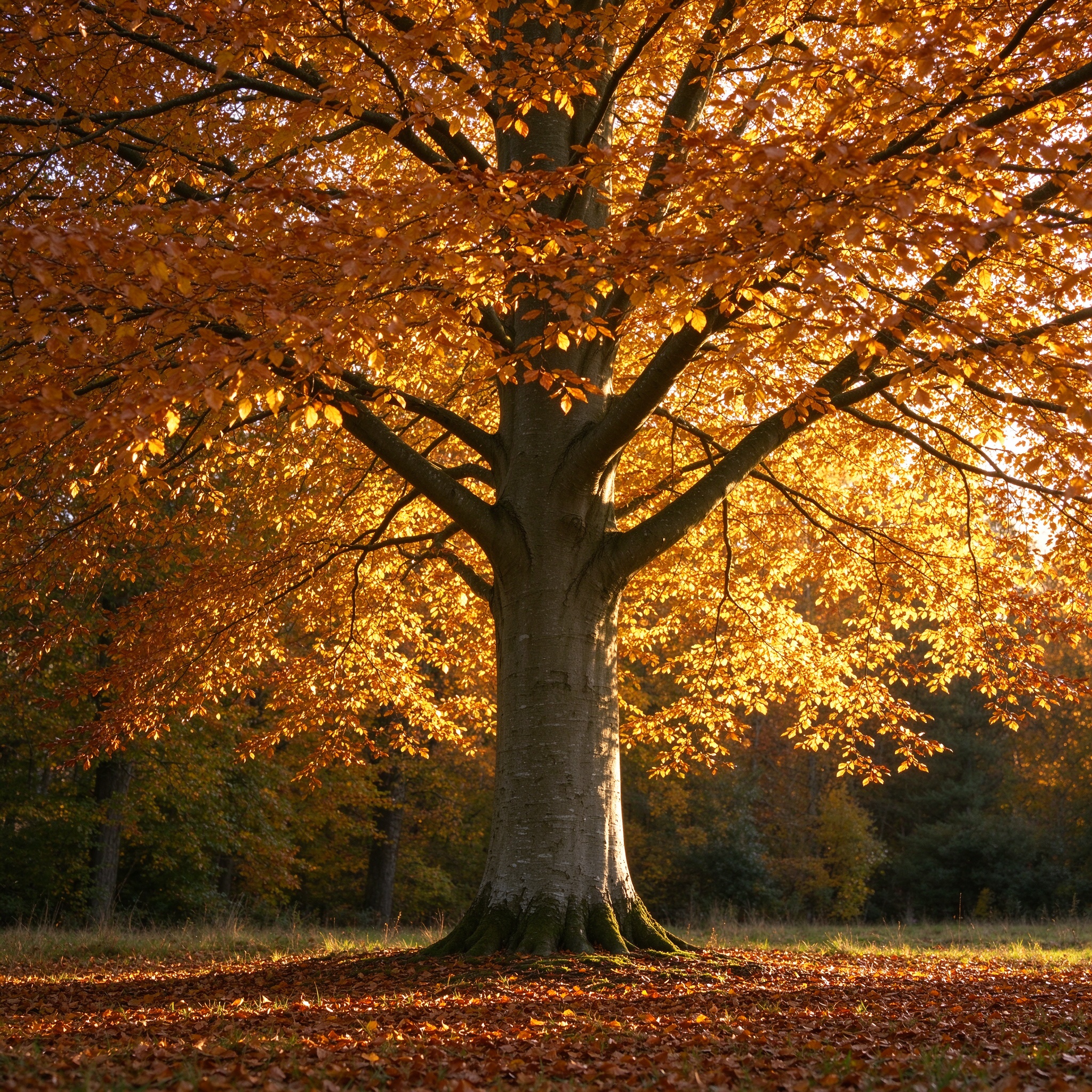
- •American beech is a slow-growing, long-lived native tree reaching 60–80 feet tall with a broad, dense crown.
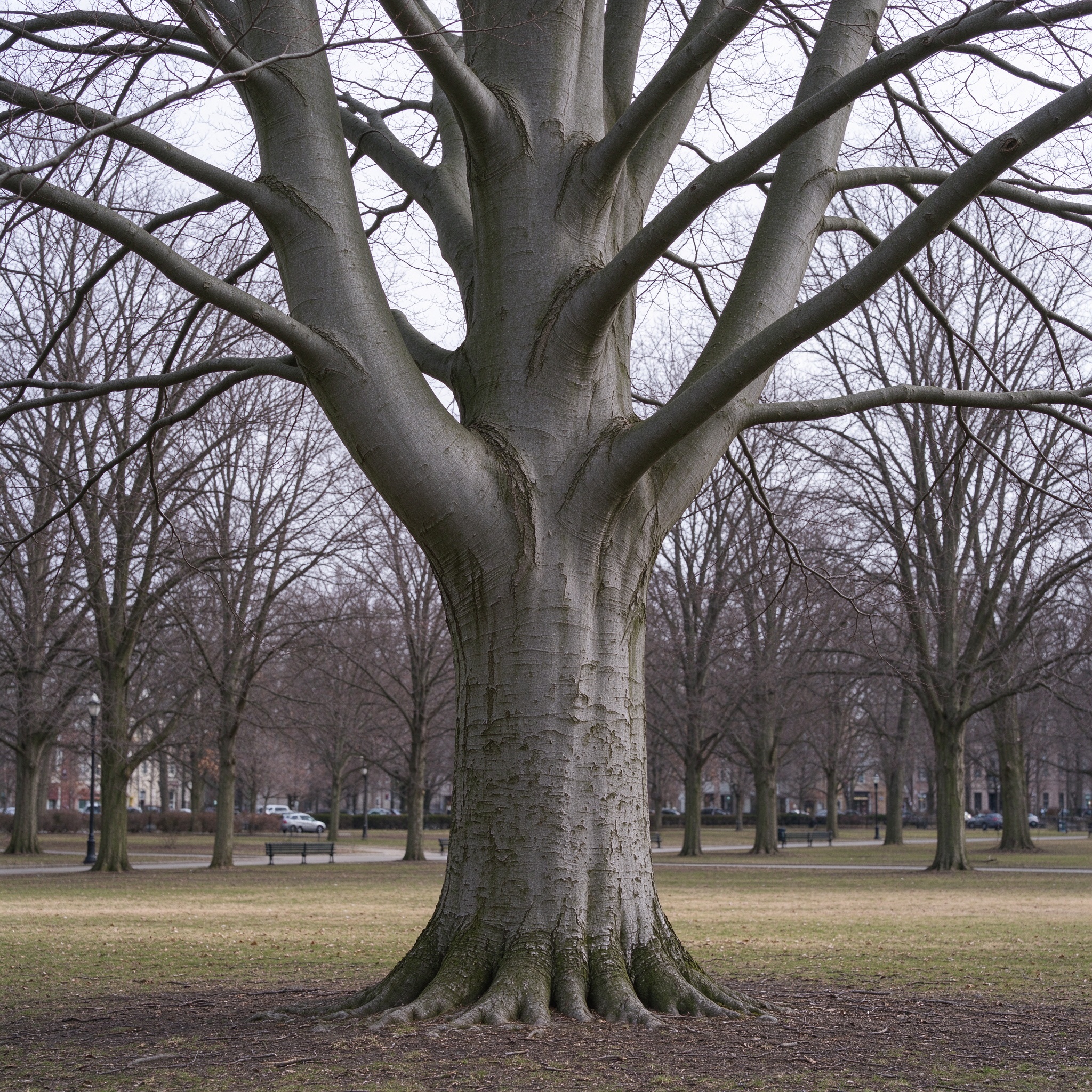
- •It is unmistakable year-round for its smooth, gunmetal-gray bark that looks like elephant hide.
- •In autumn the leaves turn a luminous golden bronze and often cling to the branches through winter on young trees.
- •Beechnuts are small, triangular, and sweet, a staple of woodland wildlife.
- •Beech is highly sensitive to soil compaction, road salt, and drought, and is best planted in an established woodland or large yard where its shallow surface roots will not be disturbed.
📋 Quick Facts
Scientific Name: Fagus grandifolia
Family: Fagaceae
Category: tree
USDA Zones: Zones 3–9
Light:
- •Full sun to partial shade.
- •Young trees tolerate shade well; mature trees need full sun for best growth. Beech casts a dense, dry shade under which few other plants grow.
Water:
- •Moderate and consistent.
- •Beech has shallow surface roots that dry out fast; mulch heavily and water during drought.
- •Once established it is moderately drought-tough, but leaf scorch is common in dry summers.
Temperature: Hardy to -40°C (zone 3). Late spring frost can blacken new leaves, but the tree reframes.
Soil:
- •Rich, moist, well-drained, slightly acidic soil (pH 5.0–6.5). Does not tolerate compacted, wet, or alkaline soil.
- •Avoid planting near roads or sidewalks where salt and compaction occur.
Harvest:
Common Problems: Beech bark disease (beech scale + fungus) in the Northeast; nectria canker; drought stress and leaf scorch in urban settings; woolly beech aphid.
📅 When to Plant
- •Balled-and-burlapped trees in early spring.
- •Beech has a sensitive root system and transplants poorly — choose a young tree and never let the root ball dry out.
🌱 Growing Stages
 1
Dormant
(Winter)Smooth gray bark is the tree's signature. Young trees hold bronze dead leaves through winter. Look for small pointed buds on the twigs.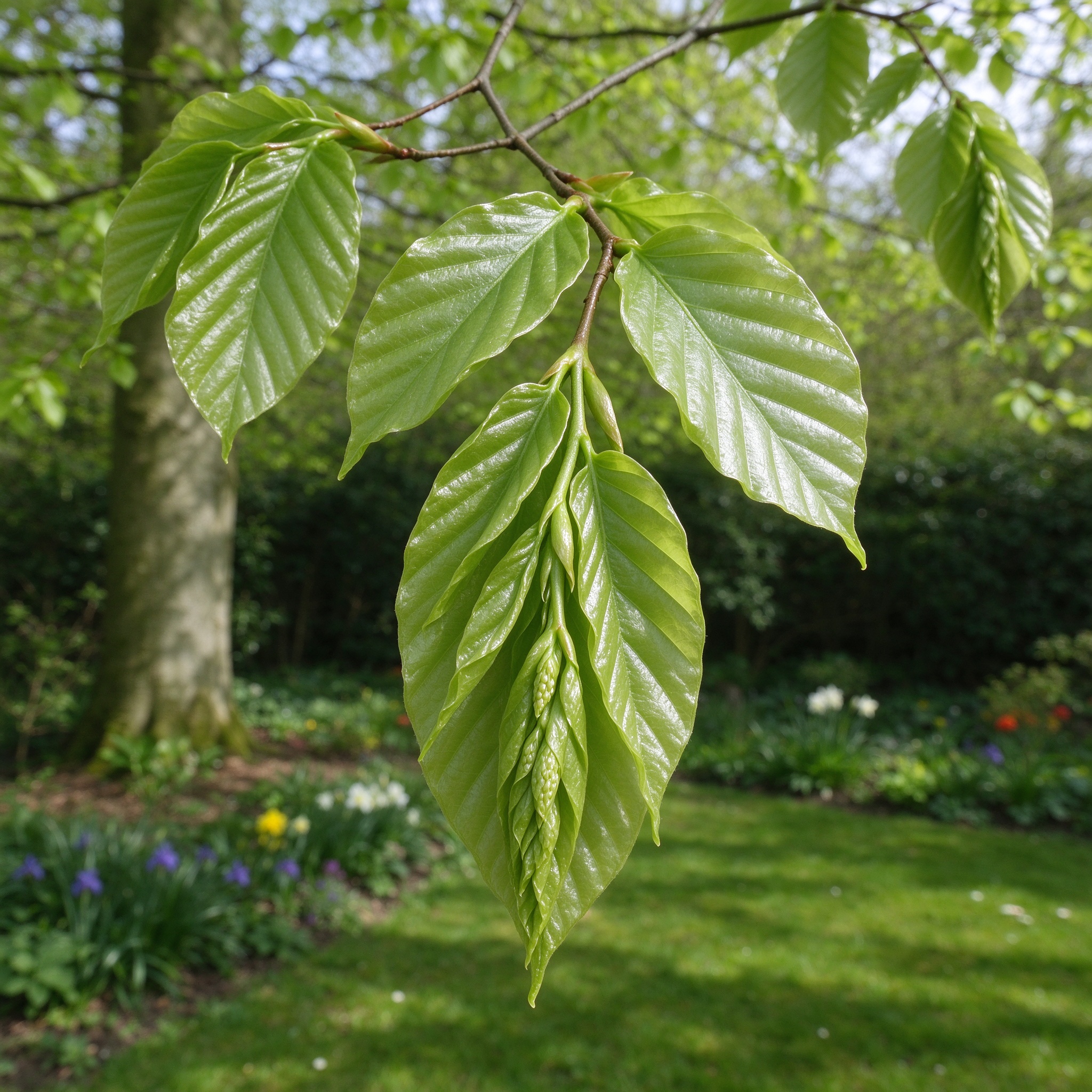 2
Spring Leaf-out
(April–May)Soft, silky light-green new leaves unfurl. Beech is one of the last large trees to leaf out in spring.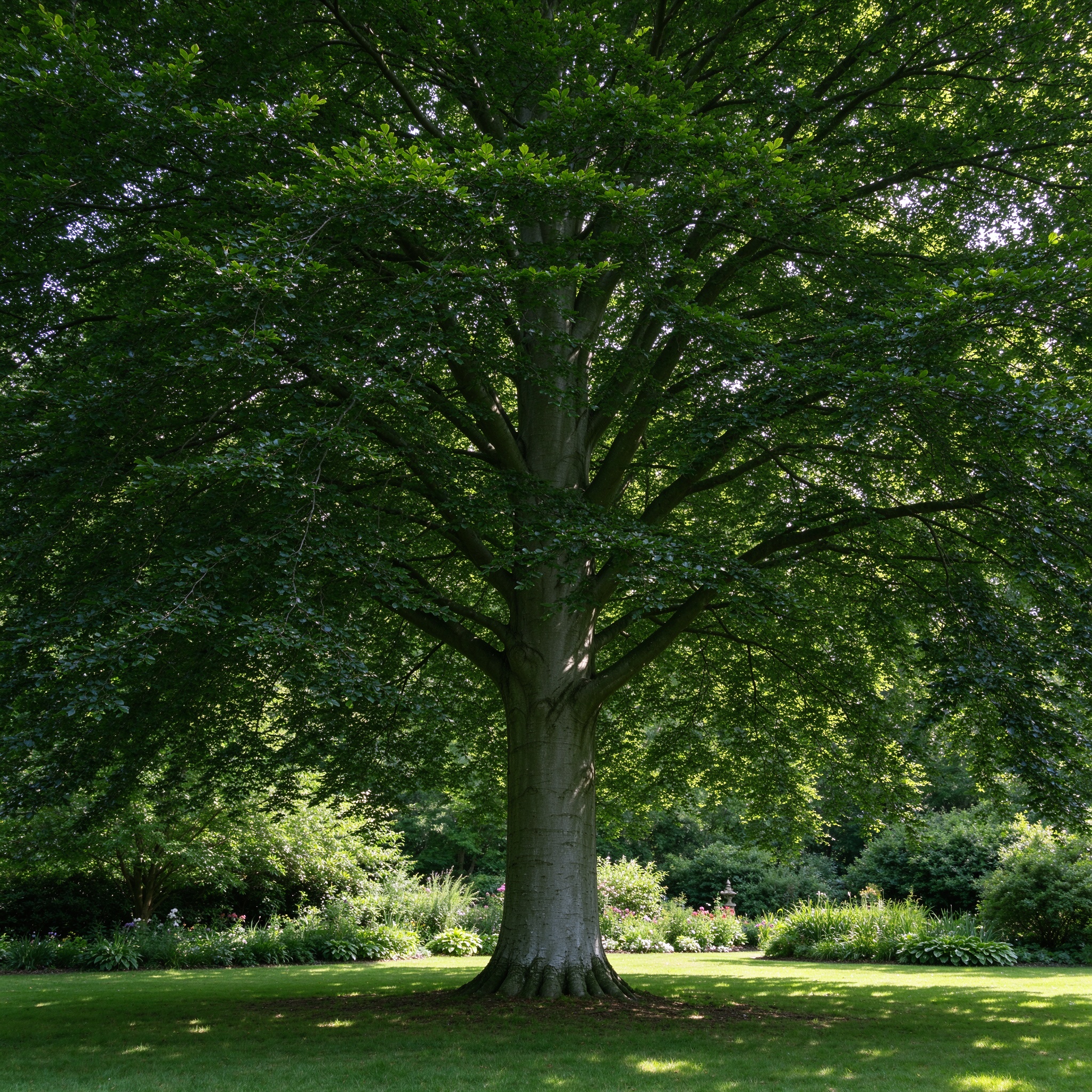 3
Summer Canopy
(June–August)Dense dark-green crown. The shallow root plate often pushes up through the lawn. Raccoons, squirrels, and birds forage for beechnuts.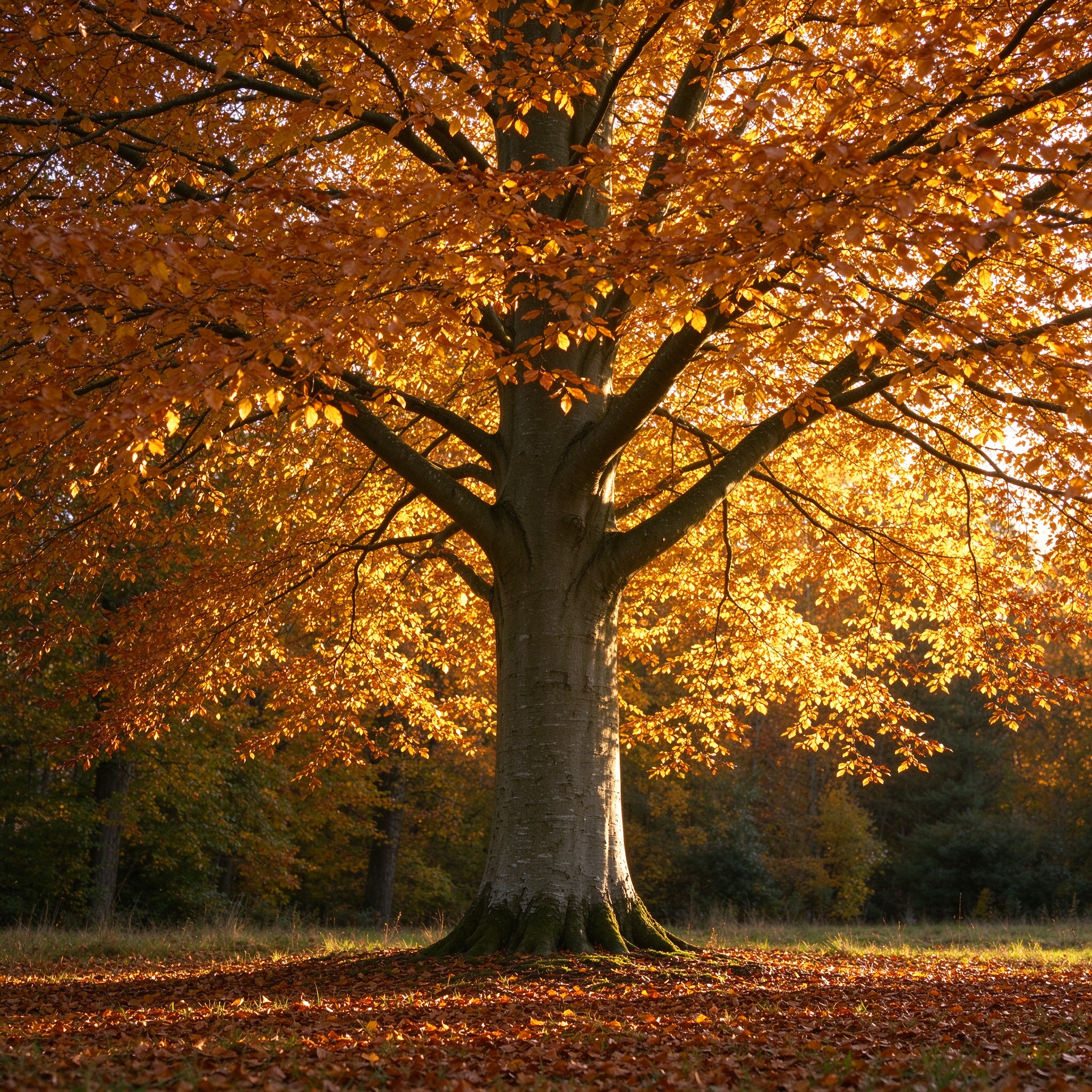 4
Fall Color
(September–November)Leaves turn luminous golden bronze, often holding the color for weeks. This is the beech's ornamental peak.
💧 Detailed Care Guide
☀️ Light Requirements
- •Full sun to partial shade.
- •Young trees tolerate shade well; mature trees need full sun for best growth. Beech casts a dense, dry shade under which few other plants grow.
💧 Watering
- •Moderate and consistent.
- •Beech has shallow surface roots that dry out fast; mulch heavily and water during drought.
- •Once established it is moderately drought-tough, but leaf scorch is common in dry summers.
🌡️ Temperature
- •Hardy to -40°C (zone 3).
- •Late spring frost can blacken new leaves, but the tree reframes.
🌱 Soil & Fertilizer
Soil:
- •Rich, moist, well-drained, slightly acidic soil (pH 5.0–6.5). Does not tolerate compacted, wet, or alkaline soil.
- •Avoid planting near roads or sidewalks where salt and compaction occur.
Fertilizer:
- •Little to no fertilizer.
- •Apply a thin layer of compost in early spring. Avoid high-nitrogen lawn fertilizers near the trunk.
📝 Step-by-Step Planting Guide
- 1Choose a site with ample room — beech spreads 40–60 feet wide and lives 200+ years. Not a front-yard tree for small lots.
- 2Plant a young balled-and-burlapped tree in early spring. Never let the root ball dry out.
- 3Dig a wide, shallow hole; plant at the same depth as the nursery. Backfill with native soil, do not amend heavily.
- 4Mulch 3–4 inches with shredded bark, extending out to the drip line. Beech surface roots benefit greatly from mulch.
- 5Water deeply once a week during the first two summers. After establishment, only water in prolonged drought.
- 6Prune only in late winter to avoid sap bleed. Train a central leader when young.
- 7Do not till or grade under the tree — its shallow roots are easily damaged. Rake leaves but leave them as mulch.
🌱 Recommended Varieties
Aspleniifolia (Fernleaf Beech)
Deeply cut fern-like leaves, narrower habit, 40–50 ft.Pendula (Weeping Beech)
Strongly weeping form, 30–40 ft, a striking specimen.🍅 When to Harvest
❓ Frequently Asked Questions
- 1
How fast does American beech grow?
Very slowly — about 30 cm per year once established. It is a legacy tree: plant it for the next generation, not for quick shade. - 2
Can I grow grass under a beech tree?
Not well. The dense shade and shallow root plate make a dry, competitive zone. Plant a mulch bed or shade-tolerant ground cover instead. - 3
Are beechnuts edible?
Yes, they are sweet and edible, though small and labor-intensive to collect. Wildlife loves them. Avoid eating large quantities raw.
Photo credit: NC State Extension
Images courtesy of NC State Extension under CC BY license. Thank you to the photographers who make these educational images available.
License: CC BY-NC 2.0 / CC BY 4.0