
How to Grow Avocado: Complete Guide
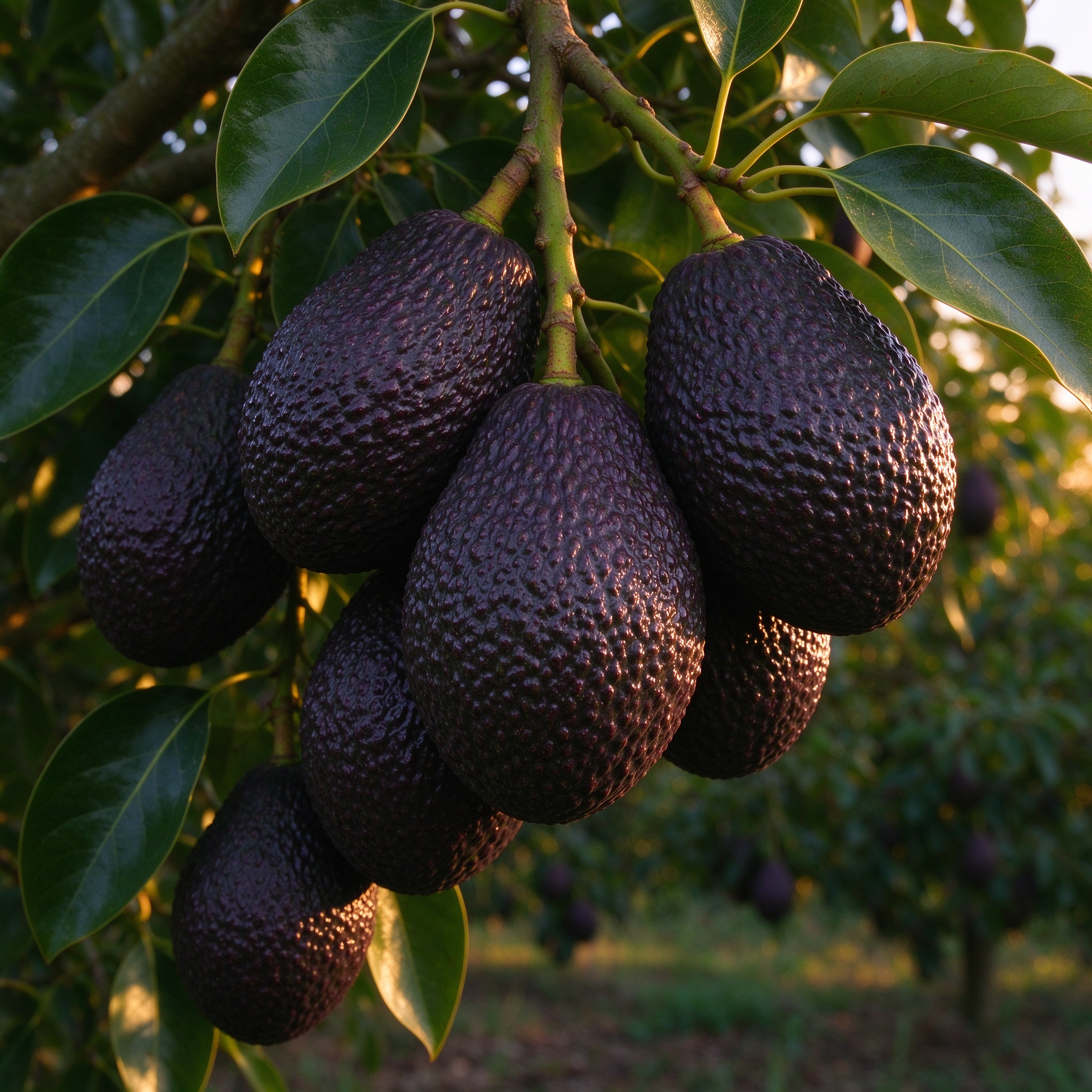
- •Avocado is an evergreen subtropical tree growing 30–65 feet tall in the ground, or 5–10 feet in containers.
- •It has glossy dark elliptical leaves and small greenish-yellow flowers that open in two synchronized cycles, encouraging cross-pollination between Type A and Type B varieties.
- •The fruit ripens on the tree after picking and is among the most nutritionally dense common fruits — high in monounsaturated fats, potassium, and fiber.
- •Avocado is frost-sensitive and needs well-drained soil; in marginal climates it is grown in pots and overwintered indoors.
📋 Quick Facts
Scientific Name: Persea americana
Family: Lauraceae
Category: tree
USDA Zones: Zones 9–11; grow in pots and overwinter indoors in zone 8 and colder.
Light:
- •Full sun — at least 6 hours of direct sun daily. Protect young trees from harsh midday sun in desert climates.
- •Needs air circulation to prevent fungal leaf spot.
Water:
- •Regular deep watering once established. Allow the top few inches of soil to dry between waterings. Avocado hates wet feet — ensure excellent drainage.
- •Yellow leaves often mean overwatering, not underwatering.
Temperature: Damaged below 32°F (0°C); killed or severely stunted below 28°F (-2°C). Ideal growing range 60–85°F. Plant on the warmest, most protected side of the house.
Soil: Fast-draining, rich loam, slightly acidic (pH 6.0–6.5). Heavy clay must be amended with compost and grit; in containers use a premium cactus/potting mix.
Harvest:
Common Problems: Root rot (Phytophthora) from overwatering; sunburn on young bark; leaf burn from salty water; fruit drop when stressed by cold or drought.
📅 When to Plant
Spring, after all danger of frost. Potted avocados can be moved outdoors after last frost and back indoors before first frost.
🌱 Growing Stages
 1
Establishment
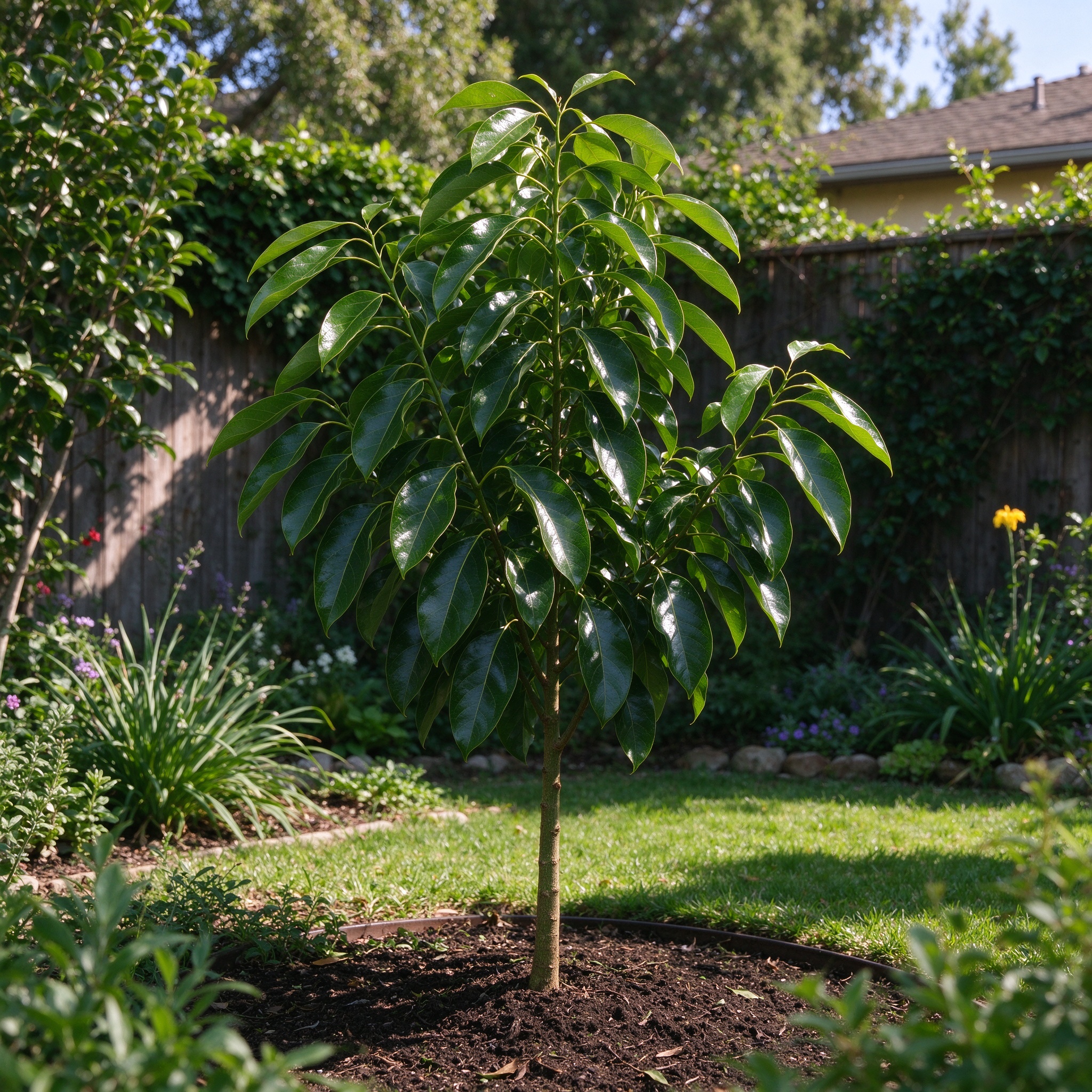
(First 1–2 years)Young tree focuses on root and trunk growth. Protect from frost and wind. It will not fruit until 3–4 years from a grafted tree.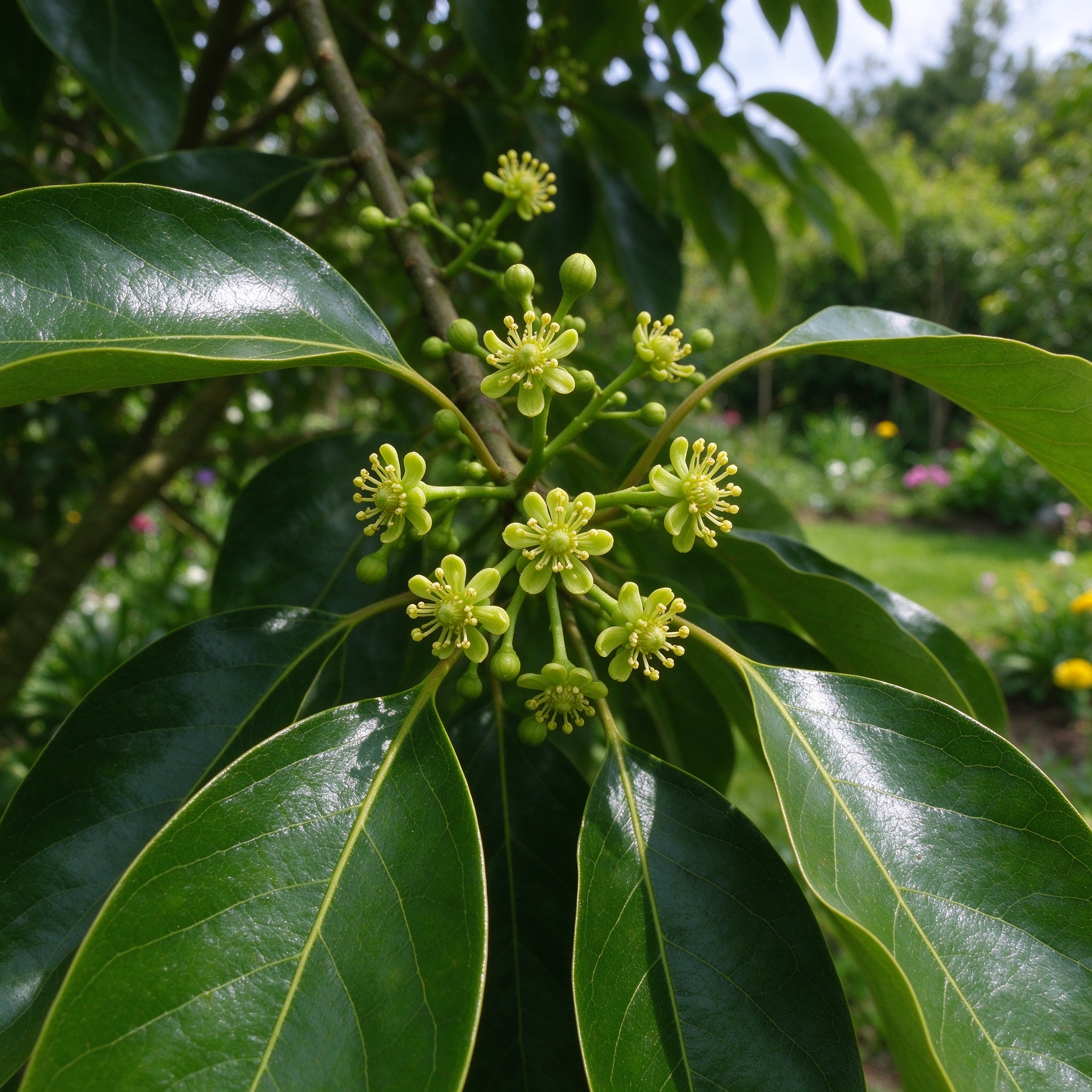 2
Flowering
(Spring)- •Thousands of small greenish-yellow flowers open in two synchronized cycles.
- •A single tree often sets fruit even without a pollinator, but yields improve with both Type A and Type B.
 3
Fruit Development
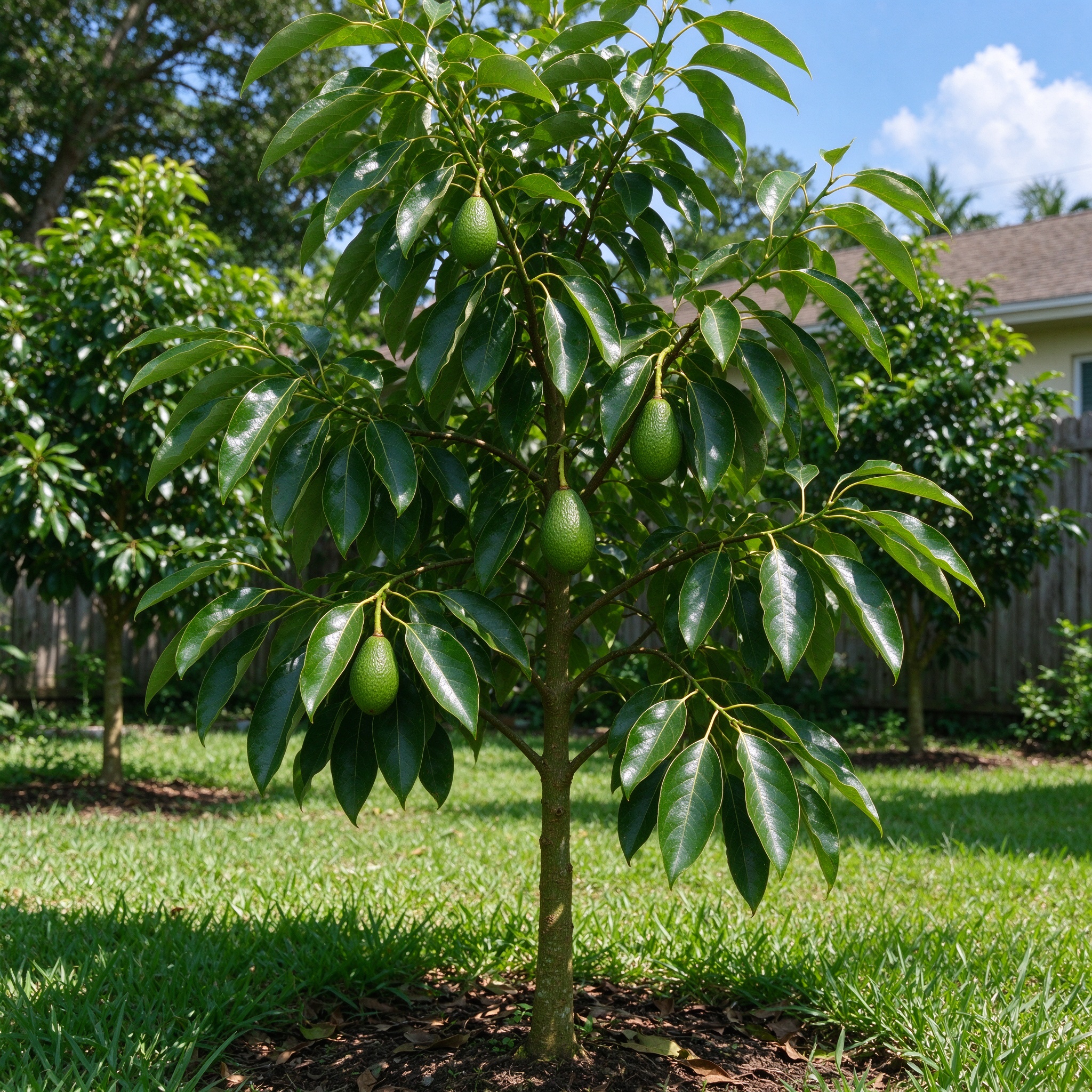
(Summer–fall)Small green avocados swell on the tree. Fruit can hang for 6–18 months before mature. Thin excess fruit in heavy years.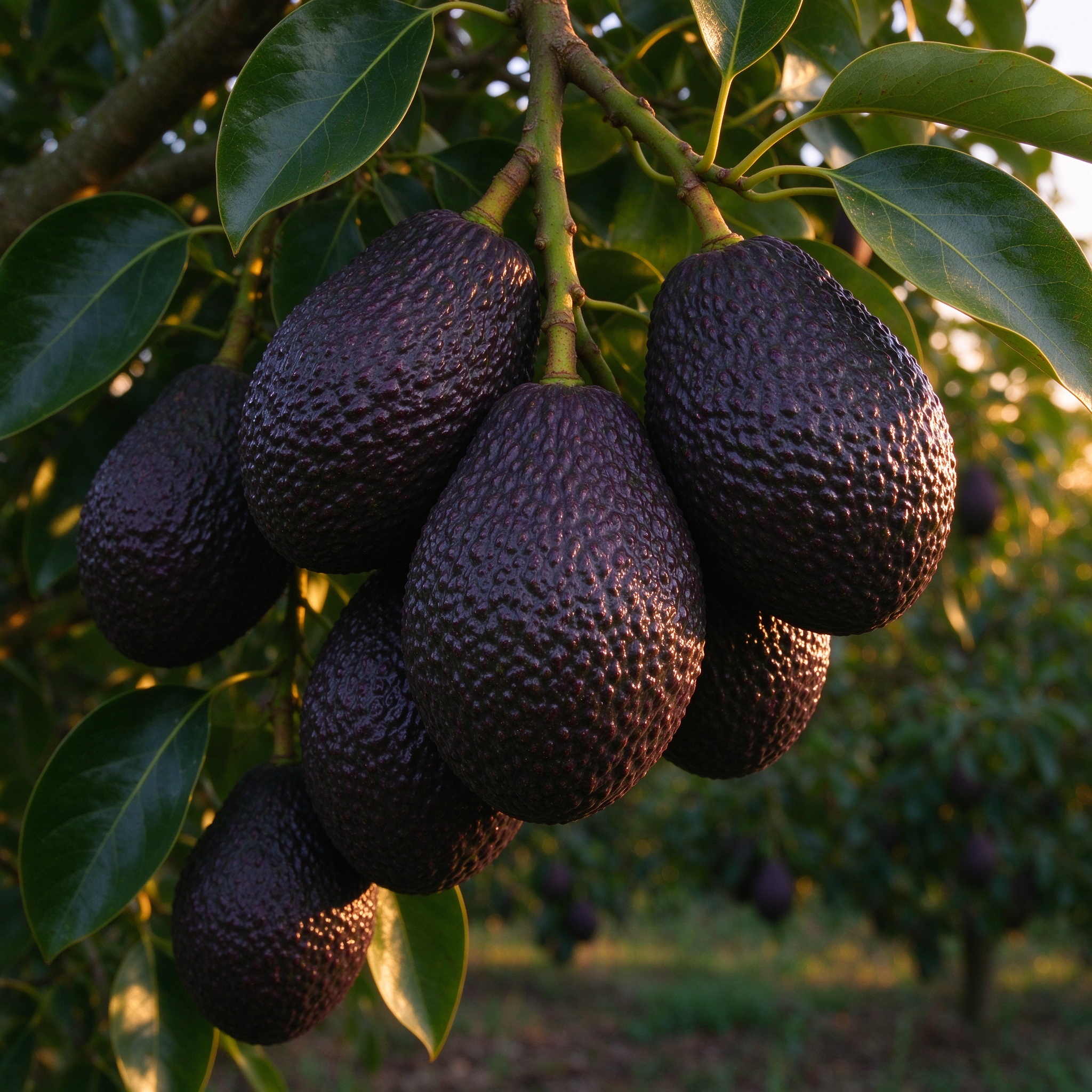 4
Harvest
(Winter–spring (varies by variety))Avocados do not soften on the tree — pick when full size and dark (Hass) or glossy green (Fuerte), then let ripen at room temperature for 3–7 days.
💧 Detailed Care Guide
☀️ Light Requirements
- •Full sun — at least 6 hours of direct sun daily. Protect young trees from harsh midday sun in desert climates.
- •Needs air circulation to prevent fungal leaf spot.
💧 Watering
- •Regular deep watering once established. Allow the top few inches of soil to dry between waterings. Avocado hates wet feet — ensure excellent drainage.
- •Yellow leaves often mean overwatering, not underwatering.
🌡️ Temperature
- •Damaged below 32°F (0°C); killed or severely stunted below 28°F (-2°C). Ideal growing range 60–85°F.
- •Plant on the warmest, most protected side of the house.
🌱 Soil & Fertilizer
Soil:
- •Fast-draining, rich loam, slightly acidic (pH 6.0–6.5).
- •Heavy clay must be amended with compost and grit; in containers use a premium cactus/potting mix.
Fertilizer:
- •Feed with a balanced fruit-tree fertilizer in spring and summer, or use an avocado/citrus fertilizer. Do not fertilize in fall or winter.
- •Watch for iron chlorosis (yellow leaves with green veins) in alkaline soil.
📝 Step-by-Step Planting Guide
- 1Choose a grafted variety — seed-grown avocados take 7–10 years to fruit and often produce poor-quality fruit.
- 2Plant in fast-draining soil on a mound if drainage is questionable. Do not plant deeper than the root ball — avocado hates being buried.
- 3Water deeply but infrequently. Let the top 3–4 inches dry out between waterings. Yellow leaves usually mean too much water.
- 4Mulch with coarse bark, keeping it 6 inches from the trunk to avoid crown rot.
- 5Fertilize with a citrus/avocado food in spring and summer; watch for iron deficiency in alkaline soil.
- 6Protect from frost. In zone 8 and colder, grow in a pot and overwinter indoors near a bright window.
- 7Pick fruit when full size — avocados ripen off the tree. Let them soften at room temperature before eating.
🌱 Recommended Varieties
Hass
The classic commercial avocado — dark, pebbly skin, creamy nutty flesh. Type A. Most popular home-grown variety.Fuerte
Smooth, thin green skin; pear-shaped. Type B. Mature-tasting and reliable in coastal California.Bacon
Cold-hardier choice; thin green skin, light flesh. Type B. Grown in zone 9 margins.🍅 When to Harvest
❓ Frequently Asked Questions
- 1
Can I grow an avocado from the pit?
- •Yes, but the resulting tree will take 7–10 years to fruit and fruit quality is unpredictable.
- •Most home gardeners buy a grafted variety that fruits in 3–4 years.
- 2
When is an avocado ripe?
Avocados never soften on the tree. Pick a full-size fruit, let it sit at room temperature for 3–7 days — it is ready when it yields gently to pressure. - 3
Why are my avocado leaves turning yellow?
Usually overwatering or poor drainage. Check the soil 3 inches down — water only when dry. In alkaline soil, it may be iron chlorosis; use an iron chelate.
Photo credit: NC State Extension
Images courtesy of NC State Extension under CC BY license. Thank you to the photographers who make these educational images available.
License: CC BY-NC 2.0 / CC BY 4.0