
How to Grow Persimmon Tree: Complete Guide
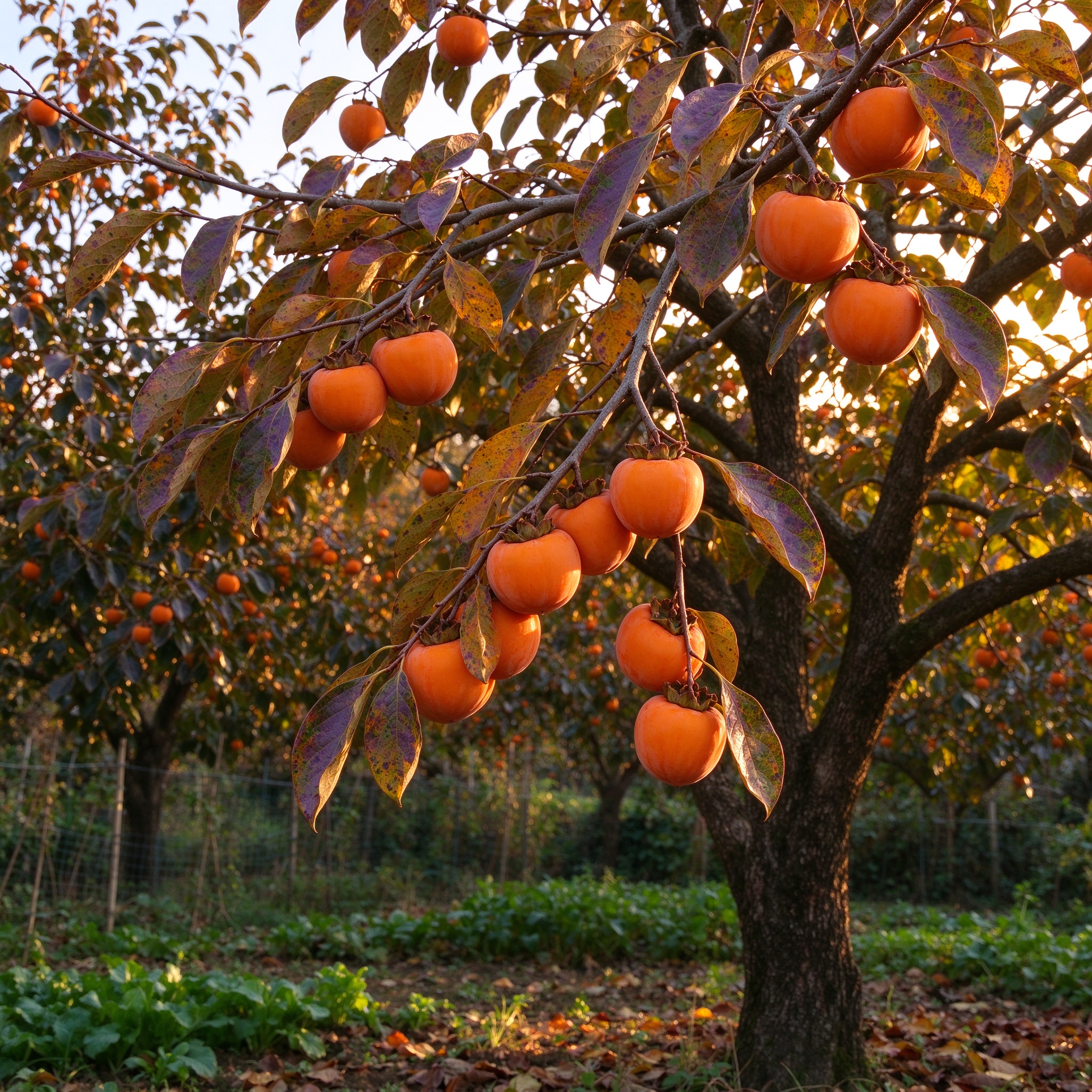
- •The common persimmon is a deciduous tree native to the eastern and southern United States, reaching 30–60 feet tall.
- •It has dark green, glossy oval leaves that turn yellow to purple in fall.
- •The small, greenish flowers appear in spring, and female trees produce round, orange-yellow fruits about 1.5–2 inches wide.
- •Fruits are extremely astringent until fully soft and ripe, at which point they become sweet, juicy, and rich in flavor.
- •Persimmon wood is dense and traditionally used for golf clubs and billiard cues. The tree is highly drought-tolerant and adapts to poor soils.
📋 Quick Facts
Scientific Name: Diospyros virginiana
Family: Ebenaceae
Category: tree
USDA Zones: Zones 4–9
Light: Full sun for best fruit production. Tolerates partial shade but yields fewer fruits. Plant in an open, sunny location where the canopy can develop fully.
Water:
- •Drought-tolerant once established. Water young trees regularly during the first 1–2 years to develop a strong root system.
- •Mature trees need little supplemental watering except during prolonged drought. Avoid overwatering, especially in heavy clay.
Temperature:
- •Hardy to –20°F (zone 4).
- •Flowers may be damaged by late spring frosts, which can reduce fruit set. Fruits ripen in fall and improve in flavor after a light frost.
Soil:
- •Adaptable to a wide range of soils, including poor, sandy, or clay soils.
- •Prefers well-drained, slightly acidic soil (pH 6.0–7.0) but tolerates alkaline conditions. Does not tolerate constantly waterlogged roots.
Harvest:
Common Problems: Astringency in unripe fruit (normal, not a problem); fruit drop if over-fertilized with nitrogen; deer and wildlife love the fruit; heart rot in old trees.
📅 When to Plant
Plant bare-root trees in late winter or early spring while dormant. Container-grown trees can be planted in spring or fall.
🌱 Growing Stages
 1
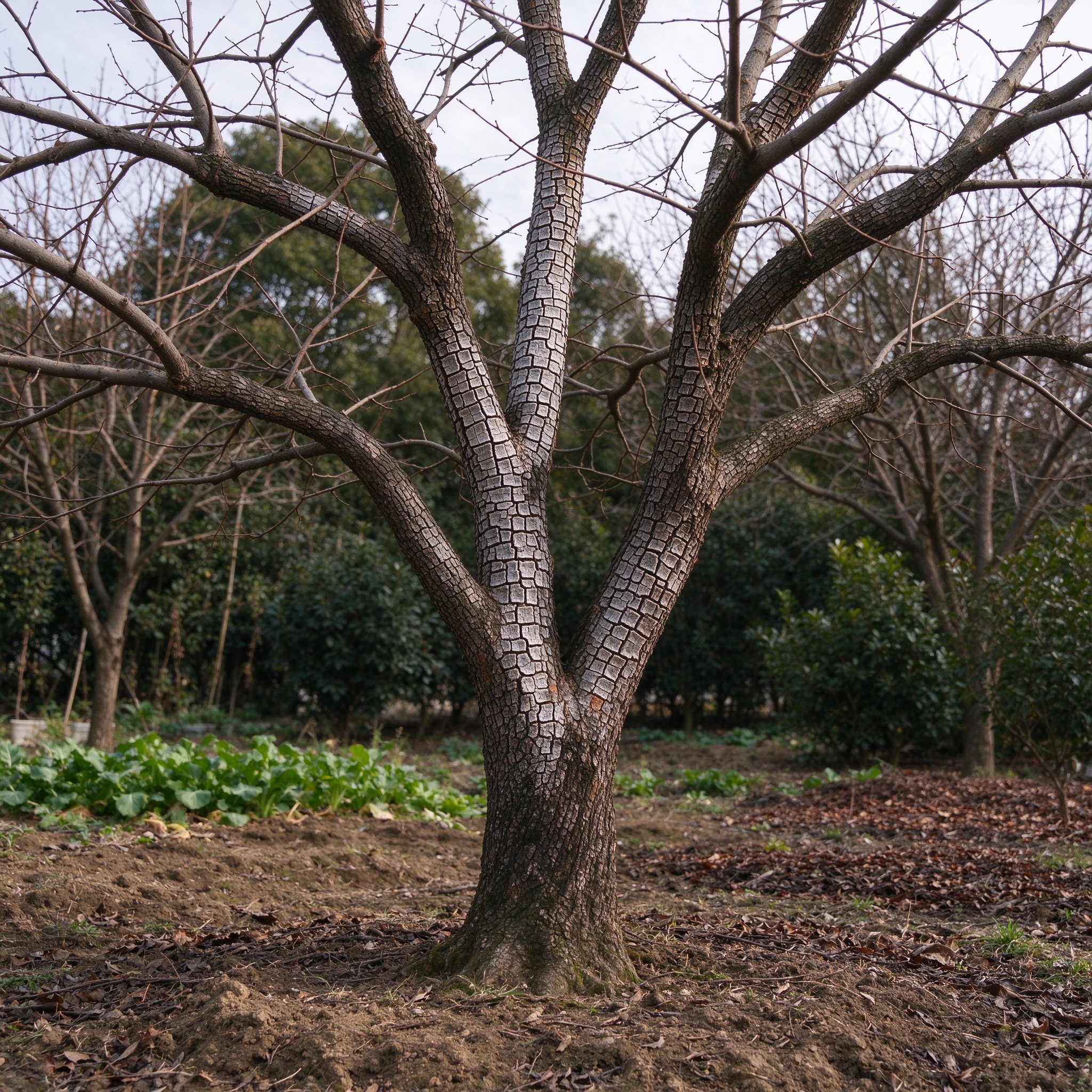
Dormant Season
(Winter)- •The tree is bare with rough, blocky, dark bark. Persimmon bark is distinctive — broken into square plates resembling alligator skin.
- •Roots remain dormant; do not fertilize or prune heavily.
 2
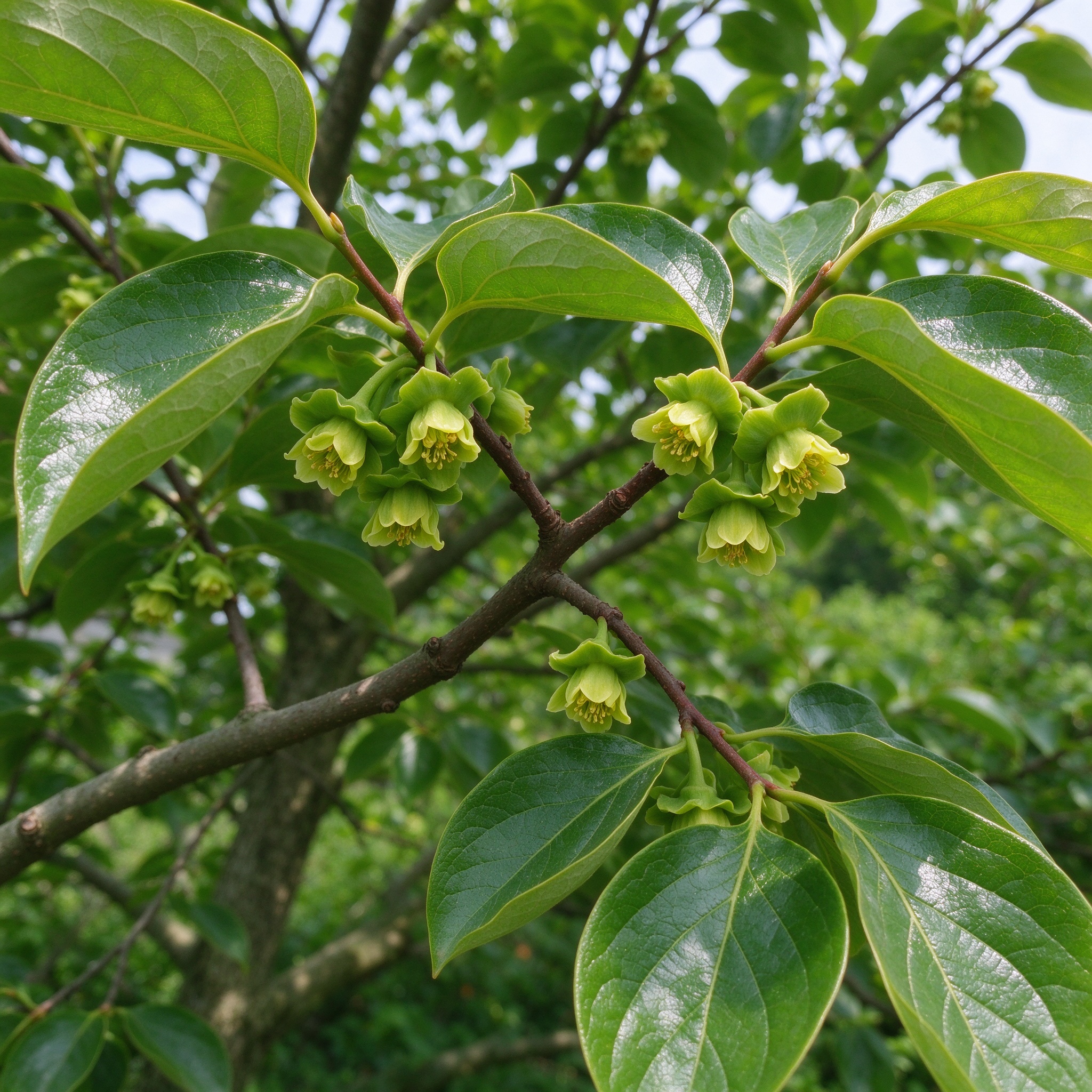
Spring Flowering
(May–June)- •Small, bell-shaped greenish-yellow flowers appear among the new leaves.
- •Female flowers develop into fruit; male flowers are on separate trees (or separate trees are needed for best pollination). Protect from late frost.
 3
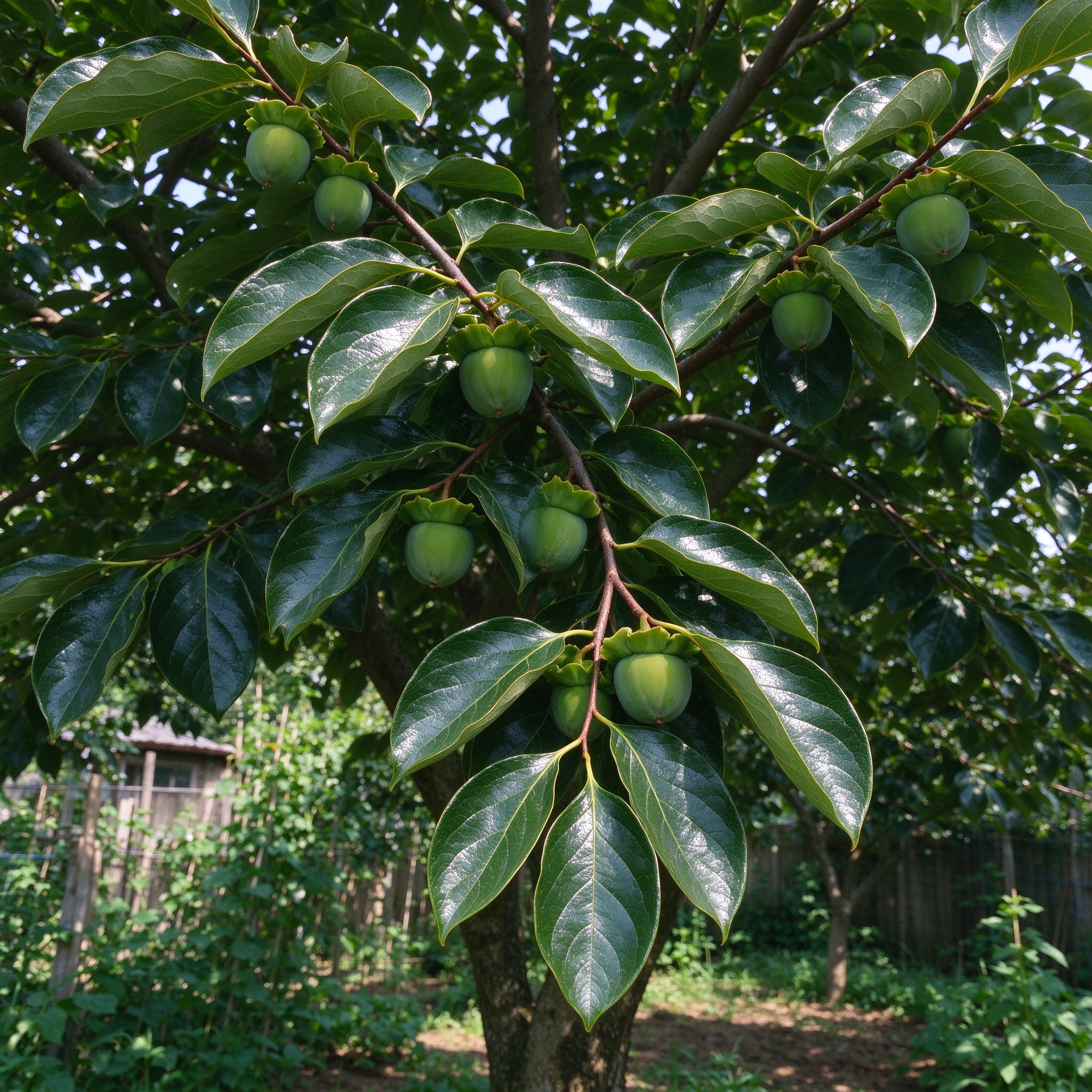
Summer Fruit Development
(July–September)Small green fruits grow on the branches. Leaves are glossy dark green. Water during dry spells, but avoid excessive nitrogen, which causes fruit drop.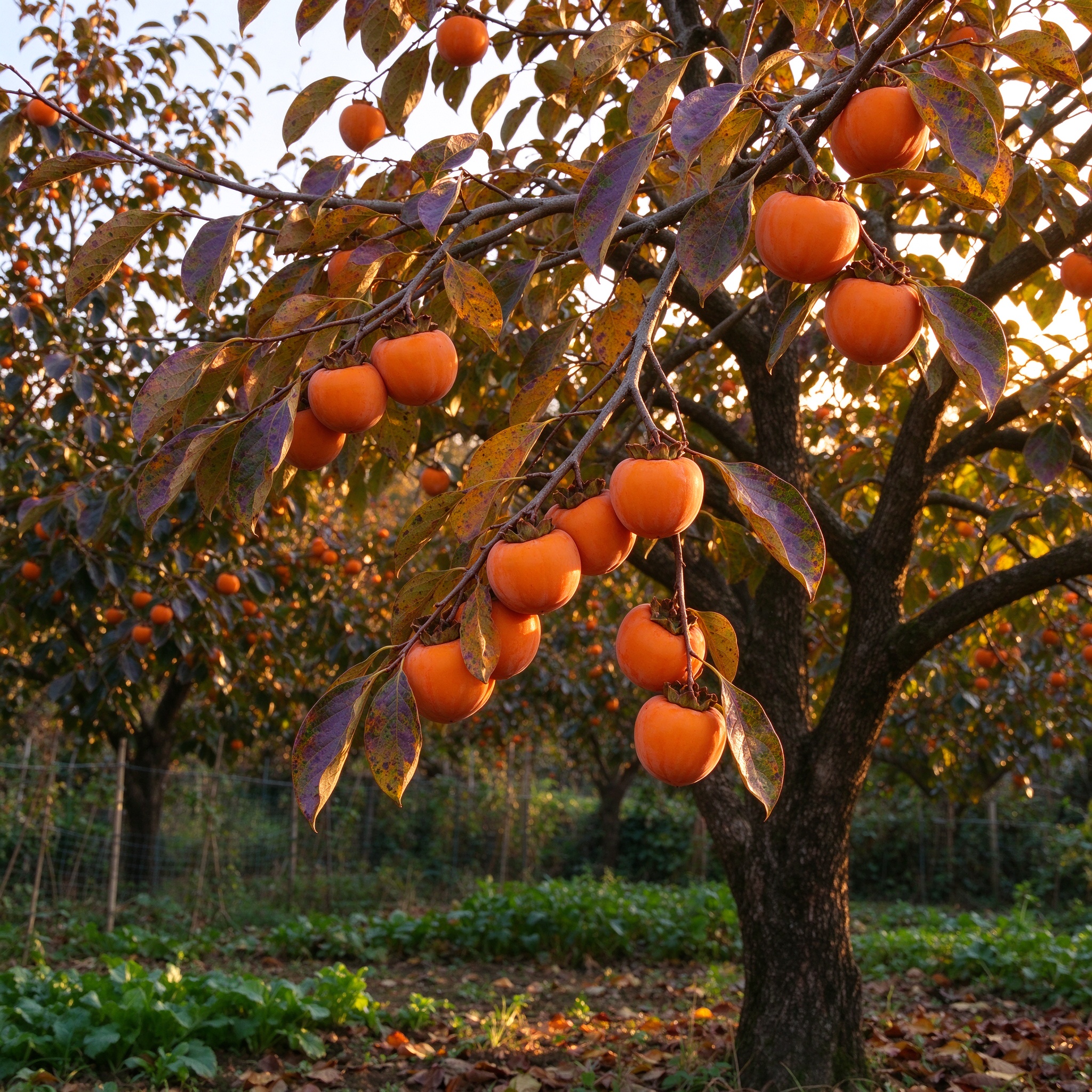 4
Fall Harvest
(October–November)- •Fruits turn orange and soften. Wait until they are soft to the touch before eating — unripe persimmons are extremely astringent.
- •A light frost improves sweetness. Leaves turn yellow-purple and drop.
💧 Detailed Care Guide
☀️ Light Requirements
- •Full sun for best fruit production. Tolerates partial shade but yields fewer fruits.
- •Plant in an open, sunny location where the canopy can develop fully.
💧 Watering
- •Drought-tolerant once established. Water young trees regularly during the first 1–2 years to develop a strong root system.
- •Mature trees need little supplemental watering except during prolonged drought. Avoid overwatering, especially in heavy clay.
🌡️ Temperature
- •Hardy to –20°F (zone 4).
- •Flowers may be damaged by late spring frosts, which can reduce fruit set. Fruits ripen in fall and improve in flavor after a light frost.
🌱 Soil & Fertilizer
Soil:
- •Adaptable to a wide range of soils, including poor, sandy, or clay soils.
- •Prefers well-drained, slightly acidic soil (pH 6.0–7.0) but tolerates alkaline conditions. Does not tolerate constantly waterlogged roots.
Fertilizer:
- •Needs little fertilizer.
- •Young trees benefit from a light application of balanced 10-10-10 in early spring. Over-fertilization promotes leafy growth at the expense of fruit.
📝 Step-by-Step Planting Guide
- 1Choose a sunny site with well-drained soil. Persimmons adapt to poor ground but fruit best in loamy, slightly acidic soil.
- 2Dig a hole twice as wide as the root ball. Plant at the same depth as in the nursery container. Backfill and water thoroughly.
- 3Water deeply once a week during the first growing season. Mulch with organic matter to conserve moisture and protect the deep taproot.
- 4Plant at least one male pollinator nearby if growing American persimmon; most named varieties are self-fertile or partially self-fertile.
- 5Prune lightly in late winter to shape and remove dead wood. Persimmons need minimal pruning compared to other fruit trees.
- 6Harvest fruits when they are fully orange and soft. Eat fresh, use in baking, or dry. Unripe fruits cause astringent mouthfeel.
🌱 Recommended Varieties
"Fuyu"
Japanese persimmon (D. kaki), non-astringent, firm and sweet even when crisp. Most popular commercial variety."Hachiya"
Japanese persimmon, astringent until fully soft, then extremely sweet and jelly-like. Heart-shaped fruit."American" (D. virginiana)
Native species, smaller fruits, very astringent until soft. Extremely cold-hardy.🍅 When to Harvest
❓ Frequently Asked Questions
- 1
When is a persimmon ready to eat?
- •Only when it is completely soft — like a water balloon — and slightly wrinkled.
- •A firm persimmon is extremely astringent and will make your mouth pucker.
- •Japanese non-astringent types like Fuyu can be eaten firm, but American persimmons must be soft.
- 2
Do you need two persimmon trees?
- •Most American persimmons are dioecious — you need a male and female tree for reliable fruit.
- •Many named Japanese varieties (Fuyu, Hachiya) are self-fertile and produce fruit without a pollinator, though fruiting is heavier with one nearby.
- 3
How long until a persimmon tree bears fruit?
- •Grafted trees produce fruit in 3–5 years. Seed-grown trees can take 7–10 years and may not come true to type.
- •Buy grafted named varieties for reliable, early harvest.
Photo credit: NC State Extension
Images courtesy of NC State Extension under CC BY license. Thank you to the photographers who make these educational images available.
License: CC BY-NC 2.0 / CC BY 4.0