
How to Grow Catalpa (Southern Catalpa): Complete Guide
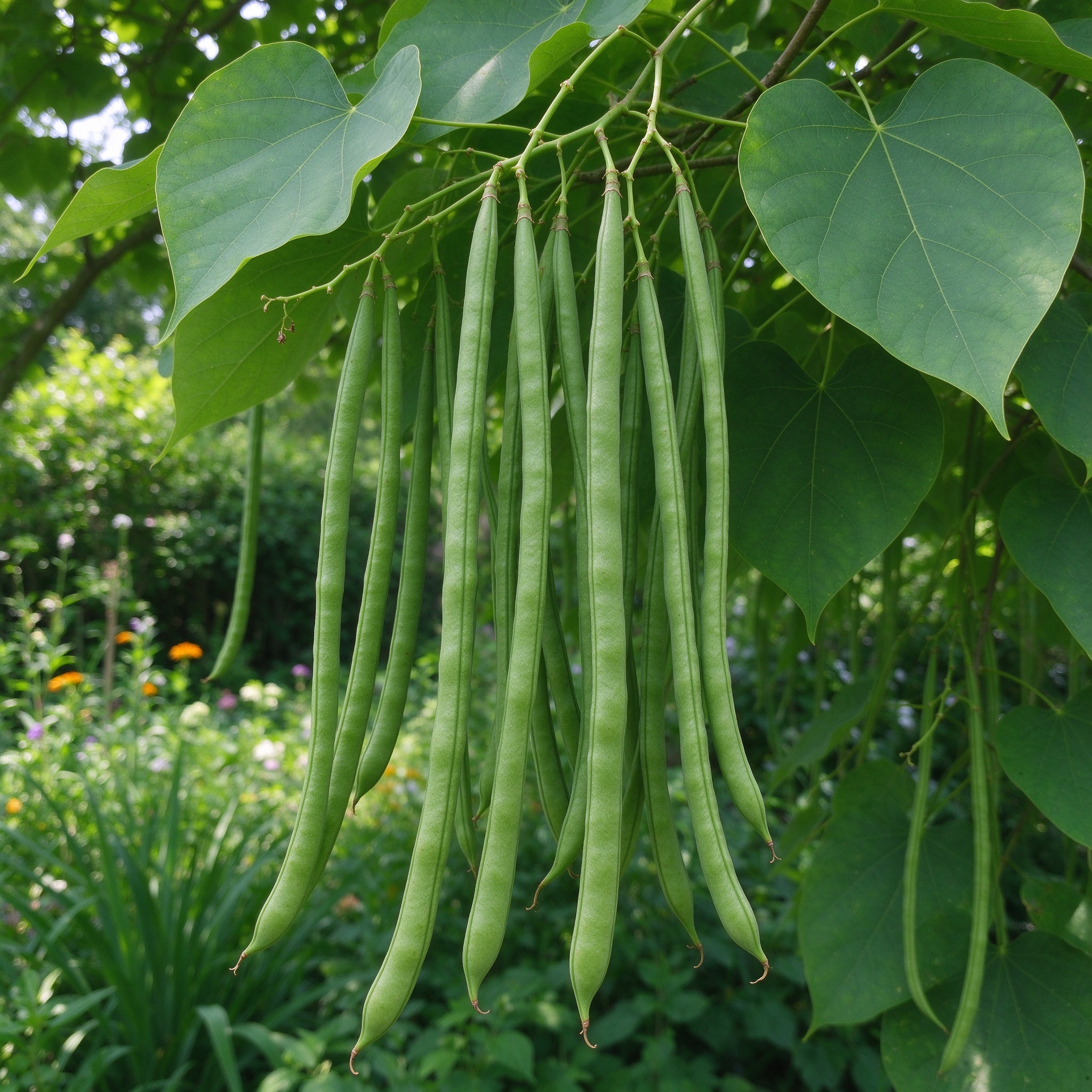
- •Southern catalpa is a deciduous shade tree native to the southeastern United States, growing 40–60 feet tall with an irregular, broad crown.
- •It is best known for its enormous heart-shaped leaves (up to 12 inches long), showy white trumpeted flowers flecked with purple and yellow in late spring, and slender dark bean-like pods that hang through winter.
- •Catalpa adapts to almost any soil, tolerates urban pollution, and is one of the most low-care large trees you can plant.
- •It is also the sole host for the catalpa sphinx moth, whose caterpillars are prized fishing bait.
📋 Quick Facts
Scientific Name: Catalpa bignonioides
Family: Bignoniaceae
Category: tree
USDA Zones: Zones 5–9
Light: Full sun to partial shade. Best flowering and form in full sun; tolerates light shade but becomes sparse and open.
Water:
- •Moderate, even moisture when young; once established, drought-tough. Water deeply once or twice a week during the first growing season.
- •Mature trees rarely need supplemental irrigation.
Temperature: Hardy to -29°C (zone 5). Late frosts may blacken the very large new leaves, but the tree reframes quickly.
Soil: Very adaptable — tolerates clay, poor, alkaline, and compacted soils. Prefers average, well-drained loam but thrives where many other trees struggle.
Harvest:
Common Problems: Brittle wood that drops branches in storms; catalpa sphinx caterpillars can defoliate the tree but it reframes; leaf spot in wet years.
📅 When to Plant
Bare-root trees in late winter/early spring; container-grown trees spring or fall.
🌱 Growing Stages
 1
Dormant
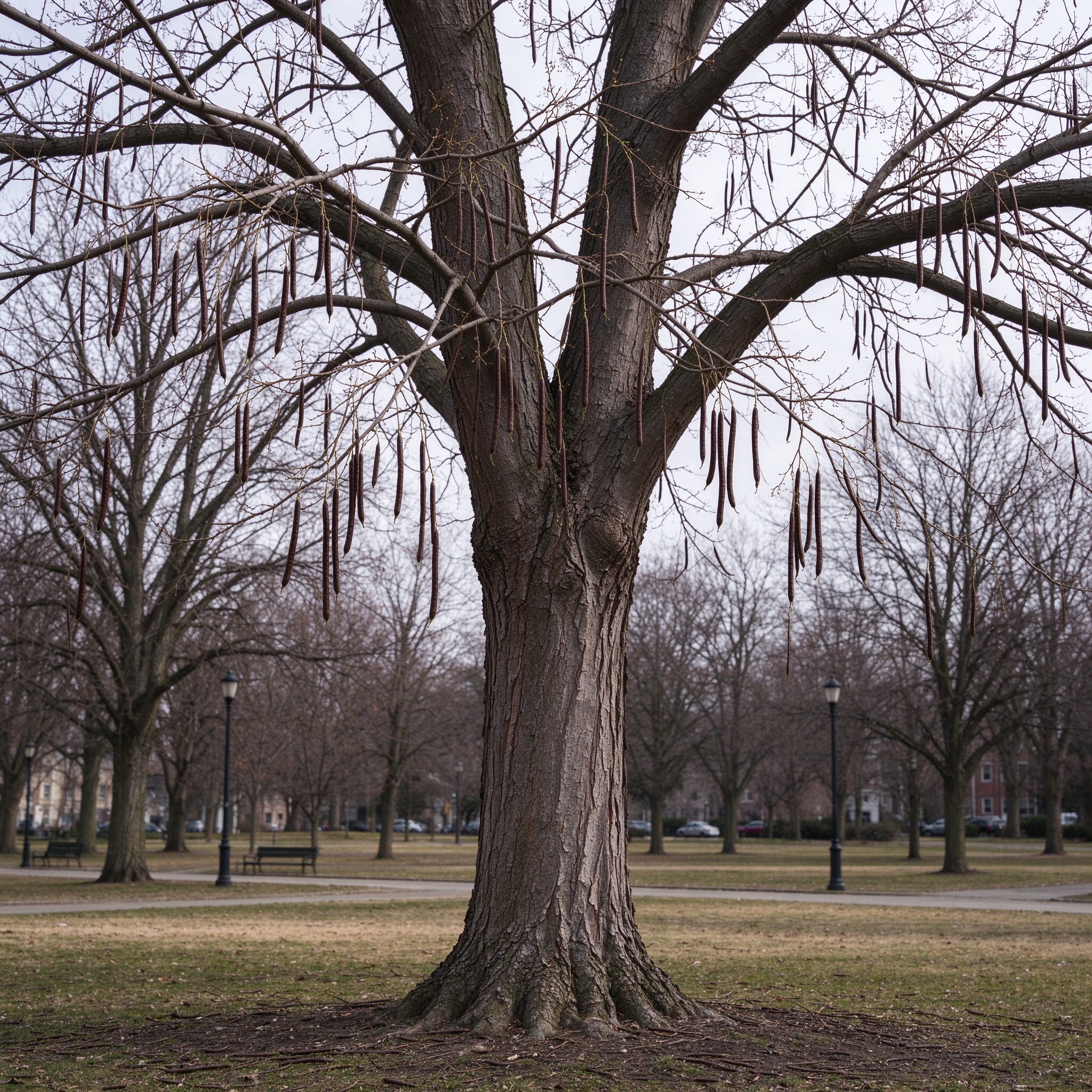
(Winter)Tree is bare with bold, blocky twigs and dangling brown 8–15 inch pods that persist from the previous season.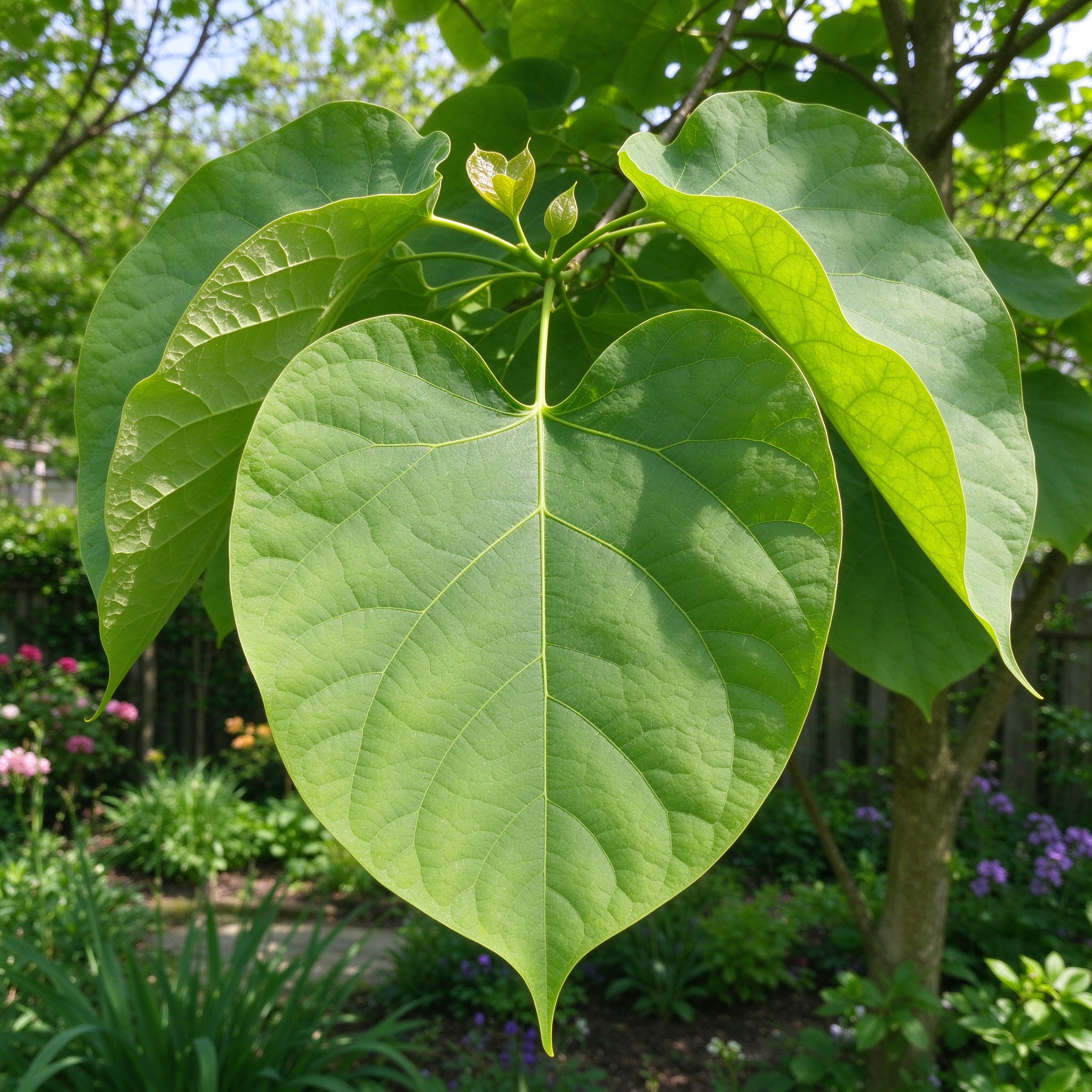 2
Spring Leaf-out
(May)Enormous heart-shaped bronze-purple leaves unfold. They are among the largest leaves of any native North American tree.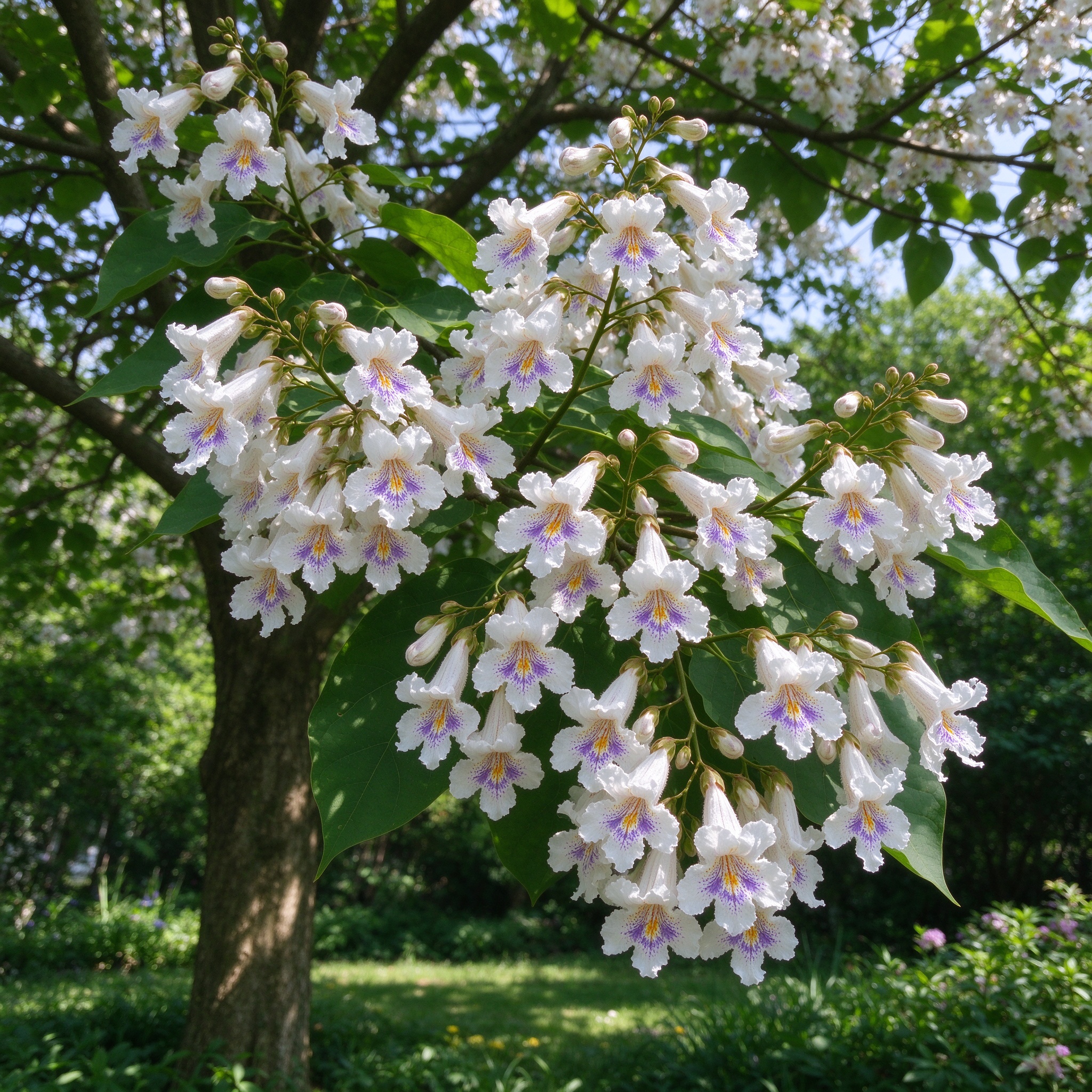 3
Flowering
(June)Large panicles of white trumpet-shaped flowers with yellow and purple inner spotting cover the crown — the tree's ornamental peak.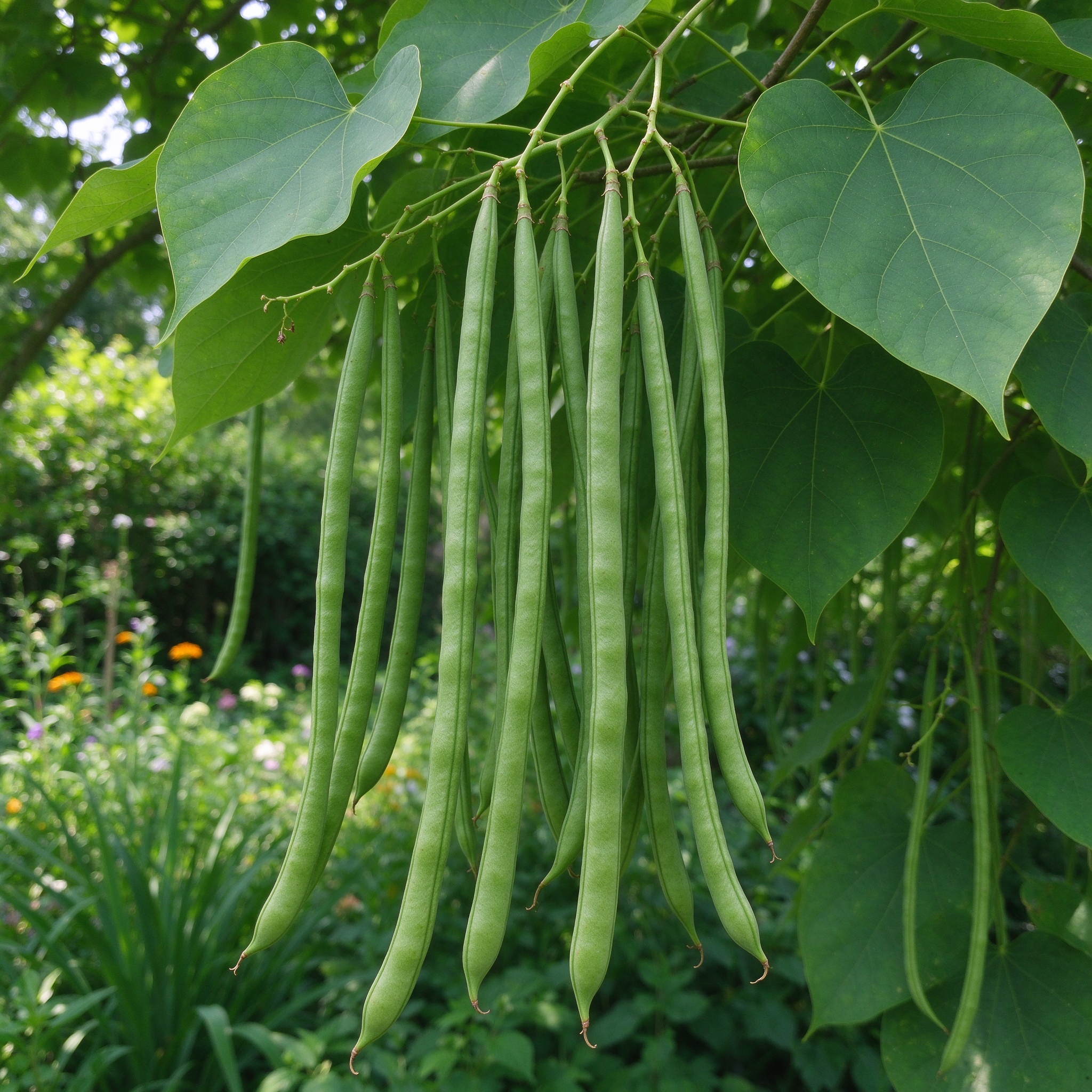 4
Pod Set
(Summer–winter)Long slender green bean pods form, ripening to dark brown and hanging through winter, giving the tree the nickname "cigar tree."
💧 Detailed Care Guide
☀️ Light Requirements
- •Full sun to partial shade.
- •Best flowering and form in full sun; tolerates light shade but becomes sparse and open.
💧 Watering
- •Moderate, even moisture when young; once established, drought-tough. Water deeply once or twice a week during the first growing season.
- •Mature trees rarely need supplemental irrigation.
🌡️ Temperature
- •Hardy to -29°C (zone 5).
- •Late frosts may blacken the very large new leaves, but the tree reframes quickly.
🌱 Soil & Fertilizer
Soil:
Very adaptable — tolerates clay, poor, alkaline, and compacted soils. Prefers average, well-drained loam but thrives where many other trees struggle.
Fertilizer:
- •Little to no fertilizer needed. Too much nitrogen weakens branches and promotes caterpillar outbreaks.
- •A single light application of 10-10-10 in spring for young trees is enough.
📝 Step-by-Step Planting Guide
- 1Choose a site with plenty of room — catalpa spreads as wide as it is tall. Full sun and any average soil.
- 2Dig a hole twice as wide as the root ball, no deeper. Plant at the same depth as in the nursery.
- 3Backfill with native soil, water deeply, and mulch 3 inches around the base, keeping mulch off the trunk.
- 4Water once or twice weekly during the first year. After establishment, only water during prolonged drought.
- 5Prune in late winter to establish a single strong trunk and remove crossing branches.
- 6Rake up fallen pods and leaves in autumn if you want a tidy lawn; otherwise they decompose in place.
🌱 Recommended Varieties
"Nana"
Dwarf, umbrella-shaped grafted form, 10–15 ft high, often used as a specimen in small yards.Northern Catalpa (C. speciosa)
Larger and more upright (60–90 ft), larger flowers, shorter range in the wild.🍅 When to Harvest
❓ Frequently Asked Questions
- 1
Why is catalpa called the cigar tree?
The long, slender dark brown seed pods look like cigars hanging from the branches all winter. - 2
Do catalpa trees lose their pods in fall?
Leaves fall in autumn, but the pods often hang on through winter, dropping gradually the following spring. - 3
Are catalpa trees messy?
Yes — large leaves, thousands of seed pods, and spent flower panicles drop in season. Best suited to a park-like setting rather than a manicured front lawn.
Photo credit: NC State Extension
Images courtesy of NC State Extension under CC BY license. Thank you to the photographers who make these educational images available.
License: CC BY-NC 2.0 / CC BY 4.0