
How to Grow Japanese Maple: Complete Guide
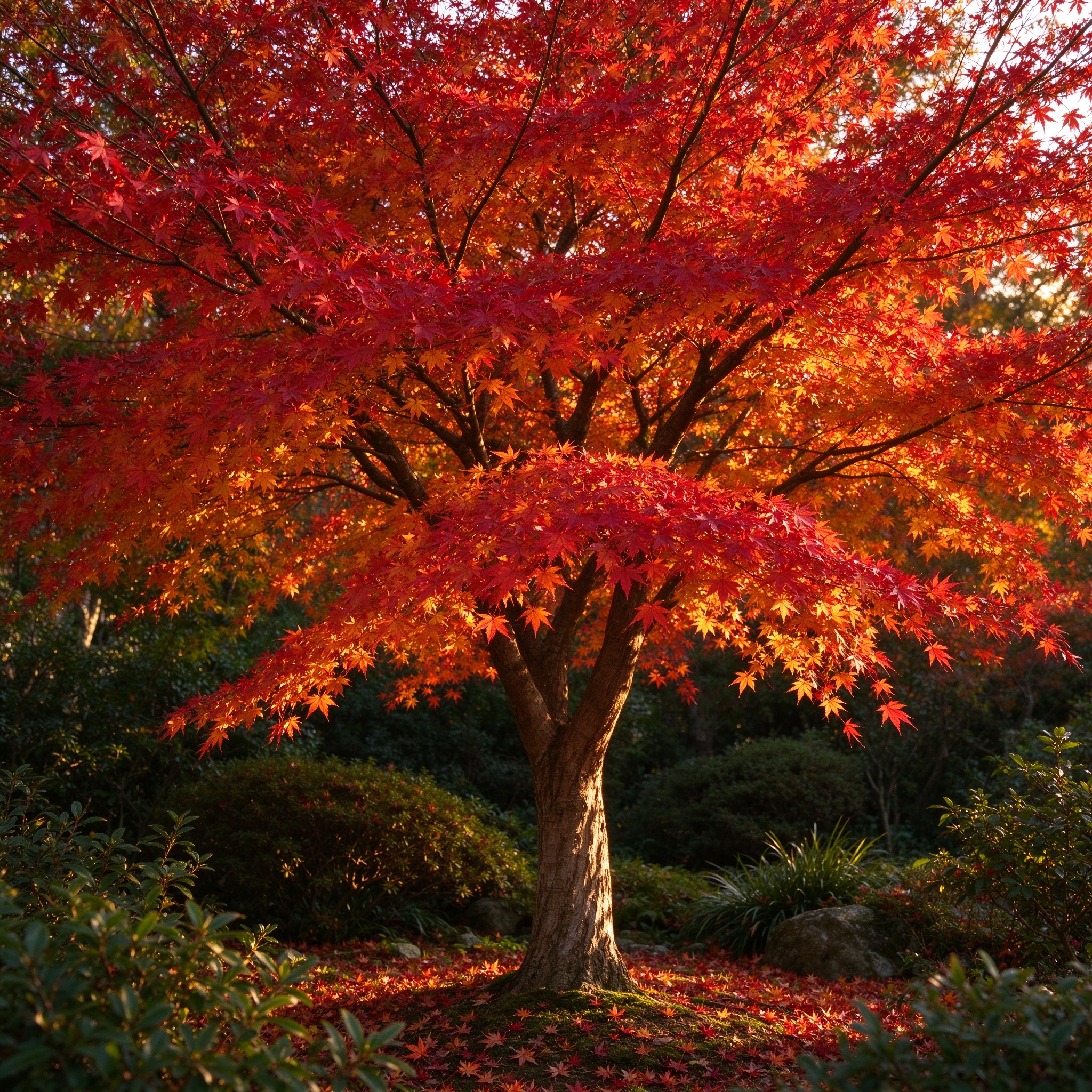
- •Japanese maple is a slow-growing deciduous small tree or large shrub native to Japan, Korea, and China.
- •It typically reaches 15 to 25 feet tall with an equal or greater spread, forming a layered, graceful silhouette.
- •The palmately lobed leaves emerge in spring, green or red depending on cultivar, and turn brilliant yellow, orange, or crimson in fall.
- •Hundreds of cultivars exist, ranging from dwarf mounds to upright specimens, with leaf colors from deep purple to variegated green and white.
- •It is one of the most popular ornamental landscape trees for small gardens, patios, and Japanese-style gardens.
📋 Quick Facts
Scientific Name: Acer palmatum
Family: Sapindaceae
Category: tree
USDA Zones: Zones 5–8 (most cultivars; some hardy to zone 5 with shelter)
Light:
- •Plant in dappled or partial shade. Japanese maples thrive with morning sun and protection from hot afternoon sun, especially in southern zones.
- •Full sun is tolerated in cooler northern climates where moisture is consistent, but leaf scorch is common where summers are hot and dry.
- •Protect from strong, drying winds, which damage foliage.
Water:
- •Keep soil evenly moist but well-drained. Water deeply once or twice a week during the first growing season to establish roots.
- •Once established, about one inch of water per week is sufficient; increase during drought or heat waves.
- •Mulch with two to three inches of shredded bark or leaf mold to retain moisture and protect shallow roots.
- •Do not let the soil dry out completely, and avoid overwatering or planting in soggy ground.
Temperature:
- •Prefers cool summers.
- •Hardy to –20°F (zone 5), but young foliage is sensitive to late spring frosts, which can blacken new leaves.
- •In zone 8 and warmer, provide afternoon shade and consistent moisture to prevent leaf scorch.
Soil:
- •Rich, moist but well-drained, acidic to neutral soil (pH 5.5–7.0).
- •Amend heavy clay with compost and coarse bark to improve drainage; amend sandy soil with organic matter to retain moisture.
- •Japanese maples are shallow-rooted and benefit from annual mulching rather than cultivation near the trunk.
Harvest:
Common Problems: Leaf scorch (brown leaf edges) from too much sun, wind, or drought; late frost damage to new growth; aphids and scale insects; verticillium wilt in poorly drained soil.
📅 When to Plant
- •Plant in early spring after the last frost, or in fall 4–6 weeks before the first frost.
- •Container-grown trees can be planted any time the soil is workable, but avoid summer planting in hot climates.
🌱 Growing Stages
 1
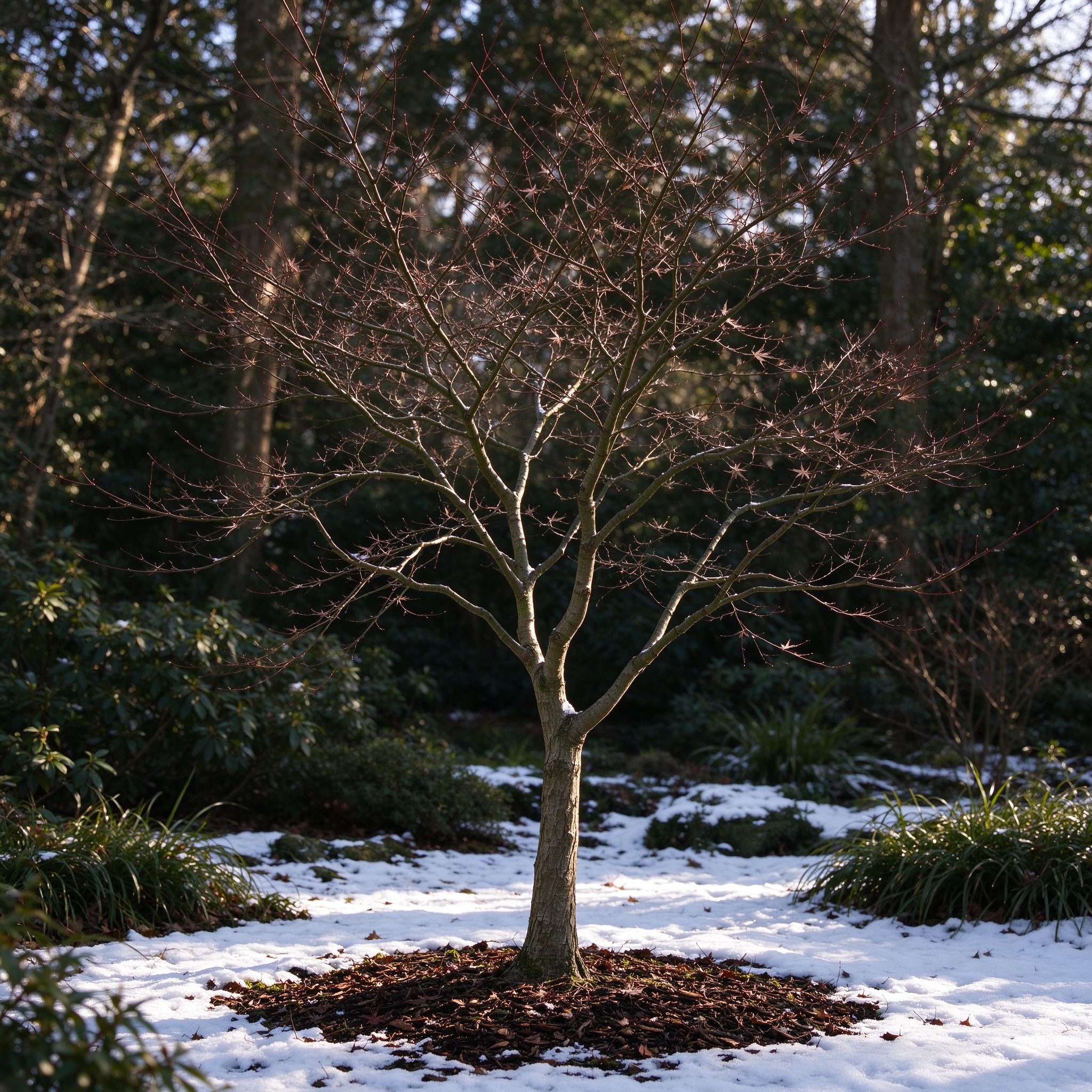
Dormant Season
(Late fall through late winter)- •The tree is bare, with sculptural branching and often colorful bark on cultivars like Sango-kaku.
- •Roots remain active below ground, storing carbohydrates. Do not prune or fertilize during dormancy.
 2
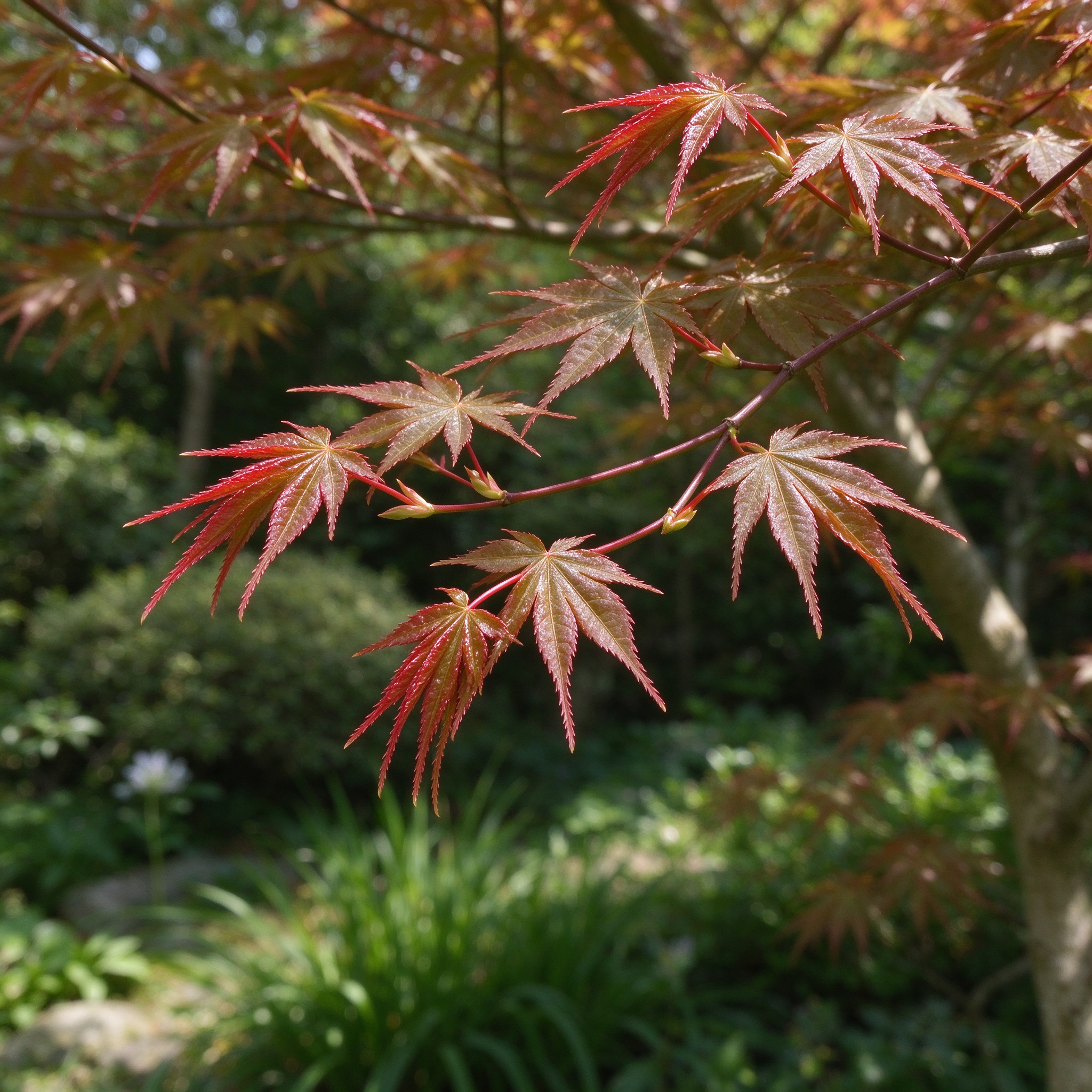
Spring Bud Break
(Early spring, March–April)- •Delicate new leaves unfurl, often red or bronze before turning green.
- •This is the most frost-sensitive stage — a late freeze can blacken the new growth. Protect with burlap if frost is forecast.
 3
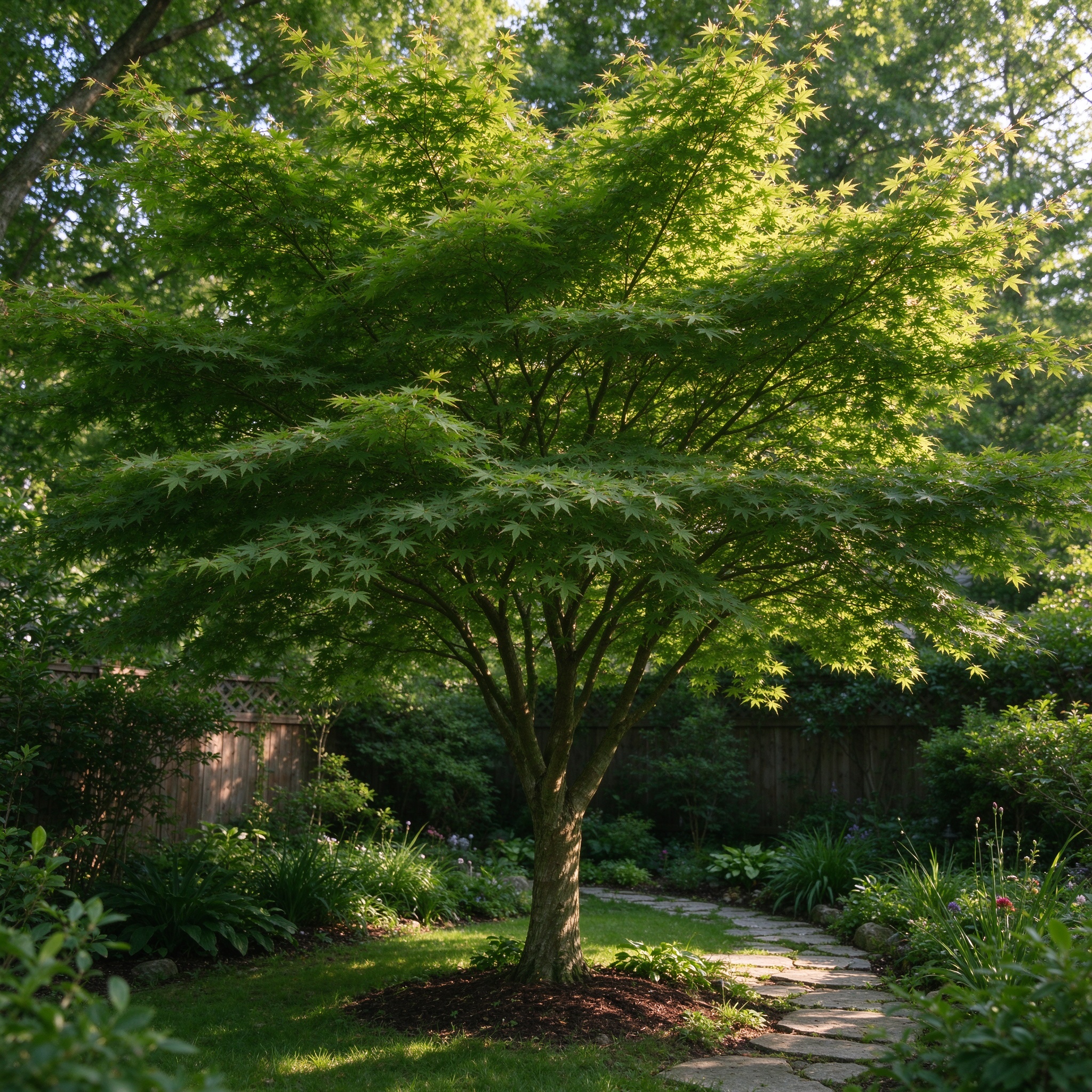
Summer Growth
(May–August)- •The canopy fills out.
- •Leaves are green or deep purple depending on cultivar. Water regularly and watch for leaf scorch on hot afternoons. Apply mulch to keep roots cool.
 4
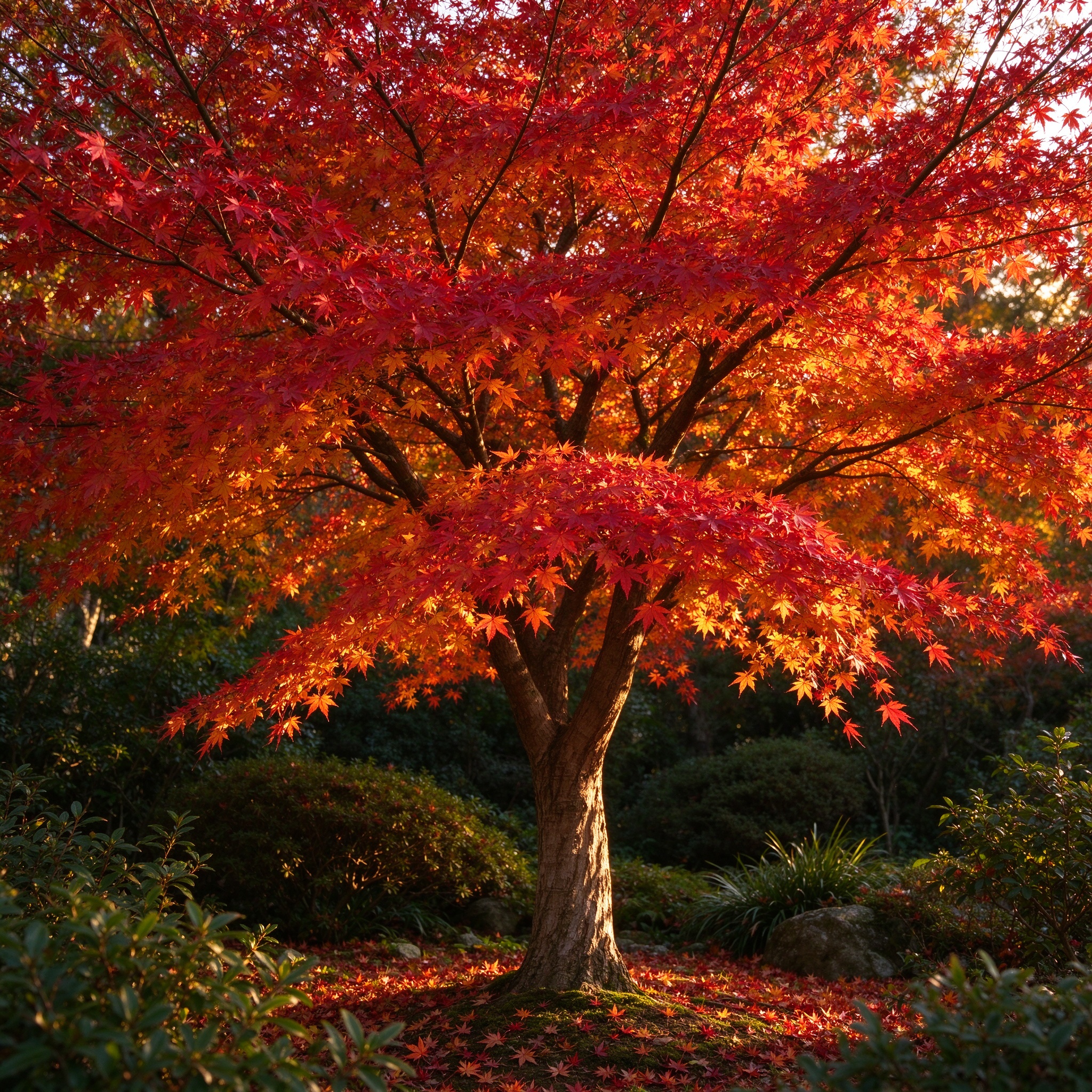
Fall Color
(September–November)- •Leaves turn brilliant yellow, orange, crimson, or deep red depending on cultivar. This is the tree's ornamental peak.
- •Rake leaves if they cover nearby beds, but allow them to decompose under the tree as mulch.
💧 Detailed Care Guide
☀️ Light Requirements
- •Plant in dappled or partial shade. Japanese maples thrive with morning sun and protection from hot afternoon sun, especially in southern zones.
- •Full sun is tolerated in cooler northern climates where moisture is consistent, but leaf scorch is common where summers are hot and dry.
- •Protect from strong, drying winds, which damage foliage.
💧 Watering
- •Keep soil evenly moist but well-drained. Water deeply once or twice a week during the first growing season to establish roots.
- •Once established, about one inch of water per week is sufficient; increase during drought or heat waves.
- •Mulch with two to three inches of shredded bark or leaf mold to retain moisture and protect shallow roots.
- •Do not let the soil dry out completely, and avoid overwatering or planting in soggy ground.
🌡️ Temperature
- •Prefers cool summers.
- •Hardy to –20°F (zone 5), but young foliage is sensitive to late spring frosts, which can blacken new leaves.
- •In zone 8 and warmer, provide afternoon shade and consistent moisture to prevent leaf scorch.
🌱 Soil & Fertilizer
Soil:
- •Rich, moist but well-drained, acidic to neutral soil (pH 5.5–7.0).
- •Amend heavy clay with compost and coarse bark to improve drainage; amend sandy soil with organic matter to retain moisture.
- •Japanese maples are shallow-rooted and benefit from annual mulching rather than cultivation near the trunk.
Fertilizer:
- •Fertilize lightly in early spring with a slow-release, balanced or acid-loving tree/shrub fertilizer.
- •Do not over-fertilize, especially with high-nitrogen lawn fertilizers, which produce weak, brittle growth that is prone to frost damage.
- •Established trees rarely need feeding if mulched annually with organic matter.
📝 Step-by-Step Planting Guide
- 1Choose a site with dappled morning sun and afternoon shade, protected from strong winds. Ensure the soil drains well and is rich in organic matter.
- 2Dig a hole twice as wide as the root ball but no deeper. Place the tree so the root flare sits at or slightly above soil level.
- 3Backfill with native soil amended with compost. Water thoroughly to settle, then mulch with 2–3 inches of shredded bark, keeping mulch away from the trunk.
- 4Water deeply 1–2 times per week during the first growing season. Reduce frequency once established, but never let the root zone dry completely.
- 5Fertilize lightly in early spring with a slow-release acid-loving fertilizer. Avoid high-nitrogen lawn fertilizers near the tree.
- 6Prune only to remove dead or crossing branches in late winter. Do not heavily shape the tree; its natural form is its best feature.
- 7Monitor for aphids, scale, and leaf scorch. Treat aphids with horticultural oil; improve watering and shade if scorch appears.
🌱 Recommended Varieties
"Bloodgood"
Upright tree with deep purple-red leaves that hold color through summer and turn bright red in fall."Crimson Queen"
Weeping, dissected-leaf cultivar with burgundy foliage, reaching 8–10 feet."Sango-kaku" (Coral Bark)
Green leaves turning yellow in fall, famous for bright red coral bark in winter."Dissectum"
Weeping laceleaf types with fine, feathery foliage, ideal for cascading over rocks or containers.🍅 When to Harvest
❓ Frequently Asked Questions
- 1
How big does a Japanese maple get?
- •Most cultivars reach 15–25 feet tall and wide at maturity, growing 1–2 feet per year. Dwarf and weeping types stay under 10 feet.
- •Choose the cultivar carefully to match the space; overgrown Japanese maples do not transplant well.
- 2
Can Japanese maples grow in full sun?
- •In zones 5–6, yes, especially if the soil stays consistently moist. In zones 7–8, afternoon shade is essential to prevent leaf scorch.
- •A site with morning sun and dappled afternoon shade is ideal in all zones.
- 3
Why are my Japanese maple leaves turning brown?
- •Brown, crispy leaf edges are usually leaf scorch caused by hot sun, drying wind, or insufficient water.
- •Check the soil 2–3 inches below the surface; if dry, water deeply. Move container trees to a shadier spot during heat waves.
Photo credit: NC State Extension
Images courtesy of NC State Extension under CC BY license. Thank you to the photographers who make these educational images available.
License: CC BY-NC 2.0 / CC BY 4.0