
How to Grow Bell Peppers: Complete Guide
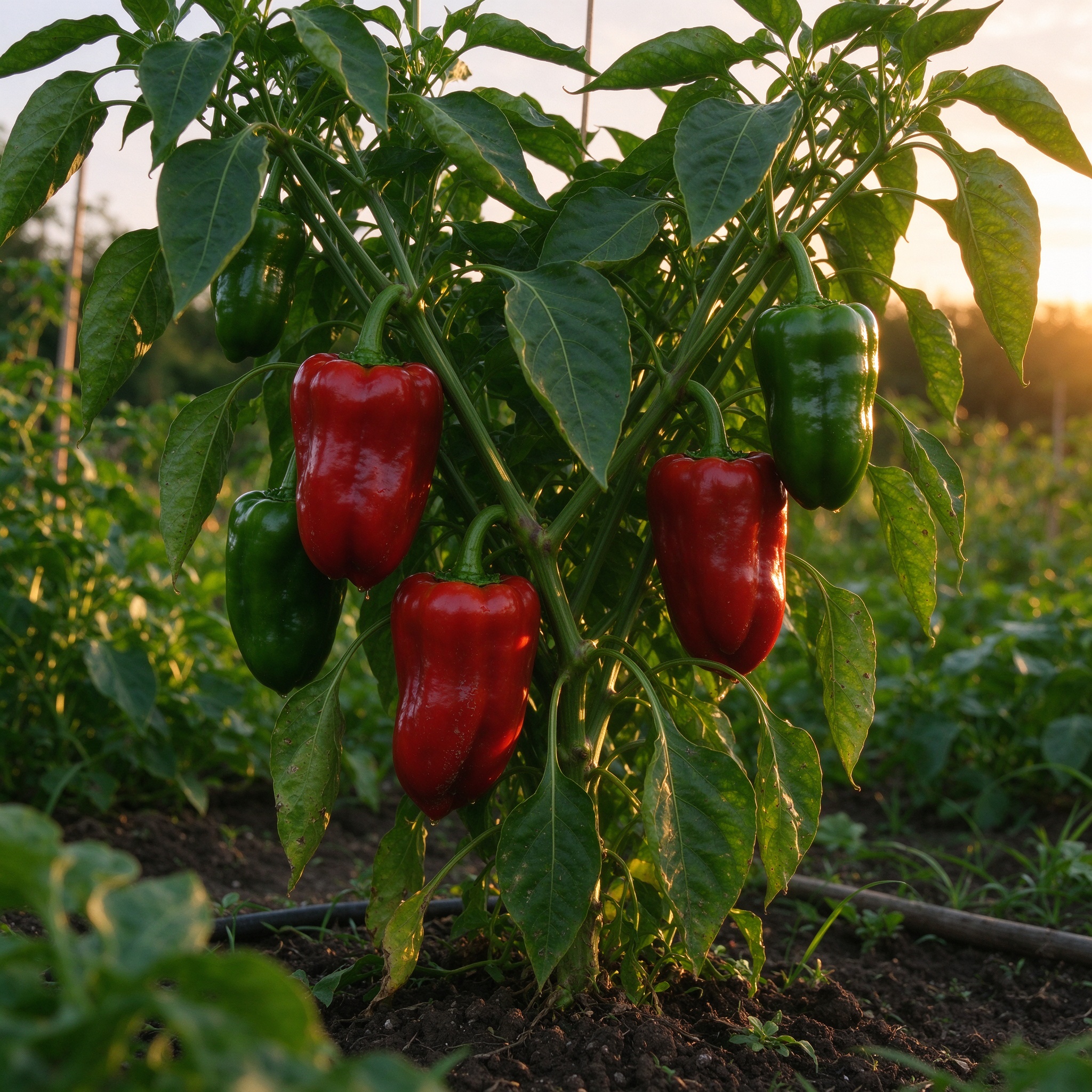
- •Bell peppers (Capsicum annuum) are warm-season, frost-tender perennial nightshades grown as annuals for their blocky, thick-walled sweet fruits that mature from green to red, orange, yellow, or purple.
- •Native to tropical America, they are slower to establish than tomatoes but very productive once settled, thriving in full sun and evenly moist, rich soil.
- •Plants grow 1 to 3 feet tall, need consistent warmth to set fruit, and reward gardeners with crisp, vitamin-C-rich harvests from midsummer until frost.
📋 Quick Facts
Scientific Name: Capsicum annuum
Family: Solanaceae
Category: Vegetable
USDA Zones: 4-11 (annual)
Light:
- •Plant in full sun with at least 6 hours of direct sunlight daily for strong growth and fruit set.
- •In very hot southern gardens, light afternoon shade cloth prevents sunscald on exposed shoulders, but peppers will not fruit well in deep shade.
Water:
- •Water deeply and regularly, about 1 to 2 inches per week, allowing the soil to nearly dry between waterings.
- •Apply water at the base and mulch to lock in moisture. Irregular watering causes blossom-end rot, stress, and poor fruit development.
Temperature:
- •Peppers are heat-loving but flower and fruit best between 70 and 85°F; they drop blossoms if daytime highs exceed 90°F or nights stay above 75°F, and they are damaged below 55°F nights.
- •Seed germination needs soil above 70°F.
Soil:
- •Grow in rich, moist but well-drained loam with a neutral to slightly acidic pH around 6.0 to 6.8.
- •Mix in compost before planting; northern gardeners can warm the bed with black plastic for a few weeks to speed early growth.
Harvest:
- •Bell peppers take about 60 to 90 days from transplanting to a usable green size, and another 2 to 3 weeks to mature to their full red, orange, or yellow color.
- •Pick at any stage with a sharp knife; regular picking keeps plants producing.
- •Fruits become sweeter and more nutritious the longer they stay on the plant.
Common Problems: Blossom end rot, Sunscald, Mosaic virus.
📅 When to Plant
- •Start pepper seeds indoors 8 to 10 weeks before your last spring frost, or buy hardened nursery transplants.
- •Set plants outdoors 2 to 3 weeks after the last frost, once night temperatures stay reliably above 55°F and soil has warmed to about 65°F.
- •In Zone 10 they can be planted as a fall crop.
🌱 Growing Stages
 1
Indoor seedling stage
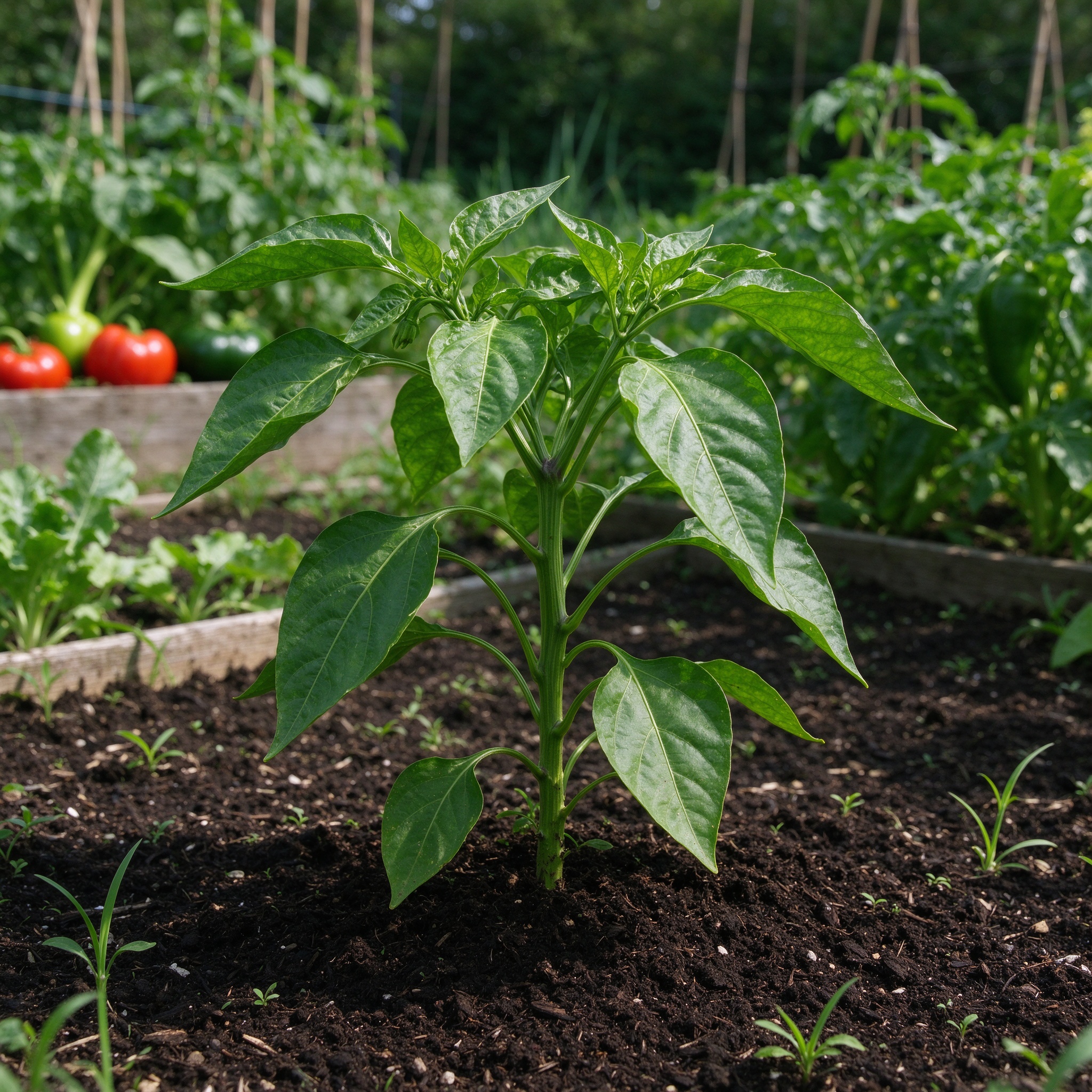
(8–10 weeks)- •Pepper seeds germinate slowly—up to 3 weeks below 70°F—so they are almost always started indoors.
- •Seedlings grow two true leaves, then slowly thicken their stems under bright light.
- •This stage is critical: cold soil, too little light, or overcrowding produces spindly plants that never recover.
- •Harden off for 10 days before moving out.
 2
Transplant establishment
(2–3 weeks)- •After moving into warm garden soil, peppers pause to establish roots before top growth resumes.
- •Water deeply at planting, mulch to keep soil warm, and avoid feeding heavily until new leaves appear.
- •This is when cutworms and cool nights can set plants back; a cloche or wall of water helps in cold springs.
 3
Vegetative branching and flowering
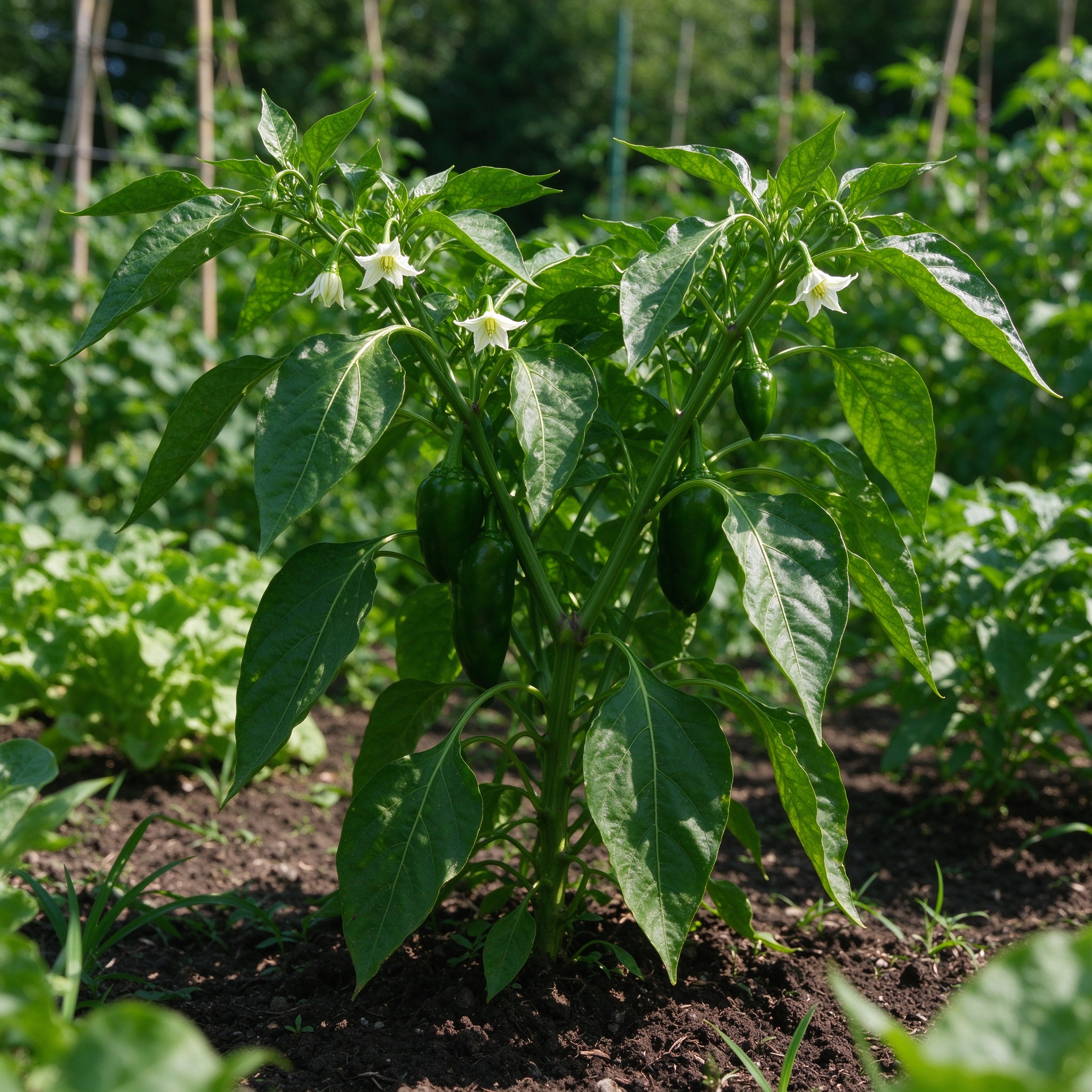
(4–6 weeks)- •Plants branch outward after the early tip pinch, producing ovate dark green leaves and small white star-shaped flowers in leaf axils.
- •Each flower is self-fertile but needs vibration from wind or bees to set a pod.
- •Temperatures between 70 and 85°F and even moisture determine whether blossoms hold or drop in this stage.
- 4
Fruit expansion and coloring
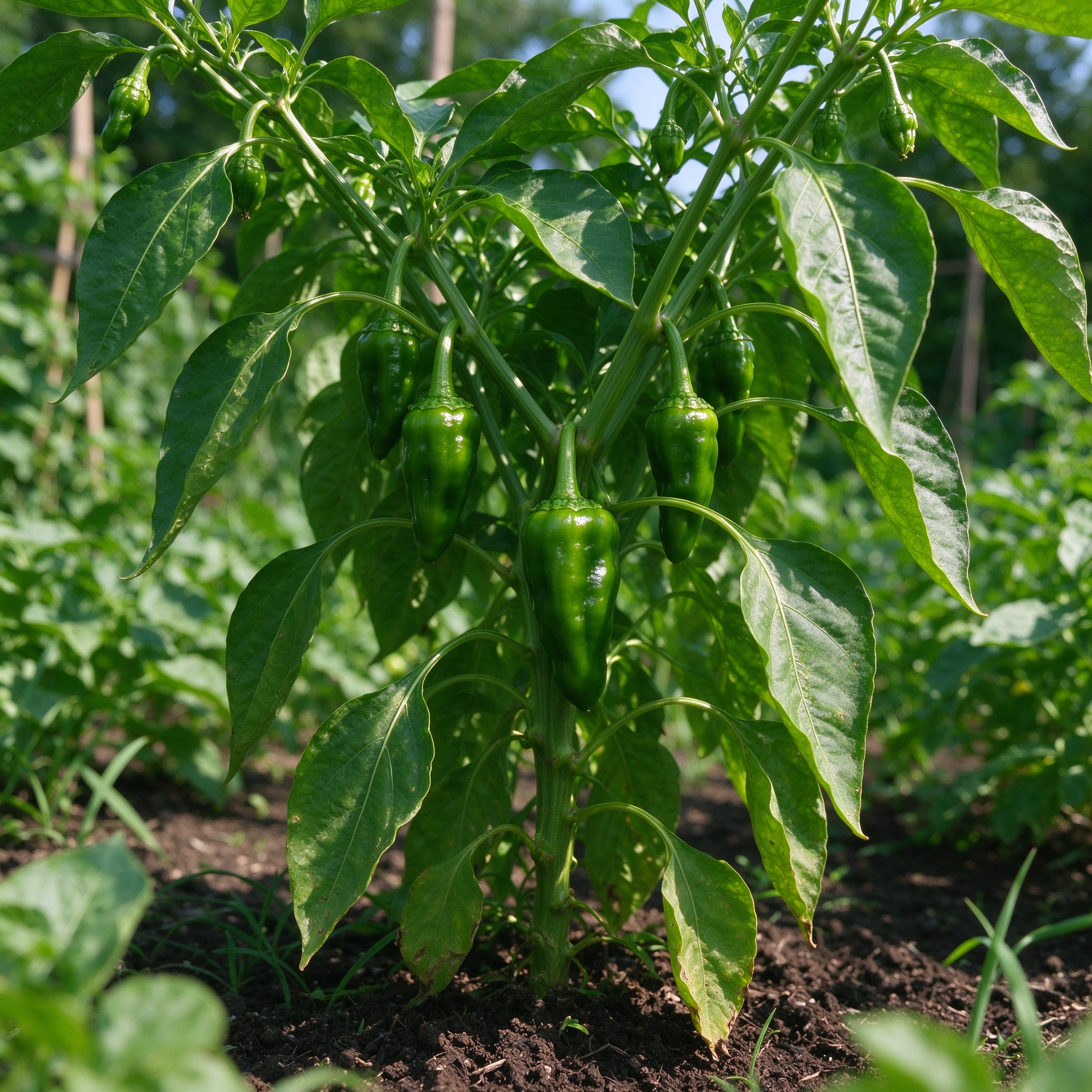
(5–8 weeks)- •Green pods swell rapidly after pollination, reaching full size in 2 to 3 weeks; they then sit on the plant for another 2 to 3 weeks converting from green to their mature red, orange, or yellow color and sugar content.
- •Regular harvesting of early green fruit stimulates new flower set and extends production until frost.
💧 Detailed Care Guide
☀️ Light Requirements
- •Plant in full sun with at least 6 hours of direct sunlight daily for strong growth and fruit set.
- •In very hot southern gardens, light afternoon shade cloth prevents sunscald on exposed shoulders, but peppers will not fruit well in deep shade.
💧 Watering
- •Water deeply and regularly, about 1 to 2 inches per week, allowing the soil to nearly dry between waterings.
- •Apply water at the base and mulch to lock in moisture. Irregular watering causes blossom-end rot, stress, and poor fruit development.
🌡️ Temperature
- •Peppers are heat-loving but flower and fruit best between 70 and 85°F; they drop blossoms if daytime highs exceed 90°F or nights stay above 75°F, and they are damaged below 55°F nights.
- •Seed germination needs soil above 70°F.
🌱 Soil & Fertilizer
Soil:
- •Grow in rich, moist but well-drained loam with a neutral to slightly acidic pH around 6.0 to 6.8.
- •Mix in compost before planting; northern gardeners can warm the bed with black plastic for a few weeks to speed early growth.
Fertilizer:
- •Peppers respond to moderate feeding.
- •Mix compost into the bed at planting, then start feeding with a balanced or low-nitrogen, higher-potassium organic fertilizer (such as tomato fertilizer) once flower buds appear; side-dress every 3 to 4 weeks.
- •Too much nitrogen gives lush leaves but few fruits.
📝 Step-by-Step Planting Guide
- 1
Start seeds indoors early, warm and bright
- •Because peppers are slow growers, sow seed 8 to 10 weeks before your last frost, two seeds per cell 1/4 inch deep in sterile starting mix.
- •Keep soil at 70°F or warmer using a heat mat—germination below 60°F can take 3 weeks or fail entirely.
- •Once seedlings emerge, move them under bright grow lights, water carefully, and thin to the strongest plant per cell.
- •Pot up seedlings into larger containers if roots fill the cells before it is time to move them outdoors, and begin hardening off about 10 days before transplanting by exposing them gradually to wind and sun.
- 2
Transplant after frost, on a cloudy day
- •Wait until all frost danger has passed and nighttime temperatures stay above 55°F, then set hardened transplants 12 to 18 inches apart in rows 2 to 3 feet apart, in a bed where no solanaceous crop has grown for 3 years.
- •Plant at the same depth they grew in their pots, or bury leggy stems up to the lowest leaves.
- •Choose a cloudy day or late afternoon to reduce shock, water deeply, and install a small stake or tomato cage at planting time so you will not disturb roots later.
- •Avoid sites that stayed wet in spring, since peppers hate soggy feet.
- 3
Mulch, water evenly, and keep roots warm
- •Once plants have settled in (about a week after transplanting), apply a 2 to 3 inch layer of straw, chopped leaves, or black plastic mulch to lock in soil moisture, suppress weeds, and keep roots warm.
- •Water deeply once or twice a week—about 1 to 2 inches total—aiming the hose at the base and avoiding wetting leaves.
- •Let the top inch dry between soakings rather than spritzing daily.
- •Consistent even moisture is the single biggest defense against blossom-end rot and poor fruit set during hot spells.
- 4
Pinch for bushiness and feed for fruit
- •When young plants reach about 8 inches tall, pinch out the growing tip to encourage branching and a sturdier, bushier habit that supports heavy fruit loads.
- •As soon as flower buds appear, side-dress with a low-nitrogen, higher-potassium organic fertilizer such as a tomato formulation, and repeat every 3 to 4 weeks through summer.
- •Keep weeds pulled by hand or by shallow cultivation, because peppers have shallow roots.
- •In extreme heat, shade cloth or floating row cover over the plants during the hottest part of the day prevents blossom drop and sunscald.
- 5
Harvest with scissors and keep picking
- •Begin harvesting as soon as fruits reach a usable size—you can pick green bells early, or leave them on to turn red, orange, or yellow for sweeter, vitamin-rich fruit.
- •Always cut the stem with a sharp knife or pruners rather than pulling, since twisting can break brittle branches and reduce later yields.
- •Harvesting regularly stimulates the plant to set more fruit.
- •At season's end, any remaining green bells can be picked and will continue to color up indoors in a warm spot; clear all plant residue to reduce overwintering pests and diseases.
🌱 Recommended Varieties
Early-maturing sweet bells
- •Choose early varieties in short-season or cool-summer areas where peppers struggle to ripen.
- •'Lady Bell' is a thick-walled, blocky green bell that ripens to red and is ready in about 60 to 70 days.
- •'Gypsy' is an early hybrid that matures from yellow-orange to deep red on compact plants.
- •'Bell Boy' is a widely grown early bell with blocky fruits and good disease resistance, popular with first-time pepper growers.
Main-season color bells
- •Main-season varieties produce the thick, glossy fruits typical of farmers' markets.
- •'California Wonder' is the classic heirloom blocky green bell turning deep red, heat-tolerant and disease-resistant.
- •'Orange Sun' is a bright orange open-pollinated bell with juicy, sweet walls.
- •'Golden California Wonder' matures to a rich yellow and offers the same vigorous growth as its green parent.
- •'Big Bertha' and 'Red Knight' are prized for extra-thick walls.
Heirloom and specialty bells
- •Heirloom and open-pollinated bells offer unusual colors and flavors for fresh eating.
- •'Lipstick' is a compact early bell that ripens from green to cherry red with thin, sweet walls ideal for stuffing.
- •'Milena' is a golden-orange open-pollinated variety with blocky fruits.
- •'Sweet Sunset' is a compact variety that changes color from pale yellow through orange to deep red as it matures on the bush, and 'Sweet Orange' is grown for its sugary, crisp bite.
🪴 Growing in Containers
- Use a 3–5 gallon pot with drainage:
- •Peppers develop substantial roots; a 12-inch-wide, 10–12-inch deep pot (3–5 gallons) is the minimum.
- •One plant per pot, with drainage holes and a tray beneath to catch runoff.
- Pick compact and dwarf varieties: Compact bells such as 'Basket of Fire', 'Sweet Sunset', or dwarf blocky varieties perform best in pots; tall standard bells can work but need staking and daily watering in heat.
- Fill with rich, free-draining mix:
- •Use quality potting soil blended with 20 percent compost and a little perlite.
- •Garden soil compacts in pots and causes root rot; do not reuse tired mix from past seasons without adding compost.
- Water daily in summer, feed weekly:
- •Pots dry fast—check daily and water until it runs out the bottom.
- •Once flowers appear, dilute liquid tomato or high-potash fertilizer every 10–14 days; avoid high-nitrogen plant food.
- Place in full sun, shelter from wind:
- •Set pots where they get 6+ hours of direct sun daily.
- •In wind-exposed patios, group pots together or place against a wall; peppers are brittle and loaded branches snap easily without a small stake.
✂️ Pruning & Maintenance
- ✓
Pinch the top at 8 inches
- •When seedlings reach about 8 inches tall, snap out the growing tip.
- •This forces side branching, creating a sturdier bush that spreads out, supports more fruit, and shades its own stems against sunscald.
- ✓
Remove damaged or diseased wood
- •At any time, cut out broken, blackened, or moldy branches back to healthy tissue.
- •This prevents disease from spreading and improves air flow; sanitize pruners between plants with rubbing alcohol.
- ✓
Thin crowded inner growth
- •If the center of a plant becomes a dense tangle, snip a few of the oldest or crossing stems early in summer.
- •Do not strip leaves—pepper foliage is needed to shade fruit from sunscald.
- ✓
Stake heavy-fruiting plants
- •As fruits swell, tie main stems to a short stake or use a small tomato cage.
- •Branches loaded with bells snap under wind or weight; tie loosely with soft twine and retie as plants grow.
🐛 Pest & Disease Control
Common Pests
Aphids
Symptoms: Tiny green or pink soft-bodied insects clustered on new growth and leaf undersides, sucking sap and causing curled, distorted young leaves; sticky honeydew coats foliage and grows black sooty mold.Control:- •Start with a strong jet of water from the hose to knock aphids off plants early in the morning.
- •Follow with weekly insecticidal soap or neem sprays directed at leaf undersides.
- •Encourage ladybugs and lacewings with nectar flowers, and remove heavily infested shoots.
- •Avoid excess nitrogen, which produces the soft, lush growth aphids love.
Cutworms
Symptoms: Smooth, gray or brown caterpillars that hide in soil during the day and chew through seedling stems at or just below soil line at night, toppling newly set transplants as if cut with scissors.Control:- •Protect each transplant with a 3-inch cardboard or aluminum foil collar pushed an inch into the soil.
- •Cultivate the top few inches of soil in spring to expose larvae to birds and drying.
- •Handpick at night with a flashlight, and use floating row covers over young plants until they establish; remove plant residue and weeds from the bed in fall.
Pepper maggots and flea beetles
Symptoms: Pepper maggots are small white larvae that tunnel inside young fruits, causing dimpled, discolored pods and premature drop; tiny black flea beetles pepper new leaves with shot-hole damage early in the season.Control:- •Set out yellow sticky traps to monitor the adult flies and cover plants with row cover until mid-flowering.
- •Destroy infested fruit immediately so larvae cannot complete their cycle.
- •Exclude flea beetles with row covers on new transplants and keep weeds mowed; dusting plants with diatomaceous earth around the base reduces feeding.
Spider mites
Symptoms: Tiny spider-like mites feeding on leaf undersides cause a pale, stippled appearance, fine webbing on hot dry days, and overall bronzing or yellowing of foliage that reduces photosynthesis and fruit size.Control:- •Spray leaf undersides with strong water jets and increase humidity by mulching and misting during hot dry spells.
- •Apply insecticidal soap or horticultural oil when mites first appear, repeating every 3 to 5 days to kill newly hatched mites.
- •Avoid broad-spectrum pyrethroids, which kill the predatory mites that naturally keep spider mites under control.
Common Diseases
Bacterial leaf spot and blight
Symptoms: Small water-soaked brown spots with yellow halos on leaves and rough scab-like lesions on fruits; leaves turn yellow and drop, and stems may develop dark lesions in wet weather.Control:- •Use certified disease-free seed or treat seed with hot water, rotate crops away from solanaceous plants for 3 years, and avoid overhead watering that spreads bacteria.
- •Remove and destroy infected plants, mulch to prevent soil splash, and plant resistant cultivars.
- •Copper sprays may slow spread but cannot cure infected foliage.
Tobacco mosaic virus
Symptoms: Light and dark green mottled mosaic on leaves, narrowed fern-like leaflets, stunted bushy growth, and green or yellow mottled, distorted fruits; spread by infected seed, aphids, and tobacco users' hands.Control:- •There is no cure.
- •Rogue out and destroy infected plants, wash hands after handling tobacco, and use certified virus-free seed.
- •Control aphid vectors with reflective mulches and insecticidal soap.
- •Choose resistant varieties marked with the TMV code and disinfect tools between beds.
Verticillium wilt
Symptoms: Yellow V-shaped blotches on lower leaves that wilt during the day and recover at night, then become permanent; plants are stunted and produce small, sparse fruit even in moist soil.Control:- •Choose resistant cultivars labeled V for Verticillium, plant in fresh, well-drained soil or raised beds, and rotate away from solanaceous crops for 4 years.
- •There is no cure—remove infected plants. Avoid overwatering and keep beds clean of weeds such as nightshades that can host the fungus.
Sunscald
Symptoms:- •Sun-exposed shoulders of fruits develop pale, papery white or yellow patches that later turn tan and shrivel; the affected area may be colonized by secondary molds.
- •Caused by intense direct sun on suddenly exposed fruit after heavy pruning or defoliation.
Control:- •Do not overprune peppers—leave enough foliage to shade developing fruit.
- •Use shade cloth or the natural shade of taller neighboring plants during heat waves, and keep plants healthy so they carry full leaves.
- •Harvest affected fruits promptly; nothing can reverse already damaged skin.
Blossom-end rot
Symptoms:- •A dark, sunken leathery spot on the blossom end of peppers, caused by insufficient calcium uptake when moisture fluctuates.
- •It often appears on the earliest fruits after a dry spell followed by heavy watering.
Control:- •Water consistently and evenly—about 1 to 2 inches per week—and mulch to buffer soil moisture.
- •Avoid deep cultivation near shallow roots and do not over-fertilize with nitrogen.
- •If soil is calcium-poor, add lime or gypsum before planting; remove affected fruit so energy goes into the later crop.
🍅 When to Harvest
- •Bell peppers take about 60 to 90 days from transplanting to a usable green size, and another 2 to 3 weeks to mature to their full red, orange, or yellow color.
- •Pick at any stage with a sharp knife; regular picking keeps plants producing.
- •Fruits become sweeter and more nutritious the longer they stay on the plant.
❓ Frequently Asked Questions
- 1
Why do my pepper plants bloom but drop their flowers without fruiting?
- •Pepper flowers drop when temperatures fall outside the fruit-set window: daytime highs above 90°F or nighttime lows above 75°F (or nights below 60°F) both cause blossoms to abort before fruit forms.
- •Low humidity, drought stress, or a lack of pollinators can compound the problem.
- •During heat waves, shade plants with 30 to 40 percent shade cloth during the hottest afternoon hours, water consistently at the base, and gently shake plants or tap stems midday to help self-pollination.
- •Once temperatures moderate, new flowers will set.
- 2
Do green peppers turn red after picking?
- •Green peppers are simply unripe fruits of the same variety that will eventually color.
- •They will continue to ripen and turn red, orange, or yellow off the vine if kept in a warm spot (around 65 to 70°F), but color develops best and fastest while still attached to the plant.
- •If you pick them just as they begin to blush and store them at room temperature out of direct sun, most will color up in 1 to 2 weeks.
- •Never refrigerate unripe peppers, since cold temperatures halt ripening and ruin flavor.
- 3
Should I prune or pinch bell pepper plants?
- •Bell peppers do not need heavy pruning the way indeterminate tomatoes do, but a light pinch pays off.
- •Once young plants reach about 8 inches tall, snap out the growing tip at the top to encourage branching; bushier plants support more fruit and shade themselves against sunscald.
- •Later in summer, remove only broken, diseased, or very crowded inner branches—never strip the leaves, because peppers need their foliage to protect fruit from sun.
- •Stake or cage plants loaded with fruit to keep branches from snapping.
- 4
Can I grow bell peppers in containers?
- •Yes—peppers are excellent container plants and many gardeners get heavier harvests from pots than from beds because containers warm up fast in spring.
- •Use a pot at least 3 to 5 gallons and 10 to 12 inches deep with drainage holes, one plant per pot, filled with quality potting mix blended with compost.
- •Place in full sun and water daily in hot weather, since pots dry fast; feed with diluted liquid tomato fertilizer every 2 weeks once flowers appear.
- •Compact varieties such as 'Basket of Fire' or dwarf bells work best.
- 5
Why are my peppers small and slow growing?
- •Peppers are naturally slow, especially early in cool spring weather.
- •Growth stalls if roots are cold (soil below 65°F), if plants were overcrowded in their seedling pots, if night temperatures stay below 60°F, or if the soil dries out repeatedly.
- •Ensure at least 6 hours of direct sun, 12 to 18 inch spacing, even moisture under mulch, and light feeding with a potassium-rich fertilizer once buds form.
- •Most plants explode in size once summer heat arrives; thinning excessive small fruits on a plant sometimes helps the remaining ones size up.
- 6
What is the white fuzz or papery patch on my pepper fruit?
- •A pale, papery white or tan patch on the exposed top shoulder of a pepper is sunscald, not a disease.
- •It occurs when intense midday sun hits fruit—often after a storm or heavy prune stripped the shading leaves—and kills the skin cells.
- •It can be trimmed away before eating, but prevention is better: keep plants well foliated, avoid heavy pruning in summer, and use 30 percent shade cloth during heat waves.
- •If the patch is soft and smelly rather than dry and papery, suspect bacterial soft rot and remove the fruit immediately.
Source:
NC State Extension Gardener Plant Toolbox — https://plants.ces.ncsu.edu/images/plants/capsicum-annuum/
The Old Farmer's Almanac — https://www.almanac.com/plant/bell-peppers
Photo credit: NC State Extension
Images courtesy of NC State Extension under CC BY license. Thank you to the photographers who make these educational images available.
License: CC BY-NC 2.0 / CC BY 4.0