
How to Grow Lettuce: Complete Guide
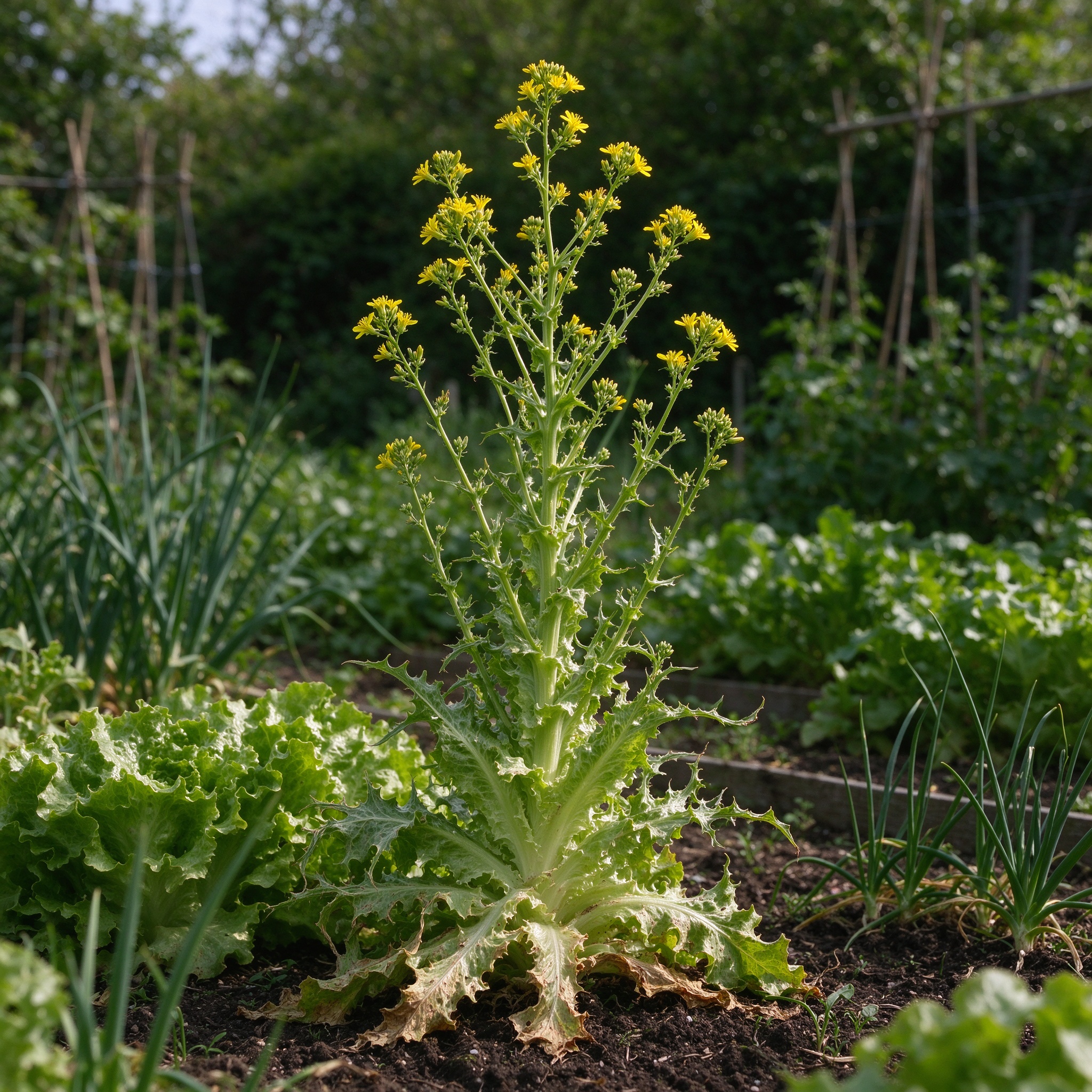
- •Lettuce (Lactuca sativa) is a fast, cool-season annual in the daisy family grown for its tender edible leaves, in head, romaine, butterhead, and loose-leaf forms.
- •Native from the Mediterranean to Siberia, it thrives in spring and fall, bolts and turns bitter in sustained heat above 70°F.
- •With shallow roots and small size, lettuce is ideal for raised beds, containers, succession sowing, and cut-and-come-again harvests, making it the easiest starter crop for beginning gardeners.
📋 Quick Facts
Scientific Name: Lactuca sativa
Family: Asteraceae
Category: Vegetable
USDA Zones: 2-11 (cool season)
Light:
- •Lettuce grows best in full sun to partial shade, about 5 to 6 hours of direct sun daily.
- •In summer, give plants afternoon shade or dappled light from taller crops—too much heat sun triggers bolting.
Water:
- •Lettuce has shallow roots and must stay consistently moist; about 1 inch of water per week, applied lightly and often.
- •Mulch to cool soil and prevent drying. Overwatering causes soft growth and disease; underwatering causes bolting and bitterness.
Temperature:
- •Lettuce is a cool-season crop: ideal growing temperatures are 60 to 70°F.
- •It tolerates light frost but bolts and turns bitter when days stay above 70–80°F. Germination is best at 45 to 65°F.
Soil:
- •Rich, moisture-retentive, well-drained soil with plenty of organic matter; pH 6.0 to 6.7.
- •Dig in compost before sowing, and prepare a fine clod-free seedbed because seed is tiny.
Harvest:
- •Leaf lettuce is ready to pick baby leaves in 25 to 30 days and full-size in 50 to 60 days; butterhead and romaine mature in 60 to 70 days; crisphead (iceberg) in 70 to 80 days.
- •Harvest in the morning before leaves turn warm and bitter.
Common Problems: Bolting, Slugs, Aphids.
📅 When to Plant
- •Direct-sow outdoors 2 to 4 weeks before your last spring frost, or start indoors 6 to 8 weeks ahead for transplants.
- •For fall crops, sow 6 to 8 weeks before the first fall frost. Make small sowings every 2 weeks for a continuous harvest through spring and fall.
🌱 Growing Stages
 1
Germination
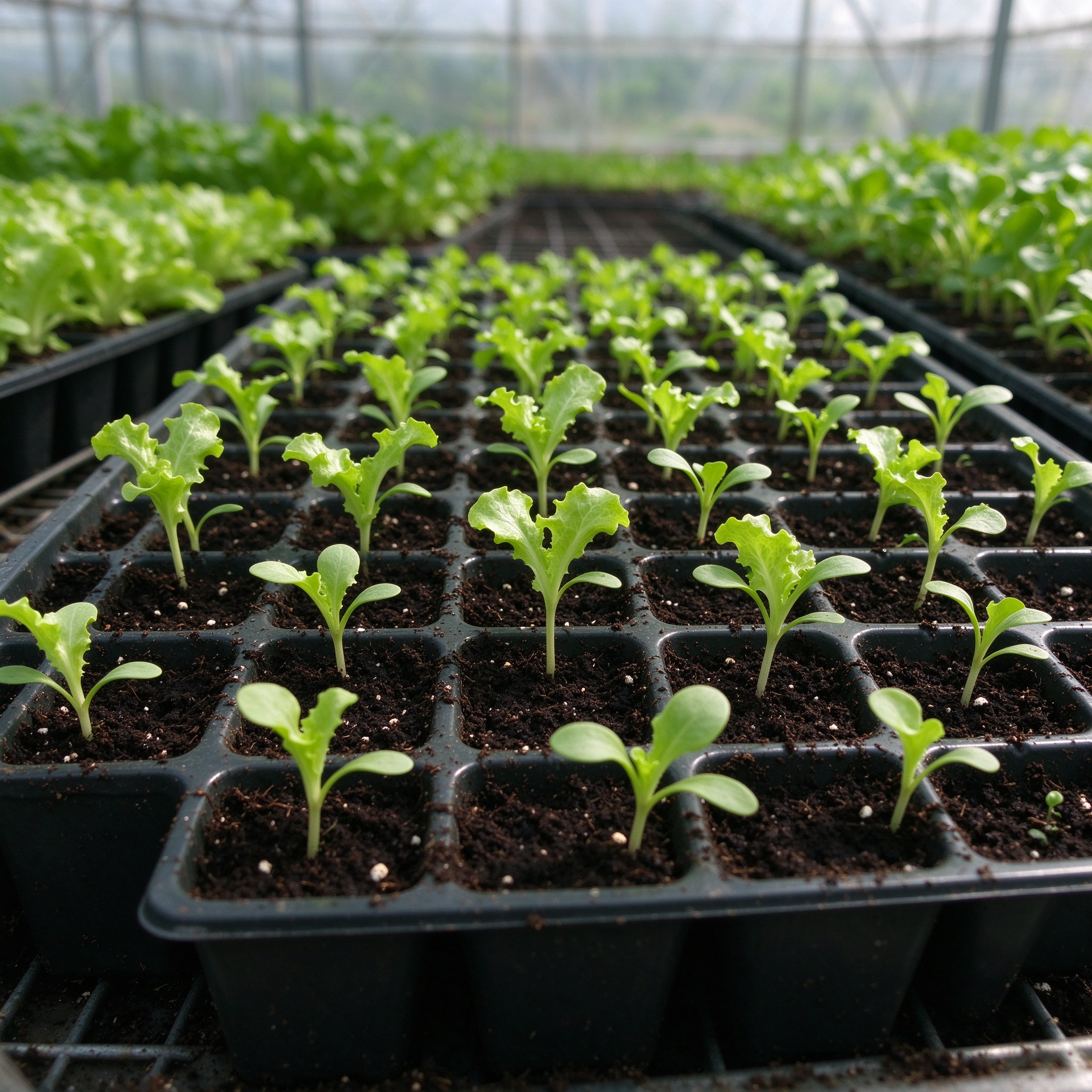
(7–14 days)- •Tiny lettuce seeds need light and cool soil (45–65°F) to sprout; cover them only 1/8 inch deep.
- •Seedlings emerge with two small cotyledons, vulnerable to drying out and damping-off. Keep the seedbed moist but not soggy.
 2
Seedling and thinning stage
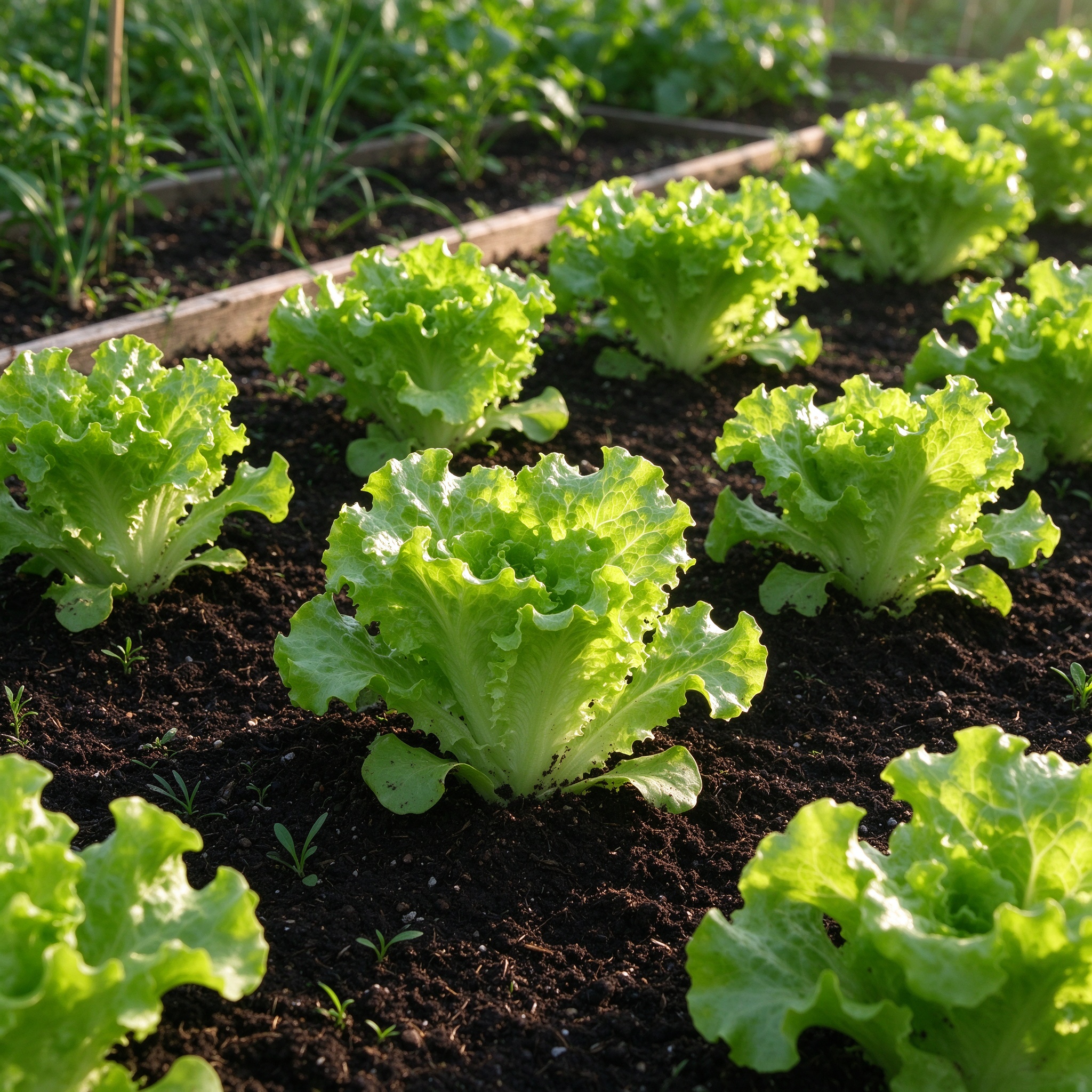
(2–3 weeks)- •True leaves develop and seedlings need space. Thin leaf types to 4 inches, butterhead and romaine to 8, crisphead to 16.
- •Thinnings are eaten as baby greens; this is also when slugs, cutworms, and aphids do their worst damage.
 3
Rosette / head formation
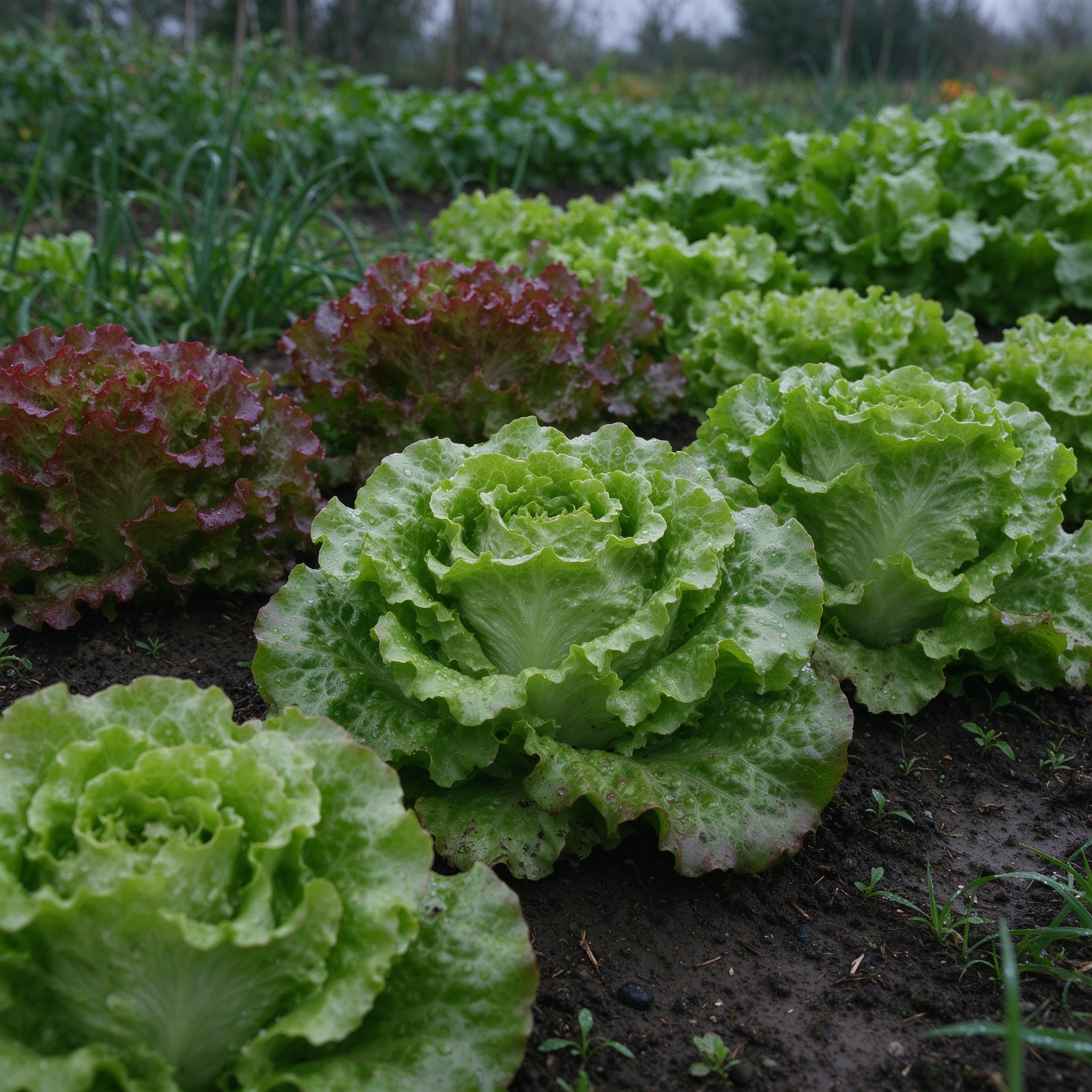
(3–6 weeks)- •Plants spread into a tight rosette; head types fold inner leaves into a firm heart.
- •Water, mulch, and one light top-dressing of nitrogen keep leaves tender. Watch for bolting stalks in warm weather.
- 4
Harvest and possible rebloom
(2–6 weeks depending on type)- •Pick baby leaves continuously, or cut whole heads at firmness. Butterhead and romaine stumps often sprout a smaller second crop.
- •Once a flower stalk forms, the plant is done—pull it and resow.
💧 Detailed Care Guide
☀️ Light Requirements
- •Lettuce grows best in full sun to partial shade, about 5 to 6 hours of direct sun daily.
- •In summer, give plants afternoon shade or dappled light from taller crops—too much heat sun triggers bolting.
💧 Watering
- •Lettuce has shallow roots and must stay consistently moist; about 1 inch of water per week, applied lightly and often.
- •Mulch to cool soil and prevent drying. Overwatering causes soft growth and disease; underwatering causes bolting and bitterness.
🌡️ Temperature
- •Lettuce is a cool-season crop: ideal growing temperatures are 60 to 70°F.
- •It tolerates light frost but bolts and turns bitter when days stay above 70–80°F. Germination is best at 45 to 65°F.
🌱 Soil & Fertilizer
Soil:
- •Rich, moisture-retentive, well-drained soil with plenty of organic matter; pH 6.0 to 6.7.
- •Dig in compost before sowing, and prepare a fine clod-free seedbed because seed is tiny.
Fertilizer:
- •Lettuce is a moderate feeder.
- •Mix compost into the bed before sowing, then top-dress with alfalfa meal or a balanced organic fertilizer about 3 weeks after transplanting or when seedlings are established.
- •Keep nitrogen steady for tender growth.
📝 Step-by-Step Planting Guide
- 1
Prepare a fine, rich seedbed
- •Lettuce seed is tiny, so rake the bed to a fine, crumbly tilth and remove stones and clods that would block germination.
- •Dig in 1 to 2 inches of compost or well-rotted manure and, if your soil is heavy, mix in sand or leaf mold.
- •Lettuce likes a pH of 6.0 to 6.7; a soil test will tell you if lime is needed.
- •Mark shallow drills 8 to 12 inches apart with a string line, water the row well, and wait for the surface to dry just enough to sow—seeds must not be buried deeply.
- 2
Sow shallow and thin as seedlings appear
- •Sow seeds only 1/8 to 1/4 inch deep—lettuce needs light to germinate, so barely cover with fine soil.
- •You can sow in clusters every 4 inches in drills, or broadcast loose-leaf types over a wide row.
- •Keep the seedbed evenly moist; in warm weather, water lightly twice a day.
- •When seedlings are 1 to 2 inches tall, thin them: leaf lettuce to 4 inches apart, romaine and butterhead to 8 inches, crisphead to 16 inches.
- •Use the thinnings as baby greens in salads.
- 3
Start successive sowings every 2 weeks
- •Because lettuce matures so fast and then quickly bolts or becomes bitter, never plant the whole row at once.
- •Sow a small new row every 10 to 14 days from early spring through mid-spring, and again from late summer into fall.
- •In hot climates, stop sowing in the heat of summer; resume when nights cool in late August, or grow heat-tolerant varieties under shade cloth.
- •Interplant slow-maturing crops such as broccoli or Brussels sprouts with lettuce to use space efficiently.
- 4
Water, mulch, and feed young plants
- •Lettuce has shallow roots, so water lightly and often—about 1 inch per week—keeping the top inch moist.
- •Once seedlings are 2 to 3 inches tall, apply a 2-inch organic mulch of straw, chopped leaves, or compost to cool the soil, suppress weeds, and reduce watering needs.
- •Top-dress with alfalfa meal or balanced organic fertilizer about 3 weeks after sowing.
- •Water in the morning so leaves dry quickly; wet leaves overnight invite bottom rot and mildews.
- •Keep weeds pulled by hand, since lettuce roots are easily damaged.
- 5
Harvest outer leaves or whole heads
- •You can pick individual baby leaves 2 to 3 inches long from the outside of the plant at any time, leaving the center to grow for cut-and-come-again harvests over many weeks.
- •For butterhead, romaine, or crisphead, cut the whole plant about an inch above the soil surface when heads are firm; a second smaller crop often sprouts from the stump.
- •Harvest in the cool morning, rinse leaves, and spin or pat dry; store in a plastic bag in the crisper for up to 10 days.
🌱 Recommended Varieties
Early spring loose-leaf varieties
- •Fast-maturing leaf lettuces are perfect for early spring and baby greens.
- •'Black-Seeded Simpson' is the classic loose-head green lettuce, tender and ready very early.
- •'Salad Bowl' is a frilly oakleaf-type leaf lettuce that resists tipburn and is harvested cut-and-come-again.
- •'Red Sails' is an All-America Selections winner with ruffled red leaves, heat-tolerant and decorative.
Main-season butterhead and romaine
- •Butterhead and romaine types hold well into late spring and early fall.
- •'Buttercrunch' is an AAS-winning butterhead with tender green leaves, mild flavor, and bolt resistance.
- •'Bibb' is the classic small loose-head with sweet soft leaves.
- •'Parris Island Cos' (romaine) is a upright, dark green, heat-tolerant cos; 'Little Gem' is a tiny fast romaine loved for tight sweet hearts.
Heirloom and specialty head types
- •Head lettuces and heirlooms reward careful spacing. 'Ithaca' and 'Pennlake' are crisphead strains that form firm heads in North Carolina conditions.
- •'Great Lakes' is the classic crisphead heirloom.
- •'New Red Fire' is a heat- and bolt-resistant ruffled red-and-green leaf lettuce, and 'Jericho' is a heat-tolerant romaine bred for spring and summer planting.
🪴 Growing in Containers
- Use a shallow, wide pot: Lettuce has shallow roots: a window box or pot 6 to 12 inches deep and 18 inches wide is perfect. You can densely sow mixed baby greens in a single large tub.
- Sow densely and thin: Sow seeds 1/2 inch apart on the surface, cover with 1/4 inch of potting mix, and thin to 4–8 inches depending on type. Use the thinnings as mesclun.
- Keep soil constantly moist:
- •Pots dry fast—check daily and water in the morning. Use a fine rose or handheld pump bottle so you don't wash tiny seeds out.
- •Mulch the surface with a little compost.
- Feed lightly every 2 weeks:
- •Once seedlings are 4–6 inches tall, feed with half-strength balanced liquid fertilizer every 2 weeks.
- •Too much nitrogen gives soft, bug-prone leaves; too little makes them bitter.
- Move pots with the seasons:
- •In spring, place in full sun; in summer, move into afternoon shade or under shade cloth.
- •Cold frames and porch pots let you extend harvests in fall and even winter in mild zones.
✂️ Pruning & Maintenance
- ✓
Harvest outer leaves continuously
- •For cut-and-come-again crops, snip outer 3–4 inch leaves with scissors, leaving the center.
- •This is the main 'pruning' of lettuce and keeps the plant producing for weeks.
- ✓
Cut whole heads at the base
When heads are firm, use a sharp knife to cut the plant an inch above the soil. Stumps often sprout a smaller second crop; leave them if you want one. - ✓
Remove bolting stalks immediately
- •As soon as a center flower stalk appears, pull the plant—leaves turn bitter within days.
- •Resow a fresh row in its place; never let one bolting plant waste garden space.
- ✓
Trim yellow or damaged leaves
Snip off any yellow, slug-eaten, or diseased leaves at the base. This improves air flow and prevents rot from spreading into the heart of head lettuces.
🐛 Pest & Disease Control
Common Pests
Aphids
Symptoms: Tiny green, pink, or gray-green aphids cluster on leaf undersides and at the base of heads, sucking sap and causing curled, puckered leaves; sticky honeydew grows black sooty mold and heads become contaminated with shed skins.Control:- •Spray leaf undersides and leaf bases with a strong jet of water early in the morning.
- •Use insecticidal soap or neem oil every few days, and plant chives, garlic, or nasturtiums as barrier and repellent companions.
- •Inspect leaves before eating, and wash thoroughly; tolerant resistant varieties reduce buildup.
Slugs and snails
Symptoms: Irregular ragged holes in tender leaves and seedlings, with silvery slime trails on foliage and soil; small seedlings may disappear overnight entirely.Control:- •Handpick at dusk with a flashlight, set out shallow beer traps sunk to the rim, or lay boards in the evening and scrape slugs off each morning.
- •Use copper tape or a 1-inch band of food-grade diatomaceous earth around beds, and avoid thick bark mulch that shelters them.
- •Water in the morning so the surface dries by night.
Cutworms
Symptoms: Smooth gray or brown caterpillars that hide in soil by day and chew through seedling stems at or just below soil line at night, toppling whole rows of newly set transplants.Control:- •Protect each transplant with a 3-inch cardboard or foil collar pushed an inch into the soil.
- •Cultivate the top few inches in spring to expose larvae to birds.
- •Handpick at night, use floating row covers, and remove weed residue where adults lay eggs.
Whiteflies
Symptoms: Tiny white insects that fly up in clouds when leaves are disturbed, sucking sap from undersides, causing yellow speckling, sticky honeydew, and stunted growth; often worse on greenhouse-grown starts.Control:- •Spray leaf undersides with water jets and use yellow sticky traps.
- •Apply insecticidal soap every few days and use a handheld vacuum on adults early in the morning.
- •Remove heavily infested leaves; reflective aluminum mulch repels them early in the season.
Common Diseases
Downy mildew
Symptoms: Yellow angular lesions on upper leaf surfaces with white to gray fuzzy growth on undersides; leaves turn brown and die in cool wet spring or fall weather.Control:- •Plant in full sun with good air circulation, space plants properly, water in the morning, and avoid overhead irrigation.
- •Remove infected leaves, rotate crops, and choose resistant varieties. Copper sprays may slow spread but cannot cure infected tissue.
Powdery mildew
Symptoms: A white talcum-like coating on upper leaf surfaces that spreads over leaves, causing them to yellow, distort, and die.Control:- •Space plants for air flow, water at the soil line, and remove badly infected leaves.
- •Spray preventively with 1 teaspoon baking soda per quart of water plus a little dish soap.
- •Grow resistant varieties and avoid shady, crowded plantings.
Lettuce mosaic virus
Symptoms:- •Leaves show green mottling, brown spots, blistering, and backward curling; plants are stunted, heads distorted or fail to form.
- •Spread by aphids and infected seed.
Control:- •There is no cure—pull and destroy infected plants. Use certified virus-free seed, control aphid vectors, and use row covers.
- •Disinfect tools and remove weeds that host the virus; choose resistant varieties.
Damping-off
Symptoms: Seedlings suddenly topple and rot at the soil line, or fail to emerge; caused by soil-borne fungi in wet, cold, overcrowded conditions.Control:- •Use sterile seed-starting mix, do not overwater, and sow thinly. Ensure good air circulation and warm soil (above 50°F) for fast germination.
- •Drench with a labeled fungicide if it becomes a recurring problem, and rotate seed beds.
White mold (Sclerotinia)
Symptoms: Pale gray water-soaked areas on stems and leaves that develop white cottony growth and hard black resting pellets; plants wilt and collapse at the soil line.Control:- •Ensure good air circulation, water in the morning, and avoid crowding. Remove infected plants and crop residue; rotate on a 5-year cycle.
- •The fungus lives for years in soil, so a clean, sunny, well-drained bed is the best prevention.
🍅 When to Harvest
- •Leaf lettuce is ready to pick baby leaves in 25 to 30 days and full-size in 50 to 60 days; butterhead and romaine mature in 60 to 70 days; crisphead (iceberg) in 70 to 80 days.
- •Harvest in the morning before leaves turn warm and bitter.
❓ Frequently Asked Questions
- 1
How do I keep lettuce from bolting and turning bitter?
- •Bolting is triggered by sustained temperatures above 70–80°F plus long days.
- •To delay it, plant heat-tolerant varieties such as 'Jericho', 'New Red Fire', or 'Slobolt', sow in partial shade or under 30 percent shade cloth during warm spells, and keep soil consistently moist under mulch.
- •Plant lettuce in the dappled shade of taller crops such as sweet corn or tomatoes.
- •Harvest outer leaves often and remove any plant that sends up a flower stalk—once it bolts, the leaves turn bitter fast.
- 2
What is the cut-and-come-again method?
- •Cut-and-come-again means harvesting outer leaves a few inches long with scissors rather than pulling the whole plant, so the central growing point keeps producing for weeks.
- •Leaf, oakleaf, and baby-mix lettuces respond especially well; butterheads can be cut about an inch above the ground and often sprout a second small crop.
- •It stretches your harvest over many weeks from a small sowing and gives you tender young leaves rather than one head all at once.
- 3
Can I grow lettuce in containers?
- •Yes—lettuce is one of the easiest container crops. Use a pot or window box 6 to 12 inches deep, sow seeds densely 1/2 inch apart, and thin as needed.
- •Keep the soil constantly moist (pots dry fast) and fertilize with half-strength balanced liquid fertilizer every 2 weeks.
- •Place in full spring sun, then move pots into afternoon shade as summer heats up. Succession-sow fresh pots every 2 weeks for a steady supply.
- 4
Why are my lettuce seedlings leggy?
- •Leggy, stretched seedlings almost always mean too little light or too much heat.
- •If started indoors, move them under bright grow lights close to the tops, keep them cool (55–65°F nights), and avoid overcrowding.
- •If direct-sown seedlings are spindly, thin them properly—competition for light makes them stretch.
- •Leggy seedlings can be replanted deeper when transplanted, but it is usually easier to resow in a sunny spot at the right season.
- 5
When should I start lettuce for a fall crop?
- •For fall harvest, sow lettuce directly 6 to 8 weeks before your first expected fall frost.
- •Because late-summer soil is often too hot for good germination, you can pre-cool the soil by watering it and covering it with a straw bale or shade cloth for a week before sowing, then sow in the cool soil.
- •Fall lettuce often tastes sweeter because nights are cool, and a light frost actually improves flavor.
- •Use row covers to extend harvest into late fall.
- 6
How do I wash and store homegrown lettuce?
- •Harvest in the cool morning, plunge leaves into cold water to wash off soil and aphids, then spin or pat dry.
- •Store in a loosely closed plastic bag in the crisper drawer—head lettuce keeps 2 to 3 weeks, leaf and butterhead 1 to 2 weeks.
- •Wilted leaves can be revived by soaking in ice water for 15 minutes.
- •Do not store apples or ethylene-producing fruit near lettuce, since ethylene causes browning.
Source:
NC State Extension Gardener Plant Toolbox — https://plants.ces.ncsu.edu/images/plants/lactuca-sativa/
The Old Farmer's Almanac — https://www.almanac.com/plant/lettuce
Photo credit: NC State Extension
Images courtesy of NC State Extension under CC BY license. Thank you to the photographers who make these educational images available.
License: CC BY-NC 2.0 / CC BY 4.0