
How to Grow Tomatoes: Complete Guide
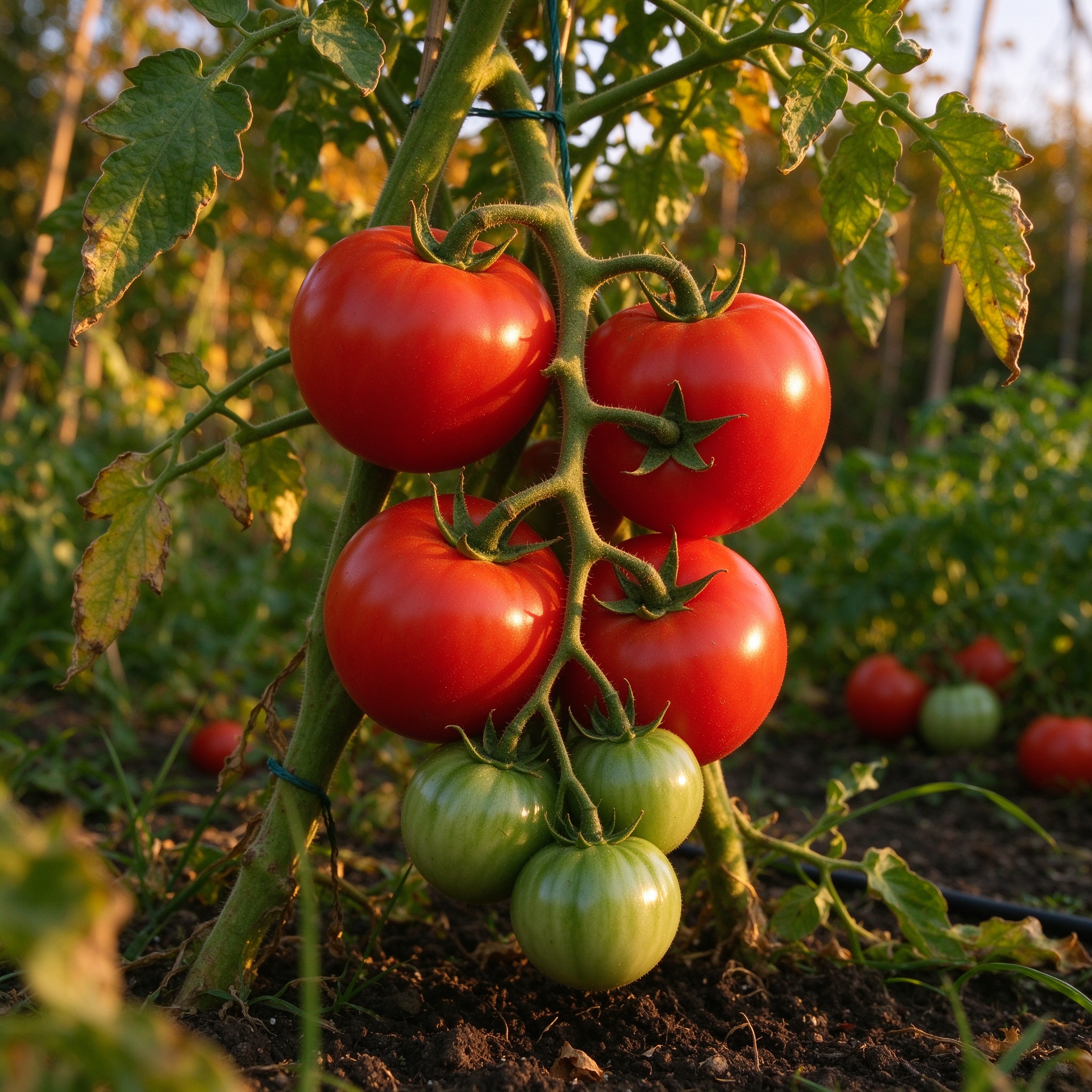
- •Tomatoes (Solanum lycopersicum) are tender warm-season annuals in the nightshade family, grown for their juicy, sun-ripened berries in every color from cherry-red to deep purple.
- •Native to western South America, they are the most popular home garden vegetable in North America, prized for slicing, sauces, salsas, and canning.
- •Plants grow 3 to 10 feet tall depending on whether they are determinate bush types or indeterminate vining types, and they need full sun, warm soil, and consistent moisture to set and ripen fruit through summer.
📋 Quick Facts
Scientific Name: Solanum lycopersicum
Family: Solanaceae
Category: Vegetable
USDA Zones: 2-11 (annual)
Light:
- •Full sun is essential: at least 6 to 8 hours of direct sunlight per day.
- •In southern regions a little afternoon shade or light row cover helps blossoms survive extreme heat, but too much shade delays ripening and reduces fruit set.
Water:
- •Water deeply and consistently, about 1 to 2 inches per week, applying water at the base of the plant rather than overhead.
- •Even moisture prevents blossom-end rot and fruit splitting; mulch with straw or hay 5 weeks after transplanting to retain moisture and keep leaves dry.
Temperature:
- •Tomatoes prefer daytime temperatures around 70 to 75°F.
- •They stop setting fruit when daytime highs exceed 90°F or night temperatures stay above 75°F, and they are killed by frost.
- •Soil must be at least 55°F for direct seeding, with 70°F ideal for fast germination.
Soil:
- •Plant in moist, loamy, slightly acidic soil with a pH of 5.8 to 6.8, enriched with aged compost or well-rotted manure dug in about 2 weeks before planting.
- •Good drainage is essential; raised beds and deep planting holes with bone meal work well.
Harvest:
- •Most tomatoes ripen 60 to more than 100 days after transplanting, depending on variety.
- •Harvest when fruits are firm and fully colored; they continue to ripen off the vine at room temperature.
- •Pick regularly to keep indeterminate plants producing until frost.
Common Problems: Blossom end rot, Early blight, Aphids, Hornworms.
⚠️ Pet Safety Warning
This plant is toxic to both cats and dogs.
Leaves and stems contain solanine, toxic if ingested in large amounts. Ripe fruit is safe.📅 When to Plant
- •Start tomato seeds indoors 6 to 8 weeks before your last spring frost, or buy hardened nursery transplants.
- •Set plants outdoors only after all danger of frost has passed and soil has warmed to at least 60°F (15°C), typically late spring to early summer.
- •In Zone 10 they are a fall and winter crop.
🌱 Growing Stages
 1
Germination and seedling stage
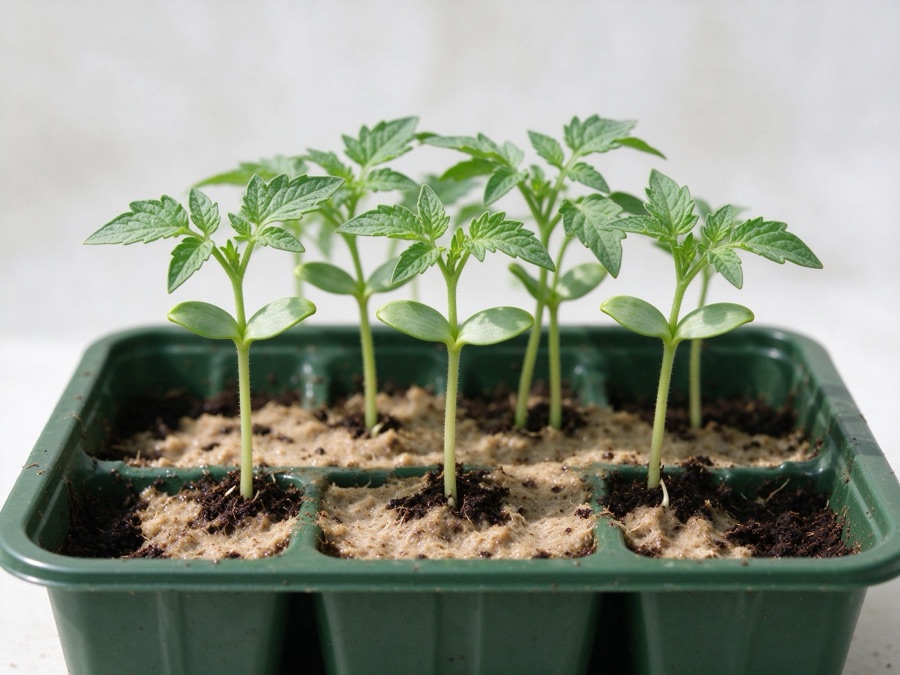
(5–10 days germinating, 6–8 weeks as seedlings)- •Tomato seeds sprout in 5 to 10 days at 70°F or warmer, pushing cotyledons up through sterile starting mix.
- •For the next 6 to 8 weeks young plants grow their true compound leaves, needing bright light, even moisture, and gentle airflow to stay stocky rather than leggy.
- •This is the stage where hardening off begins and pests such as damping-off and flea beetles can do the most damage if plants are kept too wet or unprotected.
 2
Vegetative establishment after transplant
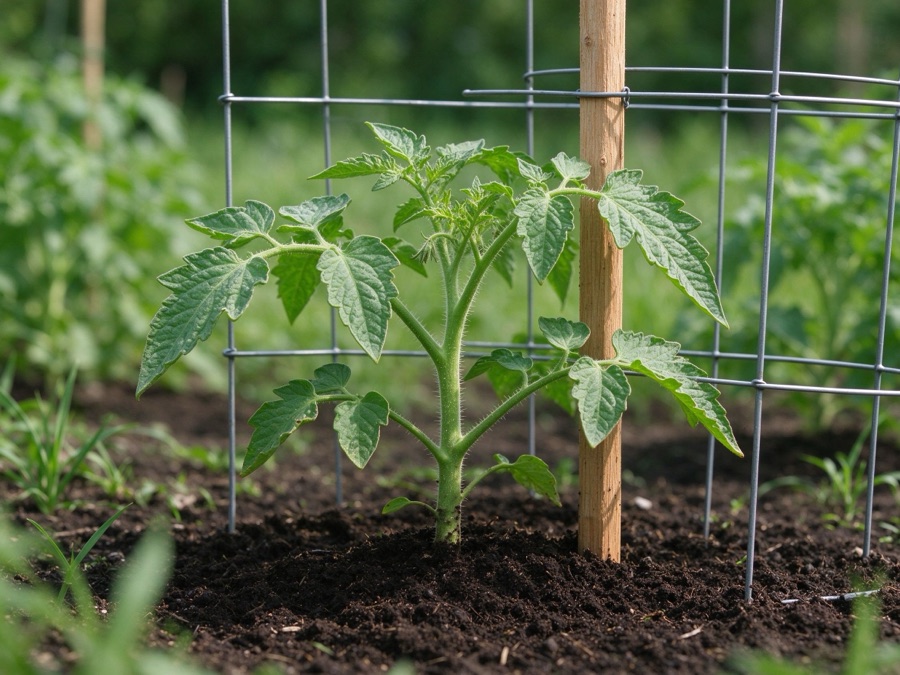
(2–4 weeks after transplant)- •Once transplants recover from shock in the warm garden bed, they shift into rapid vegetative growth, sending up new stems and large sticky compound leaves while the buried stem develops adventitious roots.
- •Plants need stakes or cages installed now, regular deep watering, and light mulch; this is also the moment to remove the lowest leaves and pinch early side suckers so growth channels into a strong main framework rather than a floppy bush.
 3
Flowering and fruit set
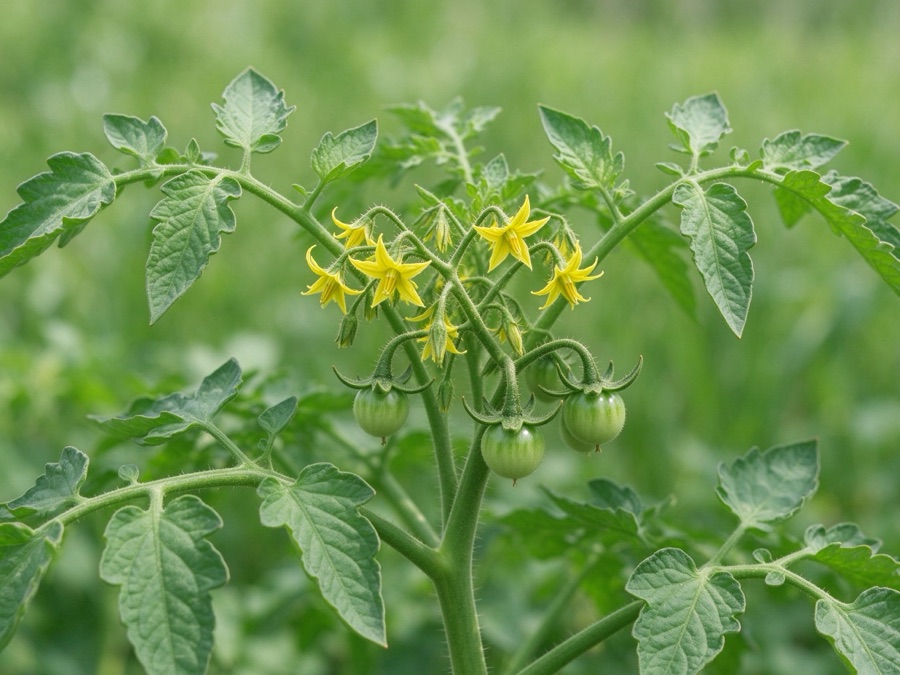
(4–6 weeks)- •Yellow star-shaped self-fertile flowers appear in clusters of 3 to 12 on the new growth.
- •Bumblebees and wind shake the flowers so pollen falls onto the stigma; temperatures between 60 and 85°F are required for successful set.
- •If nights stay above 75°F or days above 90°F, blossoms drop without fruit.
- •Small green ovaries swell into golf-ball-size fruits, triggering the start of regular side-dressing with tomato fertilizer.
 4
Fruit ripening and harvest
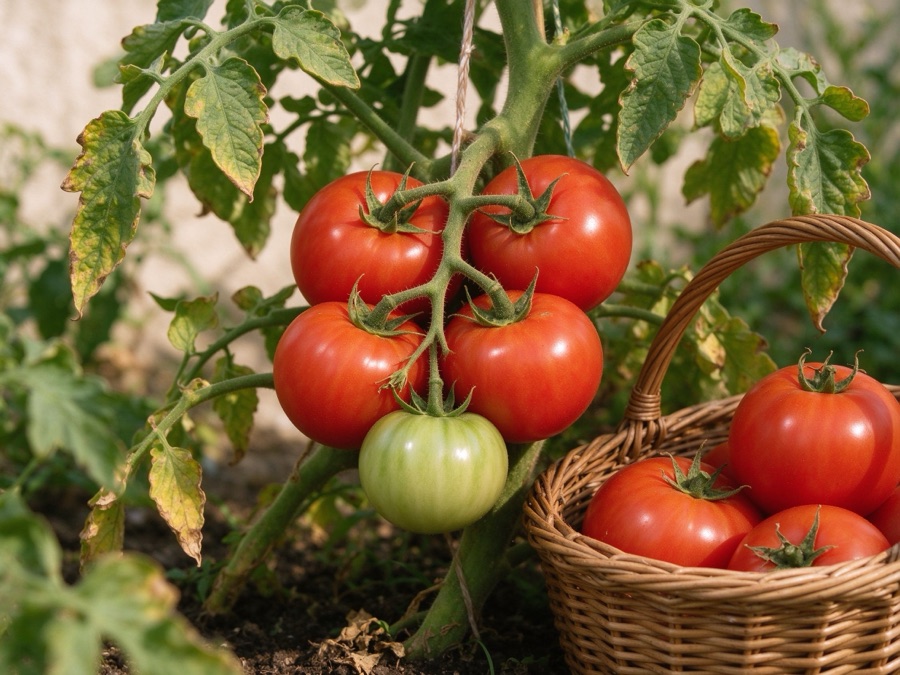
(3–6 weeks per planting, until frost)- •Green fruits turn through the breaker, turning, and red stages as lycopene develops; optimal ripening happens between 68 and 77°F, and fruit ripens best off the vine in cool weather.
- •Indeterminate plants continue producing new flowers and fruit while older clusters color up, so harvests are spread over many weeks.
- •At season's end, any green-mature fruit can be picked and ripened indoors; vines are killed by frost.
💧 Detailed Care Guide
☀️ Light Requirements
- •Full sun is essential: at least 6 to 8 hours of direct sunlight per day.
- •In southern regions a little afternoon shade or light row cover helps blossoms survive extreme heat, but too much shade delays ripening and reduces fruit set.
💧 Watering
- •Water deeply and consistently, about 1 to 2 inches per week, applying water at the base of the plant rather than overhead.
- •Even moisture prevents blossom-end rot and fruit splitting; mulch with straw or hay 5 weeks after transplanting to retain moisture and keep leaves dry.
🌡️ Temperature
- •Tomatoes prefer daytime temperatures around 70 to 75°F.
- •They stop setting fruit when daytime highs exceed 90°F or night temperatures stay above 75°F, and they are killed by frost.
- •Soil must be at least 55°F for direct seeding, with 70°F ideal for fast germination.
🌱 Soil & Fertilizer
Soil:
- •Plant in moist, loamy, slightly acidic soil with a pH of 5.8 to 6.8, enriched with aged compost or well-rotted manure dug in about 2 weeks before planting.
- •Good drainage is essential; raised beds and deep planting holes with bone meal work well.
Fertilizer:
- •Avoid high-nitrogen fertilizers that promote leafy growth at the expense of fruit.
- •At transplanting, mix a handful of bone meal or organic tomato fertilizer into the hole, then side-dress every 2 to 3 weeks with fish emulsion, liquid seaweed, or a balanced organic tomato fertilizer once fruits reach the size of a golf ball.
📝 Step-by-Step Planting Guide
- 1
Start seeds indoors 6–8 weeks before last frost
- •Sow tomato seeds 1/2 inch deep in sterile seed-starting trays about 6 weeks before your expected last spring frost, keeping the medium at 70°F or warmer with a heat mat for fastest germination within 5 days.
- •Grow seedlings under bright grow lights or a very sunny windowsill, watering carefully to avoid damping-off, and thin to one strong seedling per cell.
- •Begin hardening plants off 7 to 10 days before transplanting by setting them outdoors in shade for a few hours the first day, gradually increasing sun and exposure until they can spend full nights outside when temperatures stay above 50°F.
- 2
Transplant deep after frost, with stakes or cages
- •Wait until all frost danger has passed and the soil has warmed to at least 60°F, then choose a sunny bed where no nightshade crop (tomato, pepper, eggplant, potato) has grown in the past 3 to 4 years.
- •Bury each transplant deeply so only the top leaves show above soil; roots will sprout along the buried stem, building a stronger root system.
- •Set plants 18 to 24 inches apart, place a sturdy stake or tomato cage at planting time, and water deeply to reduce shock.
- •Adding a handful of bone meal or organic tomato fertilizer to each hole gives roots a phosphorus boost.
- 3
Water deeply and mulch to keep roots even
- •For the first week after transplanting, water generously to settle roots, then settle into a regular schedule of about 1 to 2 inches of water per square foot each week, applied early in the morning at the base of the plant.
- •Avoid overhead watering that wets the leaves, because splashing spreads fungal spores and invites blight.
- •About 5 weeks after transplanting, apply 2 to 4 inches of organic mulch such as straw, hay, or shredded bark around each plant; this conserves soil moisture, keeps lower leaves from being splashed, suppresses weeds, and helps prevent the uneven moisture that causes blossom-end rot and fruit cracking.
- 4
Support, prune suckers, and feed through summer
- •As indeterminate vining tomatoes grow, gently tie stems to stakes with soft twine or rags and pinch out the small suckers that form in the crotch between leaves and main stems; this improves air circulation and lets sunlight reach ripening fruit.
- •Once fruits reach golf-ball size, begin side-dressing every 2 to 3 weeks with fish emulsion, liquid seaweed, or a balanced organic tomato fertilizer, pulling mulch back, scratching in the granules around the drip line, and replacing mulch.
- •Continue removing the lowest leaves up to about 12 inches from the ground as fruits develop to further reduce soil splash.
- 5
Harvest ripe fruit and clean up at season's end
- •Pick tomatoes when they are firm and fully colored for their variety, cutting or twisting gently from the vine; garden tomatoes are best stored at room temperature and never refrigerated, which destroys flavor.
- •Keep harvesting regularly, because leaving overripe fruit on the vine slows production.
- •When frost threatens, pull up any remaining green-mature plants, hang them upside down in a cool garage, or pack pale-green fruits in a paper bag to ripen slowly.
- •At season's end, remove and discard all diseased plant material rather than composting it, and plan a 3-year crop rotation so nightshades do not return to the same bed.
🌱 Recommended Varieties
Early-maturing varieties (under 70 days)
- •Choose early varieties in short-season gardens or to beat summer blossom drop.
- •'Early Girl' is the classic reliable indeterminate hybrid, meaty and productive through summer, with fusarium wilt resistance.
- •'Early Cascade' is an indeterminate trailing type that fruits in clusters and resists disease.
- •'Sun Gold' is an intensely sweet tangerine-orange cherry tomato ready in just 57 days, resistant to fusarium wilt and tobacco mosaic virus.
Main-season garden varieties (70 to 80 days)
- •Main-season types offer the best balance of yield, flavor, and disease resistance for mid-summer harvests.
- •'Celebrity Plus' is a versatile hybrid resistant to TSWV, fusarium wilt, tobacco mosaic virus, and root-knot nematodes.
- •'Better Boy' is an indeterminate slicer resistant to fusarium, TMV, and nematodes.
- •'Roma VF' is a determinate paste tomato with meaty interiors, few seeds, and resistance to wilts, ideal for sauces and canning.
Heirloom and specialty slicers
- •Heirlooms deliver unmatched flavor for sandwiches and fresh eating, especially in the heat and humidity of southern gardens.
- •'Brandywine' is the famous indeterminate beefsteak with the perfect acid-sweet balance, available in red, yellow, or black strains.
- •'Cherokee Purple' is a dusky rose beefsteak that thrives in southern heat.
- •'Amish Paste' is a large acorn-shaped plum heirloom with juicy flesh excellent for sauce, and 'Yellow Pear' produces sweet teardrop-shaped yellow fruits perfect for salads.
🪴 Growing in Containers
- Pick a large pot with real drainage:
- •Use a container at least 5 gallons and 12 to 20 inches deep and wide, with drainage holes in the bottom; tomatoes need far more root room than patio herbs.
- •Set a tray beneath to catch runoff because pots dry out fast.
- Choose compact determinate varieties:
- •Bush or dwarf types such as 'Tiny Tim' or determinate cherries and Romas perform best in pots; one plant per pot.
- •Tall indeterminate types can work but will need a cage or stake and daily watering.
- Use loose, moisture-retentive potting mix:
- •Fill with a quality potting mix blended with compost and aged bark rather than garden soil, which compacts in pots.
- •Mix in a slow-release organic tomato fertilizer at planting to feed through the season.
- Water daily, feed weekly in heat:
- •Containers dry out quickly—check daily and water until it runs out the bottom.
- •In heat waves, pots may need watering twice a day; feed with dilute liquid tomato fertilizer every 1 to 2 weeks once fruits set.
- Position in full sun with afternoon relief:
- •Place pots where they receive at least 6 hours of direct sun daily.
- •In southern zones, move or shade pots against scorching afternoon sun that can bake root balls; rotate occasionally so all sides ripen evenly.
✂️ Pruning & Maintenance
- ✓
Pinch out suckers on indeterminate vines
- •Snap off the small shoots that grow in the crotch between a leaf stem and the main trunk while they are still tiny, usually leaving one or two main stems tied to the stake.
- •This opens the plant to light and air and focuses energy on fruit.
- ✓
Remove the lowest 12 inches of leaves
- •As fruits develop, prune off leaves touching or close to the soil to reduce fungal splash and slug habitat.
- •This also speeds ripening by exposing clusters to sun and improves air flow beneath the plant.
- ✓
Top the main stem near season's end
- •About 4 to 6 weeks before your first expected fall frost, pinch off the growing tip of each indeterminate vine.
- •This stops new flowering and redirects the plant's energy into ripening the fruits already on the vine before cold weather.
- ✓
Tie stems gently to supports
- •Use soft twine, old nylon stockings, or fabric strips tied in a figure-eight around the stem and stake; never wire or tight string that can cut into swelling vines.
- •Retie every few weeks as the plant grows heavy with fruit.
🐛 Pest & Disease Control
Common Pests
Tomato hornworm
Symptoms: Large, bright green caterpillars with a diagonal white stripe and a horn on the rear, that defoliate branches overnight and chew holes into green fruit; dark pellet-like frass often littered on leaves below.Control:- •Handpick hornworms wearing gloves and drop them into a bucket of soapy water; they are slow and easy to spot.
- •If you see small white rice-like cocoons attached to a caterpillar, leave it alone—it has been parasitized by a beneficial wasp that will kill it and help control future generations.
- •Rotate crops and till soil in fall to kill overwintering pupae.
Aphids and whiteflies
Symptoms: Tiny green or white insects clustered on new growth and leaf undersides, sucking sap, causing curled yellow leaves and sticky honeydew that grows black sooty mold; whiteflies fly up in clouds when disturbed.Control:- •Spray a strong jet of water from the hose to knock aphids off plants early in the morning.
- •Follow up with insecticidal soap or neem oil applied directly to the insects, coating leaf undersides; repeat every few days.
- •Encourage ladybugs and lacewings by planting nectar-rich flowers, and use yellow sticky traps for whiteflies; avoid broad-spectrum insecticides that kill beneficials.
Stink bugs and tomato fruitworms
Symptoms:- •Stink bugs are shield-shaped brown or green insects that pierce fruits with their beaks, leaving cloudy white spots and corky tissue beneath the skin.
- •Fruitworms are caterpillars that bore holes into green tomatoes, often near the stem, and feed inside.
Control:- •Handpick adults and drop them into soapy water; knock them off plants onto a drop cloth held below.
- •Destroy and discard fruit already infested by fruitworms, since it will rot inside.
- •Use row covers on young plants until flowering, remove crop residue in fall, and rotate away from solanaceous weeds such as jimsonweed that host these pests.
Flea beetles and slugs
Symptoms:- •Flea beetles are tiny shiny black beetles that pepper young leaves with numerous small shot-like holes, weakening transplants.
- •Slugs leave irregular ragged holes and silvery slime trails on lower leaves and fruit resting on wet soil.
Control:- •Use floating row covers over newly set transplants to exclude flea beetles, and cultivate the top inch of soil frequently to expose their larvae.
- •For slugs, remove mulch and debris near plants, set out shallow saucers of beer sunk to the rim to drown them, or handpick at dusk; copper tape or diatomaceous earth around transplants creates a barrier they will not cross.
Common Diseases
Early blight (Alternaria)
Symptoms: Dark brown concentric target-like spots, about 1/2 inch across, appearing first on lower older leaves during warm humid weather, causing yellowing and defoliation; lesions can also girdle stems and rot fruit near the ground.Control:- •Plant resistant varieties, rotate crops on a 3-year cycle, and water at soil level rather than overhead.
- •Remove infected lower leaves as soon as spots appear, keep plants staked for air flow, and mulch to prevent soil splash.
- •Destroy infected debris at season's end rather than composting it; a copper or chlorothalonil spray may protect healthy foliage when weather stays wet.
Late blight (Phytophthora infestans)
Symptoms:- •Fast-spreading gray-green water-soaked blotches on leaves that turn brown and papery, with white fuzzy mold on undersides in damp weather; dark greasy lesions quickly rot fruits.
- •Favored by cool wet nights and humid days.
Control:- •There is no cure once plants are infected; immediately pull and bag infected plants, do not compost them, and alert neighbors because the spores blow long distances.
- •Choose resistant cultivars, stake and space plants for air flow, avoid overhead irrigation, and remove volunteer potato or tomato plants that can harbor the pathogen.
Blossom-end rot
Symptoms: A dark, sunken, leathery brown-black spot on the blossom end of tomatoes, caused by insufficient calcium reaching developing fruit because of uneven watering or root damage—not an infectious disease.Control:- •Water consistently and deeply, mulch to stabilize soil moisture, and avoid cultivating deep near roots. Do not over-fertilize with nitrogen.
- •If your soil test shows low calcium, add lime or gypsum before planting; removing affected fruits lets the plant put energy into the remaining crop.
- •Avoid root disturbance when transplanting.
Fusarium and Verticillium wilts
Symptoms:- •Fusarium wilt yellows and wilts leaves starting on one side of the plant and moves upward; Verticillium produces yellow V-shaped blotches on lower leaves.
- •Both soil-borne fungi plug water-conducting vessels, causing permanent wilt even in wet soil.
Control:- •Choose varieties tagged with F (Fusarium) and V (Verticillium) resistance, and rotate crops away from solanaceous plants for at least 3 years.
- •There is no cure for infected plants—remove them entirely.
- •Plant in raised beds with fresh sterile soil if wilts have been a chronic problem, and avoid overwatering.
Tobacco mosaic virus
Symptoms: Light and dark green mottled mosaic pattern on leaves, narrowed fern-like distorted leaflets, stunted plants, and yellow-green streaked or blotchy fruits; spread by infected seed, tobacco users' hands, and aphids.Control:- •Plant certified virus-resistant seed (look for the TMV code on packs), wash hands thoroughly before handling plants especially after using tobacco products, and control aphids that spread the virus.
- •Rogue out and destroy infected plants immediately; there is no cure. Disinfect tools and do not save seed from affected plants.
🍅 When to Harvest
- •Most tomatoes ripen 60 to more than 100 days after transplanting, depending on variety.
- •Harvest when fruits are firm and fully colored; they continue to ripen off the vine at room temperature.
- •Pick regularly to keep indeterminate plants producing until frost.
❓ Frequently Asked Questions
- 1
Why are my tomato plants flowering but not producing fruit?
- •Blossom drop without fruit set is almost always temperature related: tomatoes fail to set fruit when daytime highs exceed 90°F or night temperatures stay above 75°F, and they also drop flowers if nights dip below 55°F.
- •Inadequate water, too little sunlight, or low humidity can also reduce pollination.
- •Provide light afternoon shade cloth during heat waves, water consistently at the base, and mist lightly in very dry air to help pollen stick; once temperatures moderate, flowers will set again.
- •Avoid over-fertilizing with nitrogen, which pushes leaf growth over fruit.
- 2
Should I grow determinate or indeterminate tomatoes?
- •Determinate (bush) tomatoes grow 2 to 3 feet tall, ripen their whole crop over a short window, and need little or no staking—they are perfect for containers, small gardens, and canning because all the fruit comes at once.
- •Indeterminate (vining) tomatoes keep growing and producing all season until frost, reaching 6 feet or more, and need cages, stakes, or trellises plus regular sucker pruning; they are the best choice for continuous fresh slicers.
- •Most paste/Roma types are determinate, while most beefsteaks and cherries are indeterminate.
- 3
Why do tomatoes split or crack open on the vine?
- •Cracking happens when fruit growth suddenly accelerates after uneven moisture—usually a heavy rain or deep watering following a dry spell—so the skin bursts faster than it can expand.
- •The key is to keep soil moisture even: water deeply and regularly through dry periods, mulch 2 to 4 inches around each plant, and avoid letting beds alternate between parched and soaked.
- •Harvest fruits just as they begin to blush and let them finish ripening at room temperature rather than waiting for fully red fruit in very wet weather.
- 4
How deep should I transplant tomatoes?
- •Tomatoes are unusual among garden vegetables in that they grow roots along any portion of stem buried underground, so deep planting is a strength rather than a problem.
- •Set transplants so only the top two or three sets of leaves sit above the soil surface, removing the lower leaves first; leggy starts can even be laid sideways in a shallow trench and covered up to the crown.
- •This buried stem develops a much larger root mass, giving the plant better drought tolerance, sturdier anchorage, and faster establishment after transplant shock.
- 5
Can I save seeds from my best tomatoes for next year?
- •You can reliably save seeds only from open-pollinated or heirloom varieties; modern hybrids will not come true and their offspring will be variable and disappointing.
- •Scoop the seedy gel from ripe tomatoes, ferment it in water for a few days until it develops a scum, rinse clean, and dry seeds thoroughly on paper in a cool shady spot before storing in an envelope.
- •Keep saved seed away from other varieties during flowering to avoid cross-pollination, and label the batch with variety and year; properly dried tomato seed stays viable for about 4 years.
- 6
Why should I never refrigerate homegrown tomatoes?
- •Refrigeration below about 55°F destroys the flavor-volatile compounds that make a garden tomato taste like a garden tomato, leaving a bland, mealy texture even on a perfectly ripe fruit.
- •Instead, keep ripe tomatoes stem-side down at room temperature out of direct sun, and use within a few days.
- •Green-mature tomatoes that need ripening should be placed in a loosely closed paper bag at 55 to 70°F with a banana or apple to speed the process through ethylene gas; check weekly and remove any soft or spotted fruit before storing other tomatoes.
- 7
Is a tomato a fruit or a vegetable?
- •Botanically, a tomato is a fruit: it develops from the ovary at the base of a flower and carries the plant's seeds inside, the same definition that puts cucumbers, squash, beans, and peas in the fruit category.
- •Legally and culinarily, however, the Supreme Court of the United States held in Nix v. Hedden, 149 U.S.
- •304, decided May 10, 1893, that tomatoes are vegetables under the Tariff Act of March 3, 1883.
- •Justice Horace Gray wrote for a unanimous Court that, although botanically the fruit of a vine, tomatoes are in ordinary speech and cooking served at dinner with the main course rather than as dessert, so the ordinary, non-botanical meaning of 'vegetable' governed the tariff.
- •In a home garden either label is harmless: tomatoes are grown as a warm-season vegetable, while botanists still classify the fruit as a berry.
- 8
When should I plant tomatoes in my zone?
- •Tomatoes are frost-sensitive warm-season crops; the safe transplant date is set by two conditions together: night temperatures consistently above 50°F (mid-50s) and soil at 4-inch depth at least 60°F, about two weeks after your average last spring frost.
- •Start seeds indoors 6 to 8 weeks before that date, and harden seedlings off over 7 to 10 days before setting them out.
- •Typical windows by USDA zone: Zones 3–4 (northern Minnesota, North Dakota, northern Wisconsin and Maine, mountain Montana) — last frost mid-May to early June, transplant late May to early June; choose early-maturing varieties and use row cover or water walls.
- •Zones 5–6 (Chicago, Denver, Boston, Philadelphia, Pacific Northwest valleys) — last frost mid-April to mid-May, transplant mid-May; protect against late cold snaps with row cover.
- •Zones 7–8 (Virginia, the Carolinas, Tennessee, Arkansas, northern California coast, Georgia, Alabama, Texas hill country) — Zone 7 transplants mid-April to early May, Zone 8 late March to early April; many Zone 7 growers set a second crop in late summer for fall harvest.
- •Zones 9–10 (southern Texas, central and southern Florida, southern California, Arizona) — grow two crops: spring transplants February to early March before summer heat stops pollination, and a fall crop seeded in late August and transplanted in September, producing through November or January.
- •These are averages: confirm your local last frost date with the county Cooperative Extension, since microclimates shift the window by a week or two.
- 9
Is it spelled tomatoes or tomatos?
- •The correct English plural spelling is tomatoes: the singular tomato keeps its o before the plural -es, which is why dictionaries list tomatoes rather than tomatos.
- •Tomatos is an extremely common misspelling: the flat plural -s pattern feels natural after words ending in consonants, so search engines still see a large volume of queries typed as tomatos.
- •Behind those misspelled searches is ordinary planting and cooking intent: growers want to know how to start seedlings, support vines, prune suckers, space plants, water and fertilize, identify pests and diseases, harvest ripe fruit, and fix cracking or blossom drop.
- •Every guide on this site uses the standard spelling tomatoes, and searchers landing after typing tomatos will find the same practical tomato information they would have found under the correct spelling.
- •This note is a spelling clarification only; it does not change any planting or recipe advice.
- •If you arrived here from a tomatos search, our tomato growing guide walks through sowing, transplanting, care through the season, and harvest for your USDA zone: see the tomato guide at /how-to-grow-tomatoes, and browse the vegetable garden guides for companion planting, soil preparation, and fertilizer choices.
- •No separate tomato page is written for the misspelling, because tomatoes and tomatos refer to the same plant, Solanum lycopersicum.
Source:
NC State Extension Gardener Plant Toolbox — https://plants.ces.ncsu.edu/images/plants/solanum-lycopersicum/
The Old Farmer's Almanac — https://www.almanac.com/plant/tomatoes
Supreme Court of the United States, Nix v. Hedden, 149 U.S. 304 (1893) — https://www.govinfo.gov/content/pkg/USREPORTS-149/pdf/USREPORTS-149-304.pdf
Photo credit: NC State Extension
Images courtesy of NC State Extension under CC BY license. Thank you to the photographers who make these educational images available.
License: CC BY-NC 2.0 / CC BY 4.0