
How to Grow Bird of Paradise: Complete Guide
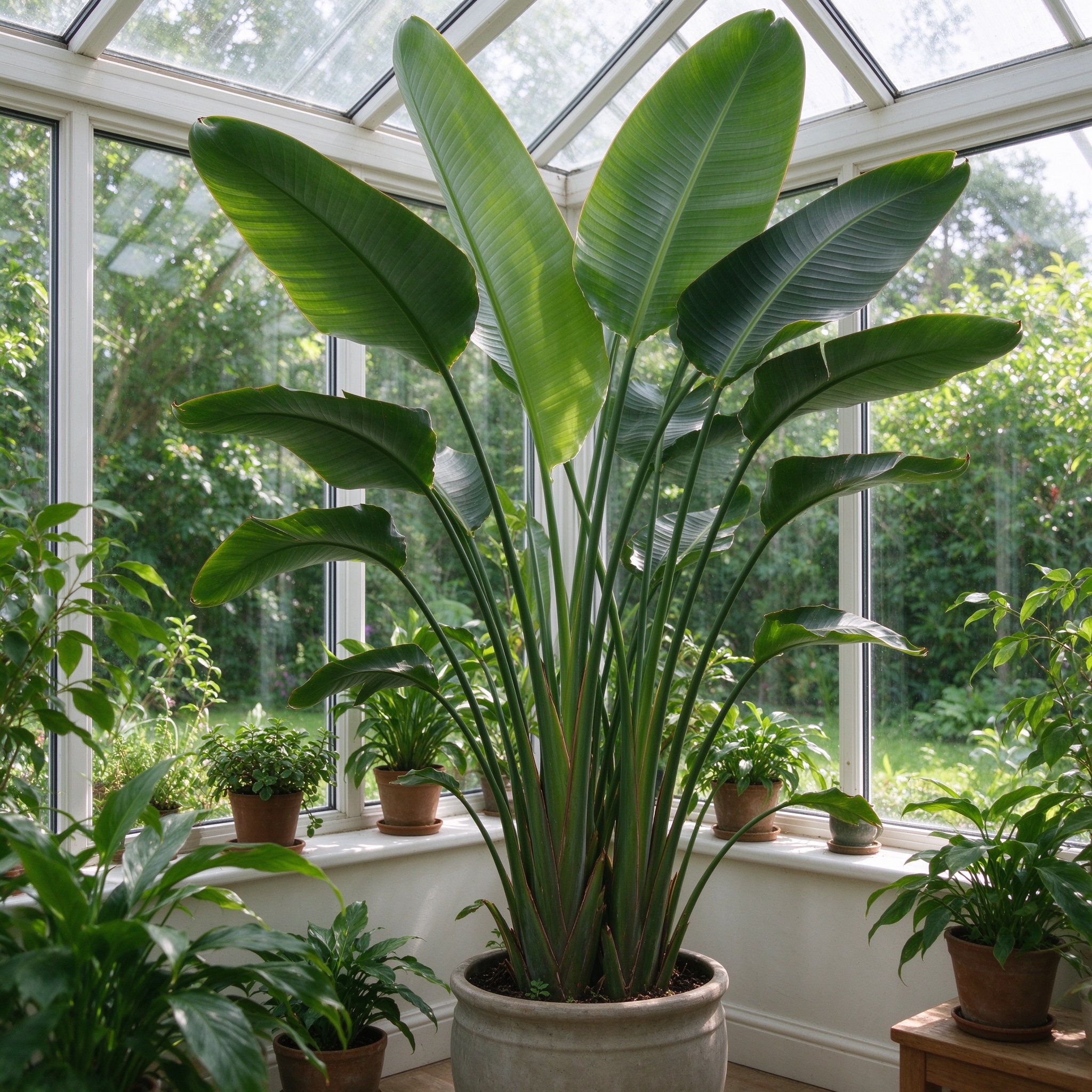
- •The bird of paradise (Strelitzia reginae), also called crane flower, is a clumping, broadleaf evergreen perennial in the Strelitziaceae family, native to the Cape Provinces and KwaZulu-Natal in South Africa.
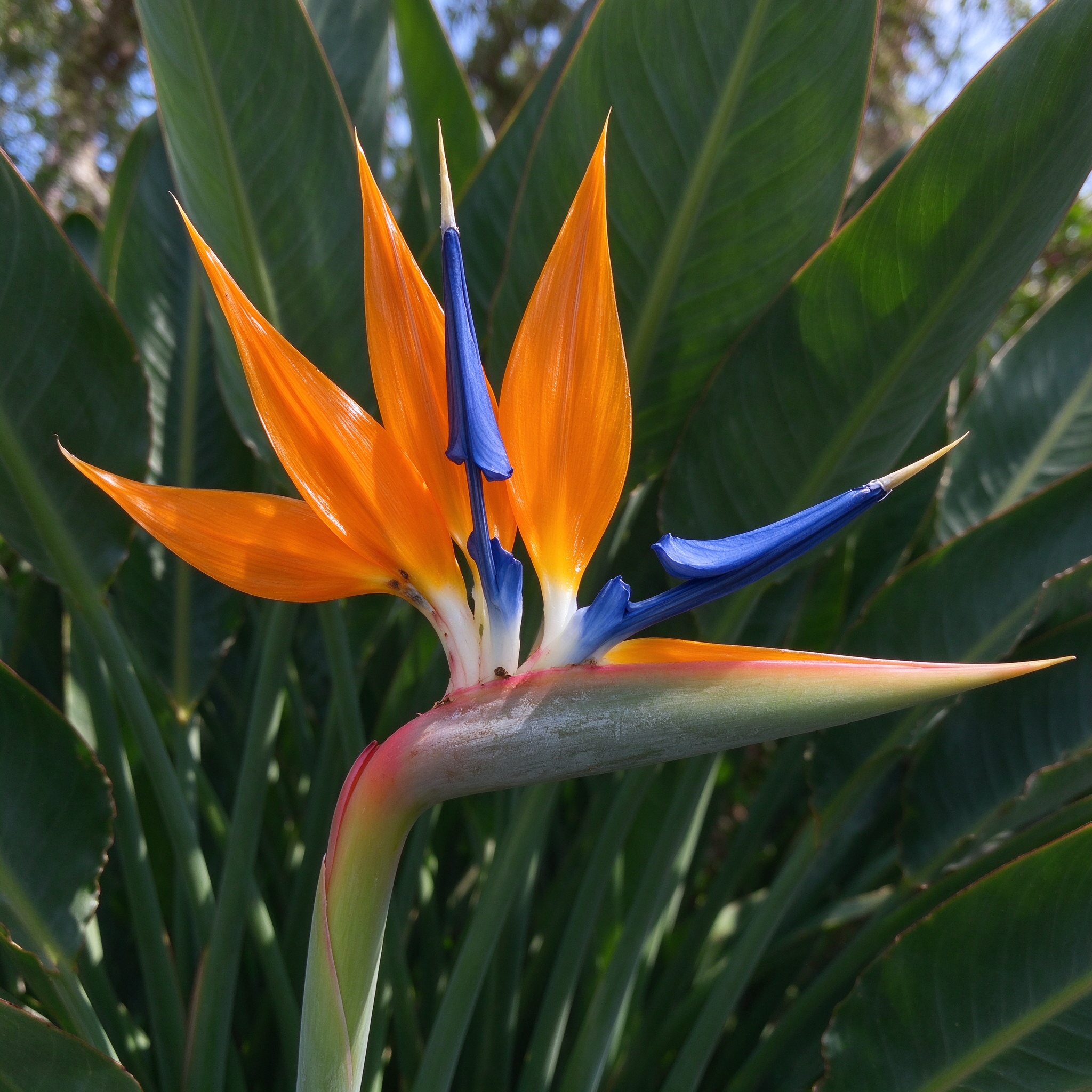
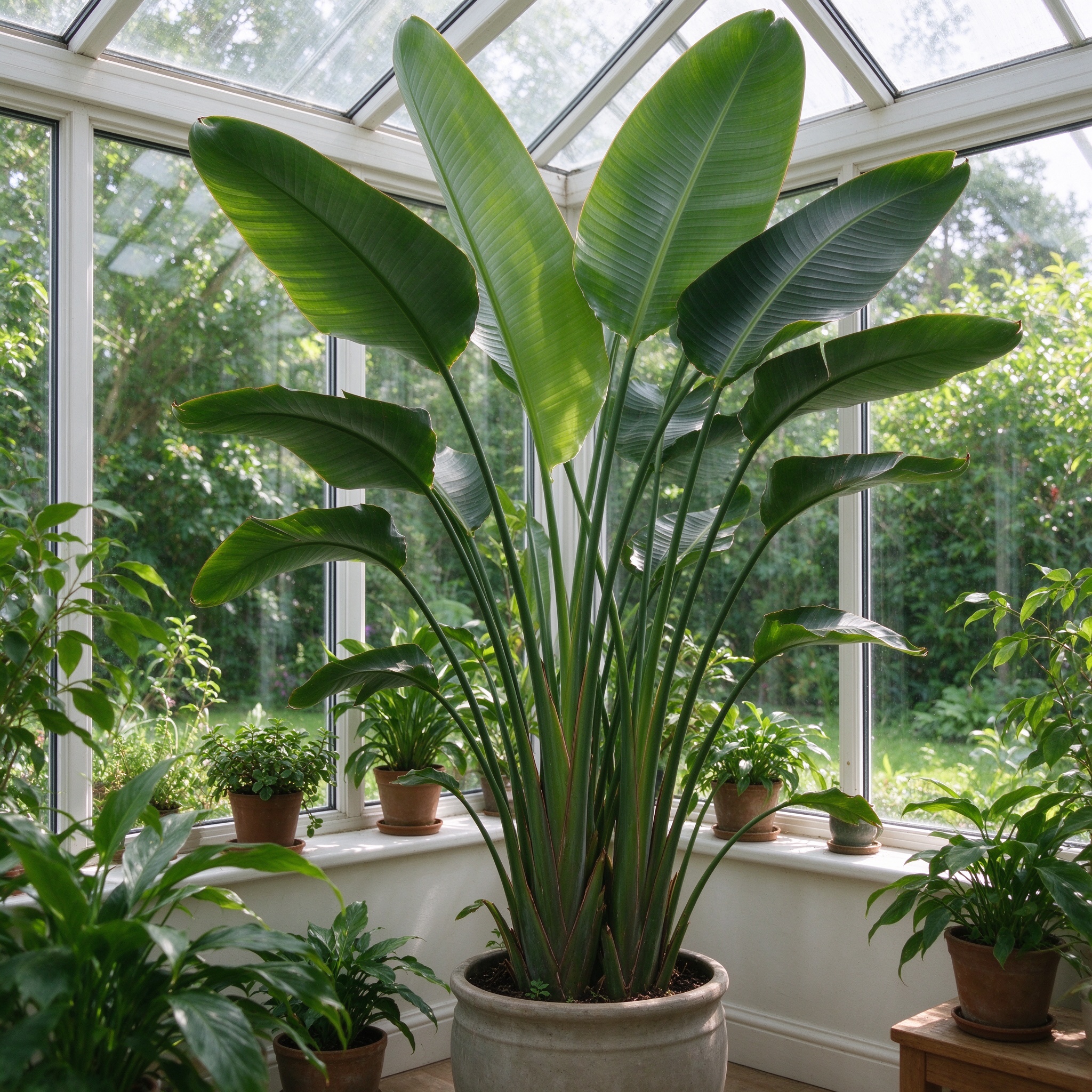
- •Large, gray-green, banana-like leaves rise in dense fans from underground rhizomes, typically reaching 3 to 4 feet tall indoors, and the plant is grown as much for its architectural foliage as for its famous exotic bloom: a beak-like, boat-shaped spathe from which three brilliant orange sepals and three vivid blue petals emerge in succession, looking like a bird in flight perched on a tall stalk.
- •NC State notes that it blooms intermittently throughout the year.
- •In a home it makes a bold floor-standing statement near the brightest window you have.
- •It is moderately easy to care for, but it refuses to flower without strong light, even moisture, and a little room to be slightly root-bound.
- •Keep it away from nibbling pets, because the ASPCA lists Strelitzia as toxic to cats, dogs, and horses.
📋 Quick Facts
- •This is the single most important care rule for a bird of paradise indoors: give it the brightest spot you have, ideally an unobstructed south or west window that delivers several hours of direct sun each day, with bright indirect light for the rest of the day.
- •NC State lists the species under full sun (six or more hours of direct sunlight a day) and partial shade (two to six hours of direct sun), and the RHS advises growing it in full light with shade only from the hottest midday sun.
- •A few feet back from an east window keeps the foliage healthy but usually is not bright enough to trigger flowering.
- •Without strong light the plant survives for a while, but stems stretch, leaves lean hard toward the window, the clump opens into an untidy fan, and buds never form.
- •Conversely, do not place a dark-grown plant straight into blazing summer midday sun through glass: leaves scorch when light jumps straight from shade to strong sun, so acclimate any plant moved outdoors gradually over two weeks.
- •In winter, move it to the strongest light available because daylight is weak and the plant needs every ray it can get.
- •Rotate the pot a quarter turn every few weeks so the leaves grow evenly on all sides instead of all tilting toward one window.
- •Flowering houseplants generally need more light than foliage plants, and a bird of paradise is a flowering plant first and foremost.
- •Water on a soak-and-dry rhythm, never on a fixed calendar.
- •NC State directs watering freely and fertilizing regularly in spring and summer but keeping the plant drier in winter; the NC State HortScans note adds that the plant needs moderate moisture at all times and the soil should never become waterlogged.
- •In practice, water thoroughly until liquid runs freely out of the drainage hole, then let the top 2 to 3 inches of the potting mix dry out before you water again.
- •In a bright, warm summer room that usually means once a week or every ten days; in a cool, darker winter corner it can stretch to two or three weeks, and RHS instructs watering sparingly in winter when growth slows.
- •Empty the saucer within a few minutes of watering so the root ball never sits in standing water: long soaking leaves no air in the soil, so the roots drown.
- •Use room-temperature water; cold water shocks the roots, and cold, wet soil in winter is the fastest route to root rot.
- •The thick rhizomes and fleshy roots store some water, so the plant tolerates a missed watering far better than a wet pot.
- •Slightly dry soil in winter is safer than moist soil.
- •If leaves curl or droop before the soil dries, check for a cold draft or a root problem rather than adding more water.
- •A normal warm living room suits a bird of paradise.
- •NC State calls for moderate nighttime temperatures around 55 to 65°F (13 to 18°C); the NC State HortScans note adds that a night temperature of 50 to 55°F (10 to 13°C) is sufficient and that the plant does well in conservatories held at 60 or even 65°F.
- •RHS advises ventilating whenever indoor temperatures exceed 20°C (68°F), because stagnant hot air encourages pests and fungal problems.
- •Keep the plant away from cold drafts, exterior doors, and windowsills that chill overnight, and away from radiator vents and air-conditioning outlets that blow hot or dry air directly on the foliage.
- •RHS rates this species H1b: it can spend the summer outside where nights stay in the 10–15°C (50–59°F) range, and extended cold below about 10°C (50°F) stresses this tropical plant.
- •Humidity between 40 and 60 percent is fine; ordinary indoor humidity is acceptable, and the plant is more forgiving than a fern or anthurium.
- •In dry forced-air winter rooms, set the pot on a tray of damp pebbles or group it with other plants to raise local humidity, but do not mist the broad leaves every evening: wet foliage that stays damp overnight encourages leaf spot and botrytis.
- •When summer temperatures rise above 70°F, NC State suggests moving the plant outdoors into a sunny to semi-shaded spot with good air circulation rather than deep shade.
- •NC State calls for fertile, loamy, well-drained soil high in organic matter; both NC State and RHS list the species across acid, neutral, and alkaline pH rather than requiring one fixed range, and RHS recommends a peat-free, loam-based compost for plants grown under glass.
- •A reliable indoor blend is two parts quality potting soil or loam-based compost, one part orchid bark or aged compost for structure, and one part perlite or pumice for drainage.
- •The mix must hold enough moisture for a few days while still allowing water to pass through freely; dense, peat-heavy seed-starting mixes that stay soggy for weeks are a poor choice, because the fleshy rhizomes and roots rot in waterlogged soil.
- •Strelitzia tolerates acid, neutral, and alkaline conditions within the normal houseplant range.
- •Add grit or sharp sand to the compost if you tend to overwater; extra drainage material keeps the mix open around the fleshy rhizomes.
- •Repotting into fresh mix every second year replaces organic matter that has compacted and degraded; old, compacted mix is a common cause of stale soil and root disease.
- •There is no edible harvest with a bird of paradise.
- •The plant is 'ready' for propagation when the mature clump has filled its pot and pushes several rooted suckers around the mother plant; that is the moment to divide and share.
- •Mature plants grown in full sun may send up one or more flower spikes in spring, summer, or intermittently through the year; individual blooms last several weeks on the plant, and the NC State horticulture document notes cut flowers keep for about 15 days.
- •Very young plants rarely bloom: seed-grown plants take several years to flower at all, while divisions from a mature clump flower sooner.
- •NC State records the fruit as a leathery capsule holding small seeds with orange arils; these seeds and the fruit are the parts of the plant that cause mild gastrointestinal irritation in pets, so remove spent pods before curious pets can chew them.
- •The number-one problem is root rot from overwatering, a pot without drainage, or a saucer left full; NC State specifically notes that root rot can occur from overwatering or poorly drained soils, and RHS advises watering sparingly in winter.
- •Second is failure to flower, which almost always traces back to insufficient light, a too-large pot that keeps the soil wet, over-fertilizing, or a plant that has not reached flowering maturity.
- •Leaf spot causes yellow or brown spots on the foliage, and warm, dry heated rooms bring spider mites; mealybugs hide in leaf axils, scale clings to the stalks, spider mites spin fine webbing on the undersides, and aphids cluster on tender new growth.
- •NC State lists mealybugs, scale, and spider mites among the pests to monitor, RHS reports scale insects, glasshouse red spider mite, and mealybugs, and UF/IFAS notes aphids among outdoor pests.
- •Brown, crispy leaf tips usually point to dry air or fertilizer salt buildup.
- •Natural leaf splitting and tearing on the broad blades is expected and is not a disease; true problems are yellowing leaves, mushy stems, webbing on the undersides, and cottony or scaly clusters along the stalks.
- •Cold drafts and frozen foliage are other major causes of sudden leaf collapse.
⚠️ Pet Safety Warning
This plant is toxic to both cats and dogs.
- •ASPCA lists bird of paradise (Strelitzia) as toxic to cats, dogs, and horses.
- •GI irritants cause mild nausea, vomiting, and drowsiness, mainly from the fruit and seeds; foliage is far less irritating.
- •Keep it out of reach of nibbling pets and remove developing seed pods.
📅 When to Plant
- •Bird of paradise is sold year-round as a houseplant, so there is no sowing or planting window; you can buy one and repot it in any month.
- •The best time to repot or divide is spring, when growth resumes and the plant recovers fastest from root disturbance.
- •RHS hardiness rating H1b allows this species to spend the summer outside where nights stay between about 10 and 15°C (50–59°F); if you summer your plant on a patio or balcony, acclimate it gradually to brighter outdoor light over a week or two so the broad leaves do not scorch.
- •Bring it back indoors before fall nights fall toward the lower end of that range, around 10°C (50°F); NC State notes that the species wants moderate nighttime temperatures around 55 to 65°F and suffers in cold drafts.
🌱 Growing Stages
 1
Nursery acclimation
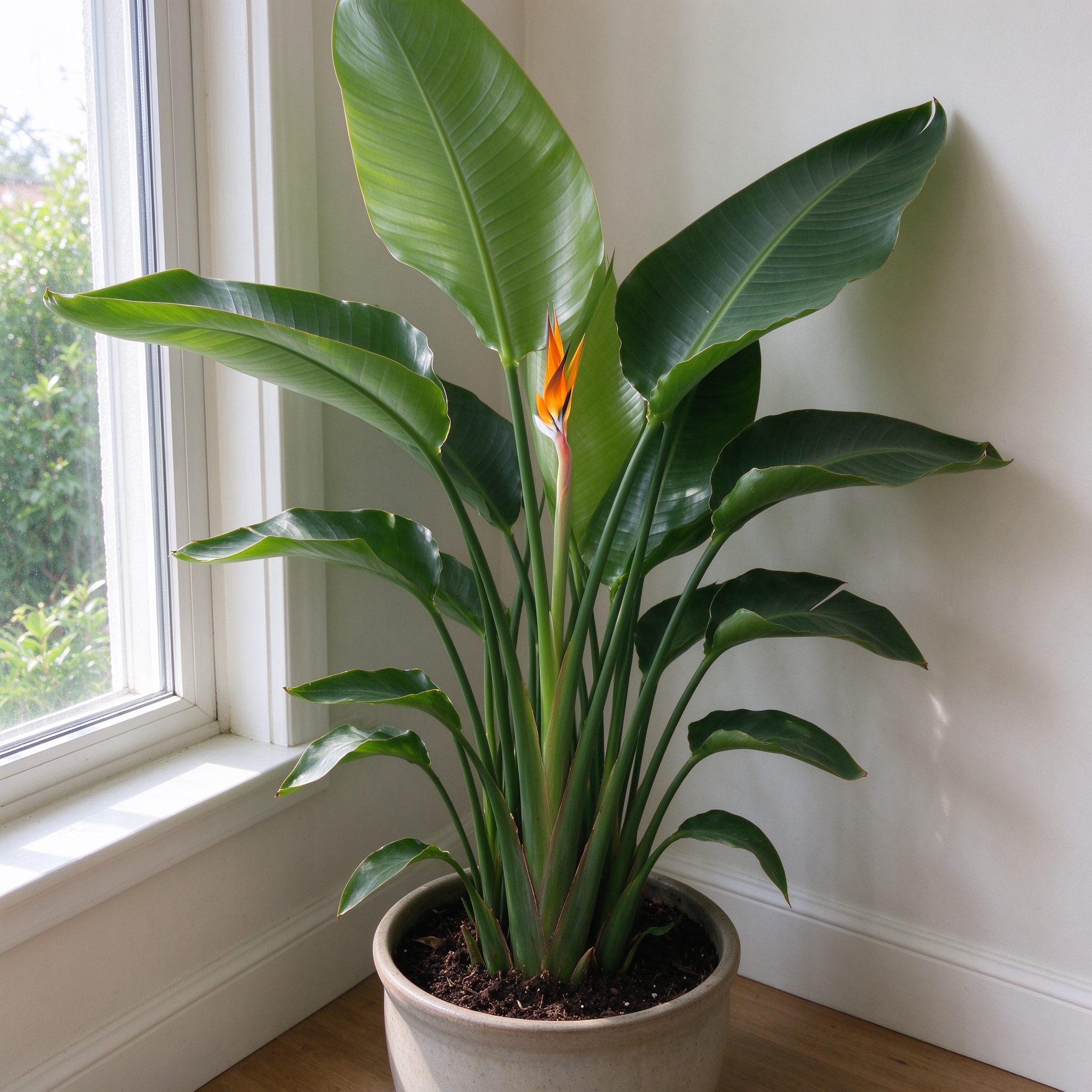
(First 2–4 weeks)- •A new bird of paradise has just been moved from a greenhouse to your living room, and the change in light, temperature, and watering habit shocks it.
- •Expect one or two older lower leaves to yellow and droop during this period; that is normal acclimation, not a disease.
- •Put the plant in its final brightest position, check that the nursery pot drains, and water only when the top 2 inches of mix feel dry.
- •Do not repot immediately into a much larger pot: an oversized container holds extra wet soil that rots the roots.
- •Wait at least four to six weeks before repotting so the plant can settle into its new light level first.
 2
Root and clump establishment
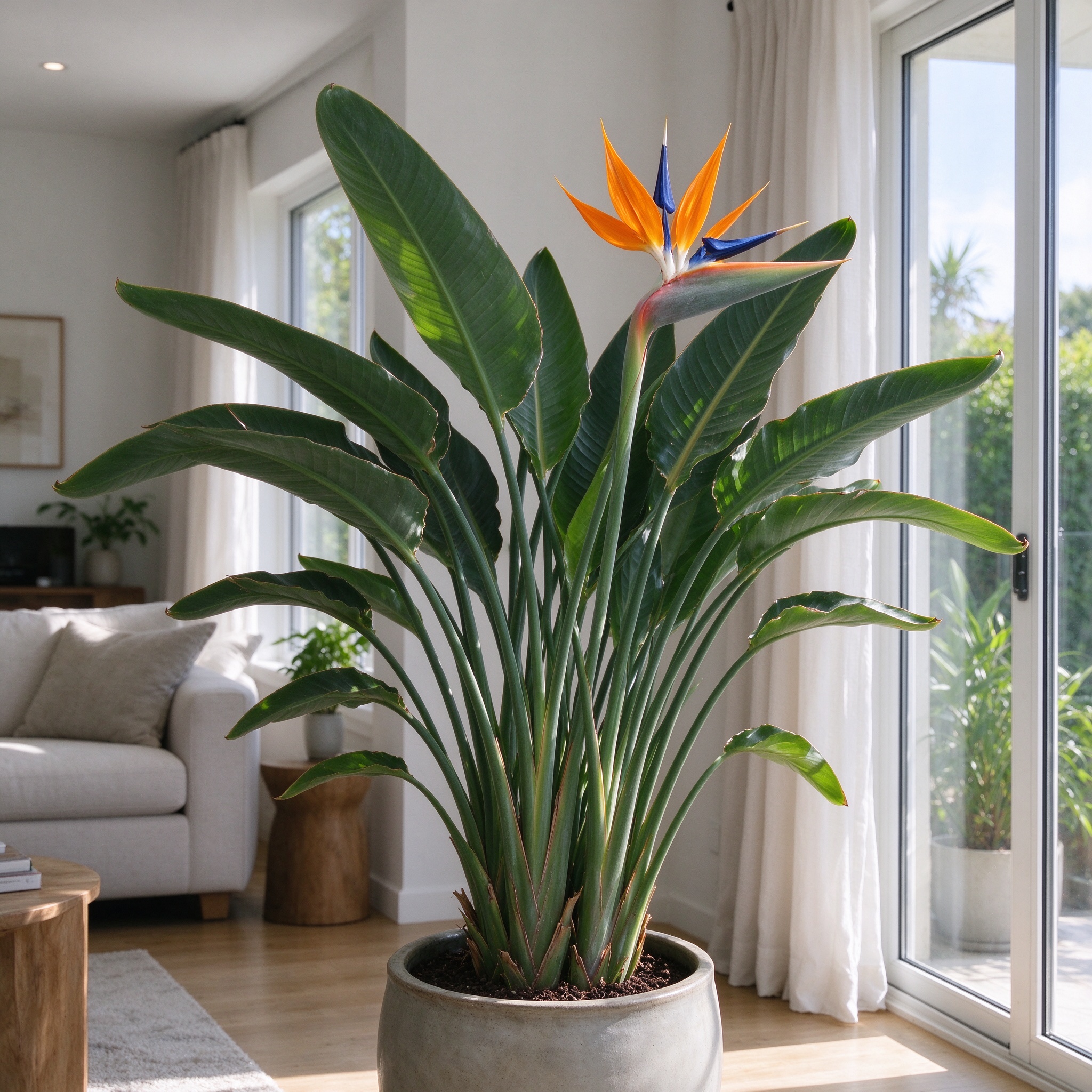
(Months 1–12)- •Once settled, the plant moves energy into expanding the underground rhizome network and fleshy root system, pushing one new leaf fan roughly every month or two during the growing season.
- •Keep the soil on the soak-and-dry schedule and feed at half strength monthly in spring and summer so the root mass fills the nursery pot.
- •This is the stage where the plant is most likely to suffer if overwatered in winter: keep the mix drier and stop feeding from fall onward.
- •Inspect leaf backs and stalks at every watering so mealybugs, scale, or aphids are caught while the population is still small.
 3
Mature foliage clump
(Year 1–3)- •Over the second and third year the plant builds the full, dense fan of 3-to-4-foot gray-green leaves it is grown for.
- •The clump crowds the pot more tightly, and roots may start to circle the root ball or emerge from the drainage hole; RHS notes that plants generally flower better when slightly pot-bound, so resist the urge to move it into an oversized container just because it looks tall.
- •Remove yellow and brown leaves at the base of the petiole, wipe the broad blades with a soft damp cloth now and then to keep photosynthesis efficient, and rotate the pot a quarter turn each month so the clump stays balanced.
 4
Flowering maturity
(Year 3 onward)- •A mature, crowded clump given strong light may finally send up a tall flower stalk from the center of the fan.
- •RHS warns that plants may take a few years to bloom and will only do so with adequate light and feed; seed-grown specimens can take even longer, while divisions of a mature flowering clump reach bloom faster.
- •The beak-like spathe opens its orange and blue flowers in succession over several weeks.
- •When the clump becomes genuinely congested in spring, RHS and UF/IFAS both recommend propagating by division of rooted suckers, separated late spring to early summer and repotted at the same depth they grew before.
💧 Detailed Care Guide
☀️ Light Requirements
- •This is the single most important care rule for a bird of paradise indoors: give it the brightest spot you have, ideally an unobstructed south or west window that delivers several hours of direct sun each day, with bright indirect light for the rest of the day.
- •NC State lists the species under full sun (six or more hours of direct sunlight a day) and partial shade (two to six hours of direct sun), and the RHS advises growing it in full light with shade only from the hottest midday sun.
- •A few feet back from an east window keeps the foliage healthy but usually is not bright enough to trigger flowering.
- •Without strong light the plant survives for a while, but stems stretch, leaves lean hard toward the window, the clump opens into an untidy fan, and buds never form.
- •Conversely, do not place a dark-grown plant straight into blazing summer midday sun through glass: leaves scorch when light jumps straight from shade to strong sun, so acclimate any plant moved outdoors gradually over two weeks.
- •In winter, move it to the strongest light available because daylight is weak and the plant needs every ray it can get.
- •Rotate the pot a quarter turn every few weeks so the leaves grow evenly on all sides instead of all tilting toward one window.
- •Flowering houseplants generally need more light than foliage plants, and a bird of paradise is a flowering plant first and foremost.
💧 Watering
- •Water on a soak-and-dry rhythm, never on a fixed calendar.
- •NC State directs watering freely and fertilizing regularly in spring and summer but keeping the plant drier in winter; the NC State HortScans note adds that the plant needs moderate moisture at all times and the soil should never become waterlogged.
- •In practice, water thoroughly until liquid runs freely out of the drainage hole, then let the top 2 to 3 inches of the potting mix dry out before you water again.
- •In a bright, warm summer room that usually means once a week or every ten days; in a cool, darker winter corner it can stretch to two or three weeks, and RHS instructs watering sparingly in winter when growth slows.
- •Empty the saucer within a few minutes of watering so the root ball never sits in standing water: long soaking leaves no air in the soil, so the roots drown.
- •Use room-temperature water; cold water shocks the roots, and cold, wet soil in winter is the fastest route to root rot.
- •The thick rhizomes and fleshy roots store some water, so the plant tolerates a missed watering far better than a wet pot.
- •Slightly dry soil in winter is safer than moist soil.
- •If leaves curl or droop before the soil dries, check for a cold draft or a root problem rather than adding more water.
🌡️ Temperature
- •A normal warm living room suits a bird of paradise.
- •NC State calls for moderate nighttime temperatures around 55 to 65°F (13 to 18°C); the NC State HortScans note adds that a night temperature of 50 to 55°F (10 to 13°C) is sufficient and that the plant does well in conservatories held at 60 or even 65°F.
- •RHS advises ventilating whenever indoor temperatures exceed 20°C (68°F), because stagnant hot air encourages pests and fungal problems.
- •Keep the plant away from cold drafts, exterior doors, and windowsills that chill overnight, and away from radiator vents and air-conditioning outlets that blow hot or dry air directly on the foliage.
- •RHS rates this species H1b: it can spend the summer outside where nights stay in the 10–15°C (50–59°F) range, and extended cold below about 10°C (50°F) stresses this tropical plant.
- •Humidity between 40 and 60 percent is fine; ordinary indoor humidity is acceptable, and the plant is more forgiving than a fern or anthurium.
- •In dry forced-air winter rooms, set the pot on a tray of damp pebbles or group it with other plants to raise local humidity, but do not mist the broad leaves every evening: wet foliage that stays damp overnight encourages leaf spot and botrytis.
- •When summer temperatures rise above 70°F, NC State suggests moving the plant outdoors into a sunny to semi-shaded spot with good air circulation rather than deep shade.
🌱 Soil & Fertilizer
Soil:
- •NC State calls for fertile, loamy, well-drained soil high in organic matter; both NC State and RHS list the species across acid, neutral, and alkaline pH rather than requiring one fixed range, and RHS recommends a peat-free, loam-based compost for plants grown under glass.
- •A reliable indoor blend is two parts quality potting soil or loam-based compost, one part orchid bark or aged compost for structure, and one part perlite or pumice for drainage.
- •The mix must hold enough moisture for a few days while still allowing water to pass through freely; dense, peat-heavy seed-starting mixes that stay soggy for weeks are a poor choice, because the fleshy rhizomes and roots rot in waterlogged soil.
- •Strelitzia tolerates acid, neutral, and alkaline conditions within the normal houseplant range.
- •Add grit or sharp sand to the compost if you tend to overwater; extra drainage material keeps the mix open around the fleshy rhizomes.
- •Repotting into fresh mix every second year replaces organic matter that has compacted and degraded; old, compacted mix is a common cause of stale soil and root disease.
Fertilizer:
- •Feed lightly and regularly through the growing season, not in winter.
- •RHS recommends applying a balanced liquid fertilizer monthly during growth; NC State agrees the plant should be fertilized regularly in spring and summer, and the NC State HortScans note adds organic fertilizers such as blood and bone meal placed around the plant about every three months to increase blooms and growth.
- •For an indoor plant, a balanced all-purpose houseplant fertilizer diluted to half or three-quarters strength once a month from March through August matches this guidance; stop entirely in fall and winter, when low light means the plant cannot use the feed and leftover salts build up in the mix.
- •Do not apply fertilizer to bone-dry soil, because concentrated salts burn the roots; water first with plain water, then feed.
- •Too much nitrogen produces lush, floppy leaves at the expense of flowers, so avoid lawn-type high-nitrogen feeds.
- •Every spring, before the next growing season, flush the pot by running plain water through the mix several times to leach accumulated salts, which otherwise brown the leaf tips and encourage crusting on the soil surface.
📝 Step-by-Step Planting Guide
- 1
Choose the brightest position and a stable, draining pot
- •Pick a south- or west-facing spot with several hours of direct sun, bright indirect light for the rest of the day, and good air circulation; NC State and the RHS both point to a well-lit, sunny position and full light with shade only from hot midday sun.
- •Choose a pot with at least one drainage hole and only one size larger than the current root ball.
- •Because mature plants become top-heavy with broad leaves, favor a heavy terracotta or weighted floor pot rather than a flimsy plastic one that can tip over.
- •Keep the plant away from drafty exterior doors, radiators, and air-conditioning vents that swing temperature and humidity up and down.
- 2
Mix a fertile, fast-draining loam blend
- •Prepare a blend of two parts loam-based or quality potting compost, one part orchid bark or aged leaf compost for open structure, and one part perlite or pumice for drainage, matching NC State's fertile, loamy, well-drained soil high in organic matter and RHS's peat-free loam-based compost.
- •If you overwater regularly, add a little extra grit or sharp sand to open the mix and speed drainage.
- •Avoid dense, moisture-retentive mixes intended for seedlings or outdoor vegetables; the rhizomes rot quickly when the mix stays wet for days after every watering.
- 3
Pot at the right shallow depth
- •Water the root ball first so the plant slides out of the old pot without tearing roots, then set it at exactly the same depth it was growing before.
- •The NC State HortScans note stresses that the plants must not be planted too deeply: the juncture where stems meet roots should be level with the soil surface, never buried under a mound of fresh mix, because buried crowns rot.
- •Fill around the root ball, firm the mix gently to remove air pockets, and water in thoroughly until liquid drains from the bottom.
- •Planting too high leaves roots exposed and drying; planting too deep invites crown rot.
- 4
Water on a soak-and-dry rhythm by season
- •Water thoroughly until it drains freely, then let the top 2 to 3 inches of mix dry before the next drink, following NC State's direction to water freely in spring and summer but keep drier in winter, alongside the HortScans rule of moderate moisture that never reaches sogginess.
- •In a bright summer room this is often weekly to every ten days; in a cool winter corner two to three weeks may pass.
- •RHS instructs watering sparingly in winter; roots sitting in water drown because soil airspaces fill with water.
- •Always empty the saucer after watering, and use room-temperature rather than cold water.
- 5
Feed monthly in growth and groom the foliage
- •From March through August, apply a balanced liquid houseplant fertilizer at half to three-quarters strength about once a month, matching RHS's monthly balanced liquid feed during growth; stop entirely in fall and winter.
- •Wipe the broad leaves every few weeks with a soft, damp cloth to remove dust, which blocks light and harbors mites, and rotate the pot a quarter turn monthly so growth stays even.
- •At each watering inspect leaf backs, leaf axils, and stalks for mealybugs, scale, spider mites, and aphids so an early population can be wiped off before it spreads to neighboring plants.
- 6
Repot and divide on a two-year cadence
- •RHS recommends repotting every second year and top-dressing annually; do it in spring when growth resumes.
- •Move up only one pot size, because the plant flowers better slightly root-bound.
- •When the clump becomes genuinely crowded, separate rooted suckers in late spring to early summer (RHS: division of rooted suckers in spring; UF/IFAS: divide mature clumps late spring to early summer), keeping enough root on each division to support it, and plant each at the original depth.
- •Handle the fleshy, brittle roots carefully to avoid tearing them.
🌱 Recommended Varieties
Reliable classic orange type
- •The classic sold at garden centers and big-box stores: broad gray-green banana-like leaves in an upright fan, with orange sepals and vivid blue petals emerging from a dark, canoe-shaped spathe.
- •NC State describes the flowers as three brilliant orange sepals and three bright blue petals, two of which join to form an arrow-like nectary.
- •This species is the most forgiving indoor choice and the best option for first-time owners who want the classic bird-of-paradise look without the size of the giant species.
'Mandela's Gold' yellow-flowered cultivar
- •NC State lists the cultivar 'Mandela's Gold' (older trade name 'Kirstenbosch Gold') with grayish-green leaves and a gray and pink beak-like spathe that holds yellow and purple flowers rather than the usual orange and blue.
- •It is grown and marketed as a specialty selection of the species; the foliage habit and care are the same as the orange type, and it needs the same bright light to bloom.
Large statement species
- •UF/IFAS describes Strelitzia nicolai as the white or giant bird of paradise, a much larger relative that grows 15 to 30 feet outdoors, with large paddle-like leaves arranged spirally around a distinct stem and white flowers resembling the traveler's tree.
- •Indoors it is usually kept as a dramatic foliage statement in a large room or conservatory; it rarely flowers in ordinary homes, and it needs far more space than this species.
Compact rush-leaved species (S. juncea)
- •Strelitzia juncea, a smaller-growing species distinguished by narrow, round, rush-like leaves rather than broad blades; the foliage looks like upright green reeds, and it still produces the orange and blue bird-shaped flowers on mature plants.
- •It is slower-growing and neater on a bright windowsill or in a medium-size floor pot, tolerates a little more neglect than this species, and shares the same soil, watering, and light requirements.
🪴 Growing in Containers
- Pot size and drainage:
- •Choose a pot with at least one drainage hole and only one to two inches wider than the existing root ball.
- •RHS notes that the plant flowers better slightly pot-bound, so an oversized pot is a mistake: it holds extra wet soil around the roots and delays flowering while raising root rot risk.
- •A depth of 10 to 14 inches for a young plant and 16 to 18 inches for a mature clump keeps the root run sensible.
- Terracotta versus plastic and glazed ceramic:
- •Unglazed terracotta breathes and dries out quickly, which suits this plant when you tend to overwater; plastic and glazed ceramic hold moisture longer, useful in a very dry heated home but riskier for someone who waters too often.
- •RHS recommends peat-free loam-based compost in a large container under glass, so weight and porosity should match your watering habit as much as your decor.
- Weight and stability for a tall clump:
- •Mature bird of paradise plants are top-heavy with broad, wind-catching leaves.
- •A lightweight plastic pot on a shelf or stand can tip over when a leaf brushes against it, especially if the root ball has loosened.
- •Use a heavy floor pot, a weighted planter, or place a stone at the bottom of a decorative cachepot for ballast.
- •Stand the plant against a stable wall or corner rather than at the edge of a walkway where it can be knocked over by pets or children.
- Repotting cadence:
- •RHS recommends repotting every second year and top-dressing annually in spring.
- •Repot earlier only when roots circle tightly around the root ball or push out the drainage hole in large numbers.
- •Always repot in spring, when the plant recovers fastest; winter repotting shocks a dormant plant and can rot exposed roots in cool, moist soil.
- Saucer and decorative cachepot:
- •Use a saucer under the real growing pot to catch drips, but empty it within minutes after watering; standing water around the root ball invites root rot.
- •A decorative outer cachepot can look neat, but it must be treated as a holder only: lift the growing pot out to water, let it drain, and set it back, rather than leaving it sitting in a layer of accumulated water inside the cachepot.
✂️ Pruning & Maintenance
- ✓
Remove dead and yellowed foliage
- •Cut brown, yellow, or damaged leaves cleanly at the base of the petiole with sanitized shears whenever you notice them.
- •UF/IFAS advises removing dead leaves to improve the plant's appearance.
- •Removing spent foliage redirects energy into new leaf fans and improves airflow around the crowded crown.
- •One or two older leaves yellowing each month is normal; a cluster turning yellow at once points to overwatering or a draft.
- ✓
Cut spent flower stalks at the base
- •After a flower spike finishes blooming and the spathe dries and browns, cut the stalk cleanly where it emerges from the rhizome crown.
- •Leaving a spent stalk attached drains energy from the clump and can rot at its base, which then spreads to the crown.
- •UF/IFAS likewise notes that old flower stalks should be removed for a neat appearance.
- ✓
Clean up torn blades without reshaping the leaf
- •Broad bird of paradise leaves tear along their veins naturally in air movement or outdoors in wind; this split pattern does not harm the plant.
- •You can snip off a ragged brown torn edge with a clean cut, but do not cut a healthy leaf into a neat oval or split it further; the plant needs the full leaf surface for photosynthesis.
- •RHS notes that the species needs no regular pruning beyond removing dying foliage and spent blooms.
- ✓
Divide mature clumps in spring
- •When the clump outgrows its container, divide it in late spring to early summer: RHS recommends division of rooted suckers in spring, and UF/IFAS advises digging and separating mature clumps in late spring or early summer, pulling them apart into single stems and replanting at the same depth.
- •Disinfect shears between cuts, keep a healthy portion of root on each division, and water divisions to keep the soil moist for the first three months while roots establish.
🐛 Pest & Disease Control
Common Pests
Mealybugs
Symptoms:- •Cottony white ovals cluster in the leaf axils, along the lower stalks, and on the underside of the midribs.
- •Sticky honeydew coats nearby foliage, and tender new growth emerges curled or distorted as the insects suck sap.
- •RHS lists mealybugs as a susceptibility of Strelitzia, NC State names mealybugs among the pests to monitor, and the HortScans note lists them among the more common pests of the genus.
Control:- •Dab visible mealybugs with a cotton swab dipped in rubbing alcohol, which kills them on contact, then wipe the whole plant down with diluted insecticidal soap or neem oil, repeating every ten days for a month because eggs hidden in crevices keep hatching.
- •Check neighboring plants on the same shelf, raise air circulation around the clump, and isolate an infested plant while you treat it.
Scale insects
Symptoms:- •Small, raised brown or tan bumps stick to the stalks and leaf veins; they do not move when touched.
- •Sooty black mold grows on the honeydew they excrete, and leaves yellow or drop early.
- •RHS lists scale insects as susceptible on bird of paradise, NC State names scale among the pests to monitor, and UF/IFAS likewise lists scales among the occasional outdoor insects.
Control:- •Because adults are protected by a shell, scrape each bump off with a fingernail or a cotton swab dipped in rubbing alcohol, then spray the whole plant with horticultural oil or neem to kill the crawler stage.
- •Repeat every seven to ten days for a month.
- •Prune out heavily infested stalks and seal them in a bag before disposal so crawlers do not spread to other houseplants.
Spider mites (glasshouse red spider mite)
Symptoms:- •Fine reddish or pale speckling dots the upper leaf surface, and fine webbing appears where the leaf meets the stalk; leaves turn dull bronze or gray-green and may drop early.
- •RHS lists glasshouse red spider mite as a susceptibility of Strelitzia, and NC State includes spider mites among the pests to monitor.
- •Dry, heated indoor air in winter is the main trigger, which is why the broad, flat foliage of this plant is especially easy for mites to colonize.
Control:- •Isolate the plant, then spray or wipe every leaf, top and bottom, with diluted neem oil or insecticidal soap, repeating weekly for three weeks.
- •Raise local humidity with a pebble tray or humidifier, because mites breed fastest in dry air, and keep the leaves clean with regular wiping.
- •Heavily speckled leaves on a large specimen can be cut off and bagged rather than saved.
Aphids
Symptoms:- •Soft, pear-shaped green, black, or pale insects cluster on tender new leaf tips and flower stalks, sucking sap and curling the young foliage.
- •Sticky honeydew and black sooty mold follow; the NC State HortScans note lists aphids among the more common pests of the genus; UF/IFAS likewise names aphids among the occasional outdoor pests.
- •Infestations usually appear after spring growth bursts or after a plant is moved outdoors for the summer.
Control:- •Wipe colonies off with a damp cloth or blast them off with a gentle stream of room-temperature water, then spray with diluted insecticidal soap, repeating weekly until none remain.
- •A light systemic houseplant insecticide controls stubborn outbreaks.
- •Inspect any plant you bring home or move back inside in fall before placing it near your existing collection.
Common Diseases
Root rot (overwatering)
Symptoms:- •Leaves yellow, wilt, and droop even though the soil is wet; the base of the crown feels mushy and brown instead of firm, and roots pulled from the pot are brown and slimy rather than pale and solid.
- •NC State notes that root rot can occur from overwatering or poorly drained soils; RHS advises watering sparingly in winter, when cold, wet soil drives decay fastest.
- •It is the most common cause of a sudden bird of paradise collapse indoors.
Control:- •Remove the plant from its pot immediately, clip away every brown, mushy root with sterile shears, and repot into fresh, open, fast-draining mix in a clean pot with a working drainage hole.
- •Let the mix dry out before watering again. Going forward, let the top 2 to 3 inches dry between drinks and empty the saucer after every watering.
- •If the crown itself has turned mushy, a clean sucker cutting may be saved even when the mother plant cannot.
Fungal leaf spot
Symptoms:- •Tan to brown circular or irregular spots, often with a yellow halo, appear on older leaves; the centers may dry and fall out, leaving a shot-hole look.
- •NC State notes that leaf spot may cause yellow or brown spots on the leaves, and UF/IFAS warns to watch out for fungal leaf spot disease.
- •The fungus thrives when water sits on the broad leaves overnight and in stagnant, humid rooms.
Control:- •Stop wetting the foliage; water the soil rather than the leaves.
- •Pick off and bag every spotted leaf, disinfecting shears between cuts, and improve air circulation around the crown with a small fan if the room is still.
- •A general houseplant fungicide applied every ten days until new growth is clean slows spread; watering in the morning so any accidental splash dries quickly prevents reinfection.
Botrytis gray mold
Symptoms:- •A fuzzy gray-brown mold spreads over flowers, bracts, and injured leaves in cool, wet, poorly ventilated rooms; bracts develop lesions and florets turn brown.
- •NC State's horticulture notes record benomyl or thiabendazole dips to control bract lesions and floret browning due to botrytis on cut Strelitzia, which confirms the organism attacks the broad floral structures.
- •Indoors it shows up mainly on plants left near cold windows or in unventilated bathrooms.
Control:- •Cut out all moldy tissue and bag it, move the plant away from cold drafts and cold windowsills, lower humidity, and increase airflow.
- •Stop misting the leaves and avoid letting water collect in the crown overnight.
- •Apply a broad-spectrum fungicide if the problem recurs; healthy, airy plants rarely develop botrytis, so better culture is the lasting fix.
Crown rot (cold, wet soil)
Symptoms:- •The base of the plant at soil level turns dark, soft, and slimy, the newest leaves wilt without clear yellowing, and a sour odor may rise from the mix.
- •It strikes dormant plants in winter that are kept too wet in a cool room, matching RHS advice to water sparingly while growth slows; long soaking drowns the roots as water replaces air in the soil.
Control:- •Take the plant out of the pot, trim all soft, dark tissue back to firm green or white, dust the cut crown with a little cinnamon or fungicide, and let it dry overnight before repotting in fresh, dryish mix.
- •Move the plant to a warmer, brighter room and water sparingly until spring growth appears.
- •Crowns that have rotted all the way through cannot be saved; separate any healthy rooted sucker and start it fresh.
🍅 When to Harvest
- •There is no edible harvest with a bird of paradise.
- •The plant is 'ready' for propagation when the mature clump has filled its pot and pushes several rooted suckers around the mother plant; that is the moment to divide and share.
- •Mature plants grown in full sun may send up one or more flower spikes in spring, summer, or intermittently through the year; individual blooms last several weeks on the plant, and the NC State horticulture document notes cut flowers keep for about 15 days.
- •Very young plants rarely bloom: seed-grown plants take several years to flower at all, while divisions from a mature clump flower sooner.
- •NC State records the fruit as a leathery capsule holding small seeds with orange arils; these seeds and the fruit are the parts of the plant that cause mild gastrointestinal irritation in pets, so remove spent pods before curious pets can chew them.
❓ Frequently Asked Questions
- 1
How often should I water a bird of paradise?
- •Check the soil instead of following a fixed schedule: water thoroughly until liquid drains freely from the bottom, then wait until the top 2 to 3 inches of mix are dry before watering again.
- •In a bright, warm summer room that is usually once a week to every ten days; in a cool winter corner two to three weeks may pass between drinks, and RHS advises watering sparingly in winter.
- •NC State recommends watering freely in spring and summer but keeping the plant drier in winter; the HortScans note adds moderate moisture that never reaches sogginess.
- •Always empty the saucer after watering, and use room-temperature water; this plant tolerates a slightly dry pot far better than a wet one.
- 2
Why are my bird of paradise leaves curling?
- •Curling usually signals stress rather than a single cause.
- •The most common reason indoors is underwatering combined with dry air: when the rhizome cannot pull enough moisture, the broad leaves curl inward to reduce transpiration, often with brown crispy edges as well.
- •The opposite problem also curls leaves: overwatering that has rotted the roots, so the plant cannot take up water even though the soil is wet.
- •Check the mix first: if the soil is bone-dry, soak the plant thoroughly; if wet and soggy with a soft crown, you likely have root rot and need to unpot, trim, and repot.
- •Other causes are cold drafts, a sudden move, and direct hot sun on a leaf that was previously shaded.
- 3
Why are my bird of paradise leaves splitting or tearing?
- •Splitting and tearing on a bird of paradise are mostly natural.
- •NC State notes the long gray-green leaves look like banana leaves; mature foliage in an exposed spot or outdoors develops gaps and tears along the veins in response to wind and air movement, and the same pattern appears on houseplants left in a draft or by an open window.
- •This is not a pest, disease, or nutrient problem, and you do not need to remove a leaf unless it has fully browned.
- •Torn ragged edges can be trimmed cleanly, but a healthy green leaf should keep its full surface for photosynthesis.
- •If leaves are also yellow, mushy, or covered in webbing, then a real problem is involved and should be checked separately.
- 4
Why isn't my bird of paradise flowering?
- •Most failures to bloom come down to light, maturity, pot size, or feed.
- •First, light: RHS states that plants may take a few years to bloom and will only do so if given adequate levels of light and feed, so a plant in a dim living room will grow leaves but never form a spike.
- •Second, maturity: seed-grown plants take several years to flower, while divisions from a mature clump bloom faster.
- •Third, pot size: RHS notes plants generally flower better if slightly pot-bound, so an oversized pot delays bloom while the plant grows roots.
- •Fourth, avoid over-fertilizing with a high-nitrogen feed, which produces leaves instead of flowers.
- •Move the plant to the brightest window, feed a balanced fertilizer monthly through spring and summer, and wait for a mature, crowded clump to send up a stalk.
- 5
Why are the leaf tips turning brown and crispy?
- •Brown crispy tips are almost always a cultural issue rather than a disease.
- •Dry heated indoor air in winter dehydrates the leaf ends, and built-up fertilizer salts do the same.
- •Trim the brown part off with a clean angled cut that follows the natural leaf shape; let tap water stand out overnight before watering so any chlorine dissipates.
- •Raise local humidity with a pebble tray, flush the pot with plain water once each spring to leach salts, and check that you are not overwatering or letting the soil stay bone dry for weeks at a time.
- •If the whole leaf goes brown from the base upward, suspect root rot from soggy soil instead.
- 6
Is bird of paradise toxic to cats and dogs?
- •Yes.
- •The ASPCA lists the bird of paradise flower (Strelitzia) as toxic to dogs, cats, and horses, with GI irritants as the toxic principle; clinical signs are mild nausea, vomiting, and drowsiness, caused mainly by the fruit and seeds rather than the leaves.
- •NC State likewise lists it as toxic to cats, dogs, and horses.
- •The risk is mild and usually passes on its own, but keep the plant out of reach of chewing pets, remove any developing seed pods before they can be nibbled, and contact a veterinarian if a pet eats a large amount and shows ongoing vomiting or lethargy.
- •Do not confuse Strelitzia with the unrelated shrub Caesalpinia gilliesii, also called bird of paradise, which the ASPCA notes is more toxic.
Source:
NC State Extension Gardener Plant Toolbox — https://plants.ces.ncsu.edu/images/plants/strelitzia-reginae/common-name/crane-flower/
NC State Extension Gardener Plant Toolbox — https://plants.ces.ncsu.edu/images/plants/strelitzia-reginae/common-name/crane-flower/
Royal Horticultural Society (RHS) — https://www.rhs.org.uk/images/plants/17807/bird-of-paradise/details
UF/IFAS Extension ENH79 Bird-of-Paradise (Sydney Park Brown & Robert J. Black) — https://ask.ifas.ufl.edu/publication/MG106
NC State Horticulture Document Library (Arvidson & Koths, Bird-of-Paradise) — https://hortscans.ces.ncsu.edu/uploads/b/i/bird-of-_53b4990defded.pdf
ASPCA Animal Poison Control Center — https://www.aspca.org/pet-care/animal-poison-control/toxic-and-non-toxic-plants/bird-paradise-flower
Photo credit: NC State Extension
Images courtesy of NC State Extension under CC BY license. Thank you to the photographers who make these educational images available.
License: CC BY-NC 2.0 / CC BY 4.0