
How to Grow Snake Plant: Complete Guide
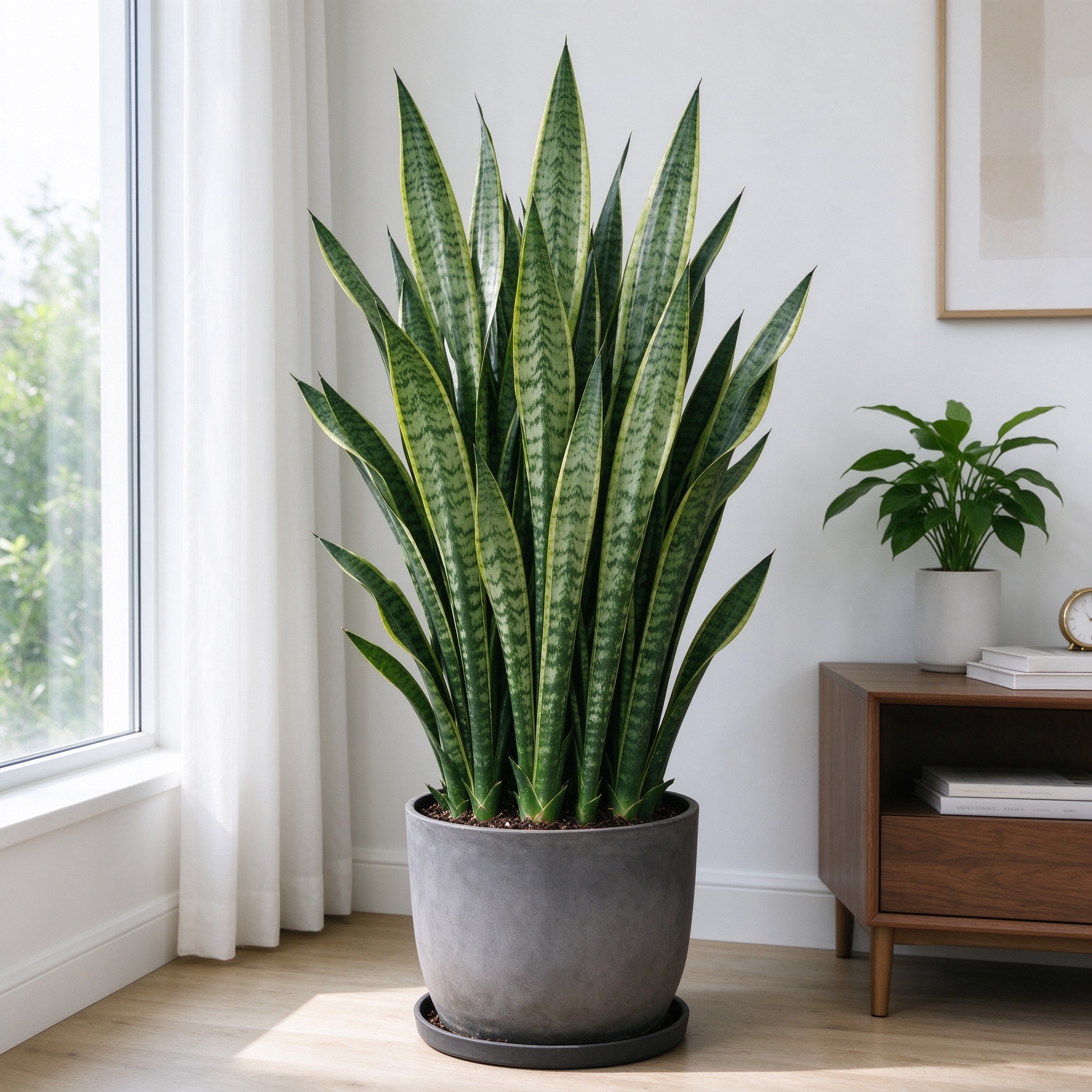
- •Snake plant (Dracaena trifasciata, formerly Sansevieria trifasciata), also called mother-in-law's tongue, is an erect, clumping, broadleaf evergreen succulent perennial in the asparagus family (Asparagaceae), native to West and West Central Africa.
- •It grows stiff, upright, sword-shaped leaves in rosettes that reach up to 4 feet tall indoors.
- •NC State calls it quite durable, easily grown, and difficult to kill, and the Almanac calls it 'nearly indestructible'.
- •It tolerates very low light, cool rooms, and weeks of forgotten watering, which is why it is the default low-effort plant for offices, bedrooms, and new plant parents.
📋 Quick Facts
Scientific Name: Sansevieria trifasciata
Family: Asparagaceae
Category: Houseplant
USDA Zones: 9-11 (houseplant)
Light:
- •Very forgiving: partial shade of 2–6 hours of direct sun is ideal per NC State, but the plant tolerates very low light and even deep corners.
- •It also takes some direct sun. The one thing to avoid is sudden moves from a dark corner into blazing midday sun, which shocks the leaves.
- •Variegated cultivars like 'Laurentii' need a bit more light to keep their yellow edge.
Water:
- •Under-water rather than over-water. NC State says well-drained soil and careful watering are a must; do not overwater, as the roots will rot.
- •In spring to autumn let the soil dry between waterings; in winter water only every one to two months.
- •The Almanac adds to water from the bottom when possible and to stick your finger two inches into the soil before watering.
Temperature:
- •Average room temperatures above 50°F (10°C) are fine. NC State notes it tolerates cool temperatures around 50 degrees and low humidity.
- •Keep it away from drafty windows in winter; extended exposure to cold can damage the foliage, per the Almanac.
Soil:
- •A loose, fast-draining mix; NC State lists loam and sand with good drainage and a neutral to slightly alkaline pH.
- •The Almanac recommends a cactus-and-succulent potting mix, which resists staying oversaturated. Avoid dense, moisture-retentive peat-heavy mixes.
Harvest:
- •There is no edible harvest.
- •The plant is 'ready' when the rosette has produced several pups around the mother — that is the point at which you can divide and repot the offsets.
- •Mature, pot-bound plants may occasionally send up a fragrant greenish-white flower spike in spring, but NC State notes that as a houseplant the snake plant rarely blooms.
Common Problems:
- •Overwatering leading to root rot is by far the number-one issue, followed by mealybugs in the leaf axils, spider mites in dry heated rooms, and fungal leaf spots on leaves that stay wet.
- •Cold drafts and frozen foliage are the other major killer.
⚠️ Pet Safety Warning
This plant is toxic to both cats and dogs.
Contains saponins, toxic to cats and dogs. Causes nausea, vomiting, diarrhea.📅 When to Plant
- •Snake plants are sold year-round as houseplants; there is no outdoor sowing window.
- •Spring is the best time to repot or divide, when the plant resumes active growth.
- •If you live in USDA Zone 8 or warmer, the Almanac notes you can grow snake plants outdoors almost year-round, but because they spread by underground runners and can become invasive, treat them like bamboo and grow them in contained beds or pots.
🌱 Growing Stages
 1
Acclimation
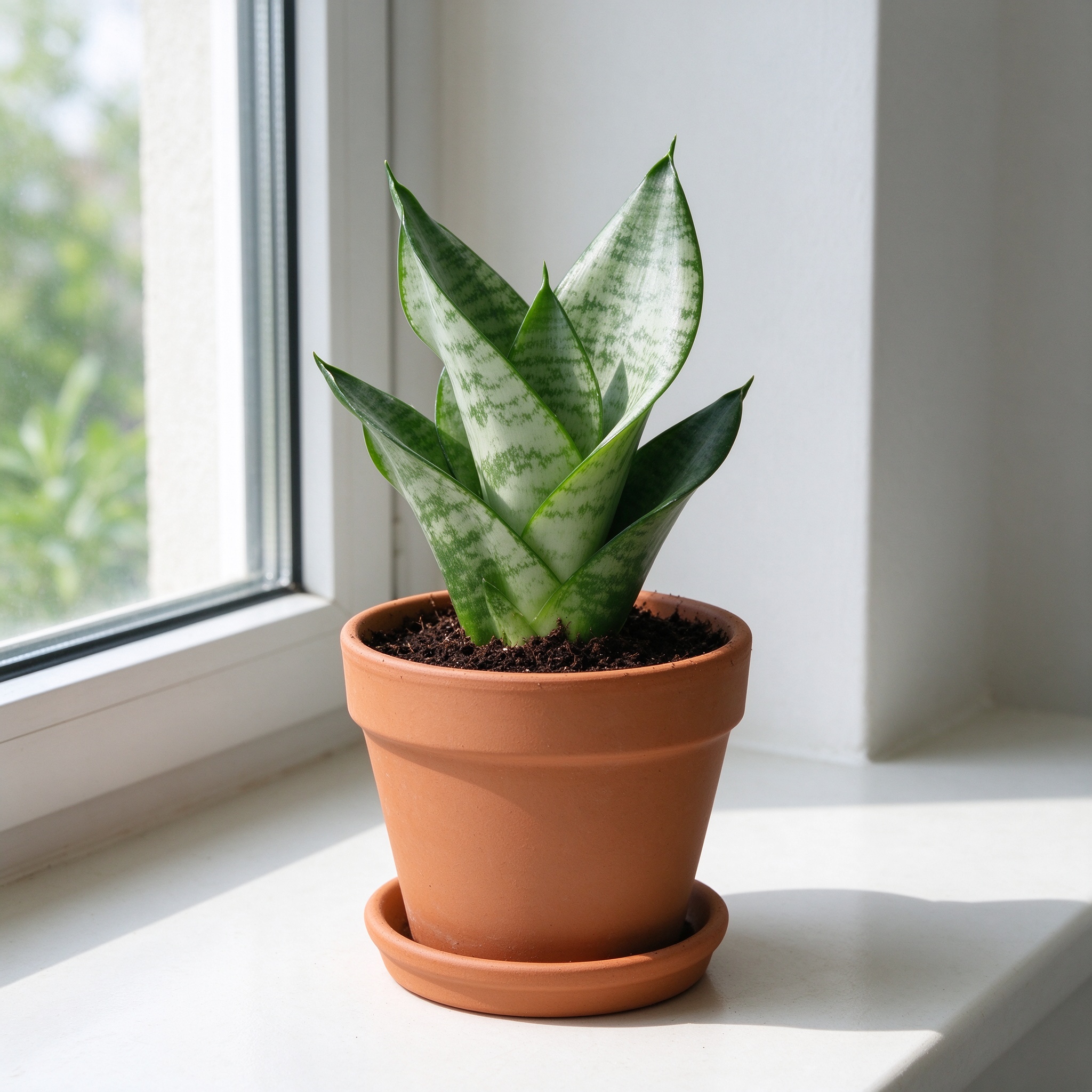
(First 2–4 weeks)- •Snake plants are sold in nurseries and big-box stores and are usually already acclimated to indoor conditions.
- •Expect very little change during the first month; the plant is extremely forgiving.
- •Keep it in any light from low to bright, water only when the soil has completely dried, and do not repot immediately.
- •Wait at least a month before dividing or repotting so it can settle into your home's light and watering rhythm.
 2
Root and pup establishment
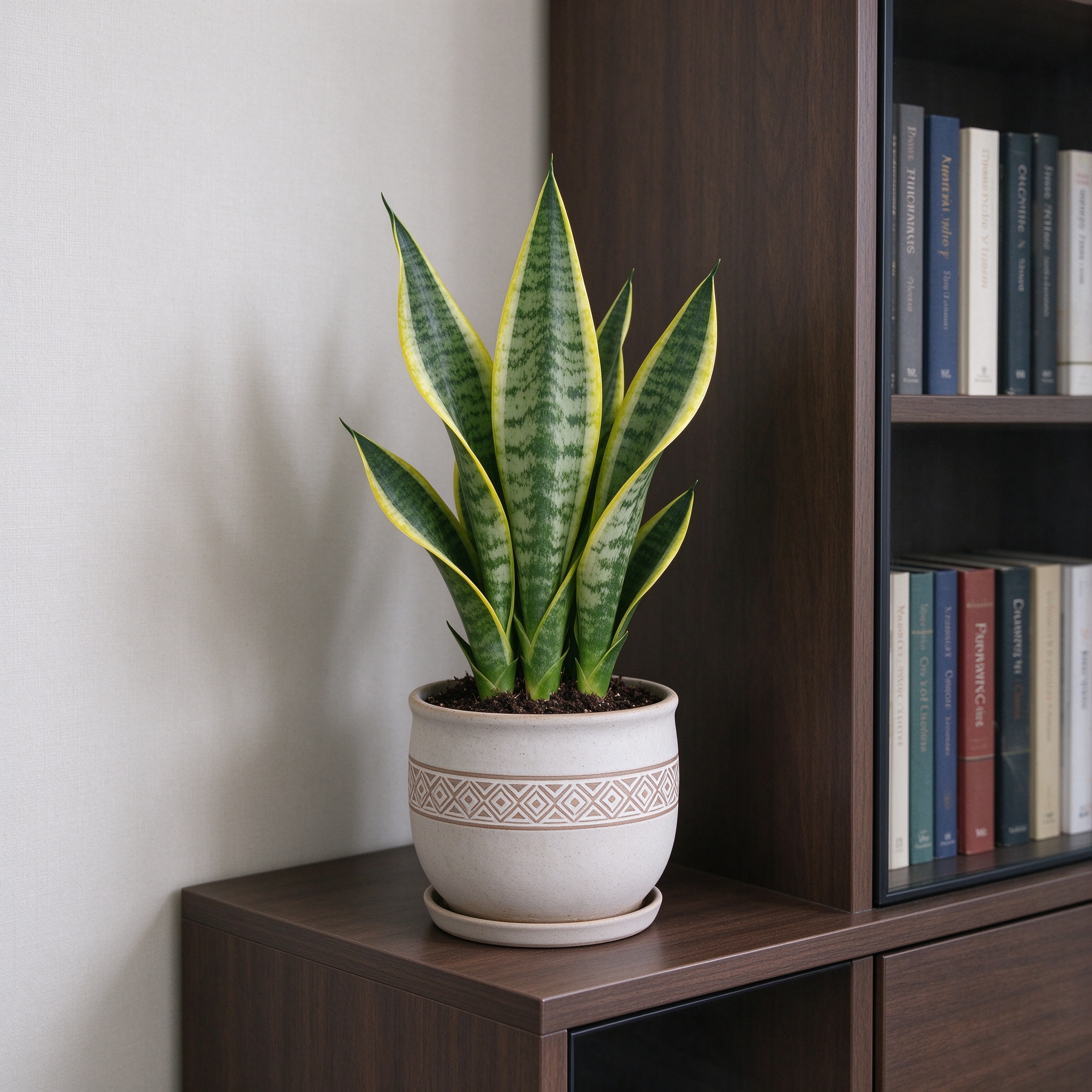
(Months 1–12)- •Once settled, the snake plant puts energy into expanding its shallow rhizome network and sending up new pups around the mother rosette.
- •In good light you may see one or two new pups per season. This is the moment to confirm the pot has room for the clump to widen.
- •Water on the let-dry-out schedule and fertilize at half strength once in spring, so the pups have what they need to emerge.
 3
Mature clumping foliage
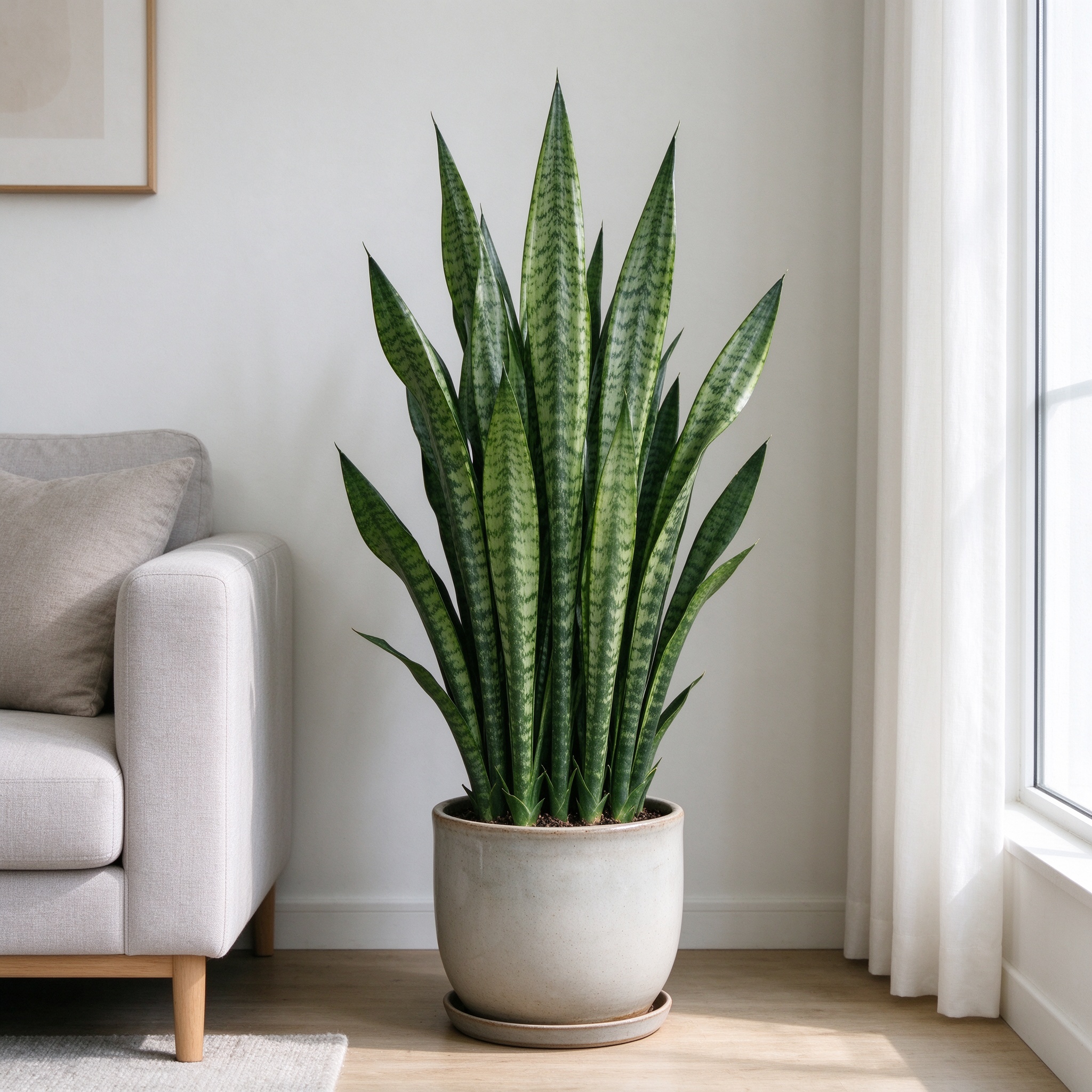
(Year 1–3)- •By the end of the second or third year, the pot is full of upright sword-shaped leaves reaching 2–4 feet, depending on cultivar.
- •NC State describes stiff, upright, succulent leaves growing in rosettes with alternating transverse bands of green.
- •This is the mature display that makes snake plants a modern design staple.
- •Wipe the flat leaves periodically to keep them glossy, and watch for mealybugs at the leaf bases.
- 4
Division and flowering phase
(Year 2+)- •Mature, crowded snake plants are ready to divide.
- •The Almanac notes that snake plants are rapid growers in good conditions and may need to be divided annually.
- •In very rare cases indoors, a pot-bound plant sends up a fragrant greenish-white raceme flower spike in spring, but NC State notes that as a houseplant the snake plant rarely blooms.
💧 Detailed Care Guide
☀️ Light Requirements
- •Very forgiving: partial shade of 2–6 hours of direct sun is ideal per NC State, but the plant tolerates very low light and even deep corners.
- •It also takes some direct sun. The one thing to avoid is sudden moves from a dark corner into blazing midday sun, which shocks the leaves.
- •Variegated cultivars like 'Laurentii' need a bit more light to keep their yellow edge.
💧 Watering
- •Under-water rather than over-water. NC State says well-drained soil and careful watering are a must; do not overwater, as the roots will rot.
- •In spring to autumn let the soil dry between waterings; in winter water only every one to two months.
- •The Almanac adds to water from the bottom when possible and to stick your finger two inches into the soil before watering.
🌡️ Temperature
- •Average room temperatures above 50°F (10°C) are fine. NC State notes it tolerates cool temperatures around 50 degrees and low humidity.
- •Keep it away from drafty windows in winter; extended exposure to cold can damage the foliage, per the Almanac.
🌱 Soil & Fertilizer
Soil:
- •A loose, fast-draining mix; NC State lists loam and sand with good drainage and a neutral to slightly alkaline pH.
- •The Almanac recommends a cactus-and-succulent potting mix, which resists staying oversaturated. Avoid dense, moisture-retentive peat-heavy mixes.
Fertilizer:
- •Very light feeding.
- •A dilute all-purpose houseplant fertilizer once or twice in spring and summer is plenty; skip winter entirely.
- •Too much fertilizer causes brown leaf tips and weak, stretched growth.
📝 Step-by-Step Planting Guide
- 1
Choose the right pot and spot
- •Pick a pot with a drainage hole — the Almanac's first rule — and choose a terracotta pot if you tend to overwater, because terracotta lets the soil dry faster than plastic.
- •Snake plants are top-heavy, so choose a pot wider than it is tall, or a weighted ceramic pot, so it does not tip over as the leaves reach 2–4 feet.
- •Any light works, from a low-light corner to a sunny window, but the ideal is bright indirect light with 2–6 hours of direct sun, per NC State.
- •Keep the room above 50°F (10°C) and away from drafty winter windows.
- 2
Use a fast-draining cactus mix
- •Snake plants store water in thick, succulent leaves and rot quickly if the mix stays wet.
- •NC State calls for loam or sand with good drainage; the Almanac recommends a cactus-and-succulent potting mix, which is ideal because it resists becoming oversaturated.
- •To lighten a generic houseplant mix further, stir in extra perlite or coarse sand. A neutral to slightly alkaline pH is fine.
- •Do not pack the soil hard; a porous, airy mix is what keeps the thick rhizomes and shallow roots healthy.
- 3
Pot up at the correct depth
- •When repotting, the Almanac warns not to bury the plant too deep: set it at exactly the same depth it had in its previous container.
- •Snake plants have shallow rhizomes close to the surface, and burying the crown invites rot.
- •Fill in around the root ball with cactus mix, tamp gently, and wait a few days before watering to let any cut roots callus over.
- •Snake plants like being slightly pot-bound and actually flower more when crowded, so only move up one pot size when the rhizomes push against the sides.
- 4
Water sparingly, from below
- •This is the single most important care rule.
- •NC State says do not overwater, as the roots will rot: in spring to autumn let the soil dry between waterings, and in winter water only every one to two months.
- •The Almanac recommends sticking your finger or a wooden chopstick two inches into the soil; hold off if you feel any moisture.
- •When you do water, the Almanac suggests watering from the bottom of the pot so roots grow down deep.
- •Never let water collect in the center of the rosette, because that causes crown rot.
- 5
Divide and groom annually
- •Snake plants are rapid growers in good light and may need dividing annually, per the Almanac.
- •Divide and repot in spring: cut out a section that includes leaves and roots, and pot it into fresh cactus mix.
- •The large flat leaves collect dust; wipe them down with a damp cloth as needed, as the Almanac recommends.
- •Feed with a dilute all-purpose houseplant fertilizer once or twice in spring and summer, and skip winter.
- •Inspect the leaf bases at each watering for mealybugs, which tuck into the tight crevices.
🌱 Recommended Varieties
Tall, forgiving growers
- •Start with the classic tall types that tolerate neglect: Dracaena trifasciata 'Laurentii', the most common cultivar with dark green banded leaves and a yellow edge; the plain all-green species type, which NC State describes with stiff upright leaves and transverse bands; and 'Black Coral', a widely sold modern selection with deep dark green, almost black leaves that stand out against lighter décor.
- •All three are extremely tolerant of low light, missed waterings, and irregular feeding.
Dwarf, bird's-nest rosettes
- •If space is tight, choose the short rosette types: 'Hahnii', which NC State describes as a dwarf plant with 6–12 leaves forming a short, funnel-shaped nest just 6–8 inches tall; 'Golden Hahnii', the same compact shape with a yellow edge; and 'Twisted Sister', a twisting, mounding selection with yellow-gold and green variegation.
- •These fit on desks, kitchen counters, and small shelves where a 4-foot snake plant would simply be too tall.
Showy silver and striped forms
- •Once you are hooked, the collector tier is where snake plant collecting goes: 'Moonshine', which NC State describes as silvery-gray foliage with light green blotches and narrow dark green margins; 'Bantel's Sensation', narrow dark green leaves with striking white vertical stripes that the Almanac notes can be hard to find; and 'Black Gold', with dark green foliage and bright gold edging.
- •These need a bit more bright light to keep their contrast and are slower to pup than the plain species.
🪴 Growing in Containers
- Drainage hole is essential:
- •The Almanac's first rule is a pot with a drainage hole in the bottom. Snake plants rot in standing water, so a hole is non-negotiable.
- •If you use a decorative pot without a hole, keep the plastic grow pot inside and lift it out to empty after watering.
- Terracotta suits snake plants:
- •The Almanac specifically calls out terracotta: it works well because it lets the soil dry out more quickly than plastic.
- •That is ideal for a plant that wants to stay on the dry side. If you tend to forget watering, plastic is fine; if you overwater, choose terracotta.
- Wider, heavier pots for top-heavy leaves:
- •Snake plants are shallow-rooted but top-heavy.
- •Choose a pot wider than it is deep, or a weighted ceramic pot, so the 2–4 foot leaves do not tip it over.
- •The rhizomes spread sideways, not deep down, so a shallow, wide planter suits the root system better than a tall narrow one.
- Pot-bound is fine:
- •Snake plants like being slightly crowded, and the Almanac notes that pot-bound plants may flower.
- •Only move up one pot size when the rhizomes visibly push against the sides or crack the pot.
- •Oversized pots hold extra wet soil and trigger root rot, which is the opposite of what this plant wants.
- Repotting depth:
- •When you repot, the Almanac warns not to bury the plant too deep. Set it at exactly the same depth it had in its previous pot.
- •The shallow rhizomes near the surface will rot if buried.
- •Fill around the root ball with cactus mix and wait a few days before watering to let any cuts callus.
✂️ Pruning & Maintenance
- ✓
Cut off yellow or damaged leaves
- •Snip yellow, brown, or mushy leaves off at the base of the rosette with a clean knife or shears.
- •Removing spent foliage lets the plant redirect energy into new pups.
- •One yellow leaf occasionally is normal; a whole cluster at once means overwatering.
- ✓
Remove brown tips
- •Brown, dry tips are usually low humidity, fluoride in tap water, or salts from over-fertilizing.
- •You can trim the brown tip off with scissors, but note that the cut edge will stay brown forever — so only trim to the shape of the leaf, not into the green tissue.
- •Going forward, water with rainwater or filtered water and cut fertilizer.
- ✓
Divide crowded clumps
- •When the rhizomes push against the pot sides, divide in spring.
- •The Almanac recommends cutting out a section with leaves and roots and potting it in fresh cactus mix.
- •This controls size, produces new plants, and refreshes tired soil. Always let the cut surfaces callus over for a day before watering.
- ✓
Wipe the flat leaves
- •The large, flat, sword-shaped leaves collect dust. The Almanac recommends wiping them down with a damp cloth as needed.
- •Wiping keeps them glossy and lets you inspect the leaf bases for mealybugs, which tuck into the tight crevices between the leaves.
🐛 Pest & Disease Control
Common Pests
Mealybugs
Symptoms:- •Cottony white ovals cluster at the base of the leaves and in the tight crevices between rosettes.
- •NC State specifically lists monitoring for mealybugs as one of the two key insect checks on snake plants. Sticky honeydew may coat nearby leaves.
Control:- •Dab each mealybug with a cotton swab dipped in rubbing alcohol, then wipe the whole plant down with insecticidal soap.
- •Repeat every ten days for a month, because eggs in the tight leaf bases keep hatching.
- •For heavy infestations, remove and discard the worst leaves rather than trying to save them.
Spider mites
Symptoms:- •Tiny pale dots speckle the upper leaf surface, and fine webbing may appear near the base.
- •NC State lists spider mites alongside mealybugs as the insect to watch for. Dry, heated winter air is the usual trigger.
Control:- •Wipe or spray every leaf top and bottom with diluted neem oil or insecticidal soap, repeating weekly for three weeks.
- •Raise humidity slightly with a pebble tray, because mites reproduce fastest in dry air. Cut out badly damaged leaves rather than trying to save them.
Scale insects
Symptoms:- •Small raised brown bumps stick to the lower leaves and rhizomes; they do not move when touched. The Almanac lists scale insects as a snake-plant pest.
- •Sooty black mold may grow on the honeydew they excrete.
Control:- •Adults are protected by a shell, so dab each bump with rubbing alcohol or scrape them off, then spray the whole plant with horticultural oil to kill the crawler stage.
- •Repeat every seven to ten days for a month. Heavily infested outer leaves can be cut off and bagged.
Thrips
Symptoms:- •Silvery streaks and pale scratches run across the stiff leaves, and tiny dark frass specks dot the surface.
- •Thrips feed inside the unfurling center leaves, so the newest growth may emerge pale or distorted.
- •They are slim, dark insects that jump when disturbed.
Control:- •Spray with spinosad or repeated applications of insecticidal soap, making sure to reach the center of the rosette where thrips hide.
- •For persistent cases, apply a systemic houseplant insecticide to the soil. Cut out the most damaged leaves rather than trying to save them.
Common Diseases
Root rot (overwatering)
Symptoms:- •Leaves go soft, mushy, and fall over even though the soil is wet; the rhizome at the soil line turns brown and squishy.
- •NC State and the Almanac both name overwatering as the most common issue on snake plants, and NC State warns that overwatering may cause root rot.
Control:- •Take the plant out immediately, clip away every brown, mushy root and rhizome section with sterile shears, dust the cuts with cinnamon or fungicide, and repot into fresh, dry cactus mix in a clean pot with drainage.
- •Let it sit dry for a week before watering again. Going forward, water only when the soil has fully dried, and water from below.
Fungal leaf spot
Symptoms:- •Tan to brown, water-soaked spots expand on the leaves, often with a yellow halo; centers may become papery and fall out.
- •Spots start where water sat on the leaf overnight or where the rosette center collected water. It is most common in cool, poorly ventilated rooms.
Control:- •Pick off and destroy every spotted leaf. Stop watering into the center of the rosette.
- •Spray with a general houseplant fungicide (chlorothalonil or copper) every ten days until new growth is clean.
- •Improve airflow around the plant and water from below rather than overhead.
Bacterial leaf spot
Symptoms:- •Small, water-soaked dark spots expand into greasy-looking brown blotches on the stiff leaves, often with a yellow halo.
- •The spots follow the veins and spread by splashing water or by hands moving from an infected plant to a healthy one.
Control:- •Stop overhead watering.
- •Pick off and destroy every spotted leaf, and disinfect pruners between plants. Copper-based bactericides can slow the spread on valued specimens.
- •The real fix is to water the soil from below, not the leaves, and to improve airflow.
Southern blight
Symptoms:- •The leaves suddenly wilt and collapse even though the soil is dry; white, thread-like fungal growth and tiny round tan sclerotia appear on the rhizome at the soil line.
- •It is most common in warm, very wet, over-potted containers.
Control:- •Stop watering and let the mix dry out completely. Remove the top inch of soil to discard sclerotia.
- •If the rhizome is already rotted, cut out healthy leaf sections above the rot and root them as leaf cuttings in fresh, barely moist cactus mix.
- •Going forward, use a smaller pot and water far less often.
Botrytis gray mold
Symptoms:- •A fuzzy gray-brown mold spreads over leaves that have been injured or that touch cold windowsills.
- •Spots are water-soaked at first, then covered in the characteristic dusty gray spore mass. It is most common in cool, very wet rooms in winter.
Control:- •Cut out all moldy tissue and bag it. Move the plant out of any cold draft and off a cold windowsill.
- •Lower humidity, increase airflow, and stop misting the leaves. Apply a broad-spectrum fungicide if the problem recurs.
- •Botrytis rarely attacks a completely dry, healthy snake plant, so better watering habits are the real fix.
🍅 When to Harvest
- •There is no edible harvest.
- •The plant is 'ready' when the rosette has produced several pups around the mother — that is the point at which you can divide and repot the offsets.
- •Mature, pot-bound plants may occasionally send up a fragrant greenish-white flower spike in spring, but NC State notes that as a houseplant the snake plant rarely blooms.
❓ Frequently Asked Questions
- 1
How often should I water my snake plant?
- •Far less often than you think.
- •NC State says that in spring to autumn you should let the soil dry between waterings, and in winter water only every one to two months.
- •The Almanac recommends sticking your finger or a wooden chopstick two inches into the soil and holding off if you feel any moisture or see soil sticking.
- •In a typical heated home, that works out to roughly every two to three weeks in summer and once a month or less in winter.
- •When in doubt, wait another week — snake plants store water in their leaves and are far more often killed by overwatering than by drought.
- 2
Why are my snake plant leaves turning mushy and falling over?
- •Mushy, floppy leaves are the classic sign of root rot from overwatering.
- •NC State and the Almanac both name overwatering as the number-one problem on snake plants.
- •The soil has stayed wet too long, the roots have rotted, and they can no longer hold the leaves upright.
- •Take the plant out of the pot, cut away every brown, squishy root and leaf with sterile shears, and repot into fresh, dry cactus mix in a pot with a drainage hole.
- •Do not water again for at least a week. Going forward, water only when the soil has completely dried.
- 3
Can snake plants survive in low light?
- •Yes — this is one of their superpowers.
- •NC State says the plant tolerates very low light, and the Almanac notes that they grow well, albeit more slowly, in shady corners and other low-light areas of the home.
- •They are one of the best choices for windowless offices, hallways, and bathrooms without windows.
- •The trade-off is that they grow more slowly and use even less water in dim light, so back off the watering schedule further.
- •Variegated cultivars like 'Laurentii' lose their yellow edge in very low light, so give those a slightly brighter spot.
- 4
Is the snake plant toxic to cats and dogs?
- •Yes.
- •NC State lists it as low-severity poison because it contains saponins.
- •If a cat or dog chews a leaf, symptoms include vomiting (occasionally with blood), depression, nausea, diarrhea, drooling, and in cats dilated pupils.
- •The sap can also cause skin irritation.
- •Keep the plant where curious pets cannot reach it, and watch cats that like to nibble long, sword-shaped leaves.
- •If ingestion happens, contact a veterinarian; serious poisoning is rare, but the symptoms are uncomfortable.
- 5
How do I propagate a snake plant?
- •The easiest method is division.
- •The Almanac recommends dividing and repotting in spring: cut out a section that includes leaves and roots and place it in a pot with well-draining cactus mix.
- •You can also cut a leaf into 2–3 inch sections, let the cut ends callus over for a day, and plant them upright in barely moist cactus mix; roots form in a few weeks.
- •One caveat from the Almanac: if you propagate a variegated cultivar like 'Laurentii' from a leaf cutting, the new plants will lose their yellow edge.
- •To keep variegation, you must divide the mother plant.
- 6
Why is my snake plant leaning or falling over?
- •Leaning usually means one of three things. First, too little light: the leaves grow toward the window and bend sideways.
- •Rotate the pot a quarter turn each month and move it a bit closer to the light.
- •Second, overwatering: soft, water-logged leaves cannot stand upright — see the root-rot answer above.
- •Third, the pot is too small or top-heavy: snake plants are wide at the base and tall on top, so a shallow, narrow pot tips over.
- •Repot into a wider, heavier pot in spring. If only one leaf leans, you can cut it off at the base; the plant will send up a new pup.
- 7
Why are my snake plant leaves turning yellow?
- •Yellowing snake plant leaves almost always trace back to overwatering and root rot.
- •This succulent stores water in stiff leaves and wants the soil to dry completely between drinks; when the mix stays soggy, roots rot and the closest leaves turn yellow, soft, and floppy at the base.
- •Stop watering, let the pot dry out, and check that the pot has drainage and the mix is a fast-draining cactus or succulent blend.
- •If the roots are brown and mushy, unpot, trim them back to firm tissue, and repot in fresh mix.
- •Underwatering produces dry, wrinkled, desiccated leaves rather than yellow soft ones, so a yellow snake plant is nearly always a watering problem in the other direction.
- 8
Why are the tips of my snake plant turning brown?
- •Brown tips on a snake plant usually trace to overwatering first; other common triggers are a cold draft near a window or door and dry heated air weakening already stressed roots.
- •Unlike a fern, a snake plant does not need regular misting, and NC State notes it tolerates low humidity.
- •Trim a brown tip cleanly with an angled cut that follows the natural shape of the leaf, but do not remove an otherwise healthy green leaf just to tidy the plant.
- •Let the soil dry completely before the next watering, and use room-temperature water rather than cold water from the tap.
- 9
Can a snake plant survive in a dark room with no window?
- •Snake plants are among the most shade-tolerant houseplants: NC State notes they tolerate very low light and keep growing in the weak light of a dim but lit office or hallway, though permanent true darkness with no natural or artificial light will weaken even this tough plant.
- •In a windowless room, give it an LED grow light on a 10–14 hour daily cycle and expect very slow growth.
- •In a dim but lit bedroom or passageway, it keeps its color and form with little care; variegated cultivars like 'Laurentii' need a little more light than the plain green species to keep their yellow edge.
- •Never move a plant straight from a dark corner into blazing midday sun, which shocks the leaves.
Source:
NC State Extension Gardener Plant Toolbox — https://plants.ces.ncsu.edu/images/plants/sansevieria-trifasciata/
The Old Farmer's Almanac — https://www.almanac.com/plant/snake-plant
Photo credit: NC State Extension
Images courtesy of NC State Extension under CC BY license. Thank you to the photographers who make these educational images available.
License: CC BY-NC 2.0 / CC BY 4.0