
How to Grow Monstera: Complete Guide
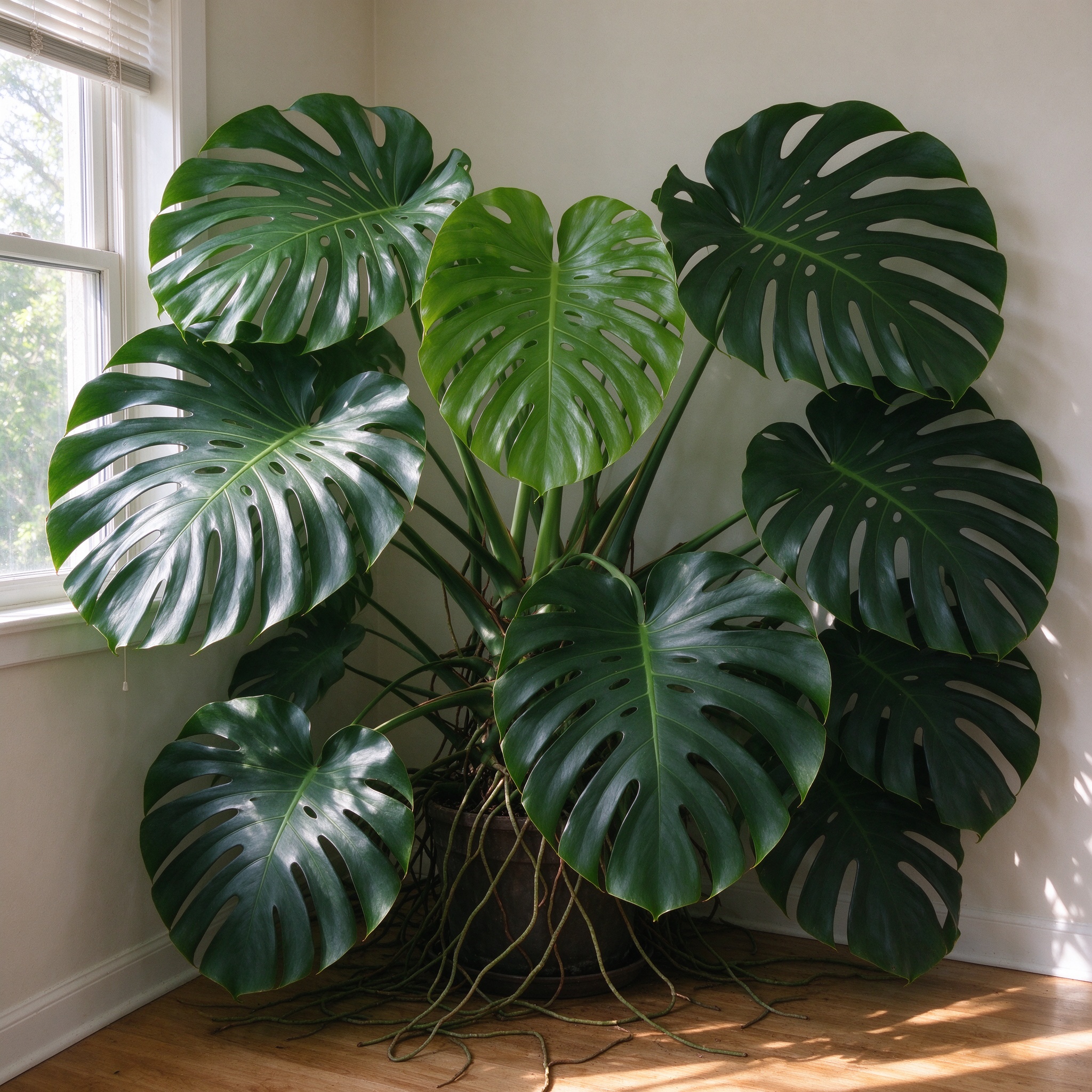
- •Monstera deliciosa, commonly called the Swiss cheese plant or split-leaf philodendron, is a woody, broadleaf evergreen climbing vine in the arum family (Araceae), native from Mexico to Panama.
- •In the home it typically reaches 6 to 8 feet tall, though in its tropical habitat it can climb to 70 feet.
- •Its glossy, heart-shaped leaves develop dramatic natural holes (fenestrations) and deep lobes as they mature, which is why it is one of the most recognizable and beloved houseplants of the last decade.
- •It is surprisingly forgiving once settled, as long as it gets warmth, bright indirect light, and a sturdy support to climb.
📋 Quick Facts
Scientific Name: Monstera deliciosa
Family: Araceae
Category: Houseplant
USDA Zones: 10-12 (houseplant)
Light:
- •Bright, indirect light — a few feet back from an east or west window, or behind a sheer curtain on a south window.
- •NC State lists dappled sunlight and partial shade (2–6 hours of direct sun) as ideal; direct midday sun scorches the large leaves.
- •Variegated cultivars like 'Thai Constellation' need a bit more light to keep their creamy marbling, while the green species tolerates lower light but grows more slowly and stops splitting.
Water:
- •Water thoroughly until it drains freely, then let the top quarter to one-third of the potting mix dry out before watering again.
- •In a bright summer room that is often once a week; in a cool, dark winter corner it can stretch to two or three weeks.
- •Never let the pot sit in a saucer of water, and cut back sharply in winter when growth slows.
Temperature:
- •Average warm room temperatures of 60–85°F (16–29°C) are ideal, per NC State.
- •Keep it away from cold drafts and air-conditioning vents; it slows down or drops leaves below about 55°F (13°C).
- •It prefers humidity above 40 percent, so forced-air winter heating often means a nearby humidifier or pebble tray.
Soil:
- •A high-organic-matter, well-draining loam with a neutral pH (6.0–8.0), per NC State.
- •In practice that means a mix of one part potting soil, one part orchid bark or coco coir, and one part perlite or pumice.
- •Dense, water-retentive seed-starting mixes are a mistake; the thick rhizomes and aerial roots rot quickly in soggy soil.
Harvest:
- •There is no vegetable-style harvest.
- •The plant is 'ready' when it is three to four feet tall, pushing consistently split leaves, and has filled its pot with roots — that is the point at which you can divide, take stem cuttings, or share offsets with friends.
- •Very rarely, mature plants indoors may produce the edible, banana-pineapple-flavored fruit, but NC State notes they typically do not flower or fruit in interior landscapes.
Common Problems:
- •Overwatering leading to root rot is the number-one issue, followed by spider mites in dry heated rooms, mealybugs tucked into leaf axils, and scale on the thick stems.
- •Very low light causes leggy growth and leaves that refuse to split. Direct midday sun scorches the foliage, and cold drafts drop leaves.
⚠️ Pet Safety Warning
This plant is toxic to both cats and dogs.
Contains insoluble calcium oxalates, toxic to cats and dogs. Causes oral irritation.📅 When to Plant
- •Monsteras are houseplants, so there is no sowing window; you can buy or repot one any month of the year.
- •The best time to repot or make cuttings is spring, when growth resumes and the plant recovers quickly from root disturbance.
- •If you want to summer your monstera outdoors, wait until night temperatures stay above 60°F (16°C) and acclimate it gradually to brighter light over a week or two.
🌱 Growing Stages
 1
Nursery acclimation
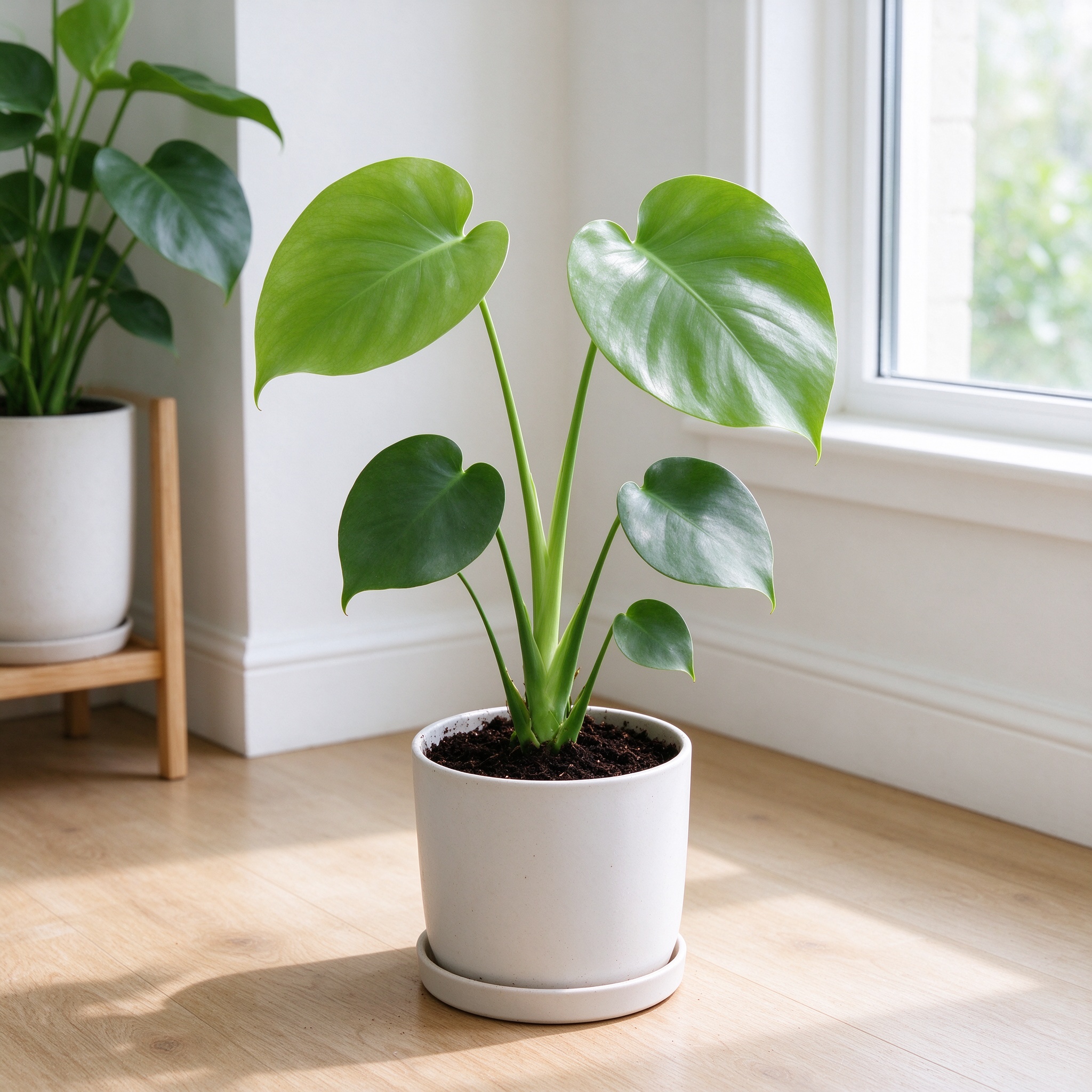
(First 2–4 weeks)- •When you bring a monstera home from the store, it has just been shocked by transport, a new light level, and a new watering routine.
- •Expect one or two lower leaves to yellow and drop during this period — that is normal acclimation, not a disease.
- •Keep it in bright indirect light, water only when the top quarter of the mix is dry, and do not repot immediately.
- •Wait at least a month before moving it into a bigger pot so it can grow roots into the nursery soil first.
 2
Root and vine establishment
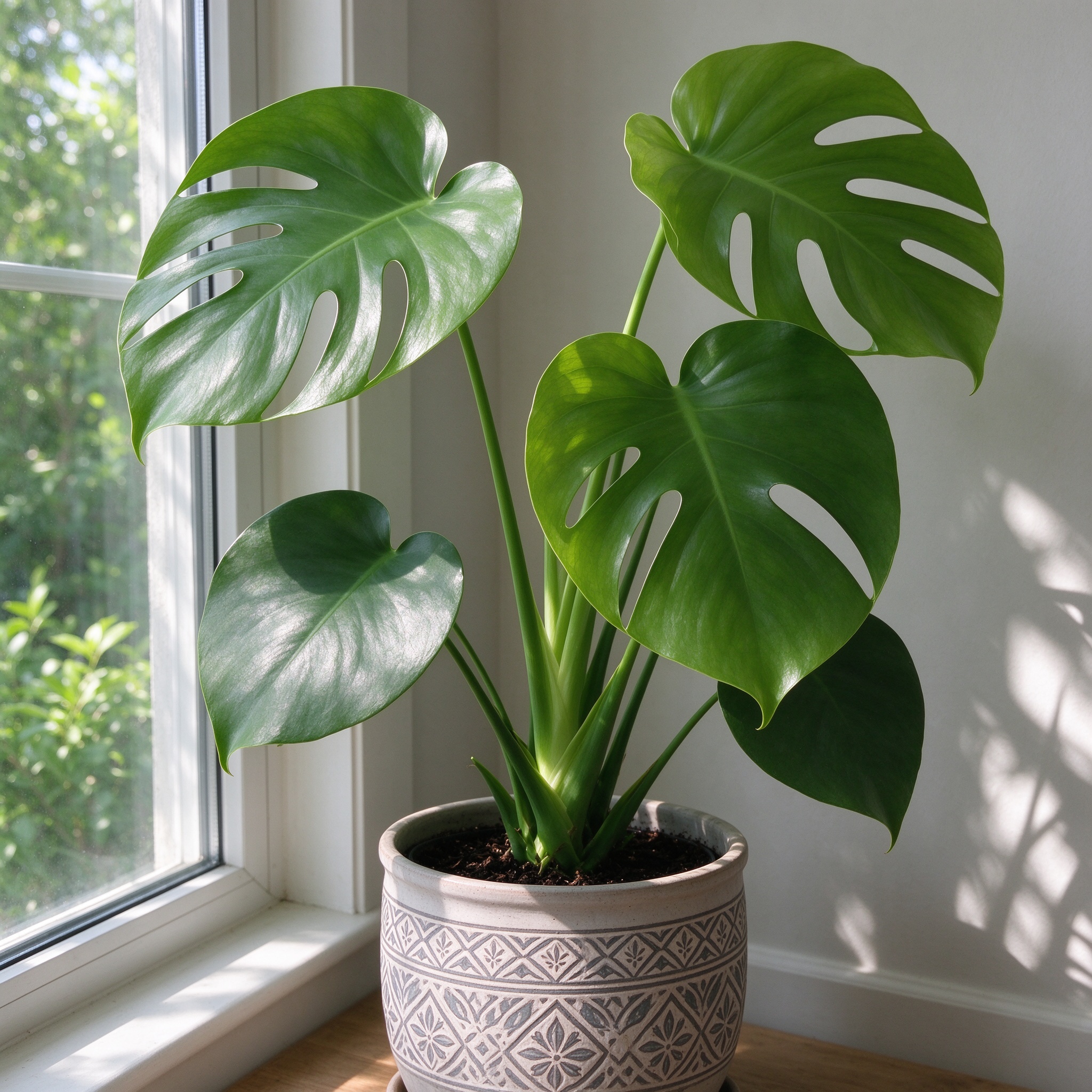
(Months 1–6)- •Once settled, the monstera shifts energy into growing a network of feeding roots and thick, clinging aerial roots.
- •In this phase it puts out one or two new leaves a month, and the stems thicken.
- •This is the moment to install a moss pole or bark slab, because the aerial roots will attach to it as they lengthen.
- •Water on the soak-and-dry schedule and fertilize at half strength every four to six weeks through the growing season so the root mass fills the pot.
 3
Mature fenestrated foliage
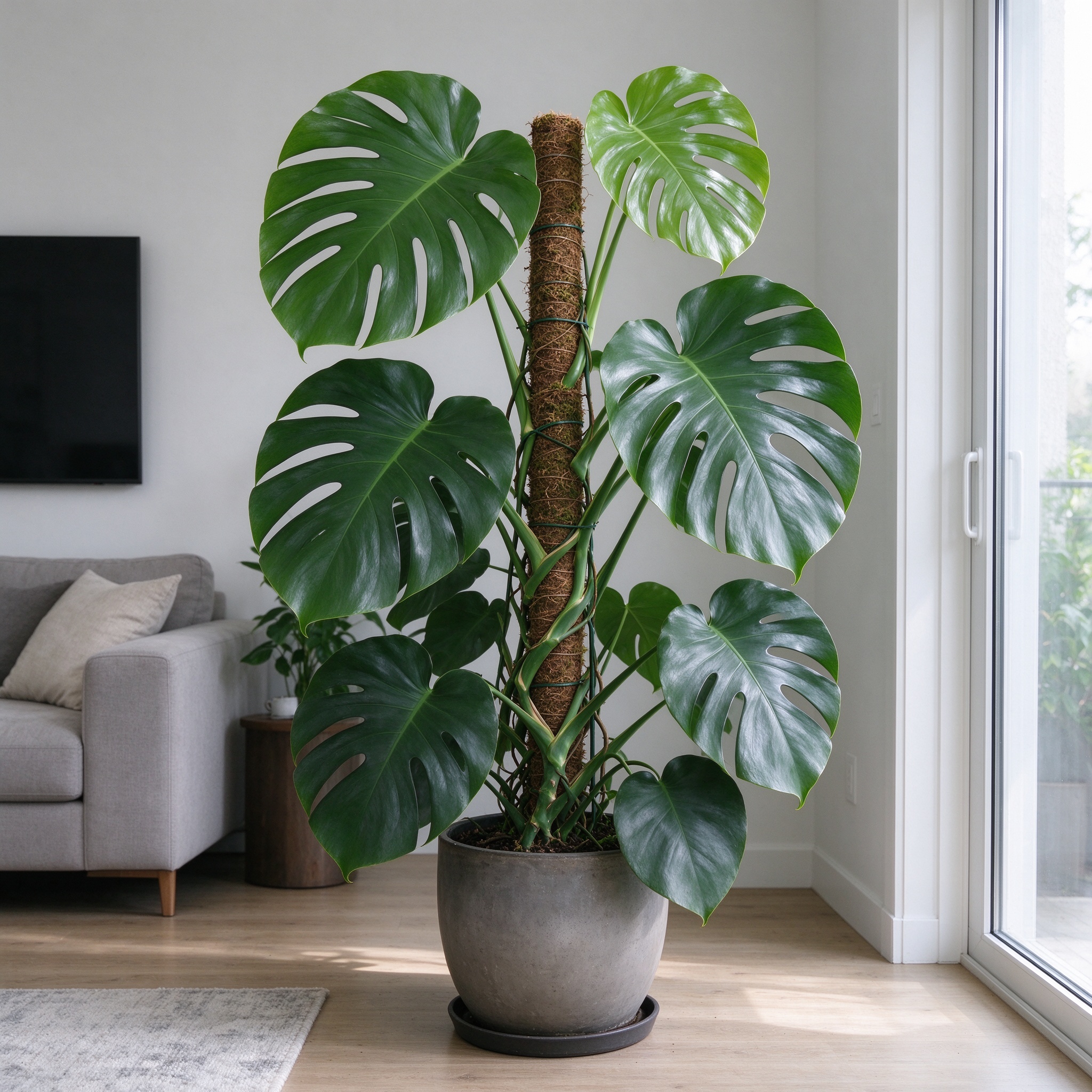
(Year 1–3 onward)- •As the plant reaches three to five feet and starts climbing, the leaves undergo the transformation everyone grows a monstera for: each new leaf emerges larger, deeper, and more heavily split than the last, developing the characteristic holes and lobes.
- •Mature leaves can reach a foot or more across.
- •Provide a sturdy support — NC State warns that sturdy support is necessary to prevent the stems from breaking — and wipe the large leaves regularly so photosynthesis stays efficient.
- 4
Climbing and propagation phase
(Year 2+)- •A mature monstera becomes a climbing vine rather than a rosette, sending long stems with spaced leaves up the support.
- •This is the stage where you can take stem cuttings with a node and aerial root, root them in water, and start new plants.
- •In very rare conditions indoors the plant may produce a white spathe flower and eventually the edible, banana-pineapple-flavored fruit — but NC State notes it typically does not flower or fruit in interior landscapes.
💧 Detailed Care Guide
☀️ Light Requirements
- •Bright, indirect light — a few feet back from an east or west window, or behind a sheer curtain on a south window.
- •NC State lists dappled sunlight and partial shade (2–6 hours of direct sun) as ideal; direct midday sun scorches the large leaves.
- •Variegated cultivars like 'Thai Constellation' need a bit more light to keep their creamy marbling, while the green species tolerates lower light but grows more slowly and stops splitting.
💧 Watering
- •Water thoroughly until it drains freely, then let the top quarter to one-third of the potting mix dry out before watering again.
- •In a bright summer room that is often once a week; in a cool, dark winter corner it can stretch to two or three weeks.
- •Never let the pot sit in a saucer of water, and cut back sharply in winter when growth slows.
🌡️ Temperature
- •Average warm room temperatures of 60–85°F (16–29°C) are ideal, per NC State.
- •Keep it away from cold drafts and air-conditioning vents; it slows down or drops leaves below about 55°F (13°C).
- •It prefers humidity above 40 percent, so forced-air winter heating often means a nearby humidifier or pebble tray.
🌱 Soil & Fertilizer
Soil:
- •A high-organic-matter, well-draining loam with a neutral pH (6.0–8.0), per NC State.
- •In practice that means a mix of one part potting soil, one part orchid bark or coco coir, and one part perlite or pumice.
- •Dense, water-retentive seed-starting mixes are a mistake; the thick rhizomes and aerial roots rot quickly in soggy soil.
Fertilizer:
- •Feed with a balanced liquid houseplant fertilizer diluted to half strength every four to six weeks from spring through early fall.
- •Stop entirely in winter.
- •Over-fertilizing builds up salts and burns the leaf tips; if you see crispy brown tips, leach the soil by running plain water through the pot several times.
📝 Step-by-Step Planting Guide
- 1
Choose the right pot and spot
- •Pick a deep pot with at least one drainage hole and a spot that delivers bright, indirect light — think a few feet back from an east- or west-facing window, or a sheer-curtained south window.
- •Monsteras hate direct afternoon sun, which scorches the large leaves, but too little light stops them from splitting and encourages leggy growth.
- •A warm room held between 60 and 85°F (16–29°C) and steady humidity above 40 percent will keep your plant actively pushing new leaves.
- •If your home is dry in winter, set the pot on a pebble tray or run a small humidifier nearby.
- 2
Build an airy, well-draining mix
- •Use a rich, well-aerated potting mix that stays moist but never soggy.
- •A reliable blend is one part high-quality potting soil, one part orchid bark or coco coir for structure, and one part perlite or pumice for drainage.
- •NC State notes that the species wants high-organic-matter loam with good drainage and a neutral pH around 6.0–8.0.
- •Avoid heavy, water-retention mixes designed for seedlings or outdoor vegetables, because they hold too much water around the thick rhizomes and aerial roots and invite root rot.
- •When in doubt, add extra perlite rather than less.
- 3
Pot up at the right depth with support
- •Repotting day is the perfect moment to add support.
- •Wet the root ball first so the plant slides out easily, then snip any girdling roots and gently loosen the outer roots.
- •Plant at exactly the same depth it was growing before — never bury the thick stem, which will rot, and never leave it perched too high on a mound.
- •Bury a moss pole, wooden trellis, or bark slab at this stage so you do not have to stab it through the root system later.
- •Tamp the fresh mix firmly to remove air pockets, then water thoroughly until it runs out the bottom.
- •The thick aerial roots will naturally grip the pole over the coming months.
- 4
Water on a soak-and-dry rhythm
- •Water on a soak-and-dry rhythm, not on a calendar.
- •NC State and the Almanac both recommend watering thoroughly, then letting the top quarter to one-third of the potting mix dry out before you water again.
- •In a bright summer room that may mean once a week; in a cool, dark winter corner it can stretch to two or three weeks.
- •If you notice the leaves beading up with excess moisture (a process called guttation that collectors call 'sweating'), you are overwatering — ease up.
- •Always water until it drains freely, and empty the saucer within a few minutes so the pot never sits in a puddle.
- 5
Feed, wipe, and groom through the seasons
- •Monsteras are light feeders.
- •From spring through early fall, apply a balanced liquid houseplant fertilizer diluted to half strength every four to six weeks; the Almanac suggests several diluted feedings between spring and fall.
- •Stop entirely in winter when growth slows.
- •Wipe the broad leaves every few weeks with a soft, damp cloth to remove dust, which blocks light and invites spider mites.
- •Rotate the pot a quarter turn each month so the plant grows evenly toward the window instead of leaning sideways.
- •Inspect leaf backs at each watering so you catch pests while the population is still small.
🌱 Recommended Varieties
All-green, forgiving growers
- •Start with the plain green species type of Monstera deliciosa, the most affordable and forgiving plant in the genus.
- •For a slightly different look without the high-maintenance variegation, try M.
- •deliciosa 'Tauerii', a compact, self-heading selection widely sold at big-box stores, the lacy-trailing M.
- •adansonii 'Monkey Mask', and the longer-leaved M. adansonii 'Friedrichsthalii', which hangs beautifully from a basket.
- •All three tolerate missed waterings and lower light far better than the white-variegated rarities.
Compact & shelf-sized
- •If floor space is limited, choose smaller-growing forms such as M.
- •deliciosa 'Narrow Form', whose slender leaves stay manageable on a desk, the trailing M.
- •adansonii that hangs from a shelf rather than towering, and M. pinnatipartita, a smaller species whose leaves slowly split as they mature.
- •These stay under three feet and fit neatly into apartment corners, bookcase tops, and hanging planters where a full-size deliciosa would simply be too large and too heavy.
Rare variegated collectors
- •Once you are confident, the collector tier is where Monstera collecting becomes addictive. M.
- •deliciosa 'Thai Constellation' offers stable, marbled creamy-white-and-green variegation that is tissue-cultured and therefore far easier to find than the unstable M.
- •deliciosa 'Albo Variegata', whose stark white sectors can revert or scorch. Other grails include M. deliciosa 'Aurea' (yellow splashes), M.
- •deliciosa 'Mint' (pale mint-green sectors), and the tiny, slow M. obliqua, which commands premium prices because it is almost never sold.
🪴 Growing in Containers
- Pot size and drainage:
- •Choose a pot with at least one drainage hole and only one size up from the current root ball.
- •Monsteras like being slightly root-bound and push up faster if the pot is not oversized; an extra-large pot holds extra wet soil that rots the roots.
- •A 2–4 inch jump in diameter is plenty.
- Terracotta vs plastic:
- •Terracotta dries out quickly and suits a monstera that likes even moisture but not sogginess; plastic and glazed ceramic hold water longer, which is useful in very dry homes but raises the risk of overwatering.
- •Pick the material that matches your watering habit, not just your décor.
- Moss pole support:
- •Sturdy support is essential, as NC State notes.
- •A 3–4 foot moss pole or coconut coir pole inserted at planting time gives the thick stems something to grip and triggers mature, heavily split leaves.
- •Tie the main stem loosely to the pole with plant tape as it grows, and mist the moss so the aerial roots can root into it.
- Hanging vs floor pot:
- •Young monsteras sit well on shelves, but mature plants get heavy and top-heavy. Put them in a weighted floor pot, or train the vine up a wall trellis.
- •Hanging baskets work best for trailing M. adansonii relatives, not for the upright M. deliciosa itself, which wants to climb rather than hang.
- Repotting cadence:
- •Repot every two years in spring, or whenever you see roots circling the root ball or pushing out the drainage hole.
- •Wet the root ball first, loosen girdling roots, and plant at the same depth in fresh, airy mix.
- •Monsteras can wait another year if they are healthy; repotting in winter when the plant is dormant shocks it.
✂️ Pruning & Maintenance
- ✓
Trim leggy stems
- •Cut back long, bare stems just above a node or leaf to encourage the plant to branch and send up a fuller cluster.
- •Monsteras naturally grow as single vines, so pruning the tips is the only way to keep it bushy.
- •Always use sharp, sanitized shears and make a clean cut; ragged tears invite disease.
- ✓
Remove yellow or damaged leaves
- •Snip off yellow, brown, or damaged leaves at the base of the petiole whenever you notice them.
- •Removing spent foliage lets the plant redirect energy into new growth and improves airflow around the crown.
- •One or two lower yellow leaves a month is normal; a whole cluster at once means a watering problem.
- ✓
Control size
- •If your monstera outgrows the room, you can cut the main stem back hard in spring.
- •A node left on the trunk will push out new side shoots within a few weeks.
- •The pruned top, with a node and aerial root, roots easily in water and becomes a whole new plant, so nothing is wasted.
- ✓
Clean the leaves
- •Wipe the large, glossy leaves every few weeks with a soft, damp cloth to remove dust — NC State specifically recommends wiping dust off the leaves regularly.
- •Skip leaf-shine sprays, which clog the pores. Wiping also lets you inspect the leaf backs for spider mites, mealybugs, and scale before they build up.
🐛 Pest & Disease Control
Common Pests
Spider mites
Symptoms:- •Tiny reddish or pale dots speckle the upper leaf surface, and fine webbing appears where the leaf meets the stem.
- •Leaves may turn dull bronze or yellow and drop early; the damage is easiest to spot on the newest growth.
- •Dry, heated indoor air in winter is the main trigger.
Control:- •Isolate the plant immediately. Spray or wipe every leaf, top and bottom, with diluted neem oil or insecticidal soap, repeating weekly for three weeks.
- •Raise humidity with a pebble tray or humidifier, because mites hate moist air.
- •Heavily infested leaves on a large specimen can be cut off and bagged rather than saved.
Mealybugs
Symptoms:- •Cottony, white ovals cluster in leaf axils, along the thick stems, and on the underside of the midrib.
- •Sticky honeydew coats nearby leaves, and new growth can look curled or distorted as the insects suck sap.
- •They often arrive on a newly purchased plant that was not inspected.
Control:- •Dab visible mealybugs with a cotton swab dipped in rubbing alcohol, which kills them on contact.
- •Wipe the whole plant down with insecticidal soap and repeat every ten days for a month, because eggs hidden in the crevices keep hatching.
- •Check neighboring plants, because mealybugs crawl quickly between pots on shared shelves.
Scale insects
Symptoms:- •Small, raised brown or tan bumps stick to the stems and leaf veins; they do not move when touched.
- •Sooty black mold grows on the honeydew they excrete, and leaves yellow or drop prematurely.
- •Soft scale is common on woody monstera stems, while armored scale favors the leaf undersides.
Control:- •Because adults are protected by a shell, dab each bump with rubbing alcohol or scrape them off with a fingernail, then spray the whole plant with horticultural oil or neem to kill the crawler stage.
- •Repeat every seven to ten days for a month.
- •Prune out heavily infested stems and seal them in a bag before you toss them so the crawlers do not spread.
Thrips
Symptoms:- •Silvery streaks and pale scratches run across the leaves, and tiny dark frass specks dot the surface.
- •New leaves may emerge deformed, brown-edged, or stuck together, because thrips feed inside the unfurled leaf.
- •They are slim, dark insects that jump or fly when disturbed.
Control:- •Thrips hide in tight leaf folds, so treatment has to reach those crevices.
- •Spray with spinosad or repeated applications of insecticidal soap, and apply a systemic houseplant insecticide to the soil for persistent cases.
- •Isolate the plant, and cut out the worst damaged leaves rather than trying to save them.
Common Diseases
Root rot (overwatering)
Symptoms:- •Leaves turn yellow, wilt, and droop even though the soil is wet; the lower stem at the soil line feels mushy and brown instead of firm.
- •Roots pulled from the pot are brown and mushy rather than pale and firm.
- •It is almost always caused by waterlogged soil, a pot without drainage, or a saucer left full.
Control:- •Take the plant out immediately, clip away every brown, mushy root with sterile shears, and repot into fresh, airy mix in a clean pot with drainage.
- •Let it dry out before watering again.
- •Going forward, always let the top quarter to one-third of the mix dry between waterings, and empty the saucer after every watering.
- •Severely rotted stems may be impossible to save; propagate a healthy tip cutting instead.
Bacterial leaf spot
Symptoms:- •Small, water-soaked dark spots expand into yellow-rimmed brown blotches on the leaves; in humid weather the spots may look greasy or ooze.
- •Spots often start where water sat on the leaf overnight, and they run along the veins.
- •It spreads by splashing water and by hands that touch an infected plant then a healthy one.
Control:- •Stop wetting the foliage; water the soil, not the leaves.
- •Remove and bag every spotted leaf, and disinfect your pruners between plants with rubbing alcohol.
- •Improve air circulation around the plant with a small fan.
- •Copper-based bactericides can slow spread on valued specimens, but the best cure is to cut out infected tissue and adjust your watering habit.
Fungal leaf spot (Cercospora)
Symptoms:- •Tan to brown circular spots with a yellow halo appear on older leaves; the centers may fall out, giving a shot-hole look.
- •The fungus thrives in warm, humid rooms where leaves stay wet.
- •It rarely kills the plant but quickly ruins the glossy, showy foliage monsteras are grown for.
Control:- •Pick off and destroy spotted leaves, and avoid overhead watering.
- •Spray with a general houseplant fungicide (chlorothalonil or copper) every ten days until new growth is clean.
- •Raising airflow and watering in the morning so any splash dries quickly keeps the fungus from reinfecting the next flush of leaves.
Anthracnose
Symptoms:- •Leaf edges turn yellow, then brown and papery, and the browning creeps inward in V-shaped wedges along the veins.
- •Small black fruiting bodies may dot the dead tissue, and the stem near the soil can shrivel. It shows up in damp, poorly ventilated rooms.
Control:- •Remove all affected leaves and stem tips, disinfecting tools between cuts.
- •Let the top layer of mix dry out and open a window or run a fan to lower humidity.
- •A fungicide containing thiophanate-methyl can be applied as a soil drench and foliar spray.
- •If the crown itself is rotted, take a clean tip cutting and start over rather than saving the mother.
Botrytis gray mold
Symptoms:- •A fuzzy gray-brown mold spreads over leaves that have been injured or that touch cold windowsills.
- •Spots are water-soaked at first, then covered in the characteristic dusty gray spore mass.
- •It is most common in cool, very wet rooms in winter, and on leaves damaged by sun or mechanical injury.
Control:- •Cut out all moldy tissue and bag it. Move the plant out of any cold draft and off a cold windowsill.
- •Lower humidity, increase airflow, and stop misting the leaves. Apply a broad-spectrum fungicide if the problem recurs.
- •Botrytis rarely attacks a completely dry, healthy monstera, so better culture is the real fix.
🍅 When to Harvest
- •There is no vegetable-style harvest.
- •The plant is 'ready' when it is three to four feet tall, pushing consistently split leaves, and has filled its pot with roots — that is the point at which you can divide, take stem cuttings, or share offsets with friends.
- •Very rarely, mature plants indoors may produce the edible, banana-pineapple-flavored fruit, but NC State notes they typically do not flower or fruit in interior landscapes.
❓ Frequently Asked Questions
- 1
Why aren't my monstera's leaves splitting or getting holes?
- •Fenestration — the dramatic holes and splits monsteras are famous for — is a sign of a mature plant in good light.
- •Young plants under two feet tall naturally push out small, heart-shaped, unperforated leaves, and that is normal.
- •As the plant matures, each new leaf splits more.
- •If a mature monstera stops splitting, it almost always means it is not getting enough bright indirect light.
- •Move it closer to a window, give it a moss pole to climb (climbing triggers mature foliage), and make sure you are fertilizing through the growing season.
- •Warmth and humidity above 40 percent also speed the production of split leaves.
- 2
Why are my monstera's leaves turning yellow?
- •Yellow leaves are almost always a watering problem, not a nutrient problem.
- •The most common cause is overwatering: if the soil stays soggy, the roots rot and can no longer deliver water, so leaves turn uniformly yellow and droop.
- •The fix is to let the top quarter to one-third of the mix dry between waterings and to make sure the pot drains.
- •A single older yellow leaf at the bottom is also normal — monsteras shed their oldest leaves as they grow new ones.
- •Cold drafts, sudden temperature swings, or a long stretch in very low light can also yellow leaves, but those usually happen alongside droopy or leggy new growth.
- 3
How often should I water my monstera?
- •There is no universal number; it depends on light, pot size, and season.
- •The rule NC State and the Almanac share is to water thoroughly until it drains, then wait until the top quarter to one-third of the potting mix has dried out.
- •In a bright room in summer that is often once a week; in a cool, dark corner in winter it can be two to three weeks.
- •Always check with your finger an inch or two down before watering.
- •Monsteras prefer to dry out slightly between waterings rather than sit wet, and they will tell you they are thirsty by drooping slightly — they bounce back quickly once watered.
- 4
Is monstera toxic to cats and dogs?
- •Yes.
- •NC State lists monstera as low-severity poison because all parts contain needle-like calcium oxalate crystals.
- •If a cat or dog chews a leaf, the crystals cause intense burning of the mouth, tongue, and throat, along with drooling, vomiting, and difficulty swallowing.
- •The sap can also irritate skin in sensitive people.
- •Keep the plant up on a shelf or hanging where curious pets cannot reach it, and watch cats that like to nibble houseplants.
- •If ingestion happens, rinse the mouth and contact a veterinarian, though serious poisoning is rare and most cases are uncomfortable rather than dangerous.
- 5
How do I propagate a monstera?
- •Monsteras are one of the easiest houseplants to root.
- •Cut a section of stem just below a node — the bump where a leaf meets the stem — making sure the cutting has at least one leaf and ideally a short brown aerial root.
- •Put the node in a jar of water, keep it out of direct sun, and change the water weekly.
- •In two to four weeks you should see roots; once they are an inch or two long, pot the cutting into moist houseplant mix.
- •You can also air-layer a cutting that is still attached to the mother, which produces a larger plant faster.
- •NC State lists both layering and stem cuttings as the recommended propagation methods.
- 6
Why are the leaf edges turning brown and crispy?
- •Brown, crispy edges are usually low humidity, especially in winter when forced-air heating dries the air to below 30 percent.
- •The fix is a humidifier, a pebble tray under the pot, or grouping it with other plants so the local microclimate is moister.
- •If the brown edges are accompanied by yellow halos or mushy spots, the problem is overwatering or a bacterial leaf spot, not dry air.
- •Underwatering — letting the root ball go bone-dry for weeks — also browns the edges, and so does direct midday sun hitting the leaf.
- •Check the soil and the light exposure before you buy a humidifier.
- 7
Why is my monstera growing leggy and leaning toward the window?
- •Leggy growth with long gaps between leaves and a lean toward the light is classic low-light etiolation.
- •A monstera in a dim corner stretches to reach more light, produces smaller leaves, and stops developing the deep splits and holes people grow it for.
- •Move it to a spot a few feet back from an east or west window, or behind a sheer curtain on a south window, where light is bright but not scorching.
- •Rotate the pot a quarter turn each month so the stem grows straight on all sides.
- •Variegated cultivars such as 'Thai Constellation' need even more light than the plain green species to keep their creamy marbling; a dark room will push the variegation back to green.
- 8
Why are my monstera leaves curling?
- •Curling has two opposite causes.
- •Most often it is underwatering or dry heat: when the mix dries out and the air is warm and dry, the large leaves curl inward to slow water loss, often with brown crispy edges as well.
- •Check the soil first; if the top quarter is dry, soak the plant thoroughly.
- •The other cause is overwatering and root rot: soggy soil that rots the roots also makes leaves curl, but those leaves are usually yellow, soft, and droopy rather than firm and brown-edged.
- •Very low humidity can add to the curling; a pebble tray or humidifier helps more than occasional misting.
- 9
Should I mist my monstera to raise humidity?
- •A light mist raises humidity only for a few minutes, so it does not solve a dry room by itself, and wet leaves that stay damp overnight can invite bacterial and fungal leaf spot.
- •Monstera prefers humidity above about 40 percent, but ordinary indoor humidity is usually acceptable; the better fixes are a pebble tray under the pot, a small humidifier nearby, or grouping the plant with other foliage so the leaves share local moisture.
- •Wiping the large leaves with a damp cloth every few weeks removes dust and lets you inspect the leaf backs for pests at the same time.
Source:
NC State Extension Gardener Plant Toolbox — https://plants.ces.ncsu.edu/images/plants/monstera-deliciosa/
The Old Farmer's Almanac — https://www.almanac.com/plant/monstera
Photo credit: NC State Extension
Images courtesy of NC State Extension under CC BY license. Thank you to the photographers who make these educational images available.
License: CC BY-NC 2.0 / CC BY 4.0