
How to Grow Pothos: Complete Guide
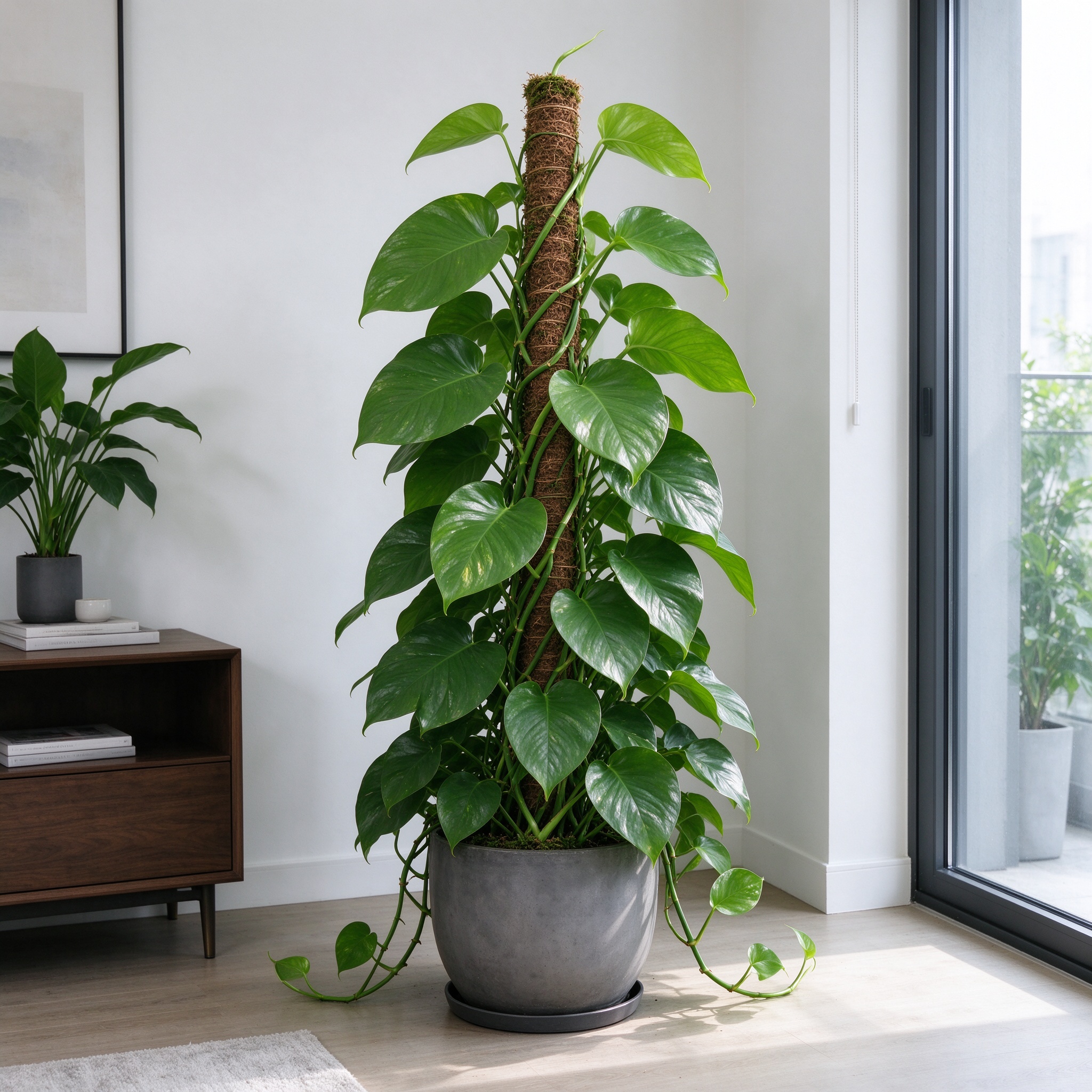
- •Pothos (Epipremnum aureum), also called Devil's Ivy or golden pothos, is a low-maintenance, herbaceous perennial broadleaf evergreen vine in the arum family (Araceae), native to the Society Islands in the South Pacific.
- •In homes it trails as far as 6 to 10 feet from a hanging basket, though in the wild it climbs to 40 feet with large, fenestrated leaves.
- •It is famous for glossy, heart-shaped leaves on cascading stems, tolerance of very low light, and almost impossible-to-kill reputation.
- •It is the default first houseplant for beginners, but its variegated cultivars are collected by enthusiasts as well.
📋 Quick Facts
Scientific Name: Epipremnum aureum
Family: Araceae
Category: Houseplant
USDA Zones: 10-11 (houseplant)
Light:
- •Bright, indirect light is ideal, but pothos is one of the most tolerant houseplants of low light — NC State lists deep shade (less than 2 hours of direct sun) as tolerated.
- •Too little light makes the leaves smaller and can wash out variegation on 'Golden', 'Marble Queen', and 'Njoy'.
- •Direct sun scorches the leaves, so keep it behind a sheer curtain or a few feet back from a south window.
Water:
- •Let the potting mix dry out between waterings; NC State says the medium should be well-drained and allowed to dry, and the Almanac says only water when the soil feels dry.
- •In a bright room that is roughly every one to two weeks; in low light, every two to three weeks.
- •Yellow leaves and blackening leaf margins are the classic signs of overwatering.
Temperature:
- •Average room temperature of 65–85°F (18–29°C) is ideal.
- •Keep it away from cold drafts and air-conditioning vents; it slows below 60°F (15°C) and drops leaves near 50°F.
- •It tolerates average household humidity well and does not demand a humidifier.
Soil:
- •A general, well-draining potting mix; NC State calls for high-organic-matter loam with good drainage.
- •The Almanac recommends adding a handful of perlite or coco coir to improve drainage.
- •Avoid dense, moisture-retentive mixes that stay soggy for days after watering.
Harvest:
- •There is no edible harvest.
- •The plant is 'ready' when the vines are 1–2 feet long and full enough that you can snip 4–6 inch tip cuttings to root and share.
- •Mature, pot-bound pothos may occasionally flower with a greenish spathe, but houseplants almost never bloom or set the red-orange berries described by NC State.
Common Problems:
- •Overwatering leading to root rot is the top issue, followed by yellow leaves from wet soil, loss of variegation in low light, mealybugs in the leaf axils, and spider mites in dry heated rooms.
- •Vines also naturally lose their lower leaves over time, becoming leggy and bare unless you prune them back.
⚠️ Pet Safety Warning
This plant is toxic to both cats and dogs.
Contains insoluble calcium oxalates, toxic to cats and dogs. Causes oral irritation and vomiting.📅 When to Plant
- •Pothos is sold and potted year-round as a houseplant; there is no outdoor sowing window.
- •Spring is the best time to repot or take cuttings, when growth resumes and cuttings root quickly.
- •Never plant pothos outdoors — the Almanac warns it is invasive in mild-winter climates like Florida, where it escapes into forests and smothers native vegetation.
🌱 Growing Stages
 1
Shop acclimation
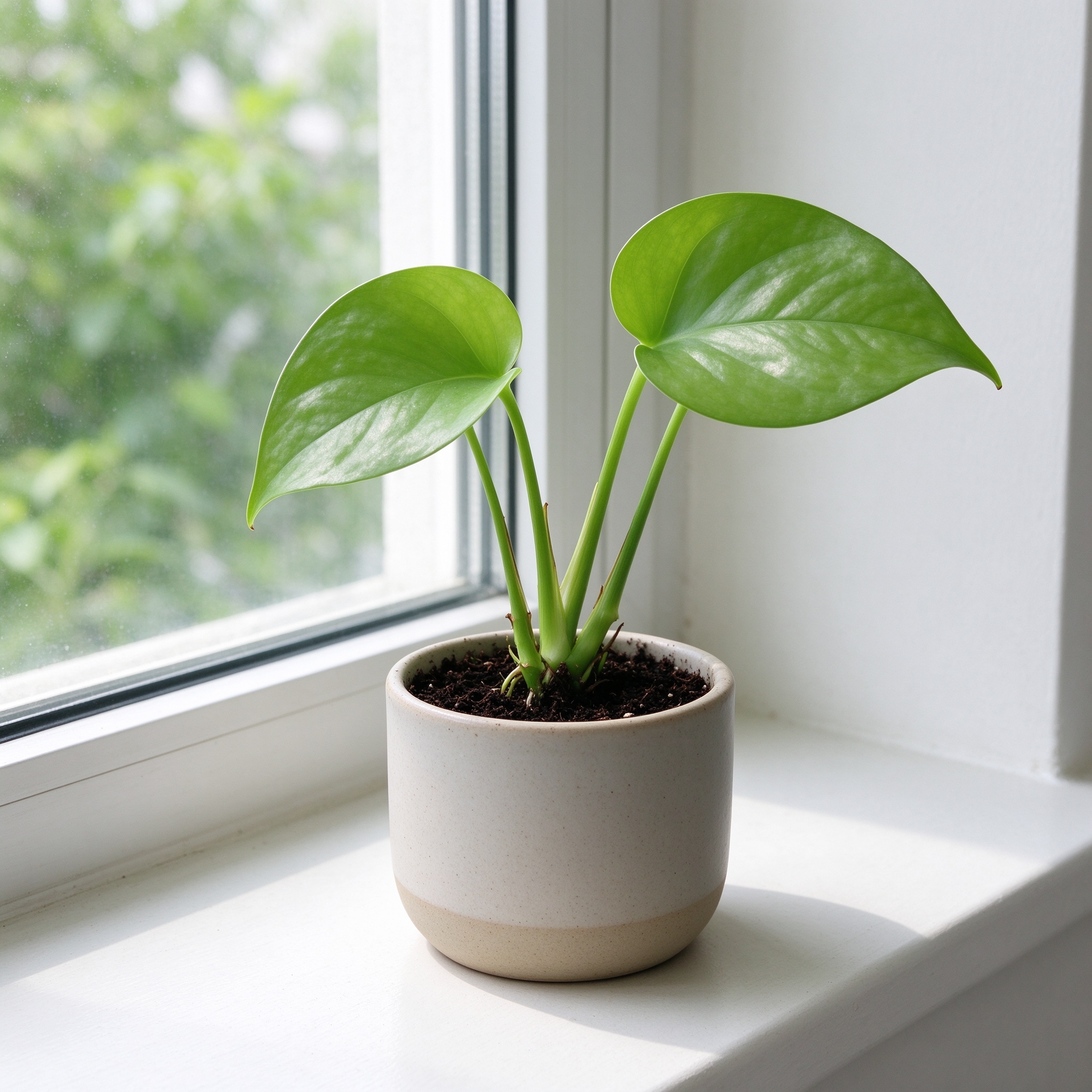
(First 2–4 weeks)- •Pothos bought from a big-box store or nursery has usually been grown in a greenhouse and then moved through a warehouse to your home.
- •Expect one or two lower leaves to yellow during the first month as it adjusts to your light and watering.
- •Keep it in bright indirect light, water only when the top inch of mix is dry, and do not repot immediately.
- •Wait at least a month before moving it into a bigger pot.
 2
Vine elongation
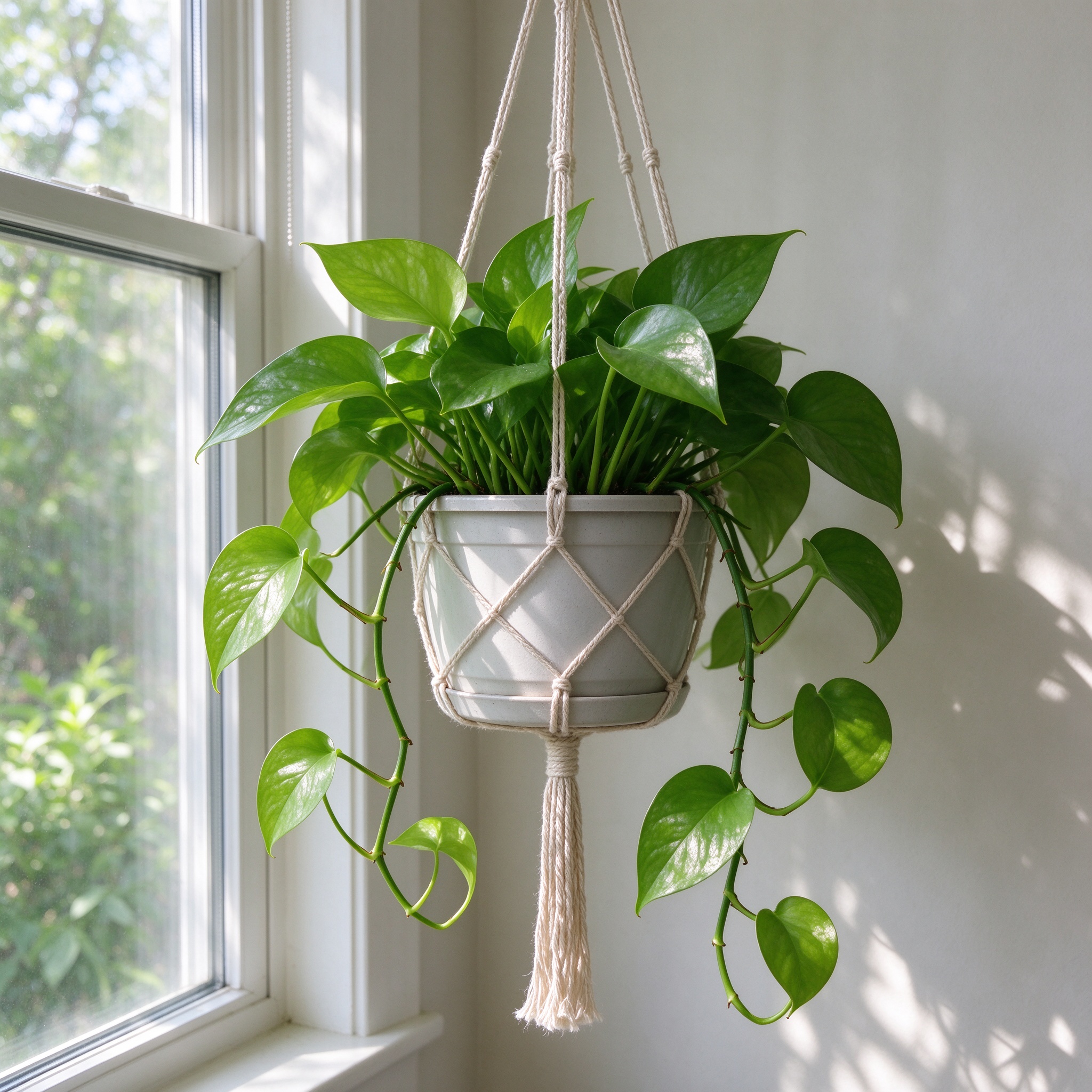
(Months 1–6)- •Once settled, pothos puts energy into lengthening its vines.
- •In this phase it sends out several new leaves per month and the stems trail over the edge of the pot.
- •This is the moment to decide whether you want a hanging basket, a shelf trailer, or a moss-pole climber.
- •Water on the dry-to-the-touch schedule and fertilize every other month through the growing season, as NC State recommends, so the vines fill out rather than stretch.
 3
Mature trailing foliage
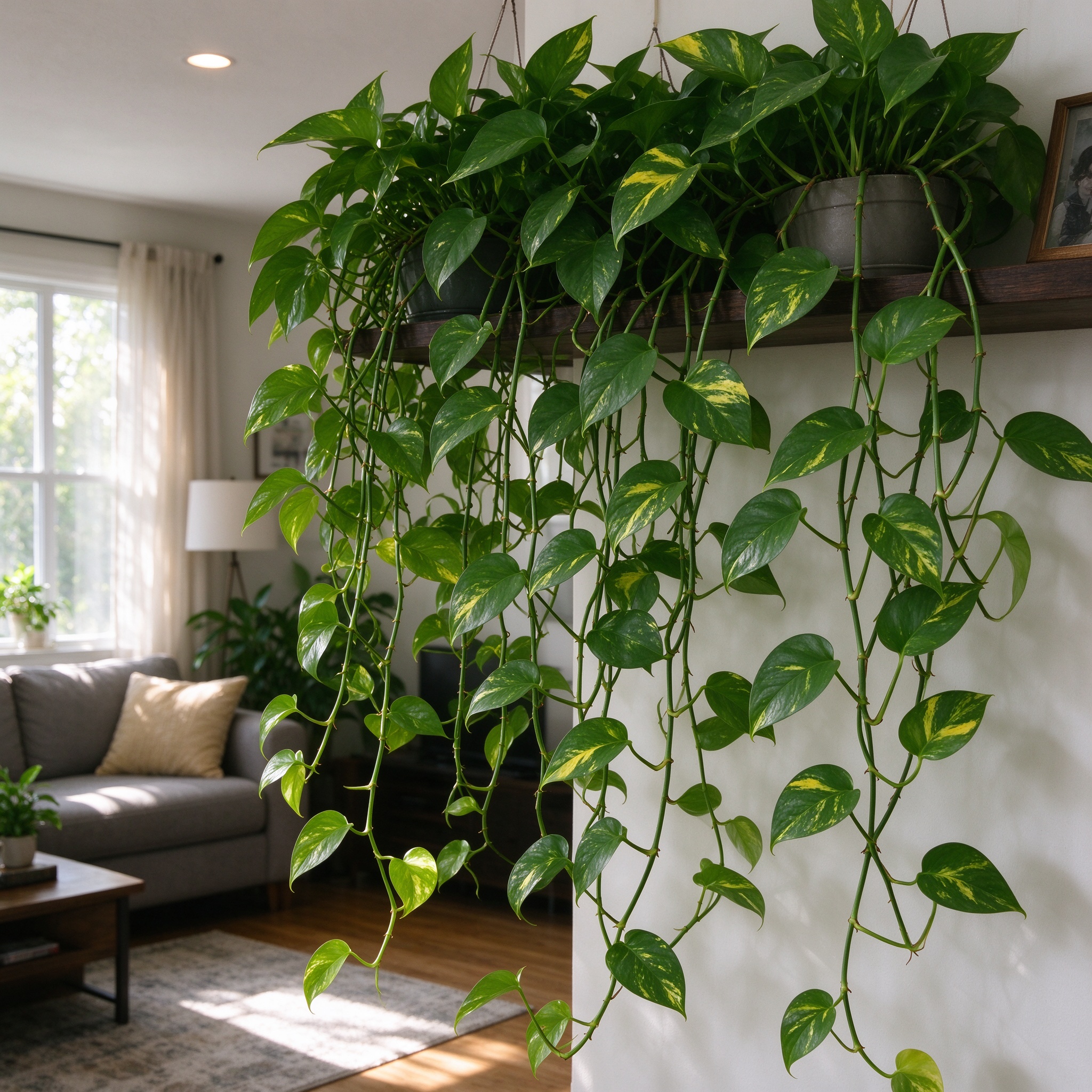
(Year 1–2)- •By the end of the first year, a pothos in a hanging basket trails 3 to 6 feet and becomes a real focal point.
- •The leaves reach their mature size of 3 to 4 inches.
- •If you give the plant a support on which to climb and adequate light, NC State notes that it will begin to produce larger, mature leaves approaching the size seen in the wild.
- •Wipe the waxy leaves periodically and prune bare stems to keep the display dense.
- 4
Propagation phase
(Year 2+)- •Mature pothos vines are ready to be propagated.
- •Snip a 4–6 inch stem cutting just below a root node, with 2–3 leaves on it, as the Almanac describes, and root it in water or soil.
- •Vines root so easily that you can share plants with friends and coworkers.
- •In very rare indoor cases the plant may produce a greenish spathe flower, but NC State notes that houseplants rarely, if ever, produce fruits.
💧 Detailed Care Guide
☀️ Light Requirements
- •Bright, indirect light is ideal, but pothos is one of the most tolerant houseplants of low light — NC State lists deep shade (less than 2 hours of direct sun) as tolerated.
- •Too little light makes the leaves smaller and can wash out variegation on 'Golden', 'Marble Queen', and 'Njoy'.
- •Direct sun scorches the leaves, so keep it behind a sheer curtain or a few feet back from a south window.
💧 Watering
- •Let the potting mix dry out between waterings; NC State says the medium should be well-drained and allowed to dry, and the Almanac says only water when the soil feels dry.
- •In a bright room that is roughly every one to two weeks; in low light, every two to three weeks.
- •Yellow leaves and blackening leaf margins are the classic signs of overwatering.
🌡️ Temperature
- •Average room temperature of 65–85°F (18–29°C) is ideal.
- •Keep it away from cold drafts and air-conditioning vents; it slows below 60°F (15°C) and drops leaves near 50°F.
- •It tolerates average household humidity well and does not demand a humidifier.
🌱 Soil & Fertilizer
Soil:
- •A general, well-draining potting mix; NC State calls for high-organic-matter loam with good drainage.
- •The Almanac recommends adding a handful of perlite or coco coir to improve drainage.
- •Avoid dense, moisture-retentive mixes that stay soggy for days after watering.
Fertilizer:
- •Feed lightly.
- •NC State recommends fertilizing every other month except during winter dormancy; the Almanac suggests a diluted liquid houseplant fertilizer about once a month in spring and summer.
- •Over-fertilizing burns the leaf tips and builds salt crust on the soil surface.
📝 Step-by-Step Planting Guide
- 1
Choose a pot with drainage
- •Pothos hates sitting in wet soil, so the single most important decision is a pot with at least one drainage hole.
- •The Almanac is explicit: choose a pot with a drainage hole in the bottom, because pothos plants do not like to sit in wet soil and their roots will rot.
- •Plastic nursery pots, hanging baskets with holes, and glazed ceramic with a drainage hole all work; skip decorative cachepots with no hole unless you plan to keep the grow pot inside and empty the liner after watering.
- •Terracotta is a good choice if you tend to overwater, since it dries out faster than plastic.
- 2
Plant in a well-draining mix
- •Use a general, well-draining potting mix or a soilless mix, as the Almanac recommends. NC State calls for high-organic-matter loam with good drainage.
- •To lighten it further, stir in a few handfuls of perlite or coco coir, which increases drainage and stops the mix from compacting around the roots.
- •Pothos is not picky about pH and tolerates a range, but a neutral, airy mix is ideal.
- •Do not pack the soil hard when you pot up; a loose, porous medium lets air reach the roots and prevents the anoxic conditions that trigger root rot.
- 3
Pot up and choose a display
- •Pothos looks best cascading from a hanging basket, perched on a high shelf, or trained up a small moss pole.
- •When you pot up, set the root ball at the same depth it was growing in the nursery pot, then fill in around it with fresh mix and tamp gently.
- •The Almanac notes that pothos can climb by brown aerial roots and will strip paint if allowed to attach directly to walls, so guide vines onto a trellis, a wooden dowel, or a moss pole rather than letting them stick to painted drywall.
- •Hanging baskets show off the trailing stems best and keep the vines out of reach of curious pets.
- 4
Water on a dry-to-the-touch schedule
- •Water only when the top inch or two of the mix feels dry, then soak it thoroughly until water runs out the bottom.
- •NC State says to let the well-drained medium dry out between waterings, and the Almanac repeats that pothos do not like wet soil.
- •In bright summer light that is roughly every one to two weeks; in a dim corner, every two to three weeks.
- •Yellow leaves and blackening leaf margins are the classic overwatering signs that NC State flags.
- •Reduce watering further in winter, when the plant is dormant, and never let the pot sit in a saucer of standing water.
- 5
Feed lightly and groom the vines
- •Pothos is a light feeder.
- •NC State recommends fertilizing every other month except during winter dormancy, and the Almanac suggests a diluted liquid houseplant fertilizer about once a month in spring and summer.
- •Too much fertilizer burns the tips of the leaves.
- •As the vines lengthen, they naturally shed lower leaves, so every few months snip the long, bare stems back to a few inches above the soil to force branching and keep the plant bushy, as NC State advises.
- •Wipe the large waxy leaves occasionally with a soft rag to remove dust, and remove any rotted or spotted stems promptly.
🌱 Recommended Varieties
Forgiving all-rounders
- •Start with the most tolerant cultivars: E.
- •aureum 'Golden Pothos', the classic green-and-yellow variegated vine that tolerates low light and missed waterings; E.
- •aureum 'Jade', a solid dark green selection that NC State specifically calls great in low light; and E.
- •aureum 'Lime', a bright chartreuse variety that adds color without needing the bright light that white-variegated types demand.
- •All three bounce back from drought and dim corners that would kill fussier plants.
Small-leaved, shelf-sized
- •If you want a tidy plant rather than a long trailer, choose the compact cultivars: Beautifall® 'Njoy' Pothos, which NC State describes as small, thin green leaves with cream variegation; 'Pearls and Jade', a green-and-white sport with short internodes; and 'Snow Queen', densely variegated green and white.
- •These stay bushy, fit on desks and shelves, and are less likely to send bare, leggy vines across the room.
Showier variegated forms
- •Once you are hooked, the showier cultivars are where pothos collecting goes: E. aureum 'Marble Queen', green leaves and stems marbled with white; E.
- •aureum 'Neon', which the Almanac features for its showy, bright lime-yellow leaves; and E.
- •aureum 'Tricolor', leaves variegated with white on off-white stems.
- •These need a bit more bright indirect light to keep their contrast, and they are slower than the plain green types.
🪴 Growing in Containers
- Drainage is non-negotiable:
- •The Almanac's first potting rule is a drainage hole in the bottom. Pothos do not like to sit in wet soil; their roots will rot.
- •If you want a decorative pot without a hole, use it as a cachepot: set the plastic grow pot inside and lift it out to empty the liner after watering.
- Hanging basket vs pot:
- •Pothos is one of the best hanging-basket plants, and NC State tags it for hanging baskets.
- •A basket shows off the trailing vines and keeps them away from pets.
- •Alternatively, set a regular pot on a high plant stand or shelf so the vines can cascade down the wall.
- Size up slowly:
- •Pothos likes being slightly root-bound and blooms (rarely) and thrives when a little crowded.
- •Move up only one pot size at a time — an oversized pot holds extra wet soil and triggers root rot.
- •Repot every two to three years in spring, or when roots push out the drainage hole.
- Material: plastic, terracotta, or ceramic:
- •Plastic retains moisture longer and suits a forgetful waterer; terracotta dries faster and suits someone who tends to overwater.
- •Glazed ceramic with a drainage hole is a middle ground.
- •Pick based on your habit, not just looks, because pothos is killed far more often by wet roots than by dry ones.
- Training on a support:
- •If given a moss pole or trellis and adequate light, pothos will climb and produce larger, mature leaves, as NC State notes.
- •Guide the thin vines onto the support and tie them loosely with plant tape. The brown aerial roots will grip the surface.
- •Do not let vines attach directly to painted walls, because they strip paint, per the Almanac.
✂️ Pruning & Maintenance
- ✓
Cut back leggy vines
- •Snip long, bare vines back to a few inches above the soil, just above a leaf node. NC State advises pruning stems back to maintain a bushy habit.
- •The cut stem will branch out and push new leaves. The trimmings root in water, so you can refill the same pot or start new plants.
- ✓
Remove yellow and spotted leaves
- •Snip yellow, brown, or spotted leaves off at the base of the petiole as soon as you see them.
- •The Almanac specifically recommends removing rotted or dead stems and any spotted leaves.
- •This improves airflow and lets the plant redirect energy into healthy growth.
- ✓
Shape and size control
- •If a pothos has outgrown its spot, you can cut all the vines back hard in spring. A node left on each stem will push out new growth within weeks.
- •This is the standard way to reset a bare, leggy pothos that has been growing in a dim corner for years.
- ✓
Wipe the leaves
- •The large, waxy leaves collect dust.
- •NC State recommends wiping them down occasionally with a soft rag, and the Almanac repeats that the large waxy leaves should be wiped periodically.
- •Wiping also lets you inspect the leaf backs for mealybugs and spider mites before they build up.
🐛 Pest & Disease Control
Common Pests
Mealybugs
Symptoms:- •Cottony white ovals cluster in the leaf axils and along the thin stems; sticky honeydew coats nearby leaves, and new growth looks curled or distorted.
- •NC State specifically lists monitoring for mealybugs as one of the two key insect checks for pothos.
Control:- •Dab each visible mealybug with a cotton swab dipped in rubbing alcohol, then wipe the whole plant with insecticidal soap.
- •Repeat every ten days for a month, because eggs in the crevices keep hatching.
- •Check neighboring plants, because mealybugs crawl between pots on shelves. Heavily infested vines are easiest to simply prune out and bag.
Spider mites
Symptoms:- •Tiny pale dots speckle the upper leaf surface, and fine webbing appears where stems meet leaves.
- •The Almanac lists spider mites as one of the two occasional pest problems on pothos. Dry, heated winter air is the usual trigger.
Control:- •Isolate the plant, then wipe or spray every leaf top and bottom with diluted neem oil or insecticidal soap, repeating weekly for three weeks.
- •Raise humidity with a pebble tray or humidifier, because mites reproduce fastest in dry air.
- •Cut out badly damaged vines rather than trying to save them.
Scale insects
Symptoms:- •Small raised brown bumps stick to the stems and leaf veins; they do not move when touched.
- •Sooty black mold grows on the honeydew they excrete, and leaves yellow or drop.
- •Soft scale is the type most often seen on pothos vines, especially on stems that have been left unattended for a long time.
Control:- •Adults are protected by a shell, so dab each bump with rubbing alcohol or scrape them off, then spray the whole plant with horticultural oil to kill the crawler stage.
- •Repeat every seven to ten days for a month. Prune heavily infested stems and bag them rather than tossing them loose.
Fungus gnats
Symptoms:- •Tiny dark flies dart around the soil surface and up from the pot when you water; larvae live in damp soil and feed on fine roots.
- •They rarely damage a healthy pothos directly, but they are a sure sign the mix is staying too wet for too long.
Control:- •Let the top inch of soil dry out completely between waterings to kill the larvae. Sticky yellow cards near the pot catch the flying adults.
- •For persistent cases, drench the soil with Bt israelensis (Bti), a biological control that kills larvae without chemicals on the foliage.
Common Diseases
Root rot (overwatering)
Symptoms:- •Leaves turn yellow and wilt even though the soil is wet; stems near the soil line turn black and mushy.
- •NC State explicitly lists root rot as a problem with overwatering, and the Almanac repeats that root rot occurs when the plant is overwatered or the soil does not drain.
- •Growth becomes stunted.
Control:- •Take the plant out, clip away every brown, mushy root with sterile shears, and repot into fresh, airy mix in a clean pot with a drainage hole.
- •Let it dry out before watering again. Going forward, water only when the top inch or two feels dry, and empty the saucer after every watering.
- •If the main stem is blackened at the base, take a healthy tip cutting and restart.
Fungal leaf spot
Symptoms:- •Tan to brown circular spots, often with a yellow halo, appear on the leaves; centers may drop out, leaving shot-holes.
- •Spots start where water sits on the leaf and spread in humid, poorly ventilated rooms.
- •Pothos leaves that touch cold window glass are especially prone.
Control:- •Remove and bag every spotted leaf. Stop wetting the foliage and water the soil directly.
- •Spray with a general houseplant fungicide (chlorothalonil or copper) every ten days until new growth is clean.
- •Improve airflow around the plant and water in the morning so any splash dries quickly.
Bacterial leaf spot
Symptoms:- •Small, water-soaked dark spots expand into greasy-looking brown blotches on the leaves, often with a yellow halo.
- •The spots follow the veins and spread by splashing water or hands moving from an infected vine to a healthy one.
Control:- •Stop overhead watering.
- •Pick off and destroy every spotted leaf, and disinfect pruners between plants.
- •Copper-based bactericides can slow the spread on valued vines, but the real fix is to water the soil, not the leaves, and to improve airflow around the plant.
Anthracnose
Symptoms:- •Leaf edges yellow, then turn brown and papery, and the browning creeps inward in V-shaped wedges along the veins.
- •Small black fungal fruiting bodies may dot the dead tissue. It appears in damp, crowded indoor conditions where vines touch cold glass.
Control:- •Cut out all affected leaves and stem tips, disinfecting tools between cuts. Let the top layer of mix dry out and improve ventilation.
- •A fungicide with thiophanate-methyl can be used as a soil drench and foliar spray.
- •If the crown is rotted, take a clean tip cutting rather than saving the mother.
Southern blight / stem rot at soil line
Symptoms:- •The stem at the soil line turns dark and mushy, and the whole vine suddenly collapses even though the top leaves look fine.
- •White, thread-like fungal growth and tiny round tan sclerotia may be visible on the soil surface.
- •It is most common in very wet, over-potted containers.
Control:- •Stop watering immediately and let the mix dry out. Remove the top inch of soil to discard sclerotia.
- •If the stem is already rotted at the base, the plant cannot be saved; snip healthy tip cuttings above the rot and root them in fresh, barely moist mix.
- •Going forward, use a smaller pot so the mix dries out between waterings.
🍅 When to Harvest
- •There is no edible harvest.
- •The plant is 'ready' when the vines are 1–2 feet long and full enough that you can snip 4–6 inch tip cuttings to root and share.
- •Mature, pot-bound pothos may occasionally flower with a greenish spathe, but houseplants almost never bloom or set the red-orange berries described by NC State.
❓ Frequently Asked Questions
- 1
Is pothos hard to care for?
- •No — pothos is one of the easiest houseplants in the world, which is why it is also called Devil's Ivy.
- •NC State describes it as very easy to grow, and the Almanac calls it 'the easiest houseplant ever'.
- •It tolerates low light, missed waterings, and irregular feeding better than almost any other foliage plant.
- •The two things that will actually kill it are: sitting in soggy soil (root rot) and freezing temperatures.
- •As long as you let the mix dry out between waterings and keep it above 50°F (10°C), it will survive decades with almost no attention.
- 2
Why are my pothos leaves turning yellow?
- •Yellow leaves on pothos are almost always a watering problem, specifically overwatering.
- •NC State notes that root rot and blackening leaf margins occur with overwatering, and the Almanac says leaves will begin to yellow when the soil stays wet.
- •The fix is to let the top inch or two of the mix dry out before watering again, and to make sure the pot drains.
- •A single older yellow leaf at the base of a long vine is also normal — pothos sheds its oldest leaves as it grows.
- •Cold drafts or a very long stretch in deep shade can also yellow leaves, but those usually appear alongside slow, weak growth.
- 3
Can pothos grow in water?
- •Yes, easily.
- •NC State observes that vines easily root in water, and the Almanac confirms cuttings can live in either soil or water.
- •To grow pothos permanently in water, place a cutting with at least one node and two leaves in a clean jar, keep the node submerged, and change the water every one to two weeks.
- •Add a drop of diluted liquid fertilizer once a month to give the plant nutrients.
- •Be aware that pothos grown in water for a long time struggles when eventually moved back to soil, because it grows a different type of root.
- •Pick one medium and stick with it.
- 4
Is pothos toxic to cats and dogs?
- •Yes.
- •NC State lists pothos as medium-severity poison because all parts contain calcium oxalate crystals.
- •If a cat or dog chews a leaf, the crystals cause oral irritation, pain and swelling of the mouth, tongue, and lips, excessive drooling, vomiting, and difficulty swallowing.
- •The sap can also cause skin irritation.
- •The Almanac repeats that pothos are mildly toxic and should be grown with caution around curious pets and small children.
- •Hang the basket up high or set the pot on a shelf where pets cannot reach the vines.
- 5
How do I make my pothos fuller instead of leggy?
- •Long, bare vines with leaves only at the tips are pothos's natural habit as they age. NC State advises pruning stems back to maintain a bushy habit.
- •Snip the long vines back to a few inches above the soil line just above a leaf node; the stem will branch out from that point and push new leaves.
- •You can also stick the cut ends back into the same pot to fill it out.
- •More bright indirect light also helps, because low light makes vines stretch and drop leaves faster.
- •Periodically wipe the large waxy leaves, as the Almanac recommends, so they photosynthesize at full capacity.
- 6
Why is my variegated pothos turning solid green?
- •Losing variegation in low light is a classic pothos issue that NC State calls out explicitly.
- •Cultivars like 'Golden Pothos', 'Marble Queen', and 'Njoy' keep their white or yellow markings only when they get enough bright indirect light to photosynthesize the green tissue.
- •If you move the plant to a dim corner, it produces more green chlorophyll to survive and the variegation fades.
- •Move it closer to a window (but out of direct midday sun) and the new leaves should come back more variegated.
- •Prune out any fully green shoots that appear, because they grow faster and can overtake the variegated portions.
Source:
NC State Extension Gardener Plant Toolbox — https://plants.ces.ncsu.edu/images/plants/epipremnum-aureum/
The Old Farmer's Almanac — https://www.almanac.com/plant/pothos
Photo credit: NC State Extension
Images courtesy of NC State Extension under CC BY license. Thank you to the photographers who make these educational images available.
License: CC BY-NC 2.0 / CC BY 4.0