
How to Grow Cosmos: Complete Guide
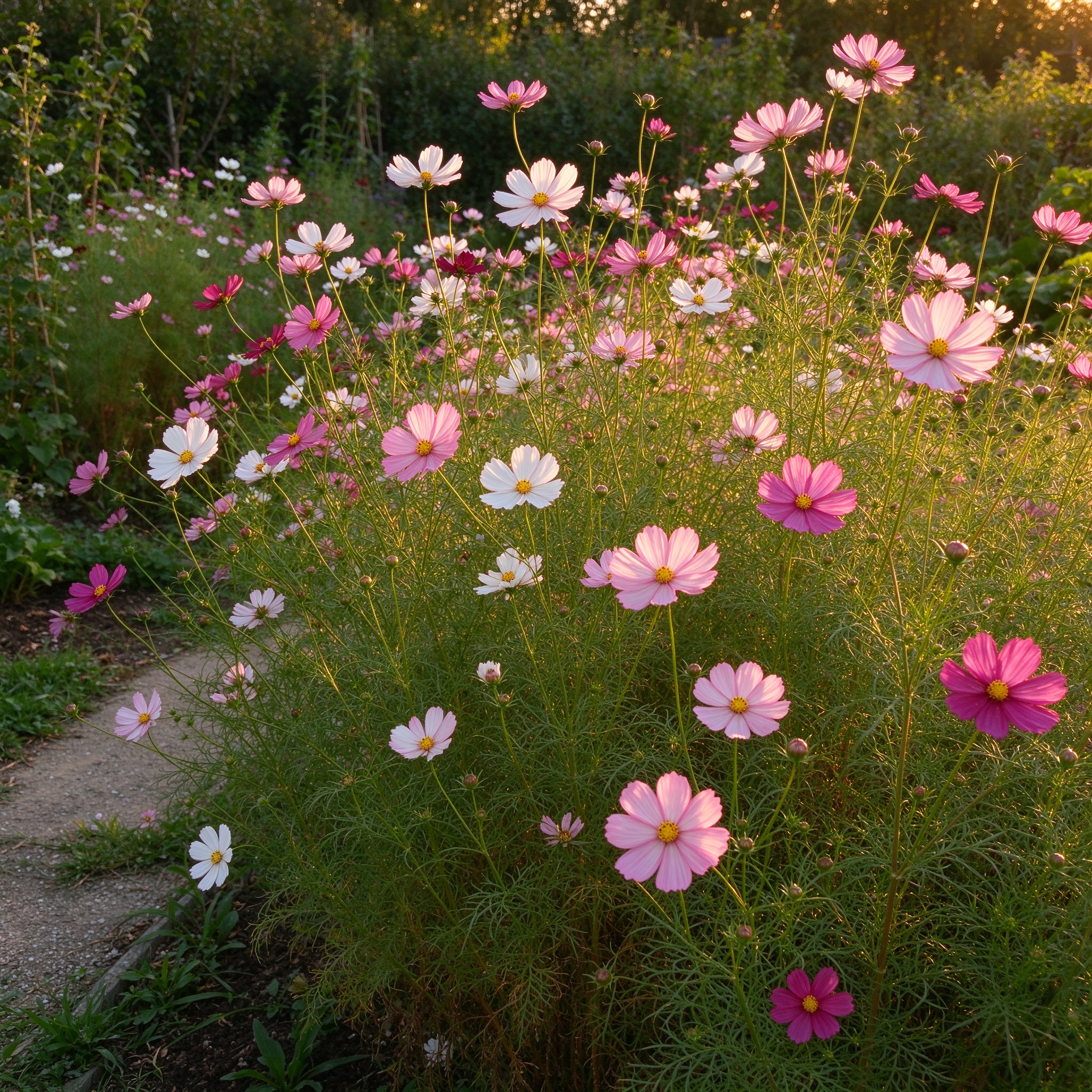
- •Cosmos is one of the easiest, fastest, and most rewarding annuals for sunny gardens, grown for its airy, daisy-like flowers that dance atop tall, feathery stems.
- •The two most common species are Cosmos bipinnatus, with white, pink, rose, and magenta blooms, and Cosmos sulphureus, with warm yellow, orange, and red flowers.
- •Both are native to Mexico and Central America, bloom profusely from early summer to fall, and attract bees, butterflies, and hummingbirds.
- •Cosmos thrives in poor, well-drained soil, tolerates heat and drought, and needs almost no fertilizer — in fact, rich soil produces tall, leafy plants with few flowers.
- •They are quick to grow from seed, self-sow freely, and are perfect for borders, cottage gardens, wildflower meadows, and cut flower beds.
- •With a short maturity of just 60 to 90 days, cosmos is a favorite of children and beginning gardeners because it grows so fast and blooms so dependably.
- •The flowers are also edible, making a delicate garnish for salads and desserts.
📋 Quick Facts
Scientific Name: Cosmos bipinnatus, Cosmos sulphureus
Family: Asteraceae
Category: Flower
USDA Zones: Tender annual, hardy in all zones as a warm-season annual; grows as a short-lived perennial in frost-free zones 9–11.
Light:
- •Cosmos demands full sun for the best, most abundant flowering — at least six hours of direct sunlight daily, with eight or more hours ideal.
- •In full sun, plants stay compact, bloom heavily, and produce strong stems. In too little sun, cosmos becomes tall, leggy, floppy, and blooms poorly.
- •Cosmos thrives in hot, sunny, open positions and handles reflected heat well.
- •Plant in the sunniest part of the garden, away from the shade of trees and buildings.
- •While full sun is essential, cosmos is remarkably heat-tolerant and keeps blooming through the hottest summer days, making it a reliable backbone plant for sunny borders.
Water:
- •Cosmos is drought-tolerant once established and prefers dryish, well-drained conditions.
- •Water young seedlings regularly until they are established, then allow the soil to dry out somewhat between waterings.
- •Established cosmos needs watering only during prolonged dry spells, and even then tolerates drought well.
- •Overwatering and rich, moist soil produce excessive leafy growth with fewer flowers and can cause stems to become weak and floppy.
- •Water at the base rather than overhead, and avoid excessive moisture, which can lead to fungal problems in humid climates.
- •In containers, check moisture more often, as potted cosmos dries out faster, but still let the surface dry between waterings.
Temperature:
- •Cosmos is a warm-season tender annual that thrives in temperatures from 60 to 90°F (15 to 32°C) and is killed by frost.
- •It handles summer heat exceptionally well and keeps blooming through the hottest weather.
- •Seeds germinate best at 65 to 75°F, and plants grow fastest in warm conditions with full sun.
- •Cosmos is not frost-hardy and must be planted after the last spring frost; it survives mild autumn weather but is killed by the first hard freeze.
- •In warm, mild-winter climates, cosmos may persist as a short-lived perennial or self-sow year after year.
- •High humidity and poor air circulation can encourage mildew, so give plants full sun and good spacing.
Soil:
- •Cosmos is remarkably tolerant of poor soil and actually blooms best in lean, well-drained ground.
- •It thrives in sandy, loamy, or average garden soil with a pH of 6.0 to 7.5 and needs little or no amendment.
- •Rich, heavily fertilized soil produces tall, lush, leafy plants with few flowers, so avoid improving the soil before planting.
- •The only hard requirement is good drainage — cosmos dislikes waterlogged, heavy clay.
- •In very heavy soil, add coarse sand or grit, or plant in a raised bed.
- •Space the tall types 12 to 18 inches apart, and shorter cultivars 8 to 12 inches apart, for good air circulation and sturdy, upright growth.
Harvest:
- •Harvest cosmos flowers for cutting when the buds are just beginning to open or fully open but before they begin to fade, cutting stems in the morning.
- •Cut at a slant and strip the lower leaves; cosmos lasts 5 to 7 days in a vase with regular water changes.
- •For dried flowers, cut stems at peak color and hang them upside down in a cool, dry, dark place.
- •For seed saving, leave the mature, dry flower heads on the plant until they turn brown and release their slender seeds, then collect and store them in a cool, dry place.
- •Cosmos self-sows readily, so leaving some spent flowers on the plant yields volunteer seedlings the next spring.
- •The edible petals make a pretty garnish, harvested fresh just before use.
Common Problems:
- •Cosmos is exceptionally easy to grow, but a few issues can arise: powdery mildew and aster yellows in humid, crowded conditions; leggy, floppy growth and reduced flowering from too much shade, rich soil, or overwatering; aphids on new buds and shoots; and occasional spider mites in hot, dry spells.
- •Deer generally avoid cosmos.
- •Because cosmos is a fast annual, most problems are avoided by giving it full sun, lean soil, good drainage, and adequate spacing.
- •Overly lush growth usually means the soil is too rich or the plants are being watered too much.
📅 When to Plant
- •Plant cosmos seeds directly outdoors in spring after the last frost, when the soil has warmed to about 60 to 70°F.
- •Cosmos dislike root disturbance, so direct sowing in the final position is strongly preferred over transplanting.
- •Sow seeds about 1/4 inch deep and 6 to 12 inches apart, thinning to 12 to 18 inches for the tall types.
- •You can also start seeds indoors 4 to 6 weeks before the last frost in individual biodegradable pots to avoid disturbing the roots, then transplant carefully.
- •In warm climates, sow successive crops every two to three weeks through early summer for continuous bloom until frost.
- •Cosmos is a tender annual that is killed by frost, so wait until all danger of frost has passed.
🌱 Growing Stages
 1
Germination
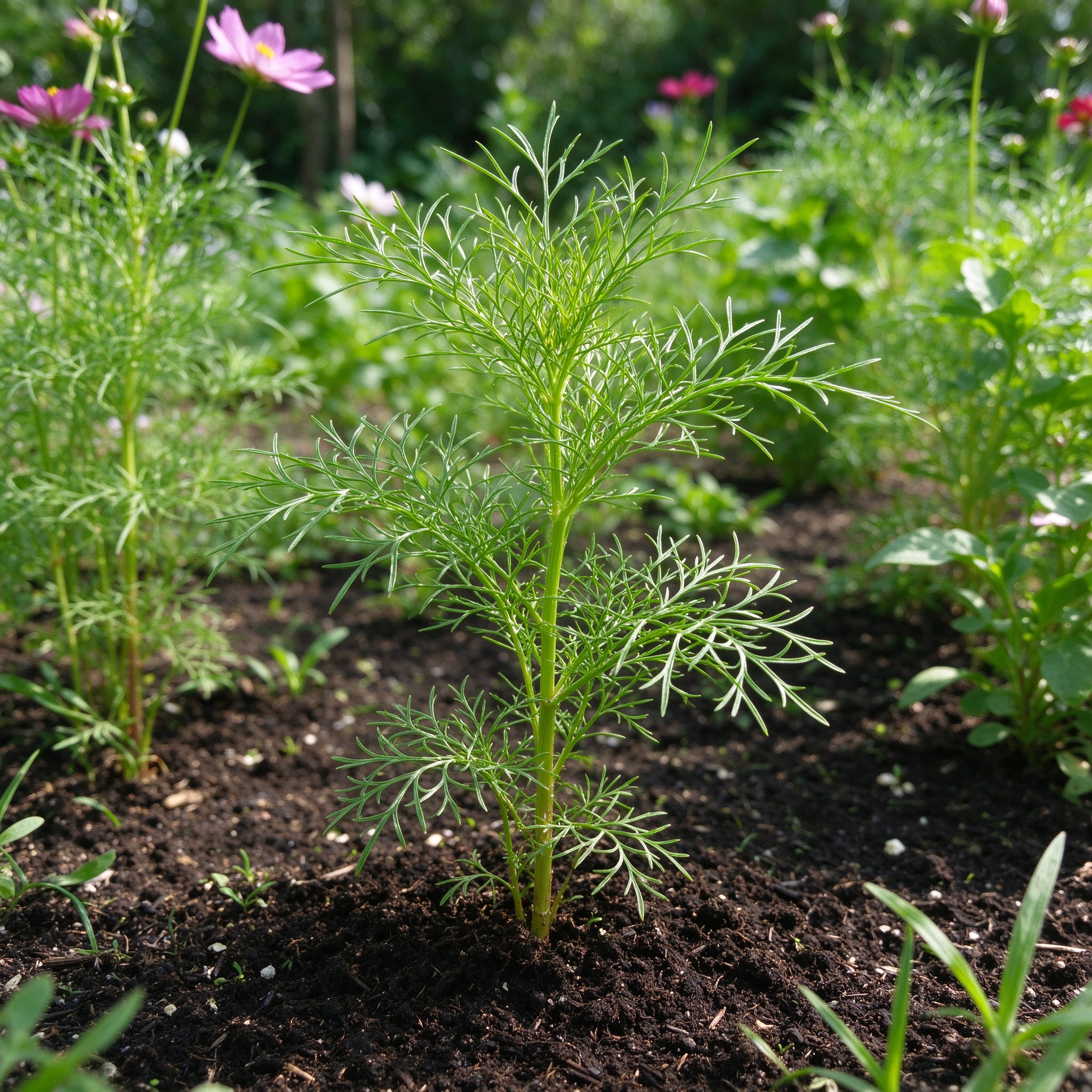
(7–14 days at 65–75°F)- •Cosmos seeds germinate quickly, usually within 7 to 14 days in warm soil.
- •Keep the soil lightly moist until the seedlings emerge, then reduce watering slightly.
- •Seedlings grow fast and form their first true leaves within a couple of weeks.
- •Direct-sown plants need thinning to their proper spacing once they are a few inches tall.
 2
Vegetative growth and branching
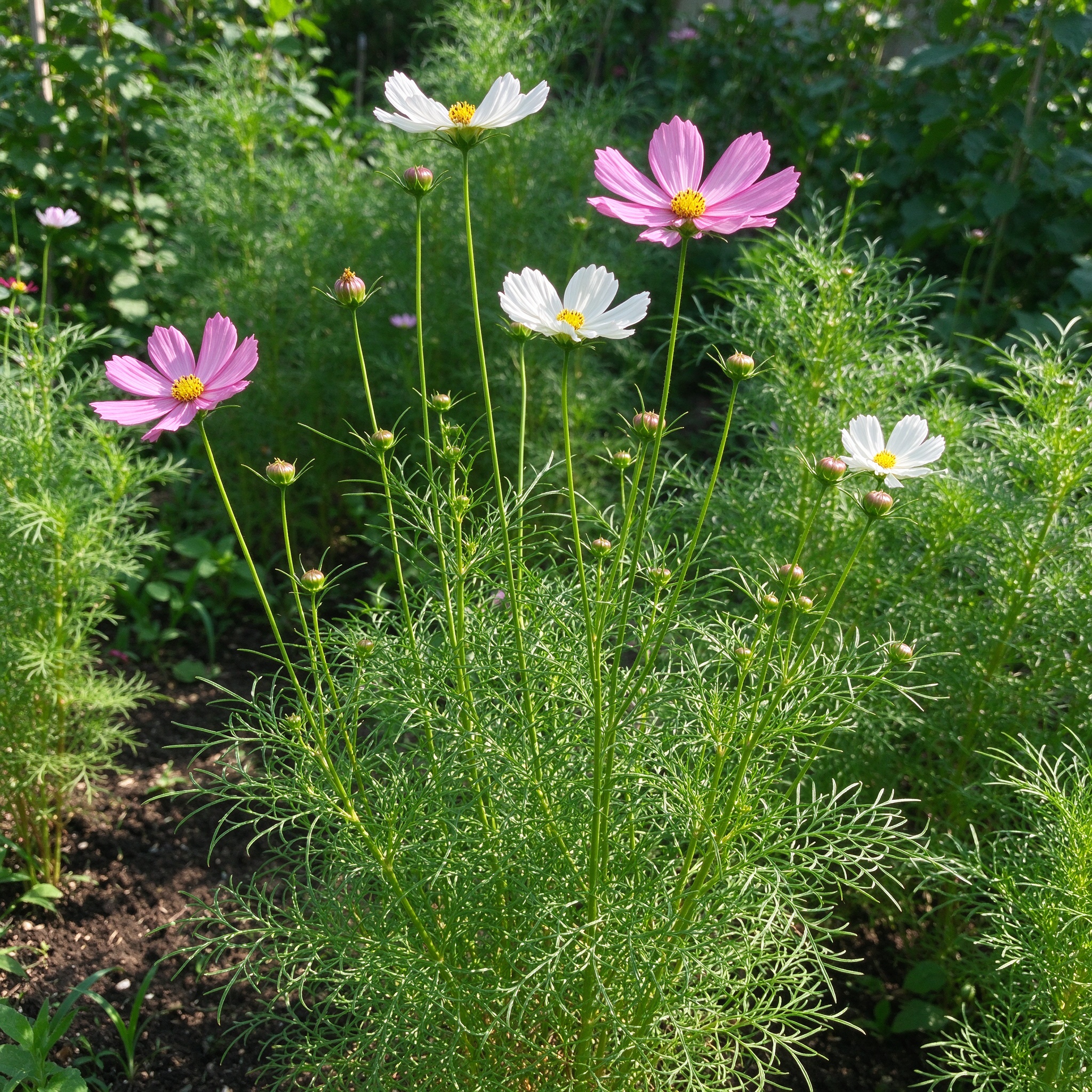
(3–6 weeks after germination)- •Seedlings grow rapidly into feathery-leaved, branching plants.
- •Pinch the growing tips once or twice when plants are a few inches tall to encourage a fuller, more floriferous habit.
- •In lean, well-drained soil with full sun, growth stays compact and sturdy; in rich soil or shade, plants become tall and leggy with fewer flowers.
 3
Bloom
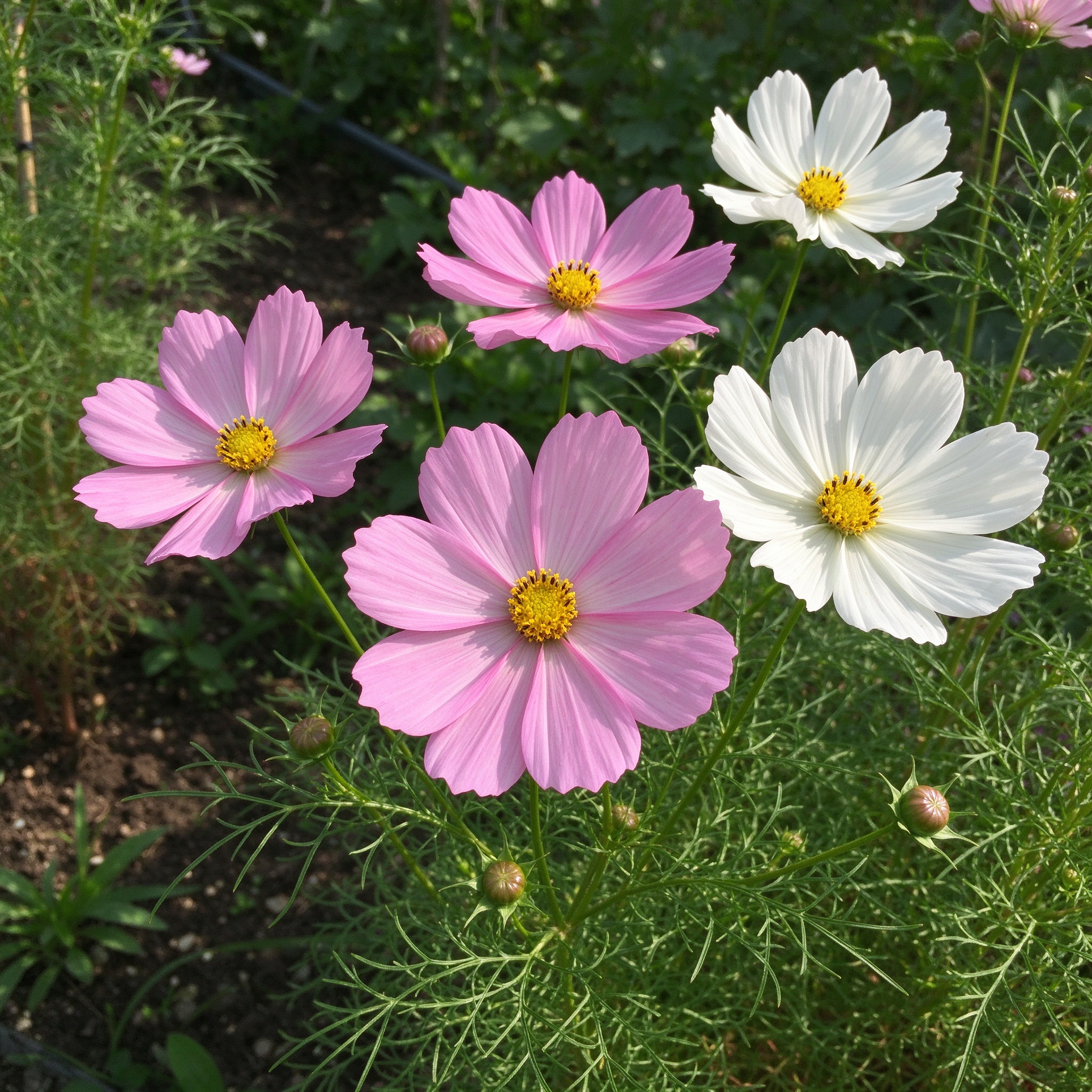
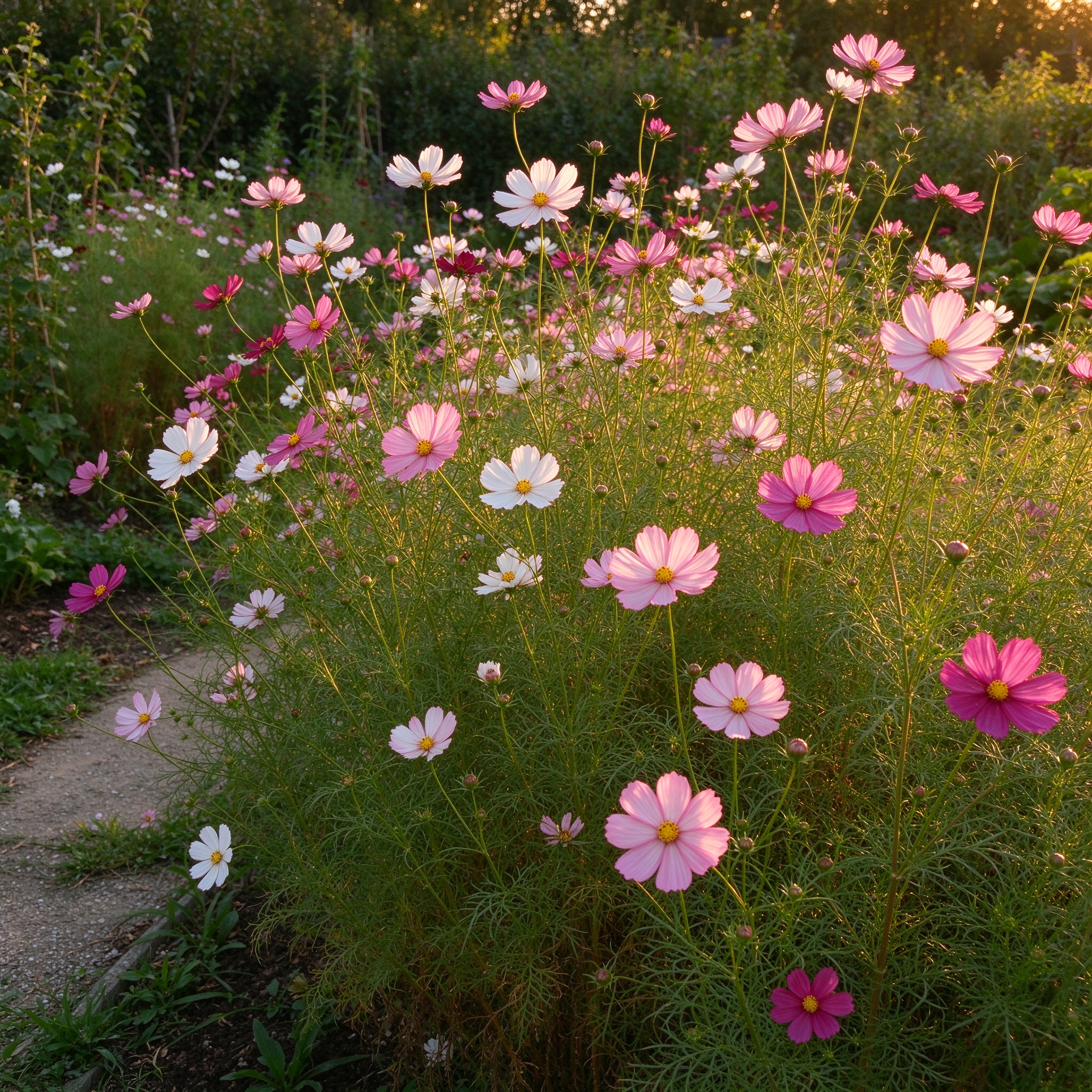
(Early summer to frost, 60–90 days to first flower)- •Cosmos begins flowering about 60 to 90 days after sowing and blooms profusely from early summer until frost.
- •The daisy-like flowers open in waves, and regular deadheading keeps the display going.
- •Bees, butterflies, and hummingbirds visit the blooms throughout the season.
- •Colors range from white and pink to magenta, yellow, orange, and red depending on species and cultivar.
 4
Seed set and decline
(Late summer to frost)- •Toward the end of the season, mature flower heads dry and release slender seeds. Leave some heads to self-sow for next year or collect the seed.
- •As the weather cools and frost approaches, the plants slow, fade, and are finally killed by the first hard freeze.
- •Remove and compost the spent plants in late fall, or leave them for winter structure and birds.
💧 Detailed Care Guide
☀️ Light Requirements
- •Cosmos demands full sun for the best, most abundant flowering — at least six hours of direct sunlight daily, with eight or more hours ideal.
- •In full sun, plants stay compact, bloom heavily, and produce strong stems. In too little sun, cosmos becomes tall, leggy, floppy, and blooms poorly.
- •Cosmos thrives in hot, sunny, open positions and handles reflected heat well.
- •Plant in the sunniest part of the garden, away from the shade of trees and buildings.
- •While full sun is essential, cosmos is remarkably heat-tolerant and keeps blooming through the hottest summer days, making it a reliable backbone plant for sunny borders.
💧 Watering
- •Cosmos is drought-tolerant once established and prefers dryish, well-drained conditions.
- •Water young seedlings regularly until they are established, then allow the soil to dry out somewhat between waterings.
- •Established cosmos needs watering only during prolonged dry spells, and even then tolerates drought well.
- •Overwatering and rich, moist soil produce excessive leafy growth with fewer flowers and can cause stems to become weak and floppy.
- •Water at the base rather than overhead, and avoid excessive moisture, which can lead to fungal problems in humid climates.
- •In containers, check moisture more often, as potted cosmos dries out faster, but still let the surface dry between waterings.
🌡️ Temperature
- •Cosmos is a warm-season tender annual that thrives in temperatures from 60 to 90°F (15 to 32°C) and is killed by frost.
- •It handles summer heat exceptionally well and keeps blooming through the hottest weather.
- •Seeds germinate best at 65 to 75°F, and plants grow fastest in warm conditions with full sun.
- •Cosmos is not frost-hardy and must be planted after the last spring frost; it survives mild autumn weather but is killed by the first hard freeze.
- •In warm, mild-winter climates, cosmos may persist as a short-lived perennial or self-sow year after year.
- •High humidity and poor air circulation can encourage mildew, so give plants full sun and good spacing.
🌱 Soil & Fertilizer
Soil:
- •Cosmos is remarkably tolerant of poor soil and actually blooms best in lean, well-drained ground.
- •It thrives in sandy, loamy, or average garden soil with a pH of 6.0 to 7.5 and needs little or no amendment.
- •Rich, heavily fertilized soil produces tall, lush, leafy plants with few flowers, so avoid improving the soil before planting.
- •The only hard requirement is good drainage — cosmos dislikes waterlogged, heavy clay.
- •In very heavy soil, add coarse sand or grit, or plant in a raised bed.
- •Space the tall types 12 to 18 inches apart, and shorter cultivars 8 to 12 inches apart, for good air circulation and sturdy, upright growth.
Fertilizer:
- •Cosmos needs little to no fertilizer and actually flowers best in poor soil.
- •A light application of compost or a low-nitrogen fertilizer at planting time is more than enough, and most gardeners need to add nothing at all.
- •Avoid high-nitrogen fertilizers, which produce lush foliage and tall, floppy plants with few blooms.
- •For container cosmos, a very light feeding of balanced slow-release fertilizer in early summer supports steady flowering without excessive growth.
- •Because cosmos is so responsive to poor conditions, the key is restraint: the leaner the soil, the more abundant the flowers.
- •Overfeeding is the most common mistake and the surest way to reduce bloom.
📝 Step-by-Step Planting Guide
- 1
Choose a sunny, open site with lean soil
- •Select a spot with full sun (at least six hours daily, ideally eight or more) and good drainage.
- •Cosmos prefers poor to average soil, so do not amend or fertilize the bed heavily — leaner soil produces more flowers.
- •In heavy clay, add coarse sand or grit or plant in a raised bed to prevent waterlogging.
- •Avoid sites shaded by trees, buildings, or tall plants, which cause leggy, weak growth and fewer blooms.
- 2
Sow seeds directly after the last frost
- •Sow cosmos seeds directly outdoors in spring after the last frost, when the soil has warmed to 60 to 70°F.
- •Plant seeds about 1/4 inch deep and 6 to 12 inches apart, then thin to 12 to 18 inches for tall types.
- •Cosmos dislikes root disturbance, so direct sowing is strongly preferred.
- •For an earlier start, sow indoors 4 to 6 weeks before the last frost in individual biodegradable pots to protect the roots, and transplant carefully after hardening off.
- 3
Water to establish, then let the soil dry
- •Water young seedlings regularly until they are established, keeping the soil lightly moist.
- •Once growing well, let the top inch or two of soil dry between waterings — cosmos prefers dryish conditions and tolerates drought.
- •Water deeply but infrequently during dry spells, at the base rather than overhead.
- •Avoid overwatering and rich, moist soil, which cause lush foliage and few flowers.
- 4
Pinch and stake tall types as needed
- •When young plants are a few inches tall, pinch the growing tips once or twice to encourage a bushier, more floriferous habit and stronger stems.
- •Tall cosmos in exposed or windy positions may benefit from light staking or support from surrounding plants.
- •Dwarf and compact cultivars need no support. Removing the first few spent flowers encourages continued blooming.
- 5
Deadhead and manage self-sowing
- •Deadhead spent cosmos flowers regularly to extend bloom and keep plants tidy, cutting stems back to a leaf.
- •Leave some mature flower heads in place at the end of the season to self-sow, or collect the seeds for next year.
- •Because cosmos self-sows freely, you may need to thin volunteer seedlings the following spring to avoid crowding.
- •Continued deadheading through the season produces bloom from early summer until frost.
- 6
Feed nothing or very little
- •Cosmos needs no fertilizer in average garden soil and flowers best in lean conditions.
- •If desired, a very light application of compost or low-nitrogen fertilizer at planting is enough; skip feeding entirely in moderately fertile ground.
- •Avoid high-nitrogen fertilizers, which produce tall, lush, floppy plants with few flowers.
- •For containers, a single light feeding of balanced slow-release fertilizer in early summer supports steady bloom.
- •Restraint is the key to abundant flowers.
🌱 Recommended Varieties
Feathery foliage and graceful pastel blooms
- •The classic tall types grow 3 to 5 feet tall with feathery foliage and single or semi-double flowers in white, pink, rose, and magenta.
- •'Sensation' is a popular open-pollinated mix of pink and white blooms on strong stems; 'Double Click' produces fully double, frilly flowers; 'Cupcake' shows distinctive fused, cup-shaped petals.
- •These are the standard for cut flowers and cottage borders, blooming profusely from early summer until frost.
Warm gold, orange, and red blooms
- •Sulfur cosmos are shorter and bushier, growing 1 to 4 feet tall with warm yellow, orange, scarlet, and bicolor flowers.
- •'Bright Lights' is a popular mix of yellow, gold, orange, and red; 'Cosmic Orange' produces vivid orange blooms on a compact plant; 'Ladybird' offers bright, warm colors in a dwarf form.
- •These thrive in hot, sunny conditions and are excellent for borders, containers, and butterfly gardens.
Tidy cosmos for containers and small spaces
- •Dwarf and compact cosmos stay 1 to 2 feet tall, making them perfect for pots, window boxes, and the front of borders.
- •'Sonata' is a well-known dwarf series with large flowers in pink, white, and carmine on short, sturdy stems; 'Little Lady' is a compact red-and-yellow; 'Cosmic' series offers a range of bright colors on a dwarf habit.
- •These bloom just as abundantly as the tall types but need far less space and rarely require staking.
🪴 Growing in Containers
- Choose a large, well-drained container:
- •Cosmos grows well in containers, especially the dwarf and compact cultivars.
- •Select a pot at least 12 to 16 inches wide and deep for a single plant, or larger for several, with generous drainage holes.
- •Use a well-draining potting mix; while cosmos likes lean soil, container plants need a little more fertility than ground plants, so a mix with some compost works well.
- •A heavy pot resists blowing over when plants are tall and top-heavy with blooms.
- Plant at the right depth and water appropriately:
- •Sow seeds or set transplants in the container at the same depth as the soil surface, spacing compact cultivars about 8 to 12 inches apart.
- •Water to establish, then let the top inch or two of mix dry between waterings.
- •Because pots dry out faster, check container cosmos more often in summer, watering deeply when the mix feels dry but never leaving it soggy.
- •In winter, cosmos in frost-prone zones is grown as an annual and discarded, or the container can be moved to a sheltered spot in mild climates.
- Feed lightly and refresh annually:
- •Container cosmos benefits from a single light feeding of balanced slow-release fertilizer in early summer to support steady flowering in the limited pot volume.
- •Do not overfeed, which produces lush growth and fewer flowers.
- •Since cosmos is an annual, replace the plant each year, refreshing the potting mix or replacing it entirely.
- •Deadhead regularly to keep the container display going until frost.
✂️ Pruning & Maintenance
- ✓
Deadhead spent flowers regularly
- •Remove faded cosmos flowers, cutting the stems back to a leaf or side shoot.
- •Regular deadheading extends the bloom season and keeps the plants tidy, prompting repeated flushes of flowers.
- •Continue through summer and fall for the longest display.
- ✓
Pinch young plants for a fuller habit
- •When cosmos seedlings are a few inches tall, pinch out the growing tip once or twice.
- •This encourages branching and produces a bushier, more floriferous plant with stronger stems. It also helps keep tall types from becoming leggy.
- •Repeat once if the plant gets spindly.
- ✓
Cut back spent plants at season's end
- •After the first hard frost kills the plants, cut the spent cosmos down to the ground and compost the foliage, or leave the dried stems in place through winter for structure and wildlife.
- •In early spring, clear away the old growth before sowing or planting the new season's cosmos.
🐛 Pest & Disease Control
Common Pests
Aphids
Symptoms: Clusters of small, soft-bodied insects gather on new shoots, buds, and undersides of leaves, causing curled, distorted growth and sticky honeydew; ants may follow.Control:- •Knock colonies off with a strong jet of water and encourage natural predators such as lady beetles and lacewings.
- •In heavy infestations, apply insecticidal soap or horticultural oil, and avoid high-nitrogen fertilizer that promotes the soft new growth aphids prefer.
Spider mites
Symptoms: Fine stippling and bronzing on leaves with delicate webbing on the undersides, most common in hot, dry, dusty conditions; foliage may yellow and drop prematurely.Control:- •Mist foliage periodically to raise humidity and knock mites down, and keep plants well watered to reduce stress.
- •Insecticidal soap or horticultural oil applied to the leaf undersides controls active colonies; repeat as needed.
- •Avoid broad-spectrum sprays that kill the predatory mites that regulate spider mites naturally.
Leafhoppers
Symptoms: Small, wedge-shaped insects hop from the plant when disturbed, feeding on sap and causing pale stippling, curled leaves, and sometimes leaf burn; they can transmit aster yellows.Control:- •Remove and dispose of heavily infested foliage and keep the area free of weeds that harbor the insects. Encourage beneficial predators.
- •Severe infestations respond to insecticidal soap applied thoroughly, repeated per label intervals.
Slugs and snails
Symptoms: Irregular holes and chewed edges on young leaves and shoots, with a slimy trail, most active in cool, damp weather and among mulched or sheltered beds.Control:- •Handpick in the evening and lay barriers such as copper tape or diatomaceous earth around the plants.
- •Remove debris and mulch that give slugs daytime shelter, and water in the morning rather than the evening.
- •In severe cases, a pet-safe slug bait applied per label reduces populations.
Common Diseases
Powdery mildew
Symptoms: A white, powdery coating spreads over the upper leaf surfaces in humid, shaded, or crowded conditions; leaves may yellow, curl, and drop early, most often in late summer.Control:- •Grow cosmos in full sun with good air circulation, space plants properly, and water at the base to keep foliage dry.
- •Remove heavily infected leaves and improve airflow.
- •Organic sulfur or potassium-bicarbonate sprays at the first sign slow the spread, and resistant cultivars suffer less.
Aster yellows
Symptoms:- •Flowers turn green and distorted, developing abnormal, broom-like growth; new shoots become yellowed and stunted.
- •The disease is caused by a phytoplasma spread by leafhoppers and has no cure.
Control:- •There is no treatment; remove and destroy infected plants promptly to prevent spread.
- •Control leafhoppers, which transmit the phytoplasma, and remove nearby weeds that harbor both the insect and the disease.
- •Choose healthy plants and rotate the planting site from year to year.
Root and crown rot
Symptoms: Plants wilt, yellow, and collapse despite moist conditions, with dark, mushy roots and crown tissue, usually in heavy, poorly drained, or overwatered soil.Control:- •Improve drainage by amending soil, planting in raised beds, or moving plants out of low-lying wet ground.
- •Reduce watering and let the soil dry between waterings.
- •Remove and destroy severely affected plants and avoid replanting cosmos in the same contaminated spot.
Bacterial blight
Symptoms: Water-soaked, dark spots develop on leaves and stems, which may wilt and die; the disease spreads in wet conditions and with poor air circulation.Control:- •Remove and destroy infected plant parts promptly and avoid overhead watering, which spreads the bacteria.
- •Improve air circulation by spacing plants properly. In severe cases, remove the entire plant and do not compost diseased material.
- •Rotate cosmos to a fresh site the next season.
🍅 When to Harvest
- •Harvest cosmos flowers for cutting when the buds are just beginning to open or fully open but before they begin to fade, cutting stems in the morning.
- •Cut at a slant and strip the lower leaves; cosmos lasts 5 to 7 days in a vase with regular water changes.
- •For dried flowers, cut stems at peak color and hang them upside down in a cool, dry, dark place.
- •For seed saving, leave the mature, dry flower heads on the plant until they turn brown and release their slender seeds, then collect and store them in a cool, dry place.
- •Cosmos self-sows readily, so leaving some spent flowers on the plant yields volunteer seedlings the next spring.
- •The edible petals make a pretty garnish, harvested fresh just before use.
❓ Frequently Asked Questions
- 1
Is cosmos easy to grow?
- •Yes.
- •Cosmos is one of the easiest annuals to grow from seed, especially for beginners and children.
- •It germinates quickly, grows fast, needs no fertilizer, tolerates poor soil, heat, and drought, and blooms profusely from early summer to frost.
- •Its main needs are full sun, well-drained soil, and not too much water or fertilizer — the leaner the conditions, the more flowers it produces.
- 2
How much sun does cosmos need?
- •Cosmos needs full sun — at least six hours of direct sunlight daily, ideally eight or more — for the best, most abundant flowering.
- •In too little sun, plants become tall, leggy, and floppy and bloom poorly.
- •Cosmos thrives in hot, sunny, open positions and handles reflected heat well.
- 3
When should I plant cosmos?
- •Plant cosmos seeds directly outdoors in spring after the last frost, when the soil has warmed to about 60 to 70°F.
- •Cosmos dislikes root disturbance, so direct sowing in the final position is best.
- •You can also start seeds indoors 4 to 6 weeks before the last frost in individual biodegradable pots and transplant carefully after hardening off.
- •Cosmos is a tender annual killed by frost, so wait until all danger of frost has passed.
- 4
Is cosmos toxic to pets?
- •No.
- •Cosmos (Cosmos bipinnatus and Cosmos sulphureus) is not listed by the ASPCA as toxic to cats or dogs and is generally considered safe.
- •The flowers are even edible and used as a garnish.
- •As with any plant, discourage pets from eating large amounts, which could still cause mild digestive upset, and contact a veterinarian if your pet shows unusual symptoms after ingestion.
Source:
NC State Extension Gardener Plant Toolbox — Cosmos — https://plants.ces.ncsu.edu/images/plants/cosmos/
The Old Farmer's Almanac — Growing Cosmos — https://www.almanac.com/plant/cosmos
UF IFAS Gardening Solutions — Cosmos — https://gardeningsolutions.ifas.ufl.edu/images/plants/ornamentals/cosmos.html
ASPCA Toxic and Non-Toxic Plants — Cosmos — https://www.aspca.org/pet-care/animal-poison-control/toxic-and-non-toxic-plants/c
Photo credit: NC State Extension
Images courtesy of NC State Extension under CC BY license. Thank you to the photographers who make these educational images available.
License: CC BY-NC 2.0 / CC BY 4.0