
How to Grow Zinnia: Complete Guide
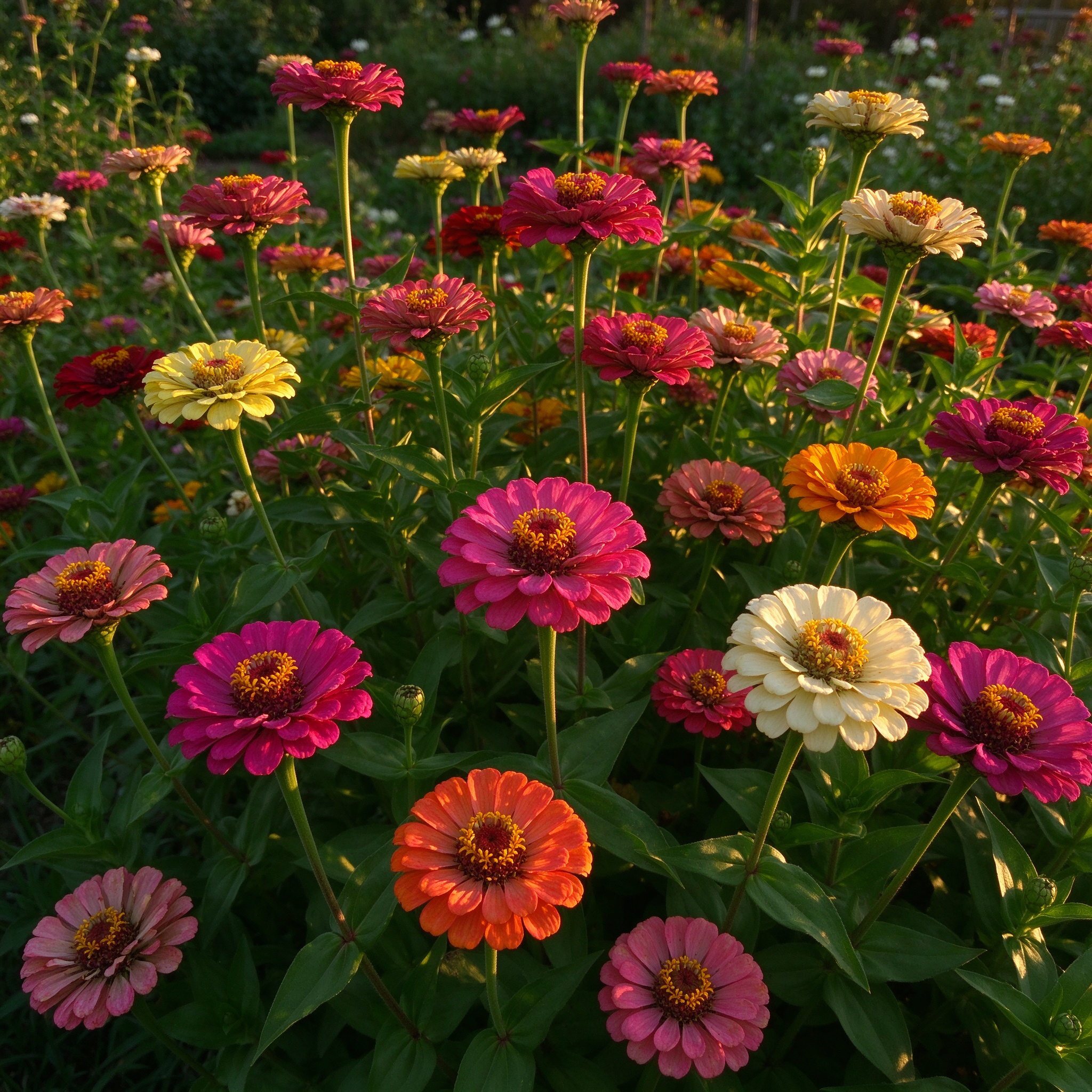
- •Zinnia is a warm-season, upright, branching annual in the aster family, native to Mexico and grown worldwide for its long, brilliant summer display of daisy-like, pompon, and cactus-flowered heads in nearly every color except true blue.
- •Plants grow 1 to 4 feet tall on rough, hairy stems, with opposite, lanceolate to oval, rough-textured leaves clasping the stalk.
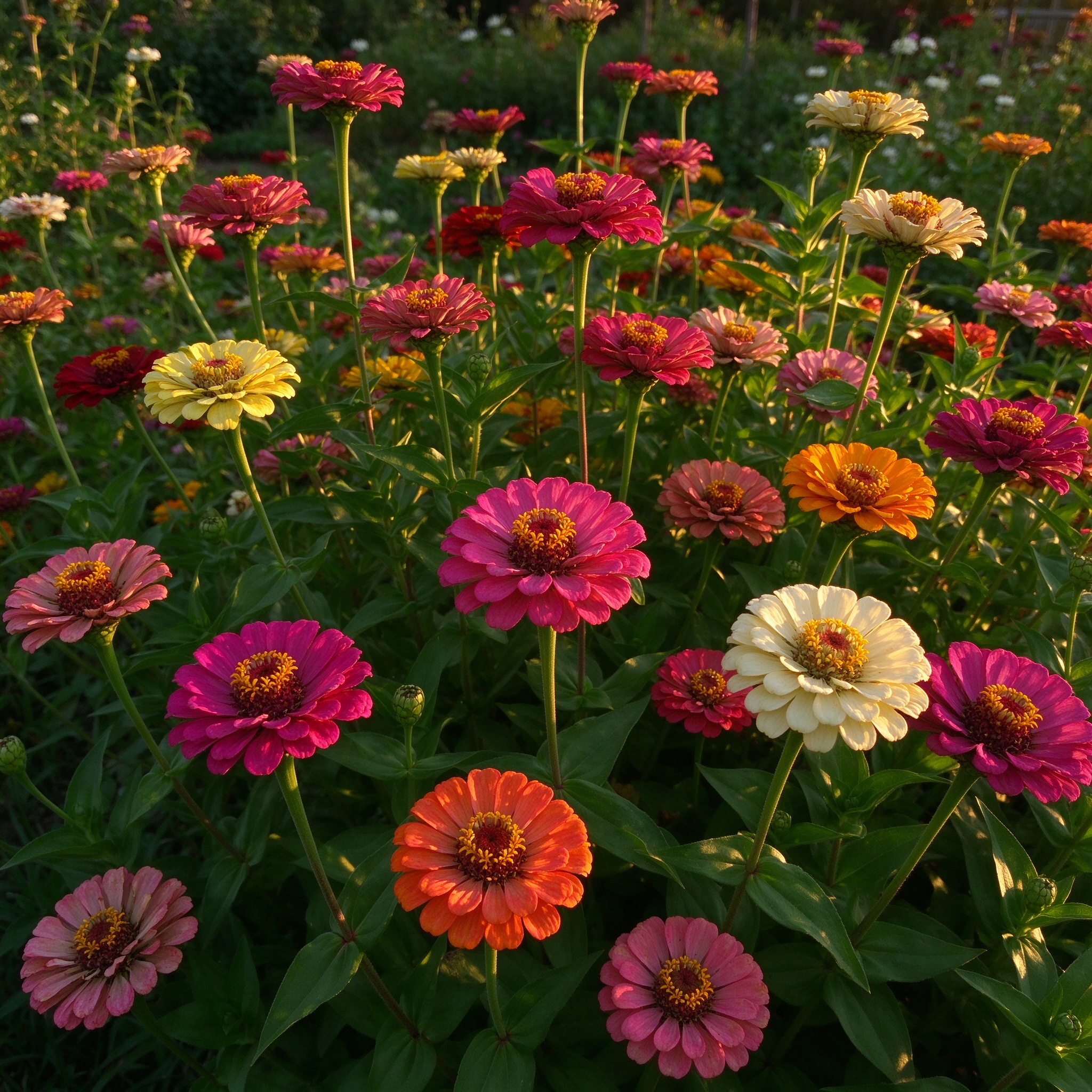
- •Flower heads measure 1 to 5 inches across, carried singly at the stem tips in single, semi-double, or double forms; colors include scarlet, orange, yellow, pink, rose, purple, white, cream, lime, and striped or bicolor blends.
- •Zinnias bloom continuously from midsummer through the first fall frost, making them a backbone of cottage borders, cutting gardens, butterfly and pollinator plantings, meadows, mass plantings, and patio containers.
- •They are especially valuable as cut flowers because stems are long, straight, and strong, and blooms last seven to ten days in a vase; butterflies, hummingbirds, and native bees visit the open, flat-faced single varieties.
- •The species tolerates heat, dry spells, and poor soil once established, but thrives on sun, good air movement, and average fertility; deer generally pass it over.
- •Garden zinnias are hybrids and cultivars grouped into classes by height and flower form, while modern interspecific Profusion hybrids bred from Zinnia angustifolia bring strong mildew and leaf-spot resistance to compact, free-flowering plants.
📋 Quick Facts
Scientific Name: Zinnia elegans
Family: Asteraceae
Category: Flower
USDA Zones: Tender annual, zones 2a–11b; killed by frost.
Light:
- •Zinnias need full sun, six to eight hours of direct sunlight each day, and open, airy positions in the garden.
- •Shade produces leggy stems, sparse flowers, and the crowded, humid canopy in which powdery mildew thrives; stems in partial shade lean toward the light and need staking.
- •Even tall cutting varieties stay upright in open sun with enough space between plants.
- •Give indoor seedlings the brightest possible window or grow lights immediately after emergence so they do not stretch before being planted outside.
Water:
- •Water zinnias moderately, about 1 inch per week during dry spells, soaking the root zone at the base of the plant rather than sprinkling the foliage.
- •Once established, zinnias are fairly drought tolerant and prefer slightly dry conditions to constantly wet soil; overwatering and wet leaves encourage root rot, leaf spots, and powdery mildew.
- •Avoid overhead sprinklers in humid regions, and maintain the recommended spacing so breezes move through the leaves.
- •Water newly sown beds evenly until seedlings emerge, then taper to deep, infrequent soakings; potted zinnias need more frequent checking because containers dry fast in summer heat.
Temperature:
- •Zinnias are tender warm-season annuals that grow best between 70 and 85°F (21 to 29°C) and stop blooming and collapse with any frost.
- •Seed germinates at soil temperatures of 70 to 75°F (21 to 24°C) in 4 to 7 days; seed sown into soil below 60°F sits dormant and rots rather than sprouting.
- •Summer heat above 90°F slows flowering temporarily in some gardens, especially in humid southern climates, where heat-tolerant interseries Profusion and Zin Magellan series keep blooming while old Z.
- •elegans strains stop.
- •In the garden they are grown as annuals in USDA zones 2a through 11b, flowering from midsummer until killed by the first fall frost; saved seed or self-sown volunteers restart the cycle the following spring.
Soil:
- •Grow zinnias in average to loamy, high-organic, well-drained soil; the plants are not demanding about soil pH and tolerate neutral to slightly acid conditions.
- •They grow in poor, sandy, and disturbed ground but flower best in loose soil amended with compost.
- •Heavy, waterlogged clay causes root rot, while soil that is too rich or heavily fertilized grows tall, leafy stems with fewer and weaker flowers.
- •Rake the bed level before sowing, remove stones and perennial weed roots, and improve compacted heavy soil with compost and coarse sand.
- •Drainage matters more than fertility: zinnias prefer to dry between waterings and fail in low spots that pool after rain.
Harvest:
- •Cut zinnias for the vase early in the morning, before the sun heats the stems, when flowers are just fully open and the petals are firm rather than wilted; harvest stems that hold their flower high on a straight stalk rather than blooms that droop on weak side stems.
- •Use sharp shears, cut to a length suitable for your arrangement, and leave at least two pairs of leaves on the mother plant so it sends up new side shoots.
- •Strip foliage that would sit below the water line, recut stems at a 45-degree angle under water, and change vase water daily; zinnia blooms last about seven to ten days.
- •For seed saving, leave selected flowers on the plant until the head ages completely, turns brown and dry, and the petals begin to drop in fall; gather the dried heads before they shatter and finish drying indoors.
- •Plants stop flowering after the first hard frost, when stems blacken and collapse.
Common Problems: Powdery mildew on shaded or crowded foliage; bacterial wilt causing sudden collapse; leaf spots and root rot in wet soil; Japanese beetles skeletonizing leaves; aphids on shoot tips; spider mites in hot dry weather; leggy stems and sparse bloom in shade; fewer flowers on over-fertilized plants.
📅 When to Plant
- •Plant zinnias after all danger of frost has passed and the soil has warmed to about 70°F (21°C); waiting one to two weeks after the last frost lets cold soil warm up, since zinnia seed rots in cool, wet ground.
- •Direct sowing is strongly preferred because zinnias transplant poorly and suffer root setback: press seeds about ¼ inch deep, spaced about 12 inches apart in rows, then thin seedlings to 9 to 18 inches depending on the variety's mature width.
- •Germination takes 4 to 7 days in warm, loose soil.
- •For earlier bloom in short-season climates, sow indoors 4 to 6 weeks before the last frost in biodegradable peat or coir pots, and plant the whole pot outside without disturbing the roots; keep seedlings under bright light and harden them off before setting out.
- •Succession-sow a fresh row every three to four weeks through early summer to extend the cutting season into fall.
- •Spacing and full sun are the two most important planting decisions for preventing the powdery mildew that plagues zinnias in humid weather.
🌱 Growing Stages
 1
Germination
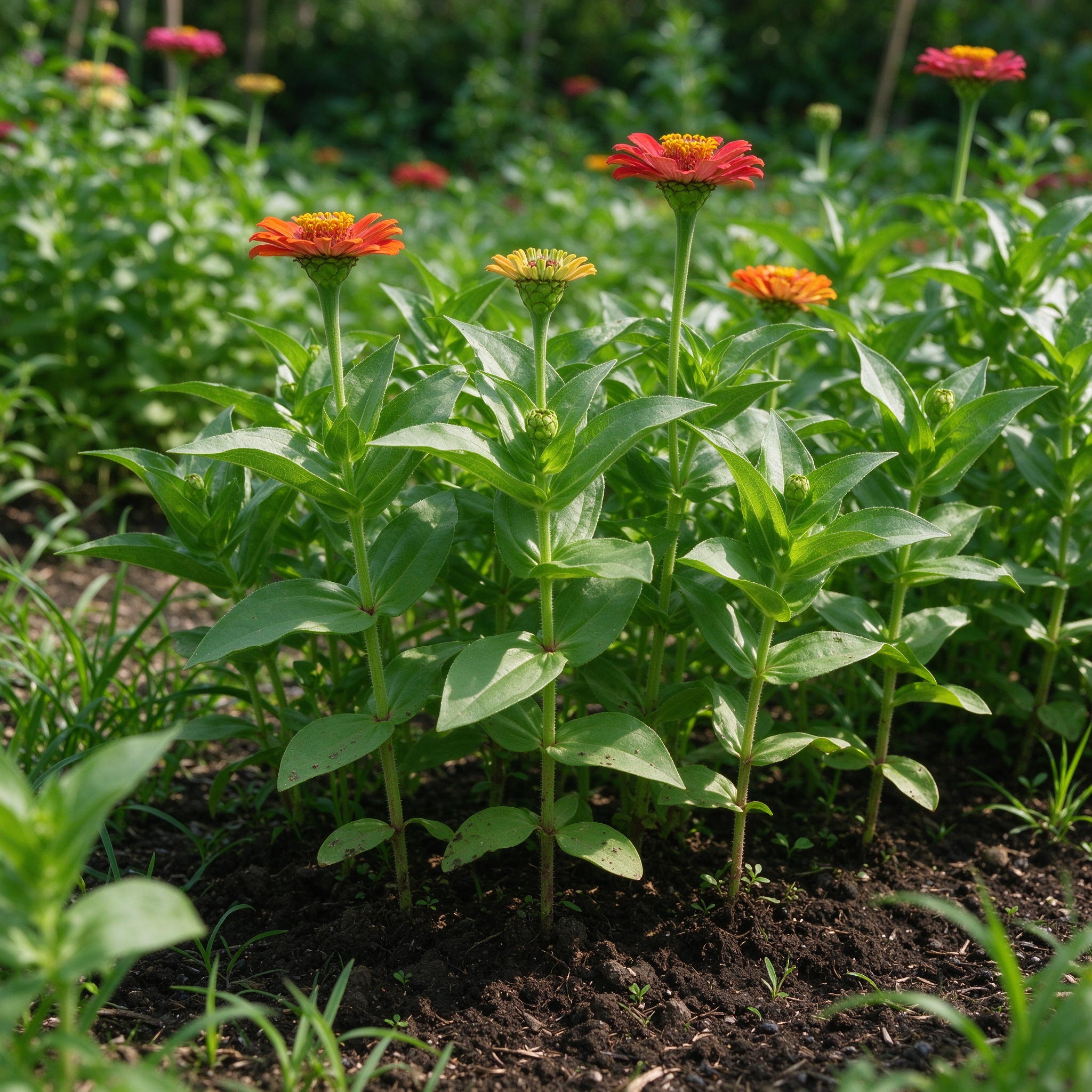
(4 to 7 days)- •Warm soil at 70 to 75°F swells the flat, pointed seed, the root anchors into loose earth, and the two narrow seedling leaves emerge.
- •Cool, wet soil below 60°F keeps seed dormant and rots it, so sowing after the last frost is essential.
- •Keep the seedbed moist but never soggy; seedlings appear uniformly in warm conditions.
 2
Seedling establishment
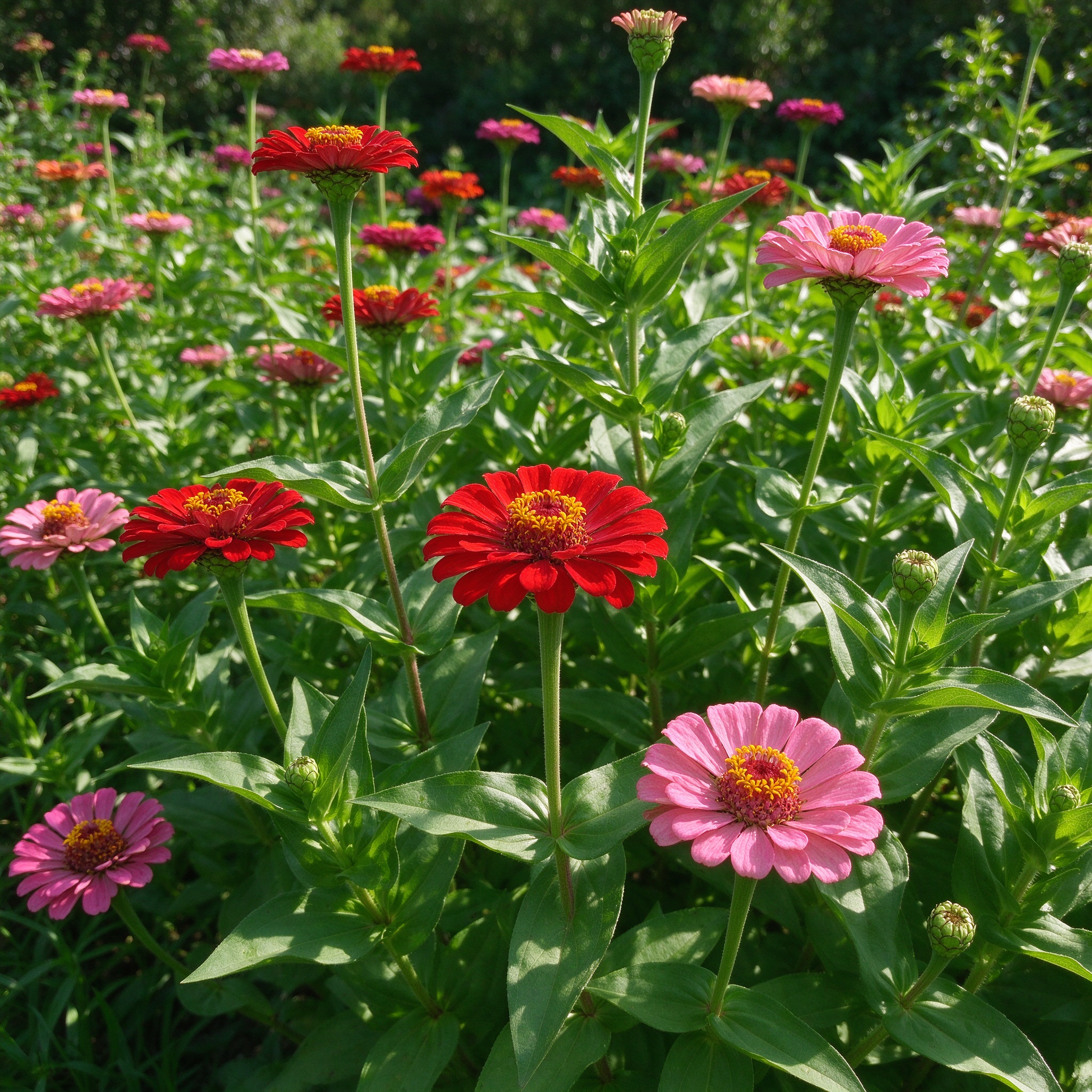
(3 to 4 weeks)- •Opposite, rough, lance-shaped true leaves replace the cotyledons while roots spread through loose, compost-amended soil.
- •This is the thinning window; crowded seedlings must reach final spacing to avoid a leggy, mildew-prone canopy.
- •Protect tender growth from aphids and keep the bed in full sun so stems stay short and sturdy.
 3
Vegetative growth and bud formation
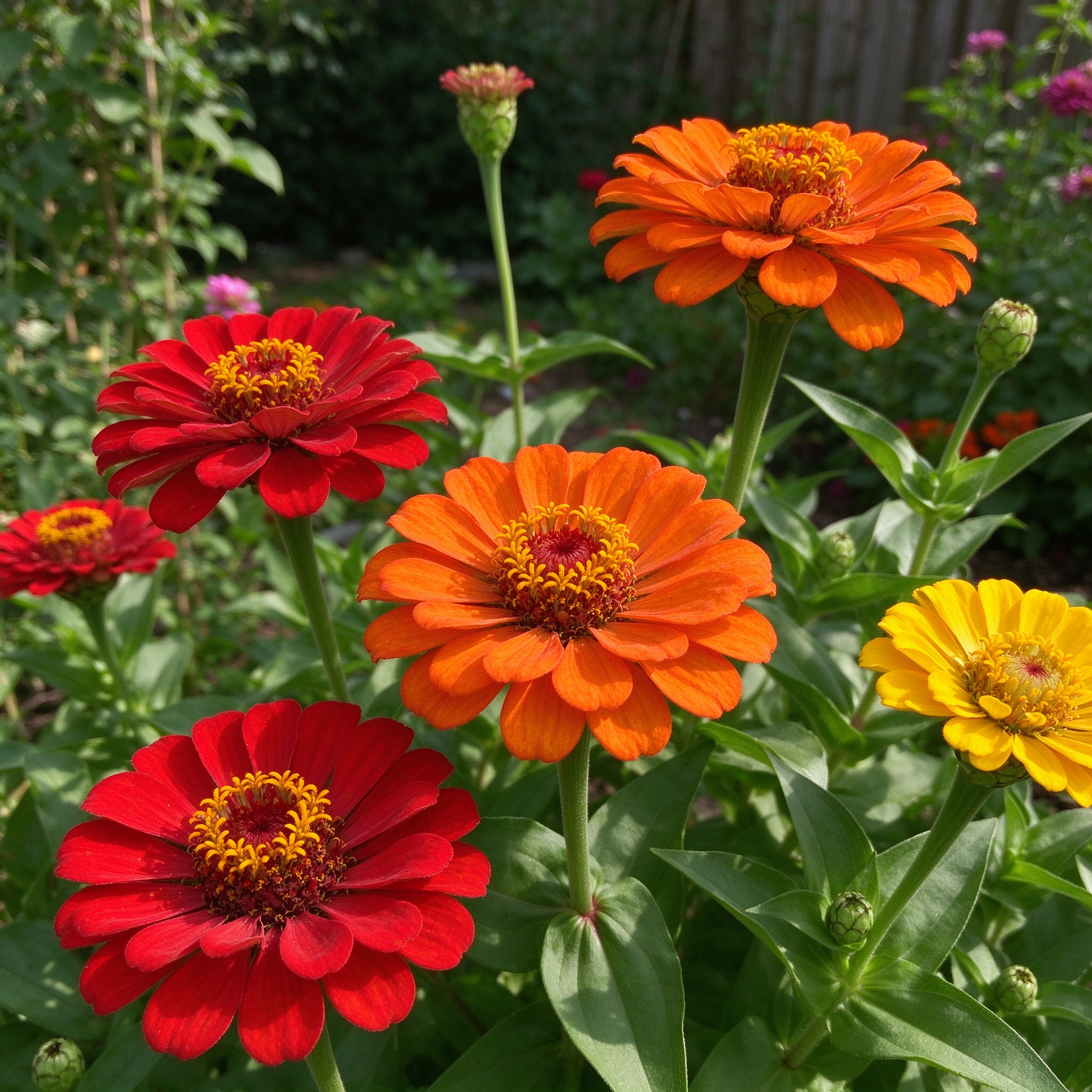
(4 to 6 weeks after emergence)- •Stems elongate and branch from leaf axils, carrying paired rough leaves, and terminal flower buds swell at the tips.
- •This stage calls for moderate water and light feeding; over-fertilizing produces leafy stems with few buds.
- •Tall varieties may need staking as stems thicken, and dry, hot spells trigger spider mites on undersides of leaves.
 4
Bloom, seed set, and frost termination
(Midsummer through first fall frost)- •Successive heads open from midsummer until frost feeds butterflies and cut bouquets; deadheading keeps buds forming.
- •After pollination, selected heads mature and dry into brown seed heads over late summer and fall.
- •The first hard frost blackens stems and ends the annual cycle; open-pollinated saved seed and self-sown volunteers restart it next spring.
💧 Detailed Care Guide
☀️ Light Requirements
- •Zinnias need full sun, six to eight hours of direct sunlight each day, and open, airy positions in the garden.
- •Shade produces leggy stems, sparse flowers, and the crowded, humid canopy in which powdery mildew thrives; stems in partial shade lean toward the light and need staking.
- •Even tall cutting varieties stay upright in open sun with enough space between plants.
- •Give indoor seedlings the brightest possible window or grow lights immediately after emergence so they do not stretch before being planted outside.
💧 Watering
- •Water zinnias moderately, about 1 inch per week during dry spells, soaking the root zone at the base of the plant rather than sprinkling the foliage.
- •Once established, zinnias are fairly drought tolerant and prefer slightly dry conditions to constantly wet soil; overwatering and wet leaves encourage root rot, leaf spots, and powdery mildew.
- •Avoid overhead sprinklers in humid regions, and maintain the recommended spacing so breezes move through the leaves.
- •Water newly sown beds evenly until seedlings emerge, then taper to deep, infrequent soakings; potted zinnias need more frequent checking because containers dry fast in summer heat.
🌡️ Temperature
- •Zinnias are tender warm-season annuals that grow best between 70 and 85°F (21 to 29°C) and stop blooming and collapse with any frost.
- •Seed germinates at soil temperatures of 70 to 75°F (21 to 24°C) in 4 to 7 days; seed sown into soil below 60°F sits dormant and rots rather than sprouting.
- •Summer heat above 90°F slows flowering temporarily in some gardens, especially in humid southern climates, where heat-tolerant interseries Profusion and Zin Magellan series keep blooming while old Z.
- •elegans strains stop.
- •In the garden they are grown as annuals in USDA zones 2a through 11b, flowering from midsummer until killed by the first fall frost; saved seed or self-sown volunteers restart the cycle the following spring.
🌱 Soil & Fertilizer
Soil:
- •Grow zinnias in average to loamy, high-organic, well-drained soil; the plants are not demanding about soil pH and tolerate neutral to slightly acid conditions.
- •They grow in poor, sandy, and disturbed ground but flower best in loose soil amended with compost.
- •Heavy, waterlogged clay causes root rot, while soil that is too rich or heavily fertilized grows tall, leafy stems with fewer and weaker flowers.
- •Rake the bed level before sowing, remove stones and perennial weed roots, and improve compacted heavy soil with compost and coarse sand.
- •Drainage matters more than fertility: zinnias prefer to dry between waterings and fail in low spots that pool after rain.
Fertilizer:
- •Zinnias are light feeders.
- •Mix finished compost into the bed at planting time, and apply only a light balanced organic feed such as a 4-4-4 or dilute balanced liquid fertilizer once a month during peak bloom.
- •High-nitrogen fertilizer, heavy manure, or repeat applications of lawn-strength feeds produce lush green foliage, soft stems that mildew and lodge, and fewer flower heads; this is one of the most common mistakes with zinnias.
- •Avoid fertilizing after midsummer in humid regions, since soft late growth mildews before frost.
- •Container-grown zinnias need a dilute balanced liquid feed every two to three weeks because nutrients wash out of pots with each watering; feed at half strength to avoid leafy growth at the expense of flowers.
📝 Step-by-Step Planting Guide
- 1
Choose a full-sun, airy site and prepare loose soil
- •Pick a bed with six to eight hours of direct sun and open air movement between plants; shade and stagnant humid air are the main cause of zinnia mildew.
- •Clear weeds and rake the top 6 to 8 inches loose, working in finished compost but not heavy manure.
- •Level the surface, remove stones, and improve heavy clay with compost and coarse sand so water drains after rain.
- •Avoid low spots that stay wet, and space the future row to match the variety's mature width so breezes pass through the canopy.
- 2
Wait for warm soil and sow seed directly
- •After the last frost and one to two weeks of warm weather, when soil reaches about 70°F (21°C), press seeds ¼ inch deep about 12 inches apart in rows, cover lightly with fine soil, and water gently.
- •Germination takes 4 to 7 days; keep the seedbed evenly moist but not soggy.
- •Direct sowing avoids transplant shock, so skip pot-grown starts whenever possible.
- •If you must start indoors, sow 4 to 6 weeks before frost in biodegradable pots, keep under bright light, harden off a week, and set the whole pot in the ground without disturbing roots.
- •Succession-sow every three to four weeks through early summer for continuous cutting.
- 3
Thin to the correct spacing
- •When seedlings reach 2 to 3 inches tall, thin them to the mature spacing: 9 to 12 inches for dwarf and Profusion types, 12 to 15 inches for medium bedding zinnias, and 15 to 18 inches for tall Benary’s Giant and State Fair cutting strains.
- •Pull weak, pale, or crowded seedlings at soil level.
- •Wide spacing lets wind and sun dry the leaves after rain, the single most effective defense against powdery mildew; crowded zinnias develop a dense humid canopy that mildews before flowering finishes.
- 4
Water at the base and keep leaves dry
- •Keep newly sown beds evenly moist until seedlings establish, then water deeply about 1 inch per week at the base of the plant in dry weather.
- •Avoid overhead sprinklers that wet the foliage, especially in humid regions; water early in the day so any accidental splash dries by noon.
- •Apply a thin organic mulch to suppress weeds and conserve moisture, keeping it away from the stems.
- •Monitor shoot tips for aphids and check hot, dry leaves for spider mites; rinse colonies off with a strong water spray.
- 5
Deadhead and cut flowers through summer
- •Remove spent heads throughout the season, cutting back to the first healthy leaf node below the bloom, to redirect energy into side shoots and new buds.
- •On tall cutting varieties, harvest stems in the morning when flowers are firm, leaving two leaf pairs on the plant to regenerate the branch.
- •Lightly feed with a dilute balanced fertilizer once a month during peak bloom; skip high-nitrogen feeds that favor leaves over flowers.
- •Stake tall mildew-prone or lodging-prone strains in exposed sites, and remove any heavily mildewed leaves to slow spread.
- 6
Collect dried seed heads in fall
- •Before frost, mark selected plants of open-pollinated heirloom or cutting strains, and let their flower heads age until completely brown, dry, and brittle, with petals loosening.
- •Cut the heads, place them in a paper bag in a cool, dry, ventilated spot for two weeks, then rub the head between your palms over paper to release the flat, dark, pointed seeds.
- •Remove the chaff, spread seeds another week to dry, then store in a labeled paper envelope in a cool, dry, dark place.
- •Note that Profusion and other named hybrids will not come true from saved seed; their seedlings revert to mixed colors and weaker habit.
🌱 Recommended Varieties
'Benary’s Giant' and 'State Fair' — long-stemmed zinnia mixes
- •Open-pollinated cutting strains that reach 3 to 4 feet with strong 20- to 30-inch stems and large 3- to 5-inch double blooms in vivid scarlet, orange, yellow, pink, purple, and white.
- •'Benary’s Giant' is the florist's standard, holding its color and form in the vase; 'State Fair' carries the largest 5-inch flowers on 4-foot plants.
- •These giants need 15- to 18-inch spacing, a full-sun cutting row, and occasional staking in wind; they bloom heavily all summer when deadheaded regularly.
Profusion series — Z. angustifolia × Z. elegans ground-cover hybrids
- •Interspecific Profusion hybrids reach 12 to 18 inches in a mound 18 to 24 inches wide, blooming nonstop without deadheading in cherry, orange, white, apricot, and salmon.
- •Bred from Zinnia angustifolia, they resist powdery mildew and leaf spot far better than standard Z.
- •elegans, tolerate heat and drought, and do not need pinching.
- •They are the best choice for humid southern gardens, mass plantings, edging, and containers, replacing older mildew-prone strains in landscapes where disease pressure is high.
'Lilliput', 'Thumbelina', 'Zesty', and 'Purple Prince' for beds and pots
- •'Lilliput' grows 18 to 24 inches with tightly quilled, golf-ball-sized pompon heads in mixed colors, excellent for small bouquets.
- •'Thumbelina' stays only 4 to 6 inches tall for window boxes and front borders, while 'Zesty' reaches 18 to 24 inches with fully double cactus-type blooms in coral, pink, orange, and white.
- •'Purple Prince' grows 36 to 48 inches with large royal-purple double heads for the middle of the border; 'Crystal White' carries clean white single daisies on compact plants that mix well with blue and purple summer flowers.
🪴 Growing in Containers
- Choose compact varieties for pots:
- •Tall 3- to 4-foot cutting zinnias are unsuitable for containers; choose dwarf Thumbelina (4 to 6 inches), Lilliput (18 to 24 inches), Profusion hybrids (12 to 18 inches), or Zesty (18 to 24 inches).
- •Use a 10- to 12-inch pot for one dwarf plant, or a 16- to 18-inch tub for three Profusion or Lilliput plants in a mixed display.
- •Containers must have drainage holes and pot feet so excess water runs freely rather than sitting around the roots.
- Plant in a rich, free-draining mix:
- •Fill the pot with a premium potting mix blended with compost and perlite; garden soil compacts and waterlogs in containers.
- •Sow seeds directly in the pot ¼ inch deep and thin to the strongest seedlings, or set in a nursery start without disturbing roots.
- •Place the container in full sun on a patio, deck, or balcony railing where it receives six to eight hours of direct light and open air movement; shade makes potted zinnias leggy and mildew-prone.
- Water, feed lightly, and deadhead pots:
- •Container zinnias dry fast in summer: check daily and water when the top inch of mix feels dry, soaking until water drains through, never leaving the pot in a saucer of water.
- •Feed a dilute balanced liquid fertilizer every two to three weeks at half strength; high-nitrogen feeds push leaves over flowers.
- •Deadhead spent heads to the first leaf node repeatedly, remove yellowed or mildewed lower leaves, and support taller pot varieties with a small stake if heads become top-heavy.
✂️ Pruning & Maintenance
- ✓
Deadhead spent flowers all summer
- •Cut faded heads back to the first healthy leaf node or side branch below the bloom.
- •Regular deadheading stops seed formation, keeps the plant producing side buds, and extends the flower display into fall; un-deadheaded zinnias slow blooming and focus energy into maturing a few large seed heads.
- •Remove yellowed and mildewed leaves at the same time to open the canopy to air movement.
- ✓
Pinch young plants for bushiness
- •On medium and tall branching varieties, pinch out the terminal growing tip when the plant reaches 8 to 12 inches tall to force two or three side branches; this yields a bushier, flowerier plant with more cutting stems rather than a single tall stalk.
- •Dwarf Profusion hybrids need no pinching because they branch naturally and bloom continuously on their own.
- •Do not pinch early in cool weather, when soft new shoots grow slowly and mildew readily.
- ✓
Support tall stems and cut back diseased growth
- •Stake tall Benary’s Giant and State Fair stems in exposed, windy beds, tying loosely to bamboo or wire supports as heads swell.
- •If powdery mildew spreads in late summer, remove the most heavily coated stems and leaves, space the canopy by pruning crowded branches, and avoid overhead watering; affected foliage will not recover and should not be composted where spores can spread.
- •After frost pulls the whole spent plant and compost healthy debris.
🐛 Pest & Disease Control
Common Pests
Japanese beetles
Symptoms: Metallic green beetles cluster on the sunniest flowers and skeletonize leaves between veins in early summer, leaving lacy brown foliage and chewing ragged holes in petal edges.Control:- •Hand-pick beetles into soapy water each morning while numbers are low, and place pheromone traps far from the zinnia bed rather than beside it.
- •Neem or labeled pyrethrin sprays reduce feeding; avoid broad-spectrum insecticides that kill pollinators visiting open blooms.
- •Remove nearby wild rose and knotweed hosts that support beetle larvae and adults.
Aphids
Symptoms: Soft green or black colonies cluster on shoot tips and the undersides of young leaves, curling growth and coating foliage with sticky honeydew that later grows black sooty mold.Control:- •Knock colonies off with a strong jet of water for two or three days running, and encourage lady beetles and lacewings that prey on aphids.
- •Heavy infestations respond to insecticidal soap or horticultural oil applied in cool weather; avoid high-nitrogen fertilizer that produces the tender shoot growth aphids prefer.
Spider mites
Symptoms: Tiny red or pale mites feed on leaf undersides in hot, dry weather, producing pale speckling and fine webbing on leaves and stems; foliage yellows, bronzes, and drops in late summer.Control:- •Raise humidity around plants by hosing leaf undersides in the morning, and keep plants adequately watered during drought.
- •Encourage predatory mites and avoid dusty, overheated sites; insecticidal soap or horticultural oil applied to leaf undersides controls mite populations before they build into a damaging colony.
Caterpillars and leaf rollers
Symptoms: Small green caterpillars chew holes in leaves and flower buds, sometimes rolling leaves together with silk; damaged petals emerge ragged or buds fail to open.Control:- •Inspect shoot tips and unfold rolled leaves by hand, removing larvae into soapy water.
- •Labeled Bt sprays control leaf-feeding caterpillars without harming pollinators when applied before larvae enter buds; clean up fallen foliage at season's end to remove overwintering sites for the following year.
Common Diseases
Powdery mildew
Symptoms: A white to grayish powdery coating spreads over leaves, stems, and buds, most often on shaded, crowded plants in humid nights and dry days; leaves curl, yellow, and drop early while bloom continues at the top.Control:- •Grow in full sun at the recommended wide spacing, water at soil level, and prune out dense inner growth for airflow.
- •Choose resistant Profusion hybrids where disease pressure is high.
- •Remove heavily infected leaves; sulfur or potassium-bicarbonate fungicides at the first sign slow spread, but prevention through spacing and sun matters more than treatment.
Bacterial wilt
Symptoms: Plants suddenly wilt and collapse despite moist soil, with stems discolored near the base; wilt progresses through the day and does not recover after watering, spreading between plants in wet weather.Control:- •There is no cure for bacterial wilt: remove and discard affected plants in household trash, do not compost them, and rotate zinnias with non-aster crops the following year.
- •Prevent spread by watering at the base, avoiding overhead irrigation, and sanitizing tools between beds; buy disease-resistant Profusion starts and certified seed rather than saving seed from an infected plant.
Leaf spot
Symptoms: Brown to gray circular or angular spots develop on lower leaves, often with dark borders and yellow halos, coalescing into blighted patches that yellow and drop; spread by splashing water in wet summers.Control:- •Water at the base, keep foliage dry, and rake up fallen leaves that carry overwintering spores.
- •Copper or sulfur fungicides protect healthy leaves after prolonged rain; avoid working among wet plants, which spreads spores by contact.
- •Remove heavily spotted foliage and thin the canopy for air movement.
Root rot and damping-off
Symptoms: Seedlings collapse at the soil line in cold, wet seedbeds; established plants stunt, yellow, and wilt in heavy, waterlogged soil that stays saturated after rain, with mushy roots at the crown.Control:- •Sow only after soil warms to about 70°F in loose, drained ground or raised beds, and never overwater the root zone.
- •Plant seed at the correct ¼-inch depth rather than burying it deep; discard affected seedlings instead of thinning them back.
- •Amend heavy clay with compost and coarse sand before the next sowing, and avoid pooling water around the crown.
🍅 When to Harvest
- •Cut zinnias for the vase early in the morning, before the sun heats the stems, when flowers are just fully open and the petals are firm rather than wilted; harvest stems that hold their flower high on a straight stalk rather than blooms that droop on weak side stems.
- •Use sharp shears, cut to a length suitable for your arrangement, and leave at least two pairs of leaves on the mother plant so it sends up new side shoots.
- •Strip foliage that would sit below the water line, recut stems at a 45-degree angle under water, and change vase water daily; zinnia blooms last about seven to ten days.
- •For seed saving, leave selected flowers on the plant until the head ages completely, turns brown and dry, and the petals begin to drop in fall; gather the dried heads before they shatter and finish drying indoors.
- •Plants stop flowering after the first hard frost, when stems blacken and collapse.
❓ Frequently Asked Questions
- 1
How to grow zinnias from seeds?
- •Sow zinnia seeds directly after the last frost, waiting one to two weeks for the soil to warm to about 70°F (21°C); cold, wet soil rots seed before it sprouts.
- •Press seeds ¼ inch deep about 12 inches apart in rows, cover lightly, and water gently; germination takes 4 to 7 days.
- •Thin seedlings to 9 to 12 inches for dwarf and Profusion types, 12 to 15 inches for bedding zinnias, and 15 to 18 inches for tall cutting strains; wide spacing and full sun are the best defenses against powdery mildew.
- •Direct sowing is preferred because zinnias transplant poorly.
- •For earlier bloom in short-season climates, start seeds indoors 4 to 6 weeks before frost in biodegradable pots, keep under bright light, harden off a week, and plant the whole pot outside without disturbing roots.
- •Succession-sow every three to four weeks through early summer for continuous cut flowers.
- •Water at the base, keep leaves dry, and give only light monthly feeding; high nitrogen grows leaves instead of flowers.
- 2
How to save zinnia seeds?
- •Let selected open-pollinated flowers age completely on the stalk until the head turns brown, dry, and brittle and petals loosen in fall.
- •Cut the head before it shatters, place it in a paper bag in a cool, dry, ventilated spot for two weeks, then rub the head between your palms over white paper to release the flat, dark, pointed seeds.
- •Blow or winnow away the petal chaff, spread the seeds another week to dry fully, and store in a labeled paper envelope in a cool, dry, dark place; zinnia seed remains viable for two to three years.
- •Save seed only from heirloom, open-pollinated varieties and cutting strains such as Benary’s Giant; Profusion, hybrid series, and named cultivars do not come true from saved seed, and their seedlings revert to mixed colors, weak habit, and poorer disease resistance.
- •Mark your favorite plants before bloom fades, since the best seed heads are easy to miss among late-season foliage.
- 3
Why are my zinnias covered in white powder?
- •The white powdery coating is powdery mildew, a fungal disease favored by shade, crowding, humid nights, and dry hot days that trap still air around the leaves.
- •Improve the situation by moving or thinning the planting to the recommended spacing, ensuring six to eight hours of full sun, and watering at the base instead of overhead.
- •Prune out crowded inner branches to open the canopy, remove heavily coated leaves, and apply sulfur or potassium bicarbonate at the first sign.
- •In humid southern gardens, replace old Z. elegans strains with mildew-resistant Profusion hybrids.
- •Mildew does not kill the plant outright but weakens it, reduces bloom, and spreads to neighboring flowers; treating early matters more than heavy spraying later.
- 4
Do zinnias come back every year?
- •Zinnias are tender annuals: each plant grows from seed, blooms all summer, and dies with the first hard frost, so they do not return from the same root the following spring.
- •Open-pollinated varieties self-seed readily, dropping seed that volunteers around the bed the next year, but named hybrids and Profusion plants do not come true from self-sown seed, reverting to mixed colors and weaker plants.
- •In zones 2a to 11b, gardeners replant from purchased or saved seed each spring; in warm-winter climates, volunteer seedlings may appear without replanting.
- •If you want a perennial substitute for zinnia color, consider coneflowers, black-eyed Susans, or cosmos, which return year after year.
Source:
NC State Extension Gardener Plant Toolbox — Zinnia elegans — https://plants.ces.ncsu.edu/images/plants/zinnia-elegans/
NC State Extension Gardener Plant Toolbox — Pests and Problems — https://plants.ces.ncsu.edu/images/plants/zinnia-elegans/
The Old Farmer's Almanac — Zinnias: Planting, Growing, and Caring — https://www.almanac.com/plant/zinnias
ASPCA — Do You Know Which Flowers and Plants Are Toxic to Pets? — https://www.aspca.org/news/do-you-know-which-flowers-and-plants-are-toxic-pets-our-experts-explain
Photo credit: NC State Extension
Images courtesy of NC State Extension under CC BY license. Thank you to the photographers who make these educational images available.
License: CC BY-NC 2.0 / CC BY 4.0