
How to Grow Sunflower: Complete Guide
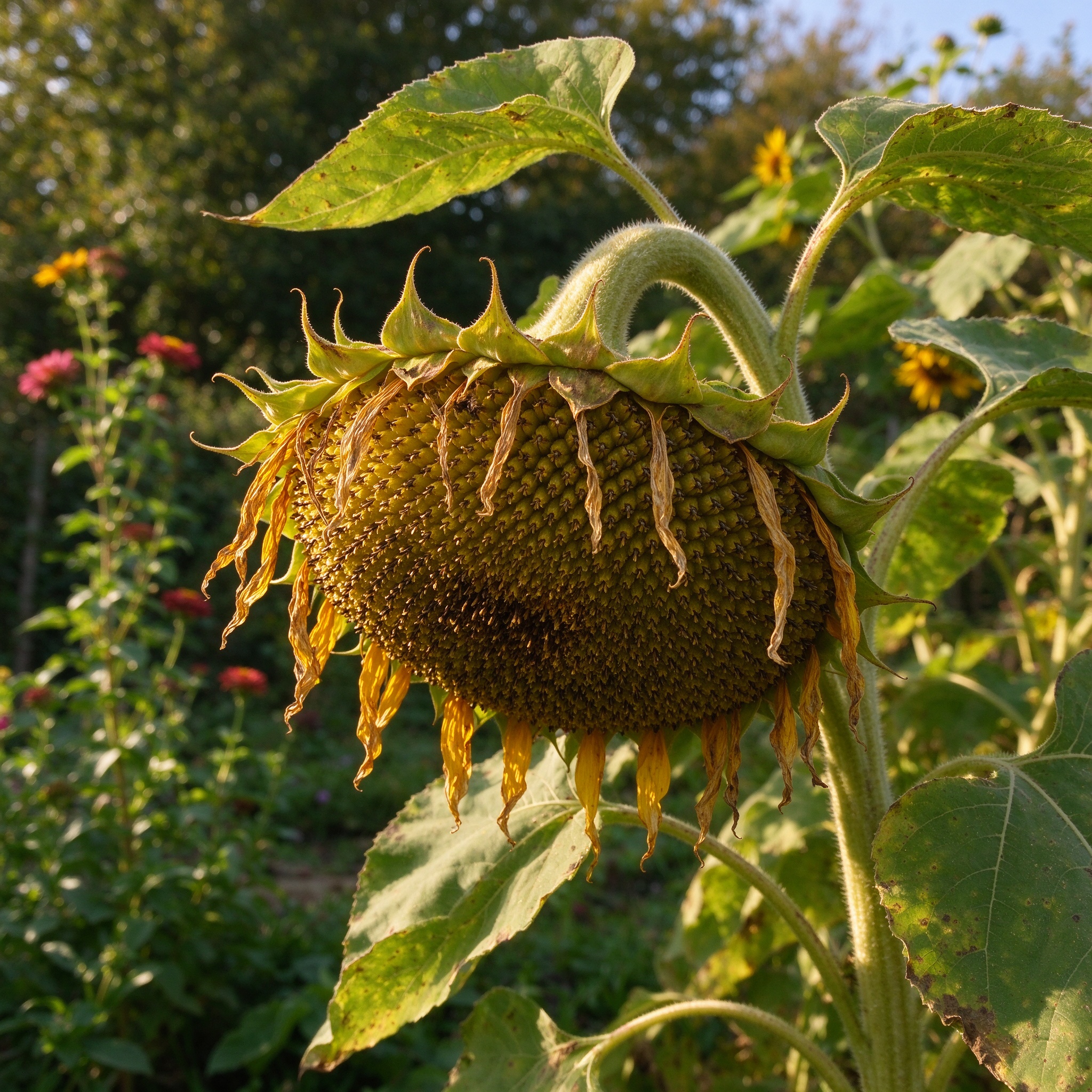
- •The common sunflower is a warm-season, fast-growing annual in the aster family, native to the southwestern United States and Mexico and grown around the world for its large daisy-like flower heads, edible seeds, oil, and ornamental value.
- •It carries a deep taproot and rough, coarse, hairy stems that grow 1.5 to 10 feet tall depending on the cultivar, with large, green, ovate to lanceolate, coarsely toothed, bristly leaves arranged alternately along the stalk.
- •Flower heads measure 3 to 6 inches across on garden varieties and up to 16 to 18 inches on giant breeding strains: a central disk of tightly packed dark brown to purplish florets surrounded by orangish-yellow ray petals, with modern hybrids offering red, mahogany, bronze, white, and bicolor forms.
- •Before opening, the unopened flower buds track the sun across the sky during the day, a behavior called heliotropism; mature heads face east and stay fixed.
- •Sunflowers bloom from July through October and are heavy nectar plants for bees, butterflies, and specialized native bees, while their ripened seeds are a favorite food of goldfinches, chickadees, squirrels, and other wildlife.
- •The species is grown in cottage, wildflower, cutting, and pollinator gardens, in meadows and along fences, and as a children's garden project; seeds are roasted for snacks, pressed for oil, or reserved for bird feeders.
- •Sunflowers self-seed readily and may volunteer around the planting the following spring.
📋 Quick Facts
Scientific Name: Helianthus annuus
Family: Asteraceae
Category: Flower
USDA Zones: Tender annual, zones 2–11; killed by frost.
Light:
- •Sunflowers demand full sun, six to eight hours of direct sunlight each day, and need long, warm summers to flower well.
- •Full sun keeps stems stout and heads upright; shaded plants stretch, lean toward the light, and produce weak stems that lodge and smaller, fewer flower heads.
- •The unopened buds follow the sun from east to west during the day and reset overnight, but once a head opens it settles facing east.
- •Give indoor-started seedlings the brightest window or grow lights immediately after emergence so they do not stretch before going outside.
Water:
- •Water sunflowers deeply and regularly during germination, establishment, and the bud-to-bloom period, applying about 1 to 2 inches of water per week and soaking the root zone rather than sprinkling lightly.
- •Once established, plants are moderately drought tolerant thanks to their long taproot, but prolonged dry spells during flowering reduce seed size and head size.
- •Water at the base of the stalk and avoid wetting the flower heads, which encourages rot and fungal spotting.
- •Tall plants in sandy soil need more frequent soaking than those in loam.
- •Do not let pots stand in saucers of water, and avoid overwatering heavy, poorly drained soil, which rots the taproot.
Temperature:
- •Sunflowers grow best between 70 and 85°F (21 to 29°C) and are not frost tolerant; seeds germinate in 7 to 14 days at soil temperatures of 70 to 75°F.
- •Cool soil below 55°F slows germination and invites rot, while temperatures above 90°F can pause flowering and wilt young plants until cooler weather returns.
- •In the garden they are grown as tender annuals across USDA zones 2 through 11, blooming from summer until the first fall frost; foliage and stalks blacken and collapse after a freeze.
- •In warm-winter zones they may self-sow, but the species is treated as an annual in all climates.
Soil:
- •Grow sunflowers in moist, well-drained loamy, sandy, or clay soil with a neutral to alkaline pH around 6.0 to 7.5.
- •They tolerate poor, dry, and compacted soils better than many garden flowers, but the long taproot needs loose ground: dig or till the bed about 2 feet deep and 3 feet across before sowing so roots can stretch without obstruction.
- •Amend heavy wet soil with compost and coarse sand to improve drainage; sandy beds benefit from finished compost to hold moisture around the roots.
- •The planting spot should not pool after rain, since standing water rots the taproot.
Harvest:
- •For cut flowers, cut the main stem just before the bud opens to encourage side blooms, harvesting early in the morning when the stems are turgid; strip leaves below the water line, recut at a 45-degree angle, and change the vase water daily.
- •For edible and bird seeds, leave the head on the stalk until the back of the flower turns brown, the foliage yellows, the petals wilt and drop, and the seeds look plump and somewhat loose.
- •Cut the head about 6 inches below the flower and bring it indoors to dry in a ventilated place for another two to three weeks before rubbing the seeds free.
- •Cover heads with cheesecloth or mesh while they mature outdoors to protect them from birds and squirrels.
- •Harvest before the first fall frost, and pull whole plants at season's end, since sunflowers are tender annuals killed by frost.
Common Problems: Birds and squirrels harvesting ripening seeds; powdery mildew, rust, and leaf spots on crowded foliage; caterpillars and sunflower moth larvae inside heads; aphids on shoot tips; slugs and snails on young seedlings; tall heads lodging in wind; root rot in waterlogged soil; leaves yellowing from overwatering or nutrient imbalance.
📅 When to Plant
- •Sow sunflower seeds directly into the garden after all danger of frost has passed and the soil has warmed to at least 50°F (10°C), ideally between 70 and 75°F (21 to 24°C) for fast, even germination.
- •Sunflowers dislike root disturbance, so direct sowing is strongly preferred over transplanting; in short-season areas you can start seeds in biodegradable peat or coir pots two to three weeks before the last frost and plant the whole pot without disturbing the taproot.
- •Plant seeds 1 to 1½ inches deep, about 6 inches apart in rows spaced about 30 inches apart; thin seedlings when they reach 6 inches tall to 12 to 18 inches apart for tall single-head varieties and 6 to 12 inches for dwarf branching types.
- •Succession-sow every five to six weeks through early summer to extend the bloom season, and choose a site sheltered from strong wind along a fence or building, since tall, top-heavy heads can topple in storms.
- •In the northern half of the United States and Canada this falls between April and mid-June; in the South, mid-March or early April works well.
🌱 Growing Stages
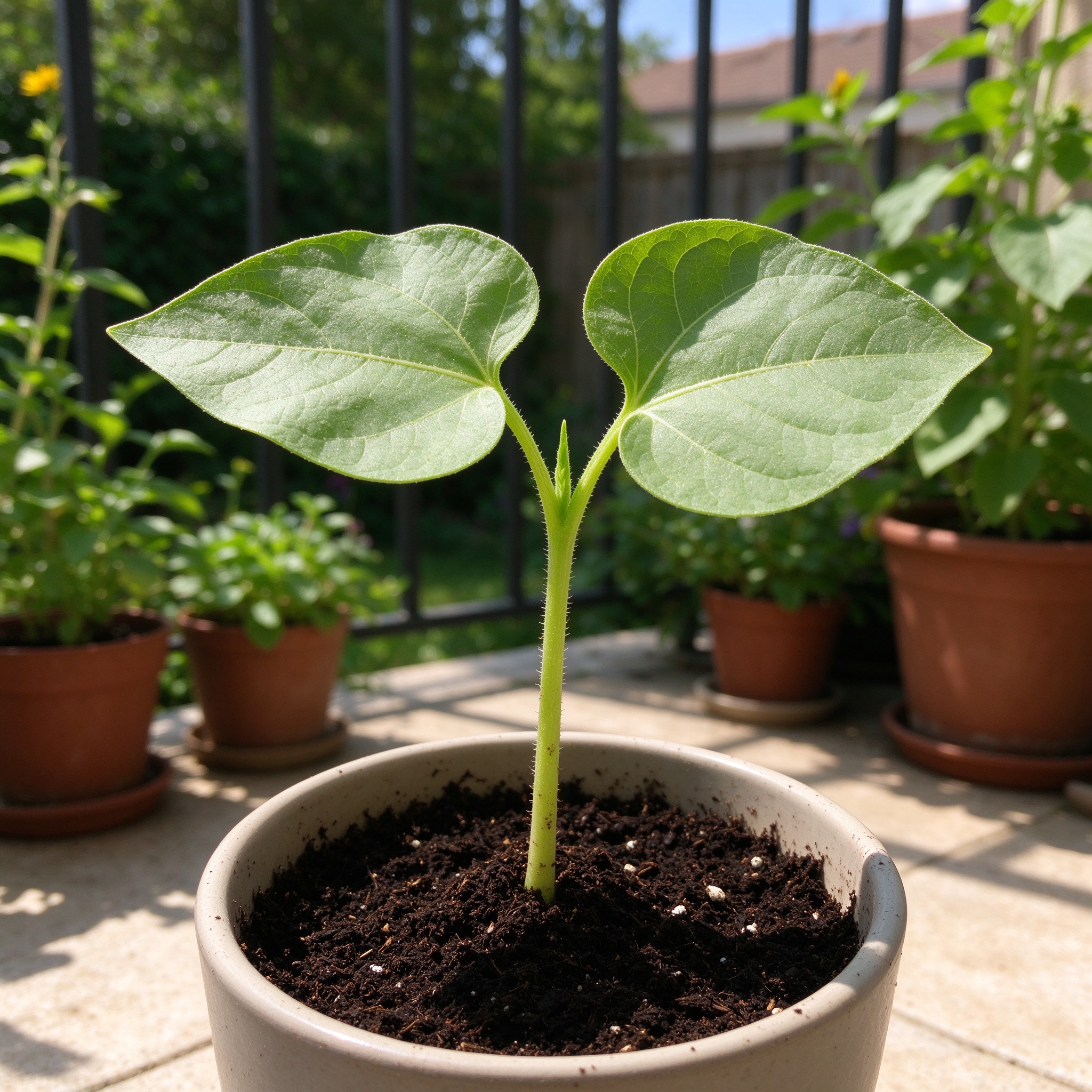 1
Germination
(7 to 14 days)- •At soil temperatures of 70 to 75°F the large seed swells, the root emerges downward into loose soil, and the two fleshy cotyledons push through the surface.
- •Keep the seedbed moist but not waterlogged; cool, wet soil below 55°F rots seed before sprouting.
- •The fast-developing taproot anchors the plant within the first two weeks.
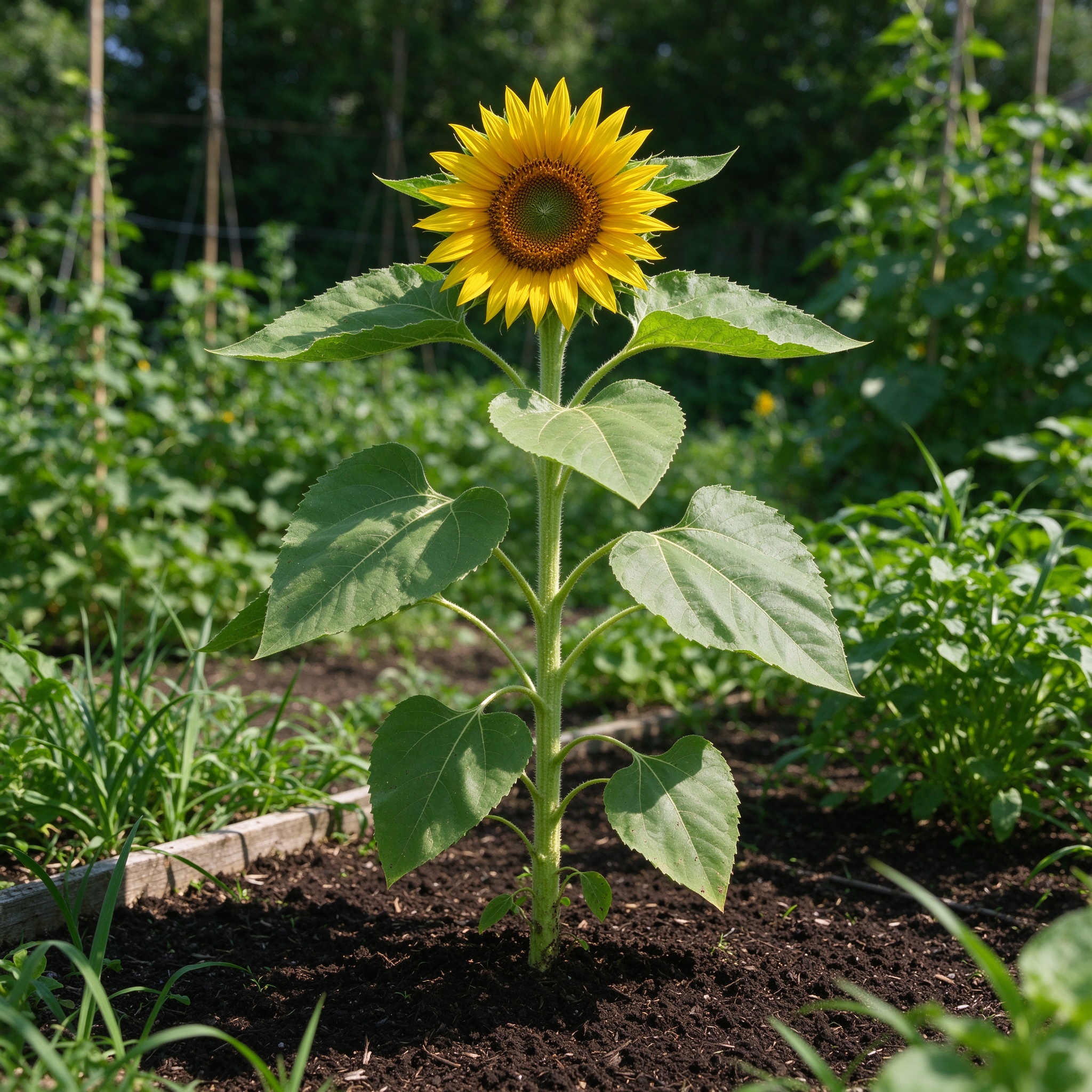 2
Seedling establishment
(3 to 4 weeks)- •The first true, serrated, hairy leaves replace the cotyledons while the taproot and fibrous feeder roots spread through the loosened soil.
- •This is the thinning window; crowded seedlings must be spaced to final distance to avoid weak stalks.
- •Protect young plants from slugs and keep them in full sun to stay compact and upright.
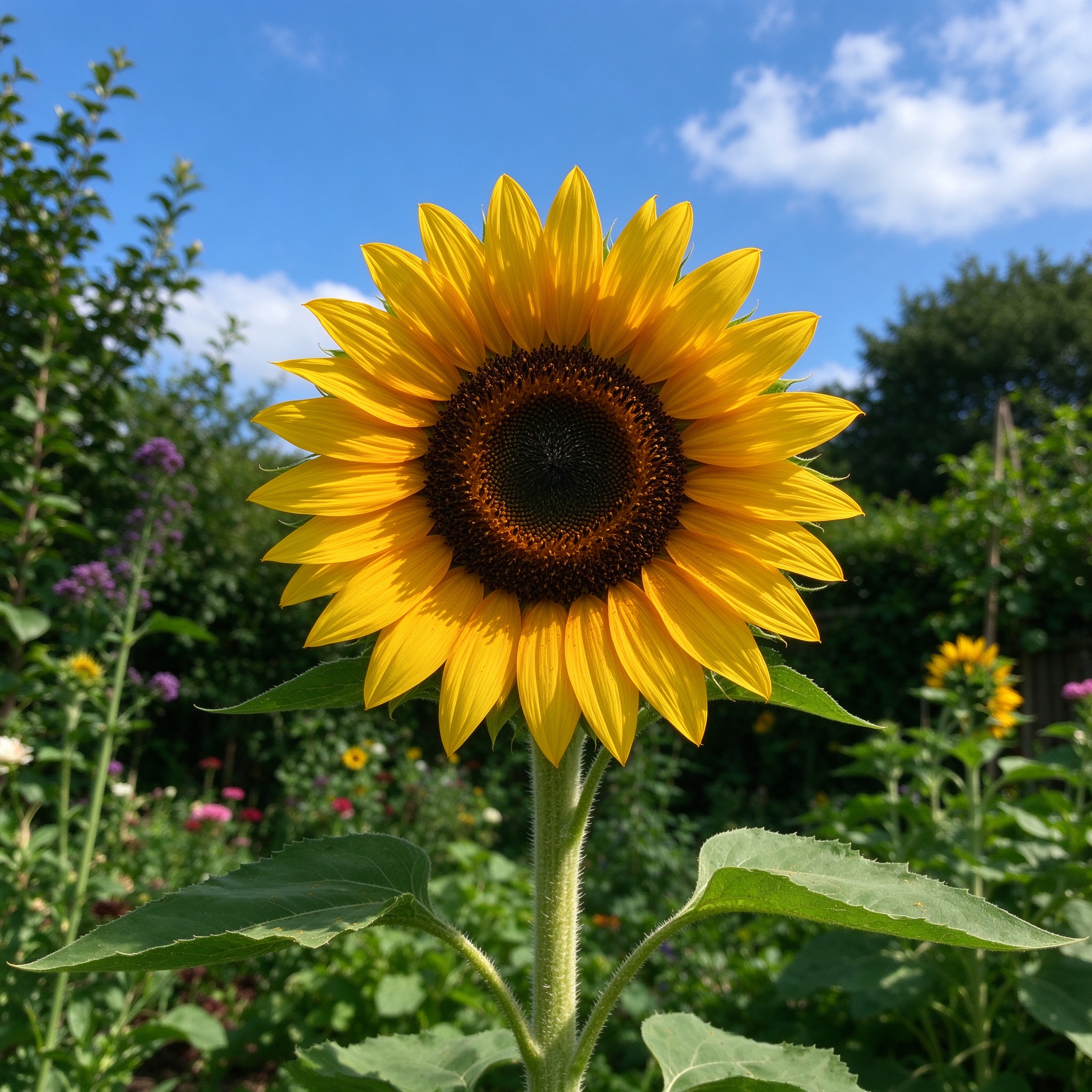 3
Vegetative growth and bud formation
(5 to 8 weeks)- •The stalk elongates rapidly, alternating large bristly leaves up the stem, and a terminal bud forms at the top; branching types also set side buds along the stalk.
- •This stage demands steady moisture and phosphorus-rich feeding, and tall varieties need staking as the stalk thickens.
- •Buds track the sun east to west each day before opening.
- 4
Bloom and seed ripening
(July through first fall frost)- •The head opens with golden or colored rays around the central disk, feeding pollinators through the bloom period.
- •After pollination, petals wilt and the disk ripens plump seeds while the back of the head turns brown.
- •Frost finally blackens the stalk and ends the annual cycle; saved seeds and self-sown volunteers restart it the following spring.
💧 Detailed Care Guide
☀️ Light Requirements
- •Sunflowers demand full sun, six to eight hours of direct sunlight each day, and need long, warm summers to flower well.
- •Full sun keeps stems stout and heads upright; shaded plants stretch, lean toward the light, and produce weak stems that lodge and smaller, fewer flower heads.
- •The unopened buds follow the sun from east to west during the day and reset overnight, but once a head opens it settles facing east.
- •Give indoor-started seedlings the brightest window or grow lights immediately after emergence so they do not stretch before going outside.
💧 Watering
- •Water sunflowers deeply and regularly during germination, establishment, and the bud-to-bloom period, applying about 1 to 2 inches of water per week and soaking the root zone rather than sprinkling lightly.
- •Once established, plants are moderately drought tolerant thanks to their long taproot, but prolonged dry spells during flowering reduce seed size and head size.
- •Water at the base of the stalk and avoid wetting the flower heads, which encourages rot and fungal spotting.
- •Tall plants in sandy soil need more frequent soaking than those in loam.
- •Do not let pots stand in saucers of water, and avoid overwatering heavy, poorly drained soil, which rots the taproot.
🌡️ Temperature
- •Sunflowers grow best between 70 and 85°F (21 to 29°C) and are not frost tolerant; seeds germinate in 7 to 14 days at soil temperatures of 70 to 75°F.
- •Cool soil below 55°F slows germination and invites rot, while temperatures above 90°F can pause flowering and wilt young plants until cooler weather returns.
- •In the garden they are grown as tender annuals across USDA zones 2 through 11, blooming from summer until the first fall frost; foliage and stalks blacken and collapse after a freeze.
- •In warm-winter zones they may self-sow, but the species is treated as an annual in all climates.
🌱 Soil & Fertilizer
Soil:
- •Grow sunflowers in moist, well-drained loamy, sandy, or clay soil with a neutral to alkaline pH around 6.0 to 7.5.
- •They tolerate poor, dry, and compacted soils better than many garden flowers, but the long taproot needs loose ground: dig or till the bed about 2 feet deep and 3 feet across before sowing so roots can stretch without obstruction.
- •Amend heavy wet soil with compost and coarse sand to improve drainage; sandy beds benefit from finished compost to hold moisture around the roots.
- •The planting spot should not pool after rain, since standing water rots the taproot.
Fertilizer:
- •Sunflowers are moderate to heavy feeders, especially the tall giant and branching strains.
- •Work compost, aged manure, or a slow-release granular fertilizer about 8 inches into the soil at planting time to support root and stalk development; a light balanced feed at sowing encourages strong roots that resist wind lodging.
- •Avoid high-nitrogen fertilizer, which grows tall leafy stalks at the expense of flower heads and produces soft stems that break easily.
- •Once buds swell, side-dress with a phosphorus- and potassium-rich feed such as a bloom booster or compost tea to support large disks and plump seeds.
- •Container sunflowers need a dilute balanced liquid feed every two to three weeks during growth, since nutrients leach from pots with each watering.
- •Always water fertilizer into the root zone rather than onto the stalk.
📝 Step-by-Step Planting Guide
- 1
Choose a sheltered, sunny site and prepare deep soil
- •Pick a spot with six to eight hours of direct sun, sheltered from strong wind by a fence, building, or hedge so tall heads do not topple in storms.
- •Till or dig the bed about 2 feet deep to accommodate the taproot, remove stones and perennial weed roots, and work in compost or aged manure.
- •Rake the surface level and smooth; in heavy clay, blend in coarse sand and compost to open drainage.
- •Avoid low spots that pool after rain, and keep the site away from overhanging tree shade.
- 2
Sow seeds directly at the correct depth and spacing
- •After frost and once soil reaches 50°F (10°C) or warmer, plant seeds 1 to 1½ inches deep, about 6 inches apart in rows 30 inches apart.
- •Cover with fine soil and water gently so seeds are not washed aside; germination takes 7 to 14 days at 70 to 75°F.
- •For succession bloom, sow a new row every five to six weeks through early summer.
- •If starting indoors, use biodegradable pots two to three weeks before the last frost and plant the whole pot outside to avoid disturbing the taproot; keep seedlings under bright light from day one.
- 3
Thin seedlings to final spacing
- •When seedlings are about 6 inches tall, thin them to the final spacing: 12 to 18 inches for tall giant and branching varieties, 6 to 12 inches for dwarf patio types.
- •Pull or snip weak, pale, or crowded seedlings at soil level; overcrowding produces weak, leaning stalks, small heads, and fungal disease in the canopy.
- •Single-headed giants need the most room; branching types can stand slightly closer to create a dense cutting row.
- 4
Water deeply and establish the roots
- •Keep the soil evenly moist during germination and the first four weeks, soaking the root zone rather than sprinkling the surface.
- •After establishment, water deeply about 1 to 2 inches per week during bud and bloom, especially in sandy soil.
- •Water at the base of the stalk and keep flower heads dry to prevent rot.
- •Apply a 2- to 3-inch organic mulch around the stalk to conserve moisture and suppress weeds, leaving a gap around the stem to avoid collar rot.
- •Stake tall giants once heads begin to swell, using a tall wooden or bamboo support tied loosely with soft twine.
- 5
Feed through the bud and bloom stage
- •If the soil was amended at planting, most sunflowers need little extra food; tall strains that show pale, slow growth can receive a phosphorus- and potassium-rich side dressing such as a bloom booster or compost tea when buds swell.
- •Avoid heavy nitrogen, which pushes leaves and stalks instead of heads. Container plants get a dilute balanced liquid feed every two to three weeks.
- •Monitor shoot tips for aphids and rinse colonies off with water, and check young seedlings at night for slug and snail damage.
- 6
Protect mature heads and harvest seeds
- •As heads ripen in late summer or fall, wrap them loosely in cheesecloth or fine mesh secured with a rubber band to keep birds and squirrels from harvesting first.
- •When the back of the head turns brown, the petals wilt and drop, and seeds are plump and loose, cut the head about 6 inches below it and dry it indoors in an airy place for two to three weeks.
- •Rub or brush the seeds free of the disk, winnow away chaff, and store in a cool, dry place for roasting, planting, or bird feeders.
- •Pull and compost spent stalks after frost.
🌱 Recommended Varieties
Dwarf multi-flowered sunflowers for pots and borders
- •Compact strains 1 to 3 feet tall produce several branching stems and smaller, numerous heads that suit containers, front borders, and children's gardens.
- •'Big Smile' grows 1 to 2 feet with 3- to 6-inch golden heads on black disks; 'Suncredible Yellow' and Sunfinity® Double Yellow reach 32 to 40 inches, branch freely, rebloom all season, and show good disease resistance.
- •These types need no staking in most settings and are spaced 6 to 12 inches apart, making them the best choice for patios and window boxes.
Tall giant sunflowers for record heads and seed
- •Single-headed breeding strains grow 8 to 14 feet on thick, sturdy stalks and carry one enormous main head.
- •'Mongolian Giant' reaches 12 to 14 feet with 16- to 18-inch golden heads; 'Russian Giant' grows about 10 feet with a dark-centered main disk; 'Aztec Sun' stays 3 to 4 feet with golden rays and yellow disks.
- •Giants need deep loose soil, a sheltered windy site, and a strong stake once heads swell; space them 18 inches apart and harvest heads generously for roasted snacks or bird seed.
Colored and double sunflowers for cutting
- •Bred for the cutting garden, these branching strains carry unusual colors and forms on 4- to 5-foot plants.
- •'Velvet Queen' bears velvet-red petals around chocolate disks; 'Pastiche' is multi-stemmed with bicolor and tricolor heads in deep yellow, orange-red, and mahogany; 'Teddy Bear' grows 2 to 3 feet with fluffy double pompon-like golden heads.
- •'Moonwalker' reaches 4 to 5 feet with yellow rays and dark chocolate disks, and these varieties mix well with zinnias and rudbeckias in summer bouquets.
🪴 Growing in Containers
- Choose dwarf varieties and a deep pot:
- •Only dwarf branching types 1 to 3 feet tall suit containers; giant 10-foot sunflowers cannot develop a proper taproot in a pot.
- •Use a deep 12- to 16-inch pot with several drainage holes, since the taproot needs vertical room, and place it on pot feet so water drains freely.
- •One dwarf plant per 12-inch pot, or three branching plants in a 16-inch tub, gives a full summer display on a sunny patio or balcony.
- Plant in a rich, free-draining mix:
- •Fill the pot with a premium potting mix blended with compost and perlite for drainage; garden soil compacts and waterlogs in containers.
- •Sow seeds directly in the pot 1 inch deep and thin to the strongest seedlings, or transplant a biodegradable pot start without disturbing roots.
- •Place the container in full sun on a patio, deck, or railing where it receives six to eight hours of direct light; shade makes potted sunflowers leggy and prone to lodging.
- Water, feed, and stake patio sunflowers:
- •Pots dry fast in warm weather: check daily and water when the top inch of mix feels dry, soaking until water drains through, never letting the pot sit in a saucer of water.
- •Feed with a dilute balanced liquid fertilizer every two to three weeks during growth, switching to a phosphorus-rich bloom feed as buds swell.
- •Even dwarf types may need a small stake once heads develop; tie loosely with soft twine and remove lower leaves that touch the soil to improve airflow.
✂️ Pruning & Maintenance
- ✓
Pinch branching types for more heads
- •On multi-stemmed dwarf and cutting varieties, pinch out the terminal growing tip when the plant reaches about 2 feet tall to force side branches; this produces a bushier plant with more flower heads rather than one tall single stem.
- •Do not pinch single-headed giant strains, which are bred to produce one large main disk at the top of the stalk.
- ✓
Deadhead side blooms through summer
- •On branching sunflowers, remove spent side heads as they fade to redirect energy into remaining buds and side blooms, extending the cutting season.
- •Cut faded heads back to the next leaf node or side branch.
- •Single-headed giants are not deadheaded for repeat bloom; after the main head finishes, the stalk is pulled at season's end.
- ✓
Support tall stalks and clean up at season's end
- •Stake giant varieties once heads swell, tying the stalk loosely to a tall wooden or bamboo support so wind and rain do not lodge the plant.
- •Remove yellowed lower leaves that touch the soil to reduce disease pressure.
- •After frost blackens the stalk, pull the whole plant, compost healthy stalks, and leave only the saved seed heads and any self-sown volunteers for next spring.
🐛 Pest & Disease Control
Common Pests
Birds and squirrels
Symptoms: Ripening seeds are stripped from the disk by goldfinches, chickadees, and squirrels, often before the head is fully mature; chewed seed coats and scattered chaff appear on the ground below the plant.Control:- •Wrap mature heads in cheesecloth or fine mesh secured with a rubber band while seeds ripen, or place a mesh bag over the head after petals fall.
- •Scare devices such as reflective tape or motion-activated sprinklers help in open yards; harvest heads slightly early and finish drying them indoors rather than competing with wildlife outdoors.
Sunflower moth and caterpillars
Symptoms:- •Tiny larvae tunnel inside the flower head, feeding on developing seeds and leaving frass and webbing among the disk florets; heads may become deformed or drop seed prematurely.
- •Caterpillars also chew holes in young leaves along the stalk.
Control:- •Inspect heads regularly from bud stage onward; remove visible larvae by hand and drop them into soapy water.
- •Maintain good air circulation around plants and remove crop debris at season's end to reduce overwintering sites.
- •Labeled Bt (Bacillus thuringiensis) sprays control leaf-feeding caterpillars before they enter the head; avoid spraying open blooms that attract pollinators.
Aphids
Symptoms: Dense green or black colonies cluster on shoot tips and the undersides of young leaves, curling growth and coating foliage with sticky honeydew that later grows black sooty mold.Control:- •Knock colonies off with a strong jet of water for two or three days running, and encourage lady beetles and lacewings that prey on aphids.
- •Heavy infestations respond to insecticidal soap or horticultural oil applied in cool weather; avoid high-nitrogen fertilizer that produces the soft shoot growth aphids prefer.
Slugs and snails
Symptoms: Irregular holes in young cotyledons and low leaves, with a shiny silvery trail across the soil and foliage; damage appears overnight on newly emerged seedlings in damp spring weather.Control:- •Hand-pick at dusk or dawn, trap under boards or inverted pots with beer bait, and ring vulnerable seedlings with diatomaceous earth or iron-phosphate slug bait.
- •Improve drainage and air circulation, remove damp leaf litter that shelters slugs by day, and keep mulch from resting directly against the stalk base.
Common Diseases
Powdery mildew
Symptoms: A white to grayish powdery coating spreads over upper leaves and stems, most often on crowded plants in humid weather; leaves curl, yellow, and drop early while heads continue to develop.Control:- •Thin plants to the recommended spacing for airflow, grow in full sun, and water at soil level rather than overhead.
- •Remove heavily infected leaves; sulfur or potassium-bicarbonate fungicides at the first sign slow spread.
- •Dwarf disease-resistant strains such as the Suncredible and Sunfinity series suffer less than older open-pollinated types.
Rust
Symptoms: Orange-brown pustules break out on the undersides of leaves, followed by yellow to brown spotting on the upper surface; heavily infected leaves wither and drop, weakening the stalk and reducing head size.Control:- •Rake and destroy infected foliage at season's end rather than composting it, avoid wetting leaves during watering, and space plants for air movement.
- •Remove and discard severely affected leaves during the season; labeled fungicides protect healthy foliage in humid regions, and rotating the planting bed each year reduces soil-borne spores.
Leaf spot
Symptoms: Brown to dark circular or angular spots develop on leaves, often with a yellow halo, coalescing into blighted patches that cause leaves to yellow and drop; spread by splashing rain and overhead watering in wet summers.Control:- •Water at the base of the stalk, keep foliage dry, and rake up fallen leaves that carry overwintering spores.
- •Copper or sulfur fungicides protect healthy leaves after prolonged rain; avoid working among wet plants, which spreads spores by contact, and rotate sunflowers with non-aster crops the following year.
Root rot and damping-off
Symptoms: Seedlings collapse at the soil line in cold, waterlogged seedbeds; established plants stunt, yellow, and wilt without recovering, with a rotted taproot in heavy, poorly drained soil that stays saturated after rain.Control:- •Sow only after the soil warms, in loose, drained ground or raised beds, and never overwater the taproot zone.
- •Plant at the correct 1- to 1½-inch depth rather than burying seed deep; discard affected seedlings rather than thinning them back.
- •Improve clay soil with compost and sand before the next sowing, and avoid pooling water around the stalk base.
🍅 When to Harvest
- •For cut flowers, cut the main stem just before the bud opens to encourage side blooms, harvesting early in the morning when the stems are turgid; strip leaves below the water line, recut at a 45-degree angle, and change the vase water daily.
- •For edible and bird seeds, leave the head on the stalk until the back of the flower turns brown, the foliage yellows, the petals wilt and drop, and the seeds look plump and somewhat loose.
- •Cut the head about 6 inches below the flower and bring it indoors to dry in a ventilated place for another two to three weeks before rubbing the seeds free.
- •Cover heads with cheesecloth or mesh while they mature outdoors to protect them from birds and squirrels.
- •Harvest before the first fall frost, and pull whole plants at season's end, since sunflowers are tender annuals killed by frost.
❓ Frequently Asked Questions
- 1
How to grow sunflowers from seeds?
- •Sow sunflower seeds directly in the garden after the last frost, once soil warms to at least 50°F (10°C) and ideally 70 to 75°F (21 to 24°C).
- •Plant seeds 1 to 1½ inches deep, about 6 inches apart in rows 30 inches apart, cover with fine soil, and water gently; germination takes 7 to 14 days.
- •Thin seedlings at 6 inches tall to 12 to 18 inches for tall giants and branching types, or 6 to 12 inches for dwarf patio varieties.
- •Sunflowers dislike root disturbance, so direct sowing is preferred; if you start indoors, use biodegradable pots two to three weeks before the last frost and plant the whole pot outside.
- •Choose a wind-sheltered, full-sun site, stake tall varieties, and succession-sow every five to six weeks through early summer for continuous bloom.
- •Keep the soil moist during germination and bud stage, then water deeply about 1 to 2 inches per week; avoid high-nitrogen fertilizer that grows leaves instead of heads.
- 2
How to save sunflower seeds?
- •Leave the flower head on the stalk until the back turns brown, the foliage yellows, the petals wilt and drop, and the seeds look plump and somewhat loose.
- •Wrap the head in cheesecloth or mesh before this stage to keep birds and squirrels from harvesting first.
- •Cut the head about 6 inches below the flower and dry it indoors in a ventilated place for two to three weeks.
- •Rub your hand over the disk or use a fork to brush the seeds free, winnow away the chaff, and rinse edible seeds before drying them for several hours or overnight.
- •For roasted snacks, choose large, plump edible-seed cultivars; smaller striped seeds are reserved for bird feeders.
- •Store saved seed in an airtight container in a cool, dry, dark place for planting next spring or for feeding birds in winter.
- •Open-pollinated varieties come true from saved seed; hybrid cultivars may not reproduce the parent's size and color.
- 3
How tall do sunflowers grow and do they need staking?
- •Height depends entirely on the cultivar: dwarf patio types reach 1 to 3 feet, branching cut-flower strains grow 4 to 5 feet, and single-headed giants reach 8 to 14 feet with heads up to 16 to 18 inches across.
- •Tall varieties in exposed, windy sites usually need staking once heads swell, because the top-heavy disks can lodge in storms; tie the stalk loosely to a tall wooden or bamboo support and choose a site sheltered by a fence or building.
- •Dwarf branching types generally stand without support.
- •Spacing, deep loose soil, and steady moisture all produce sturdier stalks, while shade and overcrowding make plants lean and weak.
- 4
Why are my sunflowers yellowing and not blooming?
- •The most common causes are overwatering or poor drainage, too much nitrogen fertilizer, too little sun, and overcrowding.
- •Yellow leaves on a stalk that stands in wet soil signal taproot rot; move future sowings to drained ground or raised beds and water deeply rather than constantly.
- •High-nitrogen feeds produce tall leafy stalks with small or no heads, so switch to a phosphorus- and potassium-rich bloom feed at bud stage.
- •Shaded plants stretch and lean toward light and flower poorly, and crowded seedlings produce weak stalks and a humid, disease-prone canopy that should be thinned to the recommended spacing.
- •If leaves yellow while growth slows, check for aphids on shoot tips and rust or mildew on the foliage, and remove infected leaves to slow spread.
Source:
NC State Extension Gardener Plant Toolbox — Helianthus annuus — https://plants.ces.ncsu.edu/images/plants/helianthus-annuus/
NC State Extension Gardener Plant Toolbox — Insects and Diseases — https://plants.ces.ncsu.edu/images/plants/helianthus-annuus/
The Old Farmer's Almanac — Sunflowers: Planting, Growing, and Caring — https://www.almanac.com/plant/sunflowers
ASPCA — Do You Know Which Flowers and Plants Are Toxic to Pets? — https://www.aspca.org/news/do-you-know-which-flowers-and-plants-are-toxic-pets-our-experts-explain
Photo credit: NC State Extension
Images courtesy of NC State Extension under CC BY license. Thank you to the photographers who make these educational images available.
License: CC BY-NC 2.0 / CC BY 4.0