
How to Grow Marigold: Complete Guide
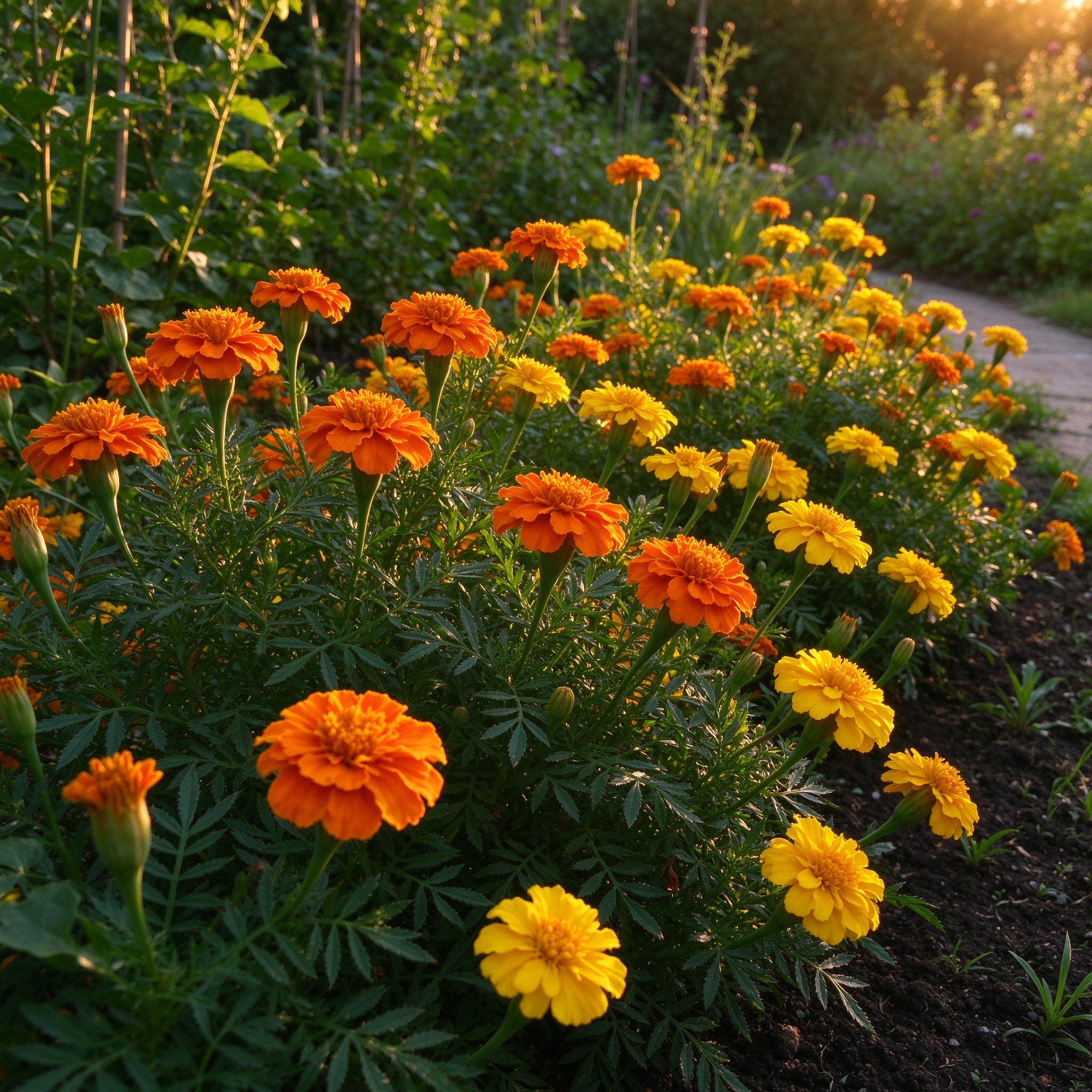
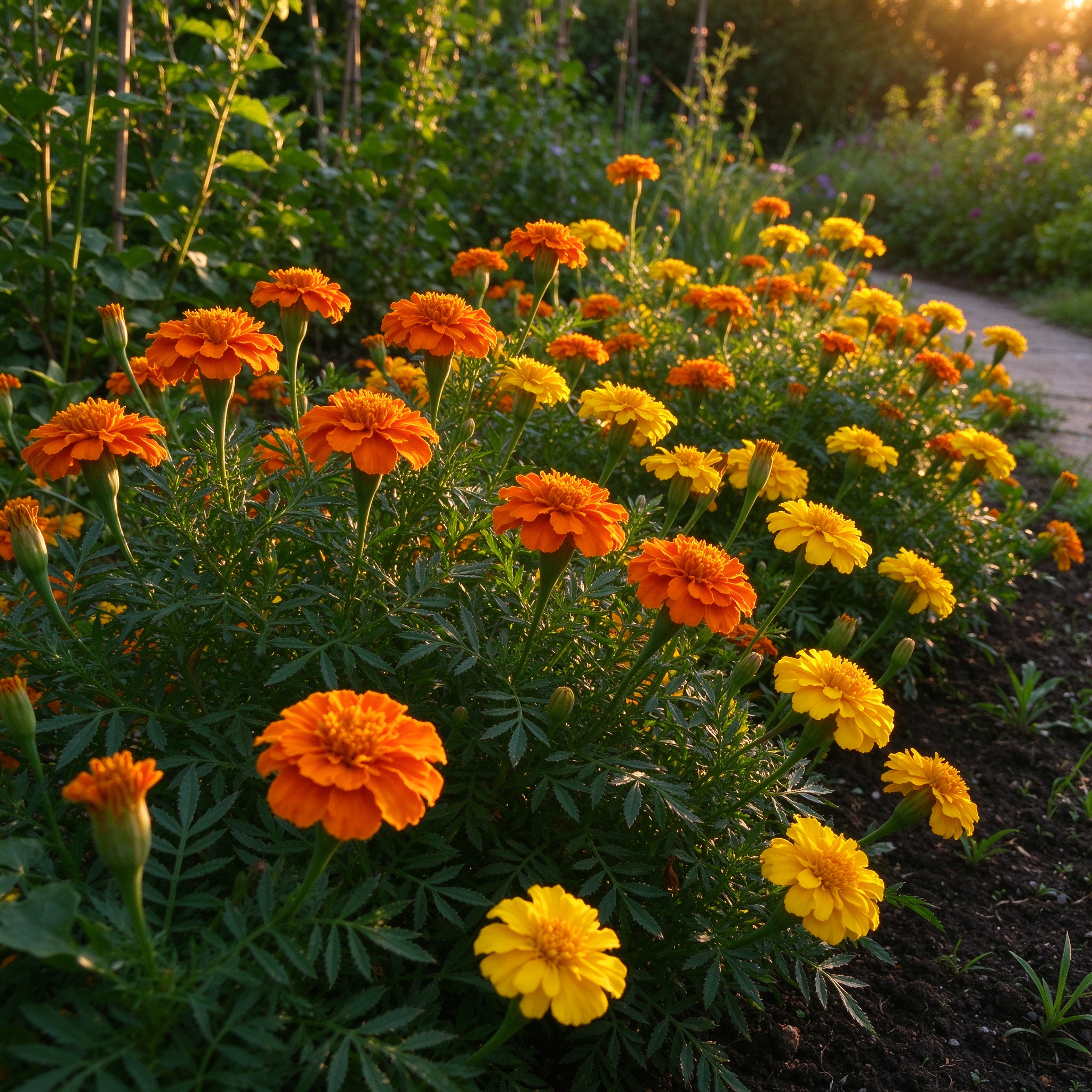
- •Marigolds are fast-growing, free-flowering warm-season annuals in the aster family, native to Mexico and Central and South America and grown around the world as bedding, edging, container, and cutting flowers.
- •The genus Tagetes includes three garden groups: compact French marigolds (T.
- •patula), which usually reach 6 to 12 inches and form neat mounds covered in small crested or bicolor blooms; tall African or Aztec marigolds (T.
- •erecta), which grow 1 to 3 feet and bear large, round, pompon-like flower heads up to 3 or 4 inches across in shades of yellow and orange; and fine-leaved signet marigolds (T.
- •tenuifolia), which reach 12 to 18 inches, carry single daisy-like blooms, and have a lemony foliage scent.
- •The pinnately divided, aromatic leaves release a sharp, spicy fragrance when crushed, and the plants carry a reputation as companion plants whose root exudates suppress certain soil nematodes.
- •Flower colors run from cream and lemon through gold, orange, rust, and mahogany-red, with many bicolor and crested forms.
- •Marigolds bloom steadily from early summer until the first hard frost, tolerate heat and poor soil, and are among the easiest annuals to grow from seed.
- •The petals of most marigolds are edible once the bitter white base at the petal is removed, although they should not be eaten in large amounts.
- •Do not confuse Tagetes marigolds with pot marigold (Calendula officinalis), a different genus with separate care and toxicity profiles.
📋 Quick Facts
- •Marigolds demand full sun, at least 6 to 8 hours of direct sunlight each day.
- •Full sun keeps the plants compact, strongly branched, and heavily flowered; plants grown in partial shade stretch toward the light, develop long weak stems that flop, and produce far fewer blooms with open, sparse centers.
- •In very hot southern gardens, a little afternoon shade can extend flower life, but six hours or more of morning and midday sun remains the target.
- •Indoor seedlings need the brightest window you have or grow lights held about 2 inches above the canopy for 14 to 16 hours a day; weak indoor light for even a few extra days produces leggy, pale seedlings that recover poorly after transplanting.
- •Water newly sown beds and transplants consistently until the plants establish, keeping the surface moist but not saturated.
- •Once established, marigolds are moderately drought tolerant and prefer the top inch of soil to dry between waterings; give them about 1 inch of water per week, more during sustained heat waves or when grown in pots.
- •Always water at the base of the plant rather than overhead: wet foliage in still air invites powdery mildew and botrytis, and overhead spray washes seeds out of freshly sown rows.
- •Avoid letting pots sit in standing water, which rots the shallow fibrous roots.
- •A 1- to 2-inch layer of shredded bark or other organic mulch around, but not against, the stems conserves moisture, suppresses weeds, and keeps the root zone cooler in summer heat.
- •Marigolds are warm-season plants that germinate best in soil held at 70 to 75°F (21 to 24°C) and grow vigorously between 65 and 85°F (18 to 29°C).
- •Germination slows sharply below 62°F and stalls under 55°F, so cool spring soil is the most common reason seeds fail to sprout.
- •Seedlings and mature plants are killed by frost: temperatures below 32°F (0°C) blacken the foliage and end the season.
- •In the garden marigolds are grown as tender annuals across USDA zones 2 through 11, blooming through summer heat and continuing until the first hard frost.
- •In mild winter climates of zones 9 to 11 they may behave briefly as short-lived perennials or self-sow, but summer heat and humidity usually finish them off, and in cold zones they are purely annuals.
- •Marigolds tolerate a wide range of soils and actually flower best in average, lean-to-modestly fertile ground.
- •They need sharply drained loam, sandy loam, or clay amended with compost and coarse sand, with a neutral pH around 6.0 to 7.0.
- •Heavy, compacted clay that stays saturated after rain rots the shallow roots; in such beds, build raised rows or work in compost, aged manure, and horticultural sand to open the structure.
- •Very rich, high-organic or heavily fertilized soil pushes lush soft foliage at the expense of flowers.
- •For containers, use a premium potting mix blended with perlite or pine bark fines; garden soil compacted in pots holds too much water and deprives roots of air.
- •For cut flowers, pick marigolds early in the morning when the stems are turgid and the flower heads are half to three-quarters open; African marigolds last seven to ten days in a vase.
- •Remove the lower leaves that would sit below the water line, recut the stem at a 45-degree angle, and place the stems immediately in room-temperature water.
- •To save seed, allow three to five flower heads per plant to mature fully on the stalk: petals fade to brown, the center disk hardens and darkens to chocolate brown, and the slender black achenes develop inside the dry head.
- •Cut these mature heads before the first hard frost and bring them indoors to finish drying in a shaded, ventilated place.
- •Remove spent blooms through the season to keep the plants producing; leave the seed heads you intend to save untouched while they ripen.
- •Pull whole plants at season's end after frost blackens the foliage, since marigolds are tender annuals that do not overwinter.
⚠️ Pet Safety Warning
This plant is toxic to both cats and dogs.
- •NC State Extension classifies Tagetes as a low-severity poisonous plant: foliage and sap contain phototoxic thiophene derivatives and aromatic essential oils that can cause contact dermatitis or a painful skin rash on sensitive skin, and eating the plant in quantity may trigger mild gastrointestinal upset such as drooling, vomiting, or diarrhea.
- •Keep grazing cats and dogs away from marigolds and rinse the skin after handling crushed stems; if a pet eats a substantial amount or shows symptoms, contact a veterinarian.
- •Note this refers to true Tagetes marigolds; pot marigold (Calendula officinalis) is a separate, non-toxic plant.
📅 When to Plant
- •Sow marigold seeds directly outdoors after all danger of frost has passed and the soil has warmed to at least 65°F (18°C), typically one to two weeks after your average last spring frost date.
- •Direct sowing is preferred because marigolds germinate quickly and transplant with only minor shock.
- •For earlier bloom in short-season gardens, start French marigold seeds indoors 4 to 6 weeks before the last frost and African marigold seeds 6 to 8 weeks before it, in a seed-starting mix at 70 to 75°F (21 to 24°C).
- •Harden indoor seedlings off for 5 to 7 days by moving them into a sheltered, sunny spot for a few hours each day, increasing exposure until they stay out overnight, then transplant after frost when night temperatures stay above 50°F (10°C).
- •Plant at the same depth the seedlings grew in their cells; marigolds do not benefit from deep burying the way tomatoes do.
- •Space French and signet types 6 to 10 inches apart and African types 10 to 12 inches apart to allow air circulation around the mature mound.
- •You can succession-sow every two to three weeks through early summer to keep a continuous supply of fresh blooms for the cutting garden.
🌱 Growing Stages
 1
Germination
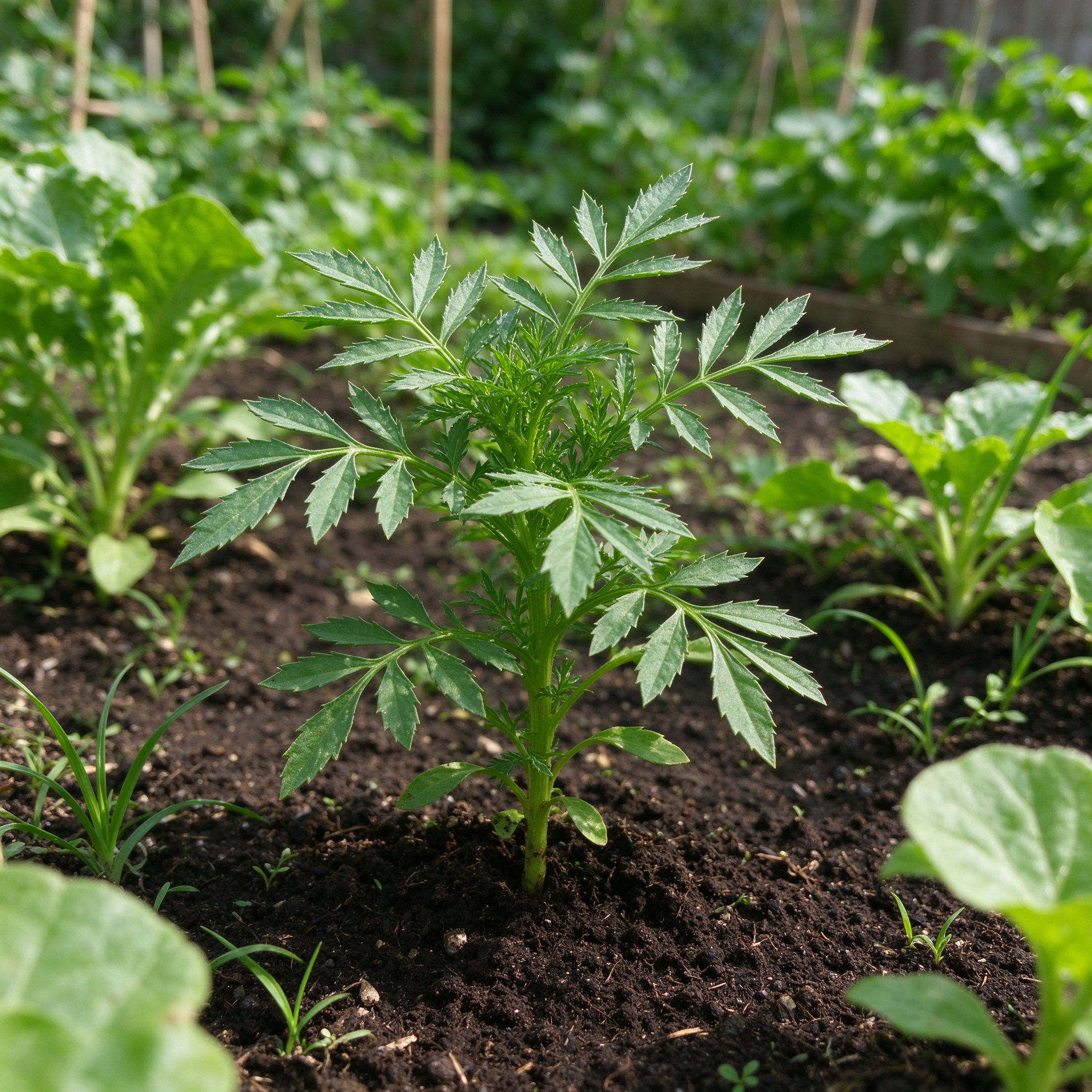
(5 to 14 days)- •At soil temperatures of 70 to 75°F the root emerges first, then the two oval cotyledons push through the soil surface.
- •Keep the mix evenly moist but never soggy; cold wet soil at this stage causes damping-off and rot.
- •Marigold seeds do not need light to sprout, but as soon as emergence begins, move seedlings into full light or under grow lights to prevent stretching.
 2
Seedling establishment
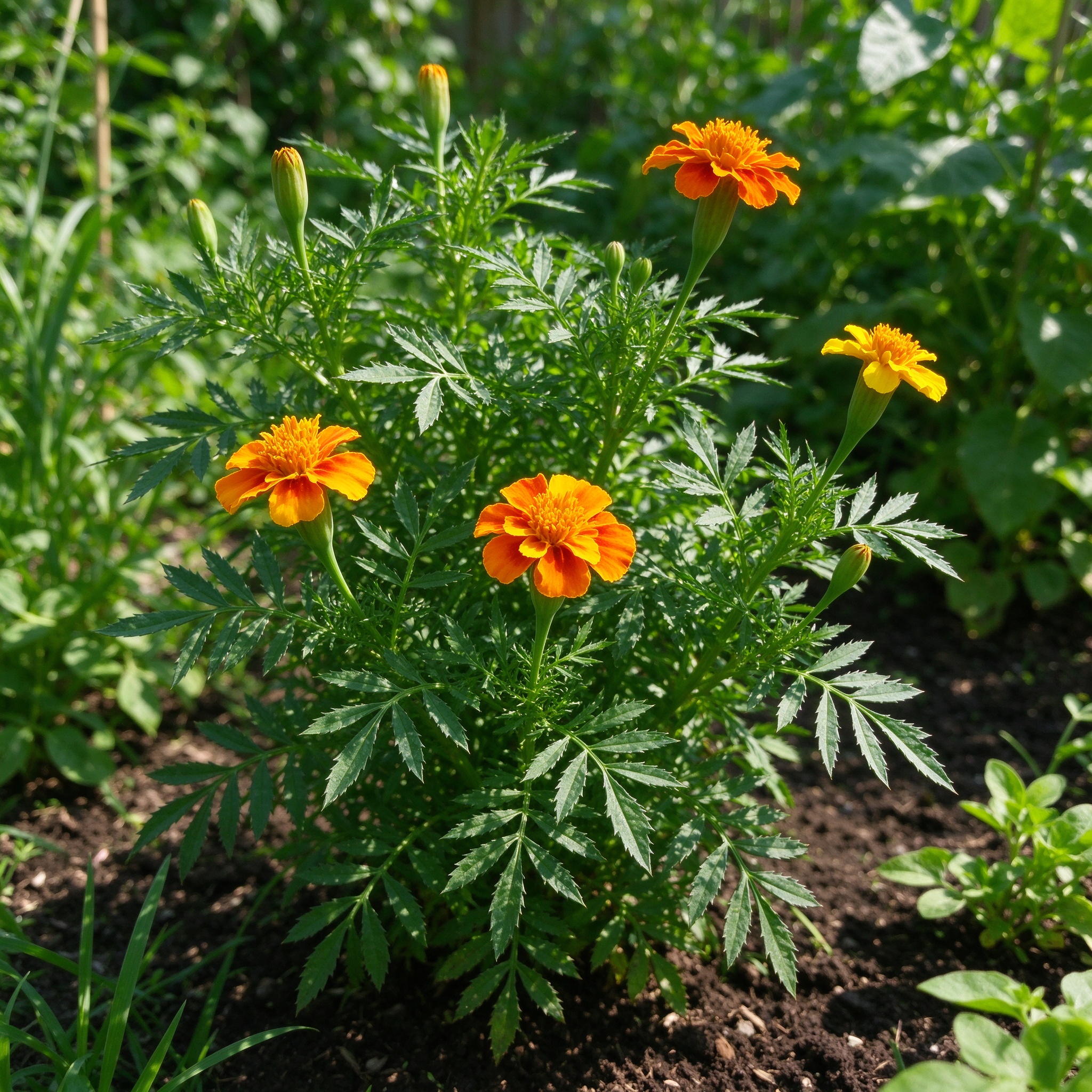
(2 to 4 weeks)- •The first pair of true, aromatic, divided leaves replaces the round cotyledons while the fibrous root system spreads through the upper soil.
- •Thin or transplant during this window, water evenly, and protect tender seedlings from slugs and cold nights.
- •Avoid high-nitrogen feeds, which push the soft, leggy growth aphids prefer.
 3
Vegetative growth and first bloom
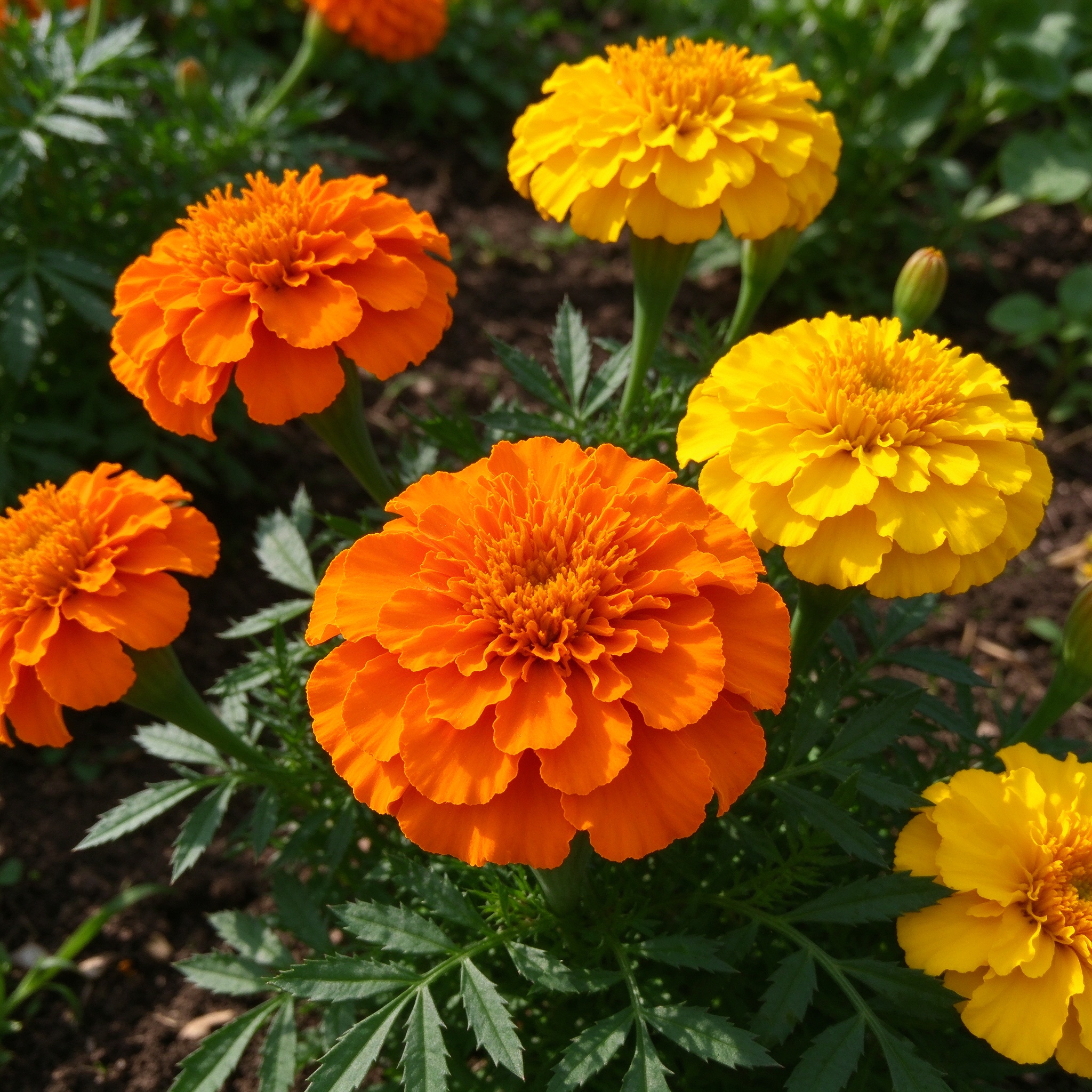
(4 to 6 weeks after emergence)- •The plant branches outward and upward, building the mound that supports summer bloom.
- •Pinching the first terminal bud on young plants delays bloom by a week or two but produces a bushier, more branched plant with more flowers overall.
- •First buds swell and open around six to eight weeks after sowing, earlier for French and signet types than for tall African marigolds.
 4
Peak bloom and seed set
(Summer through first frost)- •Regular deadhead flushes successive waves of flowers from mid-summer to fall.
- •Unheaded flowers form seed heads that mature from green to brown; birds feed on the ripe achenes, and open-pollinated types may self-sow around the bed.
- •Plants finally collapse when frost blackens the foliage, ending the annual cycle and leaving saved seed to start the next season's planting.
💧 Detailed Care Guide
☀️ Light Requirements
- •Marigolds demand full sun, at least 6 to 8 hours of direct sunlight each day.
- •Full sun keeps the plants compact, strongly branched, and heavily flowered; plants grown in partial shade stretch toward the light, develop long weak stems that flop, and produce far fewer blooms with open, sparse centers.
- •In very hot southern gardens, a little afternoon shade can extend flower life, but six hours or more of morning and midday sun remains the target.
- •Indoor seedlings need the brightest window you have or grow lights held about 2 inches above the canopy for 14 to 16 hours a day; weak indoor light for even a few extra days produces leggy, pale seedlings that recover poorly after transplanting.
💧 Watering
- •Water newly sown beds and transplants consistently until the plants establish, keeping the surface moist but not saturated.
- •Once established, marigolds are moderately drought tolerant and prefer the top inch of soil to dry between waterings; give them about 1 inch of water per week, more during sustained heat waves or when grown in pots.
- •Always water at the base of the plant rather than overhead: wet foliage in still air invites powdery mildew and botrytis, and overhead spray washes seeds out of freshly sown rows.
- •Avoid letting pots sit in standing water, which rots the shallow fibrous roots.
- •A 1- to 2-inch layer of shredded bark or other organic mulch around, but not against, the stems conserves moisture, suppresses weeds, and keeps the root zone cooler in summer heat.
🌡️ Temperature
- •Marigolds are warm-season plants that germinate best in soil held at 70 to 75°F (21 to 24°C) and grow vigorously between 65 and 85°F (18 to 29°C).
- •Germination slows sharply below 62°F and stalls under 55°F, so cool spring soil is the most common reason seeds fail to sprout.
- •Seedlings and mature plants are killed by frost: temperatures below 32°F (0°C) blacken the foliage and end the season.
- •In the garden marigolds are grown as tender annuals across USDA zones 2 through 11, blooming through summer heat and continuing until the first hard frost.
- •In mild winter climates of zones 9 to 11 they may behave briefly as short-lived perennials or self-sow, but summer heat and humidity usually finish them off, and in cold zones they are purely annuals.
🌱 Soil & Fertilizer
Soil:
- •Marigolds tolerate a wide range of soils and actually flower best in average, lean-to-modestly fertile ground.
- •They need sharply drained loam, sandy loam, or clay amended with compost and coarse sand, with a neutral pH around 6.0 to 7.0.
- •Heavy, compacted clay that stays saturated after rain rots the shallow roots; in such beds, build raised rows or work in compost, aged manure, and horticultural sand to open the structure.
- •Very rich, high-organic or heavily fertilized soil pushes lush soft foliage at the expense of flowers.
- •For containers, use a premium potting mix blended with perlite or pine bark fines; garden soil compacted in pots holds too much water and deprives roots of air.
Fertilizer:
- •Marigolds are light feeders and usually need no fertilizer at all in average garden soil.
- •Excess nitrogen produces tall, leafy, floppy growth that attracts aphids and cuts the number of flower heads.
- •At planting, work only a thin layer of compost into the bed; do not apply concentrated fertilizer around fresh seed or transplants.
- •If growth looks pale or stunted five weeks after planting, side-dress once with a dilute balanced organic feed such as a 4-4-4 at half the label rate, or top-dress with a quarter inch of finished compost, then water it in.
- •Container marigolds, whose nutrients leach out with each watering, can receive a weak balanced liquid feed every three to four weeks during peak summer; stop feeding by late summer so growth hardens before frost.
- •Never foliar-feed marigolds, and avoid high-nitrogen lawn fertilizers drifting into the flower bed.
📝 Step-by-Step Planting Guide
- 1
Choose a sunny site and prepare the soil
- •Pick a spot with full sun for at least six hours a day and free drainage that does not pool after rain.
- •Loosen the top 6 to 8 inches of soil with a fork or spade and remove stones and perennial weed roots.
- •In heavy clay, blend in compost and coarse horticultural sand to open the structure; in sandy soil, work in a little finished compost to hold moisture around the roots.
- •Marigolds do not need a rich bed, so skip the manure and concentrated fertilizer at planting time. Rake the surface level and smooth before sowing.
- 2
Sow marigold seeds by direct seeding or indoor starts
- •After frost has passed and the soil is above 65°F, sow seeds about ¼ inch deep in rows or broad-cast beds, placing several seeds every inch and covering them lightly with fine soil or compost.
- •Water gently with a fine rose so seeds are not washed aside, then keep the bed evenly moist until emergence, which takes 5 to 14 days at 70 to 75°F.
- •If starting indoors, place one or two seeds per cell in seed-starting mix, cover ¼ inch, and keep the tray warm and bright; germinate French types in 5 to 7 days and African types in 7 to 14 days.
- •Remove the heat mat once most seeds have sprouted, since continued warmth produces soft, stretched seedlings.
- 3
Thin seedlings or transplant with correct spacing
- •When direct-sown seedlings reach 2 inches tall and show their second set of true leaves, thin them with scissors rather than pulling, which disturbs neighboring roots.
- •Leave 8 to 10 inches between French and signet plants and 10 to 12 inches between African plants.
- •For indoor starts, harden off for a week, then transplant in the evening or on an overcast day to reduce stress.
- •Set seedlings at the same depth as they grew in their cells, firm the soil around the roots, and water thoroughly to settle air pockets.
- •Do not fertilize at transplanting; wait until new growth appears two to three weeks later before any feeding.
- 4
Water, mulch, and establish the plants
- •Water the bed deeply but infrequently during the first three to four weeks so roots grow downward searching for moisture.
- •Keep the top inch moist until establishment, then allow it to dry between soakings.
- •Apply a 1- to 2-inch layer of shredded bark mulch between plants, keeping it an inch away from stems to avoid collar rot.
- •Watch young seedlings for slug damage overnight, and rinse aphid colonies off soft new growth with a strong spray of water.
- •In containers, check moisture daily in hot weather; clay pots dry fastest and need water at the base whenever the surface feels dry.
- 5
Deadhead and maintain through the bloom season
- •Remove spent flower heads regularly by pinching or snipping just above the first healthy leaf or side bud below the faded bloom.
- •Deadheading stops the plant from pouring energy into seed production and triggers a fresh round of buds, which keeps the display going from summer to frost.
- •If plants become leggy or bare halfway through summer, shear the longest stems back by one-third to encourage a flush of new side growth.
- •Inspect weekly for mites on the undersides of leaves and Japanese beetles feeding on foliage, and keep the center of each mound open to air movement.
- •In fall, leave three to five heads per plant to ripen for seed if you plan to save them.
- 6
Collect dried seed heads at season's end
- •Before the first hard frost, snip the mature brown seed heads that you left on the plants.
- •Rub the dried heads between your palms over a sheet of white paper to release the slender black achenes, and separate the seed from petals and chaff by gentle blowing or hand sorting.
- •Spread the seeds on a paper plate in a cool, dry, ventilated room for another week or two, then store them in a labeled paper envelope or sealed container in a cool, dark, dry place.
- •Open-pollinated and heirloom marigolds come true from saved seed; F1 hybrid cultivars do not, and their offspring will revert to mixed, variable types.
🌱 Recommended Varieties
Compact French marigolds for edging and pots
- •French marigolds are bushy, mound-forming plants 6 to 12 inches tall with small, long-blooming crested or daisy-type heads in yellow, orange, red, and striped bicolor combinations.
- •Popular strains include 'Bonanza Mix' with double crests on sturdy 10-inch plants, 'Sparky Mix' in yellow, orange, and red stripes on compact mounds, and 'Safari Mix' with early, uniform blooms for bedding.
- •Their short stature makes them ideal along front borders, in window boxes, and in patio containers, and their neat habit requires little staking.
- •Plant them 8 to 10 inches apart to form a continuous color ribbon through summer and fall.
Tall African marigolds for cut flowers and the back of the border
- •African marigolds grow 1 to 3 feet tall on strong, mostly upright stems and produce large 3- to 4-inch round, fully double pompon heads in clear yellow and deep orange.
- •'Crackerjack Mix' is the heirloom favorite, reaching 30 to 36 inches with loose, ruffled heads in gold and orange; 'Inca II' bred for strong stems and long vase life, and 'Jubilee' carries dense golden balls that hold up well in heavy rain.
- •Tall African types benefit from staking or a supportive fence when grown in windy sites, and their large heads sit best at the back of a border or in a dedicated cutting garden.
- •Space these plants 10 to 12 inches apart so air circulates between the big mounds.
Fine-leaved edible signet marigolds for salads and garnish
- •Signet marigolds differ from the other groups in their lacy, finely divided foliage and single, open daisy blooms that smell of lemon or tangerine.
- •Plants reach 12 to 18 inches and bloom freely through summer.
- •'Lemon Gem' carries single golden-yellow flowers and 'Tangerine Gem' carries bright orange blooms; both have a mild citrus flavor once the bitter petal base is removed, and are used in salads, soft cheese, drinks, and as cake garnish.
- •Their open growth tolerates a little crowding, and the finely scented foliage naturally discourages browsing insects in the vegetable garden.
- •Signets are also the best marigolds for attracting hoverflies and other beneficial pollinators.
🪴 Growing in Containers
- Choose a roomy pot with real drainage:
- •French and signet marigolds thrive in 10- to 12-inch pots; one compact plant per 10-inch pot, or three plants in a 14-inch bowl.
- •Tall African marigolds need 14- to 16-inch containers and may require a small stake.
- •Pick a pot with at least two drainage holes; terra cotta dries evenly and suits the plant's droughty nature, while plastic retains moisture longer.
- •Elevate pots on pot feet so excess water drains freely and the roots never sit in a saucer of standing water.
- Plant in a free-draining potting mix:
- •Use a premium potting soil with perlite or pine bark fines near the top of the ingredient list; blend in a quarter part coarse compost for modest nutrition.
- •Do not use garden soil, which compacts and waterlogs in pots.
- •Fill the pot, set the seedling at its original depth, firm the mix around the roots, and water thoroughly until water runs from the holes.
- •Place the pot on a sunny patio, deck, or balcony railing where it receives six or more hours of direct sun each day; shade causes the same stretched, sparse growth it causes in beds.
- Feed and water potted marigolds lightly:
- •Container nutrients wash out faster than garden nutrients, so feed every three to four weeks with a dilute balanced liquid fertilizer such as 4-4-4 or a half-strength general plant food during peak bloom; never apply concentrated fertilizer directly to dry roots.
- •Check the pot daily in hot weather and water when the top inch of mix feels dry, soaking until water drains through.
- •Deadhead the container repeatedly to keep blooms coming, and remove yellowed lower leaves to improve air circulation around the crown.
✂️ Pruning & Maintenance
- ✓
Pinch young plants for a fuller mound
- •When seedlings have four to six pairs of leaves, pinch out the growing tip with your thumb and forefinger, removing about half an inch of the shoot.
- •This removes apical dominance and forces two or more side shoots to develop, turning a single-stem seedling into a dense, branched mound covered in flowers.
- •Skip the pinch on very short French varieties if a neat cushion shape is already developing, and never pinch seedlings before several true leaves are present.
- ✓
Deadhead spent blooms all season
- •Cut or pinch faded flower heads back to the first healthy leaf pair or side bud below the spent bloom.
- •Regular deadheading is the single most useful maintenance cut: it prevents seed formation, maintains a tidy appearance, and extends flowering right through autumn.
- •On African marigolds that have gone woody and bare below the heads, remove the entire leggy stem to the crown so fresh side growth can fill the gap.
- ✓
Shear leggy plants back at midseason
- •If a planting stretches open after a period of rain or partial shade, shear all stems back by one-third in late July or early August.
- •Follow the cut with a light watering and a weak balanced feed; within two to three weeks the plant sends out fresh basal shoots that produce a second, tighter wave of blooms before frost.
- •Always make cuts just above a leaf node so the plant has a point from which to branch.
🐛 Pest & Disease Control
Common Pests
Aphids
Symptoms: Colonies cluster on soft new shoots and under young leaves, causing curled, deformed growth and sticky honeydew that coats the foliage; black sooty mold may follow on the honeydew.Control:- •Knock colonies off with a strong jet of water directed at the shoot tips, repeat for two to three days, and release or encourage lady beetles and lacewings, which keep aphids in check.
- •Severe infestations respond to insecticidal soap or horticultural oil sprayed in cool weather; avoid high-nitrogen fertilizer that pushes the tender growth aphids prefer.
Spider mites
Symptoms: Fine pale stippling across the upper leaf surface, followed by bronzing, drying leaves and faint webbing between stems and leaves; outbreaks explode in hot, dry, dusty summer weather.Control:- •Rinse the undersides of leaves with water regularly to raise humidity around the canopy, and apply insecticidal soap or neem oil to heavily infested plants, covering leaf undersides thoroughly.
- •Increase spacing between plants for airflow and remove heavily damaged foliage; mites resist many synthetic sprays, so repeat treatment every five to seven days until the population collapses.
Slugs and snails
Symptoms: Irregular holes in young seedlings and low leaves, with a shiny silvery slime trail left across the soil and foliage; damage appears overnight, especially in damp, shaded corners.Control:- •Hand-pick at dusk or dawn, trap pests under boards or inverted flower pots baited with beer, and spread a ring of diatomaceous earth or iron-phosphate slug bait around vulnerable transplants.
- •Improve drainage and air circulation, avoid mulch that stays permanently wet, and remove leaf litter that shelters slugs during the day.
Japanese beetles
Symptoms: Metallic green-and-copper beetles skeletonize leaf tissue between veins, leaving lacy brown foliage, and cluster on flowers to eat the petals; feeding is concentrated on the sunniest plants in the yard.Control:- •Hand-pick beetles into a bucket of soapy water each morning, or trap early while numbers are low with pheromone traps placed far from the bed rather than beside it.
- •Insecticidal soap kills on contact, while neem or pyrethrin sprays reduce active feeding; remove dropped foliage and avoid encouraging nearby wild rose or knotweed hosts.
Common Diseases
Powdery mildew
Symptoms: A white, powdery coating spreads across upper leaf surfaces and young stems; leaves curl, yellow, and drop early, most often in crowded beds receiving shade or evening dew that does not dry.Control:- •Space plants to the recommended distances, grow in full sun, and water at soil level rather than overhead to keep foliage dry.
- •Remove heavily infected leaves and improve air movement around the crown; organic sulfur or potassium-bicarbonate sprays at the first sign slow the spread, and resistant French strains suffer less than tall African types.
Damping-off (seedling rot)
Symptoms: Seedlings collapse at the soil line and fall over in rows, killed before or shortly after emergence by soil-borne fungi in cold, overwatered, compacted seedling mix.Control:- •Start seeds in sterile seed-starting mix, keep the germination medium moist but not soggy, provide ventilation with a small fan, and never cover trays in plastic that traps saturated humidity.
- •Sow seeds at the correct ¼-inch depth rather than burying them deep, and discard affected seedlings rather than thinning them back into the bed.
Botrytis blight and stem rot
Symptoms: Gray-brown fuzzy mold covers flower heads and wounded stems in cool, wet, still air; flowers brown and decay, stems turn soft at the base, and the rot spreads along touching foliage.Control:- •Remove dead petals and fallen leaves from around the crown, water at the base of the plant, and maintain wide spacing and good airflow.
- •Cut out affected stems with clean tools and dispose of them in household trash rather than the compost pile; fungicidal sprays labeled for botrytis protect healthy growth during prolonged damp spells.
Leaf spot and aster yellows
Symptoms: Brown or tan circular spots develop on leaves, often with a darker border, and coalesce into blighted patches; aster yellows causes distorted, yellowed, stunted growth and greenish, malformed flower buds spread by leafhoppers.Control:- •Rake and destroy infected foliage at season's end, avoid wetting leaves, and remove weeds that host leafhoppers.
- •Fungal leaf spot can be slowed with copper or sulfur fungicides applied after rain; remove and discard any plant showing aster yellows symptoms, since no cure exists and the pathogen spreads to neighboring flowers.
🍅 When to Harvest
- •For cut flowers, pick marigolds early in the morning when the stems are turgid and the flower heads are half to three-quarters open; African marigolds last seven to ten days in a vase.
- •Remove the lower leaves that would sit below the water line, recut the stem at a 45-degree angle, and place the stems immediately in room-temperature water.
- •To save seed, allow three to five flower heads per plant to mature fully on the stalk: petals fade to brown, the center disk hardens and darkens to chocolate brown, and the slender black achenes develop inside the dry head.
- •Cut these mature heads before the first hard frost and bring them indoors to finish drying in a shaded, ventilated place.
- •Remove spent blooms through the season to keep the plants producing; leave the seed heads you intend to save untouched while they ripen.
- •Pull whole plants at season's end after frost blackens the foliage, since marigolds are tender annuals that do not overwinter.
❓ Frequently Asked Questions
- 1
How to grow marigolds from seeds?
- •Sow marigold seeds directly outdoors after the last spring frost, once the soil has warmed to at least 65°F (18°C).
- •Prepare a sunny, well-drained bed, scatter the seeds about ¼ inch deep, cover lightly with fine soil, and water gently; germination takes 5 to 14 days at 70 to 75°F (21 to 24°C).
- •Thin seedlings to 8 to 10 inches for French and signet types and 10 to 12 inches for tall African types.
- •For earlier flowers in short-season areas, sow indoors 4 to 6 weeks before the last frost (French) or 6 to 8 weeks before it (African), keep the tray at 70 to 75°F under bright light, harden the plants off for a week, and transplant after frost when nights stay above 50°F.
- •Keep the bed evenly moist until emergence, then water at the base and let the top inch dry between soakings.
- •Marigolds germinate fast and forgivingly, which makes them one of the easiest flowers for a first-time seed gardener.
- 2
How to save marigold seeds?
- •Leave three to five flower heads per plant on the stalk until they mature fully: the petals brown and wither, the center disk darkens to chocolate brown and hardens, and the slender black achenes develop inside.
- •Cut the dry heads before the first hard frost and spread them in a shaded, ventilated room for 10 to 14 days to finish drying.
- •Rub the heads between your palms over white paper to release the seeds, separate the black slender seeds from petal chaff, and dry them another week on a paper plate.
- •Store in a labeled paper envelope in a cool, dry, dark place; seeds keep for about two years, with best germination within the first 18 months.
- •Important: save seed only from open-pollinated or heirloom varieties.
- •F1 hybrid marigolds do not come true from saved seed, and the next generation will revert to mixed, variable colors and heights.
- 3
Do marigolds really repel pests in the vegetable garden?
- •Marigolds have a documented effect on certain soil nematodes: the root exudates of Tagetes suppress populations of root-knot and other nematodes in the surrounding soil, which is why they are planted alongside tomatoes, peppers, eggplants, and potatoes.
- •The claim that marigolds blanket-repel all insects, deer, and rabbits is overstated: Japanese beetles, slugs, aphids, and spider mites still feed on them, and deer usually browse them only when other food is scarce.
- •For nematode suppression, plant a dense marigold cover crop between vegetable rows the season before you grow nematode-sensitive crops, rather than relying on a few border plants.
- •The aromatic foliage does deter some browsing and flying insects on contact, which supports their traditional companion role.
- 4
Why are my marigolds leggy and not blooming?
- •The three most common causes are too little sun, too much fertilizer, and crowding.
- •Marigolds need at least six hours of direct full sun; plants in partial shade stretch toward the light and produce few open flowers.
- •High-nitrogen soil or lawn fertilizer drift grows tall soft leaves at the expense of buds, and sowing too thickly without thinning creates a shaded, humid canopy that mildews and stalls bloom.
- •Move or thin the planting, stop feeding nitrogen-rich fertilizer, water at the base, and deadhead regularly.
- •Leggy plants can be sheared back by one-third to force fresh side shoots; if the original location stays shady all day, the plants are unlikely to perform well there and should be moved to a sunnier spot next season.
Source:
NC State Extension Gardener Plant Toolbox — Tagetes (Marigold) — https://plants.ces.ncsu.edu/images/plants/tagetes/common-name/marigold/
NC State Extension Gardener Plant Toolbox — Pests and Problems — https://plants.ces.ncsu.edu/images/plants/tagetes/common-name/marigold/
The Old Farmer's Almanac — Planting and Growing Marigolds — https://www.almanac.com/plant/marigolds
ASPCA Animal Poison Control — Toxic and Non-Toxic Plants List — https://www.aspca.org/pet-care/animal-poison-control/toxic-and-non-toxic-plants
Photo credit: NC State Extension
Images courtesy of NC State Extension under CC BY license. Thank you to the photographers who make these educational images available.
License: CC BY-NC 2.0 / CC BY 4.0