
How to Grow Eucalyptus Plant: Complete Guide

- •Eucalyptus is a genus of evergreen trees and shrubs in the myrtle family, mainly native to Australia, with hundreds of species ranging from low ornamental shrubs to giants well over 20 m (65 ft).
- •Gardeners and indoor growers use two very different plants under the same name: a compact, silvery-leaved potted eucalyptus kept on a sunny windowsill for its round coin-like juvenile foliage and menthol-like scent, and a landscape eucalyptus planted in the ground as a fast-growing specimen, windbreak, or screening tree.
- •Both forms share the same signature traits: aromatic blue-green or silver foliage loaded with volatile eucalyptus oils, usually peeling bark, and a strong preference for bright light and sharp drainage.
- •The scent is released when leaves are brushed or crushed; it comes from essential oil glands in the foliage, not from a chemical treatment of the plant.
- •This page covers eucalyptus plant care indoors as a houseplant or patio container and eucalyptus tree planting outdoors as a landscape tree, including spacing, hardiness, growth rate, and pruning to size.
- •A separate note applies throughout: every part of the plant is toxic to dogs and cats (see the toxicity section), and concentrated eucalyptus essential oil carries a particular risk; this guide does not recommend eucalyptus leaves or oil for any medical, aromatherapy-ingestion, or pet remedy use.
📋 Quick Facts
- •Eucalyptus thrive in full sun (RHS and NC State: full sun, six or more hours of direct sunlight daily) and dislike shade.
- •Indoors, place the potted plant on the brightest south-facing windowsill or in a sunroom or greenhouse; a dark corner produces leggy, weak stems with pale, spaced-out leaves.
- •Outdoors, plant in a fully open position with no overhead shade from buildings or other trees.
- •Most species also prefer shelter from cold, drying winds, but that protection must not come from shade; a spot near a south- or west-facing wall that catches sun all day works for borderline-hardy outdoor specimens.
- •Lack of light is the most common reason an indoor eucalyptus thins and loses its dense silver foliage.
- •Young and newly planted trees need consistent moisture to establish: water well after planting to settle the roots, then water during dry spells for the first few years until well rooted, after which most established specimens are drought tolerant and watering is generally unnecessary (RHS; NC State: drought tolerant once established).
- •In containers, keep the compost moist throughout the growing season but never waterlogged, and reduce watering in winter (RHS).
- •Indoors, let the top 2–5 cm (1–2 in) of mix dry between drinks, then water thoroughly until it runs out the drainage hole; never let the pot stand in a saucer of water.
- •Overwatering and cold wet compost are the single most common killers of indoor eucalyptus, leading to soft growth, yellowing, and root rot.
- •Outdoors, water deeply but infrequently once established; eucalyptus roots seek moisture at depth and, on heavy clay, can dry out nearby soil significantly, so site large trees well away from buildings and shallow-rooted neighbors per RHS tree-near-buildings guidance.
- •Most eucalyptus species are tender to half-hardy outdoors and grow best in mild climates; RHS notes most dislike cold, frost-prone sites.
- •NC State lists landscape eucalyptus for zones 7b–10b, with plants in zone 7a and lower typically dying back to the ground; MBG describes E.
- •cinerea as hardy in zones 8–11. The widely grown cider gum E.
- •gunnii is the hardiest common species, surviving light frost but still best given a sheltered position.
- •Indoors, grow at ordinary room temperature (18–24°C / 65–75°F) through the growing season; cooler but bright winter conditions (10–15°C / 50–59°F) slow growth and reduce pest pressure, provided the plant does not touch a cold window pane.
- •Protect outdoor containers from winter waterlogging by moving them to a sheltered south- or west-facing wall and raising the pot on feet or bricks (RHS).
- •Outdoors: well-drained soil of average to low fertility; RHS advises not enriching the planting hole with manure or garden compost, because extra fertility encourages soft, leafy growth that falls easily to cold and wind.
- •Eucalyptus tolerates most soil types, including poor soils, but will not survive waterlogged ground.
- •Indoors: a free-draining soil-based compost such as John Innes No. 2 or No.
- •3, mixed with up to 30 percent horticultural grit by volume to improve drainage (RHS container guidance); ordinary peat-rich houseplant mixes that stay wet for days are unsuitable.
- •Add perlite or coarse sand if the mix holds water after watering.
- •The RHS also notes eucalyptus dislike being moved once settled in, so choose the outdoor site carefully and size the indoor pot for a long-term home rather than frequent repotting.
- •Harvest aromatic foliage for dried or fresh floral stems at any time once the plant has several sets of mature leaves; the round juvenile leaves are the most popular cut material, maintained by regular pruning.
- •Cut sprigs with clean shears above a leaf node.
- •Do not harvest foliage intended for medicinal, edible, or essential-oil use on a pet-accessible plant; treat all cut stems and dried bundles as toxic to dogs and cats.
- •Indoors, failure to thrive almost always traces to three causes: too little light, overwatering into cold, soggy compost, or dry air coupled with a cramped pot.
- •Outdoors, the main issues are frost damage in borderline zones, waterlogging on heavy ground, wind-rock on exposed sites, and the sheer size of the tree outgrowing the garden within a few seasons.
- •Eucalyptus are noted for extreme flammability (NC State) and should not be planted near homes, decks, or structures in fire-prone regions; root systems are thirsty and can dry out heavy clay around foundations, so large species need generous setback distances.
- •Some species and regions list eucalyptus as invasive or potentially invasive in dry climates such as parts of California, Hawaii, and the American Southwest; check your local noxious-weed and invasive-plant lists before planting outdoors.
- •Leaf and bark contact can irritate sensitive skin, and ingesting foliage or concentrated oil is poisonous (see toxicity).
⚠️ Pet Safety Warning
This plant is toxic to both cats and dogs.
- •ASPCA lists Eucalyptus spp.
- •as toxic to cats, dogs, and horses; toxic principles are essential oils including eucalyptol, with clinical signs of salivation, vomiting, diarrhea, depression, and weakness.
- •NC State rates high poison severity and warns eucalyptus oil is extremely toxic if eaten, while leaf or bark contact can irritate skin.
- •Fresh and dried foliage, cut stems used in arrangements, and concentrated essential oil all carry the risk; do not use eucalyptus as a pet remedy, flea treatment, edible herb, or medicinal remedy indoors or outdoors.
- •Keep plants and cut branches away from cats, dogs, and horses; browse our non-toxic alternatives at /cat-safe.
📅 When to Plant
- •For hardy species, chill seed in a refrigerator at 3–5 °C (37–41 °F) for two months, then sow indoors in mid to late winter (RHS); plant purchased trees or containers outdoors in spring and summer so roots settle before winter.
- •Set out tender potted specimens only after all frost risk has passed in spring.
- •Indoor seed and small plants can be potted at any time of year if kept in a warm, bright position, but spring growth establishes fastest.
🌱 Growing Stages
 1
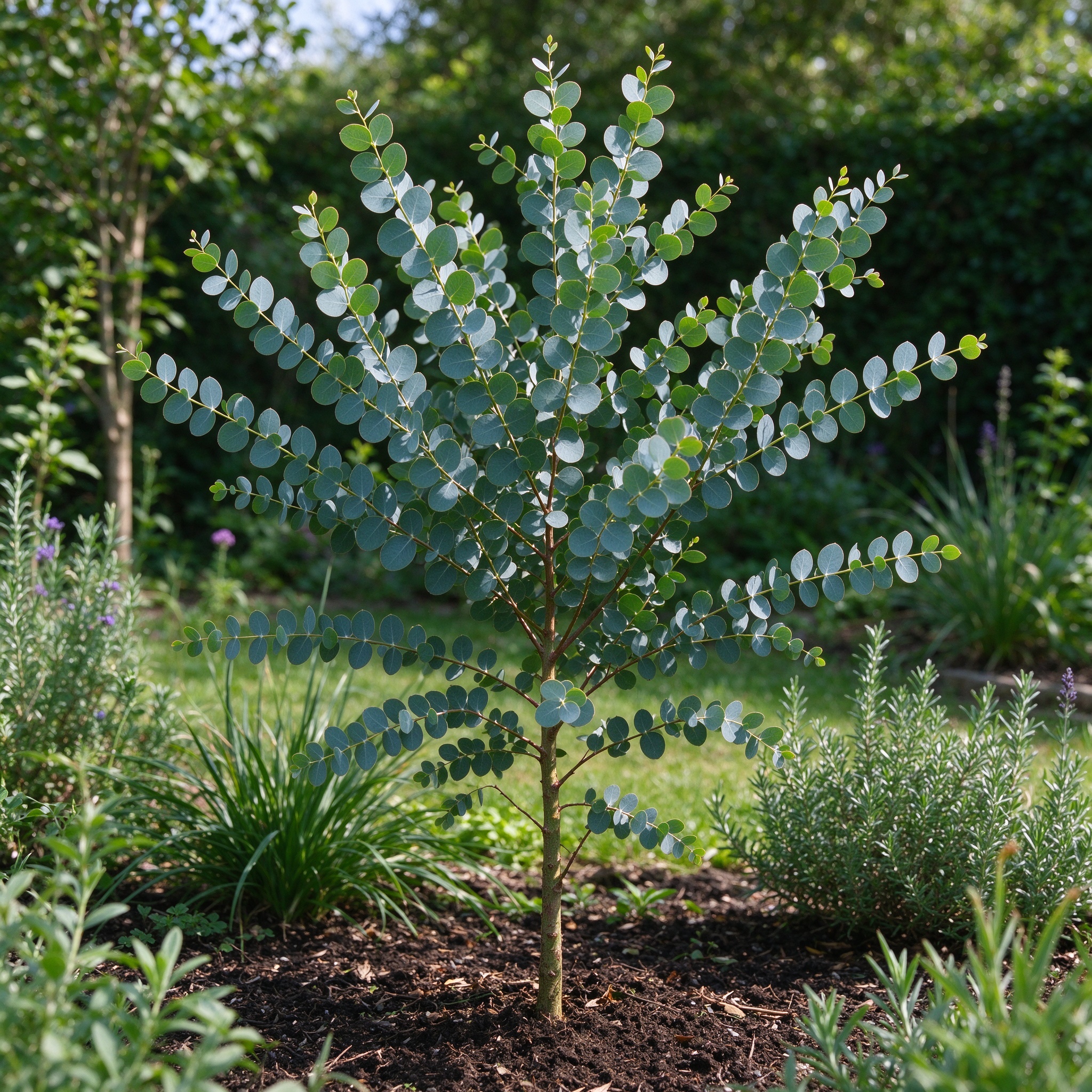
Seedling and establishment (first 3–6 months)
(3–6 months)- •Sow seed into deep root trainers or deep pots because eucalyptus dislike root disturbance (RHS); keep bright and at 18–22°C (65–72°F).
- •Seedlings grow quickly and should be potted on before they become root-bound.
- •Outdoors, small specimens up to 1 m (3⅓ ft) tall settle in more successfully and do not need staking (RHS); keep a 1 m (3⅓ ft) circle of bare, weed-free soil around the trunk so young roots do not compete for moisture.
 2
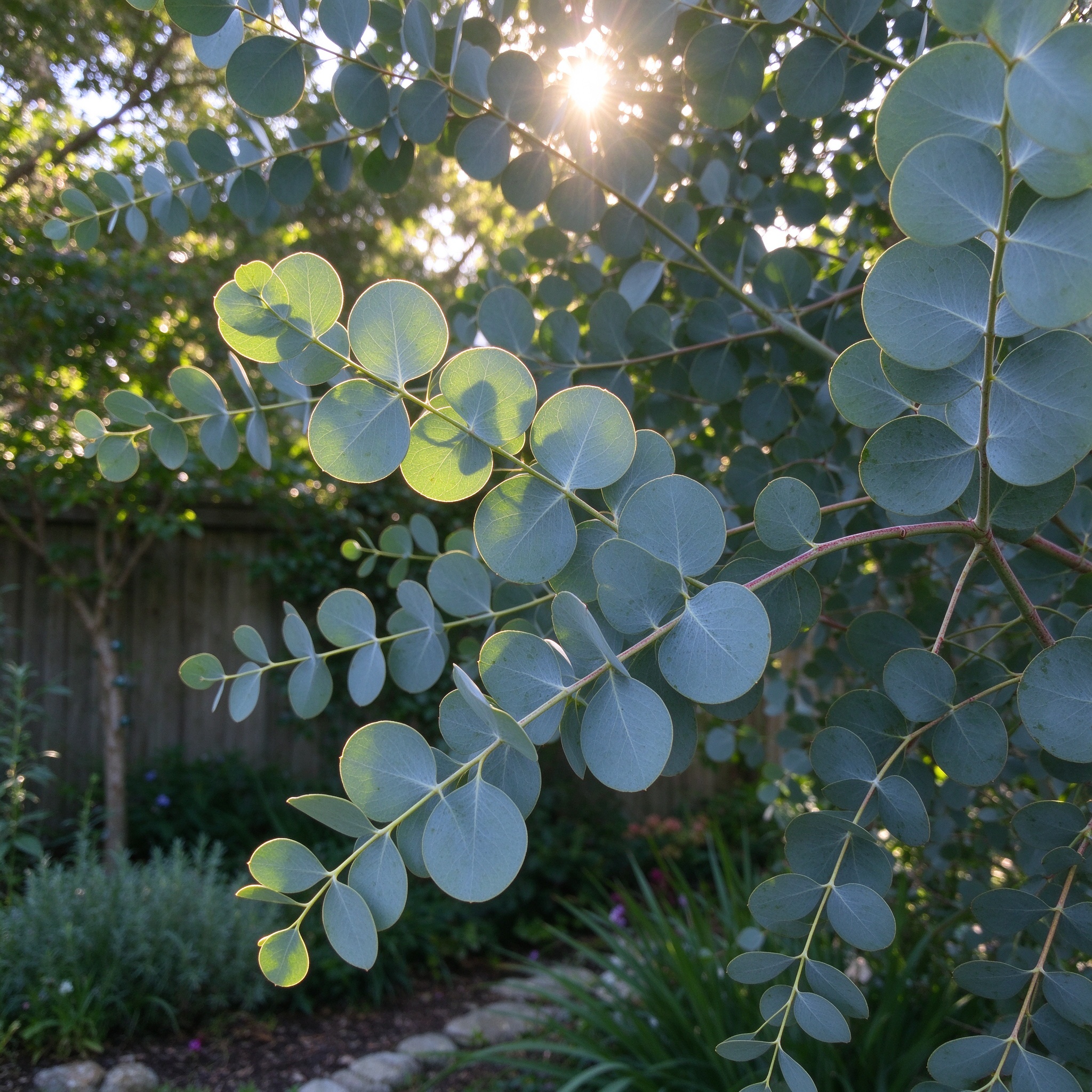
Active growth (spring–summer)
(April–September in temperate zones)- •This is the main growth period: RHS notes eucalyptus can grow rapidly, typically 1 m (3⅓ ft) or more per year in the initial years.
- •Keep container compost moist, feed monthly, and maintain full sun.
- •Indoor plants may need a pinch or trim to stay compact; outdoor trees put on height and canopy before woody tissue hardens off for winter.
 3
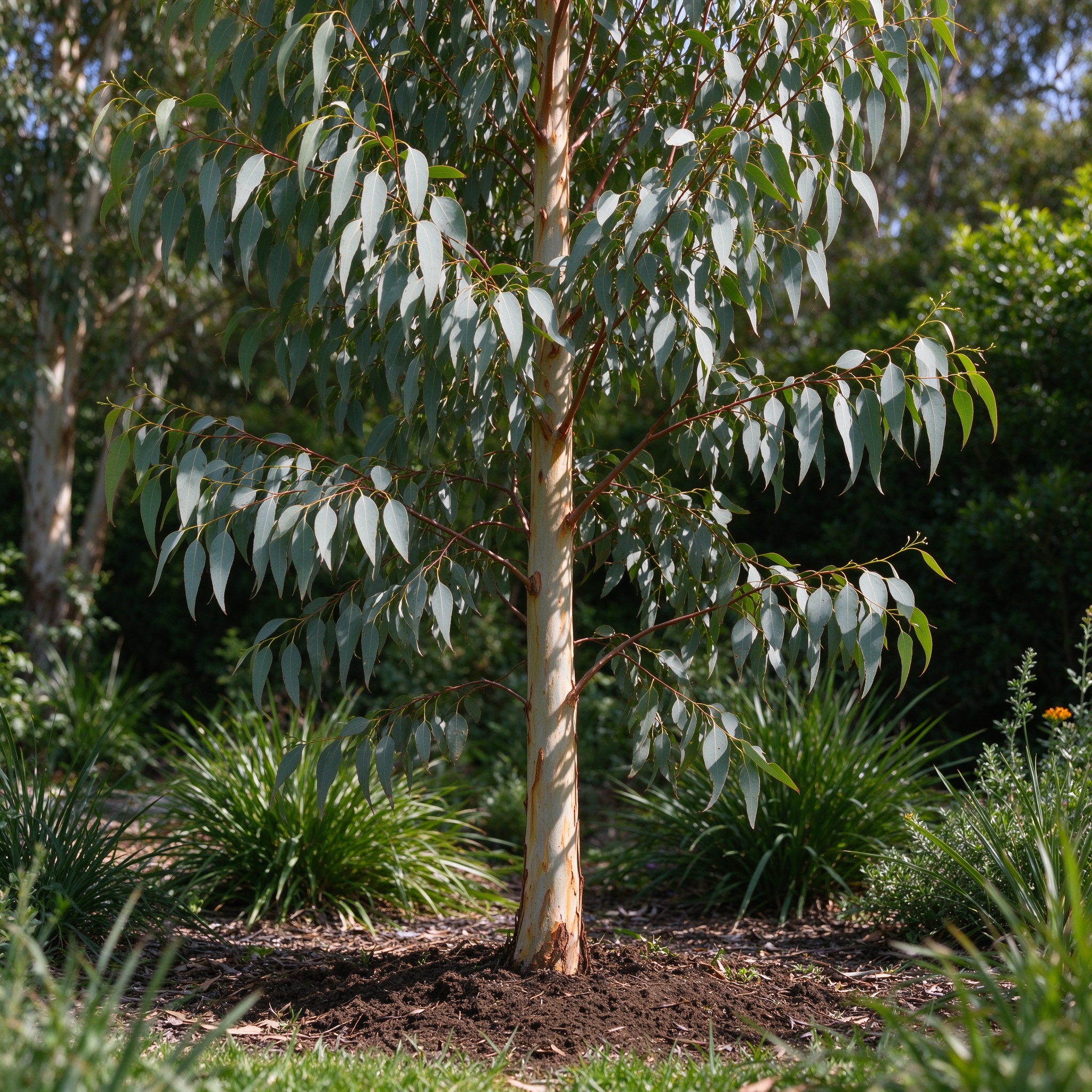
Winter rest
(December–February)- •Reduce watering and stop feeding both indoor and outdoor container plants; keep indoor eucalyptus in a cooler, bright position rather than a warm heated corner.
- •Outdoor trees are dormant; remove weeds and keep mulch away from the trunk base.
- •Frost-damaged shoots should be cut back in spring after growth resumes rather than pruned in winter.
 4
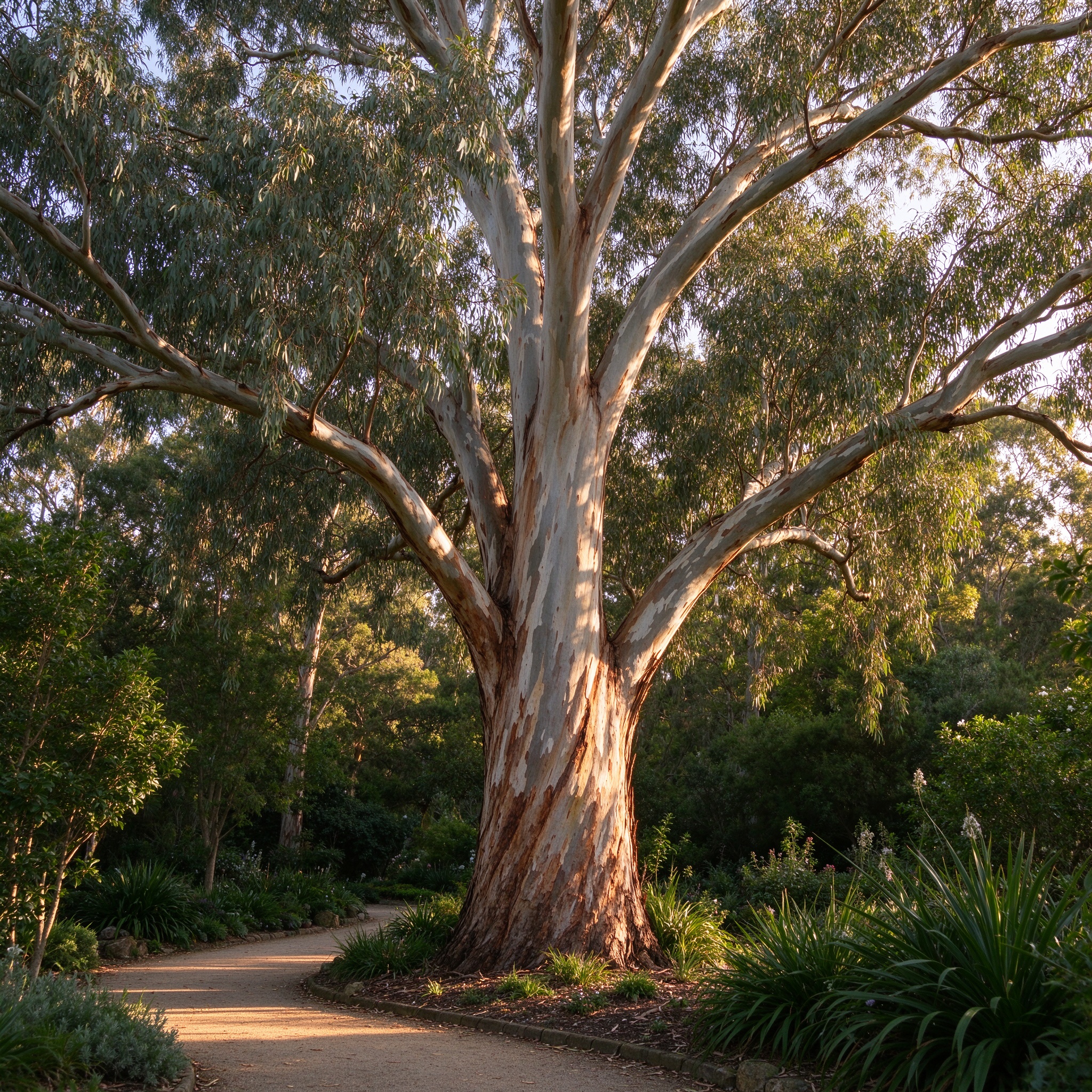
Outdoor maturity
(Several years onward)- •Once well rooted, established outdoor eucalyptus are largely drought tolerant and need little ongoing care (RHS; NC State).
- •Growth habit depends on species: compact ornamentals stay shrubby, while fast species such as E. globulus or E.
- •grandis develop tall trunks and broad canopies over time.
- •Maintain shape and juvenile foliage by coppicing or pollarding every few years in spring if required; otherwise established trees need little or no pruning.
💧 Detailed Care Guide
☀️ Light Requirements
- •Eucalyptus thrive in full sun (RHS and NC State: full sun, six or more hours of direct sunlight daily) and dislike shade.
- •Indoors, place the potted plant on the brightest south-facing windowsill or in a sunroom or greenhouse; a dark corner produces leggy, weak stems with pale, spaced-out leaves.
- •Outdoors, plant in a fully open position with no overhead shade from buildings or other trees.
- •Most species also prefer shelter from cold, drying winds, but that protection must not come from shade; a spot near a south- or west-facing wall that catches sun all day works for borderline-hardy outdoor specimens.
- •Lack of light is the most common reason an indoor eucalyptus thins and loses its dense silver foliage.
💧 Watering
- •Young and newly planted trees need consistent moisture to establish: water well after planting to settle the roots, then water during dry spells for the first few years until well rooted, after which most established specimens are drought tolerant and watering is generally unnecessary (RHS; NC State: drought tolerant once established).
- •In containers, keep the compost moist throughout the growing season but never waterlogged, and reduce watering in winter (RHS).
- •Indoors, let the top 2–5 cm (1–2 in) of mix dry between drinks, then water thoroughly until it runs out the drainage hole; never let the pot stand in a saucer of water.
- •Overwatering and cold wet compost are the single most common killers of indoor eucalyptus, leading to soft growth, yellowing, and root rot.
- •Outdoors, water deeply but infrequently once established; eucalyptus roots seek moisture at depth and, on heavy clay, can dry out nearby soil significantly, so site large trees well away from buildings and shallow-rooted neighbors per RHS tree-near-buildings guidance.
🌡️ Temperature
- •Most eucalyptus species are tender to half-hardy outdoors and grow best in mild climates; RHS notes most dislike cold, frost-prone sites.
- •NC State lists landscape eucalyptus for zones 7b–10b, with plants in zone 7a and lower typically dying back to the ground; MBG describes E.
- •cinerea as hardy in zones 8–11. The widely grown cider gum E.
- •gunnii is the hardiest common species, surviving light frost but still best given a sheltered position.
- •Indoors, grow at ordinary room temperature (18–24°C / 65–75°F) through the growing season; cooler but bright winter conditions (10–15°C / 50–59°F) slow growth and reduce pest pressure, provided the plant does not touch a cold window pane.
- •Protect outdoor containers from winter waterlogging by moving them to a sheltered south- or west-facing wall and raising the pot on feet or bricks (RHS).
🌱 Soil & Fertilizer
Soil:
- •Outdoors: well-drained soil of average to low fertility; RHS advises not enriching the planting hole with manure or garden compost, because extra fertility encourages soft, leafy growth that falls easily to cold and wind.
- •Eucalyptus tolerates most soil types, including poor soils, but will not survive waterlogged ground.
- •Indoors: a free-draining soil-based compost such as John Innes No. 2 or No.
- •3, mixed with up to 30 percent horticultural grit by volume to improve drainage (RHS container guidance); ordinary peat-rich houseplant mixes that stay wet for days are unsuitable.
- •Add perlite or coarse sand if the mix holds water after watering.
- •The RHS also notes eucalyptus dislike being moved once settled in, so choose the outdoor site carefully and size the indoor pot for a long-term home rather than frequent repotting.
Fertilizer:
- •Established trees growing in the ground generally need no feeding (RHS); excess nitrogen produces weak, brittle growth prone to wind damage and disease.
- •After a hard pruning, apply a general-purpose fertilizer such as pelleted poultry manure in spring if growth looks weak (RHS).
- •In containers, feed monthly with a general-purpose liquid fertilizer throughout the growing season, roughly April to September in the Northern Hemisphere; stop feeding over winter when growth slows.
- •Repot every two years into a slightly larger container with fresh gritty compost (RHS).
- •Indoors, dilute liquid feed to half strength to avoid salt buildup in a confined root zone; flush the pot with clear water between feeds if the mix develops a white crust.
📝 Step-by-Step Planting Guide
- 1
Choose the right species for the site
- •Check eventual height before buying, RHS advises, because some species grow very large. For indoor pots and patio containers, choose E. gunnii, E.
- •cinerea, or E.
- •pulverulenta for round juvenile leaves and compact size. For outdoor specimens, match species to hardiness: E. gunnii and E. pauciflora subsp.
- •niphophila are the hardier RHS AGM choices; E. globulus and E. grandis are fast, tall landscape trees for mild climates.
- 2
Set up the indoor pot with gritty free-draining mix
- •Use a deep pot with a drainage hole; a tall pot suits the fast root system. Fill with soil-based compost (John Innes No. 2 or No.
- •3) mixed with up to 30 percent horticultural grit (RHS). Add a layer of crocks or coarse gravel at the bottom.
- •Position on the brightest south-facing windowsill or in a sunroom; stand the pot in a cachepot only temporarily and empty the cachepot after watering.
- 3
Eucalyptus tree planting: outdoor spacing and a full-sun, well-drained position
- •For eucalyptus tree planting outdoors, plant in spring or summer (RHS).
- •Dig a hole wide enough for the root ball, at the same depth as it grew in the nursery pot; do not manure or enrich the soil, to prevent soft growth (RHS).
- •Firm in and water well to settle.
- •Keep the first 1 m (3⅓ ft) around the trunk weed-free, and mulch with chipped bark in early spring or autumn, leaving a 7.5 cm (3 in) gap around the trunk to discourage rot.
- •Give large species ample distance from buildings, pipes, and shallow-rooted plants.
- 4
Water on an establishment schedule
- •Newly planted trees: water well at planting, then during dry spells for the first few years until well rooted; afterward established specimens usually need no watering (RHS).
- •Containers: keep compost moist through the growing season, never waterlogged; reduce watering in winter.
- •Indoor plants: let the top 1–2 in dry between thorough drinks; discard standing water immediately.
- 5
Maintain size and juvenile foliage with seasonal pruning
- •Established outdoor trees generally need little or no pruning; limit size by coppicing or pollarding every few years in spring, and prune to keep the ornamental juvenile foliage (RHS; pruning group 7).
- •Indoor and patio plants are trimmed regularly to keep them compact and bushy.
- •Always use clean, sharp shears; sap and leaf oils can irritate skin, so wear gloves when handling larger cut branches.
- 6
Monitor pests, drainage, and seasonal hardiness
- •NC State reports no significant pest or disease problems for eucalyptus outdoors; indoors, dry central heating and crowding can bring spider mites or mealybugs on the undersides of leaves.
- •Check the base of the trunk and root crown for softening, which signals overwatering and root rot.
- •In autumn, bring outdoor containers under shelter before the first frost and raise pots on feet to clear the drainage holes; research hardiness by species before leaving a tree in the ground over winter.
🌱 Recommended Varieties
Cider gum — E. gunnii
- •The hardiest commonly grown eucalyptus and the standard indoor and patio compact tree.
- •RHS lists it as an Award of Garden Merit plant; young plants carry round, silvery-blue juvenile leaves on reddish stems and respond well to regular pruning that keeps foliage in the ornamental juvenile form.
- •Outdoor specimens reach a large tree with age in mild, sheltered sites but stay shrubby when coppiced regularly.
Silver dollar / argyle apple — E. cinerea
- •MBG describes this species as an extremely fast, rounded evergreen shrub or tree; in St.
- •Louis it is grown as a rapid annual reaching 1.8–2.4 m (6–8 ft) by mid-summer.
- •Its round, silvery blue-green juvenile leaves resemble coins and are widely grown by florists for cut foliage; it performs well in containers brought indoors before the first frost and is cut back hard and overwintered in a cool, dark basement or frost-free garage.
Blue gum — E. globulus
- •The iconic fast-growing tall eucalyptus with glaucous blue juvenile leaves and smooth shedding bark. UF/IFAS notes related E.
- •grandis grows rapidly to roughly 27 m (90 ft) and tolerates a wide soil range but is shade intolerant; large species like this belong in open landscape settings, never in a small indoor space, and should be planted well clear of buildings and power lines.
Silver mountain gum — E. pulverulenta
- •A compact ornamental species favored for its broad, round, powdery silver-gray leaves held close to the stem and its fragrant foliage.
- •It suits pruning into a small standard or bushy patio shrub and is commonly sold as florist eucalyptus alongside E. cinerea.
- •Warm temperate gardens can grow it outdoors; in cold climates it is grown as a summer container specimen.
Willow-leaved peppermint — E. nicholii
- •A graceful, fine-leaved tree with narrow gray-green weeping foliage and peeling bark, suited to larger gardens and windbreaks in mild regions.
- •Its narrow adult leaves contrast with the round juvenile foliage of container types; it is drought tolerant once established and should be planted in a full-sun, sheltered position.
Snow gum — E. pauciflora subsp. niphophila
- •One of the hardiest ornamental species listed by RHS with an Award of Garden Merit, valued for striking mottled cream, gray, and reddish bark and leathery gray-green leaves.
- •It forms a small to medium tree in sheltered gardens and tolerates cold mountain climates better than most eucalyptus; choose it where winter frost rules out tender species.
🪴 Growing in Containers
- Deep nursery pot at potting-up stage:
- •Seedlings and purchased small plants start in a deep root trainer or tall nursery pot; eucalyptus dislike root disturbance (RHS), so move plants on before tight roots circle the pot.
- •A depth of at least 15–20 cm (6–8 in) matches the fast initial root growth.
- Permanent indoor or patio pot:
- •RHS recommends large containers ideally 60 cm (2 ft) or more in diameter for long-term outdoor-grown eucalyptus; smaller indoor pots are repotted every two years into a slightly larger size.
- •Choose a stable, heavy pot that resists tipping under top-heavy foliage, with an open drainage hole.
- Gritty free-draining compost:
- •Soil-based peat-free compost such as John Innes No. 2 or No.
- •3 mixed with up to 30 percent horticultural grit by volume (RHS) gives the roots both support and air.
- •Avoid moisture-retentive multi-purpose mixes that stay saturated after watering.
- Sheltered winter position:
- •Container eucalyptus overwintered outdoors move to a spot against a south- or west-facing wall where extra warmth reduces waterlogging risk, and are raised on pot feet or bricks to keep drainage holes clear of standing water (RHS).
- •Container shrubs overwintered indoors are cut back hard and kept in a cool dark basement or frost-free garage per MBG practice for E. cinerea.
- Outdoor planting site:
- •For in-ground trees: full sun, average non-enriched well-drained soil, and enough space for mature height and canopy.
- •Large thirsty species must be set well away from buildings because they can dry out heavy clay around foundations (RHS); keep plants away from homes and decks in fire-prone areas given the extreme flammability NC State attributes to eucalyptus.
✂️ Pruning & Maintenance
- ✓
Initial shaping on young plants
- •Newly planted eucalyptus usually need some initial pruning to form a well-shaped tree or balanced shrub (RHS).
- •Remove crossing or weak stems early; small, unsupported plants develop stronger roots and trunks if not staked (RHS).
- ✓
Coppicing and pollarding to control size
- •If a tree has become too large for its site, pollard or coppice it every few years in spring to reduce height and spread (RHS).
- •This hard pruning regenerates a dense shoot cluster from the main framework and is the standard method of keeping vigorous landscape eucalyptus compact in a smaller garden.
- ✓
Retaining ornamental juvenile foliage
- •Coppicing or pruning in spring keeps the plant producing the round, disc-like juvenile leaves popular for flower arrangements (RHS; pruning group 7).
- •Left unpruned, most species switch to long, pointed adult foliage that is less ornamental indoors and in floral work.
- ✓
Regular trimming of indoor and patio plants
- •MBG notes E.
- •cinerea should be regularly pruned to stimulate bushy growth; indoor eucalyptus respond to an occasional spring trim that removes leggy shoots and encourages side branching.
- •Under glass, RHS advises restrictive pruning to limit size; never remove more than about one-third of the live growth in a single season.
🐛 Pest & Disease Control
Common Pests
Scale insects
Symptoms:- •Small raised brown or white bumps on stems and leaf undersides, sticky honeydew coating upper leaves, and sooty mold growing on the honeydew.
- •Outdoors these are usually kept in check by beneficial insects; indoors they build up on weak, crowded plants.
Control:- •Scrape isolated colonies by hand with a soft brush, wipe leaves with diluted horticultural soap, and improve ventilation.
- •Apply systemic insecticide to persistent indoor outbreaks following the product label; isolate the treated plant from pets.
Spider mites
Symptoms:- •Fine pale stippling across leaf surfaces, faint webbing at leaf axils, and dull bronzed foliage, most common in dry heated rooms over winter.
- •Indoors this is the most likely pest on stressed eucalyptus.
Control:- •Raise local humidity by standing the pot on a pebble tray, spray undersides with water, and wipe leaves regularly.
- •Treat persistent colonies with miticide labeled for houseplants; repeat applications match the mite life cycle.
Mealybugs
Symptoms: Cottony white clusters in leaf joints and under bark, waxy secretions, honeydew, and slowed growth on plants tucked into warm sheltered spots.Control:- •Remove visible clusters with a cotton swab dipped in alcohol, spray with insecticidal soap, and inspect nearby houseplants because mealybugs spread between touching foliage.
- •Repeat treatment every ten to fourteen days until clear.
Eucalyptus leaf beetles and psyllids
Symptoms: Outdoors: skeletonized or blotched young leaves, galled curled shoots (psyllid lerps), and holes from adult beetles feeding on foliage in spring and summer.Control:- •Healthy established trees tolerate light feeding naturally; encourage predatory wasps and birds by avoiding broad-spectrum sprays.
- •On weak trees, remove affected shoots and apply appropriate garden insecticide per label during active pest months; local extension service recommendations should guide species-specific control.
Common Diseases
Root rot from overwatering
Symptoms: Yellowing and dropping leaves, softening at the root crown, a moldy or sour smell in the pot, and stunted growth; indoor eucalyptus die from soggy cold compost more often than from drought.Control:- •Reassess drainage immediately: use gritty compost, free-draining pots, and let the top 1–2 in dry between waterings.
- •On indoor plants, tip out the root ball, trim any brown mushy roots with clean shears, repot into fresh dry mix, and reduce watering frequency; save the plant only if healthy firm roots remain.
Phytophthora root and collar rot
Symptoms: Outdoors on heavy, poorly drained ground: thinning canopy, dying branches, oozing cankers at the base of the trunk, and reddish-brown stained roots.Control:- •Prevention is key: plant in well-drained soil, never enriching wet holes with manure, and give large trees good setback from wet low spots.
- •Affected trees rarely recover; remove and replant with a drought-tolerant alternative on raised ground, and have local extension identify the pathogen before repeat planting.
Leaf spot and fungal blotch
Symptoms: Irregular brown or purplish spots on foliage that expand into patches, often after prolonged wet leaves or splash from overwatered pots.Control:- •Improve air circulation around the plant, water the root zone rather than wetting the foliage, and remove fallen spotted leaves.
- •Apply a labeled fungicide only when the pattern is persistent and confirmed by local extension; established eucalyptus trees mostly shrug off minor spotting.
Canker and dieback
Symptoms: Dead sunken bark lesions on branches and trunks, with wilting shoots above the canker; wounds from pruning, frost, or wind are entry points for fungal infection.Control:- •Prune out diseased wood well below the lesion into healthy tissue, disinfect shears between cuts, and avoid heavy frost-prone sites.
- •Keep trees vigorous with appropriate light and good drainage; close wounds naturally, do not apply tar-based sealers.
🍅 When to Harvest
- •Harvest aromatic foliage for dried or fresh floral stems at any time once the plant has several sets of mature leaves; the round juvenile leaves are the most popular cut material, maintained by regular pruning.
- •Cut sprigs with clean shears above a leaf node.
- •Do not harvest foliage intended for medicinal, edible, or essential-oil use on a pet-accessible plant; treat all cut stems and dried bundles as toxic to dogs and cats.
❓ Frequently Asked Questions
- 1
How fast do eucalyptus trees grow?
- •Eucalyptus are among the fastest evergreen trees: RHS reports typical growth of 1 m (3⅓ ft) or more per year in the initial years, and MBG notes E.
- •cinerea can grow 1.8–2.4 m (6–8 ft) tall by mid-summer as an annual in cold-winter climates. UF/IFAS describes E.
- •grandis as a fast grower reaching roughly 27 m (90 ft) at maturity in suitable conditions.
- •Indoor potted eucalyptus grow quickly through spring and summer, which is why regular pruning is needed to keep a compact houseplant form; outdoor species reach large mature sizes within a decade, so check eventual height before planting under windows or near power lines.
- 2
Can eucalyptus grow indoors as a houseplant?
- •Yes, but only with maximum light. Compact species such as E. gunnii and E. cinerea are sold specifically for indoor pots and patio containers.
- •They need the brightest south-facing windowsill or a sunroom, gritty free-draining compost, and dry-down between waterings; dark rooms produce weak leggy growth and pest problems.
- •Indoor eucalyptus require regular trimming to stay compact, monthly liquid feed in the growing season, and a cooler bright spot in winter.
- •Remember that the foliage is toxic to dogs and cats even indoors (see Is eucalyptus toxic to cats below), so place the plant where pets cannot chew leaves or drink accumulated water.
- 3
Why is my potted eucalyptus dying?
- •Overwatering into cold, soggy compost is the most common cause.
- •Indoor eucalyptus hate standing in wet soil: let the top 1–2 in dry between thorough drinks, empty the saucer after watering, and use a gritty soil-based mix rather than a moisture-retentive peat blend.
- •Other frequent causes are insufficient light leading to thin weak growth and leaf drop, a cramped root-bound pot, cold drafts from doors or windows, and dry central heating combined with spider mites.
- •Check the trunk base: soft, brown, mushy tissue means root rot has already set in; hard, firm bark with dry bronze leaves points to underwatering or insufficient light.
- 4
How do you prune an eucalyptus tree?
- •Established outdoor trees generally need little or no pruning (RHS).
- •To reduce size, coppice or pollard every few years in spring, cutting back to a chosen framework; this regenerates dense shoots.
- •Pruning also keeps foliage in the round ornamental juvenile form sought by florists (RHS pruning group 7).
- •Indoor and patio plants are trimmed regularly to stay compact and bushy, with leggy shoots shortened in spring.
- •Use clean sharp shears and wear gloves because leaf oils and sap can irritate skin; never remove more than about one-third of live growth in one season, and do the major cutting in spring rather than winter.
- 5
Is eucalyptus toxic to cats?
- •Yes.
- •The ASPCA lists eucalyptus (Eucalyptus spp.) as toxic to cats, dogs, and horses; toxic principles are essential oils including eucalyptol.
- •Clinical signs include salivation, vomiting, diarrhea, depression, and weakness.
- •NC State rates the plant high poison severity and notes eucalyptus oil is extremely toxic if eaten, while contact with leaves or bark can irritate skin.
- •Keep fresh and dried cut stems, potpourri, and essential oil bottles out of reach of cats and dogs; ingestion warrants immediate contact with a veterinarian or animal poison control.
- •This page does not recommend eucalyptus for flea deterrence, home remedies, or any pet use.
- •Browse our non-toxic houseplant options at /cat-safe instead.
- 6
How much sun does an eucalyptus plant need?
- •Full sun: RHS and NC State both place eucalyptus in full sun, at least six hours of direct sunlight daily, and the genus dislikes shade.
- •Indoor plants must sit on the brightest available windowsill or in a sunroom; rotate the pot weekly so all sides receive light.
- •Outdoor trees need an open position with no overhead canopy.
- •If new growth emerges stretched, pale, or spaced far apart along stems, the plant is telling you the light level is too low; move it closer to the window or into a brighter room.
- 7
How often should I water a potted eucalyptus?
- •During spring and summer growth, keep the compost moist but never waterlogged; water thoroughly when the top 1–2 in (2–5 cm) feels dry to the touch, and discard any water left in the saucer after fifteen minutes.
- •In winter, reduce watering so the mix stays barely moist; do not feed during this rest period.
- •Container eucalyptus watered on a fixed weekly schedule regardless of soil moisture are the ones most likely to develop root rot.
- •If the pot sits in a cool room, water less than it would in a warm heated room; if it stands outdoors in summer heat, check daily.
- 8
Can eucalyptus survive winter outdoors?
- •Only species matched to your hardiness zone will survive in the ground year-round.
- •NC State lists landscape eucalyptus for zones 7b–10b; MBG describes E. cinerea hardy in zones 8–11; the RHS points to E. gunnii and E.
- •pauciflora subsp.
- •niphophila as hardier ornamental choices.
- •In colder zones 7a and below, plants typically die back to the ground (NC State), so eucalyptus is best grown as a summer annual, a sheltered container brought under cover before frost, or a conservatory plant.
- •Container trees overwinter against a sheltered south- or west-facing wall, raised on pot feet, to avoid sitting in saturated winter rain (RHS).
- 9
When is the best time for eucalyptus tree planting outdoors?
- •Spring and summer, per the RHS: plant purchased trees or containers in spring and summer so roots settle before winter, and set out tender specimens only after all frost risk has passed.
- •For spacing, UF/IFAS windbreak guidance puts fast species such as E.
- •grandis 3–6 ft (1–2 m) apart in a screen; a single specimen tree needs a generous open circle for its mature canopy, well away from buildings, pipes, and shallow-rooted neighbors.
- •Do not enrich the planting hole with manure or compost, which produces soft, wind-prone growth, and keep a 1 m (3⅓ ft) weed-free circle around the trunk during the first years.
- 10
Why is my eucalyptus dropping its leaves?
- •Leaf drop has several signatures.
- •Sudden yellowing leaves and wet soil point to overwatering or root rot; dry, bronze crisp leaves with a hard trunk point to underwatering or a drying draft; thin pale leaves that fall after moving location suggest shock from changed light or temperature; natural partial leaf fall occurs as adult foliage replaces juvenile leaves on an unpruned outdoor tree.
- •Check soil moisture first, light exposure, and the state of the trunk crown before applying any treatment.
- •Eucalyptus also shed leaves as part of a normal annual cycle on mature outdoor trees, so a gradual thin of old inner foliage in spring is not necessarily a disease sign.
- 11
Are eucalyptus roots invasive or thirsty?
- •Eucalyptus root systems are aggressive water seekers rather than classic spreading surface invaders, but their thirst matters near structures: RHS notes larger species can dry out the soil, especially heavy clay, so plant them well away from buildings and check the tree-near-buildings guidance before siting one next to a house.
- •Separately, some regions list eucalyptus species as invasive or potentially invasive in dry ecosystems; check state and local noxious-weed lists in California, Hawaii, the American Southwest, and similar Mediterranean climates before planting outdoors.
- •NC State also emphasizes extreme flammability: large trees must be kept well away from homes and decks, with a defensible firebreak maintained around them in wildland-urban areas.
Source:
NC State Extension Gardener Plant Toolbox — Eucalyptus — https://plants.ces.ncsu.edu/images/plants/eucalyptus/
ASPCA — Eucalyptus — https://www.aspca.org/pet-care/animal-poison-control/toxic-and-non-toxic-plants/eucalyptus
RHS — How to grow eucalyptus — https://www.rhs.org.uk/images/plants/eucalyptus/growing-guide
RHS — Eucalyptus gunnii — https://www.rhs.org.uk/images/plants/6888/eucalyptus-gunnii/details
Missouri Botanical Garden PlantFinder — Eucalyptus cinerea — https://plantfinder.mobot.org/PlantFinderDetails.aspx?isprofile=0&letter=E&taxonid=282867
UF/IFAS Extension — FR286 Eucalyptus grandis — https://edis.ifas.ufl.edu/publication/fr286
Photo credit: NC State Extension
Images courtesy of NC State Extension under CC BY license. Thank you to the photographers who make these educational images available.
License: CC BY-NC 2.0 / CC BY 4.0