
How to Grow Fiddle-Leaf Fig: Complete Guide
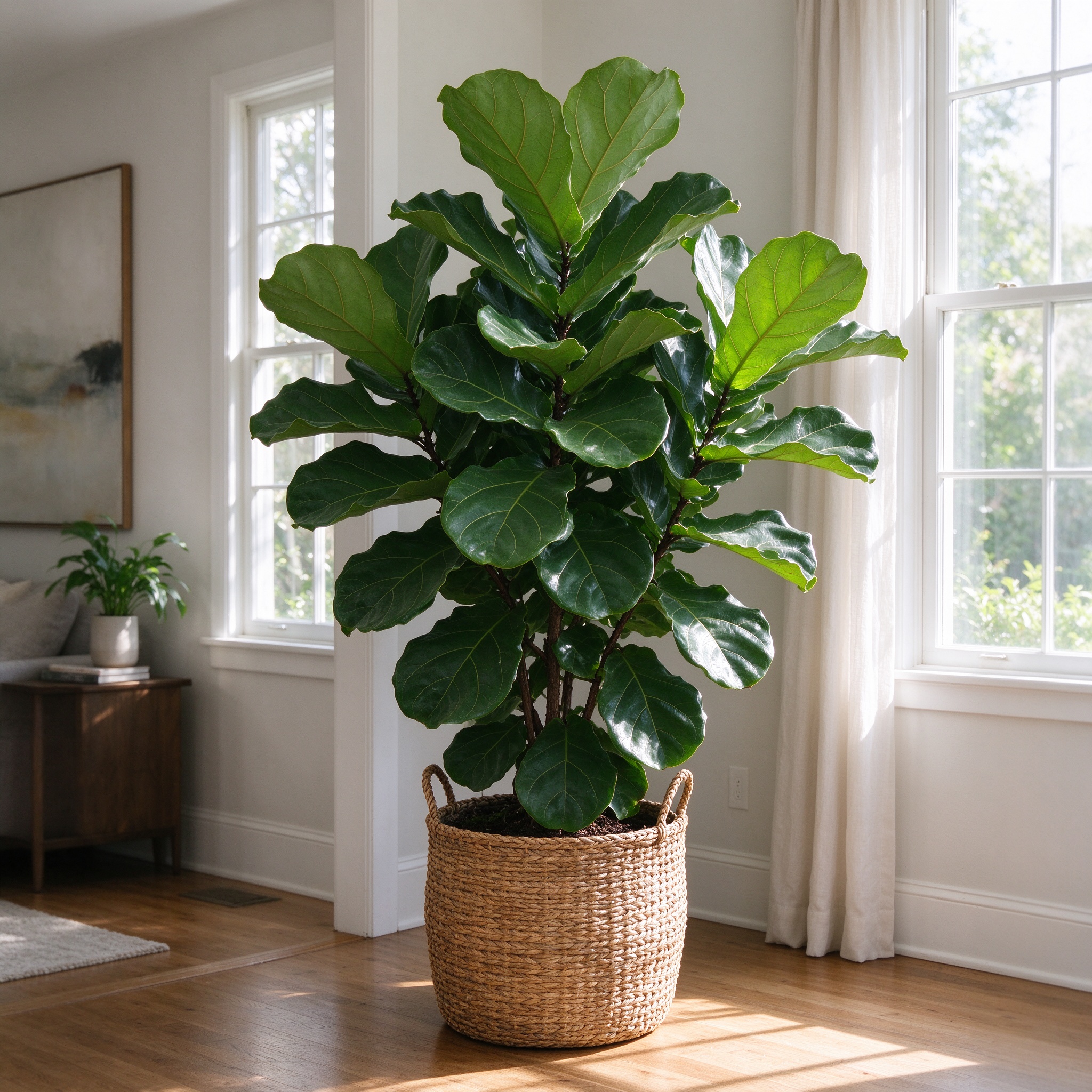
- •The fiddle-leaf fig (Ficus lyrata) is a small tropical tree and broadleaf evergreen in the mulberry family (Moraceae), native to western and central Africa, and grown across the United States as a dramatic houseplant.
- •Indoors it reaches 2 to 10 feet tall, carrying large, broad, lyre- or banjo-shaped leathery green leaves up to 18 inches long and 12 inches wide.
- •It rarely flowers or fruits as a houseplant, and its stems bleed milky sap that can irritate the skin.
- •It is a relatively low-maintenance statement plant for bright rooms and large spaces, but it is finicky about overwatering, cold drafts, and sudden light changes, and it will drop leaves under stress.
- •It is toxic to humans, cats, and dogs if ingested, so keep it away from chewing pets and small children.
📋 Quick Facts
Scientific Name: Ficus lyrata
Family: Moraceae
Category: Houseplant
USDA Zones: 10-12 (houseplant)
Light:
- •Fiddle-leaf figs prefer bright indirect light or partial shade, and they need protection from the hot afternoon sun, which causes leaf scorch.
- •A spot near a large east window, or a few feet back from a south or west window, is ideal.
- •Too little light makes the tree stretch, drop lower leaves, and look leggy; too much direct sun turns the large leathery leaves pale and burned.
- •Rotate the pot a quarter turn each week so the trunk grows straight.
Water:
- •Give the tree moist but not soggy soil, and let the top few inches dry out between waterings.
- •Fiddle-leaf figs are sensitive to overwatering, and leaf drop happens from both too much and too little water.
- •Water thoroughly until it drains, then empty the saucer.
- •Use room-temperature water; cold water shocks the roots, and the tree may respond by dropping leaves.
Temperature:
- •The tree performs best in medium relative humidity and a temperature greater than 55 degrees F, with an ideal indoor range around 65 to 75 degrees F.
- •Keep it away from heating and cooling vents, because fluctuations in room temperature cause brown spots on the leaves.
- •In summer you can move the container to a sheltered deck or patio, but bring it back indoors as outdoor temperatures start to drop in fall.
Soil:
- •Plant in moist, well-drained, loamy, acidic soil.
- •A standard peat-based houseplant mix amended with perlite for drainage and a little pine bark to lower pH works well.
- •The mix must hold moisture without staying waterlogged; heavy, dense soil that stays wet for days after watering is the most common setup that leads to root rot.
Harvest:
- •There is no edible harvest on a fiddle-leaf fig.
- •The indoor 'harvest' milestone is when the trunk thickens, the tree fills out with overlapping large leaves, and it reaches its intended statement height — typically 4 to 6 feet in a living room.
- •That is also the moment the plant is large enough to be propagated by stem cuttings if you want more figs.
Common Problems:
- •Watch for scale, aphids, mealybugs, thrips, and spider mites; bacterial and fungal leaf spots; leaf scorch from direct sun; brown spots from heating or cooling vents; and leaf drop from overwatering, underwatering, or sudden temperature swings.
- •The plant is toxic if ingested and its sap irritates skin, so wear gloves when pruning or taking cuttings.
⚠️ Pet Safety Warning
This plant is toxic to both cats and dogs.
Sap contains ficin and ficusin, toxic to cats and dogs. Causes oral irritation and vomiting.📅 When to Plant
- •Fiddle-leaf figs are sold in nurseries and design shops year-round, so you can buy one indoors any month.
- •The best time to repot or do any major pruning is spring through early summer, when the tree is pushing new growth and can bounce back from root disturbance.
- •In fall and winter, fiddle-leaf figs are prone to leaf drop, so wait out the cold season before moving, repotting, or cutting back a settled plant.
🌱 Growing Stages
 1
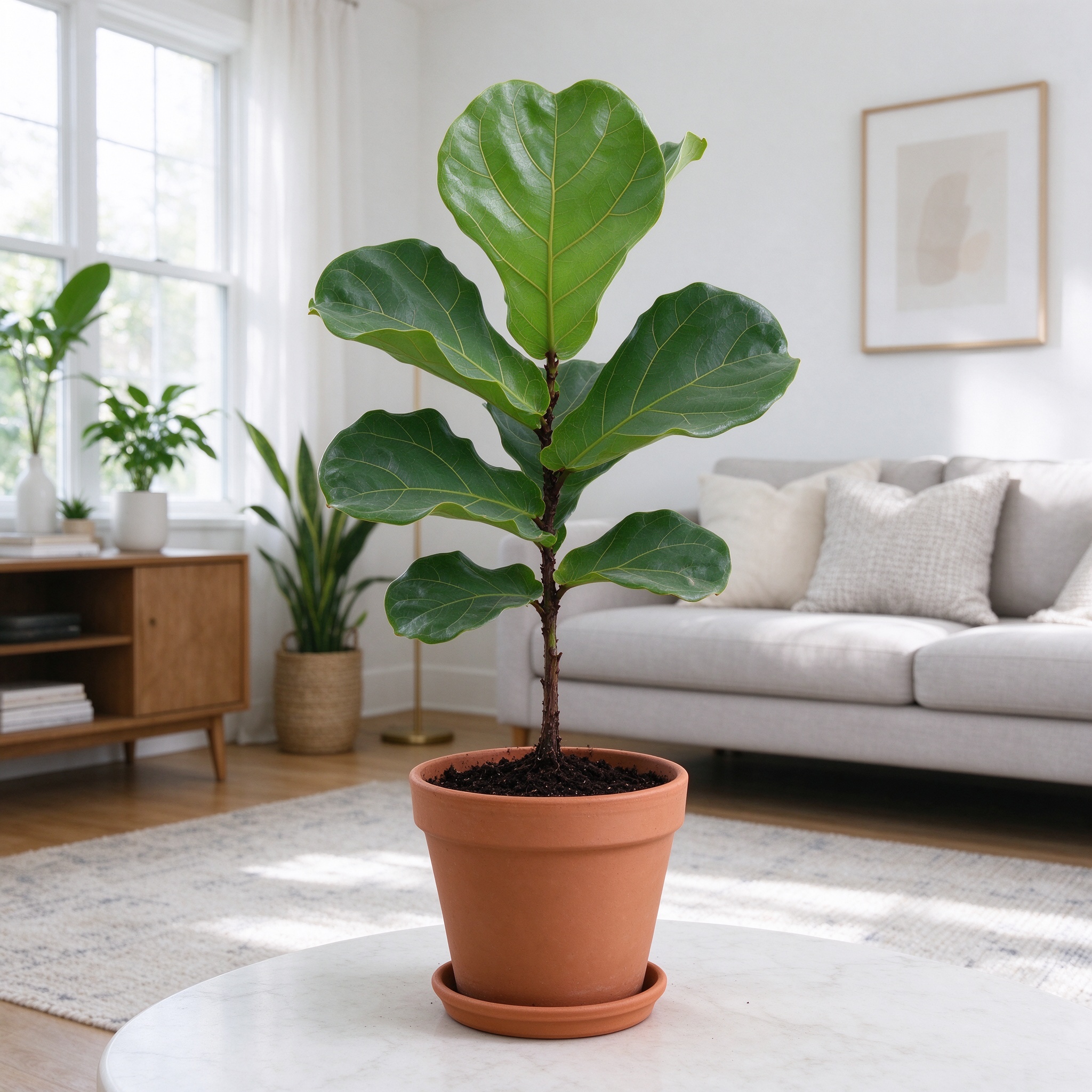
Acclimation stage (first 4-6 weeks)
(First 4 to 6 weeks after purchase)- •A new fiddle-leaf fig is recovering from the stress of transport and the change of environment, and it often drops a few lower leaves as it settles.
- •Put it in its permanent bright indirect spot immediately, water only when the top inches of soil are dry, and do not repot or fertilize.
- •Wait until you see a new leaf unfurl before changing anything. Keep it away from drafts during this fragile period.
 2
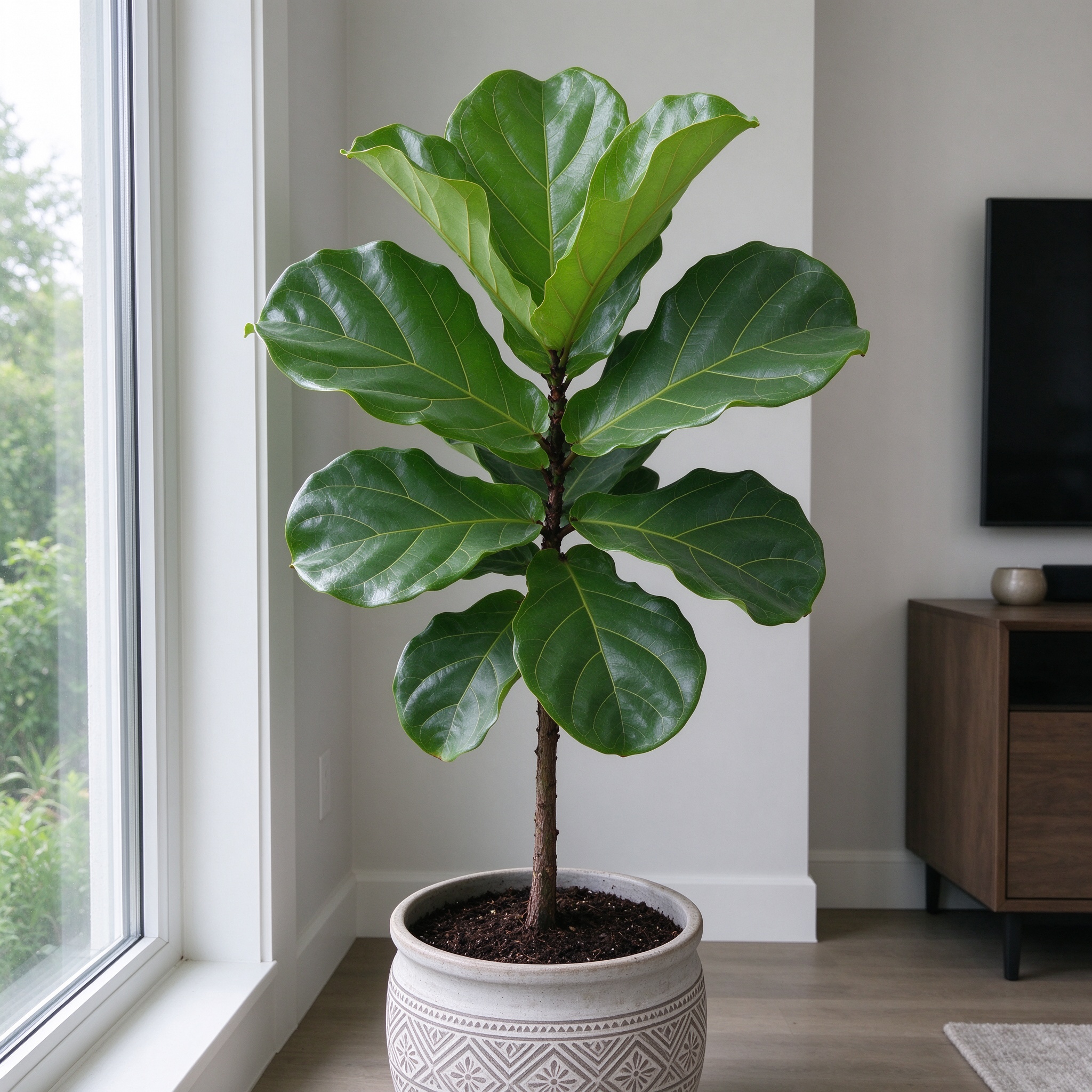
Root establishment and trunk thickening
(First 6 to 18 months)- •During this stage the tree builds its root system and slowly thickens its trunk.
- •Above ground it adds a few large fiddle-shaped leaves, usually in flushes after a period of steady growth.
- •Keep the soil moderately moist, feed lightly in growing season, and rotate weekly. The trunk should begin to feel woody and firm rather than soft.
 3
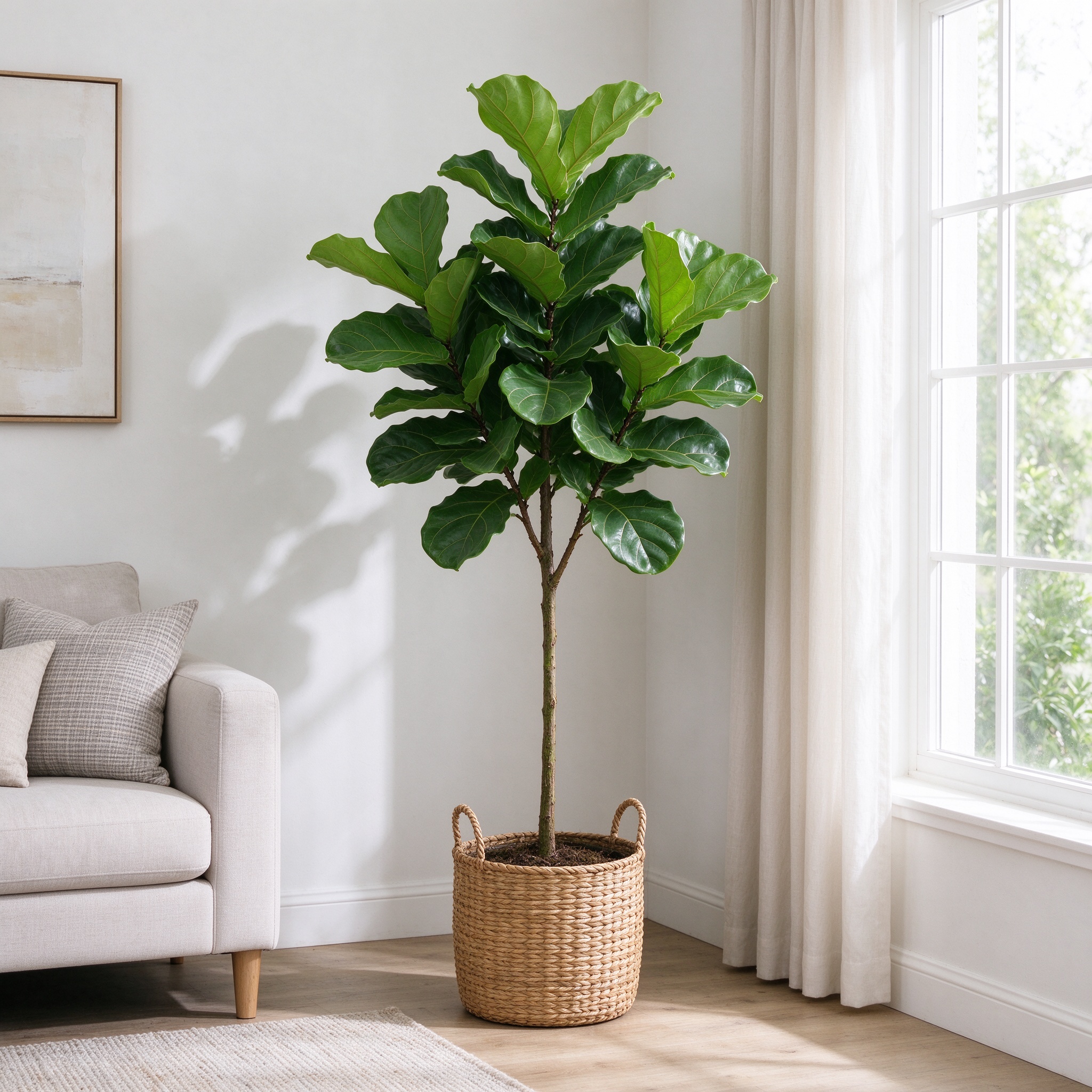
Foliage expansion / statement stage
(18 months to several years)- •Mature fiddle-leaf figs push out large, overlapping leaves along a single upright trunk, eventually reaching 4 to 6 feet indoors and up to 10 feet in a tall space.
- •This is the lush, sculptural look the plant is famous for.
- •Steady bright indirect light and consistent watering keep the leaves large and leathery; stress at this stage shows up as brown spots and leaf drop.
- 4
Pruning and propagation stage
(Spring)- •Once the tree reaches the desired height, spring is the moment to shape it: prune the top growing tip to encourage branching, remove lower leaves for a tree-like trunk, and take stem cuttings or air-layer to make new plants.
- •Wear gloves, because the cut stems drip irritating milky sap. The tree recovers from spring pruning much better than from a winter cutback.
💧 Detailed Care Guide
☀️ Light Requirements
- •Fiddle-leaf figs prefer bright indirect light or partial shade, and they need protection from the hot afternoon sun, which causes leaf scorch.
- •A spot near a large east window, or a few feet back from a south or west window, is ideal.
- •Too little light makes the tree stretch, drop lower leaves, and look leggy; too much direct sun turns the large leathery leaves pale and burned.
- •Rotate the pot a quarter turn each week so the trunk grows straight.
💧 Watering
- •Give the tree moist but not soggy soil, and let the top few inches dry out between waterings.
- •Fiddle-leaf figs are sensitive to overwatering, and leaf drop happens from both too much and too little water.
- •Water thoroughly until it drains, then empty the saucer.
- •Use room-temperature water; cold water shocks the roots, and the tree may respond by dropping leaves.
🌡️ Temperature
- •The tree performs best in medium relative humidity and a temperature greater than 55 degrees F, with an ideal indoor range around 65 to 75 degrees F.
- •Keep it away from heating and cooling vents, because fluctuations in room temperature cause brown spots on the leaves.
- •In summer you can move the container to a sheltered deck or patio, but bring it back indoors as outdoor temperatures start to drop in fall.
🌱 Soil & Fertilizer
Soil:
- •Plant in moist, well-drained, loamy, acidic soil.
- •A standard peat-based houseplant mix amended with perlite for drainage and a little pine bark to lower pH works well.
- •The mix must hold moisture without staying waterlogged; heavy, dense soil that stays wet for days after watering is the most common setup that leads to root rot.
Fertilizer:
- •Feed with a balanced liquid houseplant fertilizer once a month during spring and summer growth, diluted to half strength.
- •Do not fertilize in fall and winter. Fiddle-leaf figs are not heavy feeders, and over-fertilizing causes leaf tip browning and salt buildup.
- •A young tree pushed hard with fertilizer tends to grow soft, weak stems rather than a sturdy trunk.
📝 Step-by-Step Planting Guide
- 1
Place it in bright indirect light, away from vents
- •Set your fiddle-leaf fig near a large east window or a few feet back from a south or west window, where it receives bright indirect light all day without hot direct afternoon sun.
- •Pick a stable spot, because fiddle-leaf figs hate being moved and will often drop leaves after a relocation.
- •Keep the tree at least a few feet from heating and air-conditioning vents, exterior doors that open often, and drafty windowsills; NC State notes that fluctuations in room temperature around vents cause brown spots.
- •Rotate the pot a quarter turn weekly so the trunk grows straight toward the light.
- 2
Use a sturdy pot with drainage and a chunky mix
- •Choose a heavy, stable pot that will not tip once the tree is 5 feet tall, with at least one drainage hole.
- •Terracotta or weighted ceramic works well; plastic pots blow over.
- •Use a moist but free-draining, loamy, acidic mix: a standard peat-based houseplant blend with added perlite and a handful of pine bark.
- •Size the pot only one to two inches wider than the root ball, because fiddle-leaf figs resent a large volume of wet soil around their roots.
- •Keep the trunk base at exactly the same depth it grew in the nursery pot.
- 3
Water on a checked, moderate rhythm
- •Fiddle-leaf figs are sensitive to overwatering, so never water on autopilot.
- •Wait until the top two to three inches of potting mix feel dry, then water thoroughly with room-temperature water until it runs out the drainage holes, and empty the saucer.
- •In bright summer light that is usually once a week; in a dim winter room, stretch it to every ten days to two weeks.
- •Both too much and too little water cause leaf drop, so when unsure, push a finger into the soil rather than guessing.
- •Yellow lower leaves usually mean overwatering; crispy brown edges mean underwatering.
- 4
Maintain humidity, feed lightly, and clean leaves
- •Fiddle-leaf figs prefer medium relative humidity; if winter air is dry, run a humidifier nearby or group the tree with other plants.
- •Wipe the large leathery leaves with a damp cloth every month or two to remove dust and check for pests.
- •Feed a balanced liquid houseplant fertilizer diluted to half strength once a month in spring and summer only, and stop entirely in fall and winter.
- •Do not use leaf-shine products on the bullate leaves; a plain damp cloth is enough and keeps the leaf pores open.
- 5
Propagate by stem cuttings in spring
- •To make more fiddle-leaf figs, take a stem cutting in spring: cut a 6- to 12-inch section of healthy stem with a few leaves, wear gloves because the milky sap irritates skin, and let the cut end dry for an hour.
- •Dip the end in rooting hormone and plant it in moist, airy rooting mix, then cover with a plastic bag or dome to hold humidity.
- •Keep it in bright indirect warmth and wait several weeks for roots.
- •You can also air-layer a lower branch on a tall, leggy tree to get a bigger new plant faster.
🌱 Recommended Varieties
The classic indoor standard
- •For most living rooms, the straight species Ficus lyrata sold in every nursery is the one to start with: a bold, upright tree with the signature fiddle-shaped leaves.
- •Also grouped here are the common nursery clones indistinguishable from the species in most interiors.
- •These plants forgive an occasional missed watering and a little imperfect light better than fancy variegated cultivars, and they are far less expensive.
- •Buy a plant that already has a sturdy trunk and several leaves, rather than the cheapest tiny whip, so you start with a shape you like.
Dwarf and small-space forms
- •If you have limited floor space, choose a naturally compact cultivar instead of stunting a standard tree.
- •'Bambino' is a true dwarf variety that grows only a few feet tall, with smaller leaves, making it perfect for a corner or a large desk.
- •'Compacta' grows up to about 5 feet tall with smaller leaves than the species.
- •"Little Sunshine" stays a small plant with bright, violin-shaped green leaves.
- •These fit apartments and offices where a full-size fiddle would tower over the furniture.
Rare variegated collector cultivar
- •Collectors and interior designers chase the uncommon variegated forms.
- •'Variegata' has leaves marbled and edged in green and cream, and NC State lists it as an uncommon variety.
- •It is slower-growing and fussier about light than the green species: it needs brighter indirect light to hold the cream variegation, but still burns in direct sun.
- •Plants are scarce and pricey, and they need extra humidity and careful watering. A healthy variegated fiddle is a genuine statement piece.
🪴 Growing in Containers
- Choose a heavy, stable pot:
- •A mature fiddle-leaf fig is top-heavy; a light plastic pot tips over.
- •Choose a heavy ceramic, concrete, or weighted pot that can stand up to a 5-foot tree, with at least one drainage hole.
- •Balance matters as much as drainage. If you want a decorative cache pot, keep the nursery pot inside it and lift it out to water.
- Size the pot only slightly up:
- •Do not over-pot.
- •Fiddle-leaf figs resent a large volume of wet soil around their roots, which triggers root rot.
- •Move up only one to two inches in pot diameter, and only when roots appear at the drainage holes or growth slows.
- •A slightly tight pot also keeps the trunk from growing soft and leggy.
- Plant in loamy, acidic, free-draining mix:
- •Use a moist but well-drained, loamy, acidic houseplant mix: standard peat-based blend with perlite and a handful of pine bark.
- •The tree likes moisture held in the root zone but never waterlogged.
- •Repot every two to three years in spring; yearly root-top refresh is enough between repots.
- Mind the trunk depth and support:
- •Set the root ball at the same depth it grew in the nursery pot; burying the trunk base invites rot.
- •Tall, single-trunked plants may need a discreet stake tied loosely to the trunk until the wood hardens off.
- •Remove the stake once the trunk can stand on its own, usually within a year.
- Elevate the pot and empty the saucer:
- •Lift the pot on pot feet or a tray of pebbles so air circulates under the drainage holes and the tree never sits in pooled water.
- •Empty the saucer after every watering.
- •Avoid placing the pot directly under a heating vent or on a cold floor; a stable floor temperature helps prevent the brown spots that come from temperature swings.
✂️ Pruning & Maintenance
- ✓
Prune the top to encourage branching
- •Once the tree reaches your desired height, snip the top growing tip back in spring.
- •This stops upward growth and encourages the trunk to branch out lower, giving a fuller, tree-like shape.
- •Wear gloves, because the cut stem bleeds milky sap. Never top a tree that is still acclimating.
- ✓
Remove lower leaves for a clear trunk
- •As the tree matures, pluck or snip off the lowest side leaves a few at a time to expose a clean, woody trunk.
- •This is the standard way to train a fiddle-leaf fig into a small tree.
- •Do not strip more than a quarter of the leaves at once; the tree needs its canopy to feed itself.
- ✓
Cut out damaged and diseased leaves
- •Snip off brown-spotted, scorched, or heavily pest-infested leaves at the base of the leaf stem.
- •Removing them improves airflow and lets the tree direct energy to healthy new growth.
- •Disinfect your shears between cuts, and wipe up any milky sap that drips on furniture or floors.
- ✓
Shape and take cuttings in spring
- •Do all major shaping and stem-cuttings in spring, when the tree recovers fastest.
- •Shorten leggy branches back to a node, and save the pruned stems as cuttings for propagation.
- •Avoid heavy pruning in fall and winter, when the tree is already prone to leaf drop and cold stress.
🐛 Pest & Disease Control
Common Pests
Spider mites
Symptoms: Fine pale speckling across the large leaves, faint webbing on the undersides, and a dull cast on foliage that should be glossy; outbreaks flare in dry, heated rooms in winter.Control:- •Wash the leaves thoroughly, top and bottom, with lukewarm water, then mist occasionally to raise humidity around the tree.
- •Treat persistent mites with insecticidal soap or neem oil sprayed on leaf undersides every week for a month.
- •Isolate the tree while treating so the mites do not spread to other houseplants.
Scale insects
Symptoms: Small brown domed bumps clustered along the woody trunk and leaf veins, with sticky honeydew on the leaves; NC State lists scale among the pests to monitor on indoor fiddle-leaf figs.Control:- •Scrape off adults with a fingernail or an old toothbrush, wipe the trunk with diluted alcohol, then spray with horticultural oil or insecticidal soap every two weeks until no new bumps appear.
- •Check the trunk base, where scale hides in the bark crevices.
Mealybugs
Symptoms: Cottony white masses tucked at the leaf joints and along the veins, often hidden on the undersides of the big fiddle leaves.Control:- •Dab each mealybug with a cotton swab dipped in rubbing alcohol, then spray the whole tree with insecticidal soap.
- •Repeat weekly and inspect new leaves, because mealybugs spread quickly between indoor plants.
- •Pruning out the worst-infested leaves also reduces their numbers.
Thrips
Symptoms:- •Silvery streaks and pale scars on the upper leaf surface, with tiny dark droppings; leaves may curl or drop prematurely.
- •NC State lists thrips among the potential pests of indoor fiddle-leaf figs.
Control:- •Remove heavily damaged leaves and spray the undersides with insecticidal soap or neem oil, repeating every five to seven days for three weeks.
- •Keep the tree away from freshly cut flowers, which often bring thrips indoors on stems.
Common Diseases
Root rot (overwatering)
Symptoms: Yellowing and dropping leaves on a soggy root ball, soft brown base on the trunk, and a musty smell from the pot; fiddle-leaf figs are highly sensitive to overwatering.Control:- •Stop watering immediately and tip the tree out of the pot.
- •Trim away any brown, mushy roots with sterile shears, repot into fresh, free-draining mix in a pot with drainage, and water sparingly until new growth appears.
- •Going forward, let the top two to three inches dry between waterings.
Bacterial leaf spot
Symptoms: Dark, water-soaked spots that spread between the veins and turn yellow at the edges; NC State warns of potential bacterial diseases on indoor plants.Control:- •Remove and destroy infected leaves, stop wetting the foliage, and improve air circulation around the tree.
- •A copper-based houseplant spray can slow the spread. Avoid misting the leaves in future, because bacteria spread in splashing water.
Fungal leaf spot / anthracnose
Symptoms: Reddish-brown to black, roughly circular spots that expand and develop tan centers on the large leathery leaves, usually in cool, humid, still air.Control:- •Prune out spotted leaves and space nearby plants so air moves around the canopy. Water the soil, not the leaves.
- •Treat with a general houseplant fungicide if the spots keep spreading; the spots will not heal, but new leaves should come in clean.
Leaf scorch (sunburn)
Symptoms: NC State notes that leaf scorch can occur if the plant receives too much direct sunlight: large brown, dry, papery patches on the leaves facing the window.Control:- •Move the tree back to bright indirect light and prune off the most scorched leaves.
- •Gradually acclimate a tree that has been in dim light before moving it toward a brighter window; sudden light jumps cause the worst scorch.
Temperature-fluctuation brown spots and leaf drop
Symptoms: Brown spots suddenly appearing on otherwise healthy leaves, and leaves dropping, after the tree sits near heating or cooling vents or experiences a cold draft; NC State links both symptoms to temperature swings.Control:- •Relocate the tree away from vents, doors, and drafty windowsills, and keep the room steadily above 55 degrees F.
- •Once the environment is stable, the tree usually stops dropping leaves within a few weeks and pushes out new growth.
🍅 When to Harvest
- •There is no edible harvest on a fiddle-leaf fig.
- •The indoor 'harvest' milestone is when the trunk thickens, the tree fills out with overlapping large leaves, and it reaches its intended statement height — typically 4 to 6 feet in a living room.
- •That is also the moment the plant is large enough to be propagated by stem cuttings if you want more figs.
❓ Frequently Asked Questions
- 1
Why is my fiddle-leaf fig dropping leaves?
- •Leaf drop is the fiddle-leaf fig's main stress signal, and it usually means one of four things: overwatering (check that the top few inches of soil are dry before watering), underwatering (the soil has gone bone dry for too long), a recent move or rotation shock (the tree often drops a few leaves after relocation, then settles), or a cold draft near a window, door, or vent.
- •Keep the tree in one stable bright spot, water on a checked schedule, and do not repot in winter.
- •Once conditions are steady, a healthy tree stops dropping and pushes new leaves within weeks.
- 2
How often should I water a fiddle-leaf fig?
- •There is no fixed calendar; check the soil every time.
- •When the top two to three inches feel dry, water thoroughly with room-temperature water until it drains, then empty the saucer.
- •In a bright, warm room that works out to about once a week in summer and every ten days to two weeks in winter.
- •Never water on a schedule without checking the soil first, because fiddle-leaf figs are sensitive to both overwatering and underwatering, and both show up as dropping yellow leaves.
- 3
How much light does a fiddle-leaf fig need?
- •Fiddle-leaf figs want bright indirect light for most of the day: near a large east window, or a few feet back from a south or west window, with protection from the hot afternoon sun.
- •Direct afternoon sun scorches the large leaves into brown papery patches, while deep shade makes the trunk stretch and drop lower leaves.
- •Rotate the pot a quarter turn each week so the tree grows straight.
- •A spot that is too dim is the most common reason a fiddle slowly declines in an otherwise nice room.
- 4
Is fiddle-leaf fig toxic to cats and dogs?
- •Yes, Ficus lyrata is toxic to humans, cats, and dogs if ingested.
- •NC State notes that oral irritation, excessive drooling, and vomiting may occur, because the plant contains insoluble calcium oxalates.
- •The sap also irritates skin, and gloves are recommended when pruning or propagating.
- •Keep the tree out of reach of chewing pets and small children; serious poisoning is uncommon because the sap is irritating, but call a vet or poison control if an animal eats a large amount.
- 5
How do I make my fiddle-leaf fig trunk thicker and taller?
- •A thick trunk comes from time and steady care: give the tree bright indirect light, water on a checked moderate rhythm, and feed half-strength balanced fertilizer monthly in spring and summer.
- •Resist the urge to overpot or over-fertilize, which produces soft growth.
- •To encourage a taller single trunk, remove lower side leaves as the tree matures rather than topping it.
- •Pruning the top growing tip makes the tree branch out lower instead of growing straight up.
- •Patience matters; a fiddle may put on only one or two feet of height a year.
- 6
Should I mist my fiddle-leaf fig?
- •Fiddle-leaf figs prefer medium humidity but do not need daily misting.
- •If your winter air is very dry, run a humidifier near the tree or group it with other houseplants rather than spritzing the big leaves.
- •Wet leaves, especially overnight, can spread bacterial and fungal leaf spots.
- •Instead, wipe the leaves once a month with a damp cloth to remove dust and inspect for pests.
- •If brown leaf edges are your problem, check watering and vents first — low humidity is usually the least of it.
Source:
NC State Extension Gardener Plant Toolbox — https://plants.ces.ncsu.edu/images/plants/ficus-lyrata/
NC State Extension Gardener Plant Toolbox — https://plants.ces.ncsu.edu/images/plants/ficus-lyrata/
Photo credit: NC State Extension
Images courtesy of NC State Extension under CC BY license. Thank you to the photographers who make these educational images available.
License: CC BY-NC 2.0 / CC BY 4.0