
How to Grow Rose: Complete Guide
- •The rose is the most celebrated flowering woody plant in the Rosaceae family, grown worldwide as a shrub, border plant, ground cover, climber, standard tree, and potted patio accent.
- •The genus Rosa includes hundreds of wild species and tens of thousands of cultivated hybrids grouped into classes by growth habit and flower form: hybrid teas with one large, high-centered fragrant bloom per long stem; floribundas and grandifloras that flower in generous clusters; shrubs and ground covers that fill borders with hardiness and repeat bloom; climbers and ramblers that cover arches, fences, and walls; and miniature roses bred for pots and beds.
- •Plants range from 1-foot compact minis to 8-foot climbing or arching shrubs, with alternate, pinnately compound, serrated green leaves and woody canes armed with sharp prickles commonly called thorns (botanically, rose prickles are outgrowths of the bark rather than true thorns).
- •Wild species carry five petals in white, pink, or red around a central boss of yellow stamens; hybrids are bred for single, semi-double, double, and ruffled forms in every shade of red, pink, orange, yellow, white, mauve, lavender, and bicolor, often with a strong fragrance.
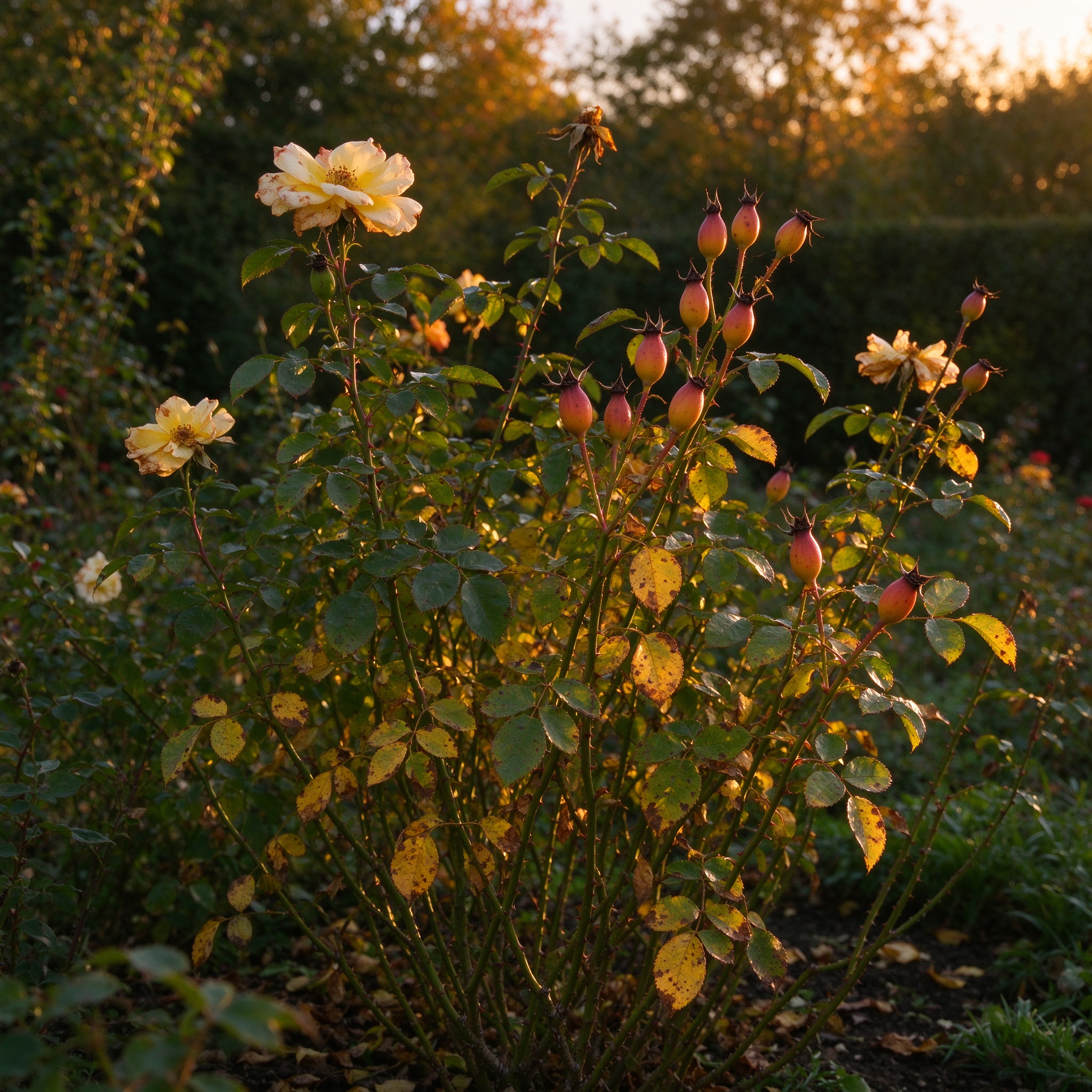
- •Flowers are followed by fleshy red-orange fruit called rose hips, which feed birds and wildlife and are used in teas and jams.
- •Roses are reproduced commercially by grafting onto hardy rootstock, by rooted softwood cuttings on own-root shrubs, and only rarely by seed; seed-grown roses do not resemble the parent and take years to flower.
📋 Quick Facts
Scientific Name: Rosa spp.
Family: Rosaceae
Category: Flower
USDA Zones: Zones 2–11 depending on class; rugosa and shrub types to zone 2, hybrid teas generally zones 5–9.
Light:
- •Roses need at least six hours of direct sunlight each day; morning sun is especially valuable because it dries dew from the leaves and cuts down on fungal diseases such as black spot and powdery mildew.
- •Plants in dense shade grow lanky and leggy, produce weak canes and few blooms, and develop a humid, disease-prone canopy; flowering declines in partial shade even on otherwise healthy shrubs.
- •Give climbers and shrubs space from overhanging tree branches and neighboring plants so air circulates freely around the foliage.
- •Potted patio roses should be rotated or moved to track the sun, and grown outdoors rather than indoors, since stagnant air and poor light bring pests and disease to confined plants.
Water:
- •Water roses deeply and regularly during the first growing season to establish roots, then provide about 1 inch of water every 7 to 10 days during dry spells, soaking the root zone rather than sprinkling lightly.
- •Mature shrubs are somewhat drought tolerant, but bloom and disease resistance suffer when soil stays dry around the roots.
- •Prefer drip irrigation or soaker hoses that deliver water at the base of the plant and keep foliage dry; overhead sprinkling wets leaves and promotes black spot, powdery mildew, and rust.
- •In summer heat, check soil moisture several inches deep before watering; reduce watering gradually in fall as canes harden off for winter.
- •Roses in pots need more frequent checks because containers dry fast; never let a potted rose stand in a saucer of standing water, which rots the roots.
Temperature:
- •Rose hardiness depends on the class: species and shrub roses such as rugosa types survive zone 2 winters, hardy shrub and floribunda types grow in zones 3 to 8, while hybrid teas, grandifloras, and tender modern hybrids are usually rated zones 5 to 9 and need winter protection in colder areas; warm-climate gardeners in zones 9 to 11 grow heat-tolerant varieties and own-root shrubs.
- •Plants break dormancy when soil and air temperatures rise in spring, bloom through summer, and harden off before winter cold.
- •Sudden late frosts after bud break blacken new shoots; protect newly leafed plants with covers during frost warnings.
- •Container roses should be moved to an unheated garage or sheltered position for winter, watered sparingly, and returned outdoors when danger of frost has passed.
Soil:
- •Roses thrive in loose, friable loam rich in organic matter with good drainage and a slightly acid to neutral pH between 6.0 and 6.8.
- •Amend heavy clay with compost, aged manure, coarse sand, and humus to open drainage; improve sandy soil with compost and peat or leaf mold to hold moisture around the roots.
- •Roses dislike waterlogged soil, which causes root rot and collar canker, so plant in raised beds or berms where drainage is poor.
- •The planting hole should be wide rather than deep: roots spread horizontally near the surface, and adding a thick layer of composted organic mulch over the root zone renews the soil year after year.
- •Test soil every few years and adjust pH with sulfur for overly sweet soil or lime where acidity is excessive.
Harvest:
- •Cut roses for bouquets early in the morning when buds are just beginning to open and feel firm; choose stems with two to three sets of healthy leaves and flowers whose outer petals have just unfurled.
- •Cut at a 45-degree angle above an outward-facing bud eye, strip leaves below the future water line, recut under water, and use clean, sharp shears.
- •Vase life runs five to ten days depending on variety.
- •Deadheading garden roses follows the same rule: remove faded blooms down to the first strong, outward-facing leaf with five leaflets, to encourage the next flush.
- •Stop deadheading and cutting flowers about three to four weeks before the average first frost so new growth hardens off and the plant enters dormancy safely.
- •In fall, leave the last blooms on some varieties to form rose hips, which feed birds and add winter interest to the shrub.
Common Problems: Black spot on leaves in wet weather; powdery mildew on shaded or crowded foliage; rust on leaf undersides; aphids clustering on new shoots; thrips distorting buds; spider mites in hot dry weather; Japanese beetles and rose chafers skeletonizing leaves; rose sawfly larvae chewing foliage; canker on stems; root rot in waterlogged soil; winter dieback in exposed sites.
📅 When to Plant
- •Plant bare-root roses in early spring as soon as the soil can be worked, or in fall in mild-winter zones; potted and own-root roses can be set out from spring through early fall, giving roots time to establish before frost.
- •Bare-root plants should be soaked in water for 8 to 12 hours before planting.
- •Choose a site with at least six hours of direct sun and good air movement; prepare a generous hole twice as wide as the root spread, loosening heavy soil and working in compost or well-rotted manure.
- •Set the plant so the graft union (the swollen knuckle where the variety joins the rootstock) sits about 2 inches below the soil surface in cold zones, at or just above the surface in warm zones.
- •Backfill with the amended soil, firm around the roots, and water thoroughly to settle air pockets; then apply a 2- to 4-inch organic mulch around the base, kept away from the canes.
- •Plant in the morning, avoid crushing the roots, and water regularly through the first growing season until the root system is established.
🌱 Growing Stages
 1
Winter dormancy
(Late fall through early spring)- •Leaves drop in cold climates, and the plant rests as woody canes above a root system that stores carbohydrates for spring.
- •Hardy species and shrubs survive zone 2 winters on their own; grafted hybrid teas need a mound of soil or mulch over the graft union and protection from wind and freeze-thaw cycles.
- •Do not prune or fertilize during deep dormancy.
 2
Spring bud break and shoot growth
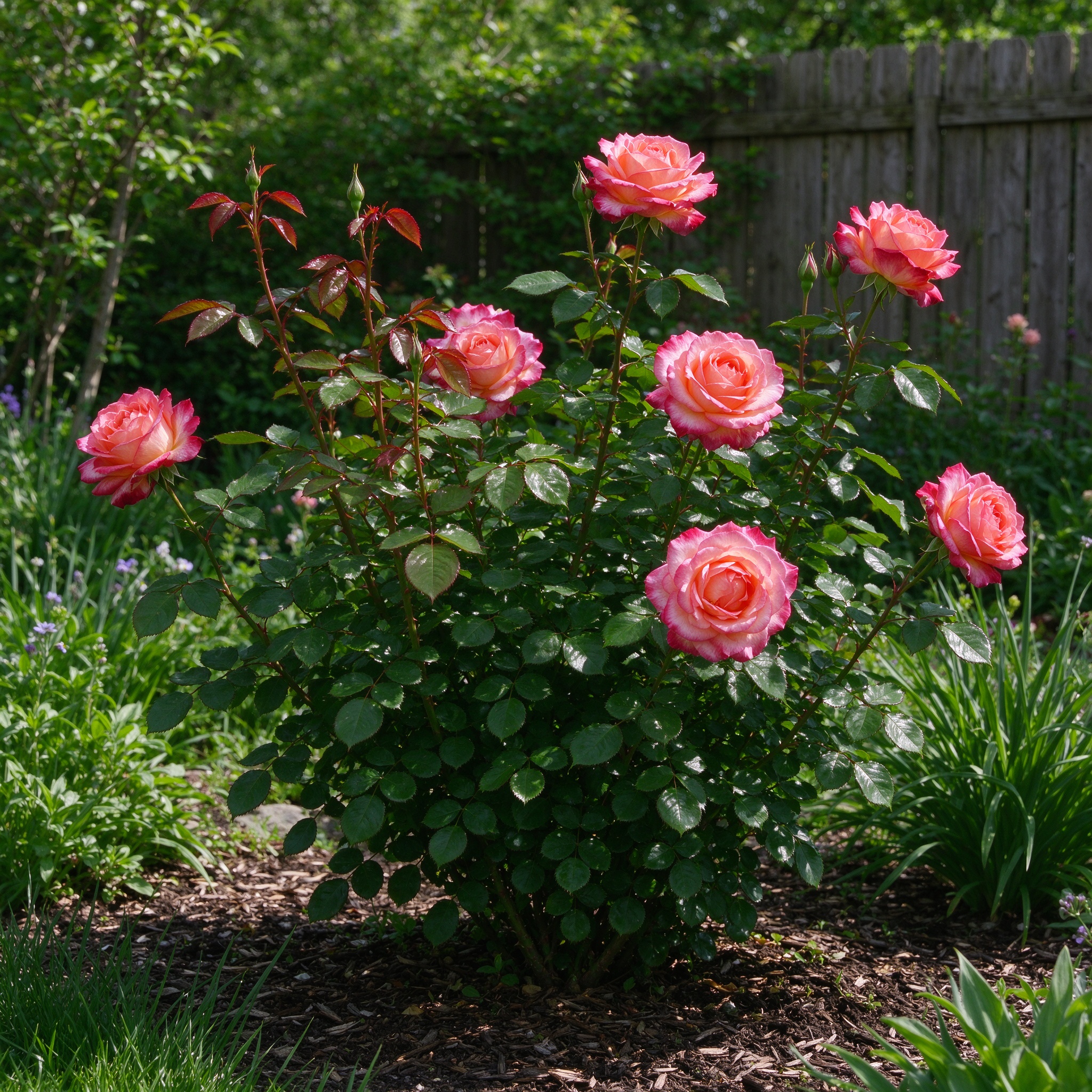
(6 to 10 weeks)- •As soil warms in spring, swelling buds break into tender green shoots and new foliage.
- •Apply the first complete fertilizer once shoots reach about 6 inches, before heavy bloom.
- •Aphids often colonize this soft new growth, and late frost can blacken shoots; protect young growth and keep watering steady as roots recover from winter dormancy.
 3
Bloom flushes through summer
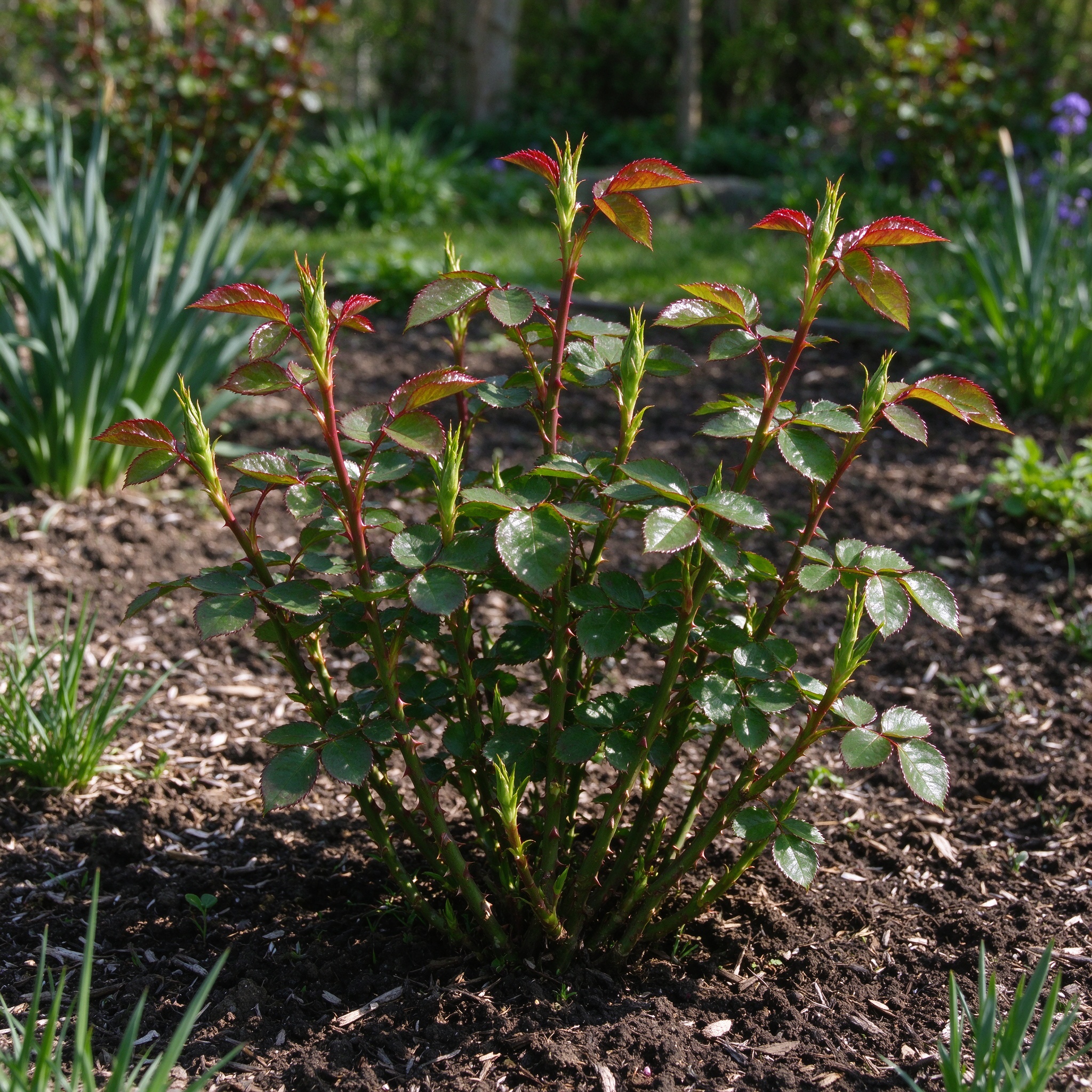
(June through August)- •Repeat-flowering classes produce successive waves of flowers: each flush, a rest period for bud development, then the next round of blooms.
- •Deadheading redirects energy into new side shoots and buds; balanced monthly feeding and phosphorus-rich bloom feed support successive flushes.
- •This is the highest pest and disease pressure period: check leaves for black spot and mildew and keep foliage dry through base watering.
- 4
Late-season hardening and dormancy
(6 weeks before frost through winter)- •Nitrogen feeding stops about six weeks before frost so soft growth matures; potassium-rich feed toughens canes and roses form hips where blooms are left on.
- •Watering tapers off, leaves yellow and fall, and the shrub enters dormancy after a few light frosts.
- •Winter pruning, mulch mounding, and container storage prepare the plant for the coldest weeks of the cycle before spring bud break restarts growth.
💧 Detailed Care Guide
☀️ Light Requirements
- •Roses need at least six hours of direct sunlight each day; morning sun is especially valuable because it dries dew from the leaves and cuts down on fungal diseases such as black spot and powdery mildew.
- •Plants in dense shade grow lanky and leggy, produce weak canes and few blooms, and develop a humid, disease-prone canopy; flowering declines in partial shade even on otherwise healthy shrubs.
- •Give climbers and shrubs space from overhanging tree branches and neighboring plants so air circulates freely around the foliage.
- •Potted patio roses should be rotated or moved to track the sun, and grown outdoors rather than indoors, since stagnant air and poor light bring pests and disease to confined plants.
💧 Watering
- •Water roses deeply and regularly during the first growing season to establish roots, then provide about 1 inch of water every 7 to 10 days during dry spells, soaking the root zone rather than sprinkling lightly.
- •Mature shrubs are somewhat drought tolerant, but bloom and disease resistance suffer when soil stays dry around the roots.
- •Prefer drip irrigation or soaker hoses that deliver water at the base of the plant and keep foliage dry; overhead sprinkling wets leaves and promotes black spot, powdery mildew, and rust.
- •In summer heat, check soil moisture several inches deep before watering; reduce watering gradually in fall as canes harden off for winter.
- •Roses in pots need more frequent checks because containers dry fast; never let a potted rose stand in a saucer of standing water, which rots the roots.
🌡️ Temperature
- •Rose hardiness depends on the class: species and shrub roses such as rugosa types survive zone 2 winters, hardy shrub and floribunda types grow in zones 3 to 8, while hybrid teas, grandifloras, and tender modern hybrids are usually rated zones 5 to 9 and need winter protection in colder areas; warm-climate gardeners in zones 9 to 11 grow heat-tolerant varieties and own-root shrubs.
- •Plants break dormancy when soil and air temperatures rise in spring, bloom through summer, and harden off before winter cold.
- •Sudden late frosts after bud break blacken new shoots; protect newly leafed plants with covers during frost warnings.
- •Container roses should be moved to an unheated garage or sheltered position for winter, watered sparingly, and returned outdoors when danger of frost has passed.
🌱 Soil & Fertilizer
Soil:
- •Roses thrive in loose, friable loam rich in organic matter with good drainage and a slightly acid to neutral pH between 6.0 and 6.8.
- •Amend heavy clay with compost, aged manure, coarse sand, and humus to open drainage; improve sandy soil with compost and peat or leaf mold to hold moisture around the roots.
- •Roses dislike waterlogged soil, which causes root rot and collar canker, so plant in raised beds or berms where drainage is poor.
- •The planting hole should be wide rather than deep: roots spread horizontally near the surface, and adding a thick layer of composted organic mulch over the root zone renews the soil year after year.
- •Test soil every few years and adjust pH with sulfur for overly sweet soil or lime where acidity is excessive.
Fertilizer:
- •Roses respond to a deliberate, season-long feeding program matched to growth stage.
- •At planting, mix finished compost or well-rotted manure and a handful of bone meal into the backfill; do not apply strong synthetic fertilizer at planting, which can burn fresh roots.
- •In spring, when buds swell and new shoots reach about 6 inches long, apply a complete balanced rose fertilizer such as 5-10-5 or 4-8-4, or a general 10-10-10, spread evenly over the root zone and watered in well.
- •Repeat-flowering roses then receive a light balanced feed about once a month from spring through mid-summer; as a bloom flush approaches, switch to a fertilizer higher in phosphorus (for example 4-8-4 or 3-10-5) to support flower size and color, since phosphorus drives bloom development.
- •Late summer feeding should reduce nitrogen and emphasize potassium, which hardens canes and builds winter cold resistance: apply a potassium-rich feed such as kelp, alfalfa meal, or a 0-10-10 formula as summer fades.
- •Stop applying nitrogen about 6 weeks before the average first frost date — roughly mid-July in northern zones and by the end of July in southern zones — and stop all feeding after that point, since soft late growth succumbs to frost and disease.
- •A slow-release granular rose fertilizer applied once in spring covers feed for two to six months according to the label.
- •Organic soil builders include compost, aged manure, bone meal for phosphorus, kelp or seaweed extract for trace elements, and alfalfa meal for nitrogen and growth stimulants; a 2- to 4-inch composted mulch replenishes organic matter gradually rather than through heavy chemical salts.
- •Always water fertilizer into moist soil rather than spreading it on dry roots, and keep granules off leaves and canes to avoid burn.
- •On potted roses, apply a dilute balanced liquid feed every two to four weeks during growth and flush salts from the pot monthly with plain water.
- •Nutrient deficiency signs to watch: nitrogen deficiency shows uniform yellowing of older leaves; phosphorus deficiency shows dark green or purplish foliage and sparse flowers; potassium deficiency shows scorched brown leaf edges and weak, thin canes.
- •Over-fertilizing causes soft, lush, pest-prone growth, fewer flowers, root burn, and salt buildup in the soil.
📝 Step-by-Step Planting Guide
- 1
Choose a sunny, open planting site
- •Select a spot with at least six hours of direct sun, morning light preferred, and free air movement between shrubs and nearby plants.
- •Avoid low, shaded beds under dense tree canopies and crowded foundation positions where leaves stay wet after rain or dew.
- •Keep climbers away from cold north walls and site shrub roses where mature 3- to 6-foot plants will not shade each other.
- •Check that soil drains after a heavy rain; choose a raised bed or berm in heavy, poorly drained ground.
- 2
Prepare the soil and planting hole
- •Loosen the planting area two feet wide and a foot deep, working finished compost or well-rotted manure into heavy or sandy soil, plus a handful of bone meal to feed new roots.
- •Test and adjust pH toward 6.0 to 6.8; add sulfur to very sweet soil or lime to overly acid ground.
- •Dig a hole twice as wide as the root spread but no deeper than the root ball, mounding a little loose soil at the center so roots spread outward rather than bending upward.
- •Have water and mulch ready before you set the plant.
- 3
Plant bare-root or potted roses correctly
- •Soak bare-root plants for 8 to 12 hours before planting; trim any broken or damaged roots and canes.
- •Set the plant in the hole and spread roots naturally; in cold zones bury the graft union about 2 inches below the surface, in warm zones leave it at soil level.
- •Backfill with amended soil, firm gently with the hands, and water thoroughly to settle air pockets.
- •For potted own-root roses, plant at the same depth as in the pot and loosen circling roots before placing.
- •Apply a 2- to 4-inch organic mulch over the root zone, leaving a gap around the canes, and water again to settle.
- 4
Water and establish the root system
- •Water deeply two or three times a week during the first growing season, soaking the root zone rather than light sprinkling.
- •Prefer drip irrigation or a soaker hose that keeps leaves dry; avoid overhead sprinkling in the afternoon.
- •Check soil moisture several inches deep before watering established shrubs, then provide about 1 inch every 7 to 10 days in dry weather.
- •Pull weeds around the mulch so they do not compete for nutrients and moisture, and protect newly planted canes from strong wind and drying sun.
- 5
Follow the season-long fertilizer program
- •In spring when buds swell and new shoots reach about 6 inches, apply a balanced rose fertilizer such as 5-10-5, 4-8-4, or 10-10-10 over the root zone and water in thoroughly.
- •Repeat-flowering roses receive a light balanced feed monthly through mid-summer, switching to high-phosphorus feed before bloom flushes, and high-potassium feed in late summer to harden canes.
- •Stop nitrogen about six weeks before the first frost and all feeding afterward.
- •Keep fertilizer off leaves and canes, and water into moist soil; renew the compost mulch each spring rather than relying on concentrated chemical salts.
- 6
Prune, deadhead, and protect through winter
- •Deadhead spent blooms down to the first outward-facing five-leaflet leaf, stopping this practice three to four weeks before frost.
- •Perform the main renewal pruning in late dormant season: remove dead, diseased, weak, and crossing canes, open the center to air, and shorten remaining healthy canes according to the rose class.
- •In cold zones, after the soil freezes, mound soil or compost over the base, tie tall climbers to their supports, and wrap or protect tender canes.
- •Container roses move to an unheated garage and rest with sparse watering until spring.
🌱 Recommended Varieties
Long-stemmed exhibition and cut-flower roses
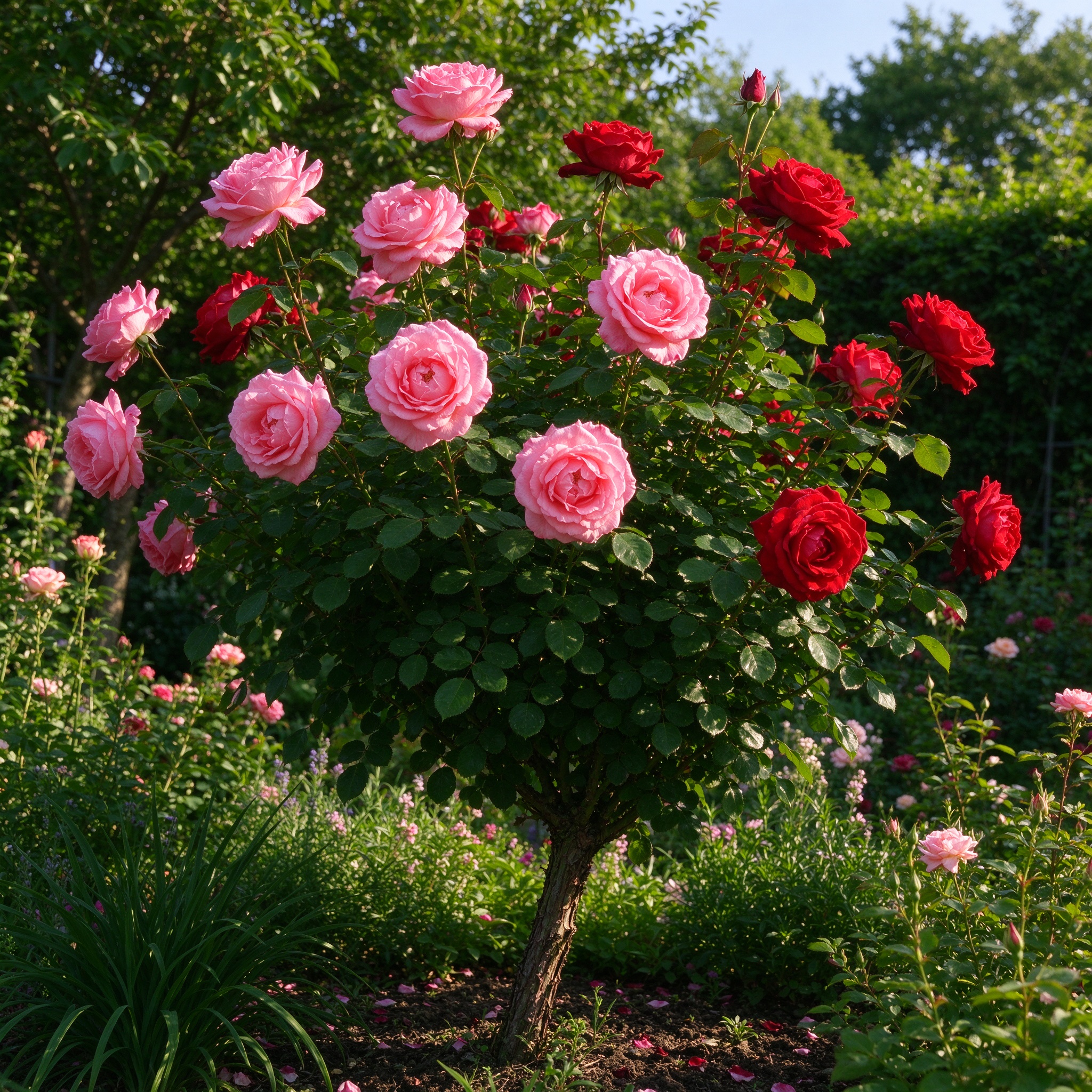
- •Hybrid teas produce one large, high-centered, long-petaled bloom on a single long, upright stem, bred for exhibition, cutting, and fragrance.
- •Bushy shrubs reach 3 to 6 feet with glossy, disease-resistant foliage in modern varieties. Examples include the deep red 'Mr.
- •Lincoln' with strong old-rose fragrance, the bicolor red-and-cream 'Double Delight', the soft pink 'Memorial Day', and the yellow 'Sunsprite'.
- •Hybrid teas are the standard rose for florist bouquets; they need regular spring pruning, monthly feeding through summer, and winter protection in cold zones.
Cluster-flowering landscape shrubs
- •Floribundas carry many flowers in generous clusters over a compact, bushy 2- to 4-foot plant, blooming repeatedly through summer with exceptional hardiness and disease tolerance; grandifloras are taller, 4 to 6 feet, with hybrid tea-style blooms in clusters on sturdy stems.
- •'Iceberg' bears pure white double sprays for cutting and hedges; 'Europeana' produces scarlet clusters; 'Queen Elizabeth' is a grandiflora with pink high-centered blooms.
- •These classes are the most forgiving garden roses, thriving in borders, mass plantings, and foundation beds with less intensive care than hybrid teas.
Hardy landscape and vertical rose forms
- •Shrub and landscape roses such as the Carefree series, Knock Out, and rugosa hybrids form mounding 3- to 5-foot bushes with repeat bloom, tough foliage, and carefree habit; rugosa roses are hardy to zone 2 with crinkled leaves and large hips.
- •Ground-cover roses spread low over banks and edges, while climbers and ramblers reach 8 to 20 feet on arches, fences, and trellises: 'New Dawn' bears fragrant pink clusters on a vigorous climber, and 'Blaze' covers structures in scarlet repeat blooms.
- •These classes provide erosion control, habitat for pollinators and birds, and garden color with minimal pruning.
🪴 Growing in Containers
- Choose miniature and compact patio roses:
- •Only compact miniature roses, patio floribundas, and 2- to 3-foot shrub varieties suit containers; large hybrid teas and climbers need open ground and develop root-bound stress in pots.
- •Use a container at least 12 to 16 inches wide and deep for one rose, with several drainage holes; dwarf roses can share a large tub but should be spaced for air movement.
- •Terracotta breathes and dries fast, while plastic and resin hold moisture longer; whatever the material, pot the rose on pot feet so excess water drains freely.
- Plant in a rich, free-draining potting mix:
- •Fill the container with a premium potting mix blended with compost and a handful of bone meal; garden soil compacts and waterlogs in containers, causing root rot.
- •Set the rose at its nursery depth, firm the mix, and water thoroughly until water runs from the drainage holes.
- •Place the pot on a sunny patio, deck, or balcony railing receiving at least six hours of direct sun, with open air around the foliage; bring the plant inside only temporarily during hard frost, since stagnant indoor air weakens roses and invites pests.
- Water, feed, and overwinter potted roses:
- •Container soil dries quickly in summer: check daily and water when the top inch feels dry, soaking until water drains through, never leaving the pot in a saucer of standing water.
- •Apply a dilute balanced liquid fertilizer every two to four weeks during active growth, switching to phosphorus-rich feed before bloom; flush built-up salts from the pot monthly with plain water running through the drainage holes.
- •Deadhead regularly and prune lightly after each flush.
- •For winter, move the pot to an unheated garage or cold frame, water sparingly so roots do not dry completely, and return outdoors after the last frost.
✂️ Pruning & Maintenance
- ✓
Renewal pruning in late dormant season
- •The main pruning takes place in late winter or early spring before buds swell, after the worst cold has passed.
- •Cut out dead, diseased, weak, thin, and crossing canes first; open the center of the shrub to sun and air; then shorten healthy remaining canes to strong outward-facing buds.
- •Hybrid teas are hard pruned to a framework of three to five strong canes about 18 to 24 inches tall; floribundas and shrubs are shaped more lightly, thinning old wood rather than shearing; climbers are pruned after blooming and trained onto their supports.
- ✓
Deadhead spent blooms through summer
- •Remove faded flowers regularly through the growing season, cutting the stem down to the first strong outward-facing leaf carrying five leaflets, just above a healthy bud eye.
- •Deadheading prevents hip formation, redirects sap into new side shoots and buds, and extends repeat flowering.
- •Cut cleanly with sharp shears at a slant away from the bud; remove any yellowed or black-spotted leaves at the same time.
- •Stop deadheading three to four weeks before the average first frost so late growth matures and the plant hardens off for winter.
- ✓
Winter protection and cane management
- •After the soil freezes in cold zones, mound soil or compost 8 to 10 inches over the base of grafted roses, tie loose climbers to their supports against wind damage, and wrap tender canes in burlap or rose cones.
- •Remove winter cover gradually in spring as buds swell, opening it on cloudy days to avoid sunscald.
- •Remove cankered, frost-killed, and blackened wood at dormant pruning, and keep the shrub thinned so air moves through the interior rather than forming a dense, damp center.
🐛 Pest & Disease Control
Common Pests
Aphids
Symptoms: Dense green, pink, or black colonies cluster on tender new shoots and unopened buds, curling leaves and coating foliage with sticky honeydew that grows black sooty mold; blooms may distort or fail to open.Control:- •Knock colonies off with a strong jet of water for two or three mornings running, and encourage lady beetles, lacewings, and parasitic wasps that prey on aphids.
- •Heavy infestations respond to insecticidal soap or horticultural oil applied in cool weather; avoid high-nitrogen fertilizer that produces the soft shoot growth aphids prefer.
Thrips
Symptoms: Slender straw-colored insects feed inside opening buds, causing petals to brown and streak, buds to deform, and flowers to open with silvery, damaged edges; damage appears on blooms before the insects are visible.Control:- •Remove and discard deformed buds that cannot recover, and maintain clean cultivation around the base of the shrub.
- •Apply labeled insecticidal soap or neem oil to opening buds on a cool day; systemic products are available for severe infestations, but timing matters because thrips enter the bud before petals unfurl.
Spider mites
Symptoms: Tiny red or pale mites feed on leaf undersides during hot, dry weather, producing pale speckling, fine webbing, and bronzed or yellowed foliage that drops early; damage spreads fastest on dusty, water-stressed roses.Control:- •Spray leaf undersides with water to raise humidity, keep plants adequately watered, and encourage predatory mites.
- •Insecticidal soap or horticultural oil applied to leaf undersides controls mites before populations build; avoid broad-spectrum pesticides that kill beneficial mites responsible for natural control.
Japanese beetles and rose chafers
Symptoms: Metallic green beetles or pale tan chafers cluster on leaves and flowers in early summer, skeletonizing foliage between veins and chewing ragged holes in petals; damage is concentrated on the sunniest shrubs.Control:- •Hand-pick beetles into soapy water each morning while numbers are low, and use pheromone traps placed far from the roses rather than beside them.
- •Neem or labeled pyrethrin sprays reduce feeding; avoid broad-spectrum insecticides on open blooms that attract bees and other pollinators.
- •Remove nearby weed hosts and keep fallen foliage cleaned up at season's end.
Common Diseases
Black spot
Symptoms: Circular black spots with fringed edges appear on upper leaf surfaces in wet weather, followed by yellowing and premature leaf drop; weak, leafless shrubs enter winter stressed and produce poor bloom the following season.Control:- •Grow resistant varieties, plant in full sun with wide spacing and good air movement, and water at the base rather than overhead.
- •Rake and destroy infected fallen leaves in fall, and remove spotted foliage during the season.
- •Fungicides labeled for black spot (neem, sulfur, or myclobutanil) protect healthy leaves when applied on a regular schedule from spring leaf emergence; prevention matters more than curing infected leaves.
Powdery mildew
Symptoms: A white to grayish powdery coating covers young leaves, buds, and shoots in warm, humid, shaded conditions; leaves curl and distort, buds fail to open, and new growth becomes stunted.Control:- •Plant in full sun, space shrubs for air circulation, and prune out dense inner growth to open the center.
- •Water at the base and avoid high-nitrogen fertilizer that produces soft, susceptible shoots.
- •Remove heavily infected foliage; sulfur or potassium-bicarbonate fungicides at the first sign slow spread, and resistant modern shrub and floribunda varieties suffer less than old garden roses.
Rust
Symptoms: Orange-brown pustules break out on leaf undersides, followed by yellow spots on the upper surface; heavily affected leaves drop and the shrub weakens through the growing season, appearing on susceptible varieties in cool, wet springs.Control:- •Rake and destroy infected fallen leaves at season's end, space plants for airflow, and keep foliage dry through base watering.
- •Remove severely spotted leaves during summer and apply labeled fungicides as a protective spray after cool, wet periods; choose rust-resistant shrub varieties in regions with recurring outbreaks.
Canker and root rot
Symptoms: Canker appears as dead, discolored, sunken lesions on canes that girdle stems and kill sections of the shrub; root rot causes overall yellowing, wilting, and stunting in waterlogged soil, with soft brown roots at the crown.Control:- •Prune out canker-affected wood well below the lesion with clean tools and sanitize shears between cuts; avoid wounding canes during routine work.
- •Prevent root rot by planting in drained soil or raised beds, watering at the root zone, and never allowing standing water around the crown.
- •Discard severely affected plants rather than expecting chemical recovery; improve drainage and replant with own-root roses after amending the soil.
🍅 When to Harvest
- •Cut roses for bouquets early in the morning when buds are just beginning to open and feel firm; choose stems with two to three sets of healthy leaves and flowers whose outer petals have just unfurled.
- •Cut at a 45-degree angle above an outward-facing bud eye, strip leaves below the future water line, recut under water, and use clean, sharp shears.
- •Vase life runs five to ten days depending on variety.
- •Deadheading garden roses follows the same rule: remove faded blooms down to the first strong, outward-facing leaf with five leaflets, to encourage the next flush.
- •Stop deadheading and cutting flowers about three to four weeks before the average first frost so new growth hardens off and the plant enters dormancy safely.
- •In fall, leave the last blooms on some varieties to form rose hips, which feed birds and add winter interest to the shrub.
❓ Frequently Asked Questions
- 1
When should I fertilize roses?
- •Begin fertilizing in spring when buds swell and new shoots reach about 6 inches long, applying a balanced complete rose fertilizer such as 5-10-5, 4-8-4, or 10-10-10 over the root zone and watering in thoroughly.
- •Repeat-flowering roses receive a light balanced feed about once a month from spring through mid-summer; switch to a high-phosphorus fertilizer before each bloom flush to support flower size and color, then use a high-potassium feed in late summer to harden canes for winter.
- •Stop applying nitrogen about six weeks before your average first frost date (around mid-July in northern zones and by the end of July in southern zones) and stop all feeding after that; soft late growth damaged by frost and disease is the result of fertilizing too late.
- •Apply fertilizer to moist soil, keep granules off leaves and canes, and renew a compost mulch each spring rather than over-applying concentrated chemical salts.
- •Container roses get a dilute balanced liquid feed every two to four weeks during growth, with monthly salt flushing from the pot.
- 2
What is the best fertilizer for roses?
- •The best choice matches the season: a balanced complete fertilizer such as 10-10-10 or a rose-specific 5-10-5 works for spring shoot growth; during bloom flushes, a higher-phosphorus blend such as 4-8-4 or 3-10-5 supports flower production; late summer calls for potassium-rich feed such as kelp, alfalfa meal, or a 0-10-10 formula to toughen canes.
- •Organic growers build soil with finished compost, aged manure, bone meal for phosphorus, kelp or seaweed extract for trace elements, and alfalfa meal for gentle nitrogen; a 2- to 4-inch composted mulch feeds the root zone gradually.
- •A slow-release granular rose fertilizer applied once in spring feeds for two to six months according to the label.
- •Roses do not respond well to high-nitrogen lawn fertilizer, which grows leaves instead of flowers and produces soft, pest-prone growth.
- •Watch deficiency signs: older leaves yellow evenly in nitrogen deficiency; dark green or purplish leaves and sparse blooms indicate low phosphorus; scorched leaf edges and weak canes signal potassium deficiency.
- 3
How to grow roses from seeds?
- •Rose seeds are slow and unreliable, and seed-grown plants rarely resemble the parent: commercial and garden roses are propagated almost exclusively by grafting onto hardy rootstock or by rooting softwood cuttings on own-root shrubs.
- •If you want to experiment, collect ripe rose hips in fall, cut them open and extract the hairy seeds, then cold-stratify them for 6 to 12 weeks at 32 to 45°F (0 to 7°C) in moist peat or paper towel, either in a refrigerator or outdoors under mulch.
- •Sow stratified seed in a sterile seed-starting mix in late winter, barely cover, and keep at 65 to 70°F; germination takes weeks to months and may be uneven.
- •Seedlings grow slowly, need two to three years before first bloom, and flowers vary widely in color, form, and hardiness because they are sexual hybrids rather than clones.
- •For reliable plants identical to a favorite rose, take a softwood cutting in early summer or purchase a grafted or own-root shrub from a reputable nursery rather than starting from seed.
- 4
How to save rose seeds?
- •Save rose seeds from mature rose hips left on the shrub after bloom: hips ripen into firm, red or orange-red fleshy fruit in fall, after the first light frost.
- •Cut hips open and scoop out the seeds, rubbing away the pulpy coating and hairs over a screen under running water until seeds are clean.
- •Rose seed requires cold, moist stratification to break dormancy: mix clean seed with damp peat moss or a moist paper towel, seal in a bag, and refrigerate for 6 to 12 weeks at 32 to 45°F (0 to 7°C), checking for mold and germination periodically.
- •After stratification, sow seeds in sterile seed-starting mix, cover lightly, and keep at 65 to 70°F in bright light.
- •Remember that seeds from hybrid roses do not come true: seedlings revert to mixed species characteristics, weak growth, and unpredictable flowers, so saved seed is mainly a breeding or educational project.
- •Hybrid roses sold commercially are grafted onto hardy rootstock, and named varieties are propagated by cuttings to preserve the exact plant.
- 5
How often should I water roses?
- •Water newly planted roses deeply two or three times a week during the first growing season to establish roots; mature shrubs need about 1 inch of water every 7 to 10 days during dry spells, soaking the root zone rather than sprinkling lightly.
- •Drip irrigation or soaker hoses are preferred because they keep foliage dry, which prevents black spot, powdery mildew, and rust; overhead sprinkling in the wettest part of the day invites fungal disease.
- •Check soil moisture several inches deep before watering; do not water on a fixed schedule if soil stays moist after rain.
- •Gradually reduce watering in fall as canes harden off, and water container roses whenever the top inch of potting mix dries, never leaving the pot in standing water.
- •Roses in sandy soil need more frequent soaking than those in heavy loam.
- 6
When do I prune roses?
- •The main renewal pruning happens in late winter or early spring before buds swell, once the worst winter cold has passed: remove dead, diseased, weak, and crossing canes, open the shrub center to air and sun, and shorten healthy canes to outward-facing buds according to the rose class.
- •Hybrid teas are hard-pruned to a framework of three to five strong canes; floribundas and shrub roses are thinned lightly rather than sheared; climbers are pruned after their spring bloom and trained onto supports.
- •During summer, deadhead spent flowers down to the first outward-facing five-leaflet leaf, but stop deadheading three to four weeks before the average first frost so new growth matures.
- •In cold zones, winter protection includes mounding soil over graft unions and tying climbers before hard freeze.
Source:
NC State Extension Gardener Plant Toolbox — Rosa spp. — https://plants.ces.ncsu.edu/images/plants/rosa/
The Old Farmer's Almanac — Roses: Planting, Growing, and Caring — https://www.almanac.com/plant/roses
Purdue University Extension — Roses (HO-128) — https://edustore.purdue.edu/ho-128-w.html
ASPCA — Do You Know Which Flowers and Plants Are Toxic to Pets? — https://www.aspca.org/news/do-you-know-which-flowers-and-plants-are-toxic-pets-our-experts-explain
Photo credit: NC State Extension
Images courtesy of NC State Extension under CC BY license. Thank you to the photographers who make these educational images available.
License: CC BY-NC 2.0 / CC BY 4.0