
How to Grow ZZ Plant: Complete Guide
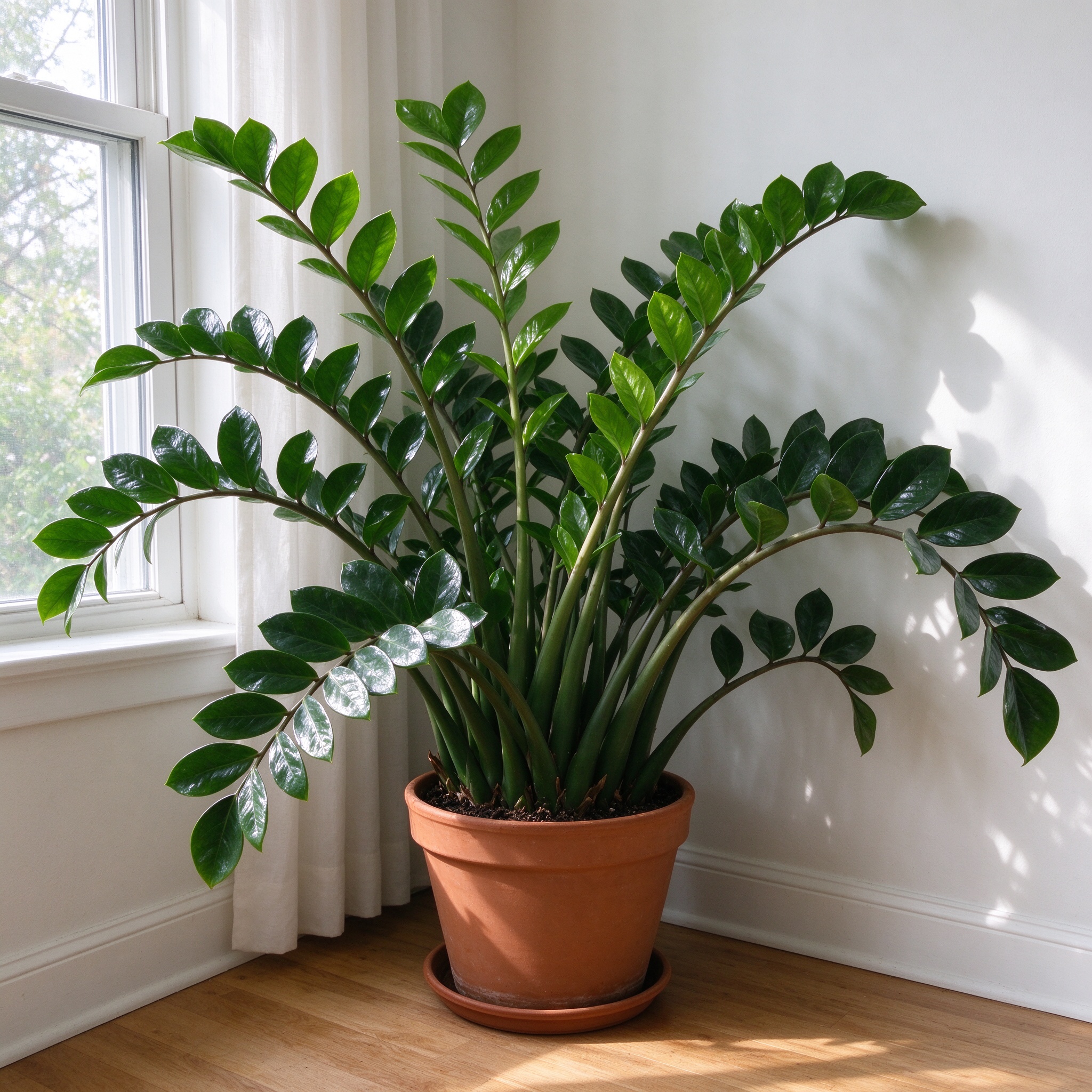
- •ZZ plant (Zamioculcas zamiifolia) is a rhizomatous, evergreen herbaceous perennial in the aroid family (Araceae), native to tropical East Africa from Kenya to South Africa.
- •It grows slowly to 2 to 4 feet tall, sending up glossy, pinnately compound leaves on thick, fleshy stalks that rise directly from a bulbous underground rhizome.
- •Those fleshy rhizomes and leaflets store water, which is what makes the plant extraordinarily drought tolerant and one of the easiest low-maintenance houseplants for beginners, offices, and commercial interiorscapes.
- •It tolerates very low light, even rooms lit only by fluorescent tubes, though it grows best in bright indirect light.
- •All parts contain calcium oxalate and are moderately toxic to cats and dogs, and the sap can irritate skin, so wear gloves when repotting or pruning.
📋 Quick Facts
Scientific Name: Zamioculcas zamiifolia
Family: Araceae
Category: Houseplant
USDA Zones: 9-11 (houseplant)
Light:
- •ZZ plants grow in nearly full shade to bright indirect light and are frequently used in dim interiorscapes, but they will scorch and brown if placed in direct sun.
- •Very low light slows growth and keeps plants smaller; a bright corner a few feet from a window without direct sun gives the best balance of speed and color.
- •Fluorescent office lighting is enough to keep one alive and steady.
Water:
- •Treat ZZ plants like cacti and other succulents: water deeply only when the soil has dried out completely.
- •That works out to about twice a month in summer, and as little as once a month in winter when the plant is not actively growing.
- •Wet feet are not tolerated and are the single most common cause of decline, so err on the dry side and never let the pot sit in a saucer of standing water.
Temperature:
- •ZZ plants are tropical and should be kept above 60 degrees F; any indoor room heated to a normal 65 to 75 degrees F range suits them perfectly.
- •If you move a container outdoors for summer, bring it back inside as soon as nighttime temperatures start falling below 60 F.
- •Avoid cold drafts, air-conditioning blasts, and sudden swings near heating vents.
Soil:
- •Pot in well-drained, loose potting soil; in the open landscape NC State notes highly organic or sandy soils with good drainage.
- •For a houseplant, any standard well-draining potting mix works, and mixing in sand or perlite gives extra insurance against root rot.
- •Do not pack the soil tightly around the rhizome; a loose, airy mix lets the thick rhizomes breathe.
Harvest:
- •There is no edible harvest on a ZZ plant.
- •The 'payoff' moment is when the plant finally fills out its pot with upright, glossy fronds, or when the rhizome has expanded enough to divide in spring to make new plants.
- •Leaf-cuttings also mature into plantlets over many months; that propagation milestone is the indoor equivalent of a harvest.
Common Problems:
- •Almost every ZZ problem traces back to watering: overwatering causes yellow leaves, brown spots with yellow halos, dramatic wilting, smelly roots, and eventually rhizome rot.
- •Direct sun scalds the leaves to brown. Low light makes growth leggy and slow.
- •Watch for scale insects, mealybugs, and, when the soil stays wet, fungus gnats. The sap is a skin irritant, so wear gloves when handling.
⚠️ Pet Safety Warning
This plant is toxic to both cats and dogs.
Contains calcium oxalates, toxic to cats and dogs. Causes oral irritation and vomiting.📅 When to Plant
- •ZZ plants are sold year-round at nurseries and houseplant shops, so you can buy one indoors any month.
- •Because the species is slow-growing and almost never needs repotting, the best window to repot or divide is spring or summer, when the plant is active and can recover quickly.
- •Move a plant up a size only when the rhizomes are visibly pressing against the sides of the pot or the old potting mix has worn out.
🌱 Growing Stages
 1
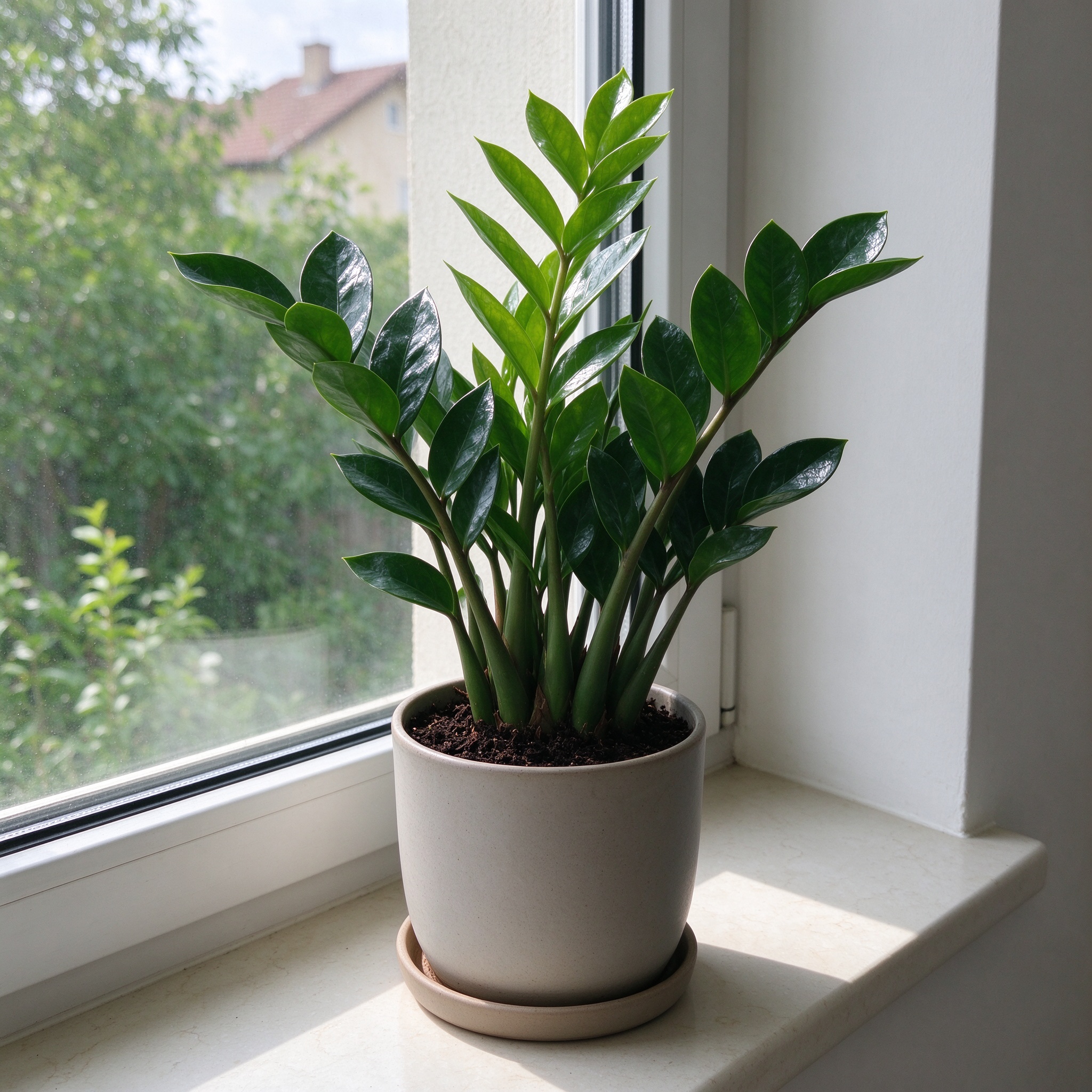
Acclimation stage (first month)
(First 2 to 4 weeks after purchase)- •A new ZZ is adjusting to your home's light and temperature after leaving the nursery.
- •Do not repot or fertilize immediately; let it settle in bright indirect light and water only when the soil has fully dried.
- •A leaf or two may yellow during this settling-in, which is normal. Wait for one new upright frond before changing anything.
 2
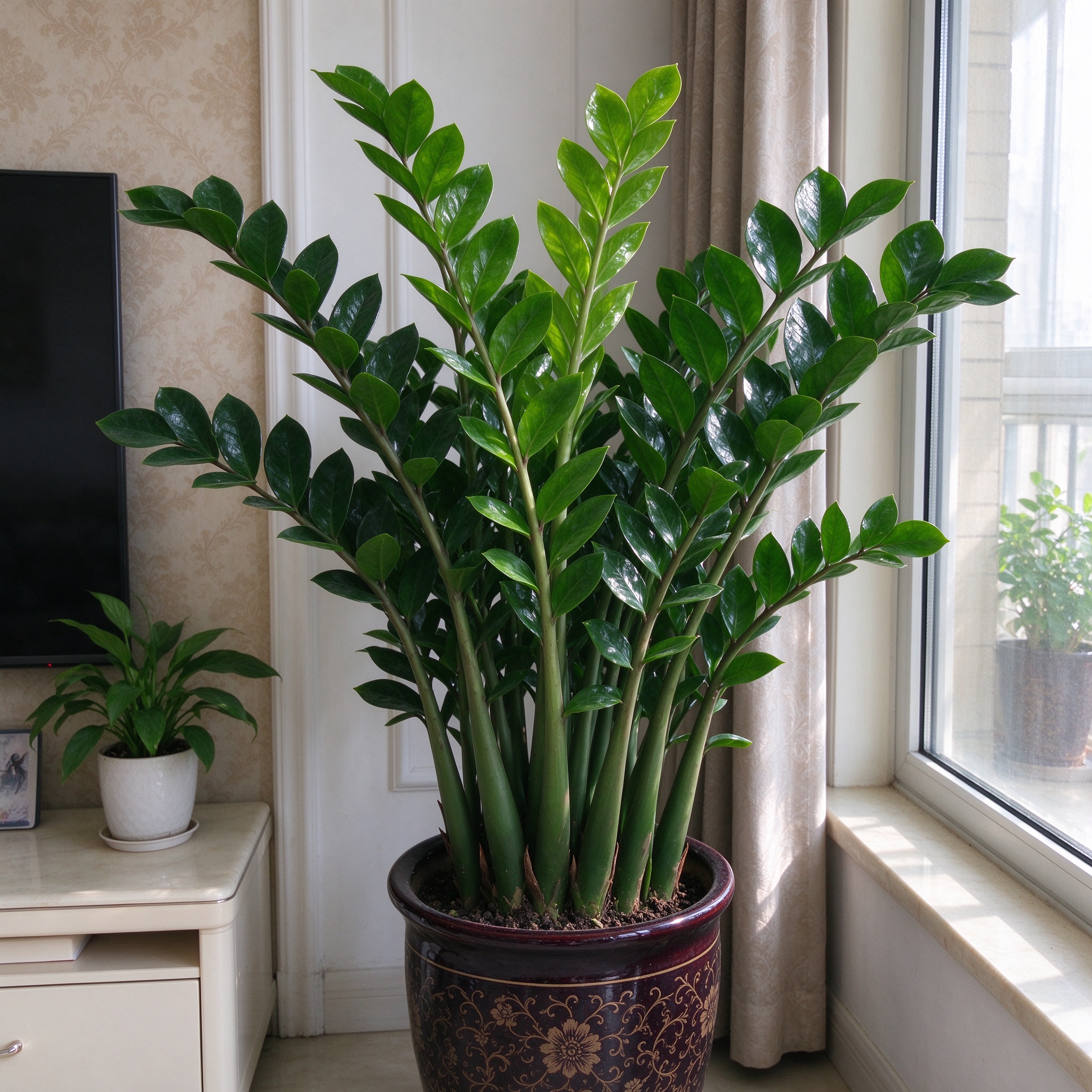
Rhizome establishment
(1 to 6 months)- •During this stage the underground rhizome swells and expands, building the plant's water reserve.
- •Above ground, growth is slow: a few new glossy fronds a year is normal. Keep the soil dry between waterings and resist the urge to feed.
- •The rhizome should feel firm and full, not soft or wrinkled. Wrinkled rhizomes mean the plant has gone too long without water.
 3
Foliage maturation
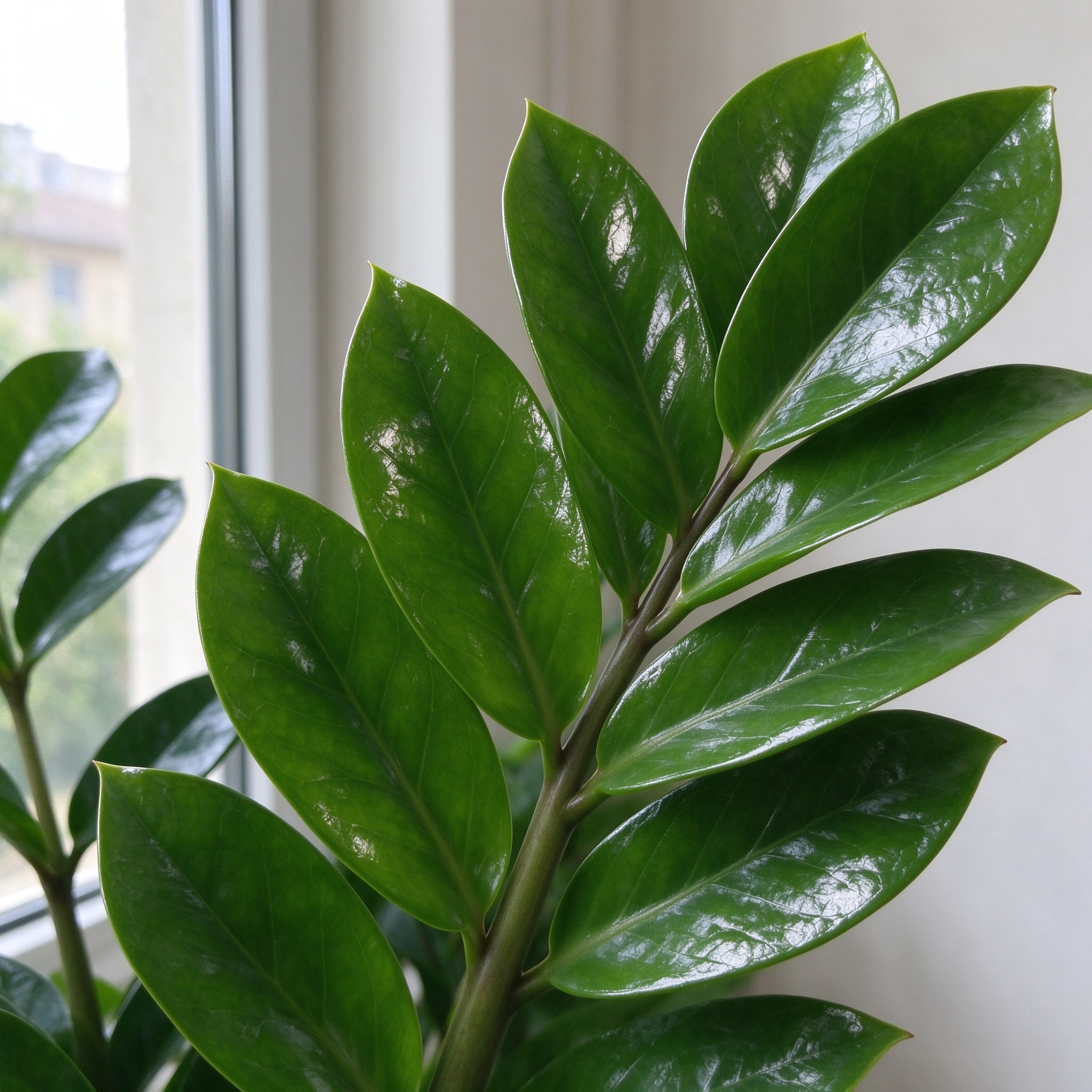
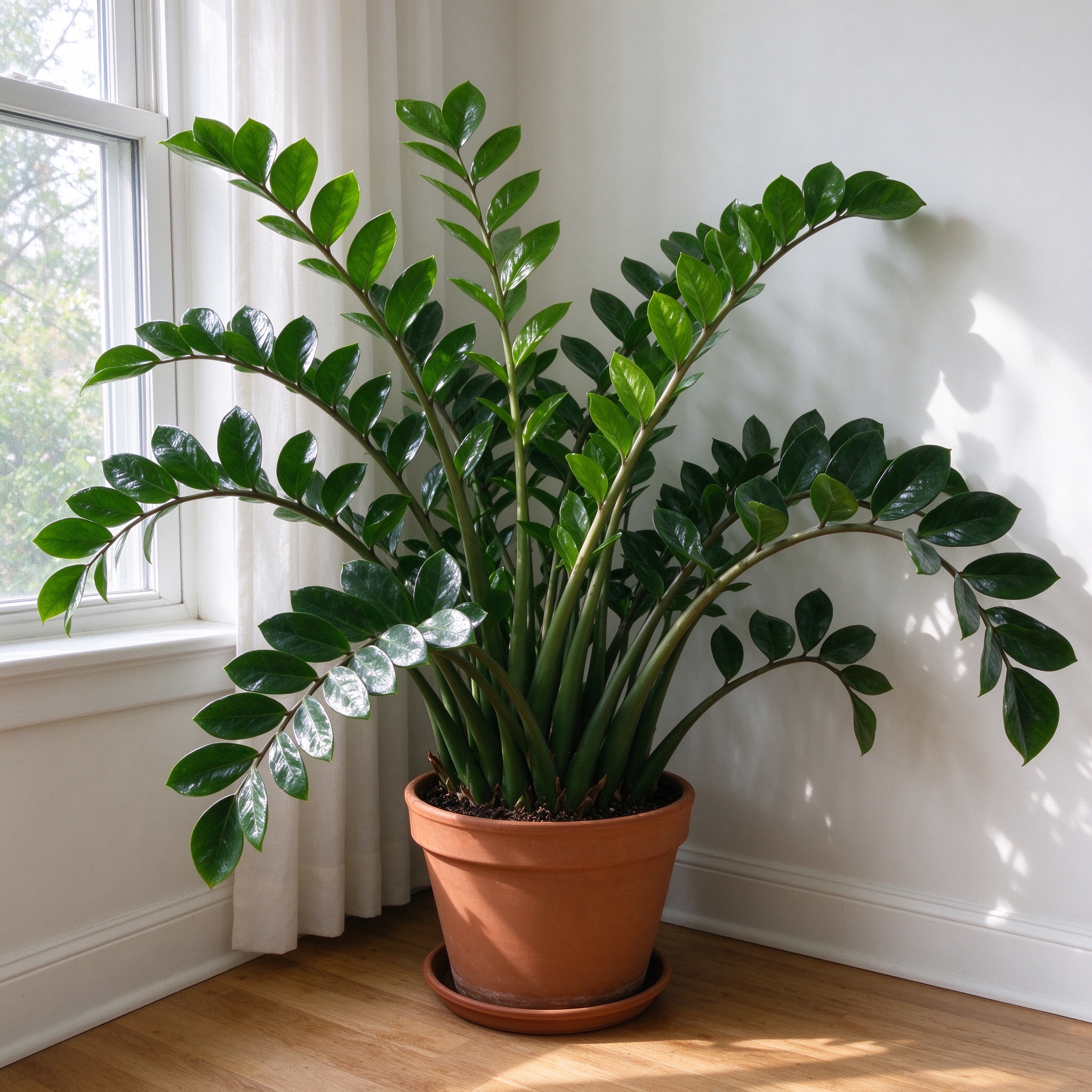
(6 months to 2+ years)- •Mature ZZ plants push up thick, glossy, pinnate fronds that slowly reach 2 to 4 feet tall.
- •Each new frond opens lime-green and darkens to deep glossy green as it hardens off.
- •At this stage the plant looks architectural and upright, with leaflets arranged evenly along the rachis.
- •Bright indirect light keeps the color deep; dim light keeps the same fronds shorter and smaller.
 4
Propagation / division cycle
(Spring or summer)- •Once the rhizome has filled the pot, the plant is ready to be divided.
- •Pull the cluster apart so each piece keeps a stem and roots, or root individual leaflets in gritty mix.
- •New plants are slow: a division takes months to settle, and a leaf cutting can take six months or more to form its own rhizome.
- •This slow cycle is the indoor 'harvest' moment of making more ZZ plants.
💧 Detailed Care Guide
☀️ Light Requirements
- •ZZ plants grow in nearly full shade to bright indirect light and are frequently used in dim interiorscapes, but they will scorch and brown if placed in direct sun.
- •Very low light slows growth and keeps plants smaller; a bright corner a few feet from a window without direct sun gives the best balance of speed and color.
- •Fluorescent office lighting is enough to keep one alive and steady.
💧 Watering
- •Treat ZZ plants like cacti and other succulents: water deeply only when the soil has dried out completely.
- •That works out to about twice a month in summer, and as little as once a month in winter when the plant is not actively growing.
- •Wet feet are not tolerated and are the single most common cause of decline, so err on the dry side and never let the pot sit in a saucer of standing water.
🌡️ Temperature
- •ZZ plants are tropical and should be kept above 60 degrees F; any indoor room heated to a normal 65 to 75 degrees F range suits them perfectly.
- •If you move a container outdoors for summer, bring it back inside as soon as nighttime temperatures start falling below 60 F.
- •Avoid cold drafts, air-conditioning blasts, and sudden swings near heating vents.
🌱 Soil & Fertilizer
Soil:
- •Pot in well-drained, loose potting soil; in the open landscape NC State notes highly organic or sandy soils with good drainage.
- •For a houseplant, any standard well-draining potting mix works, and mixing in sand or perlite gives extra insurance against root rot.
- •Do not pack the soil tightly around the rhizome; a loose, airy mix lets the thick rhizomes breathe.
Fertilizer:
- •ZZ plants need very little feeding. Use a balanced liquid houseplant fertilizer once or twice a year, in spring or summer, diluted to half strength.
- •Over-fertilizing burns the rhizomes and contributes to leaf tip browning, so less is more.
- •Skip fertilizer entirely in fall and winter, and never feed a newly repotted plant until it has settled for at least a month.
📝 Step-by-Step Planting Guide
- 1
Choose a bright indirect spot and a tight pot
- •Set your ZZ plant in bright indirect light or partial shade, a few feet back from a window, and keep it out of direct sun, which scalds and browns the glossy leaflets.
- •It tolerates dim rooms and even fluorescent-lit offices, but it grows faster and looks richer with more light.
- •Choose a container with drainage holes that is only one or two sizes larger than the nursery pot; oversized pots hold extra wet soil around the rhizomes and invite root rot.
- •Terra-cotta is an excellent choice because it wicks moisture away from the roots and makes it visually obvious when the soil has dried out.
- 2
Repot in fast-draining mix (with gloves)
- •ZZ sap can irritate skin, so put on gloves before you start.
- •Gently wriggle the old pot off the root ball, running a knife around the inside edge if it sticks.
- •Use fresh, loose, well-draining houseplant mix, optionally with sand or perlite mixed in, and plant the rhizome at exactly the same depth it was growing before; burying the rhizome too deep causes rot.
- •Fill in around the sides without packing tightly, because the thick rhizomes need air.
- •After potting, wait a few days before the first watering, then water deeply once and let the pot drain completely into the sink.
- 3
Water like a cactus: deeply, then wait
- •The golden rule with ZZ is patience: water deeply only when the entire root ball has dried out completely.
- •In summer that is roughly twice a month; in winter, when the plant rests, cut back to about once a month.
- •Push a finger an inch or two into the soil — if it feels even slightly damp, wait another week.
- •Always water until it runs out the drainage holes, then empty the saucer.
- •Yellow lower leaves, brown spots with yellow halos, and dramatic overnight wilting are almost always overwatering, not thirst.
- 4
Feed lightly and keep the leaves clean
- •ZZ plants need very little nutrition: a balanced liquid houseplant fertilizer once or twice a year, in spring or summer, diluted to half the label strength, is plenty.
- •Too much fertilizer burns the thick rhizomes and can brown the leaf tips.
- •Dust the glossy leaflets occasionally with a soft, damp cloth so the plant can breathe and photosynthesize; leaf-shine products are unnecessary and can clog the pores.
- •Wiping also lets you inspect the stems and leaf axils for scale and mealybugs before they build up.
- 5
Propagate by division or leaf cuttings
- •The easiest propagation is division at repotting time: pull a crowded rhizome cluster apart by hand or with a clean knife, making sure each piece has at least one growing stem and some roots, and pot the divisions into their own small pots.
- •Leaf cuttings also work: snip a healthy leaflet with a short piece of stem, let the cut callus over for a day, and set it in moist, gritty mix where it will slowly form a new rhizome over many months.
- •Keep the cuttings out of direct sun and water sparingly, as they rot easily if kept wet.
🌱 Recommended Varieties
Classic easy-going cultivars
- •For a first ZZ, the plain species and the broad-leaved standard clones are almost indestructible.
- •The wild-type Zamioculcas zamiifolia (the all-green species itself) is the tough workhorse seen in malls and offices.
- •'Lucky' has wide green leaflets with rounded tips, giving a softer, fuller look than the species.
- •The standard nursery clone sold simply as ZZ plant is also bulletproof. All three shrug off missed waterings, dim corners, and rare feeding.
Dwarf and compact forms
- •If your space is limited, choose a smaller-stature cultivar instead of stunting a standard plant.
- •'Zenzi' is a well-known dwarf with shorter, slightly curled, densely packed leaflets on compact stems, making it ideal for desks and small shelves.
- •'Chameleon' opens with golden-yellow new leaves that transition to dark green as they mature, adding a slow color shift on a compact frame.
- •Both stay noticeably shorter and more upright than the species, and both keep the ZZ drought tolerance.
Dark and statement cultivars
- •Collectors and designers chase the dramatic colored cultivars.
- •Raven™ 'Dowon' produces lime-green new growth that turns a dramatic purple-black as it ages, giving a near-black architectural specimen for modern interiors.
- •Variegated and ragged-leaf sports occasionally appear in the trade and command collector prices.
- •These cultivars need bright indirect light to hold their color and look their best, though they still share the species' legendary tolerance for neglect.
🪴 Growing in Containers
- Choose terra-cotta to fight wet feet:
- •Almanac recommends keeping ZZ plants in well-draining terra-cotta pots, because the porous clay wicks moisture away from the rhizomes and makes the soil dry visibly faster.
- •Plastic pots are fine too, but they force you to be more careful about watering. Whatever the material, the pot must have at least one drainage hole.
- Pot only one size up:
- •Never jump from a 6-inch pot to a 12-inch one. An oversized pot holds too much wet soil around the rhizome and is the classic recipe for root rot.
- •Move up just one or two sizes, and only when rhizomes are visibly pressing against the sides of the pot.
- •ZZ plants are slow-growing and may sit in the same pot for years.
- Use a gritty, fast-draining mix:
- •Any standard well-draining houseplant mix works, but mixing in extra perlite, sand, or orchid bark gives insurance against overwatering.
- •The mix should feel loose and airy, not dense and peaty.
- •Do not pack the soil around the rhizome; leave it slightly loose so the thick storage stems can breathe and expand.
- Mind the planting depth:
- •Set the rhizome at exactly the same depth it grew in the nursery pot.
- •Burying the rhizome too deep is a common cause of rot in ZZ: the top of the rhizome should sit just at or slightly above the soil surface.
- •After repotting, wait a few days before watering to let any bruised roots callus over.
- Pair with a cache pot, but drain properly:
- •ZZ plants look handsome in decorative ceramic cache pots; keep the nursery pot inside the cache pot for easy removal.
- •Always dump the inner pot's saucer after watering — never let the outer cache pot pool water around the roots.
- •Elevating the pot on small feet or pot risers also improves airflow under the rhizome.
✂️ Pruning & Maintenance
- ✓
Remove yellow or damaged fronds
- •Snip off entirely yellowed, brown, or mushy fronds at the base with sterile scissors.
- •ZZ rarely needs pruning for shape, but removing a dying frond lets the plant direct energy into new upright growth.
- •Wear gloves, because the cut stems drip irritating sap.
- ✓
Prune sunburned leaflets
- •If a frond gets scalded by a sudden sunbeam, cut off the worst brown leaflets individually, or remove the whole frond at the base if most of it is damaged.
- •The brown tissue will not recover, so clean cuts keep the plant looking good. New fronds come in dark green once light is corrected.
- ✓
Control height on a leggy plant
- •A ZZ that stretches in dim light can be shortened by cutting the tallest fronds back to near the soil line; new shorter growth will eventually sprout from the rhizome.
- •More reliably, move the plant to brighter indirect light so new fronds come in shorter and sturdier.
- •ZZ does not leaf out on old stems, so prune to the base.
- ✓
Wipe leaves and inspect while grooming
- •Dust the glossy leaflets with a soft damp cloth every few months rather than pruning, and use the chance to inspect stem axils for scale and mealybugs.
- •This light grooming is all the maintenance a ZZ needs; over-pruning weakens a naturally slow grower.
🐛 Pest & Disease Control
Common Pests
Scale insects
Symptoms: Small brown or tan domed bumps stuck to the stems and leaf undersides, sometimes with sticky honeydew on top of the leaves; NC State flags scale as the one pest to watch on ZZ.Control:- •Scrape off individual adults with a fingernail or an old toothbrush, then wipe stems with a diluted alcohol wipe.
- •Treat the whole plant with horticultural oil or insecticidal soap, repeating every two weeks for at least two months, because scale eggs survive the first treatment.
Mealybugs
Symptoms: Cottony white masses tucked at the base of leaf stalks and where leaflets join the rachis, often hidden because the ZZ's leaflets are waxy and dense.Control:- •Dab visible bugs with a cotton swab dipped in rubbing alcohol and spray the plant with insecticidal soap.
- •Isolate the ZZ from other houseplants and check the soil line, because mealybugs can move underground.
- •Repeat weekly until no new cottony spots appear.
Spider mites
Symptoms: Fine speckling on the glossy leaflets, a faint dull cast over the usually shiny surface, and rare fine webbing in dry, over-heated rooms.Control:- •Wipe every leaflet top and bottom with a damp cloth to knock the mites off, and raise humidity around the plant slightly with a pebble tray.
- •Treat persistent outbreaks with insecticidal soap or neem oil sprayed on leaf undersides.
- •ZZ leaflets are thick and waxy, so physical removal works surprisingly well.
Fungus gnats
Symptoms: Tiny black flies hovering over the soil surface; Almanac notes these pests frequent ZZ plants when they are overwatered, because their larvae feed in damp organic matter.Control:- •Fix the watering first: let the soil dry out completely between waterings, which kills the larvae.
- •Sticky yellow cards across the potting surface trap the adults.
- •If gnats persist, drench once with Bt israelensis or let the plant stay dry an extra week or two.
Common Diseases
Rhizome and root rot
Symptoms: Yellowing lower leaves, sudden dramatic wilting although the soil is wet, brown mushy spots on the rhizome, and a sour smell from the pot; it is the ZZ's single most common killer, caused by wet feet.Control:- •Tip the plant out immediately, cut away every brown, soft, smelly piece of rhizome and root with sterile tools, dust the cuts with cinnamon or fungicide powder, and repot into fresh, dry, fast-draining mix in a pot with drainage.
- •Water sparingly until new growth appears, then switch to a fully dry-between-waterings schedule.
Leaf scorch / sunburn
Symptoms: Tan, papery, dead patches on leaflets that faced a suddenly brighter window or an unfiltered sunbeam; NC State warns that scalding and browning can occur in direct sunlight.Control:- •Move the plant back to bright indirect light and prune off the worst scorched leaflets.
- •The damaged tissue will not recover, so cut the whole frond at the base if most of it is brown.
- •ZZ scorch is purely cultural; once light is corrected, new fronds come in dark green and glossy.
Overwatering leaf yellowing and spotting
Symptoms: Almanac describes yellow leaves or brown leaf spots ringed with yellow halos on ZZ plants that are watered too often, followed by wilting and smelly roots.Control:- •Stop watering and let the entire root ball dry out completely; in severe cases, tip the plant out and inspect the rhizome for rot.
- •Adjust to a once-every-two-weeks summer and once-a-month winter rhythm, and empty the saucer after every watering.
- •Usually the plant stabilizes within a month.
Bacterial and fungal leaf spot
Symptoms: Water-soaked dark spots on leaflets that enlarge and turn tan with a yellow margin, usually triggered by water sitting on the leaves or by very humid, stale air.Control:- •Water the soil rather than the foliage and improve air circulation around the plant. Remove and destroy badly spotted leaflets.
- •A mild copper-based houseplant spray can stop the spread; avoid wetting the leaves at all in future.
Cold-draft leaf drop and edema
Symptoms: Leaflets yellowing and dropping after a move near an open window, an air-conditioning vent, or a sudden cold night outdoors; sometimes small blister-like edema lesions appear on the leaf undersides.Control:- •Keep the plant above 60 degrees F and away from drafts.
- •Remove the worst-affected leaflets and let the plant settle in a stable spot; ZZ recovers quickly once temperatures are steady.
- •Never leave a container outdoors once nights start dropping below 60 F.
🍅 When to Harvest
- •There is no edible harvest on a ZZ plant.
- •The 'payoff' moment is when the plant finally fills out its pot with upright, glossy fronds, or when the rhizome has expanded enough to divide in spring to make new plants.
- •Leaf-cuttings also mature into plantlets over many months; that propagation milestone is the indoor equivalent of a harvest.
❓ Frequently Asked Questions
- 1
How often should I water a ZZ plant?
- •The ZZ plant wants to be treated like a cactus: water deeply only when the entire soil volume has dried out completely.
- •In a typical home that works out to about twice a month in summer and as little as once a month in winter when the plant rests.
- •Push a finger two inches into the soil; if you feel any dampness, wait another week.
- •Yellow lower leaves, brown spots with yellow halos, and sudden dramatic wilting are almost always signs of too much water, not too little, so when in doubt, wait.
- 2
Is the ZZ plant really poisonous? Is it safe around pets?
- •Yes, ZZ is moderately toxic to humans, cats, and dogs if ingested.
- •The poisonous principle is calcium oxalate, which causes diarrhea and vomiting when leaves are eaten in quantity, and the sap can irritate sensitive skin.
- •Keep it out of reach of chewing pets and small children, and wear gloves when repotting or pruning.
- •That said, serious poisoning is rare because the sap is unpleasant-tasting and most animals take one bite and stop; call a vet if your pet eats a large amount.
- 3
Why are my ZZ plant's leaves turning yellow?
- •Yellow leaves on a ZZ are almost always an overwatering signal, not a nutrient problem.
- •Because the thick rhizomes store water, the plant simply does not need frequent drinks; if the soil stays damp, the roots suffocate and the lower leaves yellow, brown-spot, or wilt dramatically.
- •Let the whole root ball dry out completely, check that the pot drains, and water only when the soil is bone dry.
- •A single oldest yellow leaf in mid-winter is normal aging; clusters of yellow leaves mean wet feet.
- 4
Can a ZZ plant survive in a dark room or office with no window?
- •Yes — this is one of the ZZ's superpowers.
- •NC State notes that while ZZ plants grow best with bright indirect sunlight, they will grow in very low light, even in areas lit only by fluorescent light.
- •Growth will be slower and the plant will stay smaller, but it will stay green and steady in a dim office, hallway, or bathroom.
- •Keep it away from direct sun, which scorches the leaves, and water even less frequently than usual in low light, since the soil dries out far more slowly.
- 5
How do I propagate a ZZ plant?
- •NC State recommends propagation by division or by leaf cutting.
- •Division is fastest: at spring repotting, pull the crowded rhizome cluster apart by hand or with a clean knife, so each piece has at least one stem and some roots, and pot it into fresh gritty mix.
- •Leaf cuttings are slower: snip a healthy leaflet with a short stem, let the cut dry for a day, and set it in moist, well-draining mix.
- •Over several months a tiny new rhizome will form at the base. Keep cuttings out of direct sun and water sparingly, as they rot easily.
- 6
Why is my ZZ plant not growing new stems?
- •ZZ plants are slow growers by nature, especially in low light, so patience is part of the deal.
- •If a plant that used to push up new fronds has stalled, check three things: light (move it a few feet closer to a window for brighter indirect light), water (overwatering stuns growth even more than underwatering), and nutrients (a single half-strength balanced feed in spring can help, but more is not better).
- •Repotting into fresh mix when the rhizomes are visibly tight against the pot also kick-starts growth; otherwise wait, because a healthy ZZ naturally produces only a few new fronds a year.
Source:
NC State Extension Gardener Plant Toolbox — https://plants.ces.ncsu.edu/images/plants/zamioculcas-zamiifolia/
Old Farmer's Almanac — https://www.almanac.com/plant/zz-plant
Photo credit: NC State Extension
Images courtesy of NC State Extension under CC BY license. Thank you to the photographers who make these educational images available.
License: CC BY-NC 2.0 / CC BY 4.0