
How to Grow Peony: Complete Guide
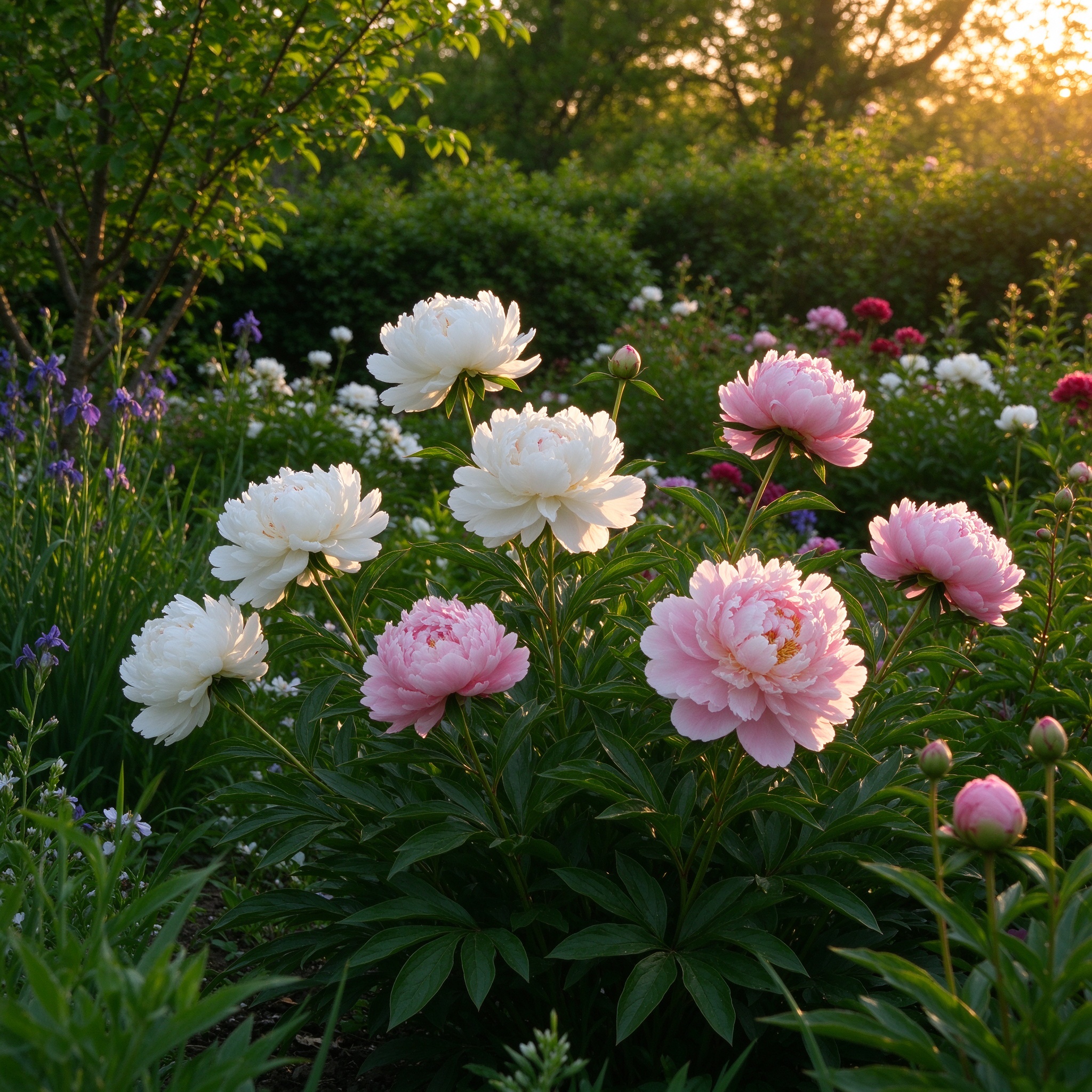
- •Peonies are long-lived, hardy herbaceous perennials famous for huge, fragrant, ruffled blooms in late spring and early summer.
- •A single plant can live and flower for decades, often outliving its gardener, which makes the peony one of the most dependable and rewarding border plants.
- •The genus Paeonia contains herbaceous peonies that die back to the ground each winter, tree peonies with woody stems that persist year-round, and intersectional (Itoh) hybrids that combine the best of both.
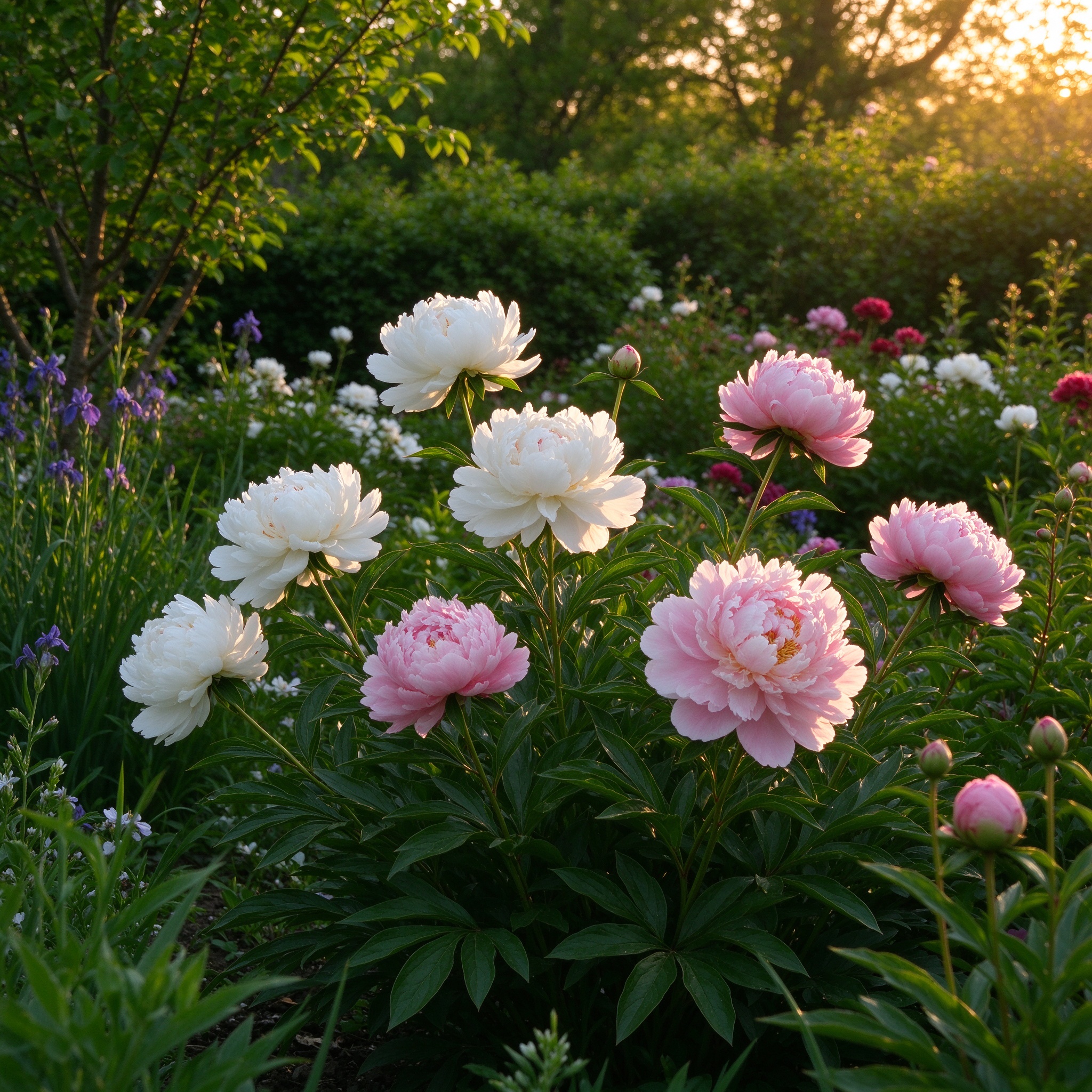
- •Herbaceous types are the most widely grown and bloom in a palette of white, cream, pink, rose, red, coral, and yellow, with single, semi-double, double, and bomb forms.
- •Peonies are hardy in cold regions, need a pronounced winter chill to set flower buds, and perform poorly in hot, humid southern gardens unless given afternoon shade and well-drained soil.
- •Because the plants are long-lived, site selection and soil preparation matter more than with almost any other perennial.
📋 Quick Facts
Scientific Name: Paeonia lactiflora, Paeonia officinalis, Paeonia hybrids
Family: Paeoniaceae
Category: Flower
USDA Zones: Hardy perennial, USDA zones 3–8 (some cultivars zone 2–9).
Light:
- •Peonies need full sun for the best flowering — at least six hours of direct sunlight daily, with morning sun strongly preferred.
- •Full sun builds strong stems, maximizes bud set, and keeps foliage healthy and disease-resistant.
- •In zones 8 and warmer, filtered afternoon shade protects the blooms from heat stress and lengthens the flower display, but too much shade sharply reduces flowering and promotes leggy, weak growth.
- •Peonies tolerate half-day shade only in hot climates; in cool northern gardens, deep shade causes sparse bloom and floppy stems.
- •Avoid planting near large trees or dense shrub borders that compete for light and moisture.
Water:
- •Peonies are moderately drought-tolerant once established but need consistent moisture during bud swell, bloom, and the weeks that follow.
- •Water deeply once or twice a week during dry spells, soaking the root zone rather than sprinkling the foliage, which invites botrytis blight.
- •Newly planted bare-root peonies need regular water for the first season to build a strong root system; keep the soil evenly moist but never waterlogged.
- •In summer after bloom, established plants tolerate drier conditions, though a deep drink during prolonged drought keeps the leaves green.
- •Stop heavy watering in fall as the plant prepares for dormancy.
- •Always water at ground level and allow the top inch of soil to dry between waterings to avoid root and crown rot.
Temperature:
- •Peonies are hardy perennials suited to USDA zones 3 through 8, and some cultivars survive zone 2 and borderline zone 9 with care.
- •They require a pronounced winter chill — roughly 30 to 60 days at or below 40°F (4°C) — to break dormancy and set flower buds for the following spring.
- •Cool spring weather (45 to 65°F) produces the longest-lasting, most vivid blooms; heat above 85°F during bud development can abort buds, especially on double cultivars.
- •Summer heat after bloom is harmless as long as the roots stay reasonably moist.
- •In warm-winter regions where chill requirements are not met, peonies produce foliage but few or no flowers; gardeners there often plant early-blooming or low-chill cultivars or accept reduced bloom.
Soil:
- •Peonies demand fertile, well-drained soil and are extremely sensitive to poor drainage.
- •A deep loam rich in organic matter with a near-neutral to slightly alkaline pH of 6.5 to 7.5 is ideal.
- •Before planting, dig a wide hole and work in compost or well-rotted manure to improve structure; in heavy clay, amend generously with compost and coarse sand, or plant in a raised bed to prevent standing water.
- •Peonies dislike acid soils (below pH 6.0) and waterlogged clay.
- •Space plants 3 to 4 feet apart to allow good air circulation, which suppresses fungal disease.
- •Because peonies live for decades, thorough soil preparation before planting pays off for the life of the plant.
Harvest:
- •Cut peony flowers for vases when the buds are in the 'marshmallow' stage — soft to the touch like a marshmallow but not yet open — for the longest vase life.
- •Harvest in early morning while stems are turgid and hydrated, cutting at a slant just above a leaf.
- •Remove most foliage below the water line, place stems in tepid water immediately, and condition them in a cool, dark room for several hours before arranging.
- •Cut flowers generally last 5 to 7 days in a vase; 'Sarah Bernhardt' and other doubles open slowly and last longest.
- •For garden display, let blooms open fully on the plant; heavy double flowers on tall stems may need support from a peony ring or stakes to keep them upright in wind and rain.
Common Problems:
- •Peonies are long-lived but can suffer from a handful of recurring problems: botrytis blight (gray mold) on buds, stems, and leaves during cool, wet springs; bud blast, where flower buds turn brown and fail to open, usually from late frost, drought, or insufficient chill; ants on buds, which are harmless and feed on nectar; peony wilt (Phytophthora) in poorly drained soil; powdery mildew on foliage in humid shade; and floppy stems on heavy double cultivars that need support.
- •Sparse flowering almost always traces to planting too deep, too much shade, or a soil that is too rich in nitrogen.
⚠️ Pet Safety Warning
This plant is toxic to both cats and dogs.
- •The ASPCA lists the garden peony (Paeonia species) as toxic to cats and dogs.
- •The toxic principle is paeonol, concentrated mainly in the roots and rhizomes.
- •Ingestion typically causes mild gastrointestinal upset — vomiting, drooling, and diarrhea — that usually resolves on its own; the plant is not considered severely poisonous.
- •Contact your veterinarian if your pet has eaten a significant amount or shows prolonged symptoms.
📅 When to Plant
- •Plant bare-root peonies in autumn, from late September to early November in most of the United States, so roots establish before the ground freezes.
- •Fall planting gives roots six to eight weeks to grow before dormancy and is the single most reliable window.
- •Potted and container-grown peonies can also be set out in early spring as soon as the soil can be worked, though spring-planted roots often skip their first bloom year while they settle.
- •Avoid planting during active summer growth or in soggy ground.
- •Choose a site that receives at least six hours of full sun and where soil drains freely; peonies hate wet feet and rot in heavy, waterlogged clay.
- •In warm climates (zones 8 to 9) give light afternoon shade to prolong bloom and protect the flowers from heat.
🌱 Growing Stages
 1
Spring emergence
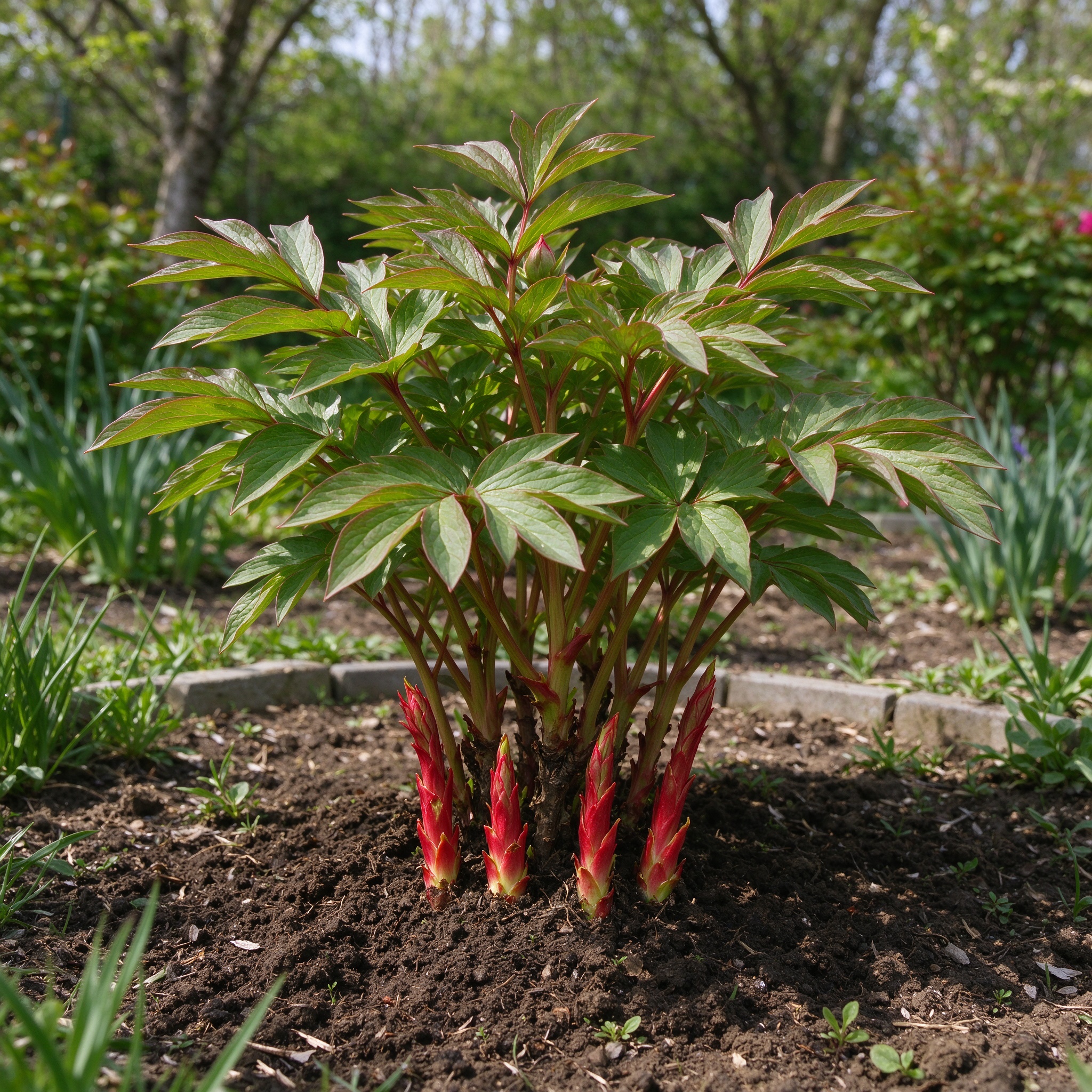
(Mid-spring, 2–3 weeks after soil warms)- •Thick red shoots push up through the soil as temperatures rise, elongating rapidly into leafy stems.
- •This is the window to apply the annual light feeding and to set support rings before growth gets tall.
- •Protect the tender new shoots from a late frost, which can blacken the tips and reduce flowering; a floating row cover on frost nights helps.
 2
Bud development and bloom
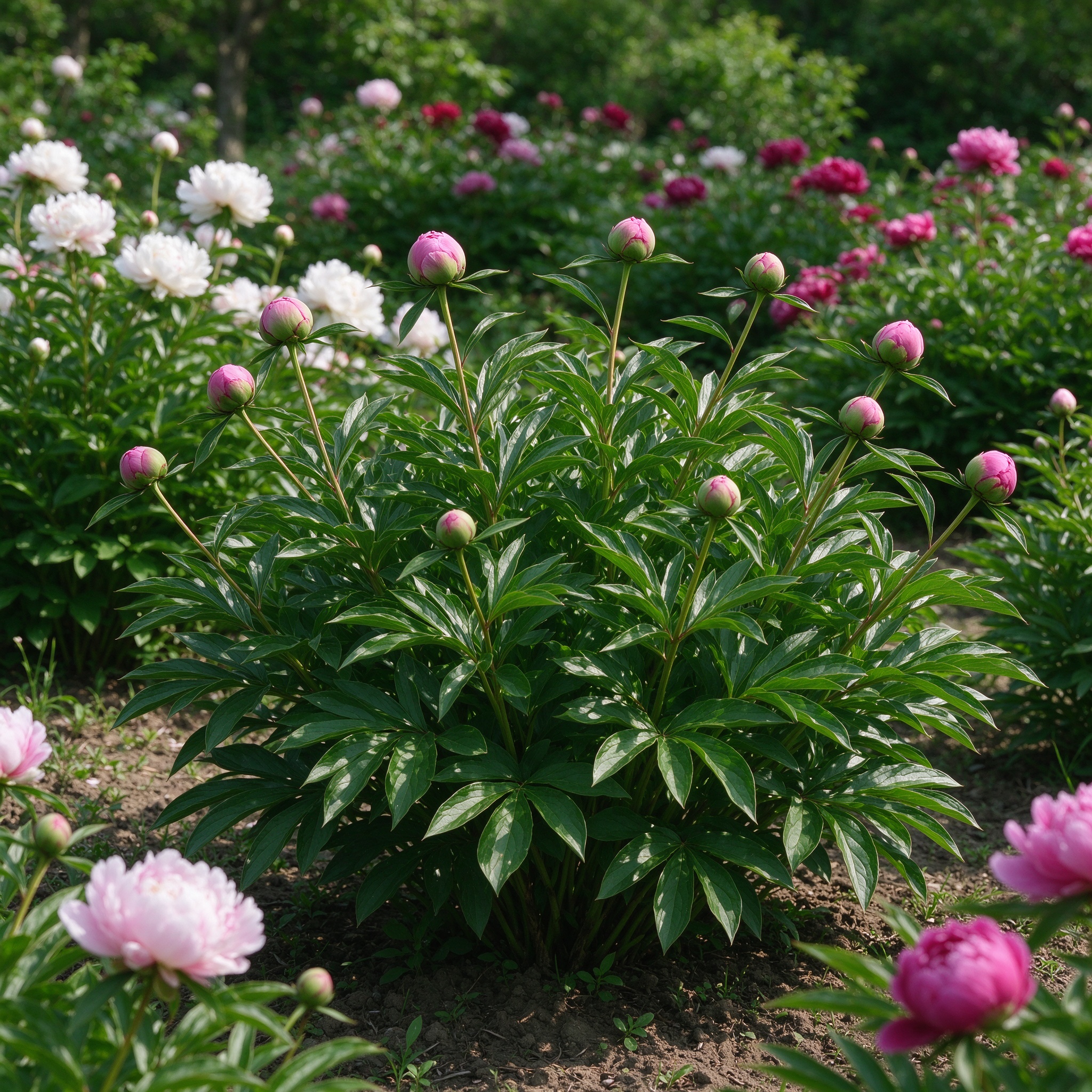
(Late spring, 2–3 weeks)- •Flower buds swell at stem tips and open over a concentrated two-to-three-week show.
- •Double cultivars open slowly from tight globes to full ruffled blooms; singles open faster and are more weather-tolerant.
- •Deadhead as flowers fade to keep the display clean. Cool weather extends bloom; heat accelerates it and can abort buds on late doubles.
 3
Post-bloom foliage growth
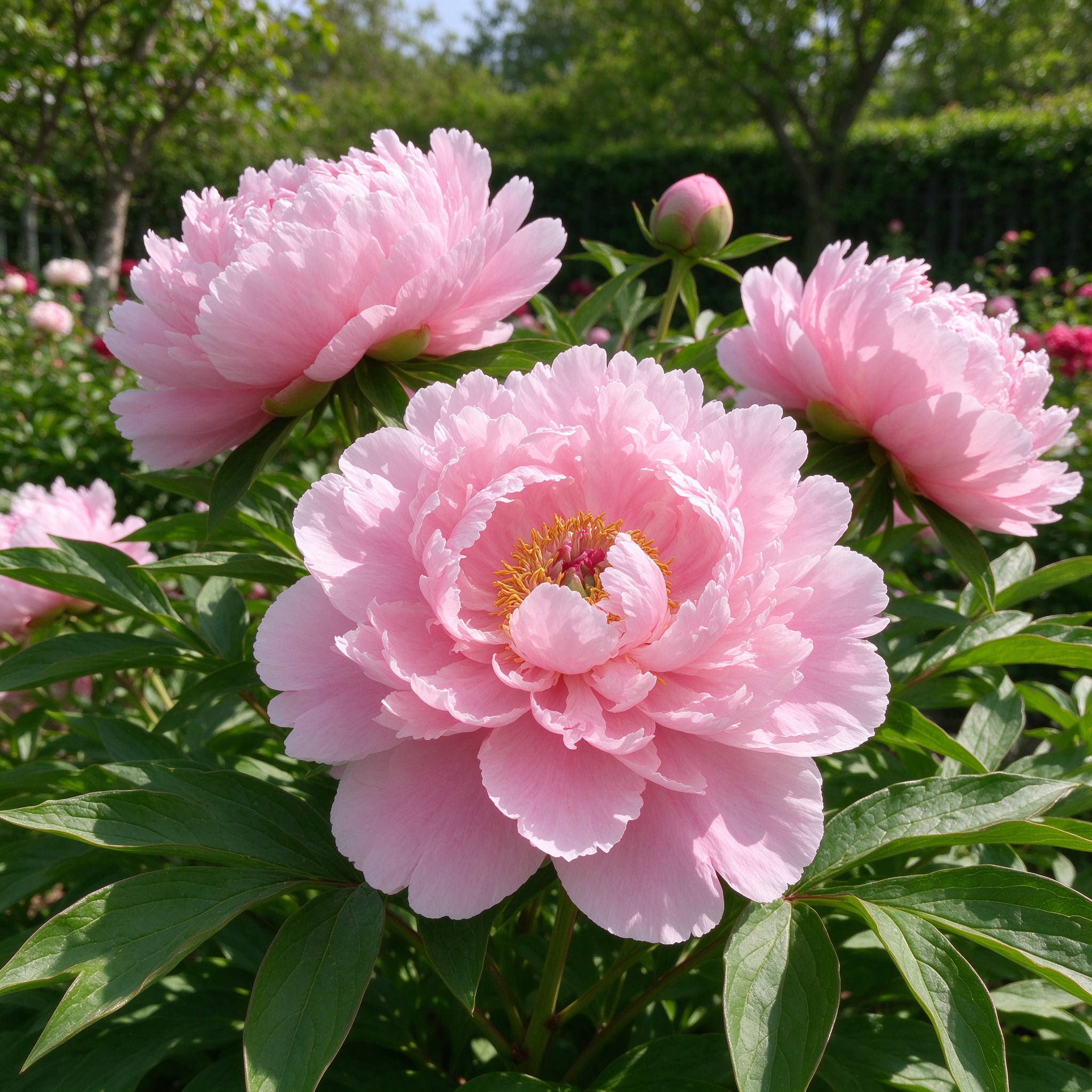
(Early summer to fall)- •After flowering, the plant channels energy into the clump, storing reserves in the fleshy roots and setting next year's buds.
- •Keep foliage healthy and well watered through summer drought.
- •Do not cut foliage back until it has died down naturally, as the leaves are essential for building the crown.
 4
Dormancy
(Late fall to early spring)- •After the first hard frost, the foliage yellows and dies back to the ground.
- •Cut stems to 2 to 3 inches, clear fallen leaves, and leave the crown dormant through winter, relying on the required winter chill to break dormancy and trigger spring growth and bud set.
- •Mulch lightly in cold, open winters for extra crown protection.
💧 Detailed Care Guide
☀️ Light Requirements
- •Peonies need full sun for the best flowering — at least six hours of direct sunlight daily, with morning sun strongly preferred.
- •Full sun builds strong stems, maximizes bud set, and keeps foliage healthy and disease-resistant.
- •In zones 8 and warmer, filtered afternoon shade protects the blooms from heat stress and lengthens the flower display, but too much shade sharply reduces flowering and promotes leggy, weak growth.
- •Peonies tolerate half-day shade only in hot climates; in cool northern gardens, deep shade causes sparse bloom and floppy stems.
- •Avoid planting near large trees or dense shrub borders that compete for light and moisture.
💧 Watering
- •Peonies are moderately drought-tolerant once established but need consistent moisture during bud swell, bloom, and the weeks that follow.
- •Water deeply once or twice a week during dry spells, soaking the root zone rather than sprinkling the foliage, which invites botrytis blight.
- •Newly planted bare-root peonies need regular water for the first season to build a strong root system; keep the soil evenly moist but never waterlogged.
- •In summer after bloom, established plants tolerate drier conditions, though a deep drink during prolonged drought keeps the leaves green.
- •Stop heavy watering in fall as the plant prepares for dormancy.
- •Always water at ground level and allow the top inch of soil to dry between waterings to avoid root and crown rot.
🌡️ Temperature
- •Peonies are hardy perennials suited to USDA zones 3 through 8, and some cultivars survive zone 2 and borderline zone 9 with care.
- •They require a pronounced winter chill — roughly 30 to 60 days at or below 40°F (4°C) — to break dormancy and set flower buds for the following spring.
- •Cool spring weather (45 to 65°F) produces the longest-lasting, most vivid blooms; heat above 85°F during bud development can abort buds, especially on double cultivars.
- •Summer heat after bloom is harmless as long as the roots stay reasonably moist.
- •In warm-winter regions where chill requirements are not met, peonies produce foliage but few or no flowers; gardeners there often plant early-blooming or low-chill cultivars or accept reduced bloom.
🌱 Soil & Fertilizer
Soil:
- •Peonies demand fertile, well-drained soil and are extremely sensitive to poor drainage.
- •A deep loam rich in organic matter with a near-neutral to slightly alkaline pH of 6.5 to 7.5 is ideal.
- •Before planting, dig a wide hole and work in compost or well-rotted manure to improve structure; in heavy clay, amend generously with compost and coarse sand, or plant in a raised bed to prevent standing water.
- •Peonies dislike acid soils (below pH 6.0) and waterlogged clay.
- •Space plants 3 to 4 feet apart to allow good air circulation, which suppresses fungal disease.
- •Because peonies live for decades, thorough soil preparation before planting pays off for the life of the plant.
Fertilizer:
- •Peonies are light feeders that need little fertilizer if the soil was well prepared.
- •In early spring as red shoots emerge, apply a low-nitrogen, balanced fertilizer such as 5-10-10 or a handful of bone meal scratched into the soil around each plant; avoid high-nitrogen formulas that produce soft growth and invite botrytis.
- •In the fall after foliage dies back, a light application of bone meal or compost again supports root and bud development for the next season.
- •Do not overfeed, as excess nitrogen and fertilizer burn can weaken crowns.
- •For the first year after planting, withhold fertilizer entirely and let the roots establish; begin a modest annual feeding from the second spring onward.
📝 Step-by-Step Planting Guide
- 1
Choose the right site and prepare deep soil
- •Select a spot with full sun (at least six hours) and excellent drainage, away from tree roots and dense shrub borders.
- •Dig a hole about 18 to 24 inches wide and 12 to 18 inches deep, loosening the subsoil.
- •Amend the excavated soil with a generous amount of compost or well-rotted manure to improve structure and fertility.
- •In clay soil, blend in coarse sand or grit to open the drainage; in sandy soil, add organic matter to hold moisture.
- •Because peonies live for decades, investing in deep, rich, well-drained soil now determines the plant's health for years.
- 2
Plant bare roots at the correct depth
- •Place the bare-root peony in the hole so the eyes (dormant buds) sit 1 to 2 inches below the soil surface in cold climates, and no more than 1 inch deep in warmer zones.
- •This depth is critical: planted too deep, the plant grows leaves but refuses to bloom; planted too shallow, the eyes freeze in harsh winters.
- •Spread the fleshy roots outward, backfill with amended soil, firm gently to remove air pockets, and water well to settle.
- •Mark the planting spot so you do not disturb the crown in future years.
- 3
Water consistently during the first season
- •Newly planted peonies need steady moisture to establish a strong root system before the first winter.
- •Water deeply once or twice a week during dry spells, soaking the root zone and keeping the soil evenly moist but never soggy.
- •Reduce frequency as the plant matures; established peonies are fairly drought-tolerant.
- •Mulch lightly with compost or shredded bark to conserve moisture and suppress weeds, keeping the mulch a few inches away from the crown to avoid rot.
- •Stop heavy watering in fall as foliage dies back and dormancy begins.
- 4
Support heavy double blooms early
- •Tall double-flowered cultivars such as 'Sarah Bernhardt' produce flowers heavy enough to topple the stems in wind and rain.
- •Install a peony ring, grow-through grid, or three stakes with twine in early spring when shoots are a few inches tall, so the support is in place before the plant reaches full height and the flowers open.
- •Placing support after growth has flopped is ineffective and damages stems. Single and Itoh peonies are generally sturdy enough to stand unsupported.
- 5
Deadhead spent flowers and clean up
- •After blooms fade, cut the spent flower heads back to the first strong leaf to keep the plant tidy and prevent seed formation, which wastes energy.
- •Leave the healthy foliage to photosynthesize and build next year's flower buds.
- •In autumn after the first hard frost, cut herbaceous peony stems down to 2 to 3 inches above the ground and remove all fallen leaves from around the base; this cleanup removes fungal spores and prevents disease carry-over.
- •Do not compost diseased foliage.
- 6
Feed lightly in spring and divide rarely
- •Each early spring, as the red shoots emerge, scratch a light application of bone meal or a low-nitrogen fertilizer into the soil around each plant.
- •Peonies rarely need division — they bloom best when left undisturbed for many years.
- •Divide only when a clump becomes overcrowded and flowering declines, usually after 10 to 15 years, in autumn by lifting the crown and cutting it into sections each with three to five eyes.
- •Replant divisions promptly at the correct depth.
🌱 Recommended Varieties
Classic fragrant doubles for the border
- •The most popular garden peonies, forming bushy 2-to-3-foot plants with huge, fully double, richly fragrant blooms.
- •'Sarah Bernhardt' is the classic soft pink double with a sweet scent and superb vase life; 'Festiva Maxima' offers large white blooms edged with crimson flecks on sturdy stems; 'Kansas' is a brilliant red double that holds its color without fading.
- •These are long-lived, reliable, and the standard for cut flowers, blooming in late spring to early summer for a concentrated two-to-three-week show.
Hybrid vigor with tree-peony colors
- •Itoh hybrids cross herbaceous and tree peonies to combine herbaceous die-back with tree-peony flower colors and forms — yellow, apricot, coral, and bicolor blooms that do not fade.
- •They are sturdy, shorter plants with a longer bloom season and stronger stems that rarely need staking.
- •'Bartzella' is a celebrated large lemon-yellow double; 'Lollipop' shows maroon-striped yellow blooms.
- •Their vigor and disease resistance make them increasingly favored by modern gardeners, though they cost more than traditional herbaceous peonies.
Lighter, graceful blooms for natural settings
- •Single peonies carry one or two rows of broad petals around a boss of golden stamens, giving an airy, pollinator-friendly flower that is more weather-tolerant than heavy doubles.
- •'Krinkled White' and 'Coral Charm' (coral semi-double) are popular.
- •Anemone-form types such as 'Monsieur Jules Elie' hold a ring of petals around a dense cushion of petaloids.
- •These forms resist rain damage and are excellent choices for wind-exposed or rain-prone gardens, and they attract bees and butterflies.
🪴 Growing in Containers
- Choose a deep, heavy pot:
- •Peonies have large, deep root systems and are long-lived, so container growing is possible but demanding.
- •Select a pot at least 18 to 20 inches deep and wide, made of heavy material (terra cotta, glazed ceramic, or thick plastic) that will not blow over when the plant is top-heavy with blooms.
- •Provide several large drainage holes and a generous layer of quality potting mix blended with compost.
- Plant at the same critical depth:
- •In a container, set the eyes just 1 to 2 inches below the surface of the potting mix, exactly as in the ground.
- •The same rule applies: too deep and the plant will not bloom. Firm the mix gently and water thoroughly.
- •Because containers freeze harder than the ground, protect the pot in winter by sinking it, wrapping it in burlap and bubble wrap, or moving it to an unheated garage so the roots survive harsh cold.
- Repot rarely and refresh the topsoil:
- •Peonies resent disturbance, so repot only when the clump outgrows the container, every 5 to 7 years at most, in autumn.
- •Each spring, carefully scrape off the top 1 to 2 inches of old mix and replace it with fresh compost to replenish nutrients without disturbing the crown.
- •Keep container peonies evenly moist in summer; they dry out faster than ground plants and need more frequent watering.
✂️ Pruning & Maintenance
- ✓
Deadhead spent flowers through bloom
- •Snip off faded flowers at the first strong leaf beneath the bloom.
- •Deadheading keeps the plant neat, prevents energy-wasting seed set, and extends the display by encouraging any side buds to open.
- •Do not cut back healthy foliage, which is needed to build next year's flower buds.
- ✓
Cut back herbaceous peonies in autumn
- •After the first hard frost kills the foliage, cut herbaceous and Itoh peony stems down to 2 to 3 inches above the ground.
- •Remove all fallen leaves and debris from the base to eliminate overwintering fungal spores, especially botrytis.
- •Do not cut tree peonies back to the ground; they keep their woody structure year-round and need only light shaping.
- ✓
Remove damaged and diseased growth
- •Throughout the season, prune out stems or buds affected by botrytis blight or wilt as soon as you see them, cutting well below the affected area into clean tissue, and dispose of the material rather than composting it.
- •Keep the crown open and airy by removing crowded inner stems that block airflow, which suppresses the humidity fungal diseases need.
🐛 Pest & Disease Control
Common Pests
Ants on buds
Symptoms:- •Clusters of ants swarm over unopened flower buds, feeding on the sweet nectar the buds exude.
- •This is natural and harmless — ants do not damage the buds and are not needed for the flowers to open.
Control:- •No control is required.
- •If ants trail into the house on cut stems, gently rinse the stems in a bucket of water before bringing them inside.
- •Do not spray the buds with insecticide, which is unnecessary and harms pollinators.
Peony stem borer
Symptoms: Young stems wilt, bend, and sometimes break; a small larva may be found tunneling inside the hollow stem near the crown, with entry holes and frass at the base.Control:- •Remove and destroy infested stems below the point of injury, cutting back to clean tissue.
- •Keep the garden free of weeds where the borer's adult beetle hosts.
- •In severe, recurring cases, a soil drench or spray timed to the adult emergence window (early summer) may be applied according to label directions.
Thrips
Symptoms: Flower buds become distorted, discolored, or fail to open fully; silvery streaks and tiny dark insects appear on petals and inside buds, particularly in hot, dry weather.Control:- •Remove and dispose of infested blooms and buds. Encourage natural predators such as minute pirate bugs and lacewings.
- •In heavy infestations, apply insecticidal soap or spinosad to buds and foliage, repeating per label intervals, and avoid drought stress that favors thrips.
Red spider mites
Symptoms: Fine stippling and bronzing on leaves, with a fine webbing on the undersides during hot, dry spells; foliage may yellow and drop, usually on stressed or dusty plants.Control:- •Mist foliage to raise humidity and knock mites down, and keep plants well watered and mulched to reduce stress.
- •Insecticidal soap or horticultural oil applied to leaf undersides controls active colonies; repeat as needed.
- •Avoid broad-spectrum sprays that kill the predatory mites that naturally regulate spider mites.
Common Diseases
Botrytis blight (gray mold)
Symptoms:- •Young shoots rot and collapse in cool, wet spring weather; stems develop soft, brown, water-soaked lesions; buds and petals turn brown and may be covered in a fuzzy gray mold.
- •It is the most common and damaging peony disease.
Control:- •Remove and destroy all infected shoots, buds, and flowers promptly.
- •Improve air circulation by spacing plants and thinning dense growth, and water at the base to keep foliage dry.
- •In autumn, cut stems low and remove all plant debris to eliminate spores.
- •In persistent wet springs, apply a labeled fungicide at bud break and repeat per label.
Peony wilt (Phytophthora)
Symptoms: Leaves and stems suddenly wilt and turn dark, often on one side of the plant; the crown and root tissue rot in poorly drained, waterlogged soil, and the plant may collapse and die.Control:- •Improve drainage by amending soil, planting in raised beds, or moving plants out of low-lying wet ground.
- •Remove and destroy affected plants and avoid replanting peonies in the same contaminated spot. Do not overwater, and keep mulch away from the crown.
Bud blast
Symptoms:- •Flower buds turn brown and dry without opening, or open only partially and drop.
- •It is not an infectious disease but a physiological disorder triggered by late frosts, drought, insufficient winter chill, or planting too deep.
Control:- •Plant eyes at the correct shallow depth and ensure a cold winter chill.
- •Provide consistent moisture during bud development and protect young shoots from late frosts with a row cover.
- •Avoid excess nitrogen that forces soft growth. Bud blast is often sporadic and not fatal to the plant.
Powdery mildew
Symptoms: A white, powdery coating develops on upper leaf surfaces and stems in humid, shady conditions; leaves may yellow and drop prematurely in late summer.Control:- •Space plants for good air circulation and grow in full sun. Water at the base and avoid overhead irrigation.
- •Remove heavily affected leaves and improve airflow around the crown; organic sulfur or potassium-bicarbonate sprays at first sign slow spread, and resistant cultivars suffer less.
🍅 When to Harvest
- •Cut peony flowers for vases when the buds are in the 'marshmallow' stage — soft to the touch like a marshmallow but not yet open — for the longest vase life.
- •Harvest in early morning while stems are turgid and hydrated, cutting at a slant just above a leaf.
- •Remove most foliage below the water line, place stems in tepid water immediately, and condition them in a cool, dark room for several hours before arranging.
- •Cut flowers generally last 5 to 7 days in a vase; 'Sarah Bernhardt' and other doubles open slowly and last longest.
- •For garden display, let blooms open fully on the plant; heavy double flowers on tall stems may need support from a peony ring or stakes to keep them upright in wind and rain.
❓ Frequently Asked Questions
- 1
Why did my peony not bloom?
- •The most common causes are planting the eyes too deep (more than 2 inches below the surface), too much shade, insufficient winter chill, or a very young or recently divided plant.
- •Check that the crown sits at the correct shallow depth and receives at least six hours of sun.
- •Give the plant time — new or divided peonies often skip their first year or two of bloom while they establish.
- •Avoid high-nitrogen fertilizer, which promotes leaves at the expense of flowers.
- 2
When is the best time to plant peonies?
- •Plant bare-root peonies in autumn, from late September to early November in most of the United States, so the roots establish before the ground freezes.
- •Fall planting is the most reliable.
- •Potted peonies can also be set out in early spring once the soil is workable, though spring-planted plants may skip their first bloom.
- •Avoid planting in summer heat or in waterlogged ground.
- 3
Do ants need to be on peony buds for them to open?
- •No.
- •The idea that ants are required to open peony buds is a myth.
- •Ants are attracted to the sweet nectar the buds secrete but are not necessary — the flowers open fine without them.
- •The ants cause no harm, so no control is needed. If you cut blooms and ants trail inside, rinse the stems briefly before arranging.
- 4
Are peonies poisonous to pets?
- •Yes.
- •The ASPCA lists the garden peony (Paeonia species) as toxic to cats and dogs, with the toxic principle paeonol concentrated mainly in the roots.
- •Ingestion typically causes mild gastrointestinal upset — vomiting, drooling, and diarrhea — that usually resolves on its own and is not considered severely poisonous.
- •Contact your veterinarian if your pet eats a significant amount or shows prolonged symptoms.
Source:
NC State Extension Gardener Plant Toolbox — Paeonia (Peony) — https://plants.ces.ncsu.edu/images/plants/paeonia/
The Old Farmer's Almanac — Growing Peonies — https://www.almanac.com/plant/peonies
UF IFAS Gardening Solutions — Peonies — https://gardeningsolutions.ifas.ufl.edu/images/plants/ornamentals/peonies.html
ASPCA Toxic and Non-Toxic Plants — Peony — https://www.aspca.org/pet-care/animal-poison-control/toxic-and-non-toxic-plants/p
Photo credit: NC State Extension
Images courtesy of NC State Extension under CC BY license. Thank you to the photographers who make these educational images available.
License: CC BY-NC 2.0 / CC BY 4.0