
How to Grow Tulip: Complete Guide
- •This complete guide explains how to plant tulip bulbs, from choosing healthy bulbs and autumn planting depth to spacing, chilling, and post-bloom bulb care.
- •The tulip is a bulbous perennial in the lily family (Liliaceae), native from southern Europe through central Asia and grown worldwide for its cup-shaped spring flowers in nearly every color except true blue.
- •Plants rise 4 to 28 inches on a single straight stem with two to four broad, straplike, slightly waxy leaves clasping the base, and one erect flower of six tepals at the top.
- •Tulips grow from a tunicated bulb: a rounded storage organ wrapped in a dry papery skin that feeds the shoot through winter dormancy and spring bloom.
- •Most garden tulips are planted as dry bulbs in autumn, root through the cool months, and flower in middle to late spring; in warm-winter climates they are treated as annuals from pre-chilled bulbs.
- •The genus is grouped by bloom time, parentage, and flower form into Darwin hybrids, Triumph, Parrot, peony-flowered doubles, fringed, and species tulips, each with a different height, petal shape, and perennializing tendency.
- •Tulips make strong mass plantings, borders, cutting gardens, and container displays, and can be forced indoors for winter color.
- •All parts contain tulipalin compounds, with the highest concentration in the bulb, so bulbs, flowers, and leaves should be kept away from cats, dogs, and horses.
📋 Quick Facts
- •Tulips want full sun, defined by NC State as six or more hours of direct sunlight a day, and RHS adds that most border and specialist tulips grow best in full sun, though a few tolerate light shade.
- •Morning sun with gentle afternoon shade suits gardens with hot late afternoons; shade for much of the day produces weak, leaning stems, sparse bloom, and bulbs that shrink rather than multiply.
- •In mixed borders, plant tulips where deciduous trees have not yet leafed out in early spring, so the bulbs receive full light before the canopy closes.
- •Outdoor spring bulb displays fail in dense foundation shade, under evergreens, or against a north wall.
- •Forced pots need a cool, dark rooting period and then bright, indirect light as shoots emerge; move them toward a window gradually to keep stems short rather than leggy.
- •Water bulbs thoroughly once after planting to settle the soil and start root growth, then leave natural rainfall to do most of the work through winter and spring.
- •RHS states that tulips in beds and borders usually do not need watering when rain keeps the ground damp; water only during a dry spell lasting more than two to three weeks, aiming to make the ground moist rather than soggy.
- •Keep the root zone medium-moisture during spring growth and bloom, but sharply drained: NC State warns that bulb and root rots occur in wet, poorly drained soils.
- •After flowering, ease watering as foliage matures, and give bulbs a dry, warm summer rest; standing moisture around dormant bulbs in summer is a main reason bulbs rot in the ground.
- •In containers, keep the mix barely moist while rooting, water regularly as shoots grow, and let pots dry gradually after bloom.
- •Never leave a planted pot sitting in a saucer of collected rainwater.
- •Tulips are cool-season bulbs that grow best where winters are cool and moist and summers are warm and dry, matching their central Asian steppe and mountain origins.
- •NC State gives hardiness USDA zones 3a through 8b and notes the plant is intolerant of heat, losing floral vigor when soil temperatures reach 70°F (21°C); warm spring soil, early heat, and summer humidity shorten the display and weaken the bulb.
- •Blooms in a border last two to four weeks, with survival in the garden depending on the cold winter the species needs to set a flower bud inside the bulb.
- •Zone 9 and warmer gardens cannot provide this natural vernalization, which is why bulbs there are pre-chilled and grown as annuals.
- •In very cold zones, deeper planting and a winter mulch protect bulbs from penetrating frost and freeze-thaw cycles; RHS notes tulips benefit from deeper planting in areas with very cold winters.
- •Indoor forced bulbs should be kept cool (around 50 to 60°F / 10 to 15°C) while rooting and until buds color, then brought into a warmer room for bloom.
- •Grow tulips in fertile, organically rich but well-drained, medium-moisture soil in full sun, per NC State; RHS adds that tulips prefer neutral to alkaline soil, so if the pH is below 6, apply lime to raise it.
- •The single most important soil property is drainage: heavy clay, low spots, and compacted ground hold water around the dormant bulb through winter and summer and cause bulb and root rot.
- •Amend clay with coarse sand, grit, and finished compost to open the profile, or plant on a raised bed or slope where water runs away quickly.
- •Avoid freshly applied manure, which burns fresh roots and carries bulb rot organisms; work compost or a balanced bulb fertilizer into the soil before planting.
- •For containers, RHS recommends three parts peat-free multipurpose compost mixed with one part grit for one-season display, or three parts loam-based compost with one part grit for bulbs kept over multiple seasons; a layer of sharp sand beneath bulbs improves drainage and prevents rot.
- •Cut tulips for the vase early in the morning when the bud shows some color but has not fully opened; RHS notes that cut flowers last best picked at this stage rather than after the petals open fully.
- •Choose stems with firm foliage and unblemished buds, cut at a slant with a clean knife, and strip lower leaves that would sit below the water line.
- •Recut the stems under running water before arranging, place them in fresh cool water, and keep the arrangement away from direct sun and ripening fruit.
- •Garden care after bloom is itself a harvest-like operation: the foliage must stay on the plant to rebuild the bulb, so cut only the spent flower stalk and leave the leaves until they yellow and turn straw-colored about six weeks after flowering.
- •If you are lifting bulbs for storage, dig them once the foliage has died back and the papery skin is dry, clean loose soil away, discard soft or mouldy bulbs, and let them dry in a cool dark ventilated spot before storing.
- •The most common complaint is weak or missing bloom in the second year: NC State notes tulip performance declines substantially starting with year two, especially hybrid bedding tulips, which is why many gardeners replant fresh bulbs each autumn.
- •Shallow planting produces smaller, non-flowering bulbs; RHS states that much smaller bulbs that do not flower are caused by shallow planting, and recommends replanting at least three times the bulb's depth.
- •Short stems follow late planting or a mild winter. Wet soil causes bulb and root rot, while dry soil in spring starves the shoot.
- •Squirrels and mice dig up newly planted bulbs, voles eat bulbs from below ground, and deer browse the flowers.
- •Aphids cluster on stems and buds and spread virus; slugs and snails rasp young foliage in early spring.
- •Fungal problems include tulip fire (brown spotting and distortion of petals and leaves), grey mould, bulb rot in storage or wet ground, and tulip viruses that streak and break petal color.
- •Tulip sap can cause contact dermatitis in sensitive skin, so wear gloves when handling many bulbs and stems.
⚠️ Pet Safety Warning
This plant is toxic to both cats and dogs.
- •The ASPCA lists Tulipa as toxic to dogs, cats, and horses.
- •The toxic principles are tulipalin A and B, with the highest concentration in the bulb; clinical signs after ingestion include vomiting, depression, diarrhea, and hypersalivation.
- •NC State describes tulip as a low-severity poisonous plant for people, with stomach pain, salivation, depression, diarrhea, sweating, nausea, and vomiting if eaten, and contact dermatitis from skin contact with the sap.
- •Keep stored bulbs, planted bulbs, cut flowers, and fallen leaves out of reach of cats, dogs, and horses; do not leave loose bulbs on a floor or patio where a pet can chew them.
- •If an animal eats any part of a tulip, especially a bulb, contact a veterinarian or the ASPCA Animal Poison Control Center (888) 426-4435 immediately.
- •For a full list of plants that are safe to grow around cats and dogs, see the cat-safe plant guide linked below.
🌱 Related Guides
📅 When to Plant
- •This section covers how to plant tulip bulbs in autumn: Plant dry tulip bulbs in autumn, six to eight weeks before the ground freezes and after soil at six inches has cooled below about 60°F (15°C), so roots establish before winter without pushing top growth.
- •In the northern United States and Canada this runs mid-September through late October; in the Midwest and Northeast, October to mid-November; in the South, late November into December.
- •RHS guidance places dry bulbs in the ground from September to November while the plant is dormant.
- •In USDA zones 8 and warmer, winters are too warm to provide the sustained cold tulips need, so refrigerate bulbs for 12 to 16 weeks at 35 to 45°F (1.7 to 7°C) before planting, or buy commercially pre-chilled bulbs, and plant them in late December or January as one-season annuals; UF/IFAS notes that bulbs pre-chilled for two to four months and planted in winter bloom once but typically do not return.
- •Keep refrigerating bulbs away from ripening apples, pears, and other fruit, which release ethylene gas that damages the embryonic flower inside the bulb.
- •Plant nursery-grown potted tulips sold in spring immediately and enjoy the display; these are not reliable bulbs for saving.
🌱 Growing Stages
 1
Autumn planting and root establishment
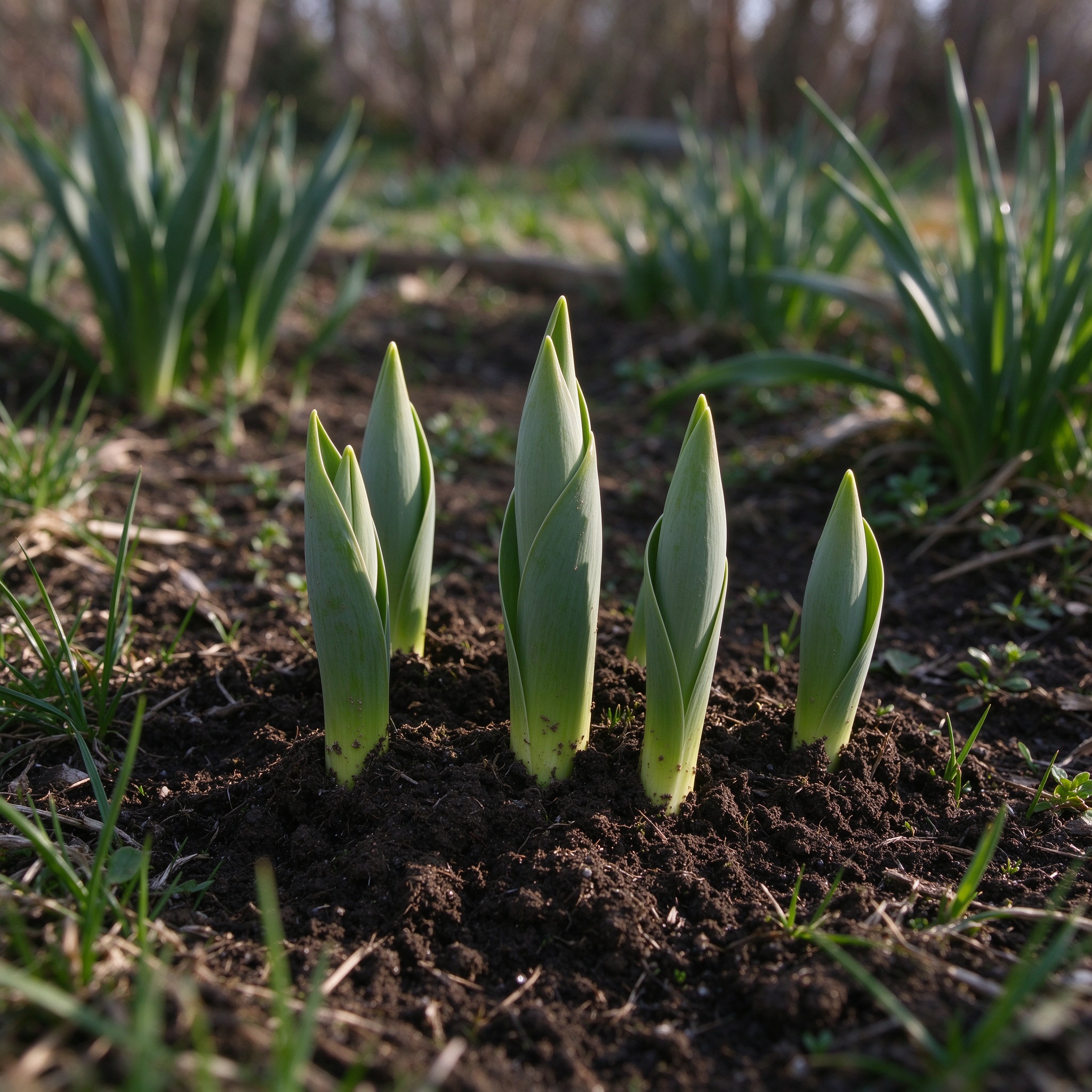
(September to November (or December–January in warm zones))- •Dry bulbs go into cool, loosened soil after the soil has dropped below about 60°F.
- •Roots emerge from the basal plate through autumn while the shoot stays dormant inside the bulb; the bulb needs six to eight weeks in the ground before hard frost to build a root system.
- •In zones 8 and warmer, bulbs spend this period in a refrigerator at 35 to 45°F for 12 to 16 weeks before planting, since outdoor soil does not stay cold long enough.
- •Water once after planting and apply winter mulch in cold climates.
 2
Winter dormancy under mulch
(December to February)- •Roots continue slowly through the cold months while the bulb rests above ground.
- •The sustained cold period, called vernalization, converts the embryonic flower inside the bulb into a bloom-ready structure; without enough weeks below about 50°F, bulbs produce leaves but few or no flowers.
- •Keep the bed on the dry side rather than saturated, because cold wet soil rots dormant bulbs.
- •Mulch protects against frost heave and keeps the soil temperature steady; do not fertilize during dormancy.
 3
Spring emergence, bud, and bloom
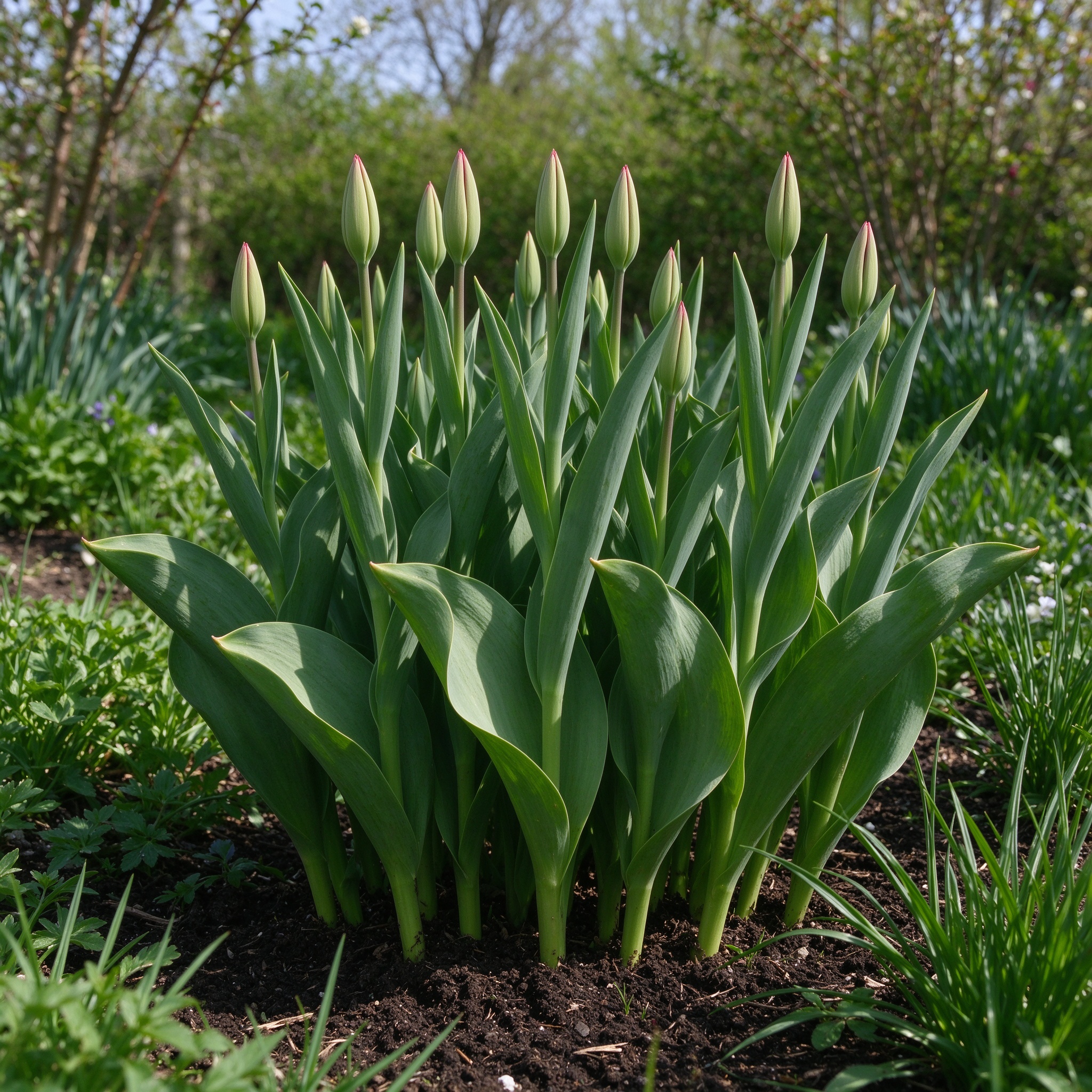
(March to May, depending on variety and zone)- •As soil warms, broad straplike leaves push through the mulch, then the single stem elongates and the flower bud forms at the top.
- •Shoots benefit from weekly potassium-rich liquid feed in perennializing beds and regular moisture during a dry spring.
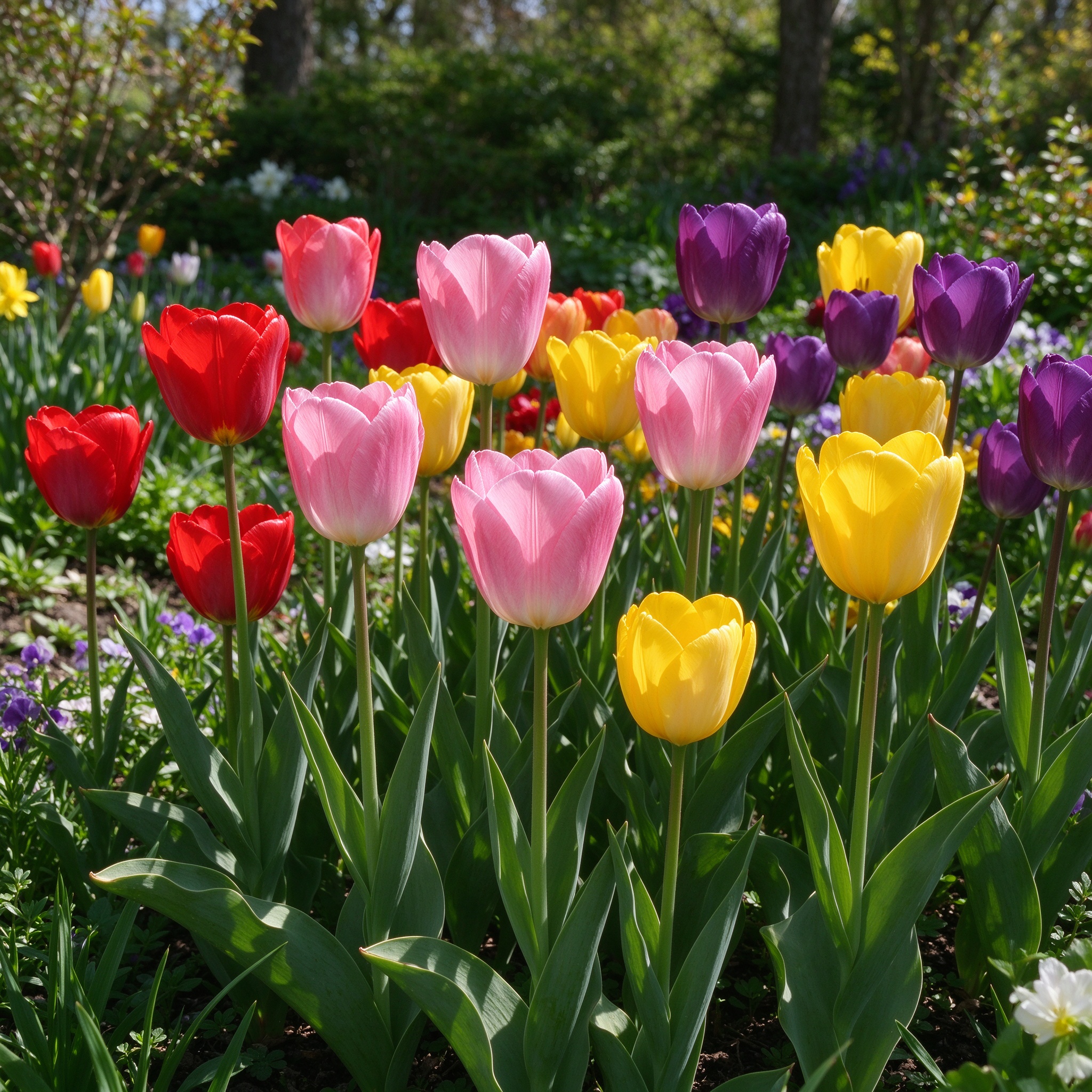
- •Early varieties flower in March to April, Triumph and Darwin hybrids in April to May, and parrot, double, and fringed forms late in the season.
- •A bloom lasts two to four weeks; NC State notes the plant loses floral vigor once soil reaches about 70°F, so warm early summers shorten the display.
- •Remove the spent flower once petals drop.
- 4
Post-bloom foliage and summer rest
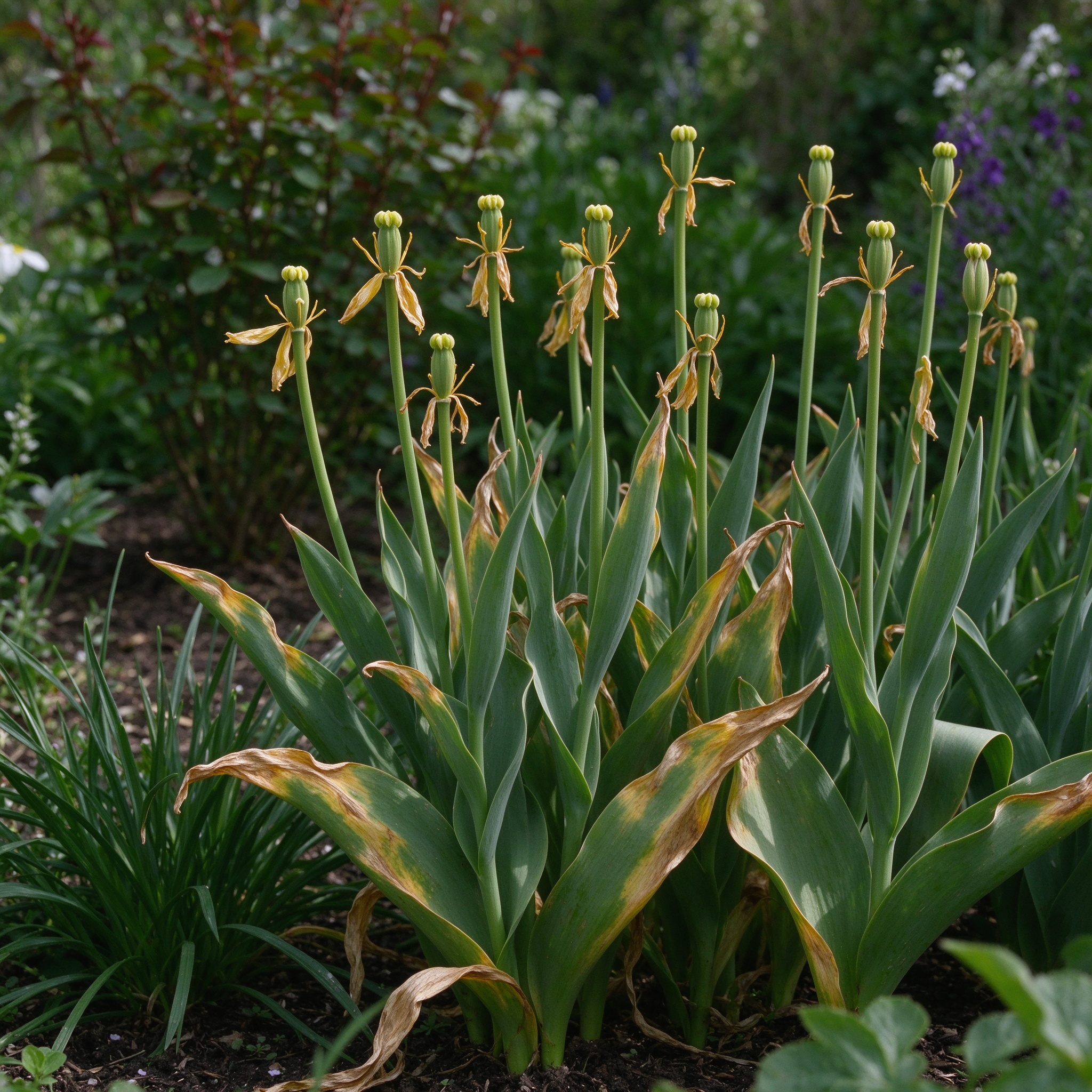
(Late spring through summer)- •Foliage continues to photosynthesize for four to six weeks after bloom, moving sugars back into the bulb to build next year's flower bud.
- •Leaves gradually yellow, turn straw-colored, and die back; only then are they removed.
- •Bulbs then enter a warm, dry summer rest that mimics their central Asian home.
- •In well-drained perennial beds they stay in the ground; in wet soils they are lifted, cleaned, dried, and stored at 65 to 68°F in a dark ventilated place until autumn replanting.
- •Most hybrid tulips shrink and weaken over years and are replaced as fresh bulbs each season.
💧 Detailed Care Guide
☀️ Light Requirements
- •Tulips want full sun, defined by NC State as six or more hours of direct sunlight a day, and RHS adds that most border and specialist tulips grow best in full sun, though a few tolerate light shade.
- •Morning sun with gentle afternoon shade suits gardens with hot late afternoons; shade for much of the day produces weak, leaning stems, sparse bloom, and bulbs that shrink rather than multiply.
- •In mixed borders, plant tulips where deciduous trees have not yet leafed out in early spring, so the bulbs receive full light before the canopy closes.
- •Outdoor spring bulb displays fail in dense foundation shade, under evergreens, or against a north wall.
- •Forced pots need a cool, dark rooting period and then bright, indirect light as shoots emerge; move them toward a window gradually to keep stems short rather than leggy.
💧 Watering
- •Water bulbs thoroughly once after planting to settle the soil and start root growth, then leave natural rainfall to do most of the work through winter and spring.
- •RHS states that tulips in beds and borders usually do not need watering when rain keeps the ground damp; water only during a dry spell lasting more than two to three weeks, aiming to make the ground moist rather than soggy.
- •Keep the root zone medium-moisture during spring growth and bloom, but sharply drained: NC State warns that bulb and root rots occur in wet, poorly drained soils.
- •After flowering, ease watering as foliage matures, and give bulbs a dry, warm summer rest; standing moisture around dormant bulbs in summer is a main reason bulbs rot in the ground.
- •In containers, keep the mix barely moist while rooting, water regularly as shoots grow, and let pots dry gradually after bloom.
- •Never leave a planted pot sitting in a saucer of collected rainwater.
🌡️ Temperature
- •Tulips are cool-season bulbs that grow best where winters are cool and moist and summers are warm and dry, matching their central Asian steppe and mountain origins.
- •NC State gives hardiness USDA zones 3a through 8b and notes the plant is intolerant of heat, losing floral vigor when soil temperatures reach 70°F (21°C); warm spring soil, early heat, and summer humidity shorten the display and weaken the bulb.
- •Blooms in a border last two to four weeks, with survival in the garden depending on the cold winter the species needs to set a flower bud inside the bulb.
- •Zone 9 and warmer gardens cannot provide this natural vernalization, which is why bulbs there are pre-chilled and grown as annuals.
- •In very cold zones, deeper planting and a winter mulch protect bulbs from penetrating frost and freeze-thaw cycles; RHS notes tulips benefit from deeper planting in areas with very cold winters.
- •Indoor forced bulbs should be kept cool (around 50 to 60°F / 10 to 15°C) while rooting and until buds color, then brought into a warmer room for bloom.
🌱 Soil & Fertilizer
Soil:
- •Grow tulips in fertile, organically rich but well-drained, medium-moisture soil in full sun, per NC State; RHS adds that tulips prefer neutral to alkaline soil, so if the pH is below 6, apply lime to raise it.
- •The single most important soil property is drainage: heavy clay, low spots, and compacted ground hold water around the dormant bulb through winter and summer and cause bulb and root rot.
- •Amend clay with coarse sand, grit, and finished compost to open the profile, or plant on a raised bed or slope where water runs away quickly.
- •Avoid freshly applied manure, which burns fresh roots and carries bulb rot organisms; work compost or a balanced bulb fertilizer into the soil before planting.
- •For containers, RHS recommends three parts peat-free multipurpose compost mixed with one part grit for one-season display, or three parts loam-based compost with one part grit for bulbs kept over multiple seasons; a layer of sharp sand beneath bulbs improves drainage and prevents rot.
Fertilizer:
- •Feeding supports growth and flowering and returns nutrients to the bulb so it can flower again the following year, per RHS.
- •At planting, mix a handful of bone meal or a balanced bulb fertilizer into the soil below and around the bulb rather than letting dry fertilizer touch the basal plate directly.
- •Once shoots are in growth from March onward, feed perennializing tulips weekly with a potassium-rich liquid fertilizer such as tomato feed, following the packet dilution; RHS advises stopping feeding once the leaves begin to yellow and die back.
- •If tulips are grown as seasonal bedding and the bulbs are discarded after flowering, no feeding is needed.
- •On rich, amended beds, a light top-dressing of compost in fall supplies most of what the bulb needs; avoid high-nitrogen lawn fertilizers around bulbs, which push soft leaves at the expense of flowers.
- •Never fertilize dormant bulbs in summer, and do not feed newly planted pre-chilled bulbs until shoots emerge.
📝 Step-by-Step Planting Guide
- 1
Choose firm, healthy bulbs before planting
- •Select large, dry, firm bulbs that feel heavy for their size with an intact papery skin; RHS advises choosing bulbs that show no signs of mould.
- •The skin sometimes falls off during handling, which does not affect flowering.
- •Reject bulbs that are soft, squishy, bruised, sprouted early, or smell musty, and discard any with black or grey fungal patches on the basal plate.
- •Larger bulbs produce the largest flowers; smaller bulbs may be planted for a second-year display but rarely bloom well the first spring.
- •Buy bulbs in autumn and plant promptly rather than storing them in a warm house where they dry out or sprout prematurely.
- 2
Pick a full-sun, sharply drained site
- •Choose a border, bed, rock garden, or container position with at least six hours of direct spring sun and soil that drains after rain.
- •Avoid low spots, heavy clay that stays wet, and dense shade under evergreens or a north wall.
- •NC State specifies full sun and well-drained soil; RHS notes that well-drained soil in full sun matters most for tulips intended to return for more than one year.
- •In heavy clay, build a raised bed or amend with coarse sand, grit, and compost so water does not pool around the dormant bulb in winter or summer.
- •Group bulbs in drifts of seven to fifteen of one variety rather than single-file rows for a natural display.
- 3
Prepare the soil and amend drainage
- •Spade the soil to a depth of about 10 inches and work in finished compost or a balanced bulb fertilizer; RHS recommends lime if the soil pH is below 6 to bring tulips toward neutral or alkaline.
- •Mix coarse sand or grit into clay to open drainage, and add a handful of bone meal to the planting hole without letting it touch the basal plate.
- •Avoid fresh manure, which burns roots and introduces rot organisms.
- •For containers, mix three parts peat-free multipurpose compost with one part grit for one-season display, or three parts loam-based compost with one part grit for bulbs kept over multiple seasons, and set a layer of sharp sand beneath the bulbs.
- 4
How to Plant Tulip Bulbs: Depth, Spacing, and Pointed End Up
- •Dig a hole or trench wide enough to space bulbs comfortably.
- •Plant at a depth of two to three times the bulb's height, which for standard hybrid bulbs works out to about 6 to 8 inches measured from the soil surface to the top of the bulb; RHS and Iowa State Extension both confirm 6 to 8 inches for large tulip bulbs.
- •Set each bulb with the pointed nose facing upward and the flat basal plate down, spacing them 4 to 6 inches apart (about twice their width, per RHS; Iowa State suggests 6 inches for large bulbs).
- •If a bulb cannot be oriented confidently, plant it on its side rather than forcing it; the shoot will turn upward on its own.
- •Cover with soil and firm gently without compacting it hard.
- 5
Water after planting and mulch for winter
- •Water the planting thoroughly once after covering to settle the soil around the roots and start root growth; this is the main watering event before spring.
- •In cold zones, apply a 2- to 3-inch winter mulch of straw, shredded leaves, or bark over the bed after the soil begins to cool, which insulates bulbs from penetrating frost and freeze-thaw cycles and keeps soil temperature even.
- •RHS notes deeper planting helps in very cold winters. Remove or pull back the mulch in early spring as shoots emerge so light reaches the foliage.
- •In warm-climate plantings of pre-chilled bulbs, water lightly through winter and keep the bed from drying completely.
- 6
Care for the bulb after bloom and decide on annual or perennial treatment
- •After flowering, cut the spent flower stalk just above the leaves to stop seed formation, per NC State and RHS; leave all foliage in place until it yellows and turns straw-colored about six weeks later, because the leaves feed the bulb for next year.
- •Do not tie, braid, or knot the leaves, which RHS warns prevents the bulb from producing flowers the following year.
- •For perennializing beds, feed weekly with a potassium-rich liquid fertilizer while growth continues and stop when foliage yellows.
- •In heavy or wet soils, lift bulbs once foliage dies back, clean and dry them, store in a dark ventilated spot at 65 to 68°F, and replant in autumn; most hybrid bedding tulips are simply replaced with fresh bulbs each year for a reliable display.
🌱 Recommended Varieties
Tall, strong-stemmed, perennializing hybrids
- •Darwin hybrids are the classic garden tulip: tall, sturdy 20- to 28-inch stems bearing large, oval, cup-shaped flowers in red, orange, yellow, pink, white, and bicolor combinations in mid to late spring.
- •Bred for strong stems, long vase life, and the best repeat bloom among large hybrids, they are the group most likely to return for several years in well-drained beds.
- •They suit mass plantings, borders, and cutting gardens and hold up to wind better than delicate double or parrot forms.
- •Common examples include 'Apeldoorn' in warm red, 'Oxford' orange-red, and 'Golden Apeldoorn' yellow.
Medium, sturdy bedding and cut-flower cups
- •Triumph tulips are the largest bedding class, growing 16 to 24 inches with a single, classic cup-shaped flower on a firm, wind-resistant stem in early to mid spring.
- •Their broad color range covers white, cream, yellow, orange, red, pink, purple, lilac, and many bicolors, and they hold their shape well in borders and as cut flowers.
- •They are slightly shorter than Darwin hybrids, flower a little earlier, and are the usual choice for dense spring bedding schemes and bulb lasagne containers.
- •Most are treated as annuals in heavy display beds but can persist for a few years in sharp-draining soil.
Fringed, twisted, ruffled exotic blooms
- •Parrot tulips produce large, late-spring flowers with deeply fringed, curled, and twisted petals that open wide like a feathered or parrot-plumed bloom in red, pink, yellow, white, purple, and striking multicolor streaks.
- •Stems reach 14 to 22 inches and can be brittle, so plant them in a sheltered border away from strong wind and heavy rain that flattens the ruffled petals.
- •They are grown for novelty and cutting rather than perennializing; treat them as seasonal display and plant fresh bulbs each autumn.
- •Their broken, streaked patterning in older varieties came from virus, while modern parrot cultivars are bred for stable, healthy growth.
Densely double, rose-like heavy blooms
- •Peony-flowered tulips, also called double early and double late tulips, carry two or more rows of petals that open into a full, rose-like, peony-shaped flower rather than a single cup.
- •Double early types flower in early spring on 12- to 16-inch stems; double late types reach 18 to 24 inches and bloom in late spring in white, yellow, pink, red, apricot, and purple.
- •The heavy, many-petaled heads can bend or flatten in rain, so stake taller doubles or shelter them, and space plants for air movement to avoid grey mould on wet petals.
- •They make lush cut flowers but are less reliable perennials than single-cup hybrids.
Crystal-fringed petal edges
- •Fringed tulips, also called Crispa tulips, carry the classic single cup but finish each petal with a fine, crystal-like fringed or serrated edge that catches the light.
- •They flower in mid to late spring on 16- to 24-inch stems in white, yellow, orange, red, pink, and purple, often with a contrasting fringe color.
- •The clean, sculpted edge makes them popular for formal bedding and cut arrangements, and they blend naturally with Triumph and Darwin hybrids in mixed drifts.
- •Plant in full sun and well-drained soil; like most large hybrids, they are best replanted annually for the tightest, most uniform display.
Short, early, naturalizing rock-garden tulips
- •Species tulips and their early hybrid groups include Kaufmanniana (waterlily tulips), Fosteriana, Greigii, Tulipa sylvestris, T.
- •turkestanica, and other wild forms.
- •They are shorter, 4 to 12 inches, flower early, open flat into star-shaped flowers in bright sun, and spread by offsets to naturalize in gravel, rock gardens, and sunny borders far more reliably than large hybrids.
- •Many have mottled or striped foliage and a sweet scent.
- •NC State notes that species tulips often perform better than hybrid plants as perennials; plant them in sharply drained, lean soil and leave them undisturbed for years to form drifts.
🪴 Growing in Containers
- Dense single-variety display pot:
- •For one bold spring display, pack bulbs close together in a shallow container with several drainage holes; RHS suggests about 12 bulbs for an 18-inch (45cm) wide pot, or up to 20 for a fuller look.
- •Use three parts peat-free multipurpose compost to one part grit, set bulbs on the compost with a finger's width between them, cover, firm, and leave soil about an inch below the rim.
- •Water well and place in a sheltered spot outdoors to root; move the pot to its final position when buds show color.
- •Treat these bulbs as seasonal: after bloom, replant the bulbs in a garden bed rather than forcing them to repeat in the same pot.
- Bulb lasagne layered for successive bloom:
- •A bulb lasagne plants two or three layers of bulbs in one tall pot, with late-flowering tulips deepest and early varieties on top so blooms follow from early spring to late spring.
- •Place the largest, latest tulips on the lower compost layer, cover, add the middle layer of Triumph or Darwin bulbs, then early crocuses or grape hyacinths and early tulips on top for the first display.
- •RHS notes the technique creates a fuller layered display in one container.
- •Keep the pot outside through autumn and winter to meet the cold requirement, protect roots from hard freeze, and bring it into light only as shoots emerge.
- Forcing tulips indoors for winter color:
- •Potted forcing replicates the outdoor cold period in a cool room or refrigerator.
- •Plant pre-chilled or chilled bulbs close together in a pot of gritty compost, water once, and keep the container dark and cool at 35 to 45°F (or around 50°F once rooted) for 12 to 16 weeks until roots fill the pot and shoots are 2 to 3 inches tall.
- •Then bring the pot into a cool room of 50 to 60°F in bright indirect light, gradually moving it toward a window to keep stems short and strong; warm a room too fast and stems stretch and topple.
- •Keep bulbs away from ripening fruit during chilling. Forced tulips bloom once and should be discarded after flowering.
✂️ Pruning & Maintenance
- ✓
Deadhead the spent flower stalk after bloom
- •Once petals drop, cut the flower stalk just above the top leaves so the bulb does not spend energy forming seedheads.
- •NC State states that when growing tulips as perennials, gardeners should promptly remove spent flower stems after bloom to prevent seeding; RHS describes the same deadheading, cutting off the stalk just above the leaves.
- •Specialist species grown from seed are the exception: leave their seedheads to ripen if you want to save seed.
- •Remove only the stalk, never the green foliage at this stage.
- ✓
Leave foliage until it yellows and dies back
- •Keep all green leaves on the plant after deadheading; the leaves gather sunlight and manufacture carbohydrates that refill the bulb for the following year.
- •NC State instructs not to remove foliage until it yellows, and RHS warns against tying up or knotting the leaves, which prevents the bulb from producing flowers the next year.
- •Allow the foliage about six weeks after flowering before it turns yellow and straw-like, then pull or cut it cleanly at the base.
- •For a tidy bed, tuck straggly leaves between neighboring perennials rather than braiding them out of sight.
- ✓
Lift, clean, and store bulbs for repeat bloom
- •In beds that stay wet in summer, RHS recommends lifting bulbs once foliage turns yellow about six weeks after flowering: dig the whole plant or bulb, shake off soil, discard any soft, damaged, or mouldy bulbs with blue or white mould or soft flesh, and let the bulbs dry thoroughly until the brown skin becomes papery.
- •Store them in trays, net bags, or paper bags in a warm, dark, well-ventilated place at 18 to 20°C (65 to 68°F) and replant in autumn from September to November.
- •For reliable front-of-border display, buy the largest fresh bulbs each year and replant stored, weaker bulbs in less prominent beds.
🐛 Pest & Disease Control
Common Pests
Squirrels, mice, and voles
Symptoms: Freshly planted bulbs are dug up and carried off by squirrels and mice shortly after autumn planting; voles tunnel through the soil and eat bulbs from below, leaving a cluster of vanished plants with no visible flowers the following spring.Control:- •Cover the planted bed with chicken wire laid on the soil surface and remove it when shoots emerge, per RHS; push holly sprigs into the soil as a deterrent, and interplant tulips with daffodils, which squirrels avoid and rodents do not eat.
- •Plant bulbs at full depth rather than shallow, and clear fallen fruit and bird seed that attract rodents around the bed.
- •In containers, use a mesh-lined pot or elevate pots off the ground to block vole tunnels.
Aphids
Symptoms: Green, pink, or black aphids cluster on tender young shoots, flower buds, and stems in spring, curling leaves and coating foliage with sticky honeydew that grows black sooty mould; dense colonies can distort buds and spread tulip virus between plants.Control:- •Knock aphids off with a strong jet of water for two or three mornings running, and encourage lady beetles, lacewings, and parasitic wasps that prey on them.
- •Heavy infestations respond to insecticidal soap or horticultural oil applied in cool weather, following the label.
- •Control is especially important in perennializing beds because aphids transmit virus; remove and destroy any plant showing streaked or broken petals.
Slugs and snails
Symptoms: Shiny slime trails and irregular holes rasped in young spring foliage and tender flower buds, most often after wet weather in shaded or mulched beds; young shoots disappear completely overnight.Control:- •Rake away loose mulch and debris around the planting so slugs have no daytime shelter, hand-pick at dusk, or set shallow beer traps sunk to soil level.
- •Iron phosphate bait applied around emerging shoots is a low-toxicity option that breaks down harmlessly; avoid crushed eggshell and copper-band remedies that perform inconsistently.
- •Keep the bed open and airy rather than over-mulched in spring.
Deer
Symptoms: Deer browse whole tulip flowers and stems in spring, leaving bitten-off stalks and torn foliage; unlike RHS notes about tulip leaves, deer readily eat the flowers and buds in areas with heavy pressure.Control:- •Fence the bed at least 8 feet high or use a low two-tier fence for deer-prone gardens; motion-activated sprinklers, deer repellent sprays applied before bloom, and strongly scented companion planting reduce browsing in small areas.
- •Where deer pressure is constant, plant daffodils, alliums, and species that deer leave alone instead of relying on repellents.
- •Protect newly forced potted tulips indoors or on a patio away from wildlife access.
Common Diseases
Tulip fire (Botrytis tulipae) and grey mould
Symptoms: Brown spotting, blotches, and distortion on petals and leaves, with grey fuzzy mould on affected tissue in wet spring weather; shoots may be stunted, bent, and covered in spores, and infected bulbs carry the fungus into storage.Control:- •Plant only healthy, firm bulbs, space for air movement, and remove and burn or bag affected plants immediately rather than composting them.
- •RHS notes streaking and spotting on petals and leaves indicate tulip viruses, tulip fire, or grey mould (botrytis); avoid overhead watering in wet spells and remove all dead foliage after bloom.
- •Rotate bulb planting away from the same bed for several seasons and keep weeds that carry botrytis under control.
Bulb rot in wet soil or storage
Symptoms:- •Bulbs turn soft, mushy, and develop a sour or musty smell; shoots fail to emerge or yellow and collapse early, with brown or grey fungal growth on the basal plate.
- •Rots occur where soil stays saturated through winter or summer and on stored bulbs kept damp and warm.
Control:- •NC State warns that bulb and root rots may occur in wet, poorly drained soils; plant in sharp-draining soil or raised beds and never in standing water.
- •Discard any soft, mouldy bulb before planting, keep stored bulbs dry and ventilated at 65 to 68°F, and do not replant affected soil for five years if sclerotinia rot appears, per RHS.
- •Avoid fresh manure and overwatering dormant bulbs.
Tulip viruses (breaking and mosaic)
Symptoms:- •Unexpected streaking, feathering, or broken color on petals, mottled yellow or pale patterns on leaves, stunted growth, and weak flower stems.
- •Older broken-color tulips celebrated this effect, but virus weakens bulbs and spreads to neighboring stock over years.
Control:- •Buy certified disease-free bulbs from reputable suppliers, control aphids that spread the virus, and promptly dig up and destroy any bulb or plant showing unusual petal streaking or leaf mottling.
- •Do not save bulbs from affected plants or divide them around the garden.
- •RHS lists streaking and spotting on petals and leaves as a sign of tulip viruses, tulip fire, or grey mould, so inspect new growth each spring and remove suspects early.
Stem and bulb eelworm (nematode)
Symptoms: Distorted, swollen stems and leaves, discolored or crinkled foliage, and bulbs that scale internally into a soft, granular mass; affected plants flower poorly and decline year over year as microscopic eelworms spread through the soil.Control:- •RHS notes that stem and bulb eelworm occasionally causes distortion alongside fungal problems; source certified clean bulbs, do not replant affected beds with tulips, daffodils, or other susceptible bulbs for several years, and remove infested plants from the garden rather than composting them.
- •Practice a crop rotation that keeps bulbs out of the same soil for a multi-year period and maintain good drainage to reduce stressed plants that nematodes favor.
🍅 When to Harvest
- •Cut tulips for the vase early in the morning when the bud shows some color but has not fully opened; RHS notes that cut flowers last best picked at this stage rather than after the petals open fully.
- •Choose stems with firm foliage and unblemished buds, cut at a slant with a clean knife, and strip lower leaves that would sit below the water line.
- •Recut the stems under running water before arranging, place them in fresh cool water, and keep the arrangement away from direct sun and ripening fruit.
- •Garden care after bloom is itself a harvest-like operation: the foliage must stay on the plant to rebuild the bulb, so cut only the spent flower stalk and leave the leaves until they yellow and turn straw-colored about six weeks after flowering.
- •If you are lifting bulbs for storage, dig them once the foliage has died back and the papery skin is dry, clean loose soil away, discard soft or mouldy bulbs, and let them dry in a cool dark ventilated spot before storing.
❓ Frequently Asked Questions
- 1
When should I plant tulip bulbs?
- •Plant dry tulip bulbs in autumn, six to eight weeks before the ground freezes, once soil at six inches has cooled below about 60°F (15°C).
- •In the northern states and Canada this is mid-September to late October; the Midwest and Northeast run October to mid-November; the South plants late November into December.
- •RHS places dry bulbs in the ground from September to November during dormancy.
- •In USDA zones 8 and warmer, winters are too warm for natural chilling: refrigerate bulbs 12 to 16 weeks at 35 to 45°F or buy pre-chilled stock, then plant in late December or January as one-season annuals, per UF/IFAS guidance for warm-climate gardens.
- •Keep chilled bulbs away from ripening fruit that releases ethylene and damages the embryo flower.
- 2
How deep do you plant tulip bulbs?
- •Plant tulips at a depth of two to three times the bulb's height, which for standard hybrid bulbs means about 6 to 8 inches from the soil surface to the top of the bulb.
- •RHS general bulb guidance confirms two to three times depth, and Iowa State Extension specifies tulips and daffodils 6 to 8 inches deep at three to four times bulb diameter.
- •Set the pointed nose upward and the flat basal plate down, spacing bulbs 4 to 6 inches apart (RHS suggests at least twice the bulb's width; Iowa State suggests 6 inches for large bulbs).
- •Deeper planting in cold zones protects bulbs from penetrating frost; shallow planting produces small, non-flowering bulbs the following year, which RHS flags as a common cause of weak bulbs.
- 3
Can I plant tulips in the spring?
- •Spring-planted tulips almost never bloom that year because bulbs need a sustained cold period (vernalization) followed by cool root growth before the warm spring season.
- •If bulbs were missed in autumn, the practical option is to buy potted nursery tulips already in bud for spring color, which are treated as disposable display plants.
- •Bare bulbs planted in spring warm soil skip the cold requirement, sprout weak leaves, and fail to form a flower bud; do not expect them to return the next year.
- •For a spring planting plan next season, refrigerate properly in autumn, pre-chill for 12 to 16 weeks where winters are warm, and put bulbs in the ground in the autumn window recommended for your zone.
- 4
Why didn't my tulips bloom?
- •The most common reasons are inadequate chilling, shallow planting, cutting or braiding foliage the previous spring, weak second-year bulbs, or a wet spot that rotted the bulb.
- •NC State notes tulip performance declines substantially from the second year onward, especially hybrid bedding tulips, and RHS adds that small non-flowering bulbs usually result from shallow planting, while short stems come from late planting or a mild winter that provided insufficient cold.
- •Other causes: feeding bulbs with high-nitrogen fertilizer, a dry spring that starved the shoot, deer eating the flower, virus that stunted the bulb, or rodents eating the bulb under ground.
- •Fix by planting at 6 to 8 inches deep in well-drained soil, leaving green leaves until they yellow, buying fresh large bulbs each autumn for hybrid displays, and choosing Darwin hybrids or species tulips for reliable repeat bloom.
- 5
Are tulips toxic to cats?
- •Yes.
- •The ASPCA lists Tulipa as toxic to cats, dogs, and horses.
- •The toxic principles are tulipalin A and B, concentrated highest in the bulb; ingestion causes vomiting, depression, diarrhea, and hypersalivation.
- •The whole plant carries some toxin, but chewing a stored bulb, digging up a planted bulb, or nibbling cut flowers and leaves presents the greatest exposure.
- •Keep loose bulbs, planted beds, cut tulips in vases, and fallen leaves out of reach of cats; if a cat eats any part of a tulip, especially a bulb, contact a veterinarian or the ASPCA Animal Poison Control Center at 888-426-4435 right away.
- •NC State also notes sap can cause contact dermatitis in sensitive people.
- •For flowering and foliage plants that are safe to grow around cats, see the cat-safe plant guide linked on this page.
- 6
Do tulips come back every year?
- •Some do, but most large hybrid bedding tulips do not reliably perennialize.
- •NC State explains that tulips may be grown as perennials or annuals, that species tulips perform better than hybrids as perennials, and that performance declines substantially from the second year; many gardeners and horticulturists treat hybrid tulips as annuals and replant fresh bulbs each autumn.
- •Darwin hybrids and Kaufmanniana, Fosteriana, Greigii, and other species tulips return for several years in sharply drained, sunny beds with full foliage left after bloom.
- •In warm-winter zones 8 and above, bulbs do not receive natural chilling and should be grown as single-season annuals from pre-chilled stock, per UF/IFAS.
- •Wet summer soil and mild winters are the two conditions that most often stop bulbs from returning.
- 7
How far apart should I space tulip bulbs?
- •Space large tulip bulbs 4 to 6 inches apart, measured center to center; RHS advises at least twice the bulb's width, and Iowa State Extension suggests 6 inches apart for large bulbs such as tulips and daffodils.
- •Closer spacing of 2 to 3 inches works in dense bedding schemes and container lasagne where bulbs are discarded after one season, but crowded perennial beds trap humidity, encourage grey mould, and force bulbs to compete for nutrients.
- •For a natural drift, group seven to fifteen bulbs of one variety in an irregular cluster rather than a straight row, and stagger bulbs between two rows so foliage does not shade neighbors.
- •Small companion bulbs such as crocus and grape hyacinths can sit 3 inches apart between tulips.
- 8
Should I pre-chill tulip bulbs for warm-climate gardens?
- •Yes, in USDA zones 8 and warmer, where winters do not deliver the sustained cold tulips need.
- •Refrigerate dry bulbs for 12 to 16 weeks at 35 to 45°F (1.7 to 7°C), keep them away from ripening apples, pears, and other fruit that release ethylene gas, then plant in late December or January; UF/IFAS describes the warm-climate trick as using bulbs pre-chilled for two to four months and planted in winter, with the expectation of one bloom that usually does not return.
- •Zone 7 and colder gardens do not need to pre-chill bulbs planted outdoors; natural winter cold provides the vernalization, though cold-framed or potted bulbs forced indoors still require the 12- to 16-week cold treatment before bringing them into warmth.
- •Store unchilled bulbs in a cool dry place until the autumn planting window rather than a warm kitchen drawer.
Source:
NC State Extension Gardener Plant Toolbox — Tulipa (Tulip) — https://plants.ces.ncsu.edu/images/plants/tulipa/
Royal Horticultural Society — How to Grow Tulips — https://www.rhs.org.uk/images/plants/tulip/growing-guide
Royal Horticultural Society — Bulbs: Planting Tips — https://www.rhs.org.uk/images/plants/types/bulbs/planting
Iowa State University Extension Yard and Garden — How Deep Should I Plant Tulips? — https://yardandgarden.extension.iastate.edu/faq/how-deep-should-i-plant-tulips
UF/IFAS Gardening Solutions — Tulips in Florida? — https://gardeningsolutions.ifas.ufl.edu/images/plants/ornamentals/tulips.html
ASPCA Toxic and Non-toxic Plants — Tulip (Tulipa) — https://www.aspca.org/pet-care/aspca-poison-control/toxic-and-non-toxic-plants/tulip
Photo credit: NC State Extension
Images courtesy of NC State Extension under CC BY license. Thank you to the photographers who make these educational images available.
License: CC BY-NC 2.0 / CC BY 4.0