
How to Grow Basil: Complete Guide
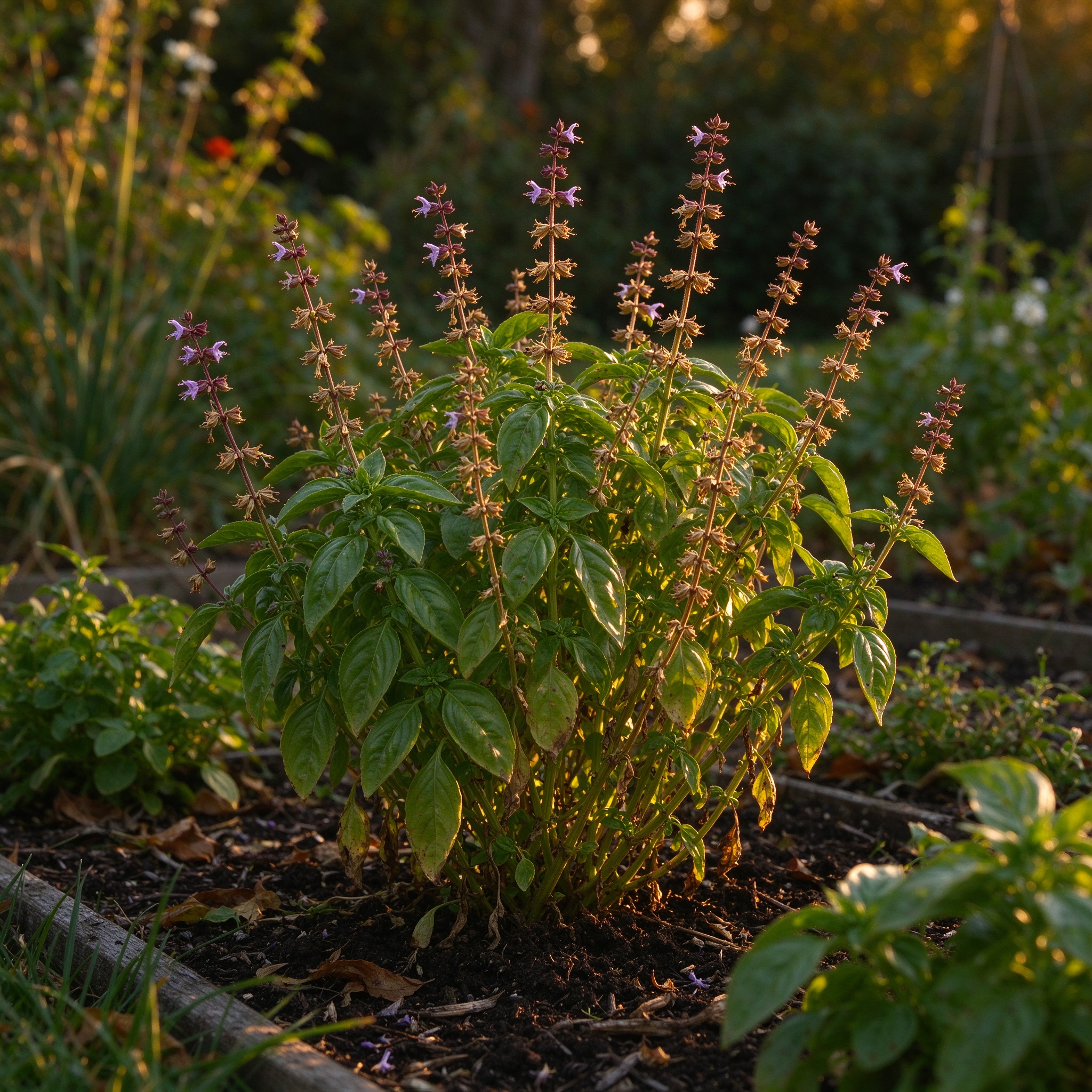
- •Sweet basil (Ocimum basilicum) is a fast-growing, frost-tender annual in the mint family, prized for its aromatic, peppery leaves that are essential to pesto, Caprese salad, and summer Italian cooking.
- •Plants grow 1 to 3 feet tall with bright green, ovate leaves and small white flower spikes that attract bees and butterflies.
- •Pinch regularly to keep plants bushy and delay flowering.
- •In zones 10 and warmer it is grown as a short-lived tender perennial; elsewhere it is killed by the first fall frost.
📋 Quick Facts
Scientific Name: Ocimum basilicum
Family: Lamiaceae
Category: Herb
USDA Zones: 10-11 (annual elsewhere)
Light:
- •Plant in full sun with 6 to 8 hours of direct sunlight each day. In very hot summer climates, light afternoon shade protects leaves from scorch.
- •Indoors, grow on the sunniest windowsill possible, or under grow lights kept on 12 to 14 hours per day.
Water:
- •Keep soil evenly moist but never soggy; water when the top inch of soil feels dry. Containers dry out fast in heat and may need checking daily.
- •A 2- to 3-inch mulch of compost or shredded leaves helps retain moisture, suppress weeds, and keep roots cool through summer.
Temperature:
- •Basil is warm-loving and sensitive to cold: it grows best between 70 and 90°F (21 to 32°C).
- •Growth stalls below 50°F and leaves blacken at the first touch of frost.
- •Protect plants from late chills with a frost cover and harvest fully before the first fall freeze.
Soil:
- •Grow in fertile, well-drained soil with a neutral pH around 6.0 to 7.5.
- •Heavy clay should be amended with compost, or basil can be planted in raised beds and containers where drainage can be controlled more easily.
Harvest:
- •Start harvesting once plants reach 6 to 8 inches tall with several sets of leaves.
- •Cut stems just above a leaf pair in the morning after dew dries, and never remove more than one third of the plant at once.
- •Pinch out flower buds to keep leaves tender and flavorful all season.
Common Problems: Fusarium wilt, Slugs, Aphids.
📅 When to Plant
- •Start seeds indoors 6 to 8 weeks before the last spring frost, or sow directly outdoors only after all danger of frost has passed and nighttime temperatures stay consistently above 50°F (10°C).
- •In mild-winter zones 10 to 11, basil can also be planted in early spring for an extended summer harvest.
🌱 Growing Stages
 1
Germination
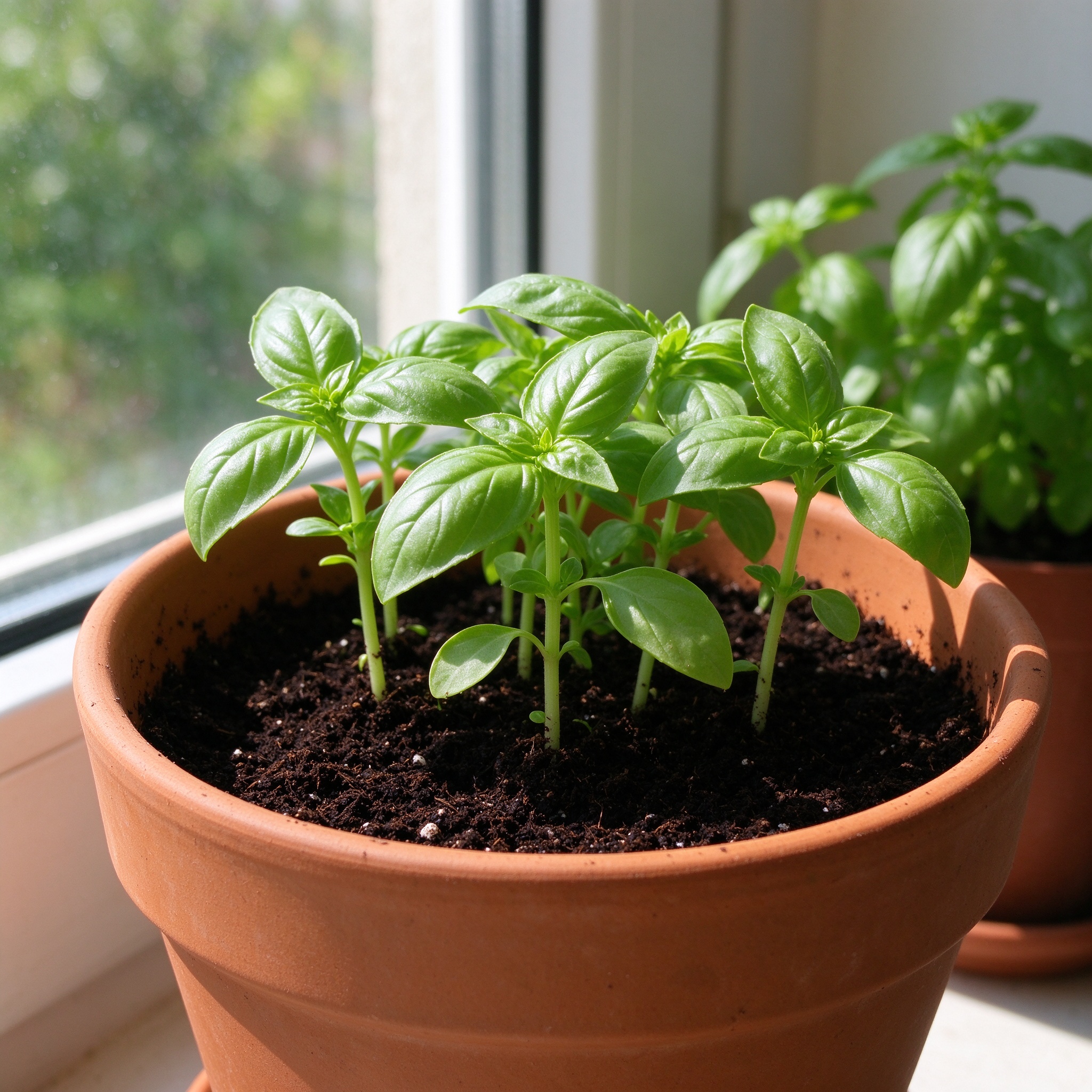
(5–10 days)- •Seeds swell and push up two small rounded cotyledons above warm, moist mix.
- •Keep soil at 70 to 75°F under lights; cooler soil delays or rots the seedling.
- •This stage is quick but fragile, so avoid overwatering and keep humidity moderate.
 2
Seedling
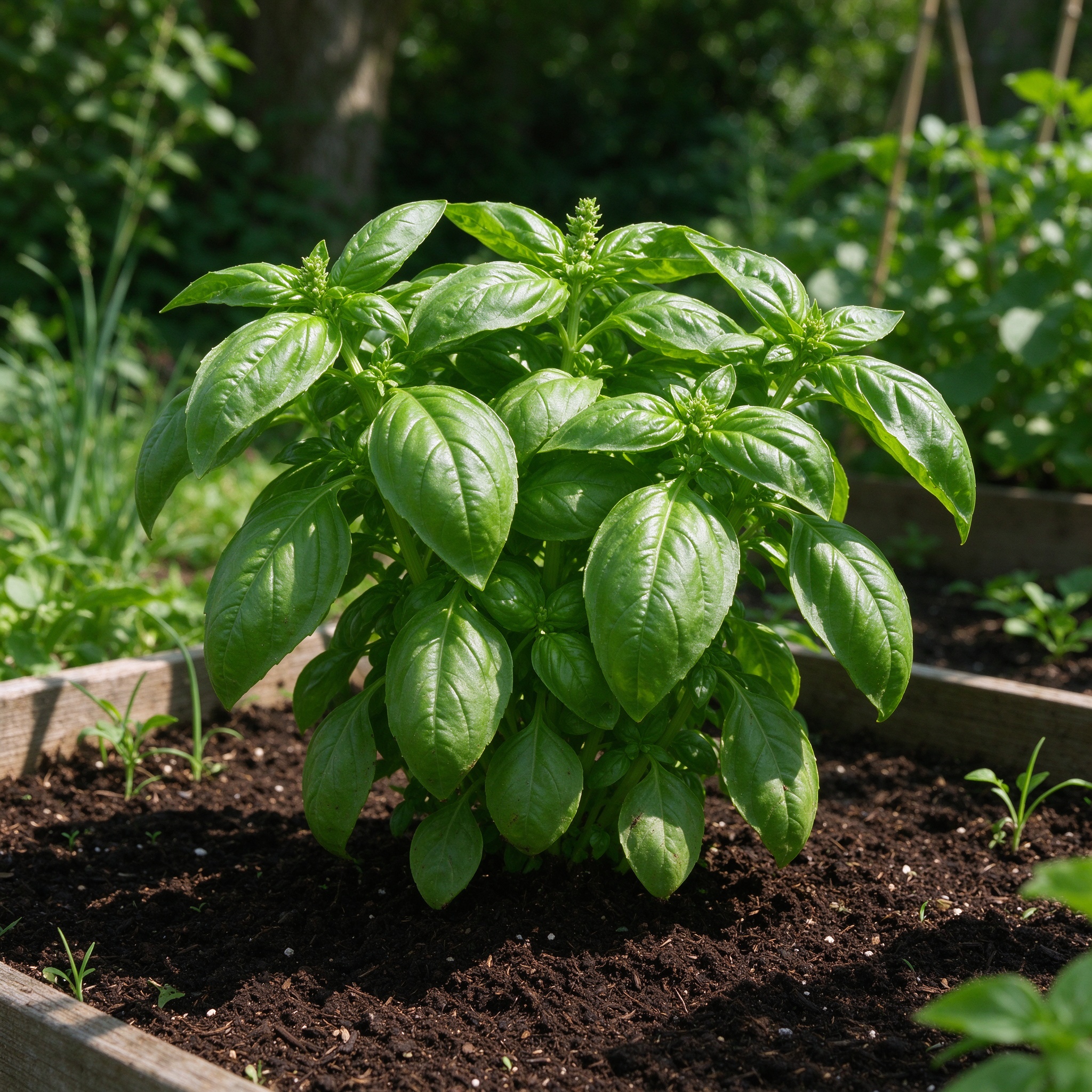
(2–4 weeks)- •True oval leaves with visible veins replace the seed leaves. Thin to one plant per cell, keep light close, and water carefully.
- •Seedlings are prone to damping-off if the mix stays wet, so let the surface dry between waterings.
 3
Vegetative bush
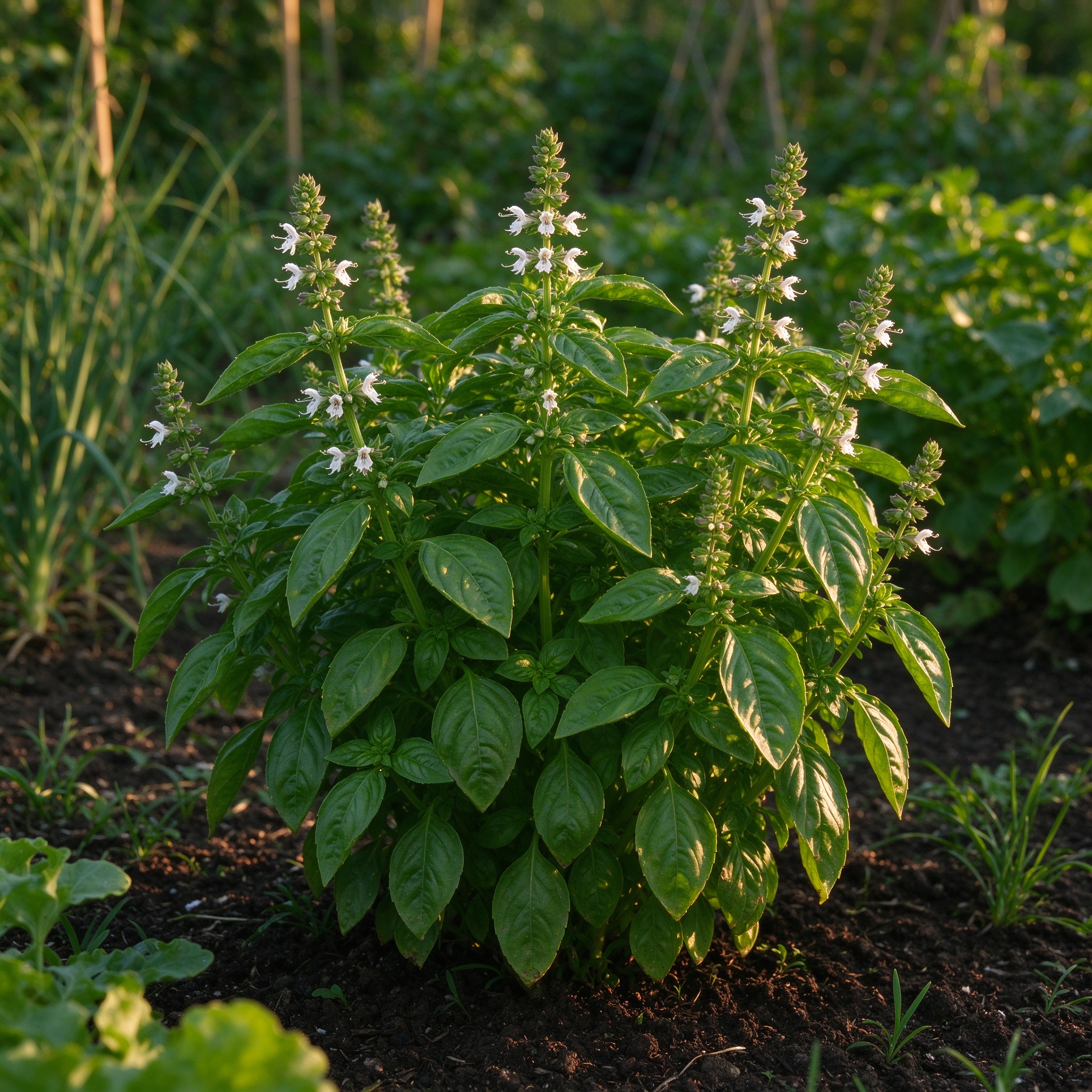
(Weeks 5–10)- •After transplant and the first tip pinch, the plant branches rapidly into a dense, leafy mound.
- •This is the main harvest window: pick stems weekly, keep flowers pinched, and feed lightly if growth slows.
- •Warm sun and even moisture drive daily leaf production.
- 4
Flowering and senescence
(Late summer)- •Tiny white or purple flower spikes rise from the stem tips, signaling the switch to seed. Leaves become bitter and growth slows.
- •Harvest everything before the first frost, or take cuttings to root indoors for a fresh supply through winter.
💧 Detailed Care Guide
☀️ Light Requirements
- •Plant in full sun with 6 to 8 hours of direct sunlight each day. In very hot summer climates, light afternoon shade protects leaves from scorch.
- •Indoors, grow on the sunniest windowsill possible, or under grow lights kept on 12 to 14 hours per day.
💧 Watering
- •Keep soil evenly moist but never soggy; water when the top inch of soil feels dry. Containers dry out fast in heat and may need checking daily.
- •A 2- to 3-inch mulch of compost or shredded leaves helps retain moisture, suppress weeds, and keep roots cool through summer.
🌡️ Temperature
- •Basil is warm-loving and sensitive to cold: it grows best between 70 and 90°F (21 to 32°C).
- •Growth stalls below 50°F and leaves blacken at the first touch of frost.
- •Protect plants from late chills with a frost cover and harvest fully before the first fall freeze.
🌱 Soil & Fertilizer
Soil:
- •Grow in fertile, well-drained soil with a neutral pH around 6.0 to 7.5.
- •Heavy clay should be amended with compost, or basil can be planted in raised beds and containers where drainage can be controlled more easily.
Fertilizer:
- •Basil is a light feeder.
- •Mix compost into the bed at planting time; if growth slows or leaves look pale, feed with a diluted balanced liquid fertilizer every 3 to 4 weeks through summer.
- •Container plants need more frequent light feeding because nutrients wash out with frequent watering.
📝 Step-by-Step Planting Guide
- 1
Sow seeds indoors 6–8 weeks before the last frost
- •Fill trays with moist seed-starting mix and sow two seeds per cell, about one quarter inch deep.
- •Keep the mix warm (70 to 75°F) under grow lights; a heat mat speeds things up. Basil usually sprouts in 5 to 7 days.
- •Once true leaves appear, snip the weaker seedling so only one strong plant remains per cell.
- •Do not rush to move plants out: basil simply will not take off until nights stay above 50°F.
- 2
Transplant outside after frost, into warmed soil
- •Wait until all danger of frost has passed and the soil has warmed before hardening off and setting out seedlings.
- •Plant them at the same depth they grew in their pots, and choose a site with 6 to 8 hours of full sun.
- •Tucking basil beside taller tomatoes gives roots shade from the hottest afternoon sun while keeping the classic companion-plant pairing.
- 3
Space plants 10–12 inches apart and mulch
- •Give each plant room to branch: space transplants about 10 to 12 inches apart in the bed.
- •After planting, add a 2- to 3-inch layer of compost or shredded leaf mulch around the stems, keeping it a short distance away from the crown.
- •Mulch holds moisture through hot spells, blocks weeds, and feeds the soil gradually. Water in well and check daily until plants are established.
- 4
Pinch the central tip to force a bushy plant
- •When a young plant has 6 to 8 sets of leaves, use your thumb and forefinger to pinch off the central growing tip just above a pair of leaves.
- •This removes the hormones that make the stem grow tall and lanky, and triggers two side branches to sprout from the node.
- •Repeat on each new stem once it develops 2 to 3 pairs of leaves. Within weeks a pinched seedling becomes a multi-stemmed, productive bush.
- 5
Harvest continuously and remove flower buds
- •Cut or pinch stems just above a leaf pair at least once every week or two, taking no more than one third of the plant at a time.
- •Harvest in the morning after dew has dried for the best flavor.
- •As soon as tiny flower buds appear at the stem tips, pinch them out: once basil blooms, leaves turn bitter and the plant shifts energy to seed.
- •Leave a few blooms if you want to feed bees.
🌱 Recommended Varieties
Compact early-cropping basils
- •These small, fast varieties mature quickly and are perfect for window boxes and early pots.
- •'Spicy Globe' forms a neat 8-inch round ball with small spicy leaves. 'Greek Dwarf' stays compact at about 6 inches with a slightly anise bite.
- •'Fino Verde' produces tiny, dense leaves on a narrow plant and is beloved for pesto and cocktail garnishes.
Main-season culinary basils
- •The workhorses of the herb garden, planted after frost for steady summer picking.
- •'Genovese' is the classic large-leaf pesto basil, growing about 2 feet tall.
- •'Sweet Basil' (also sold as 'Napoletano') has the familiar sweet-peppery flavor used on Caprese.
- •'Rutgers Obsession DMR' adds strong resistance to basil downy mildew while keeping excellent taste and compact branching.
Heirloom and ornamental basils
- •Old garden varieties chosen for striking foliage and distinctive flavors. 'Purple Ruffles' has dark purple, fringed leaves with a mild flavor.
- •'Dark Opal' was an All-America Selections winner in 1962 and offers deep burgundy leaves.
- •'Cinnamon' carries purple stems and a warm cinnamon-anise scent, while Thai-type 'Siam Queen' gives a licorice-mint taste that holds up in stir-fries.
🪴 Growing in Containers
- Choose a pot 6–10 inches across with drainage holes:
- •A single basil plant needs a container at least 6 to 10 inches wide and deep; larger pots dry out more slowly.
- •Drainage holes are non-negotiable, and a saucer should be emptied after watering.
- Use light, fluffy potting mix:
- •Plant in a quality all-purpose potting soil mixed with a little compost, not heavy garden soil which compacts in pots.
- •Good drainage keeps roots air-pruned and prevents the root rot that kills container herbs.
- Water pots more often than garden beds:
- •Container basil may need water daily in summer heat.
- •Check by pushing a finger an inch into the soil; water when it feels dry, and pour until it runs out the bottom.
- •Empty the saucer so roots never stand in water.
- Give pots the sunniest spot:
- •Place pots where they receive 6 to 8 hours of direct sun, and rotate them weekly so all sides get light.
- •In extremely hot climates, move pots into light afternoon shade to keep leaves from scorching.
- Feed lightly and harvest often:
- •Nutrients leach out with frequent watering, so feed container basil with diluted liquid fertilizer every 2 to 3 weeks.
- •Pinch the growing tips weekly; a potted plant kept pinched will stay compact and productive for months.
✂️ Pruning & Maintenance
- ✓
First tip pinch at 6–8 leaf pairs
- •Once the young plant has 6 to 8 sets of true leaves, pinch the main stem tip just above a leaf pair.
- •This is the single most important cut: it converts a lanky single stem into a branched, bushy plant.
- ✓
Harvest by pinching stems above a node
- •Every week or two, snip stems back to just above a pair of leaves. New growth emerges from that node, so regular picking is also pruning.
- •Never take more than one third of the plant at one time.
- ✓
Remove flower buds as they appear
- •Pinch out tiny flower spikes with your fingernail the moment you spot them. Removing buds delays bolting and keeps leaves sweet.
- •If you miss a flush, cut the flowering stem back by half to force new leafy growth.
- ✓
Cut back leggy stems mid-season
- •If a stem becomes tall and bare, cut it back by half to just above a healthy leaf pair.
- •Basil resprouts readily from nodes, and a mid-season cutback keeps the plant dense and productive until frost.
🐛 Pest & Disease Control
Common Pests
Japanese beetles
Symptoms: Metallic green-and-copper beetles skeletonize leaves between the veins, leaving lacy brown frames; they often feed in groups on the top growth in warm sunshine and can defoliate young plants in days.Control:- •Hand-pick beetles into soapy water early in the morning when they are slow, or knock them off with a strong spray.
- •Cover vulnerable seedlings with fine insect netting through the peak flight.
- •Avoid Japanese beetle traps near the garden, as they draw more beetles in than they catch.
Aphids
Symptoms: Clusters of tiny pale green or black insects colonize new growth and the undersides of leaves, causing curled, distorted foliage and sticky honeydew that can grow black sooty mold.Control:- •Knock small infestations off with a firm stream of water and repeat daily until gone.
- •For heavier cases, spray insecticidal soap or neem oil directly on the undersides of leaves.
- •Encourage lady beetles and lacewings, which move in quickly when aphids appear.
Slugs and snails
Symptoms: Ragged holes in young leaves and smooth slime trails on stems and the soil surface, appearing after cool, wet nights; tender seedlings may disappear overnight.Control:- •Hand-pick at dusk with a flashlight, and clear away damp mulch and debris where they hide by day.
- •Trap with a shallow saucer of beer sunk to rim level, or sprinkle food-grade diatomaceous earth around the plants.
- •Watering in the morning rather than at night reduces their night-time activity.
Spider mites
Symptoms: Fine yellow stippling speckles the upper leaf surface, and faint webbing appears at stem tips; leaves bronzen, curl, and drop as numbers build in hot, dry, dusty weather.Control:- •Mist plants regularly and spray undersides of leaves with water, which mites hate.
- •Release or encourage predatory mites, and treat serious outbreaks with insecticidal soap or horticultural oil applied on a cool evening so foliage does not burn.
Common Diseases
Basil downy mildew
Symptoms:- •Yellowing patches on upper leaf surfaces with fuzzy gray-purple growth on the undersides; leaves eventually brown and die.
- •Favored by warm, humid nights and wet foliage.
Control:- •Plant resistant cultivars such as Prospera, Rutgers Obsession, Rutgers Passion, or Queenette.
- •Space plants for air flow, water at the base rather than overhead, and remove badly infected plants promptly before spores spread.
Fusarium wilt
Symptoms: Plants suddenly wilt even though the soil is moist, with brown streaks on the stems, stunted growth, and leaf yellowing; young seedlings may keel over at the soil line.Control:- •Grow resistant varieties such as 'Newton'.
- •Remove and discard infected plants and debris, do not compost them, and avoid planting basil in the same spot for at least three years.
- •Use fresh potting mix for seedlings.
Botrytis gray mold
Symptoms: Gray-brown fuzzy mold covers wounded or aging leaves and flowers, spreading fast in cool, damp, crowded conditions; rotting patches collapse the stems.Control:- •Improve air circulation by spacing and staking plants, water at soil level, and pick off spent flowers and yellow leaves.
- •Mulch keeps leaves off wet soil, and removing debris reduces spore sources.
Bacterial leaf spot
Symptoms: Small, water-soaked dark spots with yellow halos form on leaves, eventually turning necrotic and dropping out to leave holes; spread by splashing water.Control:- •Avoid overhead watering and handle plants only when leaves are dry.
- •Remove infected foliage, disinfect tools between plants, and buy clean seed rather than saving seed from questionable plants.
Pythium root rot
Symptoms: Young plants wilt and stunt despite wet soil; roots turn brown and mushy instead of white and firm, and stems may rot at the soil line.Control:- •Use sterile seed-starting mix, avoid overwatering, and make sure pots and beds drain freely.
- •Let the top inch of soil dry between waterings, and discard trays with rotted seedlings before replanting.
🍅 When to Harvest
- •Start harvesting once plants reach 6 to 8 inches tall with several sets of leaves.
- •Cut stems just above a leaf pair in the morning after dew dries, and never remove more than one third of the plant at once.
- •Pinch out flower buds to keep leaves tender and flavorful all season.
❓ Frequently Asked Questions
- 1
When is it safe to plant basil outside?
- •Wait until all danger of frost has passed and nighttime temperatures are consistently above 50°F (10°C).
- •Basil loves warmth and simply will not grow well in cold soil. If a late chill threatens, cover plants or move containers indoors.
- •Starting seeds indoors 6 to 8 weeks before your last frost date gives you a head start so you can transplant as soon as conditions warm.
- 2
Why is my basil flowering, and should I stop it?
- •Basil flowers when days lengthen and plants mature, a process called bolting.
- •Once it blooms, leaves turn bitter as the plant shifts energy into seed production.
- •Pinch off every flower bud as soon as you see it, and keep harvesting regularly to delay flowering.
- •You can leave a few stems to flower if you want to feed bees and butterflies, but expect those leaves to lose sweetness.
- 3
How often should I water basil?
- •Water whenever the top inch of soil feels dry, aiming for evenly moist but not soggy soil.
- •In the ground, that is usually every 2 to 3 days in hot weather; container basil may need daily checking because pots heat up and dry out fast.
- •Mulch around plants, water at the base in the morning, and never let roots sit in standing water.
- 4
Can I grow basil indoors all winter?
- •Yes, but it needs a very bright south-facing window or grow lights on 12 to 14 hours a day, and daytime warmth of 70°F or more.
- •Grow it in well-drained potting mix, water when the top inch dries, and pinch often.
- •Growth will be slower than summer outdoors, and pests like spider mites and aphids are more common indoors, so inspect new growth weekly.
- 5
Why are my basil leaves turning black or yellow?
- •Blackened leaves usually mean cold damage from a chilly night or frost.
- •Yellowing can come from overwatering and poor drainage, nutrient deficiency, or downy mildew (check the leaf undersides for gray-purple fuzz).
- •Move or cover plants from cold, let soggy soil dry out, feed lightly if pale, and remove mildewed leaves promptly.
- 6
How do I preserve basil for winter?
- •Freeze chopped leaves in airtight bags or in ice-cube trays with a little water or olive oil, which keeps flavor far better than drying.
- •You can also make pesto and freeze it in portions, or hang small bunches in a dark, airy place and store crisp leaves in jars.
- •Unlike woody herbs, basil loses much of its aroma when dried, so freezing is the preferred method.
Source:
NC State Extension Gardener Plant Toolbox — https://plants.ces.ncsu.edu/images/plants/ocimum-basilicum/
NC State Extension Gardener Plant Toolbox — https://plants.ces.ncsu.edu/images/plants/ocimum-basilicum/
The Old Farmer's Almanac — https://www.almanac.com/plant/basil
Photo credit: NC State Extension
Images courtesy of NC State Extension under CC BY license. Thank you to the photographers who make these educational images available.
License: CC BY-NC 2.0 / CC BY 4.0