
How to Grow Rosemary: Complete Guide
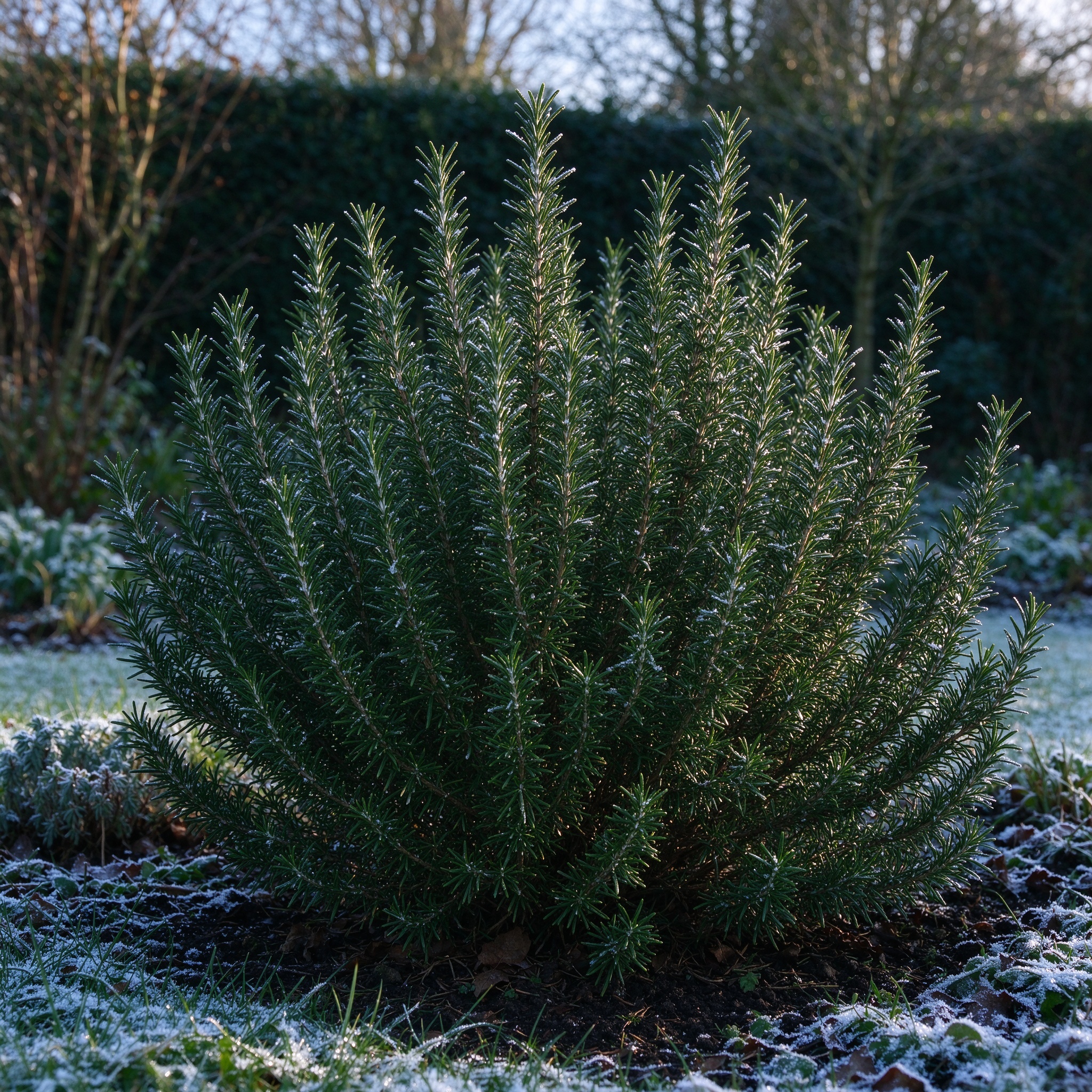
- •Rosemary (Salvia rosmarinus, formerly Rosmarinus officinalis) is a woody, evergreen shrub in the mint family native to the Mediterranean, grown for its aromatic needle-like leaves and tiny blue, lavender, or white spring flowers.
- •Mature plants reach 4 to 5 feet tall with an upright, rounded habit.
- •It thrives in full sun and sharply drained, slightly acidic to neutral soil, tolerates drought and salt, and hates wet roots.
- •Propagate from cuttings rather than seed, which germinates slowly and unevenly.
📋 Quick Facts
Scientific Name: Salvia rosmarinus
Family: Lamiaceae
Category: Herb
USDA Zones: 8-10
Light:
- •Give rosemary a full-sun site with at least 6 to 8 hours of direct light daily.
- •It tolerates partial shade but becomes leggy and prone to disease with less sun.
- •Indoors, place it in the brightest south- or west-facing window available.
Water:
- •Water established shrubs sparingly: soak deeply when the top 1 to 2 inches of soil are dry, then let the soil dry out between waterings.
- •Overwatering is the most common cause of decline. Mulch lightly but keep mulch away from the crown to avoid rot.
Temperature:
- •Rosemary is a Mediterranean plant hardy roughly to zone 8, though cultivars like 'Arp' survive colder winters with protection.
- •It dislikes wet, humid cold and damp roots more than frost itself; bring potted plants indoors before winter and protect outdoor crowns with evergreen boughs.
Soil:
- •Plant in light, sandy or gravelly, well-drained soil on the dry side, pH slightly acidic to neutral.
- •Amend heavy clay with compost and coarse sand, or grow in raised beds and containers.
- •It tolerates poor, rocky soils and salt spray but not clay that stays wet.
Harvest:
- •Snip young stem tips any time for the freshest flavor, especially soft new spring growth. Never remove more than one third of the bush at once.
- •Older woody sprigs are better for infusions and roasts than for fresh eating. Hang sprigs upside down to dry, then strip the leaves.
Common Problems: Root rot, Powdery mildew, Spider mites.
📅 When to Plant
- •Plant nursery-grown or cutting-rooted rosemary in spring, well after frost, once the soil warms to about 70°F (21°C).
- •In mild-winter zones 8 to 10, it can also go in during fall. Start cuttings or overwintering pots indoors 8 to 10 weeks before the last frost.
🌱 Growing Stages
 1
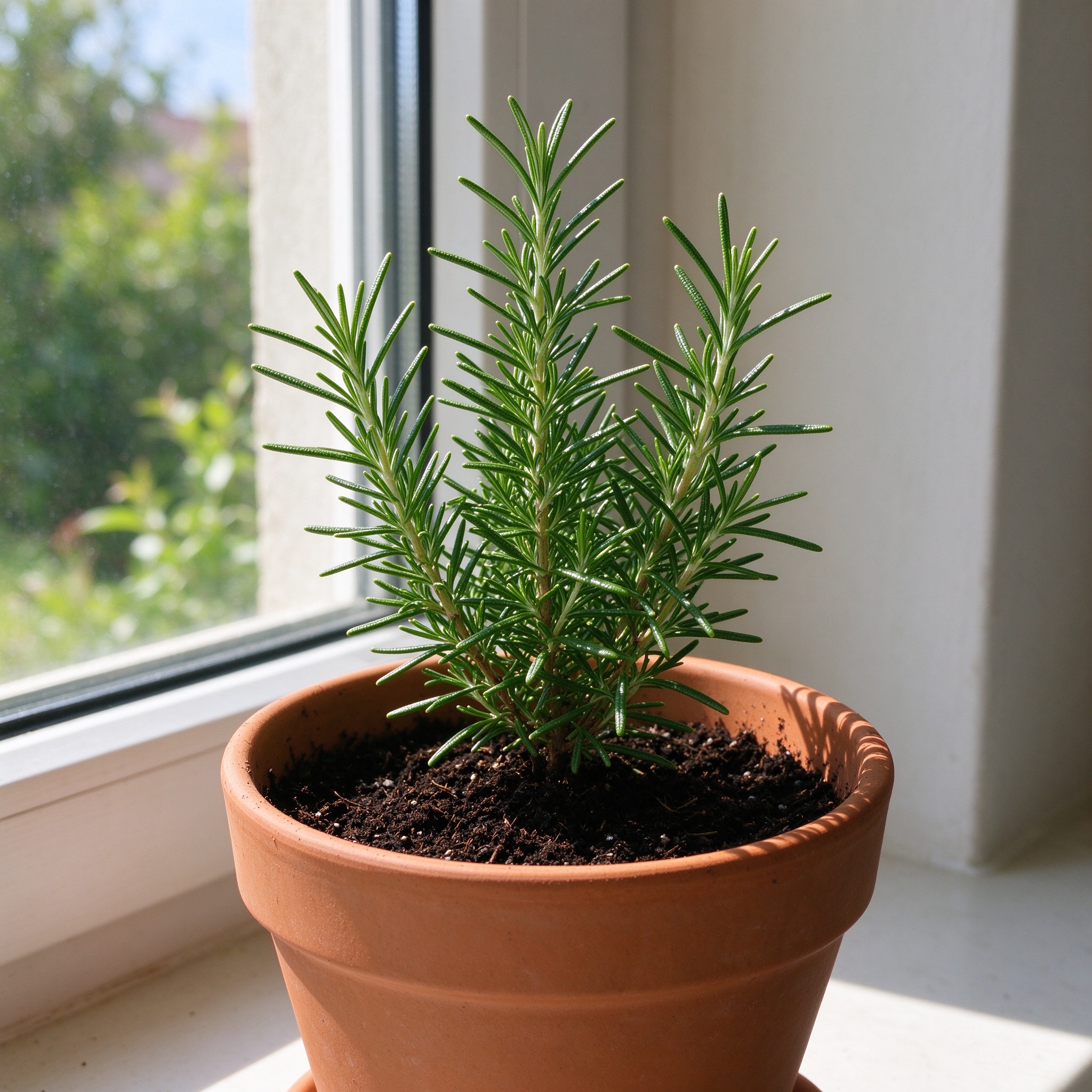
Cutting rooting
(6–8 weeks)- •A 4-inch tip cutting with lower leaves stripped develops roots in moist, airy mix under humidity. Keep it warm and bright but out of direct sun.
- •Once tugging shows resistance, it is ready to pot up on its own.
 2
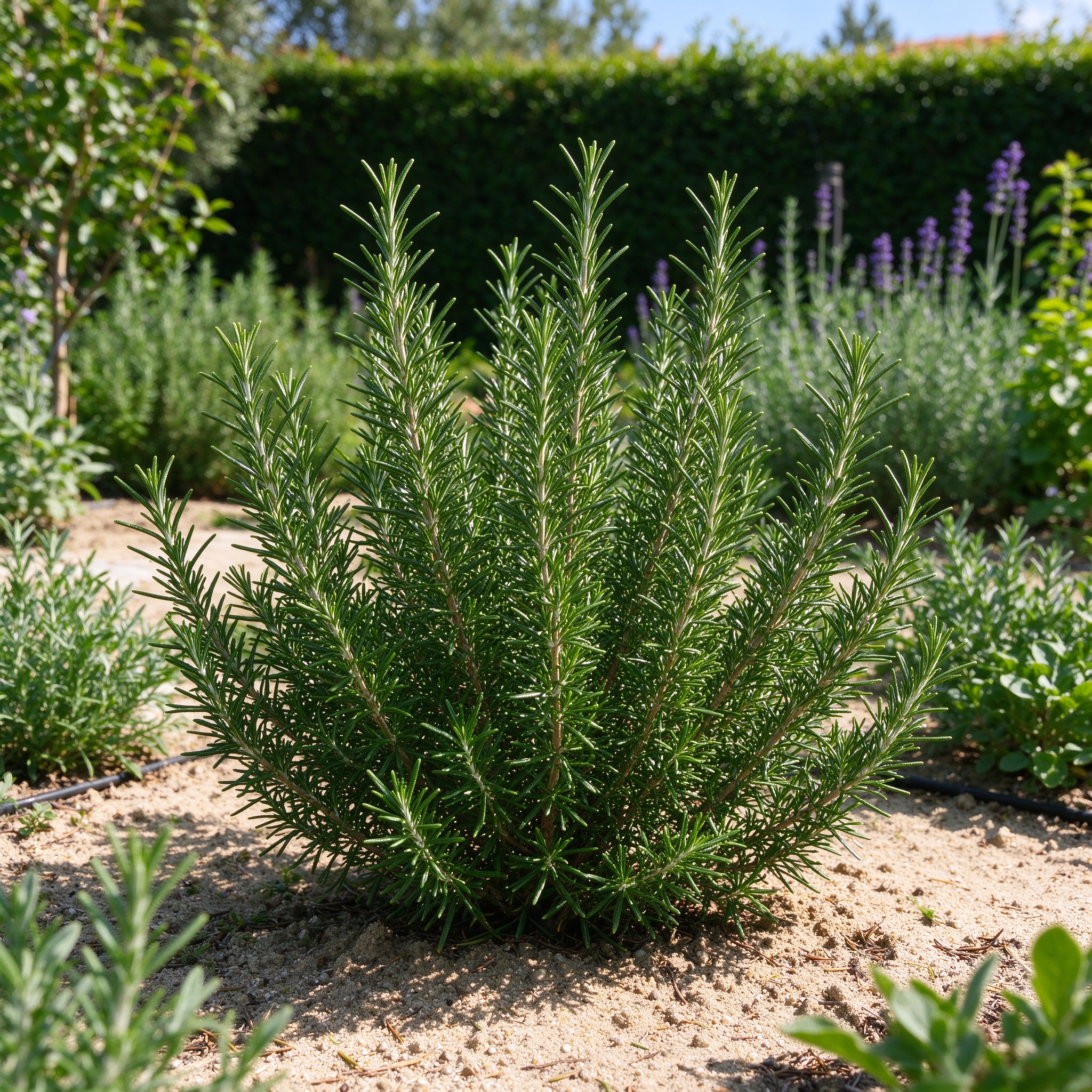
Establishment year
(First growing season)- •The young shrub builds its root system. Water deeply every few days until established, then taper off.
- •Pinch tips to encourage branching and protect from harsh wind. Growth is slow at first, which is normal for rosemary.
 3
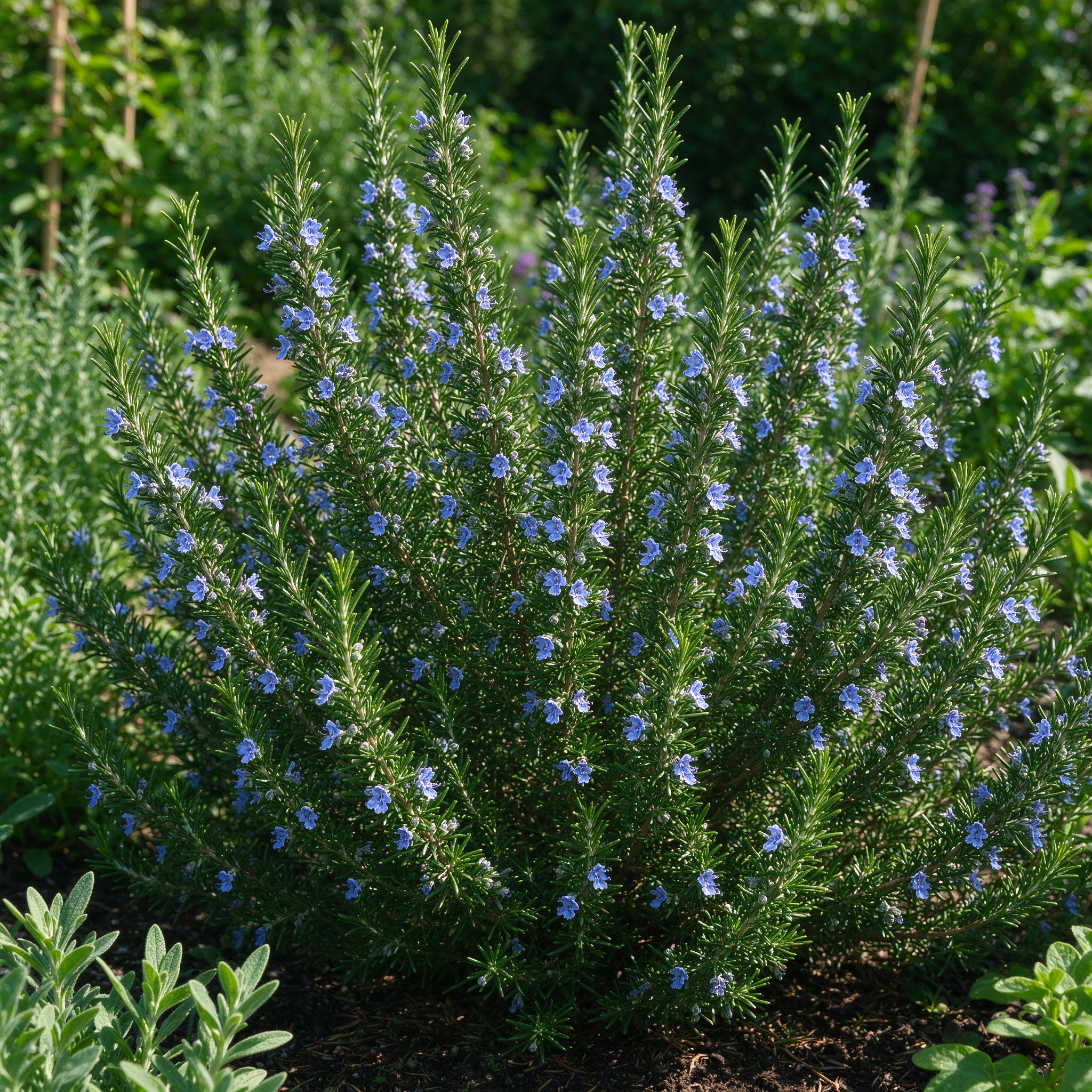
Mature evergreen shrub
(Years 2–5)- •The plant reaches 2 to 5 feet, flowers in spring, and becomes drought-tough.
- •Harvest sprigs year-round, shear lightly after bloom, and watch for root rot in wet weather. After about 5 years it may become woody and leggy.
- 4
Winter semi-dormancy
(Winter)- •Growth slows or stops; evergreen foliage stays but the plant rests.
- •In cold zones, protect outdoor crowns with evergreen boughs, or grow in pots brought to a bright cool window.
- •Do not fertilize or prune hard until spring.
💧 Detailed Care Guide
☀️ Light Requirements
- •Give rosemary a full-sun site with at least 6 to 8 hours of direct light daily.
- •It tolerates partial shade but becomes leggy and prone to disease with less sun.
- •Indoors, place it in the brightest south- or west-facing window available.
💧 Watering
- •Water established shrubs sparingly: soak deeply when the top 1 to 2 inches of soil are dry, then let the soil dry out between waterings.
- •Overwatering is the most common cause of decline. Mulch lightly but keep mulch away from the crown to avoid rot.
🌡️ Temperature
- •Rosemary is a Mediterranean plant hardy roughly to zone 8, though cultivars like 'Arp' survive colder winters with protection.
- •It dislikes wet, humid cold and damp roots more than frost itself; bring potted plants indoors before winter and protect outdoor crowns with evergreen boughs.
🌱 Soil & Fertilizer
Soil:
- •Plant in light, sandy or gravelly, well-drained soil on the dry side, pH slightly acidic to neutral.
- •Amend heavy clay with compost and coarse sand, or grow in raised beds and containers.
- •It tolerates poor, rocky soils and salt spray but not clay that stays wet.
Fertilizer:
- •Rosemary needs very little feeding. In-ground shrubs usually thrive without fertilizer; over-rich soil makes them floppy and less hardy.
- •Container plants, which leach nutrients fast, appreciate one light feeding with a balanced fertilizer right after flowering.
📝 Step-by-Step Planting Guide
- 1
Start from stem cuttings, not seed
- •Rosemary seed germinates slowly and unevenly, taking 2 to 3 weeks or more, and seedlings are slow to mature.
- •Instead clip 4-inch healthy tip cuttings from an established plant, strip the lower leaves, and dip the cut end in rooting hormone.
- •Insert them around the edge of a pot of moist seed mix, cover loosely with a bag for humidity, and expect roots in about 8 weeks.
- •Pot up individually once rooted.
- 2
Choose a full-sun, sharply drained site
- •Pick a spot with 6 to 8 hours of sun and soil that dries quickly after rain.
- •Rosemary hates wet feet: in heavy clay, dig in compost and coarse sand, or plant on a slight mound or in a raised bed.
- •A south-facing slope or the foot of a sunny wall gives the warmth and air movement a woody Mediterranean shrub needs.
- 3
Space plants 2 to 3 feet apart
- •Set rooted cuttings or nursery transplants at the same depth they grew in their pots, spacing them 2 to 3 feet apart.
- •Rosemary does not like being crowded, and good air circulation around the evergreen foliage prevents powdery mildew.
- •Water in well, then let the top inch or two dry before watering again. Resist the urge to water on a schedule.
- 4
Water sparingly once established
- •During the first season, water deeply every few days until roots establish; after that, soak only when the top 1 to 2 inches of soil feel dry.
- •Established shrubs often need watering only every 1 to 3 weeks, depending on heat and rain.
- •Soggy soil is the number one killer: brown or black needles usually mean overwatered, rotting roots.
- 5
Lightly prune after bloom and protect in winter
- •Once spring flowers fade, shear the plant lightly to keep a dense, rounded shape, removing no more than one third of the growth.
- •Never cut into bare old wood, which rarely resprouts.
- •In cold zones, mulch the crown with evergreen boughs after the ground freezes, and bring potted rosemary indoors to a bright cool window for the winter.
🌱 Recommended Varieties
Upright culinary rosemaries
- •Fast-establishing, upright types chosen for cooking and kitchen gardens.
- •'Tuscan Blue' is a vigorous upright with deep blue-violet flowers and reddish stems.
- •'Salem' grows 2 to 3 feet tall with pale blue flowers and a clean pine-like scent.
- •'Officinalis' is the classic blue-violet upright, reliable for topiary and culinary harvest.
Hardy landscape rosemaries
- •Bushy garden types that weather ordinary winters better than tender stock.
- •'Arp' is the hardiest rosemary known, reaching 4 feet with bright blue flowers. 'Severn Sea' has an arching habit to 3 feet with bright blue blooms.
- •'Hill Hardy' is another cold-tough selection with dense foliage and lavender-blue flowers.
Trailing and flower-color rosemaries
- •Oden selections used as ornamentals and low hedges. 'Prostratus' is a low creeping form to 2 feet, perfect for walls and window boxes.
- •'Irene' is a prostrate, trailing cultivar with deep violet flowers.
- •'Albus' (also 'Albiflorus') carries clean white flowers on an upright shrub for contrast in the border.
🪴 Growing in Containers
- Use a pot at least 12 inches wide with drainage:
- •Rosemary develops a woody root ball and dislikes wet feet.
- •Choose a pot 12 to 16 inches across with generous drainage holes; terra cotta dries evenly and suits the plant's nature.
- Plant in a gritty, fast-draining mix:
- •Use a light potting soil blended with coarse sand or perlite, or a cactus-style mix. Heavy peat-based mixes stay too wet and invite root rot.
- •Top-dress with a thin layer of gravel.
- Water when the top inch is dry:
- •Soak thoroughly until water runs out, then let the plant dry. Empty the saucer immediately.
- •Potted rosemary hates sitting in water more than it hates short dry spells.
- Grow in the hottest, sunniest spot: Set the pot where it receives 6 to 8 hours of sun, and rotate weekly. Rosemary on a sunny patio stays dense; in dim corners it turns leggy and prone to mildew.
- Overwinter indoors bright and cool:
- •Before frost, move the pot to the brightest window in a cool room. Water sparingly, mist dry air, and skip fertilizer until February.
- •Watch for spider mites and mealybugs on the new growth.
✂️ Pruning & Maintenance
- ✓
Shear lightly after spring bloom
- •Once flowers fade, trim the whole plant back by no more than one third to a neat rounded shape.
- •This encourages dense new foliage and prevents a woody, open center.
- ✓
Never cut into bare old wood
- •Rosemary rarely resprouts from leafless brown stems. Always cut just above a leafy green section.
- •If a branch is fully bare, remove it at the base and replace the plant from cuttings.
- ✓
Harvest sprigs as you cook
- •Snip young tips for the kitchen at any time, which doubles as pruning.
- •Taking sprigs from different sides keeps the shape balanced; never strip more than one third of the bush at once.
- ✓
Renew old shrubs from cuttings
- •After about five years rosemary becomes woody and straggly.
- •Instead of hard-cutting it back, root fresh 4-inch cuttings and grow replacements, retiring the old plant once the new ones fill in.
🐛 Pest & Disease Control
Common Pests
Mealybugs
Symptoms:- •White, cottony masses cluster in leaf axils and on stem undersides, sucking sap and weakening the plant; sticky honeydew and sooty mold often follow.
- •Most common on indoor or crowded rosemary.
Control:- •Dab light infestations with a cotton swab dipped in rubbing alcohol, or spray with insecticidal soap. Improve air circulation and avoid overwatering.
- •Heavily infested stems should be pruned out and destroyed.
Spider mites
Symptoms: Fine yellow stippling dots the needle-like leaves, which bronze and drop; faint webbing appears on branch tips in hot, dry weather, especially on indoor plants.Control:- •Spray undersides of stems with a strong water mist, which mites dislike.
- •Increase humidity around indoor plants and treat outbreaks with insecticidal soap or horticultural oil applied on a cool day.
Aphids
Symptoms: Tiny green or gray insects cluster on soft new tips, curling and distorting young growth and leaving sticky honeydew that feeds black sooty mold.Control:- •Knock them off with a firm stream of water, repeat daily.
- •Encourage lady beetles and lacewings; for persistent colonies, spray insecticidal soap directly on the tips where they feed.
Whiteflies
Symptoms: Tiny white insects flutter up when the plant is disturbed, leaving yellowing leaves and sticky honeydew; usually a greenhouse or indoor pest.Control:- •Hang yellow sticky traps near the plant and spray leaf undersides with insecticidal soap.
- •Improve ventilation and avoid excess nitrogen, which pushes soft, inviting growth.
Common Diseases
Root and crown rot (Phytophthora / Pythium)
Symptoms:- •Needles turn brown or black and drop, branches die back, and the plant declines despite looking otherwise cared for; roots are brown and mushy.
- •Caused by constantly wet soil.
Control:- •Plant in sharply drained soil, water only when the top inches dry, and keep mulch off the crown. Remove badly rotted plants; advanced rot has no cure.
- •In containers, ensure drainage holes and never let pots sit in saucers of water.
Powdery mildew
Symptoms: A white, powdery coating covers needles and stems, favored by poor air circulation, high humidity, and shade. New growth may distort.Control:- •Give plants full sun and space them for airflow. Avoid overhead watering.
- •Spray mild cases with neem oil or a baking-soda foliar spray, and prune crowded inner branches.
Botrytis blight
Symptoms: Gray-brown fuzzy mold covers dying flowers and damaged needles, spreading in cool, damp, still air; patches of foliage collapse.Control:- •Remove spent flowers and dead foliage promptly. Thin the bush for air movement and water at the base rather than over the top.
- •Destroy infected trimmings rather than composting them.
Bacterial leaf spot
Symptoms: Dark, water-soaked spots with yellow halos appear on needles and young stems, enlarging and causing dieback in wet seasons.Control: Avoid overhead irrigation and handle plants only when dry. Prune out infected shoots, disinfect tools between cuts, and improve spacing and ventilation.Aerial blight
Symptoms: Sudden dieback of branch tips with browning needles spreading down the stem, often after warm, wet weather; inner bark may show discoloration.Control: Prune affected branches well below the dead tissue and clean up fallen debris. Reduce humidity and crowding, and avoid wounding the woody stems during harvest.
🍅 When to Harvest
- •Snip young stem tips any time for the freshest flavor, especially soft new spring growth. Never remove more than one third of the bush at once.
- •Older woody sprigs are better for infusions and roasts than for fresh eating. Hang sprigs upside down to dry, then strip the leaves.
❓ Frequently Asked Questions
- 1
When should I plant rosemary outdoors?
- •Wait until spring is well underway, all frost danger has passed, and the soil has warmed to about 70°F (21°C).
- •Rosemary is usually planted from nursery pots or rooted cuttings rather than seed. In zones 8 to 10 you can also plant in fall.
- •Give it a full-sun spot with sharply drained soil and space plants 2 to 3 feet apart so air can circulate.
- 2
How do I overwinter rosemary indoors?
- •Bring potted rosemary inside before the first frost and place it in the brightest south- or west-facing window you have.
- •Let the soil dry between waterings, mist if indoor air is very dry, and do not fertilize from November through January.
- •Watch for spider mites and mealybugs, which thrive in warm, dry rooms. Move it back outside after spring frost.
- 3
Why are my rosemary needles turning brown and falling off?
- •The most common cause is overwatering: rotting roots cannot feed the foliage, so needles brown and drop.
- •Let the soil dry down 1 to 2 inches before watering again, and make sure the pot or bed drains freely.
- •Cold wet winters, sudden drafts, or moving the plant from bright sun to dim indoor light can also cause needle drop.
- 4
Can I grow rosemary from seed?
- •You can, but it is slow and unreliable: seeds may take 2 to 3 weeks to germinate, germination is uneven, and seedlings take years to reach harvest size.
- •Most gardeners start from 4-inch tip cuttings dipped in rooting hormone, which root in about 8 weeks and stay true to the parent plant's flavor and habit.
- 5
How should I prune rosemary?
- •Prune lightly after spring bloom, shearing no more than one third of the bush to keep a rounded shape.
- •Always cut above green growth and never into bare old wood, which usually will not resprout.
- •Pinch young plants to encourage bushiness, and harvest sprigs often. If the plant becomes leggy after a few years, take cuttings to replace it.
- 6
How often should I water rosemary?
- •Far less than you think.
- •During the first growing season, water deeply every few days to help roots establish.
- •Once established, soak only when the top 1 to 2 inches of soil are dry, which may mean every 1 to 3 weeks.
- •In pots, water when the soil feels dry an inch down, and never let the pot sit in a saucer of water.
Source:
NC State Extension Gardener Plant Toolbox — https://plants.ces.ncsu.edu/images/plants/salvia-rosmarinus/
NC State Extension Gardener Plant Toolbox — https://plants.ces.ncsu.edu/images/plants/salvia-rosmarinus/
The Old Farmer's Almanac — https://www.almanac.com/plant/rosemary
Photo credit: NC State Extension
Images courtesy of NC State Extension under CC BY license. Thank you to the photographers who make these educational images available.
License: CC BY-NC 2.0 / CC BY 4.0