
How to Grow Caraway: Complete Guide
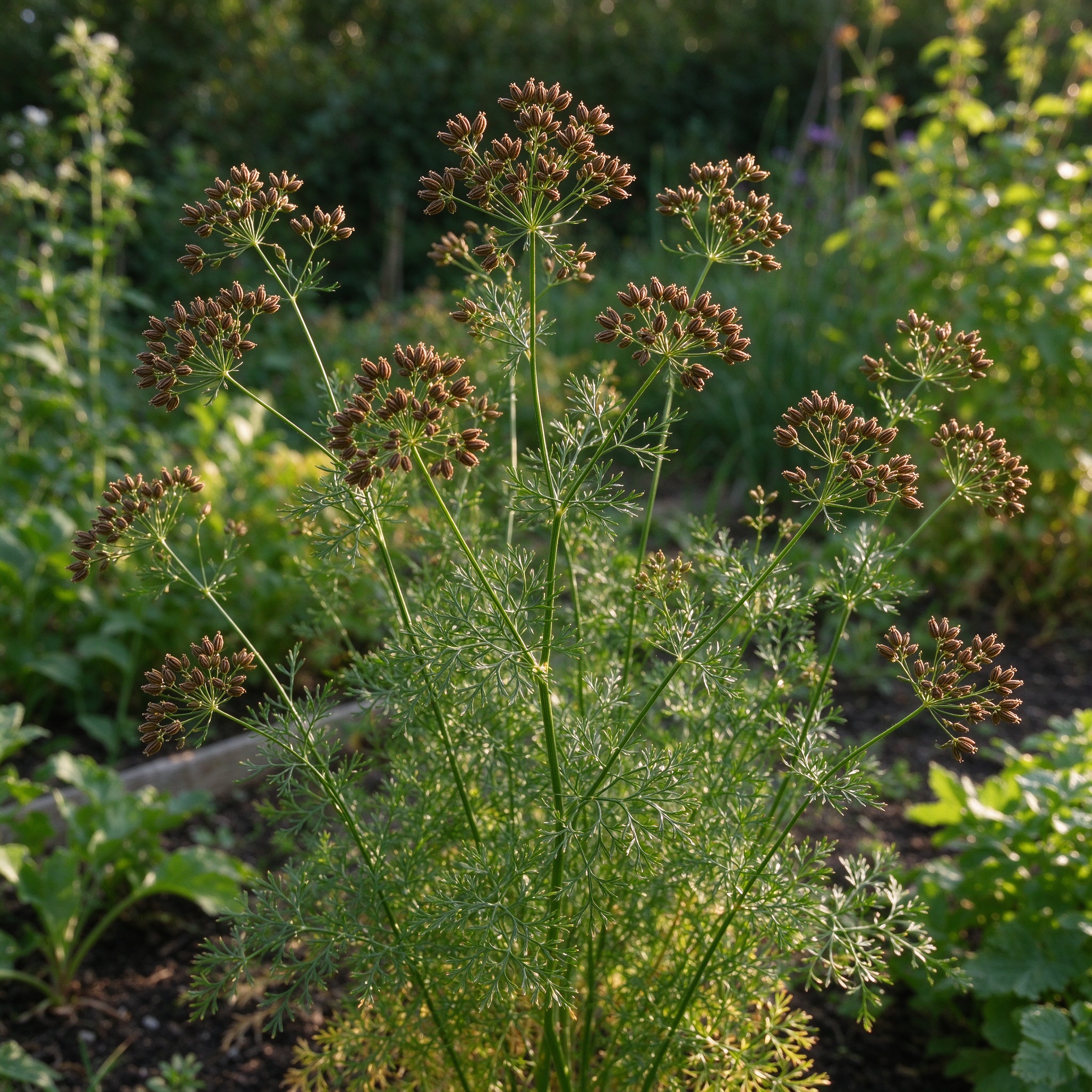
- •Caraway (Carum carvi) is an aromatic, tap-rooted biennial in the carrot family (Apiaceae), grown for its crescent-shaped, ridged seeds that carry a warm, anise-like, peppery flavor.
- •Native to temperate Europe, western Asia and North Africa, it grows wild in moist meadows, field edges and disturbed ground at low and middle elevations.
- •In its first year the plant forms a low rosette of feathery, finely divided, carrot-like leaves and a long, pale taproot; it stores that root through winter and, after a cold period of vernalization, sends up a slender, hollow, branching flower stalk in its second spring, reaching 1 to 2 feet tall and sometimes higher.
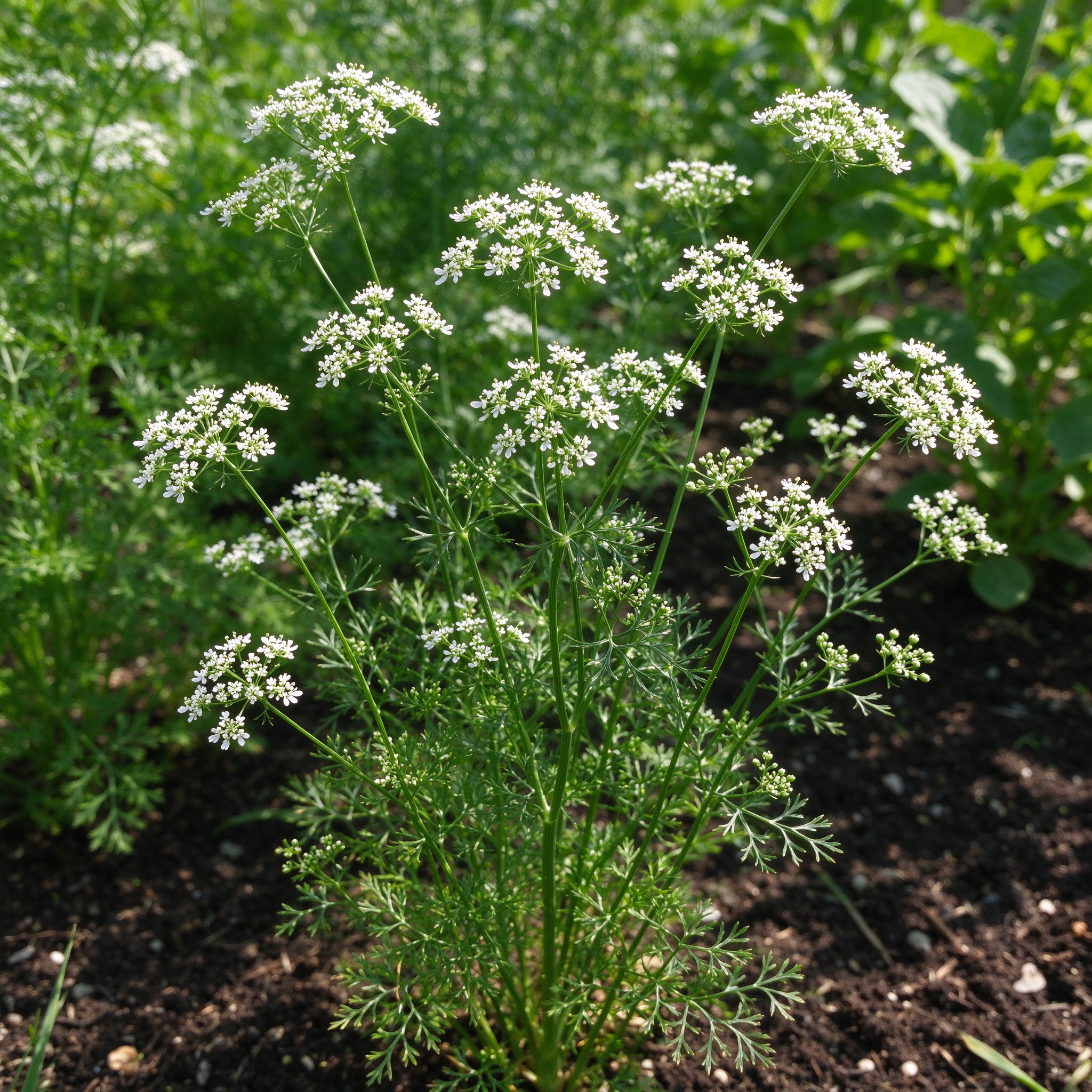
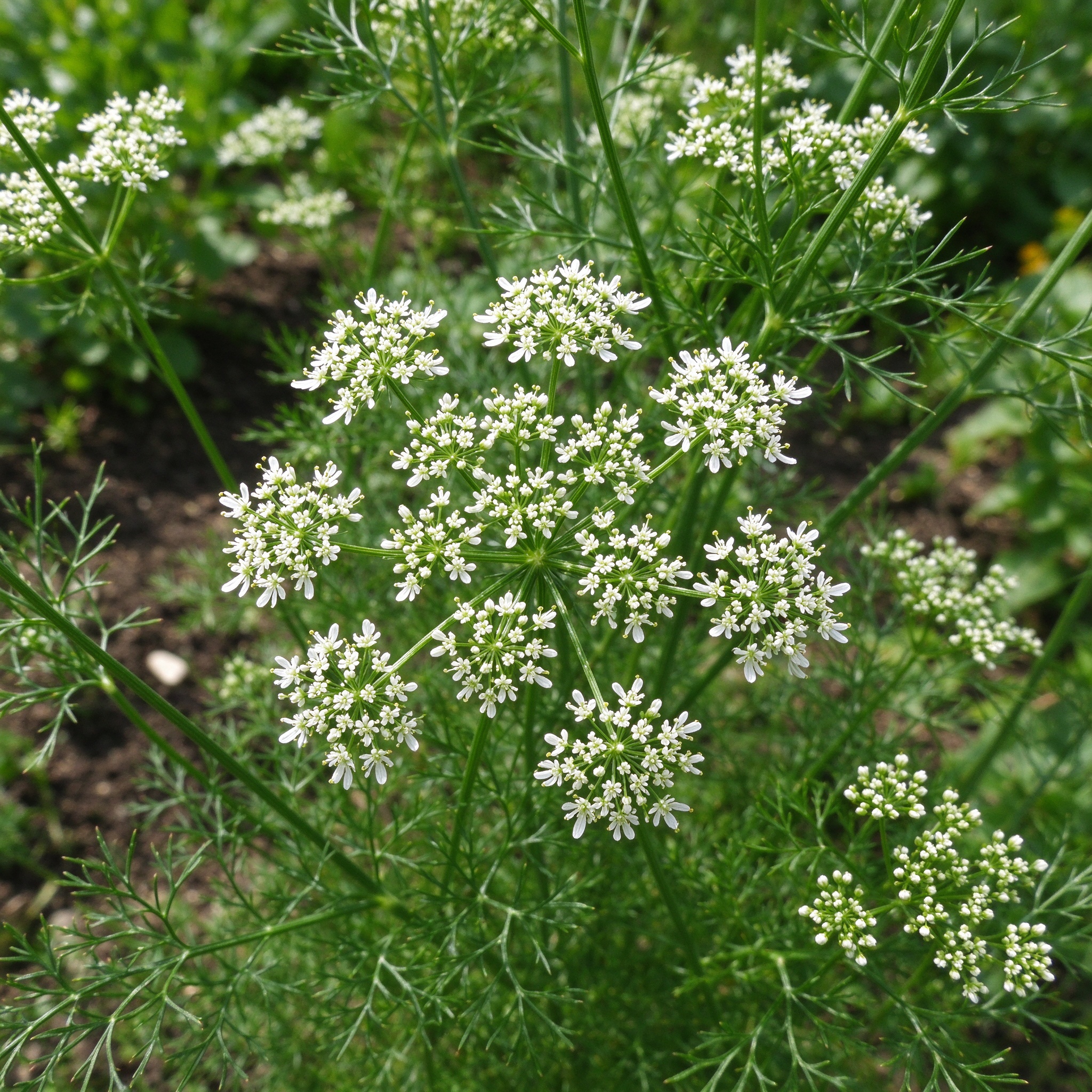
- •Small white to faintly pink flowers cluster in flat, showy umbels that attract bees, hoverflies and parasitic wasps, which in turn prey on aphids.
- •The strongly aromatic fruits—technically schizocarps, but called seeds by cooks and gardeners—mature about a month after flowering and are the familiar seasoning used in rye bread, sauerkraut, goulash and spice blends.
- •Young leaves can be eaten like parsley in salads and soups, and the first-year root may be cooked like a parsnip.
- •Caraway dislikes being transplanted because of its deep taproot and often self-sows freely in a favorable spot, acting almost perennial once established.
- •Although its seeds are a normal culinary spice for people, ASPCA lists the plant as toxic to dogs, cats and horses because of its essential oils, so garden pets should be kept away from both foliage and harvested seed.
📋 Quick Facts
- •Grow caraway in full sun, 6 to 8 hours of direct light per day; plants in full sun produce more essential oil and a more aromatic seed than those in shade.
- •It tolerates light partial shade, but crowded or shaded growth is leggy, less fragrant and more prone to lodging under the weight of flower heads.
- •Water regularly but moderately, about 1 to 1.5 inches per week, allowing the soil to dry slightly between irrigations rather than keeping it saturated.
- •Caraway is not a bog plant and root rot follows waterlogged soil.
- •Increase watering during hot summer weather and especially around second-year seed set, when the developing umbels need steady moisture.
- •Mulch established plants with straw or compost to conserve water, cool the root zone and suppress weeds; because the plant self-sows readily, mulch can also limit unwanted volunteer germination.
- •Caraway is a cool-temperate hardy biennial that grows best with daytime temperatures around 60 to 75°F (16 to 24°C) and tolerates frost and cold winters; RHS rates it H7, hardy through severe European winters.
- •It requires a period of winter cold (vernalization) before it will flower and set seed, which is why first-year plants never bloom.
- •In harsh climates, mulch overwintering rosettes to protect the crown from freeze-thaw cycles.
- •High summer heat above about 85°F (29°C) slows foliage growth and favors drying the seed heads rather than lush leaves.
- •Caraway thrives in light, fertile, well-drained soil rich in organic matter, with a pH between 6.0 and 7.5; NC State records tolerance across an acid to neutral range of 4.8 to 7.6.
- •Because the taproot descends deeply, loosen the bed to at least 12 inches and incorporate 2 to 4 inches of compost before sowing.
- •In heavy silty clay or clay, work in compost to open the structure; in raised beds or containers, provide at least 12 inches of depth and good drainage.
- •Caraway tolerates heavier ground better than many herbs, but waterlogged winter soil will rot the root.
- •Harvest young leaves throughout the first growing season once plants reach about 6 inches tall, cutting only a few leaves from each so the rosette keeps enough foliage to build its root.
- •The first-year taproot can be lifted late in the season and cooked like a parsnip or carrot.
- •The main crop—seeds—comes in the second summer: about a month after flowering, the umbels turn brown and the crescent fruits darken.
- •Cut the seed heads at ground level before they shatter and scatter seed around the garden; enclose the stalks in a paper bag and hang them in a warm, dry place to cure, after which the dry seeds fall free for threshing and storage.
- •Dried caraway keeps its flavor for about a year in an airtight container away from heat and light.
⚠️ Pet Safety Warning
This plant is toxic to both cats and dogs.
- •ASPCA lists caraway (Carum carvi) as toxic to dogs, cats and horses; toxic principles are the essential oils carvone and limonene, which can cause mild vomiting and diarrhea.
- •Keep the plant and harvested seed out of reach of pets; ordinary culinary food amounts are safe for people.
📅 When to Plant
- •Sow caraway directly where it will grow, either in early spring as soon as the soil can be worked, or in fall so seed sits over winter; direct sowing is strongly preferred because the long taproot does not tolerate transplanting.
- •Plant seeds 1/4 to 1/2 inch deep, spaced 4 to 6 inches apart, in rows about 12 inches apart.
- •Germination is slow and carrot-like: expect 7 to 14 days at about 70°F (21°C), though seedlings may take two to three weeks to appear; keep the seedbed evenly moist and free of weeds until plants establish.
- •When seedlings are 2 to 4 inches high, thin crowded clumps to about 4 to 6 inches apart in the row to allow the mature flower stalks room to branch.
- •A fall planting in mild or mulched zones can produce seed the following summer, while a spring planting follows the normal two-year cycle.
- •Do not start caraway in trays and move it later unless seedlings are transplanted very small into biodegradable pots.
🌱 Growing Stages
 1
Germination
(7 to 14 days at 70°F; up to 3 weeks)- •Caraway seed swells and sends a slender root into moist, cool soil; germination is slow and uneven, much like carrot or parsnip seed.
- •At about 70°F (21°C) most sprouts appear within 7 to 14 days, but a flat may continue to emerge for two to three weeks.
- •Keep the surface moist and weed-free, and avoid a hard soil crust that traps weak seedlings before they reach the light.
 2
First-year rosette and taproot
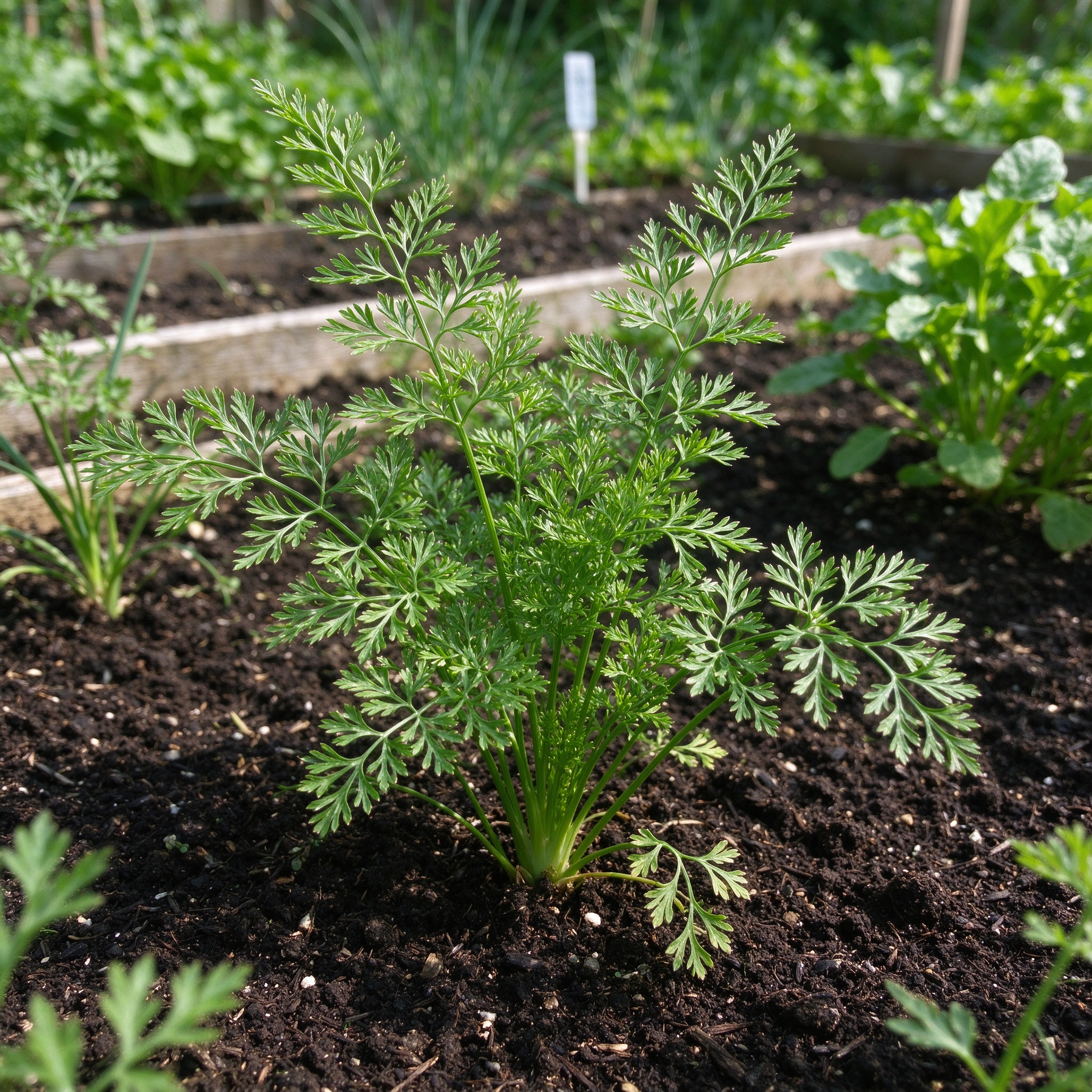
(Spring to fall of year one)- •The young plant grows a basal rosette of finely divided, feathery green leaves that resemble carrot tops while a long, pale taproot descends into the loosened soil.
- •This stage produces foliage for salads but no flowers.
- •Steady moderate moisture and light weeding let the root build the carbohydrate reserves needed for the following year's flower stalk; overwatering or heavy feeding produces soft, weak growth.
 3
Overwintering and vernalization
(Winter between year one and year two)- •After the first frost the foliage dies back and the crown rests under mulch.
- •The chilling period is required for vernalization: without winter cold the plant will not switch from leafy rosette to flowering stalk.
- •In harsh zones, straw mulch protects the crown from repeated freeze-thaw; in milder gardens the rosette may remain partly green through winter.
 4
Second-year stalk, umbels and seed
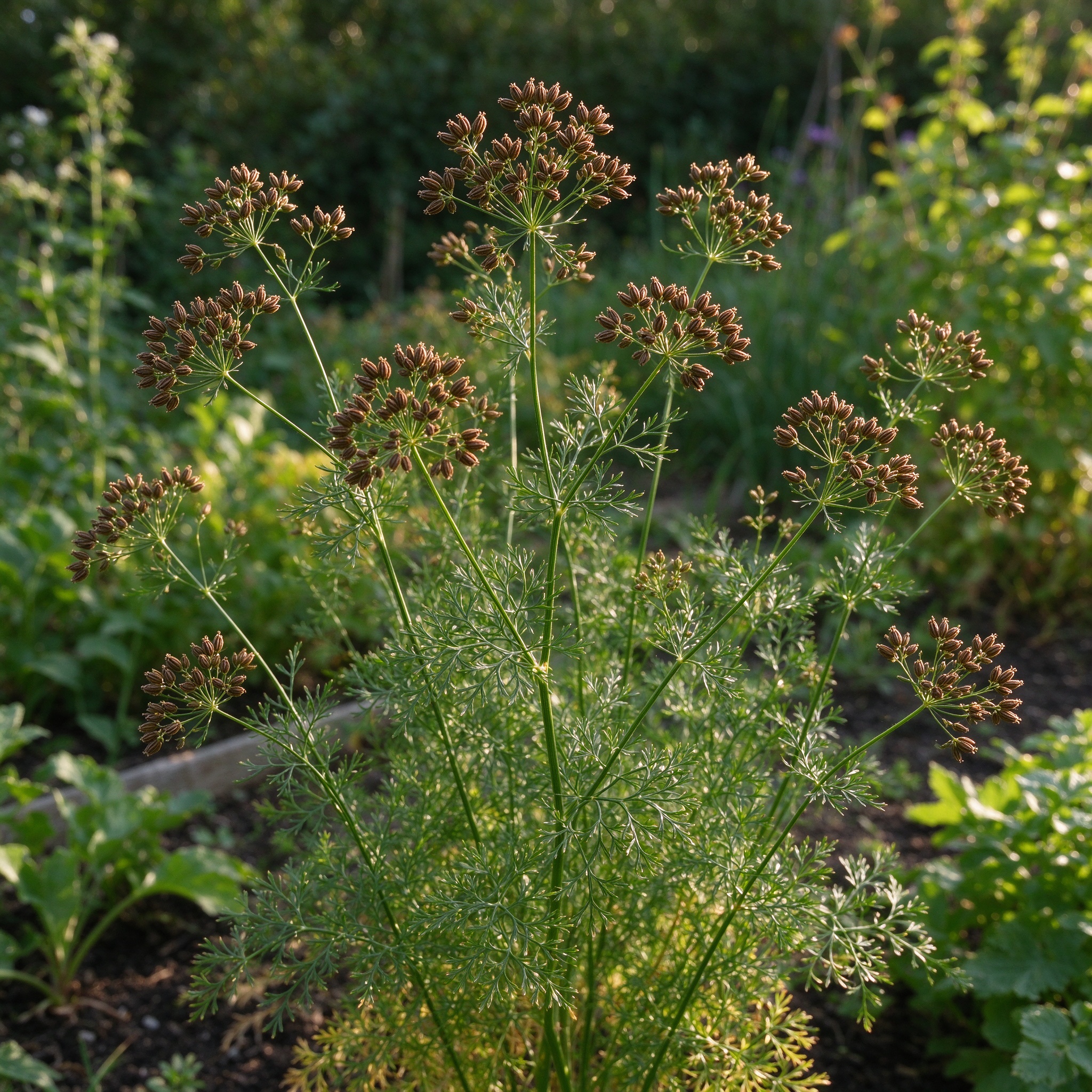
(Spring to late summer of year two)- •Vernalized plants push up a slender, hollow, branching stalk 1 to 2 feet tall, bearing flat white or pink-tinged umbels that bloom in late spring to summer and draw pollinators.
- •About a month after flowering the aromatic crescent seeds mature and turn brown; the biennial dies after setting seed.
- •Seed heads must be harvested before they shatter and scatter, then cured in paper bags for clean, fragrant storage.
💧 Detailed Care Guide
☀️ Light Requirements
- •Grow caraway in full sun, 6 to 8 hours of direct light per day; plants in full sun produce more essential oil and a more aromatic seed than those in shade.
- •It tolerates light partial shade, but crowded or shaded growth is leggy, less fragrant and more prone to lodging under the weight of flower heads.
💧 Watering
- •Water regularly but moderately, about 1 to 1.5 inches per week, allowing the soil to dry slightly between irrigations rather than keeping it saturated.
- •Caraway is not a bog plant and root rot follows waterlogged soil.
- •Increase watering during hot summer weather and especially around second-year seed set, when the developing umbels need steady moisture.
- •Mulch established plants with straw or compost to conserve water, cool the root zone and suppress weeds; because the plant self-sows readily, mulch can also limit unwanted volunteer germination.
🌡️ Temperature
- •Caraway is a cool-temperate hardy biennial that grows best with daytime temperatures around 60 to 75°F (16 to 24°C) and tolerates frost and cold winters; RHS rates it H7, hardy through severe European winters.
- •It requires a period of winter cold (vernalization) before it will flower and set seed, which is why first-year plants never bloom.
- •In harsh climates, mulch overwintering rosettes to protect the crown from freeze-thaw cycles.
- •High summer heat above about 85°F (29°C) slows foliage growth and favors drying the seed heads rather than lush leaves.
🌱 Soil & Fertilizer
Soil:
- •Caraway thrives in light, fertile, well-drained soil rich in organic matter, with a pH between 6.0 and 7.5; NC State records tolerance across an acid to neutral range of 4.8 to 7.6.
- •Because the taproot descends deeply, loosen the bed to at least 12 inches and incorporate 2 to 4 inches of compost before sowing.
- •In heavy silty clay or clay, work in compost to open the structure; in raised beds or containers, provide at least 12 inches of depth and good drainage.
- •Caraway tolerates heavier ground better than many herbs, but waterlogged winter soil will rot the root.
Fertilizer:
- •Like most herbs, caraway needs little supplemental feeding when the soil has been prepared with compost.
- •Work aged compost or a balanced all-purpose fertilizer into the seedbed before sowing; established plants usually outcompete weeds and do not need extra nitrogen.
- •If growth looks weak in the second year, side-dress with aged compost or a light dose of nitrogen fertilizer midway through the season.
- •For plants in containers, apply a half-strength liquid fertilizer about every four weeks during active growth rather than a heavy base dressing.
📝 Step-by-Step Planting Guide
- 1
Prepare a deep, fertile, well-drained bed
- •Choose a full-sun site and loosen the soil to at least 12 inches to accommodate the long taproot.
- •Incorporate 2 to 4 inches of compost or aged manure and rake the bed level, correcting pH to the 6.0 to 7.5 range.
- •In heavy clay, add extra compost and consider a raised bed so winter water drains away from the root.
- •Remove perennial weeds before sowing, because caraway seedlings are slow to establish and cannot compete with a dense weed cover early in the season.
- 2
Sow seed directly in early spring or fall
- •Caraway should not be transplanted, so sow it in its permanent location.
- •In early spring, once the soil is dry enough to work, or in fall before the ground freezes, place seeds 1/4 to 1/2 inch deep, spaced 4 to 6 inches apart, in rows 12 inches apart.
- •Keep the bed evenly moist; germination takes 7 to 14 days near 70°F (21°C) but may stretch to two to three weeks, so be patient and do not overwater the seedbed into a crust.
- •Fall-sown seed germinates the following spring and may set seed in the second summer; spring-sown seed follows the full two-year cycle.
- 3
Thin seedlings and mulch the bed
- •When seedlings reach 2 to 4 inches high, thin crowded seedlings to about 4 to 6 inches apart in the row, cutting extras at the soil line rather than pulling and disturbing neighboring roots.
- •Spread a light layer of straw or compost around established plants to conserve moisture, cool the taproot zone and suppress weeds.
- •Hand-weed around young plants during establishment; once caraway fills in, it outcompetes most weeds.
- •Mulch also slows the self-sown volunteers that otherwise sprout around the parent plant.
- 4
Care for the first-year rosette and overwinter it
- •During the first growing season, caraway stays low and leafy, building root reserves.
- •Harvest a few young leaves for salads but leave enough foliage to feed the root.
- •Water moderately through summer and do not overfeed with nitrogen, which produces weak, sprawling growth.
- •In fall, leave the rosette in place; in harsh zones, cover it with a 2 to 3 inch straw mulch to protect the crown through freeze and thaw.
- •The plant must experience this cold period before it can flower the next year.
- 5
Harvest second-year seed heads and save clean seed
- •In the second spring the rosette sends up a branching flower stalk topped with white umbels.
- •About a month after bloom, when the heads turn brown and the crescent fruits darken, cut the stalks at ground level before they shatter.
- •Tie the stalks together, enclose the umbels in a paper bag and hang them in a warm, dry, ventilated spot until the dry seeds fall free.
- •Thresh by rubbing the heads between your hands, winnow away the chaff, and store seed in an airtight jar away from heat and light for up to one year.
- •Remove any unwanted volunteer seedlings the following spring to keep the planting tidy.
🌱 Recommended Varieties
Common Caraway (Carum carvi)
- •The ordinary open-pollinated caraway sold for kitchen gardens, selected for aromatic, crescent-shaped seed used in rye bread, sauerkraut, goulash, cheese and spice blends.
- •It follows the classic two-year cycle, producing a feathery first-year rosette and brown seed heads in the second summer.
Herb Leaf Caraway
- •Grown primarily for its young, parsley- or dill-like foliage, which carries a mild anise-celery flavor for salads, soups and garnishes.
- •Leaf selections are harvested throughout the first growing season; the seed heads that follow are still usable as a secondary spice.
Parsnip-root Caraway
- •Grown in the first year for its pale, parsnip-like taproot, which is cooked and eaten like carrot or parsnip in central European and northern cuisines.
- •The root is lifted late in the first season before the plant bolts, while foliage and seed remain harvestable in the second year.
🪴 Growing in Containers
- Use a deep pot to fit the taproot:
- •Caraway needs a container at least 12 inches deep to hold its long taproot; a 5-gallon or larger pot with drainage holes suits one or two plants.
- •Fill it with a loose, compost-amended potting mix and sow seed directly in the pot, since transplanting disturbs the root.
- •Place the pot in full sun and expect a smaller rosette and flower stalk than garden-grown plants.
- Mulch, feed lightly and protect overwintered pots:
- •Keep the potting mix evenly moist but never saturated, and apply half-strength liquid fertilizer every four weeks during active growth.
- •Mulch the surface to slow evaporation.
- •Because the second-year plant must overwinter, sink the pot in a sheltered cold frame or move it against a protected wall in harsh winters, and protect the crown from freeze-thaw damage.
✂️ Pruning & Maintenance
- ✓
Leave the plant to set seed
- •RHS guidance for caraway is to leave it to set seed; there is no leaf pinching or shaping that improves the crop.
- •Harvest leaves sparingly in the first year and let the second-year umbels mature fully before cutting, since premature cutting produces weak, non-aromatic seed.
- ✓
Remove unwanted seed heads to control self-sowing
- •Caraway reseeds readily around the parent plant.
- •To keep the planting from becoming weedy, cut extra flower heads before they mature or remove volunteer seedlings as they appear the following spring.
- •Thin crowded second-year seedlings and discard any that sprout in walkways or between other herbs.
🐛 Pest & Disease Control
Common Pests
Carrot root fly
Symptoms:- •Small white maggots tunnel through the taproot, causing brownish galleries, stunted growth and wilted foliage; the plant may die in a heavy attack.
- •The slender, shiny black flies lay eggs at the base of Apiaceae plants in spring and again in summer.
Control:- •Grow caraway under fine insect netting sealed to the soil after sowing, rotate away from carrots, parsley and celery for several years, and thin plants so air circulates.
- •Avoid damaging the root during weeding, which attracts egg-laying flies; remove and destroy heavily infested plants rather than composting them.
Aphids
Symptoms:- •Clusters of soft green or gray insects gather on new flower stalks and leaf undersides, curling foliage and excreting honeydew that feeds sooty mold.
- •Heavy colonies weaken the second-year stalk and distort developing umbels.
Control:- •Wash colonies off with a strong water jet, then apply insecticidal soap to stalks and leaf undersides.
- •The white umbels draw parasitic wasps and hoverflies that naturally control aphids; avoid broad-spectrum insecticides that kill these beneficial insects.
Parsley worm (black swallowtail caterpillar)
Symptoms:- •Large green caterpillars with black bands and yellow spots chew foliage and flower stems of Apiaceae, sometimes defoliating a second-year plant.
- •They are the larva of the black swallowtail butterfly and often appear on the flower stalks in summer.
Control:- •Handpick caterpillars and drop them into soapy water; on a small herb planting this usually keeps damage in check.
- •If you wish to support butterflies, relocate a few to wild carrot or dill rather than killing them.
- •Row covers on young plants prevent butterflies from laying eggs on the foliage.
Cutworms and seedling pests
Symptoms: Young seedlings are cut off at the soil line overnight by dull brown caterpillars that hide in the topsoil during the day; sparse, missing plants in a row often indicate cutworm feeding rather than poor germination.Control:- •Protect seedlings with cardboard or foil collars pushed an inch into the soil around each plant, handpick at night with a flashlight, and keep the bed free of weeds and debris where cutworms hide.
- •Till the seedbed before sowing to expose pupae to birds and predators.
Common Diseases
White mold (Sclerotinia)
Symptoms: A white, cottony fungal growth covers stems at the soil line and leaf joints, followed by hard black sclerotia; stems wilt and collapse in patches during cool, humid weather and dense canopy conditions.Control:- •Thin plants for airflow, avoid crowding and water at the base rather than over the foliage.
- •Remove and destroy infected stems immediately, rotate with non-related crops for several years, and do not compost diseased material; the persistent sclerotia remain in soil for years.
Anthracnose
Symptoms: Small brownish spots develop on leaves and flower stalks, enlarging into sunken, tan lesions that girdle stems and cause the umbel to wilt and die back in wet seasons.Control:- •Space plants for good air movement, water in the morning at the base, and remove infected foliage promptly.
- •Rotate out of Apiaceae hosts, clear crop debris at season's end, and apply a copper fungicide at the first lesions if the disease recurs yearly.
Root rot in wet soil
Symptoms:- •The taproot turns brown and soft, foliage yellows and stunts, and the plant collapses in poorly drained or overwatered soil, especially during winter.
- •This is most common in heavy clay that stays saturated after rain.
Control:- •Grow in loose, amended soil or a raised bed with good drainage, and let the surface dry between irrigations.
- •Do not overwater overwintering rosettes; remove affected plants and improve the site's drainage before resowing the same area.
Damping-off
Symptoms: Seedlings collapse at the soil line in a cold, wet seedbed, with a soft darkened stem and rotting root; emergence is sparse and patches of young plants die shortly after sprouting.Control:- •Sow at the recommended 1/4 to 1/2 inch depth in loose, amended soil, keep the bed moist rather than soaked, and avoid dense sowing that shades the soil surface.
- •Remove collapsed seedlings promptly and improve drainage and airflow for the next planting.
🍅 When to Harvest
- •Harvest young leaves throughout the first growing season once plants reach about 6 inches tall, cutting only a few leaves from each so the rosette keeps enough foliage to build its root.
- •The first-year taproot can be lifted late in the season and cooked like a parsnip or carrot.
- •The main crop—seeds—comes in the second summer: about a month after flowering, the umbels turn brown and the crescent fruits darken.
- •Cut the seed heads at ground level before they shatter and scatter seed around the garden; enclose the stalks in a paper bag and hang them in a warm, dry place to cure, after which the dry seeds fall free for threshing and storage.
- •Dried caraway keeps its flavor for about a year in an airtight container away from heat and light.
❓ Frequently Asked Questions
- 1
How to grow caraway from seeds?
- •Sow caraway directly in its permanent site in early spring once the soil can be worked, or in fall before freeze-up; the long taproot makes transplanting a poor option.
- •Place seeds 1/4 to 1/2 inch deep, spaced 4 to 6 inches apart, in rows about 12 inches apart, and keep the bed evenly moist and weed-free.
- •Germination is slow and carrot-like, taking 7 to 14 days at about 70°F (21°C) and sometimes two to three weeks, so do not assume the seed failed and resow too early.
- •Thin crowded seedlings to about 4 to 6 inches apart when they are 2 to 4 inches high.
- •The plant stays a leafy rosette through year one, overwinters, and sends up its flower stalk and seed heads in the second year.
- 2
How to save caraway seeds?
- •Because caraway is a biennial, seed cannot be harvested until the second summer after the plant has overwintered and been chilled through winter.
- •After flowering in late spring to summer, the umbels mature about a month later and turn brown while the crescent fruits darken.
- •Cut the stalks at ground level just before the heads shatter, tie them together, enclose the flower heads in a paper bag, and hang in a warm, dry, ventilated place.
- •Once dry, the seeds fall into the bag; rub the heads to thresh, winnow away chaff, and store the clean seed in an airtight jar away from heat and light for up to a year.
- •Remove volunteer seedlings that sprout the following spring if you want to limit spread.
- 3
Why did my caraway not flower in its first year?
- •This is normal: caraway is a biennial that requires a cold winter period of vernalization before switching from leafy rosette to flowering stalk.
- •In year one it builds a taproot and low foliage; in year two, after winter chill, it sends up the branching white umbels and sets seed, then dies.
- •A fall sowing can shorten the wait, and plants that fail to overwinter in a harsh winter will not flower at all.
- 4
Is caraway poisonous to cats and dogs?
- •Yes, according to the ASPCA: caraway (Carum carvi) is listed as toxic to dogs, cats and horses, with toxic principles being the essential oils carvone and limonene.
- •Clinical signs are usually mild vomiting and diarrhea if a pet chews the plant or eats harvested seed.
- •Grow caraway out of reach of cats, dogs and browsing horses, and store saved seed where pets cannot get at it.
- •The same seeds are a normal, safe culinary spice for people in food quantities.
- 5
What soil and sun does caraway need?
- •Caraway prefers full sun, 6 to 8 hours a day, for the strongest oil and the most aromatic seed, though it tolerates light shade.
- •Grow it in light, fertile, well-drained soil rich in compost, pH 6.0 to 7.5, loosened at least 12 inches deep for the taproot.
- •It tolerates heavy amended clay but rots in waterlogged winter soil.
- •Water moderately, about 1 to 1.5 inches a week, allowing the soil to dry between irrigations.
- 6
Can caraway be grown in containers?
- •Yes, but the pot must be at least 12 inches deep for the long taproot; a 5-gallon or larger container with drainage works for one or two plants.
- •Sow seed directly in the pot rather than transplanting, use a loose compost-amended mix, and set it in full sun.
- •Feed with half-strength liquid fertilizer every four weeks and keep moisture even but not saturated.
- •To produce seed, the pot must overwinter in a sheltered cold frame or against a protected wall, since caraway needs winter chill in its second-year cycle.
Source:
Utah State University Extension — Caraway in the Garden — https://digitalcommons.usu.edu/cgi/viewcontent.cgi?article=2771&context=extension_curall
NC State Extension Gardener Plant Toolbox — Carum carvi — https://plants.ces.ncsu.edu/images/plants/carum-carvi/
Royal Horticultural Society (RHS) — Carum carvi — https://www.rhs.org.uk/images/plants/3148/wd/details
ASPCA Poison Control — Caraway — https://www.aspca.org/pet-care/animal-poison-control/toxic-and-non-toxic-plants/caraway
Photo credit: NC State Extension
Images courtesy of NC State Extension under CC BY license. Thank you to the photographers who make these educational images available.
License: CC BY-NC 2.0 / CC BY 4.0