
How to Grow Crocus: Complete Guide
- •Crocus are among the very first flowers to bloom in late winter and early spring, small, cup-shaped perennials grown from corms that bring a burst of color to lawns, borders, rock gardens, and under deciduous trees.
- •Their delicate flowers in white, purple, yellow, lilac, and striped bicolor appear before most other plants wake up, often poking through the last snow.
- •There are two main groups: spring-flowering crocus, which bloom in late winter to early spring, and saffron crocus (Crocus sativus), which bloom in autumn and produce the world's most expensive spice, saffron, from their red stigmas.
- •Crocus are easy to grow in well-drained soil and full sun to light shade, multiply readily from corms and seeds, and are beloved by bees for their early nectar.
- •They naturalize beautifully in lawns and grassy areas, returning year after year with little care.
📋 Quick Facts
Scientific Name: Crocus vernus, Crocus sativus, Crocus chrysanthus (and other species)
Family: Iridaceae
Category: Flower
USDA Zones: Hardy corms; spring crocus hardy in USDA zones 3–8, saffron crocus (C. sativus) in zones 6–8.
Light:
- •Crocus grow best in full sun to light shade, especially in cooler climates. Full sun produces the strongest growth and most abundant flowers.
- •In warm climates, light shade in the afternoon protects the plants from intense heat and extends the bloom.
- •Crocus bloom early, before trees leaf out, so they thrive under deciduous trees that are still bare in late winter, taking advantage of the sunlight before the canopy fills in.
- •In deep shade, crocus grow weakly and flower poorly.
- •Choose a site with at least four to six hours of sunlight, and ensure good drainage so the corms do not rot in wet soil.
Water:
- •Crocus need moderate moisture during active growth in late winter and spring, but the corms strongly prefer dry, well-drained conditions during summer dormancy.
- •Water after planting in autumn to settle the corms and encourage root growth, then keep the soil lightly moist through winter and spring while they grow and bloom.
- •As the foliage dies back in late spring, gradually reduce watering and allow the soil to dry so the corms rest over summer.
- •In summer, crocus prefer a dry rest; overwatering during dormancy is a common cause of corm rot.
- •In areas with heavy summer rain, plant crocus in very well-drained soil or raised beds to keep the corms dry.
Temperature:
- •Crocus are hardy corms that thrive in cool to moderate temperatures and are very cold-tolerant.
- •Spring-flowering crocus are hardy in USDA zones 3 to 8, surviving harsh winters and blooming in late winter to early spring, often through snow.
- •They need a period of winter chill to bloom well. Saffron crocus (Crocus sativus) is less hardy, suited to zones 6 to 8, and blooms in autumn.
- •Crocus grow and bloom best in cool spring weather; intense summer heat is tolerated only during dormancy when the corms rest dry.
- •In very warm, humid climates, crocus may struggle, and good drainage and a dry summer rest become essential.
Soil:
- •Crocus need well-drained soil and are among the most rot-sensitive bulbs and corms.
- •A sandy or gritty loam with a pH of 6.0 to 7.0 is ideal, and they thrive in average garden soil as long as drainage is sharp.
- •Heavy clay that stays wet in summer causes corm rot; amend generously with coarse sand, grit, or compost, or plant in a raised bed or rock garden.
- •Good drainage is essential, especially for saffron crocus, which must stay dry in summer.
- •Crocus naturalize well in lawns and grassy areas with free-draining soil. Space corms 3 to 4 inches apart and plant 3 to 4 inches deep.
Harvest:
- •Harvest spring crocus flowers for a brief indoor display or as an early sign of spring, cutting them when the buds just begin to open.
- •The flowers last only a few days. For saffron, the spice is harvested from the red stigmas of autumn-blooming Crocus sativus flowers.
- •Pick the flowers in the morning on the day they open, gently pluck the three red stigmas from each flower, and dry them in a warm, dark, airy place for several hours until crisp.
- •It takes roughly 150 flowers to produce one gram of saffron, making it the most expensive spice in the world.
- •Store dried saffron in an airtight container in a cool, dark place.
Common Problems:
- •Crocus are generally easy and reliable but can face a few issues: corm rot in wet, poorly drained soil, especially in summer; squirrels, mice, and voles digging and eating the corms, particularly in autumn; botrytis and other fungal rots in cool, wet conditions; and poor flowering from deep shade, overcrowding, or planting too deep.
- •Crocus foliage dies back naturally and should not be cut early, as the leaves feed the corm.
- •Squirrels are the most common garden complaint, often solved by planting corms among other bulbs or covering the planting area with wire mesh.
📅 When to Plant
- •Plant spring-flowering crocus corms in autumn, from late September through November in most of the United States, about 6 to 8 weeks before the ground freezes, so roots establish before winter.
- •Plant corms 3 to 4 inches deep and 3 to 4 inches apart, pointed end up.
- •Plant saffron crocus (Crocus sativus) in late summer to early autumn, about 6 to 8 weeks before the first fall frost, so they bloom in autumn.
- •Crocus grow well in full sun to light shade, in well-drained soil.
- •For a naturalized lawn display, scatter the corms and plant them where they fall, or arrange them in drifts of 10 or more for a striking effect.
🌱 Growing Stages
 1
Corm sprouting and early growth
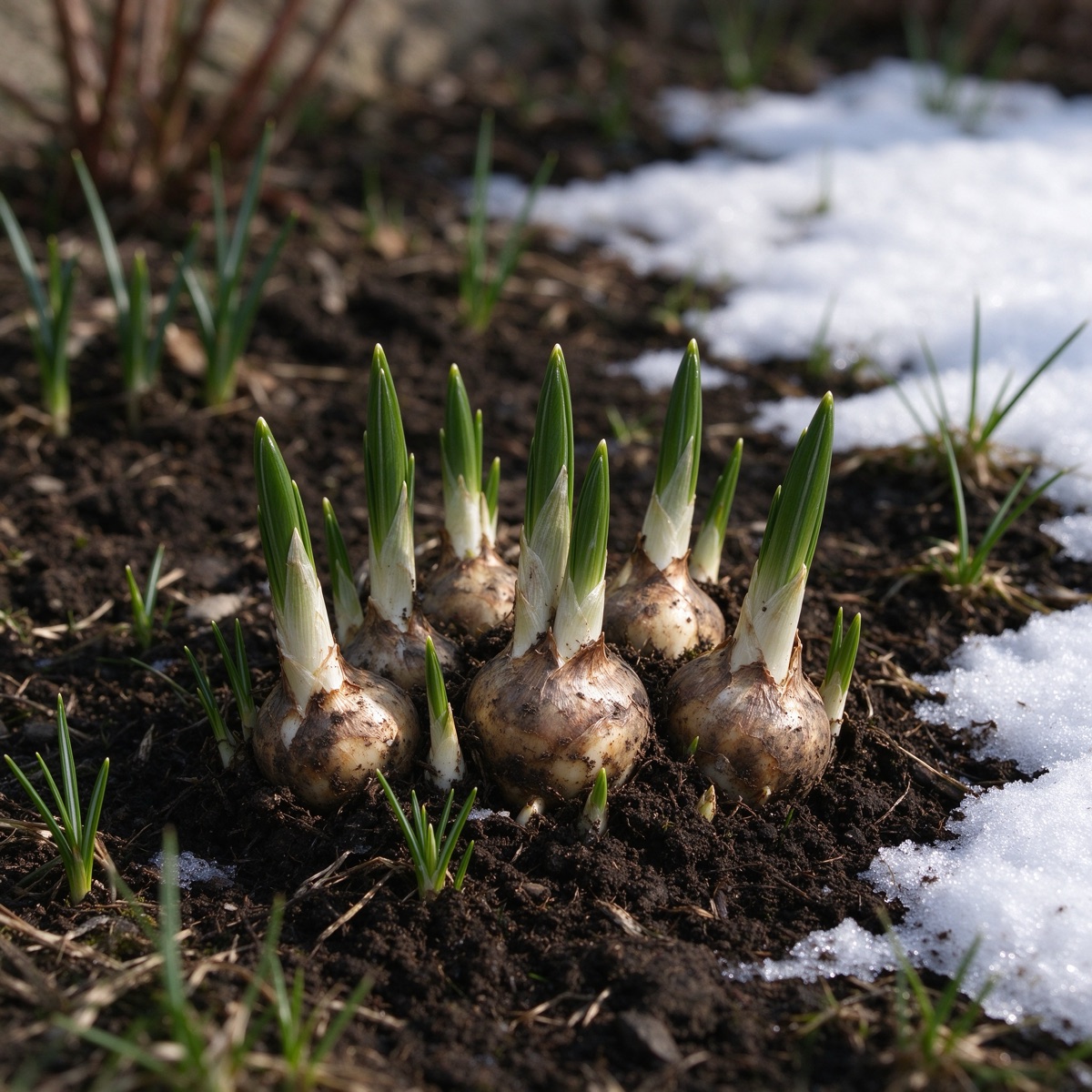
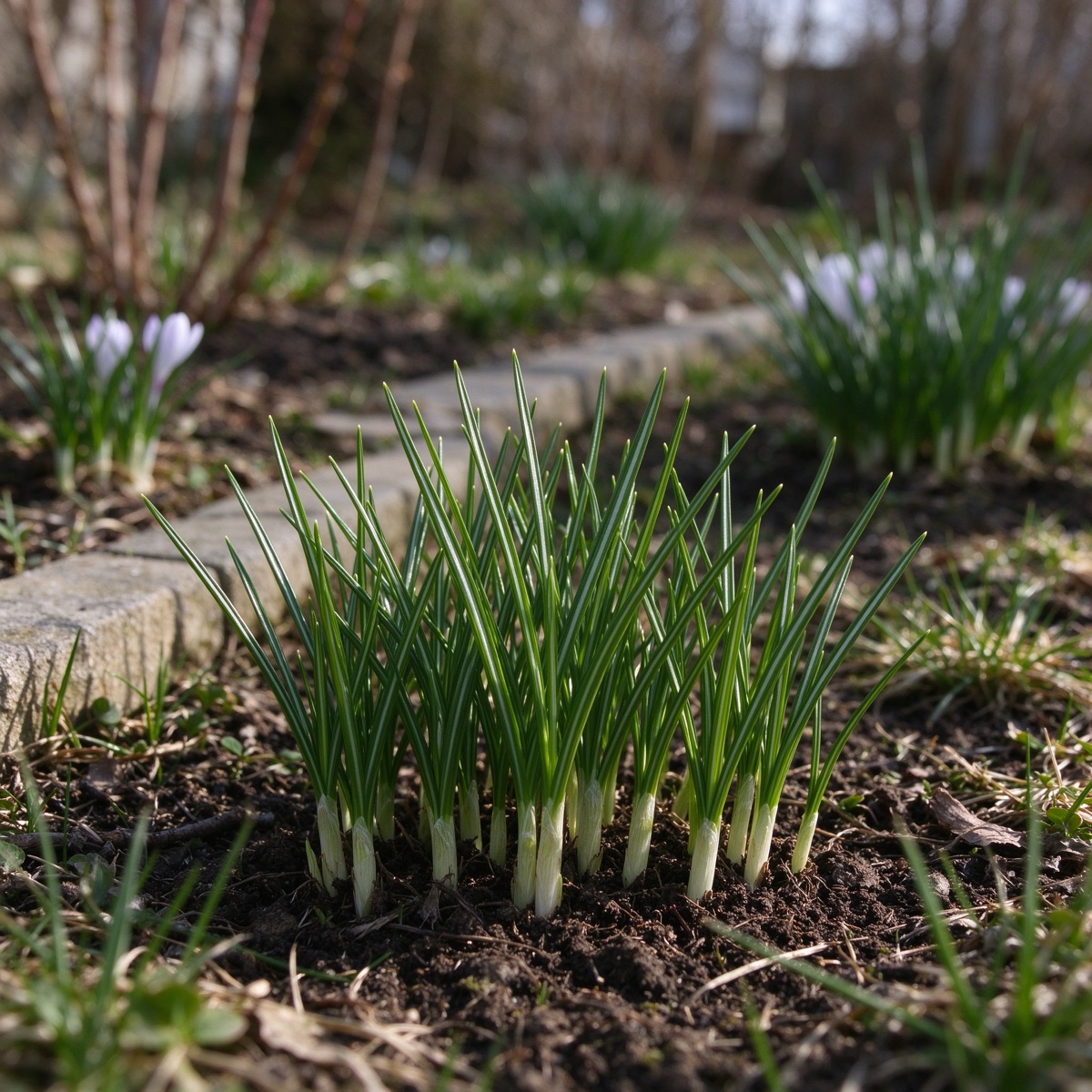
(Late winter to early spring, 2–4 weeks)- •Crocus shoots push through the cold soil, sometimes through snow, and quickly form narrow grass-like leaves with flower buds at the center.
- •In spring-flowering types this happens in late winter to early spring. Water lightly and keep the soil weed-free.
- •The early blooms provide vital nectar for bees waking from winter.
 2
Bloom
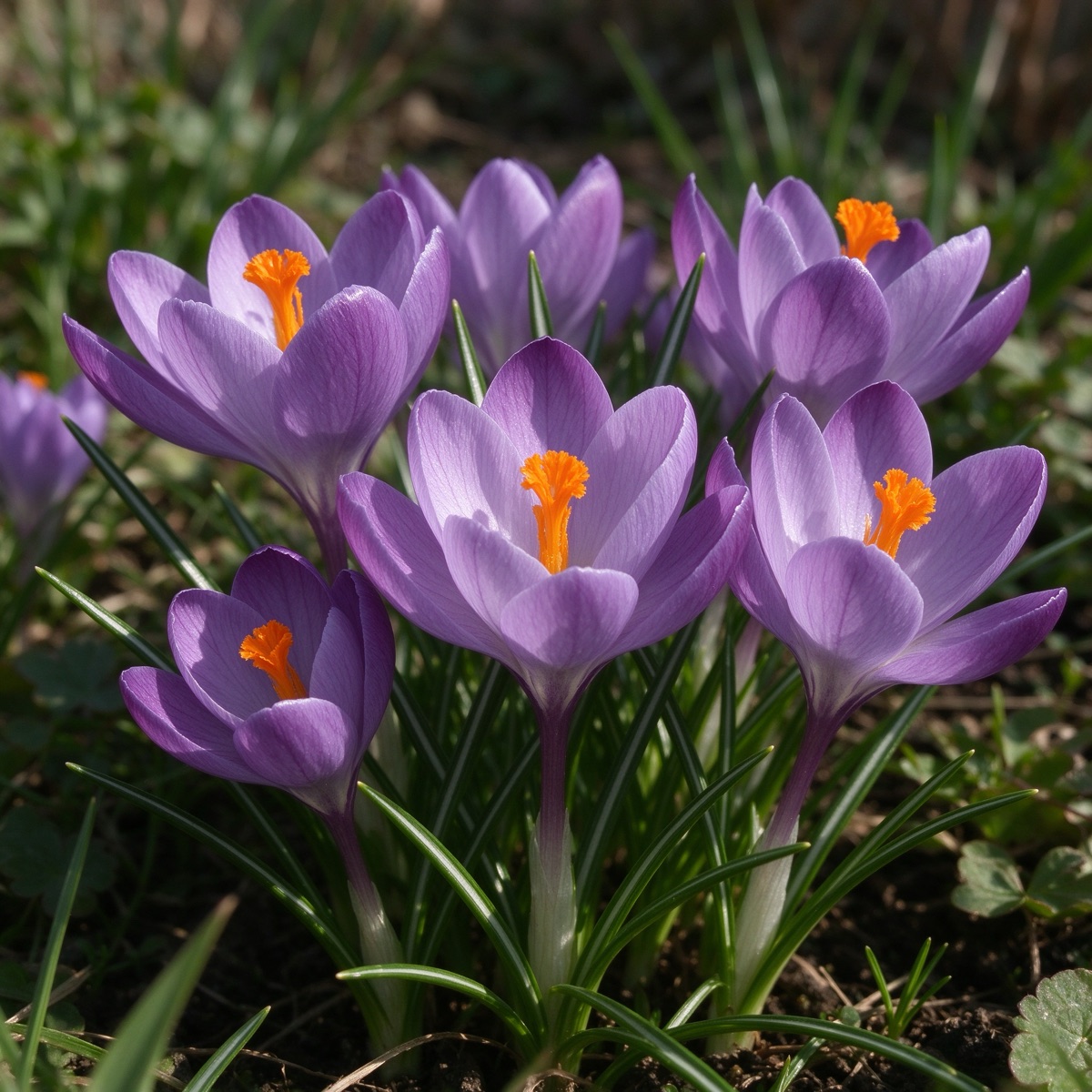
(Late winter to early spring, 2–3 weeks (spring types); autumn (saffron))- •Cup-shaped flowers open in bright sunshine and close at night and in dull weather, lasting a few days each.
- •Spring crocus bloom for two to three weeks in a mass.
- •Saffron crocus bloom in autumn, and their red stigmas are harvested on the day each flower opens.
- •Bees and early insects visit the flowers for nectar and pollen.
 3
Foliage growth and corm replenishment
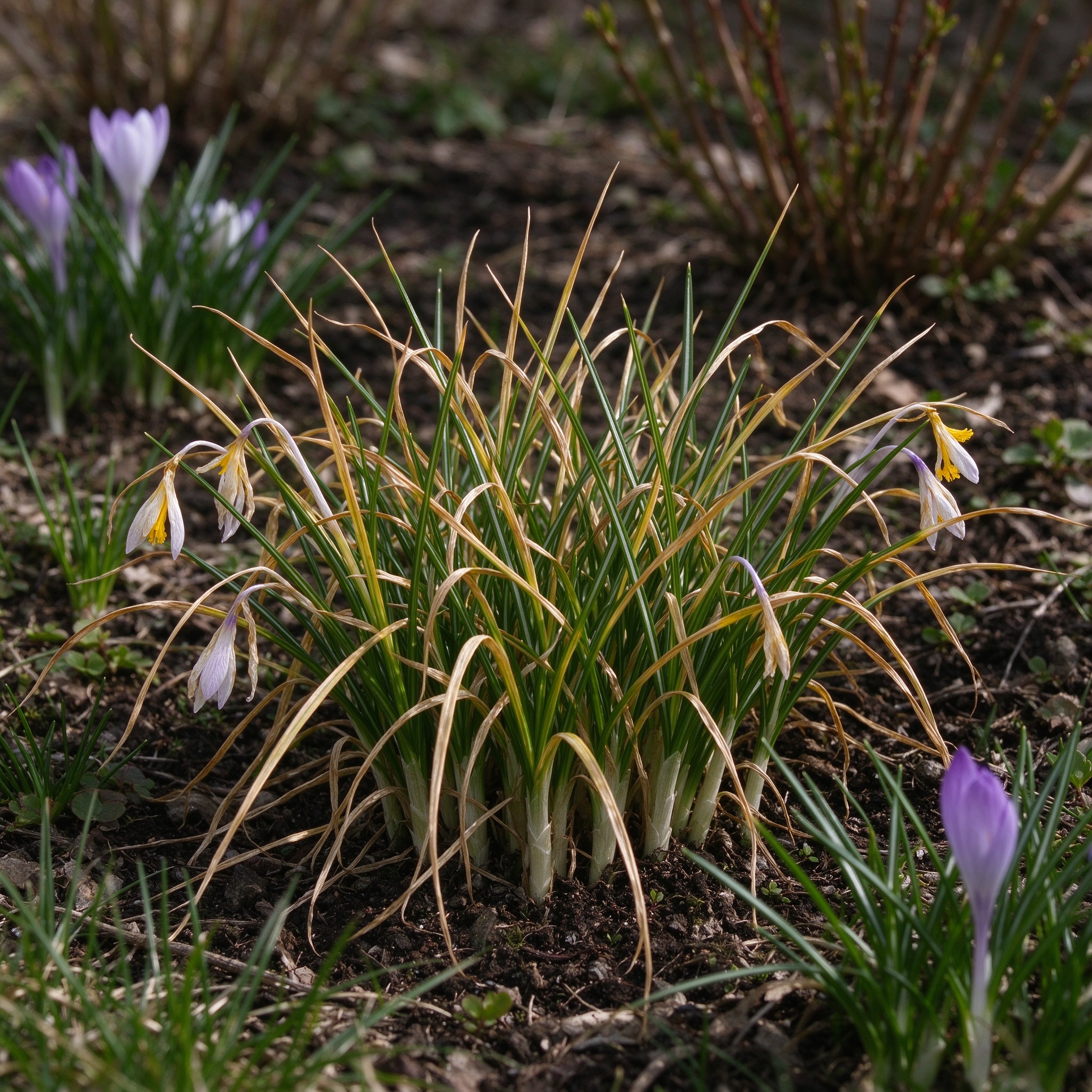
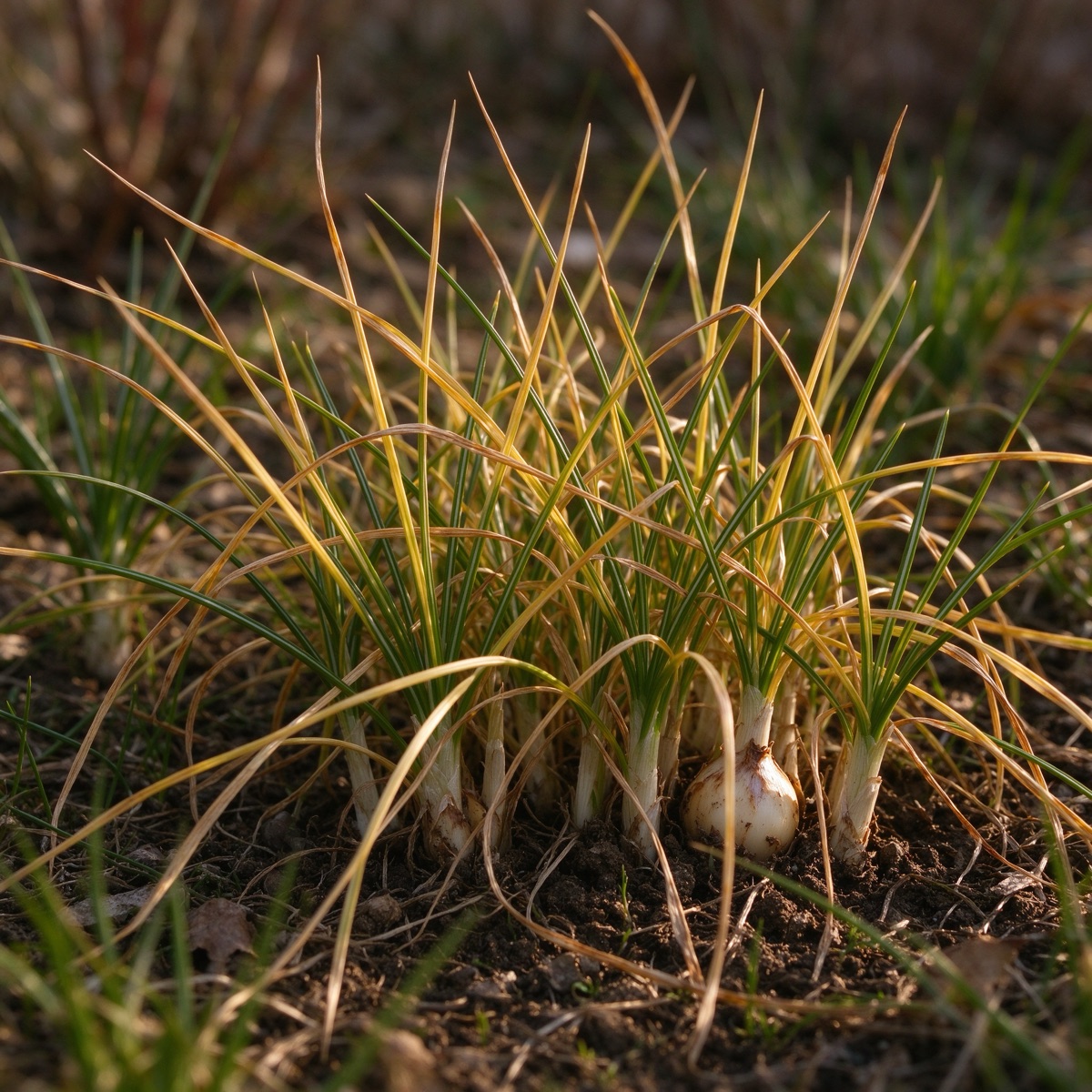
(Spring, 4–8 weeks after bloom)- •After flowering, the narrow foliage continues to grow and photosynthesize, feeding the corm and producing new cormels.
- •The leaves gradually yellow and die back naturally by late spring.
- •Do not cut or mow the foliage until it has fully died back, as early removal weakens the corm.
- •In lawns, delay mowing until the crocus foliage yellows.
 4
Summer dormancy
(Late spring to autumn)- •The corms rest dry underground through summer, requiring little moisture.
- •Saffron crocus are planted in late summer and bloom in autumn, while spring-flowering crocus rest until the following late winter.
- •Overwatering during dormancy causes rot. Crocus multiply and naturalize over the years, forming larger drifts with little care.
💧 Detailed Care Guide
☀️ Light Requirements
- •Crocus grow best in full sun to light shade, especially in cooler climates. Full sun produces the strongest growth and most abundant flowers.
- •In warm climates, light shade in the afternoon protects the plants from intense heat and extends the bloom.
- •Crocus bloom early, before trees leaf out, so they thrive under deciduous trees that are still bare in late winter, taking advantage of the sunlight before the canopy fills in.
- •In deep shade, crocus grow weakly and flower poorly.
- •Choose a site with at least four to six hours of sunlight, and ensure good drainage so the corms do not rot in wet soil.
💧 Watering
- •Crocus need moderate moisture during active growth in late winter and spring, but the corms strongly prefer dry, well-drained conditions during summer dormancy.
- •Water after planting in autumn to settle the corms and encourage root growth, then keep the soil lightly moist through winter and spring while they grow and bloom.
- •As the foliage dies back in late spring, gradually reduce watering and allow the soil to dry so the corms rest over summer.
- •In summer, crocus prefer a dry rest; overwatering during dormancy is a common cause of corm rot.
- •In areas with heavy summer rain, plant crocus in very well-drained soil or raised beds to keep the corms dry.
🌡️ Temperature
- •Crocus are hardy corms that thrive in cool to moderate temperatures and are very cold-tolerant.
- •Spring-flowering crocus are hardy in USDA zones 3 to 8, surviving harsh winters and blooming in late winter to early spring, often through snow.
- •They need a period of winter chill to bloom well. Saffron crocus (Crocus sativus) is less hardy, suited to zones 6 to 8, and blooms in autumn.
- •Crocus grow and bloom best in cool spring weather; intense summer heat is tolerated only during dormancy when the corms rest dry.
- •In very warm, humid climates, crocus may struggle, and good drainage and a dry summer rest become essential.
🌱 Soil & Fertilizer
Soil:
- •Crocus need well-drained soil and are among the most rot-sensitive bulbs and corms.
- •A sandy or gritty loam with a pH of 6.0 to 7.0 is ideal, and they thrive in average garden soil as long as drainage is sharp.
- •Heavy clay that stays wet in summer causes corm rot; amend generously with coarse sand, grit, or compost, or plant in a raised bed or rock garden.
- •Good drainage is essential, especially for saffron crocus, which must stay dry in summer.
- •Crocus naturalize well in lawns and grassy areas with free-draining soil. Space corms 3 to 4 inches apart and plant 3 to 4 inches deep.
Fertilizer:
- •Crocus need little fertilizer and grow best with a light feeding at planting and again in early spring.
- •At autumn planting, work a low-nitrogen, bone-meal-rich fertilizer or compost into the soil.
- •In early spring, as shoots emerge, a light application of a balanced fertilizer or bone meal supports growth and bloom.
- •Avoid high-nitrogen fertilizers, which promote foliage at the expense of flowers and can encourage rot.
- •For naturalized lawn plantings, a light annual top-dressing of compost in early spring is plenty.
- •After bloom, do not fertilize; let the foliage die back naturally to feed the corm.
📝 Step-by-Step Planting Guide
- 1
Choose a sunny, well-drained site and prepare the soil
- •Select a spot with full sun to light shade and sharp drainage. Crocus are among the most rot-sensitive corms, so good drainage is essential.
- •In heavy clay, amend generously with coarse sand, grit, or compost, or plant in a raised bed or rock garden.
- •Choose a site with at least four to six hours of sunlight. For naturalized lawn displays, plant crocus among grass in free-draining soil.
- 2
Plant corms at the correct depth in autumn
- •Plant spring-flowering crocus corms in autumn, about 6 to 8 weeks before the ground freezes.
- •Set corms 3 to 4 inches deep and 3 to 4 inches apart, pointed end up. Plant saffron crocus in late summer to early autumn for fall bloom.
- •For a naturalized effect, scatter corms and plant them where they fall, or plant in drifts of 10 or more for a striking spring display.
- •Water well after planting to settle the soil.
- 3
Water to establish, then let the corms rest dry in summer
- •Water after planting in autumn to settle the corms and encourage root growth, then keep the soil lightly moist through winter and spring while they grow and bloom.
- •As the foliage dies back in late spring, gradually reduce watering and let the soil dry so the corms rest over summer.
- •Crocus prefer a dry summer rest; overwatering during dormancy causes corm rot. In heavy-rain areas, ensure sharp drainage.
- 4
Feed lightly at planting and in early spring
- •At autumn planting, work a low-nitrogen, bone-meal-rich fertilizer or compost into the soil.
- •In early spring as shoots emerge, apply a light balanced fertilizer or bone meal to support growth and bloom.
- •Avoid high-nitrogen fertilizers, which promote foliage at the expense of flowers and can encourage rot.
- •For naturalized lawn plantings, a light annual top-dressing of compost in early spring is plenty.
- 5
Protect corms from squirrels and rodents
- •Squirrels, mice, and voles often dig up and eat crocus corms, especially in autumn.
- •Protect the planting by covering the soil with wire mesh or chicken wire after planting, or by planting corms among other bulbs that rodents avoid.
- •You can also scatter a pet-safe repellent over the area. Remove the mesh in early spring before shoots emerge.
- 6
Let foliage die back and divide overcrowded clumps
- •After bloom, allow the crocus foliage to yellow and die back naturally over several weeks — do not cut it early, as the leaves feed the corm.
- •In late spring, the corms go dormant.
- •Every few years, after the foliage dies back, lift and divide overcrowded clumps to renew vigor and increase your display, replanting the corms immediately at the correct depth.
🌱 Recommended Varieties
The classic big spring blooms for lawns and borders
- •The most widely grown spring crocus, producing large, showy flowers in early spring in a wide range of colors.
- •'Jeanne d'Arc' is a large white; 'Pickwick' offers white flowers striped with purple; 'Remembrance' shows deep violet; 'Yellow Mammoth' is a big golden yellow.
- •These bloom early and reliably, naturalize well, and are the standard for spring garden displays, returning year after year.
The earliest, daintiest bloomers of late winter
- •The earliest crocus to bloom, often pushing through late-winter snow with small, delicate, richly colored flowers.
- •'Cream Beauty' is a soft creamy yellow; 'Ard Schenk' is white; 'Blue Bird' shows blue with a yellow throat; 'Snow Bunting' is pure white.
- •These bloom very early, are excellent in rock gardens and containers, and multiply quickly into drifts.
The autumn-blooming source of the world's most expensive spice
- •Saffron crocus bloom in autumn rather than spring, producing large lilac-purple flowers with three striking red stigmas — the source of saffron, the world's most expensive spice.
- •Each flower yields just three stigmas, and roughly 150 flowers make one gram. 'Gawain' is a reliable, high-yielding cultivar.
- •These need well-drained soil and a dry summer rest, and bloom in October-November in zones 6 to 8.
🪴 Growing in Containers
- Choose a shallow, well-drained container:
- •Crocus grow beautifully in containers, bowls, and rock-garden troughs.
- •Select a pot at least 4 to 6 inches deep with generous drainage holes, since crocus are rot-sensitive and need sharp drainage.
- •Use a well-draining potting mix blended with coarse sand or grit. A wide, shallow bowl allows a dense, striking spring display.
- •Containers let you enjoy crocus close up and move them indoors briefly when in bloom.
- Plant densely and keep them cool in winter:
- •Plant corms 3 to 4 inches deep and 2 to 3 inches apart in the container, pointed end up, for a dense display. Water well after planting.
- •In winter, containers freeze harder than the ground, so protect them by sinking the pot in the ground, wrapping it, or moving it to an unheated garage or cold frame.
- •Keep the soil lightly moist in spring while they grow, letting it dry between waterings.
- Refresh soil and repot every few years:
- •After the foliage dies back each spring, stop watering and let the corms rest dry through summer.
- •Every two to three years, lift the corms after dormancy, discard old shriveled ones, and replant fresh corms in new potting mix to renew vigor.
- •Forced crocus in bowls can be discarded after flowering, or the corms can be planted out in the garden to naturalize.
✂️ Pruning & Maintenance
- ✓
Do not cut foliage until it dies back naturally
- •After bloom, leave the narrow foliage in place to photosynthesize and feed the corm. The leaves gradually yellow and die back by late spring.
- •Cutting or mowing the foliage early weakens the corm and reduces next year's bloom.
- •In lawns, delay mowing until the crocus foliage has turned yellow and died down.
- ✓
Deadhead only where you want to prevent seeding
- •Crocus flowers are short-lived and usually need no deadheading.
- •If you want to prevent self-seeding in a formal bed, you can remove the faded flowers and developing seed pods.
- •In lawns and naturalized areas, leave the flowers to set seed and naturalize freely, which increases the display over time.
- ✓
Divide overcrowded clumps every few years
- •Crocus multiply over time and can become overcrowded, leading to smaller blooms.
- •Every three to five years, after the foliage dies back in late spring, lift and divide the clumps, discarding old shriveled corms and replanting the healthy cormels immediately at the correct depth.
- •This renews vigor and lets you spread the display.
🐛 Pest & Disease Control
Common Pests
Squirrels
Symptoms: Squirrels dig up and eat crocus corms, especially in autumn after planting, leaving holes in the soil and scattered corms; emerging shoots may be pulled or eaten.Control:- •Protect planting beds by covering the soil with wire mesh or chicken wire after planting and removing it in early spring.
- •Plant corms among other bulbs that squirrels avoid, such as daffodils. Scatter a pet-safe repellent over the area and reapply after rain.
Mice and voles
Symptoms: Mice and voles tunnel and eat crocus corms underground, causing plants to fail to emerge or to vanish after sprouting; small tunnels and holes appear in the bed.Control:- •Plant corms in wire-mesh baskets buried in the soil to protect them from tunneling rodents. Remove mulch and debris that provide shelter.
- •In heavy infestations, reduce vole populations with safe traps or repellents.
- •Disturbing and refreshing the soil at planting discourages established tunnels.
Aphids
Symptoms: Clusters of small, soft-bodied insects gather on new shoots and buds in spring, causing curled, distorted growth and sticky honeydew.Control:- •Knock colonies off with a strong jet of water and encourage natural predators such as lady beetles and lacewings.
- •In heavy infestations, apply insecticidal soap or horticultural oil, and avoid high-nitrogen fertilizer that promotes the soft new growth aphids prefer.
Slugs and snails
Symptoms: Irregular holes and chewed edges on young leaves and flower buds, with a slimy trail, most active in cool, damp spring weather.Control:- •Handpick in the evening and lay barriers such as copper tape or diatomaceous earth around the plants.
- •Remove debris and mulch that give slugs daytime shelter, and water in the morning rather than the evening.
- •In severe cases, a pet-safe slug bait applied per label reduces populations.
Common Diseases
Corm rot
Symptoms: Corms become soft, mushy, and discolored, plants fail to emerge or grow weakly, and foliage yellows and collapses; most common in wet, poorly drained, or overwatered soil, especially during summer dormancy.Control:- •Plant only firm, healthy corms and discard any soft or rotted ones.
- •Ensure sharp drainage by amending soil, planting in raised beds, or growing in containers. Avoid overwatering, especially during summer dormancy.
- •Rotate planting sites and do not replant crocus in contaminated soil.
Botrytis blight (gray mold)
Symptoms: Brown, water-soaked spots develop on buds, flowers, and leaves, often covered with gray fuzzy mold, most common in cool, wet spring weather with poor air circulation.Control:- •Remove and destroy infected plant parts promptly and improve air circulation by planting in full sun with good spacing.
- •Water at the base rather than overhead. In persistent wet weather, apply a labeled fungicide at the first sign and repeat per label.
- •Practice good garden hygiene to reduce spore sources.
Virus diseases
Symptoms: Flowers develop streaks, mottling, or color breaking, and foliage becomes distorted or stunted; plants decline over time, and the virus spreads through tools, handling, and aphids.Control:- •There is no cure; remove and destroy infected plants promptly to prevent spread.
- •Control aphids, which transmit viruses, and practice good hygiene by disinfecting tools between plants.
- •Plant only healthy, certified corms and avoid planting near infected wild crocus or related species.
Root and crown rot (Phytophthora)
Symptoms: Plants wilt, yellow, and collapse despite moist conditions, with dark, mushy roots and crown tissue, usually in heavy, poorly drained, or overwatered soil.Control:- •Improve drainage by amending soil, planting in raised beds, or growing in containers. Reduce watering and let the soil dry between waterings.
- •Remove and destroy severely affected plants and avoid replanting crocus in the same contaminated spot.
🍅 When to Harvest
- •Harvest spring crocus flowers for a brief indoor display or as an early sign of spring, cutting them when the buds just begin to open.
- •The flowers last only a few days. For saffron, the spice is harvested from the red stigmas of autumn-blooming Crocus sativus flowers.
- •Pick the flowers in the morning on the day they open, gently pluck the three red stigmas from each flower, and dry them in a warm, dark, airy place for several hours until crisp.
- •It takes roughly 150 flowers to produce one gram of saffron, making it the most expensive spice in the world.
- •Store dried saffron in an airtight container in a cool, dark place.
❓ Frequently Asked Questions
- 1
When do crocus bloom?
- •Spring-flowering crocus bloom in late winter to early spring, often among the very first flowers of the year, sometimes pushing through snow.
- •They bloom for two to three weeks in a mass.
- •Saffron crocus (Crocus sativus) is a different species that blooms in autumn, in October to November, and produces the spice saffron from its red stigmas.
- 2
Can crocus be left in the ground year-round?
- •Yes.
- •Crocus are hardy corms that are left in the ground year-round and multiply over time, naturalizing in lawns and borders.
- •In USDA zones 3 to 8, spring crocus survive winter outdoors. They need a dry rest in summer, so ensure well-drained soil.
- •Saffron crocus is hardy in zones 6 to 8 and is also left in the ground, lifted and divided every few years to maintain vigor.
- 3
Why do squirrels keep digging up my crocus?
- •Squirrels, mice, and voles are attracted to crocus corms as food, especially in autumn after planting.
- •Protect the planting by covering the soil with wire mesh or chicken wire until early spring, planting corms among bulbs rodents avoid (like daffodils), or scattering a pet-safe repellent over the area.
- •Reapply repellents after rain.
- 4
Is crocus toxic to pets?
- •The true crocus (Crocus species), including spring and saffron crocus, is generally not considered toxic to cats or dogs.
- •However, the autumn crocus or meadow saffron (Colchicum autumnale) is a different plant that IS highly toxic to pets, causing severe digestive upset.
- •The ASPCA lists Colchicum autumnale as toxic but does not list the true Crocus genus as toxic.
- •If your pet eats a large amount of any crocus, contact a veterinarian as a precaution.
Source:
NC State Extension Gardener Plant Toolbox — Crocus — https://plants.ces.ncsu.edu/images/plants/crocus/
The Old Farmer's Almanac — Growing Crocus — https://www.almanac.com/plant/crocus
UF IFAS Gardening Solutions — Crocus — https://gardeningsolutions.ifas.ufl.edu/images/plants/ornamentals/crocus.html
ASPCA Toxic and Non-Toxic Plants — Crocus and Colchicum — https://www.aspca.org/pet-care/animal-poison-control/toxic-and-non-toxic-plants/c
Photo credit: NC State Extension
Images courtesy of NC State Extension under CC BY license. Thank you to the photographers who make these educational images available.
License: CC BY-NC 2.0 / CC BY 4.0