
How to Grow Watermelon: Complete Guide
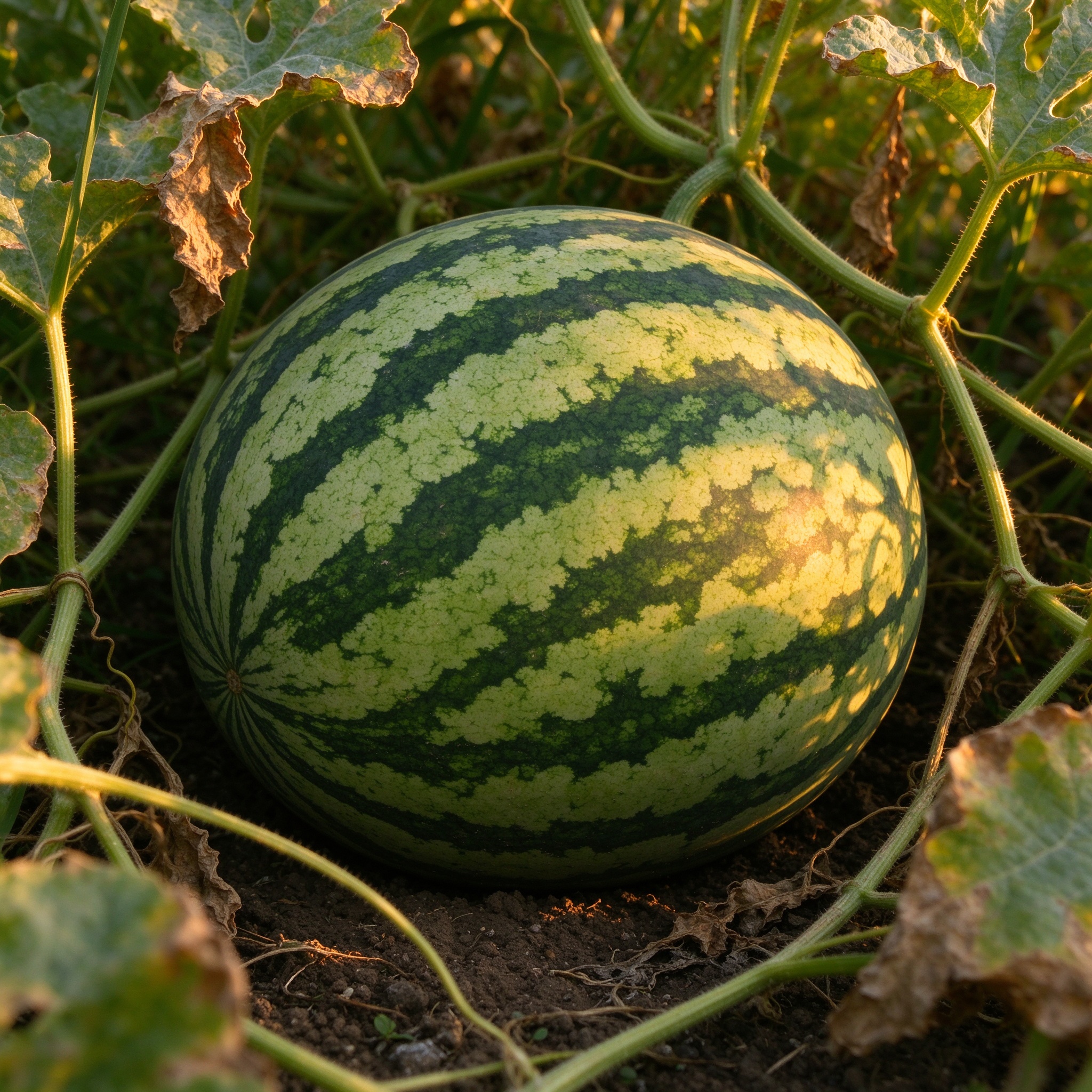
- •Watermelon (Citrullus lanatus) is a warm-season, frost-tender annual vine in the gourd family (Cucurbitaceae), grown for its large, juicy, watery fruits borne on spreading, tendril-climbing vines.
- •It originated in the dry savannas and river edges of southern Africa, which explains its love of heat, sandy soil and full exposure to the sun.
- •A single vine can spread 5 to 10 feet across, bearing separate male and female yellow flowers that must be visited by bees before a melon can form.
- •Fruits range from 3 to 60 pounds or more, with red, pink or even yellow flesh and green-striped, solid or mottled rinds; seedless triploid hybrids, bred by crossing diploid and tetraploid parents, are also common at markets.
- •Most varieties mature 70 to 100 days after planting, so short-season gardeners rely on early cultivars or transplants.
- •The crop demands a long stretch of warm weather, good drainage and steady moisture through fruit set, then a drier finish to concentrate sugar.
- •The rind can be cooked and pickled, while the flesh is eaten fresh.
- •Watermelon plant material is non-toxic to cats and dogs; the sweet flesh is safe in moderation, but chunks of hard rind can be difficult to digest and large numbers of seeds should not be deliberately fed as a treat.
📋 Quick Facts
Scientific Name: Citrullus lanatus
Family: Cucurbitaceae
Category: Vegetable
USDA Zones: 3–11 (tender annual; planted after all frost has passed)
Light:
- •Watermelon needs full sun, at least 6 to 8 hours of direct sunlight per day; shade weakens vines, delays flowering and reduces sugar content.
- •Choose the hottest, most open spot in the garden and space vines so leaves do not shade one another.
- •Warmth from reflected heat off stone, patio edging or black plastic helps ripen fruit in cooler regions.
Water:
- •Provide 1 to 2 inches of water per week from planting through flowering and fruit set.
- •Keep the soil moist but not waterlogged, watering at the base of the vine in the morning and avoiding wet leaves and overhead irrigation, which encourage disease.
- •Reduce watering once the fruit begins to swell and especially as it ripens: dry weather produces the sweetest melons, while continued heavy watering dilutes sugar and can cause blossom end rot or cracked rinds.
- •Mulch with straw or black plastic to conserve moisture and keep fruit off wet soil.
Temperature:
- •Watermelon thrives in heat, growing best with daytime temperatures around 70 to 90°F (21 to 32°C).
- •Seed germinates fastest in soil of 75 to 85°F (24 to 29°C); growth stalls below 60°F (15°C), and any frost kills the vine.
- •Sustained heat above 95°F (35°C) can drop blossoms and stress plants, while cold, wet soil at planting rots seed and weakens roots.
- •Wait for settled warm weather, and use row covers early to trap warmth until both male and female flowers appear.
Soil:
- •Watermelon prefers loamy, somewhat sandy, well-drained soil with a pH of 6.0 to 7.5, amended with aged manure, compost or seaweed before planting.
- •Heavy clay that stays wet after rain restricts root growth and favors rot, so build raised hills or mounds that warm quickly and drain fast.
- •Work plenty of organic matter into the planting mound; vines spread over the surface rather than rooting deeply, so the hill itself supplies most nutrients and moisture.
Harvest:
- •Most varieties mature 70 to 100 days after planting, with the fruit ripening over roughly a two-week window; watermelons do not sweeten further after picking, so timing matters.
- •Ripe signs include a dull rather than bright sheen on the rind, a creamy yellow (not white) ground spot where the melon rests on the soil, a hollow sound when thumped, and the tendril nearest the fruit stem turning brown and drying.
- •Cut the stem close to the melon with a sharp knife rather than twisting it off.
- •Store uncut fruit for about 10 days; once cut, keep it wrapped in the refrigerator for about four days.
Common Problems: Poor fruit set, Blossom end rot, Split rinds, Cucumber beetles, Squash vine borers, Powdery mildew, Fusarium wilt.
📅 When to Plant
- •In cool climates with short summers, start watermelon seeds indoors 2 to 3 weeks before your last frost date and set transplants out about two weeks after that date, once the soil has warmed to at least 65°F (18°C)—ideally 70°F (21°C) or warmer.
- •In warmer long-season climates, sow directly outdoors 1 to 2 weeks after the last frost, again when soil temperature has reached at least 65 to 70°F.
- •Seeds should be sown 1/2 to 1 inch deep in the garden and 1/4 to 1/2 inch deep in pots.
- •Direct seed 4 to 6 seeds in each raised hill, thinning later to 2 to 3 strong seedlings per hill.
- •Handle transplants with extreme care because the roots are fragile and the vine resents disturbance; biodegradable peat or paper pots reduce transplant shock.
- •Black plastic or mulch laid over the bed before sowing warms the soil and speeds early growth.
🌱 Growing Stages
 1
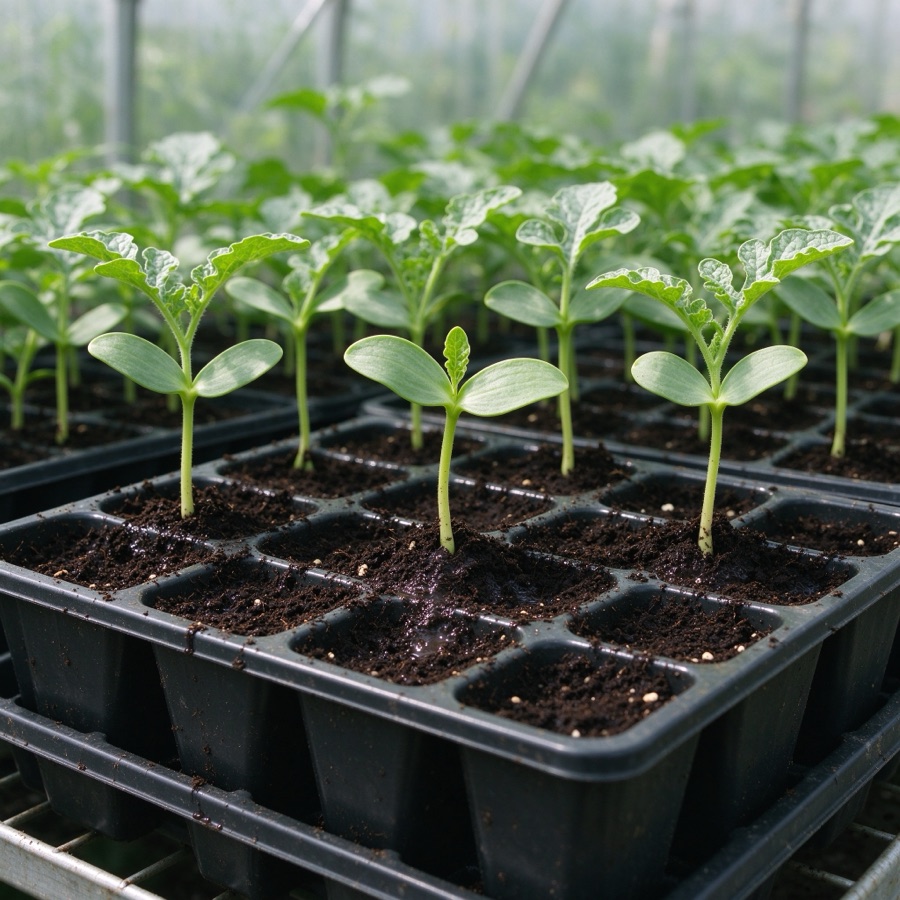
Germination and seedling
(5 to 10 days sprouting; 3 to 4 weeks as seedlings)- •In soil warmed to 75 to 85°F (24 to 29°C), watermelon seed sprouts in about 4 to 7 days, pushing two rounded cotyledons above the surface.
- •Cold or wet soil delays sprouting and rots the seed.
- •Young seedlings grow their lobed true leaves and develop shallow but fragile roots; they dislike being transplanted, so direct sowing or biodegradable pots produce the strongest start.
- •Keep the surface moist but not soggy and protect young vines with row covers against cucumber beetles.
 2
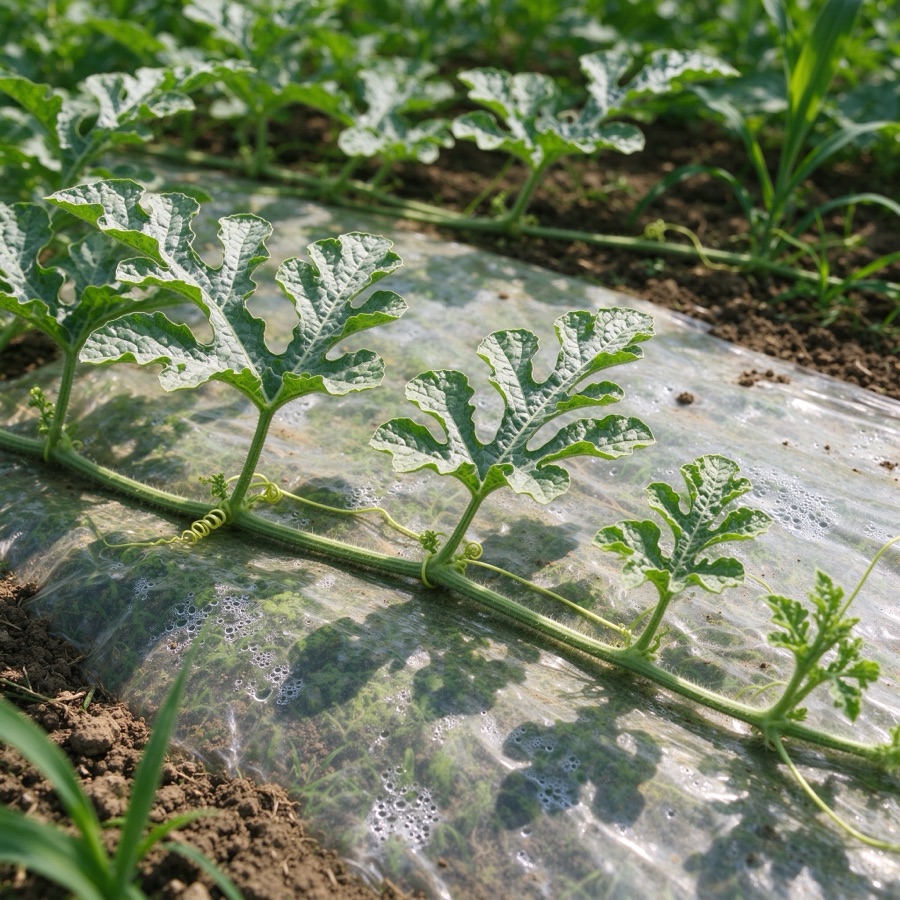
Vine and leaf growth
(First 4 to 6 weeks after establishment)- •The vine sends long, hairy runners that spread over the mulch, developing deeply lobed, rough leaves and curling tendrils.
- •This stage demands nitrogen-rich balanced feeding, even moisture and full sun to build the leaf canopy that feeds future fruit.
- •Male flowers usually appear several weeks before the female flowers that carry the swollen ovary at their base; early male blossoms falling off is normal and not a sign of failure.
 3
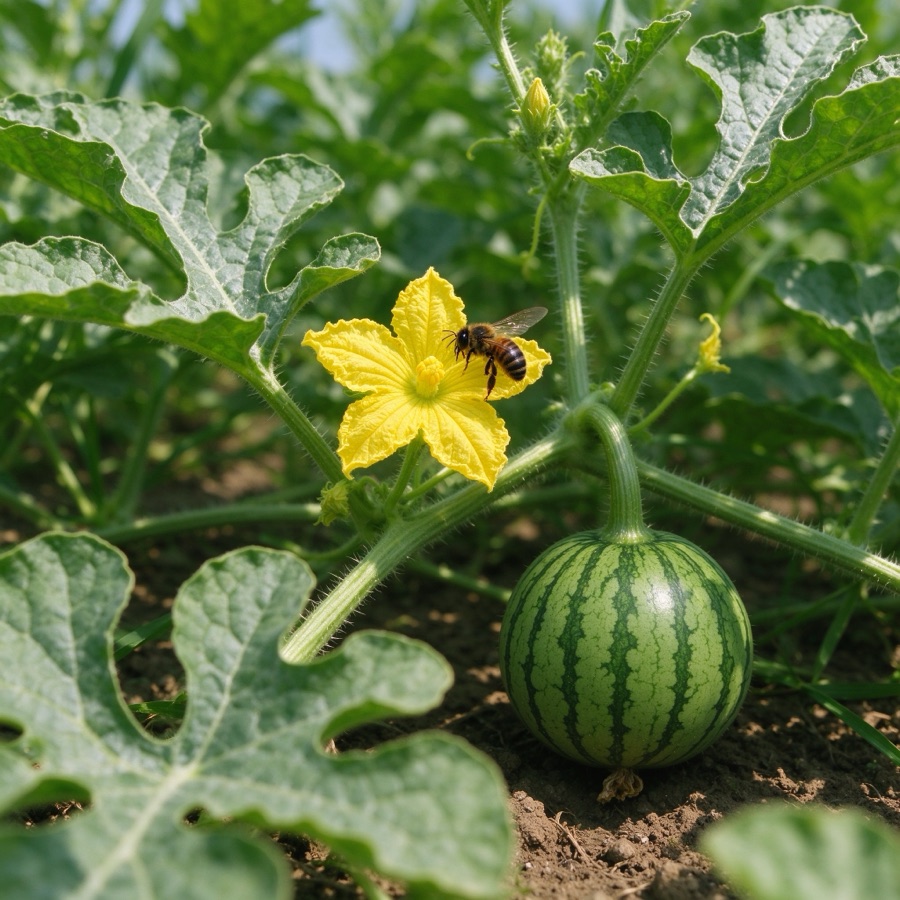
Flowering and fruit set
(Weeks 6 to 10)- •Female flowers open and must be pollinated by bees or hand to form a melon.
- •Successful flowers swell into tiny green fruits resting below the bloom, while unpollinated blossoms yellow and drop.
- •Temperatures above 95°F and cold, rainy weather reduce pollination and fruit set.
- •As melons enlarge, lift them onto straw or cardboard and switch fertilizer away from high nitrogen toward phosphorus and potassium.
 4
Ripening and harvest
(2 to 3 weeks before maturity)- •The fruit expands rapidly and develops its final sugar content while water is withheld more than usual.
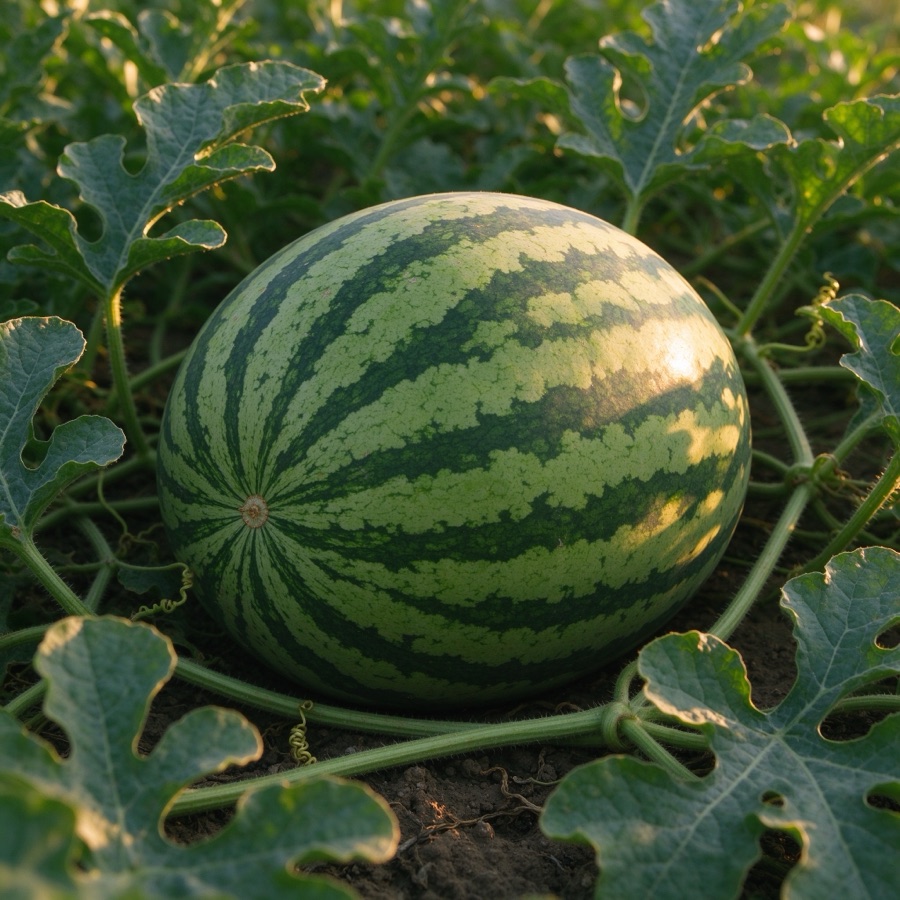
- •Rinds lose their gloss, the ground spot turns creamy yellow, and the nearest tendril browns and dries; the melon sounds hollow when thumped.
- •After harvest the fruit does not continue to sweeten, so picking at peak ripeness is essential.
- •Mature open-pollinated fruits can be selected for seed saving after full ripening.
💧 Detailed Care Guide
☀️ Light Requirements
- •Watermelon needs full sun, at least 6 to 8 hours of direct sunlight per day; shade weakens vines, delays flowering and reduces sugar content.
- •Choose the hottest, most open spot in the garden and space vines so leaves do not shade one another.
- •Warmth from reflected heat off stone, patio edging or black plastic helps ripen fruit in cooler regions.
💧 Watering
- •Provide 1 to 2 inches of water per week from planting through flowering and fruit set.
- •Keep the soil moist but not waterlogged, watering at the base of the vine in the morning and avoiding wet leaves and overhead irrigation, which encourage disease.
- •Reduce watering once the fruit begins to swell and especially as it ripens: dry weather produces the sweetest melons, while continued heavy watering dilutes sugar and can cause blossom end rot or cracked rinds.
- •Mulch with straw or black plastic to conserve moisture and keep fruit off wet soil.
🌡️ Temperature
- •Watermelon thrives in heat, growing best with daytime temperatures around 70 to 90°F (21 to 32°C).
- •Seed germinates fastest in soil of 75 to 85°F (24 to 29°C); growth stalls below 60°F (15°C), and any frost kills the vine.
- •Sustained heat above 95°F (35°C) can drop blossoms and stress plants, while cold, wet soil at planting rots seed and weakens roots.
- •Wait for settled warm weather, and use row covers early to trap warmth until both male and female flowers appear.
🌱 Soil & Fertilizer
Soil:
- •Watermelon prefers loamy, somewhat sandy, well-drained soil with a pH of 6.0 to 7.5, amended with aged manure, compost or seaweed before planting.
- •Heavy clay that stays wet after rain restricts root growth and favors rot, so build raised hills or mounds that warm quickly and drain fast.
- •Work plenty of organic matter into the planting mound; vines spread over the surface rather than rooting deeply, so the hill itself supplies most nutrients and moisture.
Fertilizer:
- •Watermelons are heavy feeders. Mix compost or aged manure into hills at planting.
- •While vines and leaves develop, a slightly higher-nitrogen balanced fertilizer supports healthy growth; after flowers begin, switch to a lower-nitrogen, higher-phosphorus and potassium formula to encourage fruit and sweetness.
- •A seaweed-based feed works well during fruiting. Avoid over-applying nitrogen late in the season, which produces lush vines at the expense of melons.
- •Side-dress along the vine row and water fertilizer in to reach shallow roots.
📝 Step-by-Step Planting Guide
- 1
Prepare fertile, warm, well-drained hills
- •Choose a full-sun, open site and build raised hills or mounds 2 to 3 feet apart in 5-foot-wide rows, with rows at least 6 feet apart; each vine can sprawl over up to 20 square feet.
- •Mix aged manure, compost or seaweed into each mound and rake the soil loose, correcting pH to 6.0 to 7.5.
- •In cool regions, lay black plastic over the bed two weeks before planting to warm the soil, and cut planting holes through it.
- •Rows on raised ridges drain well and hold the sun's heat longer than flat ground.
- 2
Sow seeds direct or start transplants indoors
- •After the soil reaches at least 65 to 70°F (18 to 21°C), place 4 to 6 seeds 1/2 to 1 inch deep in each hill, spaced about an inch apart.
- •In cool climates, start seeds 1/4 to 1/2 inch deep in biodegradable pots 2 to 3 weeks before last frost, keeping the medium at 75 to 85°F until sprouting.
- •Plant those tender-rooted transplants directly into the hill without disturbing the root ball, and remove any dead or weak seedlings.
- •Keep row covers in place until both male and female flowers open so pollinators can reach them.
- 3
Thin seedlings and guide the vines
- •Once seedlings establish their first true leaves, thin each hill to the two strongest plants, snipping the rest at soil level rather than pulling to avoid root damage.
- •Allow vines to sprawl naturally across the mulch; train runners away from neighboring crops so leaves receive full sun and air circulates between plants.
- •Mulch the soil with straw or plastic beneath developing melons to lift them off wet ground and prevent rot and soil-borne disease.
- 4
Water, mulch and feed through fruit set
- •Water the base of vines in the morning, providing 1 to 2 inches weekly until fruit begins swelling.
- •Side-dress early growth with a balanced fertilizer, then shift to a higher-phosphorus, higher-potassium feed once female flowers appear.
- •Keep mulch around hills to conserve moisture and suppress weeds, and slide cardboard or straw under each melon as it enlarges so it does not sit directly on damp soil.
- •Stop heavy irrigation as the fruit ripens to build sweetness and reduce rind splitting.
- 5
Support pollination, harvest ripe melons and save seed if desired
- •Both male and female flowers must be visited by bees to set fruit; avoid insecticides during bloom and, if bee activity is low, hand-pollinate by brushing a male flower's anthers onto a female flower's center.
- •Watch for the ripening signs—yellow ground spot, brown tendril and hollow thump—and cut fruit with a knife.
- •For seed saving, follow the fermentation method in the FAQ, reserving seed only from open-pollinated heirloom varieties because hybrids will not come true.
🌱 Recommended Varieties
'Sugar Baby'
- •A popular round, 10-pound melon with a dark green rind and bright red, crisp flesh, ready in about 80 days.
- •Its compact 4-foot vine suits smaller gardens and raised beds, and the small size makes it easy to store in a refrigerator after cutting.
'Crimson Sweet'
- •The classic large oval main-crop variety, ready in about 85 days, producing 20 to 25-pound melons with light and dark green stripes and firm deep-red flesh.
- •It offers good disease resistance and an extended harvest window, suited to gardens with enough space for spreading vines and a long warm season.
'Golden Midget' (pink flesh)
- •An early 70-day variety for northern gardeners, bearing petite 3-pound melons with golden-yellow skin and sweet pink flesh.
- •Its short maturity and compact habit make it a good choice where summer warmth is limited; 'Sunshine' and other yellow-fleshed types offer the same novelty flavor for warm beds.
🪴 Growing in Containers
- Choose a very large, deep container for dwarf or bush types:
- •Standard vines need too much room for pots, but compact bush varieties such as 'Sugar Baby' can grow in a 15 to 20-gallon container at least 18 inches wide and deep, with drainage holes.
- •Fill it with rich, compost-amended potting mix and place it on a sunny patio where reflected heat ripens the fruit; a sturdy trellis or sling may support hanging melons so the vine can climb rather than spread.
- Water, feed and shelter container vines:
- •Pots dry fast in wind and sun, so check daily and keep the root ball evenly moist, reducing water only as fruit ripens.
- •Feed with dilute balanced fertilizer through vine growth and switch to a blossom-and-fruit feed once flowers open.
- •Move the container out of cold wind, tie vines to a support, and hand-pollinate flowers if the patio lacks bees.
✂️ Pruning & Maintenance
- ✓
Thin side runners to concentrate fruit on the main vine
- •Heavy pruning is not required for watermelon, but restricting the plant to one or two main vines and pinching off early side runners focuses energy into fewer, larger melons.
- •Do this while vines are young, cutting end buds before lateral shoots become long vines, and remove any damaged or yellowed leaves that block airflow at the crown.
- ✓
Fruit thinning and stem harvest cuts
- •On a vigorous vine, leave the best 2 to 3 well-spaced fruits and remove misshapen or damaged young melons so the remaining fruit reaches full size and sweetness.
- •At harvest, use a sharp knife to cut the stem close to the fruit rather than twisting, which can tear the vine and introduce disease wounds.
🐛 Pest & Disease Control
Common Pests
Cucumber beetles
Symptoms: Yellowish-green or striped beetles chew holes in young leaves and flowers and can spread bacterial wilt and mosaic virus; seedlings are often stripped before vines have a chance to cover the ground.Control:- •Protect early seedlings with row covers until flowers open, trap beetles on yellow sticky traps, and handpick in the morning when beetles are slow.
- •Apply kaolin clay dust or insecticidal soap to foliage, and remove crop debris at season's end to reduce overwintering adults.
Aphids
Symptoms: Dense colonies cluster on tender new growth and leaf undersides, curling leaves and excreting sticky honeydew that feeds sooty mold and weakens young vines.Control:- •Rinse colonies off with a strong water jet and follow with insecticidal soap on leaf undersides.
- •Encourage ladybugs and lacewings and keep weeds away from the bed; avoid broad-spectrum sprays that kill the bees needed for pollination.
Squash vine borer
Symptoms: A cream-colored caterpillar bores into the main stem near the soil line, producing wet frass piled at the base; vines wilt suddenly in sections even when watered, and the stem may show a small entry hole.Control:- •Wrap the lower stem with aluminum foil or pantyhose to block egg-laying, and scout for the reddish-brown moth and eggs in early summer.
- •Slit infested stems to remove the borer, then mound soil over the wounded area to encourage roots; rotate cucurbits to a new bed each year and destroy old vines at harvest.
Squash bugs
Symptoms: Flat gray-brown shield-shaped adults and small bronze eggs on leaf undersides suck sap from foliage, causing leaves to wilt, turn brown and die back in patches through the vine.Control:- •Handpick adults and eggs in the cool morning, trap nymphs under boards laid on the soil, and remove crop debris where bugs overwinter.
- •Plant early so vines tolerate feeding, use row covers on young plants, and apply contact insecticides only to the crown where nymphs gather, avoiding open flowers.
Common Diseases
Fusarium wilt
Symptoms:- •Vines wilt suddenly on one side or section during warm days, leaves yellow and stunt, and cut stems show brownish vascular staining.
- •The soil-borne fungus persists for years and favors warm, dryish conditions on stressed plants.
Control:- •Plant resistant cultivars where available, rotate cucurbits to a new bed every three to four years, and remove and destroy infected vines.
- •Keep roots undamaged, maintain even moisture and avoid high-nitrogen over-feeding; there is no cure once a vine is infected.
Anthracnose
Symptoms: Brown, sunken, circular spots develop on leaves, stems and fruit; lesions may expand and merge during warm, wet weather, cracking the rind and opening the fruit to rot.Control:- •Use certified disease-free seed and rotate out of cucurbits for two to three years.
- •Water at the base in the morning, space vines for airflow, and remove infected plant parts; apply a copper or fixed-copper fungicide at the first signs of leaf spotting in rainy seasons.
Powdery mildew
Symptoms: White, powdery patches cover older leaves and stems, first on shaded foliage; leaves yellow, curl and die, weakening the canopy that shades and feeds the ripening melons.Control:- •Plant in full sun with good spacing and air movement, and remove lower shaded leaves.
- •Apply sulfur or potassium-bicarbonate fungicide at the first white patches, and choose resistant varieties in gardens where mildew recurs yearly.
Blossom end rot
Symptoms: A dark, sunken leathery patch forms on the blossom end of young melons, caused by uneven water uptake and calcium shortage rather than an organism; affected fruit continues to ripen but is unmarketable.Control:- •Maintain steady moisture through fruit set, mulch to conserve water, and avoid deep cultivation near shallow roots.
- •Apply calcium to the planting bed before sowing and keep soil pH in the recommended range; remove damaged fruit so the vine supports healthy melons.
🍅 When to Harvest
- •Most varieties mature 70 to 100 days after planting, with the fruit ripening over roughly a two-week window; watermelons do not sweeten further after picking, so timing matters.
- •Ripe signs include a dull rather than bright sheen on the rind, a creamy yellow (not white) ground spot where the melon rests on the soil, a hollow sound when thumped, and the tendril nearest the fruit stem turning brown and drying.
- •Cut the stem close to the melon with a sharp knife rather than twisting it off.
- •Store uncut fruit for about 10 days; once cut, keep it wrapped in the refrigerator for about four days.
❓ Frequently Asked Questions
- 1
How to grow watermelon from seeds?
- •Watermelon is best started once all frost has passed and the soil reaches at least 65 to 70°F (18 to 21°C), ideally 75 to 85°F for fast sprouting.
- •In short-season areas, sow seeds 1/4 to 1/2 inch deep in biodegradable pots 2 to 3 weeks before last frost and grow them under warmth and light; in warm areas, direct seed 4 to 6 seeds 1/2 to 1 inch deep into each raised hill and later thin to two or three plants.
- •Space hills 2 to 3 feet apart in 5-foot-wide rows at least 6 feet apart, mulch to warm and conserve the soil, and water evenly until fruit sets.
- •Handle the fragile roots minimally; the vine resents being moved after establishment.
- 2
How to save watermelon seeds?
- •Save seed only from open-pollinated heirloom melons: hybrid watermelons do not come true, so offspring will not match the parent's size, flavor or rind.
- •Pick a fully ripe, healthy fruit from a vigorous vine, cut it open and scoop out the seeds and surrounding pulp.
- •Ferment the mixture in a container of water at room temperature for 24 to 48 hours, stirring daily; viable seeds sink while pulp and immature seeds float.
- •Pour off the floating debris, rinse seeds thoroughly, and spread them in a single layer on parchment or a screen in a ventilated, shaded spot for 1 to 2 weeks until hard and brittle.
- •Store in an airtight jar in a cool, dark place; under good conditions watermelon seed keeps up to about five years.
- •To preserve purity, plant only one variety or separate different varieties by at least 800 feet, since bees cross-pollinate them freely.
- 3
How do I tell when a watermelon is ripe?
- •Ripening signs appear together: the ground spot where the melon rests on soil changes from white to creamy yellow, the tendril nearest the fruit stem turns brown and dries, the rind loses its glossy sheen, and a hollow rather than solid sound results when the melon is thumped.
- •Watermelons do not ripen after picking, so do not harvest early hoping for sweetness; cut the stem close to the fruit with a sharp knife.
- 4
Why are my watermelons not sweet?
- •Low sugar almost always traces to too much water late in the season, too much shade, or a harvest taken too early.
- •Reduce irrigation as fruit ripens so dry weather concentrates sugar, grow vines in full sun without crowding, and pick only after the tendril browns and the ground spot yellows.
- •Excess late-season nitrogen favors vines over fruit, and hybrid or poorly matched varieties in short-season gardens may not reach full sweetness before fall.
- 5
Can watermelon be grown in containers?
- •Standard vines need too much sprawl for pots, but compact bush varieties such as 'Sugar Baby' grow in a 15 to 20-gallon container at least 18 inches wide and deep with drainage.
- •Use rich compost-amended mix, place the pot in full reflected sun, tie the vine to a support and sling each developing melon for support.
- •Keep the root ball evenly moist until fruit sets, reduce water near harvest, and hand-pollinate if bees are absent.
- 6
How much space do watermelon vines need?
- •Each vine can spread 5 to 10 feet across and use up to about 20 square feet.
- •Plant hills 2 to 3 feet apart in a 5-foot-wide row, with rows at least 6 feet apart, or train compact varieties along a fence or trellis.
- •Crowding shades leaves, worsens mildew and reduces pollination, so give the crop the open room its sprawling habit requires.
Source:
NC State Extension Gardener Plant Toolbox — Citrullus lanatus — https://plants.ces.ncsu.edu/images/plants/citrullus-lanatus/
The Old Farmer's Almanac — Watermelon — https://www.almanac.com/plant/watermelon
Photo credit: NC State Extension
Images courtesy of NC State Extension under CC BY license. Thank you to the photographers who make these educational images available.
License: CC BY-NC 2.0 / CC BY 4.0